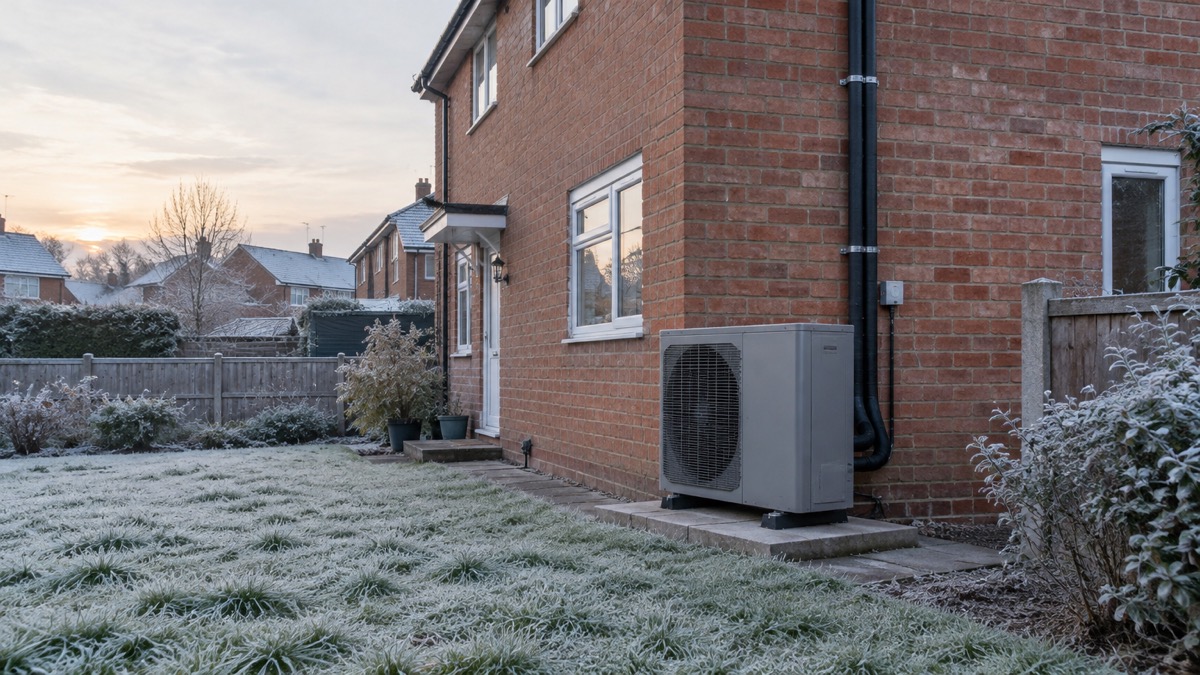
If your heat pump has stopped heating the house or the hot water, emergency mode is the setting that brings in the system's backup heater to keep you warm while you wait for an engineer. It is a stopgap, not a way to run your heating through the winter. Use it to protect the house and the people in it, then get the fault looked at.
The first thing to know is that heat pumps behave differently from boilers in a power cut. During a planned outage, heat pumps will stop, and they resume normal operation once power returns1. After a short interruption, systems like solar panels and heat pumps usually restart automatically after a short delay, though some devices may need you to check or turn them back on1. If anything does not restart, refer to your manufacturer's guidance1.
This page covers what emergency mode does, when to switch to it, why it is only a stopgap, how to restart gently after a long power cut, and why cold weather puts extra strain on a heat pump. It also covers the safety points that matter when you are relying on any kind of electric heater, and where to get help.
What emergency mode does
Emergency mode is the fallback setting on a heat pump system that has a backup heater fitted. Instead of running the outdoor unit and the compressor, the system uses the backup heater to warm the water that goes round your radiators or underfloor heating, and to heat your hot water cylinder. In effect, it turns your heat pump into a straightforward electric heater for as long as you need it.
That matters because a heat pump works by moving heat from outside air into the house, and that process depends on the outdoor unit, the compressor and the refrigerant circuit all working. When one of those stops, the system cannot heat the house in the normal way. The backup heater is there to cover exactly this situation, and to top up the system on the coldest days when the heat pump alone cannot meet demand.
Not every installation has one. Whether yours does depends on how the system was specified and installed, and on the manufacturer's design for your model. If you are not sure, check the paperwork from your installer or the manufacturer's manual for your model. If there is no backup heater, emergency mode will not be available, and the answer is to get the fault fixed rather than to look for another setting.
When to switch to emergency mode
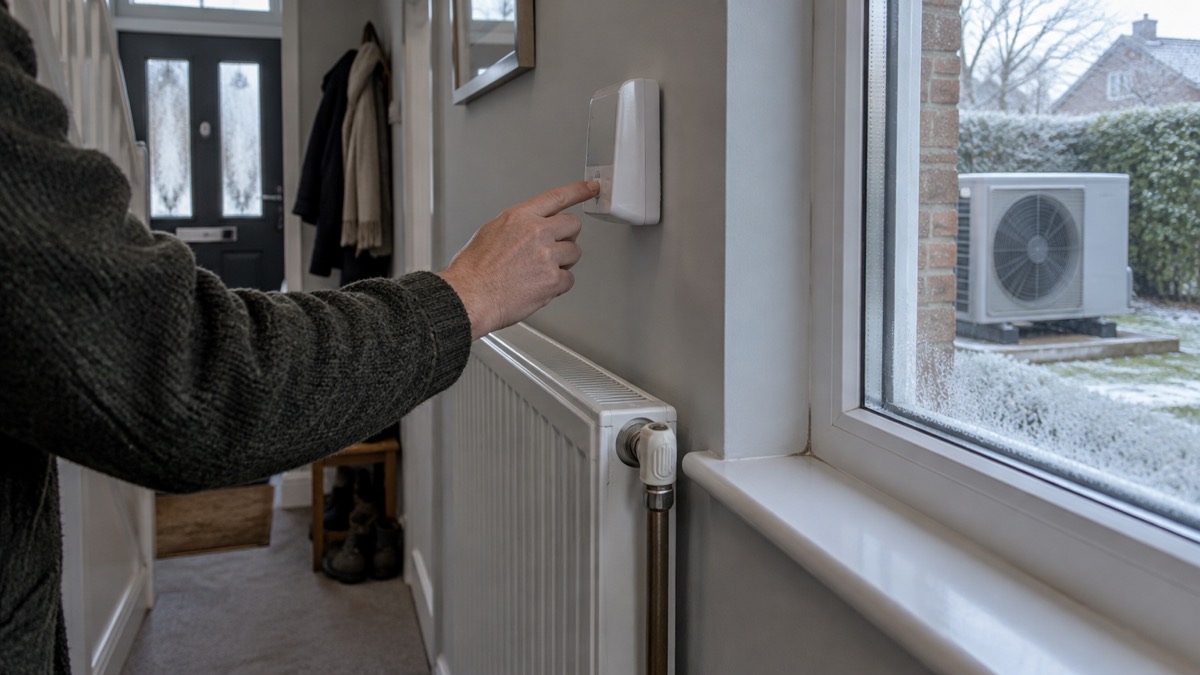
Switch to emergency mode when the heating or the hot water has stopped working and you have confirmed the system is not simply waiting out a power cut. The trigger is a house that is getting cold, or taps that are running cold, with the heat pump running but not delivering.
Work through these checks first:
- Check the power. If there has been a power cut, the heat pump will have stopped and should resume normal operation once power returns1. Give it time to restart before changing any settings.
- Check the controller for a fault code. Note it down before you do anything else; it helps the engineer.
- Check the thermostat and programmer. A timer or thermostat that has lost its settings after a power cut can leave the system thinking it should be off.
- Check the outdoor unit. Look for heavy ice, debris or anything blocking airflow, without touching or opening the unit.
- Check the breaker. If the heat pump has its own circuit breaker, see whether it has tripped.
If those checks do not restore heating, switch to emergency mode to keep the house warm while you arrange a repair. If the property is rented, report the fault to your landlord or letting agent, who is responsible for repairs.
Emergency mode is a stopgap, not a way to run your heating
Emergency mode uses an electric backup heater rather than the heat pump's normal cycle, and electric resistance heating generally uses more electricity for the same amount of heat. That is why it is designed as a temporary measure: it protects the house and the people in it while a fault is fixed, not as a permanent way to heat the home.
Use it with that in mind:
- Heat the rooms you use. Close doors and heat the living room and bathroom rather than the whole house.
- Keep the thermostat modest. Aim to take the chill off rather than to reach normal daytime temperatures.
- Keep an eye on the cost. Check your tariff and your meter readings while emergency mode is running, and speak to your supplier if you are worried.
- Get the repair booked. The sooner the heat pump is working normally, the sooner the backup heater can go off.
There is a wider point about heating in an emergency. The Met Office's winter checklist includes having the boiler serviced before winter3, and the same logic applies to a heat pump: an annual service finds problems before the cold weather does. Ideal Heating states that air source heat pumps can last up to 20 years or more with proper maintenance and regular servicing, and that the quality of installation, maintenance, brand and quality all influence lifespan2. A service is a sensible way to protect that.
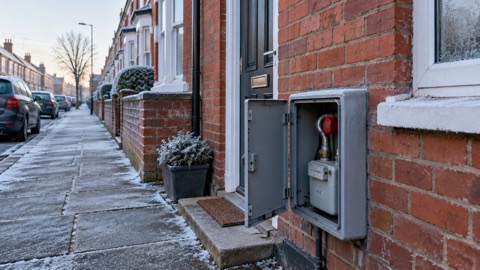
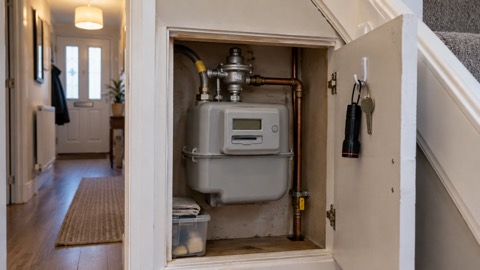
If the fault is with a gas appliance rather than the heat pump, the rules are different. In a gas emergency, if possible switch off the gas at the meter, unless the meter is in the cellar or basement, in which case do not go in4. SGN gives the same instruction: do not attempt to turn off the gas at the emergency control handle if the meter is in a cellar or basement5. If you are told to evacuate because of flooding, turn off your gas at the emergency control handle, normally located next to the gas meter, if it is safe to do so6, but do not attempt it if your meter is under water or in a cellar7. For gas emergencies, the emergency gas helpline is 0800 111 9998.
Restarting gently after a power cut of 12 hours or more
A long power cut leaves a heat pump in an unusual state. The house has cooled, the system has been off, and when the power returns everything tries to start at once. Restarting gently protects the equipment and gives you a chance to spot problems.
After a planned power cut, power will normally be restored after the three hours, unless operational reasons prevent this, and power might be switched off or reconnected around 30 minutes before or after the published time1. If the electricity supply fails because of a problem in SSEN's network during normal weather conditions, it must be restored within 12 hours of first becoming aware of the problem2. Those are the network's own commitments; a storm can push restoration beyond them. Once power returns, heat pumps resume normal operation, and systems like solar panels and heat pumps usually restart automatically after a short delay, though some devices, particularly EV chargers or smart systems, may need you to check or turn them back on3.
When the power comes back:
- Let the system restart on its own first. Heat pumps usually restart automatically after a short delay1.
- Check the controller. If the system has not restarted, refer to your manufacturer's guidance1.
- Reset the programmer and thermostat if they have lost their settings.
- Open the thermostatic radiator valves one at a time, starting with the rooms you use most, so the system is not asked to heat every cold room at once.
- Check the outdoor unit for ice or debris before assuming there is a fault.
- Watch the first hour. If the system trips, makes unusual noises or shows a fault code, switch to emergency mode if you have it and call your installer.
Why a heat pump struggles below 3ºC
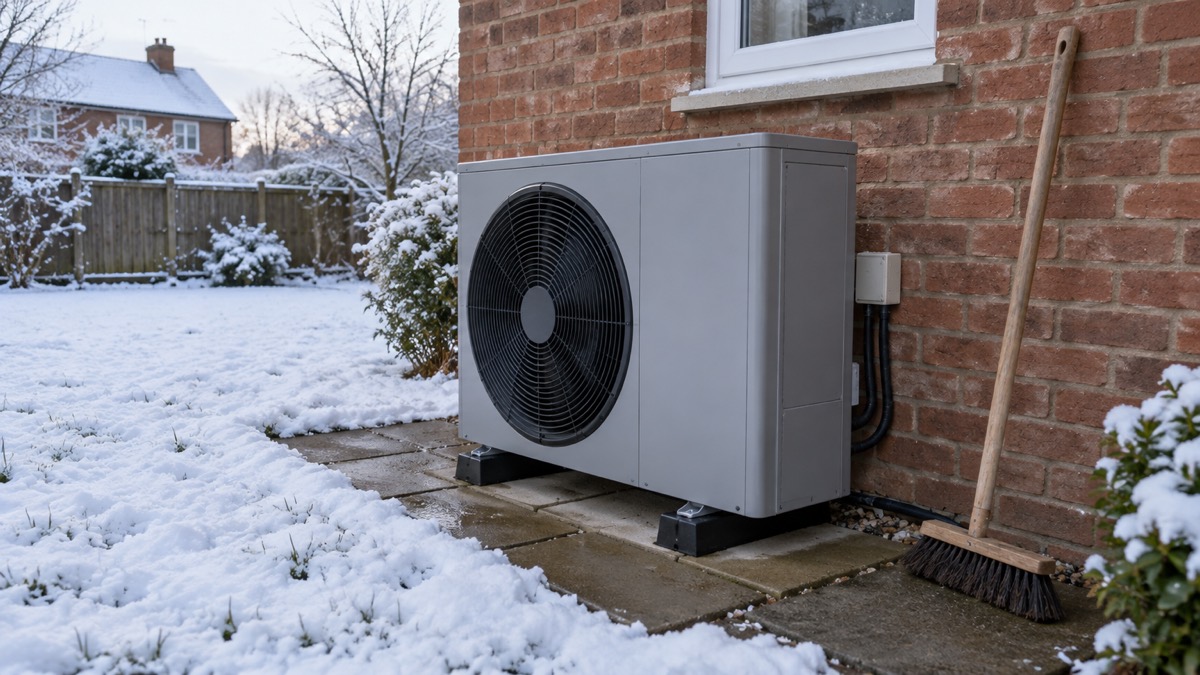
A heat pump moves heat from the outside air into your home. The colder the outside air, the less heat there is to move, and the harder the system has to work to deliver the same warmth inside. Below about 3ºC the outdoor unit also starts to frost up, and the system switches periodically into a defrost cycle to clear it. During defrost the unit may appear to stop, steam may rise from it, and water may run off. That is normal.
What is not normal is ice that does not clear, a unit that stays in defrost, or a house that stops warming. If that happens, treat it as a fault. Do not chip ice off the unit, pour hot water over it or open the casing; call your installer.
Cold weather also changes how you should use the system. When the air temperature outside drops below 3ºC, an air source heat pump's efficiency levels can reduce, but your heat pump will keep working1. Keep the outdoor unit clear of snow and leaves, and know where your controller's emergency setting is before you need it: emergency mode only provides electrical heating and should not be used permanently, as it will be more costly to run than the heat pump2. If the power goes out in cold weather, the power cuts guide and the heating and cooking without mains power guide cover what to do next.
Staying safe while you rely on backup heat
Emergency mode keeps the house warm, but it does not remove the ordinary risks of heating a home in cold weather. Take these seriously.
- Keep heaters clear. Keep portable heaters at least a metre from furniture, curtains and bedding, and never dry clothes on them. If a fire starts, leave the room and call 99911.
- Watch children and hot surfaces. Radiators and hot water can scald. Consider fitting thermostatic radiator valves and radiator guards or covers12.
- Do not block vents. Keep the outdoor unit's airflow clear and never cover the indoor unit.
- Check alarms. Test your smoke alarms and carbon monoxide alarms regularly, and replace batteries.
- Look out for neighbours. Older and medically dependent households feel the cold first. The extra help guide explains the support available.
If the heating has failed and the house is getting genuinely cold, do not wait. The heat pump breakdowns guide sets out the checks to make before calling an engineer, and the boiler breakdowns guide covers the equivalent steps for gas systems.
Where to get help
Start with your installer, who knows your system and its warranty. If you cannot reach them, the manufacturer's support line can talk you through the controls for your model. Have the model name, any fault code and the date the problem started ready.
If the property is rented, report the fault to your landlord or letting agent. If you are struggling to keep the house warm, your energy supplier and your local council can advise on support. The extra support guide covers help from networks and suppliers for vulnerable households, and the gas and heating failures section covers the wider picture.
For a gas emergency, call the emergency gas helpline on 0800 111 9998. For a fire, call 99911.
Sources (12)
- Planned power cuts, SSEN, 2026-10-25
- Boiler servicing guide, Ideal Heating, 2026
- WeatherReady winter poster, Met Office, 2026
- Safety in severe weather conditions, Devon and Somerset Fire and Rescue Service, 2026
- Flooding, SGN, 2026
- Be winter ready, SGN, 2026
- Flood advice, Cadent, 2026-10-29
- Safe home heating, Warwickshire County Council, 2026-10-29
- Carbon monoxide: the silent killer, Wiltshire and Swindon Prepared, 2026-10-25
- Carbon monoxide, Cornwall Council, 2026-10-29
- Heaters, Devon and Somerset Fire and Rescue Service, 2026
- Burns and scalds, RoSPA, 2026-10-26
 Checks Before Calling Engineer
 Boiler Checks When Moving In
 Power Cut Kit Checklist
 Stop a Condensate Pipe Freezing
 Repressurising a Combi Boiler
 Hot Water but No Radiators
 Resetting a Boiler Lockout
 Programmer Reset After Power Cut
 Boiler Leaking Water
 Boiler Overheating
 How to Bleed a Radiator
 Boiler On When Away in Winter
 Missed Reconnection Visit
 Prepayment Credit but No Gas
 Low Supply Pressure