Public Health Scotland (PHS) said on 27 August 2026 that it is working with the UK Health Security Agency (UKHSA), food safety agencies in the UK and other partners to investigate an outbreak of Salmonella Enteritidis, and that the latest investigations indicate a link to eggs imported to the UK from abroad1. The UK Government's own outbreak update, first published the same day and later revised, describes three clusters of Salmonella Enteritidis in the UK that evidence suggests may be linked to imported eggs2.
PHS said work to identify the exact source of the outbreak is ongoing1. The Food Standards Agency's chief scientific adviser, Professor Ian Young, said the exact causes of the outbreaks have not yet been identified, but that investigations so far have identified links to imported eggs, and that there is no evidence that UK-produced eggs are affected2. UKHSA's figures, as of 15 September 2026, cover England only:
| Cluster | Confirmed cases | Deaths | Sample dates |
|---|---|---|---|
| t5.9411 | 355 | one | 11 August 2025 to 7 September 2026 |
| t0.24068 | 189 | none reported | 27 May 2025 to 2 September 2026 |
| t5.9765 | 42 | one | 27 January 2026 to 24 August 2026 |
Earlier versions of the UKHSA update gave lower totals: as of 25 August 2026 it reported 259 confirmed cases and one death linked to "this cluster", alongside 177 cases in the t0.24068 cluster and 38 cases and one death in the t5.9765 cluster2. UKHSA says fewer cases have been reported over recent weeks, that cases continue to be associated with eating at a range of food outlets including small cafés, restaurants and takeaway businesses, and that the risk to the general public from Salmonella remains low2. Its deputy director for gastrointestinal infections, food safety and one health, Dr Gauri Godbole, said:
"While new cases are still being reported, we have seen fewer cases over recent weeks. However, it is too early to say if the outbreak is subsiding and we are continuing to monitor closely."
PHS describes the illness: symptoms of salmonellosis typically start around one to three days after exposure and may include diarrhoea, abdominal pain, nausea and vomiting, and most people will recover within a few days without treatment1. It says eating contaminated food is the most common reason for infection, and that anyone concerned about symptoms should contact their GP or out of hours service in the first instance1. UKHSA notes the infection can occasionally cause more serious illness, including sepsis requiring hospital admission, particularly in young children, older adults, pregnant women and people with weakened immune systems2.
Why it matters for households
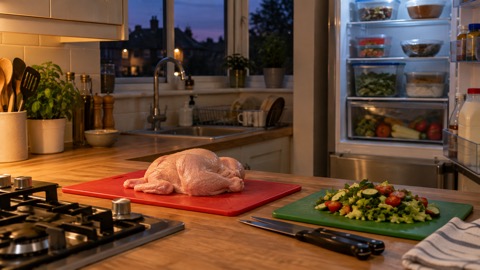
The agencies' advice turns on how eggs are cooked and handled, and on who is eating them. The FSA says eggs that are thoroughly cooked and handled hygienically should not present a food safety risk2. It says infants, young children, pregnant people and older adults should only eat raw or lightly cooked eggs if they carry the British Lion mark or are produced under the Laid in Britain scheme, and that this advice does not apply to those who are severely immunocompromised and require medically supervised diets, who should continue to follow individual medical advice2. Where eggs in food bought or eaten out may not carry those marks, the FSA says the safest approach for vulnerable people when eating out is to ensure eggs are thoroughly cooked and to avoid dishes containing raw or lightly cooked egg, such as mousses, fresh mayonnaise or hollandaise sauce2. It also advises storing and cooking food according to the packet instructions, washing hands thoroughly before handling food and always after handling raw meat, poultry and eggs2. PHS points readers to Food Standards Scotland, UKHSA and NHS Inform for further information1. Background on the illnesses involved is in the guide to Salmonella, E. coli, Listeria and other causes of illness, and the wider health emergencies household guide covers how outbreak alerts and medicine supplies are handled.
What happens next
UKHSA says its investigation remains ongoing and that it will continue to follow up cases and investigate any further common sources if they come to light2. It publishes information on all three clusters in England weekly2, and the UK Health Security Agency guide explains how the agency issues alerts and outbreak advice. PHS said work to identify the exact source of the outbreak is ongoing1. No recall or withdrawal of specific egg products has been reported in these updates.
Sources (2)
- Salmonella outbreak update - News - Public Health Scotland, publichealthscotland.scot
- Salmonella outbreak update - GOV.UK, gov.uk
 Food Poisoning Bacteria