COVID-19 positive test rates rose to around 7% in September, with hospital admission rates increasing by approximately 50% over the same period, according to UK Health Security Agency (UKHSA) data published on 8 October 20261. The agency said the increases were observed consistently across England, Scotland, Wales and Northern Ireland, as well as across Europe and the United States, indicating this is not a localised trend1.
UKHSA attributed the rise to winter indoor mixing and waning immunity rather than a more severe variant. It said colder and wetter weather means people spend more time indoors, which enables the spread of respiratory viruses, and that it has been roughly a year since the last significant COVID-19 wave, so immunity from vaccination and previous infection may be waning in parts of the population1. The agency said current data does not indicate that these variants lead to more severe illness than other variants in circulation, and that hospitalisations are rising in line with overall increases in COVID-19 circulation rather than sharply on their own1.
XFG, sometimes referred to in the media as the Stratus variant, remains the most common current COVID-19 variant. UKHSA said it has also been called "American Covid" in some coverage, though it is not new and has been circulating in the UK and other countries for around a year1. BA.3.2, a highly divergent descendant of the Omicron BA.3 lineage that re-emerged in South Africa in late 2024 and is sometimes called the "Cicada" variant, has been designated a Variant Under Monitoring by the World Health Organization, which currently assesses the public health risk as low, with no evidence of increased severity, hospitalisation or mortality, although available evidence remains limited1.
"As we move into winter, colder and wetter weather means people spend more time indoors, which enables the spread of respiratory viruses"
Why it matters for households
The rise affects households in all four UK nations, and UKHSA says it reflects a general increase in COVID-19 activity rather than a variant causing more severe disease1. The agency advises that anyone with symptoms of a respiratory infection such as COVID-19, who has a high temperature or does not feel well enough to go to work or carry out normal activities, should avoid contact with vulnerable people and stay at home if possible1. For those who cannot stay at home, it says the guidance is unchanged: wear a well-fitting face covering made with multiple layers or a surgical face mask, avoid crowded places such as public transport, large social gatherings or anywhere enclosed or poorly ventilated, take exercise outdoors away from close contact with others, and cover the mouth and nose when coughing or sneezing, wash hands frequently and avoid touching the face1.
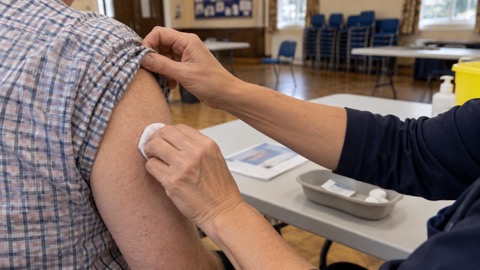
On vaccination, UKHSA says the NHS will contact those who are eligible, and that current eligibility includes people aged 75 and over, those with weakened immune systems, and those living in care homes for the elderly1. It says people may be eligible for a COVID-19 treatment assessment if they are aged 12 or over, have symptoms, have tested positive, and have certain health conditions, including conditions affecting the immune system, certain cancers or cancer treatments, kidney or liver disease, organ transplants, autoimmune or inflammatory conditions, and conditions affecting the brain, nervous system or lungs; those unsure whether they are eligible are advised to speak to their GP or hospital specialist1.
What happens next
UKHSA said it publishes weekly surveillance data for COVID-19 and other respiratory illnesses during the winter season, and monitors GP appointments, A&E attendances and hospitalisations alongside genomic sequencing to track how variants are behaving1. The agency has not reported any change to the current guidance or to the vaccination programme beyond the eligibility groups set out above1.
Households wanting background on the agency's role can read about the UK Health Security Agency, and those checking symptoms can use the guide to whether it is a cold, flu or COVID-19. The site's health emergencies hub covers wider planning, and how long to stay at home after a positive COVID test sets out the current position on isolation.
 UK Health Security Agency
 Cold, Flu or COVID-19