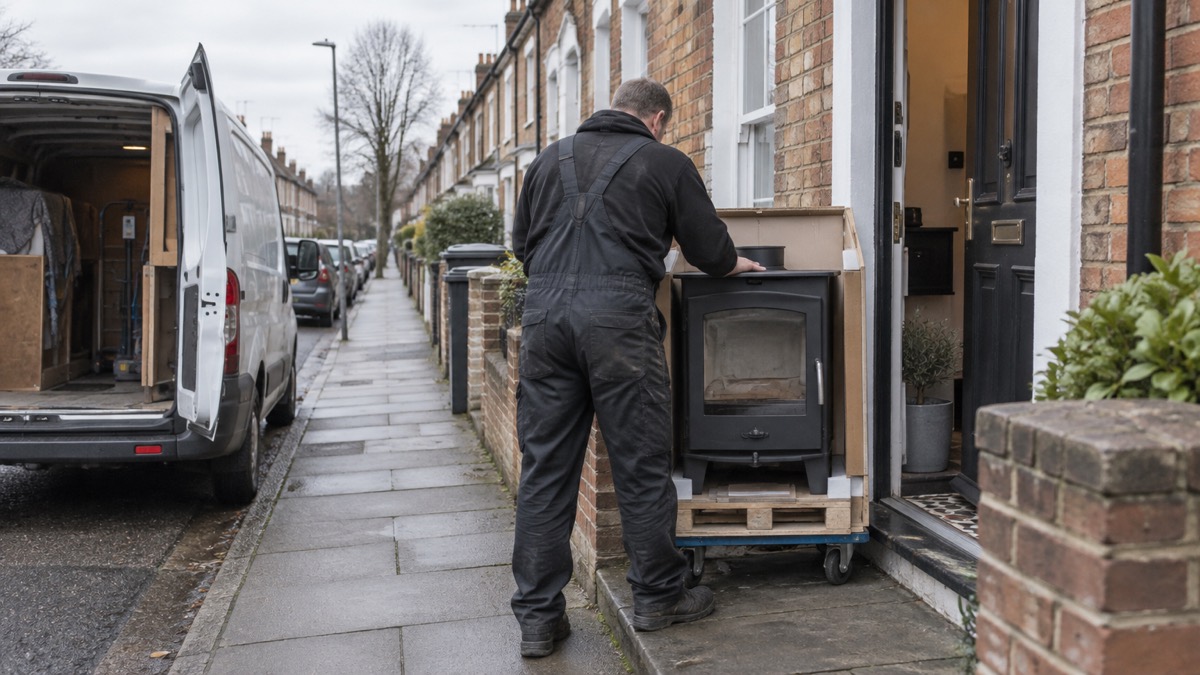
A wood-burning stove is one of the few pieces of home heating kit that keeps working when the electricity goes off. It needs no pump, no fan and no thermostat, just dry wood, a clear flue and someone in the house who knows how to run it. For a household thinking about a winter power cut, that independence is the whole point.
The Haven is a wood-burning stove in the Charnwood range. This page sets out what it does for a household in an emergency, what decides whether it suits your home, how it must be installed and run, and how to keep it safe and ready between winters. It does not give a price, and it does not rank the stove against others.
Three things matter more than any specification. The stove must be installed by a competent person following the maker's instructions and the building regulations1. It must have a working carbon monoxide alarm in the room where it stands2. And it must never be left unattended while lit1. Get those right and the stove becomes a dependable backup heat source. Get them wrong and it becomes one of the most common causes of domestic chimney fires3.
What the Haven wood-burning stove does in a power cut
When the mains fail, a wood-burning stove carries on. There is no electric ignition, no fan-assisted flue and no control board to reset. You load wood, set the air, and the stove radiates heat into the room for as long as the fuel lasts. That is what makes it worth planning around: it turns a stored pile of logs into warmth that does not depend on the grid.
What it will not do is run your central heating or keep a whole house at summer temperature. A stove heats the room it is in and the spaces that open onto it. If your plan for a winter outage is to keep one room warm and live in it, a stove fits that plan well. Our guide to keeping one room warm when the heating fails sets out how to choose and prepare that room, and a stove is one of the ways to heat it.
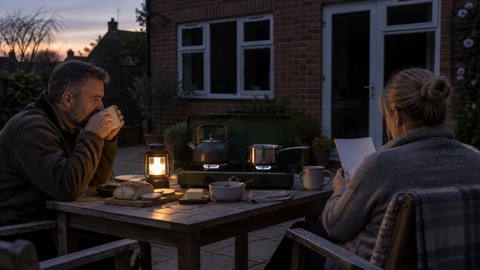
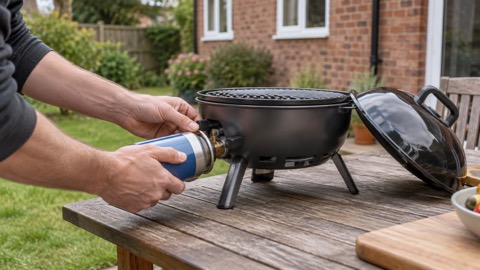
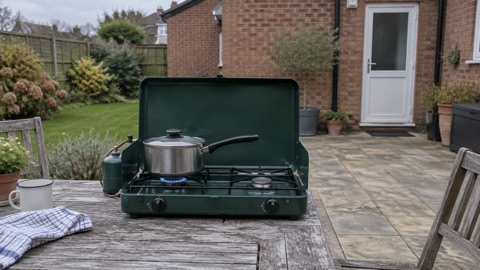
It also gives you a hot surface. Some households use the top of a stove to heat water or warm food during an outage. Treat that as a secondary benefit rather than a cooking plan. Fire and rescue services are explicit that you should never leave a fire unattended for any reason1, so anything that takes your attention away from the stove needs care. For actual cooking in a power cut, official food safety advice points to camping stoves, barbecues or bottled gas stoves, used with the manufacturer's instructions and with the understanding that they can take longer, so food must be steaming hot and cooked all the way through7. Our guides to camping stoves for a power cut and using a camping stove indoors cover that route properly.
Think of the stove as one layer of a plan, not the whole of it. It pairs naturally with the other measures in our heating and cooking without mains power section: draught-proofing, warm clothing and bedding, and a way to heat water.
Specifications that decide whether it suits your home
A stove is a long-term fixture, so the decision is less about the model than about the house and the flue. The maker's own manual is the authority on the Haven's output, efficiency, dimensions and clearances, and it should be read before anything is ordered. What the general guidance does tell you is which factors decide whether any stove will work well in your home.
| What to check | Why it matters | Where the guidance comes from |
|---|---|---|
| Flue and chimney condition | Smoke and carbon monoxide must go outside; a defective flue is a fire and poisoning risk | Fire and rescue services advise properly maintaining flues and chimneys where there is a wood burner8 |
| Ventilation | Fuel-burning equipment used indoors needs good ventilation | Official warning on fuel-burning equipment9 |
| Room size and layout | A stove heats the room it is in, not the whole house | General principle of stove heating |
| Smoke control status | Restricts what you may burn | DEFRA guidance on smoke control areas6 |
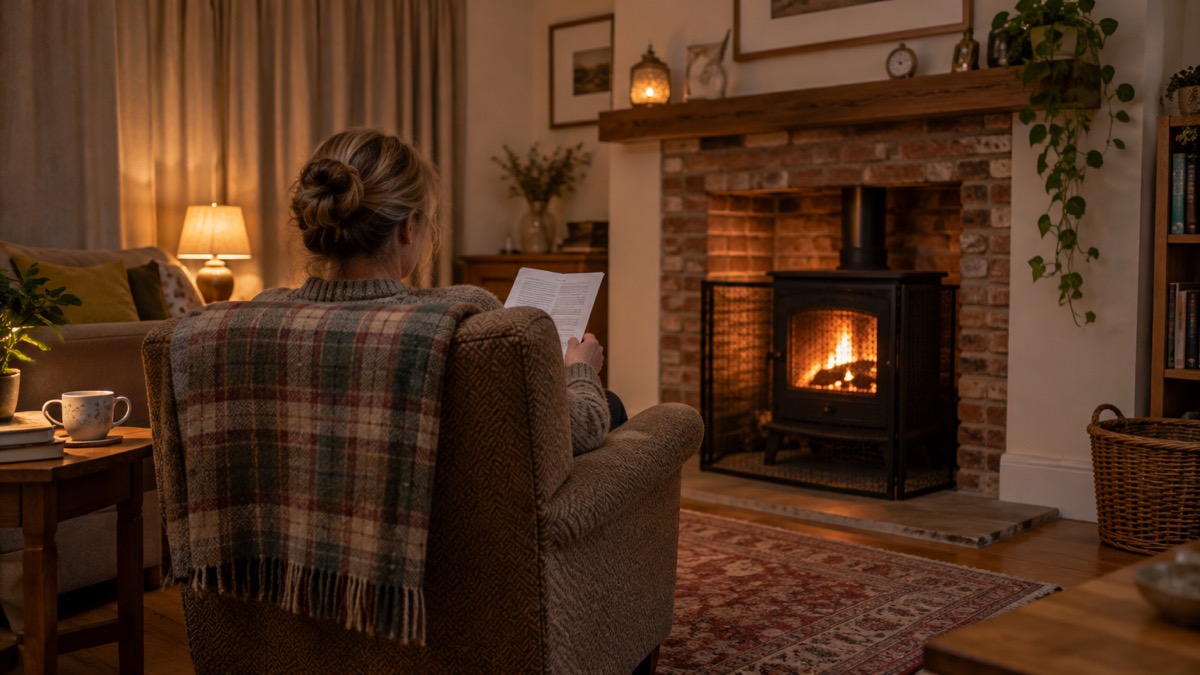
The stove thermometer is a small, cheap addition that changes how you run the appliance. Official guidance recommends using one to understand how your wood stove is performing10. It tells you when the stove is up to temperature and when you are starving it or over-firing it, which affects both heat output and how much creosote builds in the flue.
Follow the manufacturer's guidance for your stove or appliance, as it is designed to ensure safe and efficient use11. That instruction comes from fire and rescue services and applies to every setting, clearance and fuel recommendation in the Haven's manual.
If you are still deciding between appliance types, our comparison of a wood burner or multi-fuel stove sets out the difference. A multi-fuel model can burn smokeless fuel as well as wood, and independent guidance notes that a far greater heat and better performance is obtained when using either coal or smokeless fuel12. That is a consideration if you want the stove to work hard through a long cold spell.
Installation, flue and building regulations
This is the part you cannot do yourself, and the part that most affects whether the stove is safe. Stoves and boilers should be installed by a competent person, following the manufacturer's instructions and the building regulations and codes of practice1. The same requirement is stated in Welsh by Mid and West Wales Fire and Rescue Service: the stove or boiler should be installed by a competent person, following the maker's instructions and the building regulations and codes of practice1.
In practice, "competent person" means someone registered on a competent person scheme. DEFRA's clean air guidance names the schemes: get your stove installed by an installer registered on a competent person scheme certified by HETAS, APHC, BESCA, Certsure, NAPIT or OFTEC6. Carmarthenshire Council's advice is the same in substance: ensure that any work carried out in relation to solid fuel, wood or a biomass unit is undertaken by a HETAS installer, competent in that area of work13. Cheshire Fire and Rescue Service adds that installations and servicing should be carried out by competent professionals, for example HETAS registered11.
There is a legal step too. Before installing a new solid fuel appliance, or relining or installing flues and chimneys for these appliances, it is a legal requirement to submit an application for building regulation approval14. This applies in Northern Ireland as set out by HSENI; in England and Wales the building regulations work in a comparable way, and your installer will normally handle the notification. If you are in any doubt, ask before work starts.
Flues are not just your business. The Gas Safety (Installation and Use) Regulations 1998 and Building Regulations require flues to be installed in a safe position at specified distances from the boundary, and neighbours, builders and householders should consult before commencing work; if concerned, get a Gas Safe registered engineer to examine the flue15. That guidance is written for gas appliances, but the principle of flue position and neighbour consultation applies to any flue, and it is worth raising early if a neighbour is building an extension near yours.
Once installed, the flue needs looking after. If you have an open fire or wood burning stove in your home, it is important to properly maintain flues and chimneys8. Our guide to chimney sweeping covers how often and by whom.
Where a wood-burning stove must never go
A stove belongs on a proper hearth, in a room with a flue, with clear space around it. The dangers come from what people put next to it and what they try to burn in it.
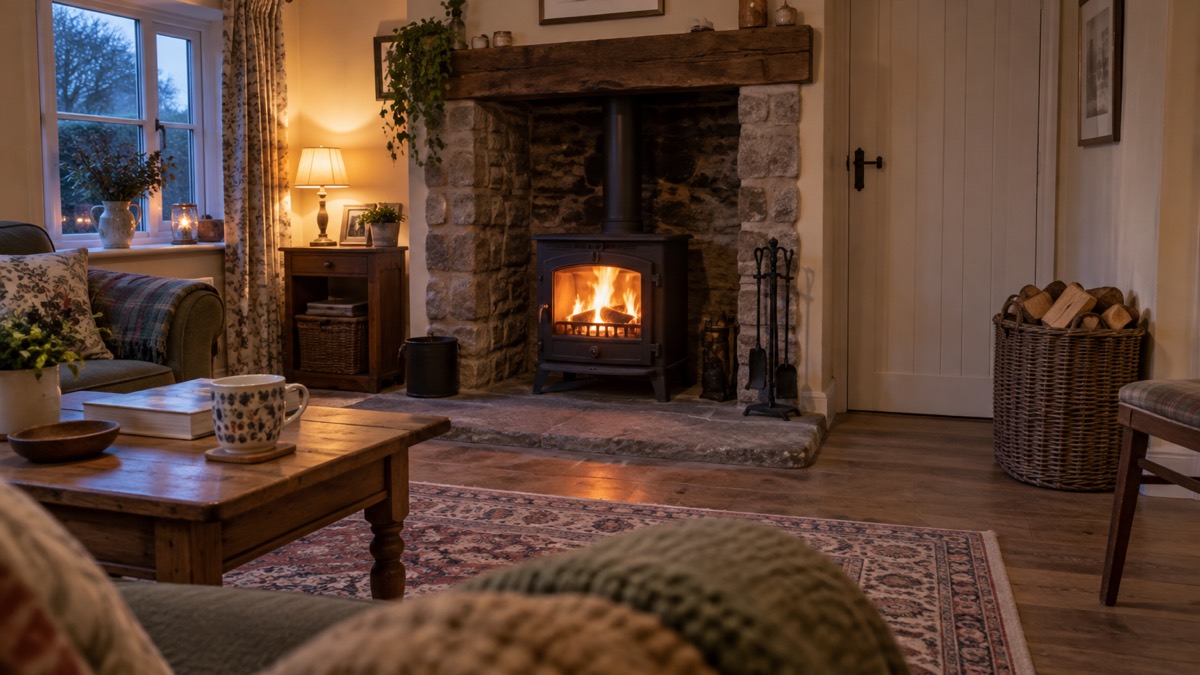
The most common mistake is storing fuel against the stove. Do not stack wood or other combustible materials against the stove or boiler; the Service has been called to fires caused by keeping firewood against the hot outer surface of wood burners1. The same warning appears in official news from Mid and West Wales Fire and Rescue Service: another danger is the storage of wood and other fuel immediately next to a woodburning stove, as heat can build up and lead to a fire igniting3. Keep fabrics, soft furnishings and piles of paper away from a woodburning stove as well16.
What you burn matters as much as where the stove stands. Do not burn wet or treated, painted or glued wood10. Never use petrol or paraffin to light a solid fuel stove17. Our guide to what wood and rubbish you should never burn goes through the list.
And a stove is not a substitute for any other heater used indoors. Never use barbecues, camping stoves or patio heaters for heat indoors18. Never use a barbecue, lit charcoal or disposable barbecue inside a tent, caravan or other enclosed space19. Never take portable or disposable barbecues, grills or charcoal fuel burners into your home or any confined spaces such as a tent, houseboat or caravan; an extinguished barbecue can continue to produce carbon monoxide for many hours after it has been extinguished, and carbon monoxide can travel through walls20. These warnings are repeated by fire services across the UK because people die doing exactly this in cold weather21.
Lighting and running it safely
Lighting a stove is straightforward once you have the routine. The safety rules around it are what keep the house safe.
- Clear the area first. Nothing combustible against the stove, nothing drying on it, nothing stacked beside it1.
- Use the right firelighters. Never petrol or paraffin17.
- Set the air controls as the maker instructs. Follow the manufacturer's guidance for your stove, as it is designed to ensure safe and efficient use11.
- Keep the door closed when the fire is established. Make sure you leave sufficient time after a fire to let the ash cool and keep the door to the stove closed23.
- Watch it. Never leave a fire unattended for any reason1. On a boat the advice is the same in spirit: always keep your eye on a solid fuel stove when it is lit and try to avoid leaving with the stove running24.
- Check for smoke leaks. When the fire is alight, check the loft space occasionally to make sure there is no smoke leaking from cracks, defective brickwork or mortar joints23.
- Guard it from children. Children should be taught about fire dangers and not allowed near hot surfaces or the stove door; use a protective guard that suits the stove's design1.
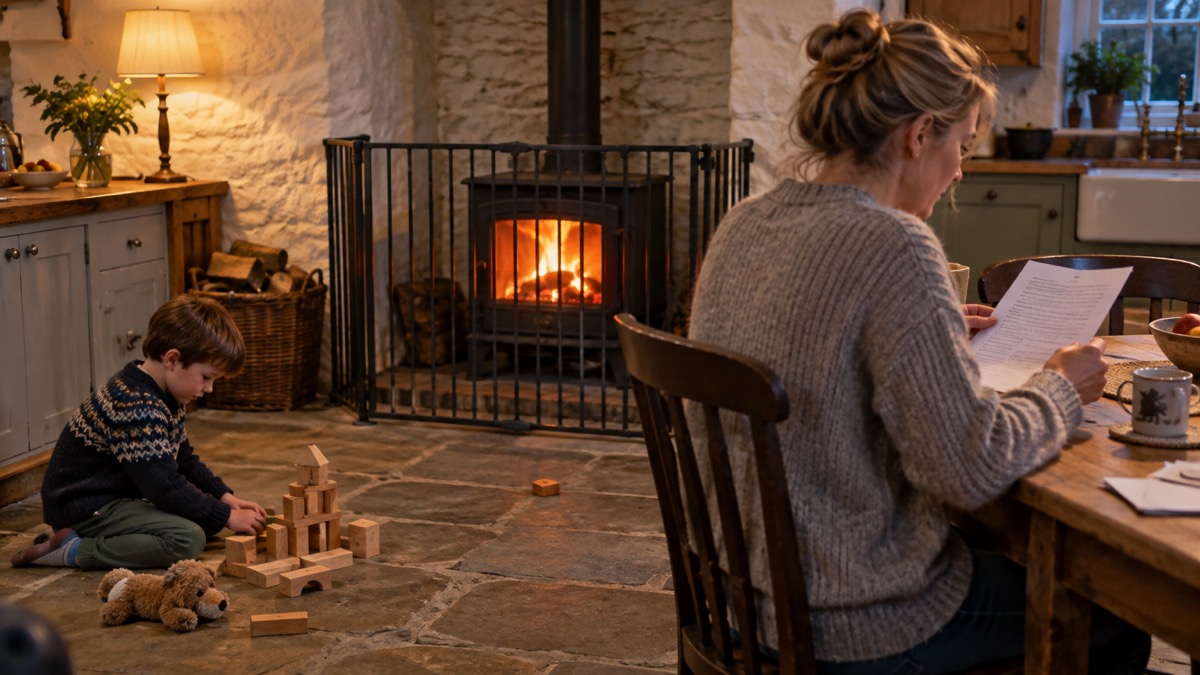
That last point deserves its own line. A fire guard is not optional decoration. It is the difference between a child who learns about fire safely and one who is burned.
If you are lighting a stove that has stood unused, or an open fire in a chimney that has not been swept, read our guide to lighting an open fire after years without use first. The risks are the same and the checks are similar.
Carbon monoxide: alarms and warning signs
Carbon monoxide is the reason every wood-burning stove needs an alarm nearby. It is colourless and odourless, and a blocked or dirty flue is one of the ways it gets into a room. Make sure that the ventilation system of your wood stove is clean, and has no blockages to prevent carbon monoxide build-up10.
The alarm advice is consistent across the fire and health services:
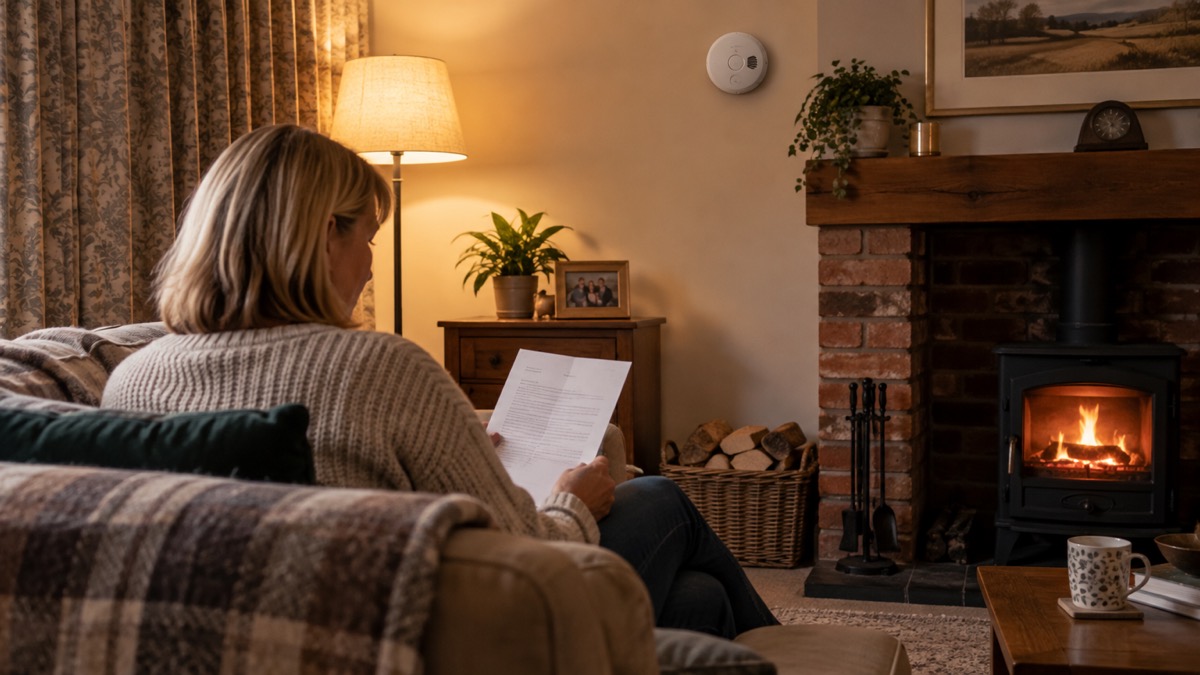
- Official guidance recommends placing a carbon monoxide alarm in rooms where you have a fixed combustion appliance, such as a gas fire, gas boiler, log burner or open fireplace2.
- NHS advice is to get a carbon monoxide alarm for each room of your home that contains appliances that burn gas, oil, coal or wood4.
- If you have a solid fuel appliance, such as a log burner, make sure you have a working carbon monoxide alarm25.
- People with woodburning stoves or open fires are encouraged to fit smoke alarms and carbon monoxide detectors in their homes3.
- Make sure you know the symptoms of carbon monoxide poisoning and have a working carbon monoxide alarm. Fitting an alarm should not be used instead of regular checks of appliances26.
That last sentence is the one to remember. An alarm is a backstop, not a substitute for sweeping and servicing. The Health and Safety Executive for Northern Ireland publishes guidance on carbon monoxide for households14, and the symptoms to watch for are set out by NHS 111 Wales4.
Storing fuel and getting rid of ash
Two housekeeping jobs keep a stove safe between burns: where the wood lives, and where the ash goes.
Wood. Keep it dry, keep it away from the stove, and keep it out of the reach of anything that could catch. Do not stack wood or other combustible materials against the stove or boiler1. Do not burn wet or treated, painted or glued wood10. Our guide to firewood explains how dry logs should be and how to season them.
Ash. Ash stays hot for a long time after the flames die. Make sure that you leave sufficient time after a fire to let the ash cool and keep the door to the stove closed23. Then:
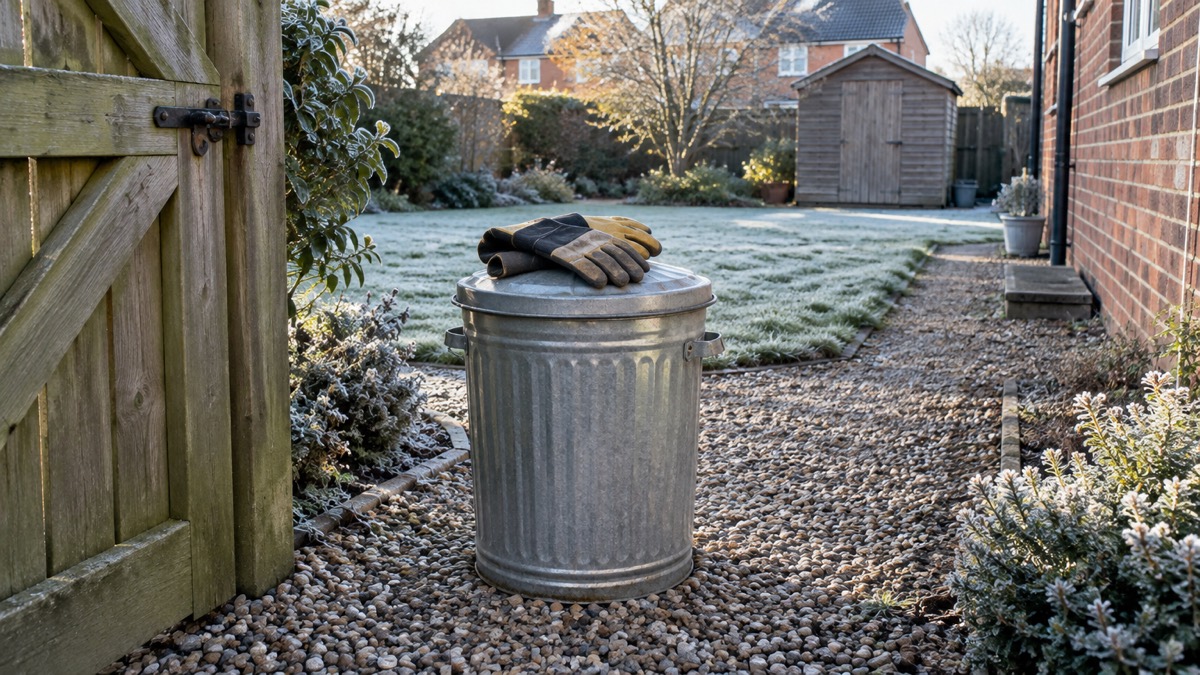
- Always place cooled ash in a metal container with a lid and store it at least one metre away from buildings, sheds or other combustible materials5.
- Never put hot ashes into a bin19.
- Never put hot ashes straight into a dustbin or wheelie bin, as they can melt the plastic and cause a fire27.
Fully cooled wood stove ash has uses: in compost, on icy surfaces, and to protect vegetables from slugs and snails23. Our guide to disposing of ashes safely covers the routine in full.
Servicing, chimney sweeping and support
A stove that is swept and serviced is a stove you can rely on in February. The schedule is simple and worth putting in the diary.
| Task | How often | Who does it |
|---|---|---|
| Chimney swept | At least once a year, and at the end of each burning season1 | A qualified professional, such as those accredited by HETAS or the National Association of Chimney Sweeps5 |
| Stove serviced | Once a year6 | A competent professional, for example HETAS registered11 |
| Flue and chimney inspected | Regularly1 | The sweep or installer |
| Ash cleared, firebricks checked for cracks, glass cleaned, door seal checked, outside cleaned | As part of routine maintenance6 | The household, with any repairs by a qualified person27 |
The chimney should be cleaned at the end of each burning season and at least once during the burning season, and inspected regularly1. National guidance recommends that chimneys serving open fires or wood-burning stoves are swept at least once a year by a qualified professional, such as those accredited by HETAS or the National Association of Chimney Sweeps5. Keep flues clean and well maintained3.
Replacement parts should come from the maker and be fitted properly. Official advice on fire door hardware is a good model: replace the handles, hinges or any hardware, and always have repairs carried out by a qualified individual27. The same applies to a stove door, its rope seal and its firebricks. A door that does not seal lets air in and smoke out.
For the Haven specifically, the maker's manual and the Charnwood brand page are the place to start for parts, servicing information and the terms of any warranty. Charnwood is listed on this site at Charnwood. The guidance here does not set out warranty periods or insurance requirements, so check your own policy and the maker's documentation.
Sources (27)
- Chimneys, open fires and wood-burning stoves, Mid and West Wales Fire and Rescue Service, 2026-10-29
- Carbon monoxide, Greater Manchester Fire and Rescue Service, 2026-10-29
- Safety reminder following spike in wood burner incidents, Devon and Somerset Fire and Rescue Service, 2025-01-21
- Carbon monoxide poisoning, NHS 111 Wales, 2025-10-02
- Chimney Fire Safety Week: residents encouraged to act now to prevent winter fires, North Yorkshire Fire and Rescue Service, 2026-09-08
- Burn better, Department for Environment, Food and Rural Affairs, 2026-10-29
- Power cuts, Food Standards Scotland, 2026-10-25
- Autumn safety, Mid and West Wales Fire and Rescue Service, 2026-10-29
- Strong winds weather warning: information and advice, nidirect, 2026-10-24
- Fuel good campaign, Oxford City Council, 2026-10-29
- Chimney fire safety, Cheshire Fire and Rescue Service, 2026-05-20
- Multifuel Stoves capable of providing both space and water heating., Solid Fuel Association
- Carbon monoxide poisoning, Carmarthenshire County Council, 2023-12-11
- Carbon monoxide, Health and Safety Executive for Northern Ireland, 2026
- Gas safety for owner occupiers, Health and Safety Executive, 2026
- Safety at home, Devon and Somerset Fire and Rescue Service, 2026-04-30
- Caravans and camping, North Yorkshire Fire and Rescue Service, 2026-05-13
- Stay warm safely in winter, Devon and Somerset Fire and Rescue Service, 2026
- Barbecue safety, Cheshire Fire and Rescue Service, 2026-10-29
- Carbon monoxide safety, London Fire Brigade, 2026-10-25
- Fire and summer safety advice, nidirect, 2026-07-03
- Carbon monoxide, North Wales Fire and Rescue Service, 2026
- Chimney safety, Devon and Somerset Fire and Rescue Service, 2024-11-07
- Boat safety, Devon and Somerset Fire and Rescue Service, 2025-06-25
- How to prevent fire in your home, Cumberland Council, 2026
- Weather and health, Public Health Wales, 2026-07-16
- Fire doors, London Fire Brigade, 2026-10-25
 Campingaz Camping Kitchen 2 CV
 Campingaz Party Grill 200
 Campingaz Party Grill 400 CV
 Optimus Gemini II Stove
 Trangia 25 Large Stove
 Trangia 27 Small Stove
 Trangia Triangel Stove
 Trangia Mini Spirit Stove
 Flogas Gold Butane Cylinder
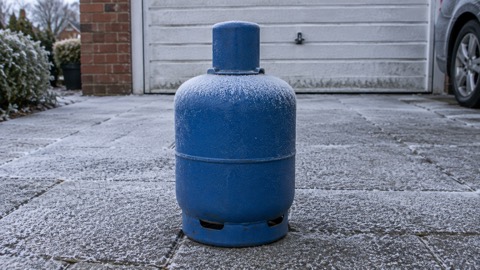 Calor 4.5kg Butane Cylinder
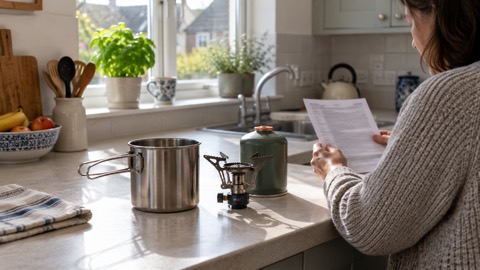 MSR Trail Lite Pot
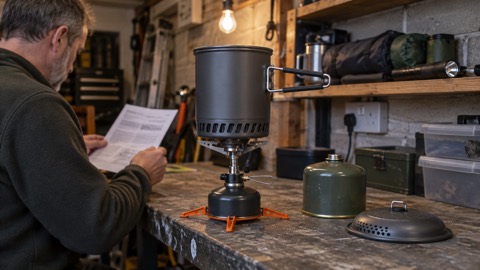 MSR Reactor Stove