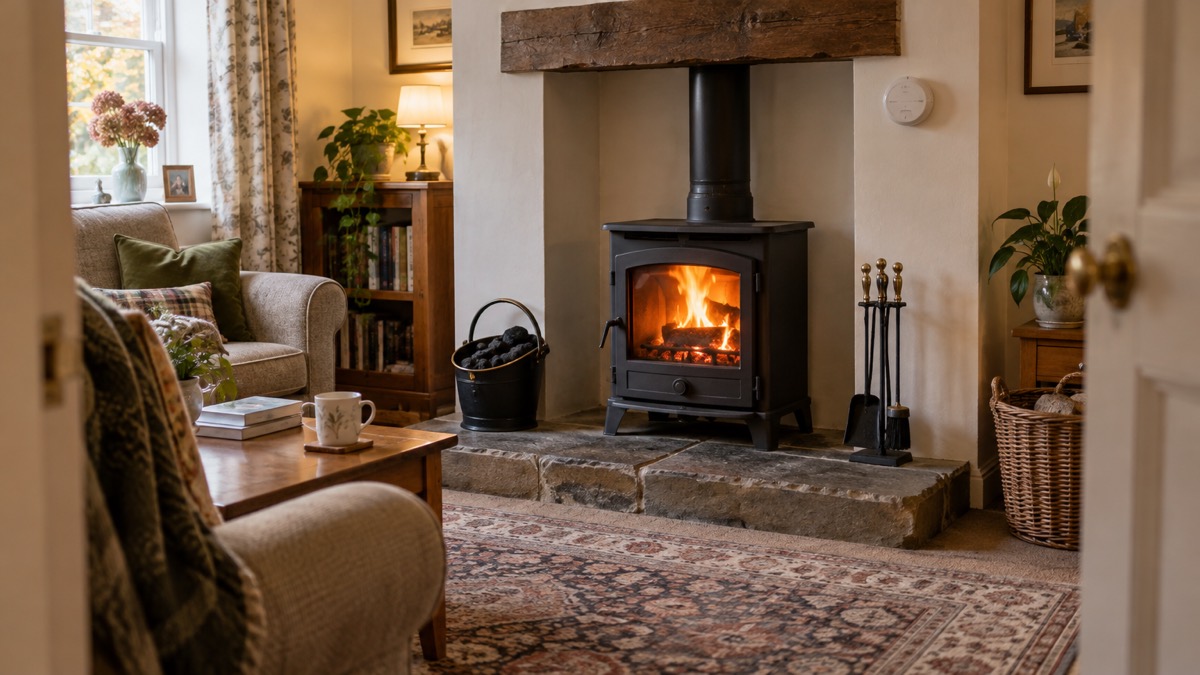
The Charnwood SLX 45 is a wood and anthracite stove with a built-in boiler, made by Charnwood and discontinued from 31 December 2021 as part of the 2022 Ecodesign regulation. That date matters to a household: you cannot buy one new, but if one is already fitted in your home you can keep using it, and in a power cut it can heat a room and run radiators without any electricity at all.
For a household preparing for outages, that is the point of it. The maker's datasheet gives a rated output to the room of 6.0kW on wood (range 4 to 7kW) and 4.6kW on anthracite, and to water 6.3kW on wood (range 4 to 7kW) and 9.7kW on anthracite1. The maker describes the integral boiler as thermostatically controlled, with a heat output sufficient to power 8 to 9 radiators and ample hot water1. The maker's product page gives different figures for the same model, and those are set out below.
What follows is what the stove does for a household in an emergency, how to run it safely, how to keep an existing one in working order, and where to go for parts and advice. It is not a buying guide: the model is no longer sold new.
What the SLX 45 is, and why it was discontinued
The SLX 45 is a solid fuel stove that burns wood or anthracite and carries an integral boiler, so the same fire that warms the room also heats water for radiators. The maker says it is also suitable for underfloor heating1. The maker also states that the SLX 45 has identical looks and features to that of the SLX201, which tells you it belongs to a family of stoves rather than being a one-off design.
It was discontinued from 31 December 2021 as part of the new 2022 Ecodesign regulation. That regulation is the reason a new one is not on sale. Since January 2022, new stoves entering the UK market must be Ecodesign compliant2, and official guidance is clear that any new stove placed on the market in the UK must now be Ecodesign compliant3. Ecodesign stoves produce lower emissions and are more efficient than non-Ecodesign stoves and open fires2.
None of that makes an installed SLX 45 illegal or unsafe. The rules govern what is sold as new. What they do mean is that the model is a fixed point in time: parts and support come from the maker and the trade rather than from a current product line, and any replacement you consider will be a different, Ecodesign-compliant design.
The specifications below are the ones that decide how the stove is installed and what it can do. Where the maker's datasheet and the maker's product page disagree, both figures are given.
| Specification | Figure | Source |
|---|---|---|
| Rated output to room, wood | 6.0kW (range 4 to 7kW) | 1 |
| Rated output to room, anthracite | 4.6kW | 1 |
| Rated output to water, wood | 6.3kW (range 4 to 7kW) | 1 |
| Rated output to water, anthracite | 9.7kW | 1 |
| Radiators supported by the boiler | 8 to 9, plus ample hot water | 1 |
| Underfloor heating | Suitable | 1 |
| Clearance to combustibles, freestanding | Side 200mm, rear 300mm | 1 |
| Clearance to combustibles, insert | Side 50mm, top and rear 200mm | 1 |
| Thermostat | Body temperature sensing | 1 |
The maker's product page lists different output figures for the same model: 6.0kW to the room with a range of 2 to 7kW, 4.6kW to the room with a range of 2 to 5kW, and 6.3kW or 9.7kW to water. If the exact output matters to your installation, ask the maker or your installer which applies to your unit.
Fuel: wood or anthracite, and what not to burn
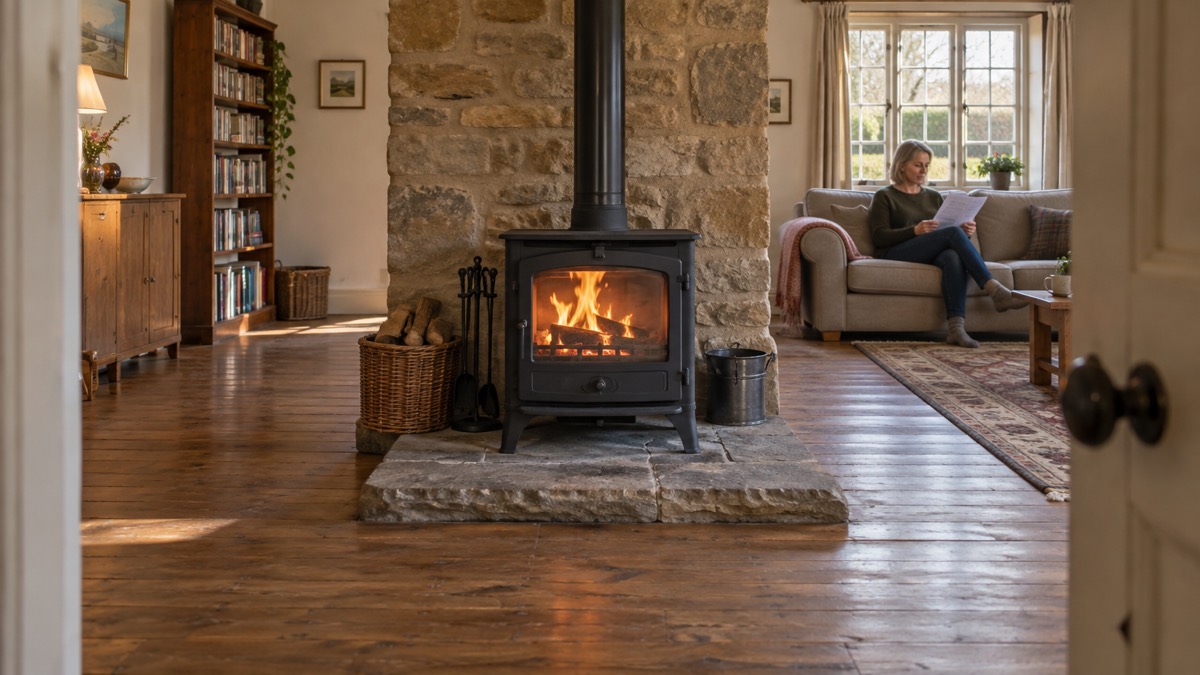
The SLX 45 burns wood or anthracite, and the fuel you choose changes both the output and the smoke. Official guidance recommends fuels from Defra's certified list of manufactured solid fuels, or dry untreated wood, for less smoke and better heat efficiency4. Anthracite is one of the smokeless coals: official guidance suggests considering anthracite, semi anthracite and low volatile steam coal, which produce less harmful particulates and can be used in smoke control areas2.
There is a practical warning attached to fuel choice. Fire and rescue guidance is to use the right type of fuel, because using coal in wood stoves can damage them5. The SLX 45 is a multi-fuel design that the maker rates for anthracite, so the point is to burn what the maker specifies rather than whatever is to hand.
Burning the wrong material is a safety matter, not just a performance one. Fire and rescue services advise always ensuring you burn the correct fuel in open fires and wood burning stoves, because burning other materials can cause toxic fumes and increase the risk of chimney fires and carbon monoxide poisoning6. If you are unsure what you may burn where you live, the rules on smoke control areas set out what is permitted, and what wood and rubbish you should never burn covers the materials to keep out of the fire.
In a smoke control area, you can only burn unauthorised fuels such as wood on Defra exempt appliances, and you can only burn unauthorised fuels in Ecodesign stoves if they also appear on the list of Defra exempt appliances3. Check the status of your appliance and your area before you rely on wood as your main winter fuel.
- Wood: dry, untreated, and from a certified source where possible4.
- Anthracite and other smokeless coals: lower particulates, permitted in smoke control areas2.
- Never: rubbish, treated wood or anything not intended for the appliance, because of toxic fumes, chimney fire and carbon monoxide risk6.
How dry the wood is affects how the stove burns and how much smoke it makes. The guidance on firewood explains what to look for and how to season logs.
Using the stove during a power cut
A stove with no electric controls is one of the few heating appliances that keeps working when the mains supply fails. That is its value to a household plan: it heats the room and, through the boiler, the radiators and hot water, with no pump-driven gas boiler and no fan.
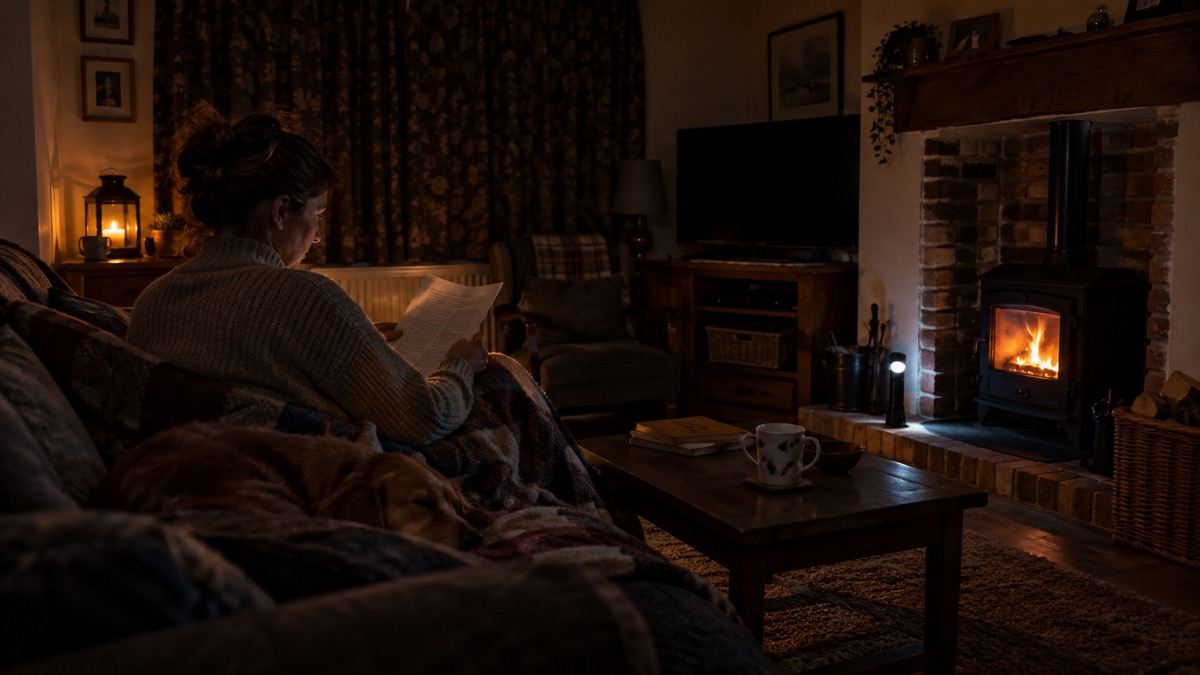
The rest of the house still needs attention. Official advice during a power cut is to turn off items such as irons, ovens, electric fires and fryers, and to unplug your TV and computer, which can be damaged by a surge when power returns7. The same advice appears in the campaign guidance for power cuts8. Do that early, while you still have light to see by.
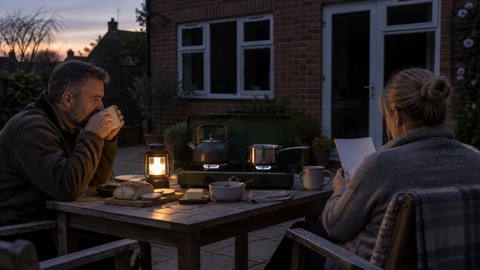
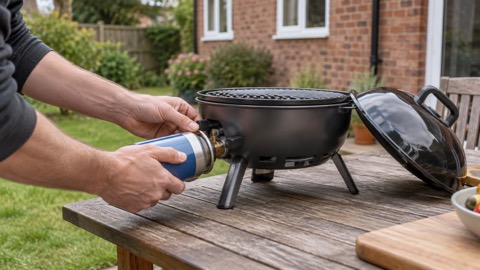
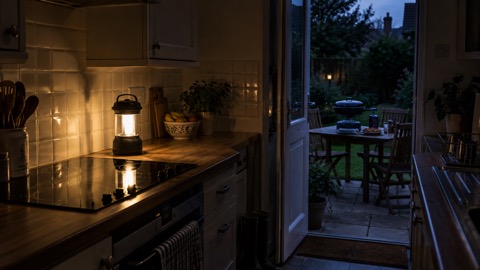
Light is the other thing to sort before dark. Keep a torch handy9, and keep a supply of candles as part of your preparations10. Candles carry a fire risk of their own, so the guidance on emergency lighting is worth reading before you depend on them. If you are cooking as well as heating, official food safety guidance notes that you can cook food and heat water using a camping stove, barbecue or bottled gas stove, checking the manufacturer's instructions for safe use11. Those appliances are for outdoors: see the safety section below.
A simple order of work for the first hour of an outage:
- Turn off irons, ovens, electric fires and fryers, and unplug the TV and computer7.
- Check the stove is drawing properly and the room is ventilated before you add fuel12.
- Set out torches and candles where they will not be knocked over9.
- Decide whether the boiler can run: if the system depends on a pump, do not run the stove hard on the boiler until you know how your system behaves. Ask your installer how your installation is arranged.
- Keep the stove door closed and the fire guarded, and check the room again before you sleep.
Safe use and carbon monoxide
A stove is a controlled fire in the middle of your home, and the risks are smoke, chimney fire and carbon monoxide. The official advice is consistent across the fire and rescue services and the health bodies, and it is worth knowing in full.
Ventilation comes first. If you have a wood burner or other non-electric stove, make sure the room is well ventilated and follow all instructions carefully to avoid carbon monoxide poisoning12. Make sure the ventilation system of your wood stove is clean and has no blockages, to prevent carbon monoxide build-up4. Welsh fire and rescue guidance makes the same point: ensure plenty of air comes into the room at all times and the chimney is clean, which helps burning and reduces airborne particles in the room, which are dangerous to health, especially for people with existing respiratory illness13.
Carbon monoxide is the danger that catches households out, because it has no smell. NHS Wales advice is to get heating and cooking appliances properly installed and keep them well maintained14. The Health and Safety Executive's position is that carbon monoxide can kill, and that safer alternatives such as electrical tools should be used where you can15.
The same rule applies to any fuel-burning device used outdoors: when using fuel-burning devices outdoors, the exhaust should not vent into enclosed shelters19. If you are relying on a stove for heat, keep the carbon monoxide risk in view all winter, not just on the first cold night. The guidance on home emergencies covers what to do if you suspect carbon monoxide, and using a wood burner safely goes through the air controls, door and guards in detail.
Keeping an existing stove in working order
An SLX 45 that is already fitted will outlast most of the appliances around it if it is looked after. The official advice is to have wood-burning and multi-fuel stoves serviced annually20, and to get your stove serviced once a year2. Regular maintenance and servicing, for example annually, and operating in line with the manufacturer's guidance and burning only permitted fuels, is the standard the guidance sets3.
The routine checks are simple and can be done by the household:
- Clean out the ash2.
- Check the firebricks for cracks2.
- Clean the stove glass2.
- Check the seal around the stove door2.
- Clean the outside of the stove or open fire2.
- Keep flues clean and well maintained21.
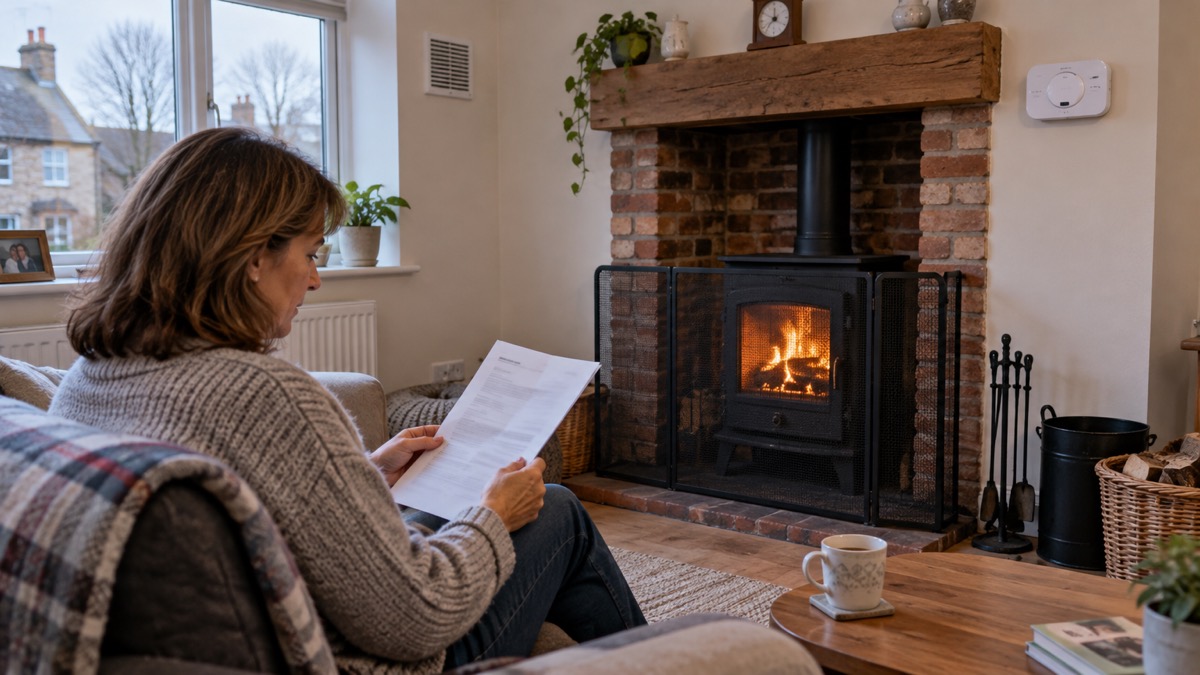
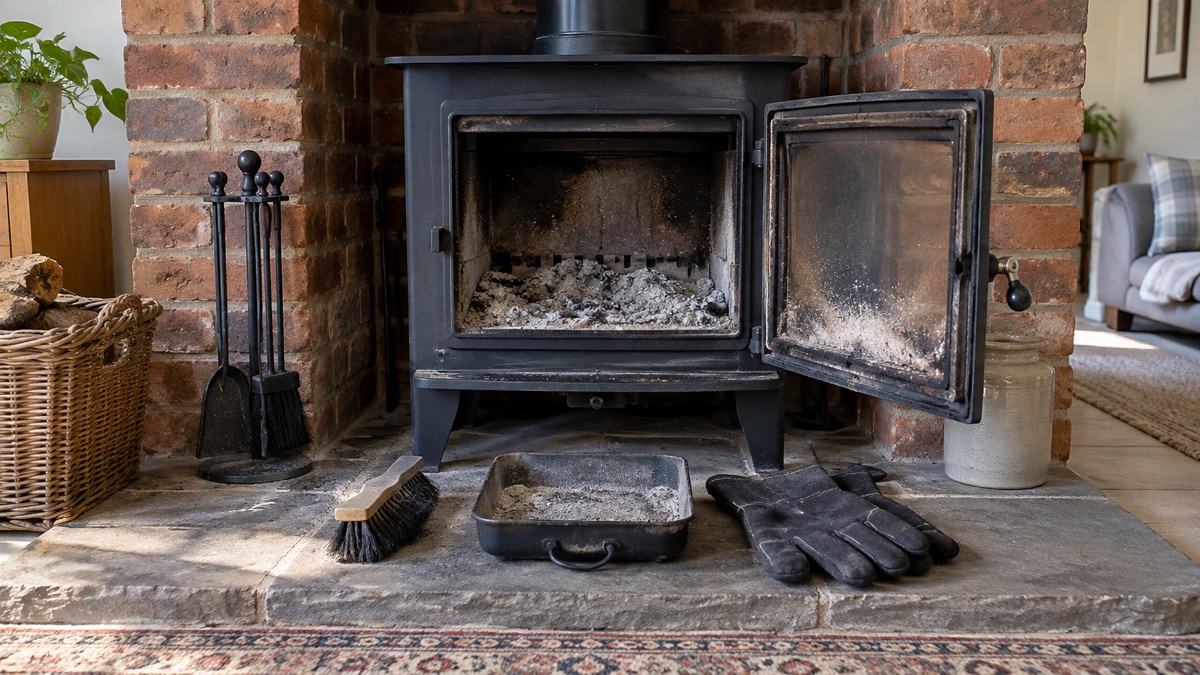
Always ensure you follow the operating and maintenance instructions provided with the appliance22. For the wider system, schedule regular maintenance for all fuel-burning appliances, including furnaces, water heaters, gas stoves, fireplaces and boilers23. If you have a boiler stove, the boiler and feed mechanism should be cleaned and serviced by a competent person as specified by the manufacturer's instructions24.
A stove that is not burning correctly is a warning sign, not a nuisance. If your wood burner is not burning correctly, contact the company or shop that sold it to you, or contact the British Solid Fuel Appliance Manufacturers' Association for advice7. If you are having installation work done, always seek advice from a professional and ensure you use a qualified installer21; more information on qualified woodburning stove installers can be found at HETAS21.
The before-winter checklist is a good place to record the annual service and the flue check, and the wood burner lighting and safety kit checklist lists what to keep beside the stove.
Support, parts and servicing
Because the SLX 45 is out of production, support comes from three places: the maker, the trade body and the installer.
The first call for any fault is the company or shop that sold you the stove, or the British Solid Fuel Appliance Manufacturers' Association for advice7. For installation and any work on the flue or the boiler connection, use a qualified installer, and HETAS holds information on qualified woodburning stove installers21. For the boiler side of the appliance, a competent person should carry out the cleaning and servicing to the manufacturer's instructions24.
Keep a record of the model, the installation date and each annual service. If you sell the house, or if you need a part, that record is what a dealer or installer will ask for first. The maker's own datasheet is the reference for the clearances and outputs of your unit1.
If you are weighing up whether a solid fuel stove belongs in your plan at all, the section on heating and cooking without mains power or gas sets out the alternatives, and wood burners and multi-fuel stoves in a power cut covers how they behave when the electricity fails. The comparison of a wood burner or multi-fuel stove explains the difference between the two types, which matters if you are choosing what to install rather than what to keep.
Sources (24)
- SLX 45 specification datasheet, Charnwood, 2026
- Burn Better, Defra, 2026
- Ready to Burn report, April 2023, Defra, 2023
- Fuel Good campaign, Oxford City Council, 2026
- Heating and gas safety, Scottish Fire and Rescue Service, 2024
- Chimney fire safety, Oxfordshire County Council, 2026
- Chimneys, open fires and wood burning stoves, Mid and West Wales Fire and Rescue Service, 2026
- Power cuts, UK Government, 2026
- Adverse weather events, Llangattock Community Council, 2026
- Strong winds: weather warning information and advice, nidirect, 2026
- Power cuts and food safety, Food Standards Scotland, 2026
- Keeping warm or cool in extreme weather, UK Chief Medical Officers, 2025
- Chimneys, open fires and wood burning stoves (Welsh), Mid and West Wales Fire and Rescue Service, 2026
- Carbon monoxide poisoning, NHS 111 Wales, 2025
- Carbon monoxide, Health and Safety Executive, 2026
- Camping and caravanning safety, Devon and Somerset Fire and Rescue Service, 2026
- Safety outdoors, Cumbria Fire and Rescue Service, 2026
- Stay warm safely in winter, Devon and Somerset Fire and Rescue Service, 2026
- Barbecue safety, Cheshire Fire and Rescue Service, 2026
- Chimney fire safety, Oxfordshire County Council, 2026
- Safety reminder following spike in wood burner incidents, Dorset and Wiltshire Fire and Rescue Service, 2025
- Chimney safety leaflet, Scottish Fire and Rescue Service, 2024
- Safe home heating, Warwickshire County Council, 2026
- Wood pellet storage carbon monoxide risk, Health and Safety Executive, 2012

 Campingaz Camping Kitchen 2 CV
 Campingaz Party Grill 200
 Campingaz Party Grill 400 CV
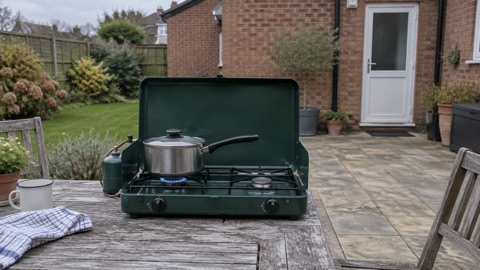 Optimus Gemini II Stove
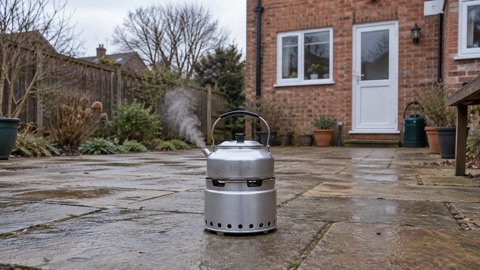
 Trangia 25 Large Stove
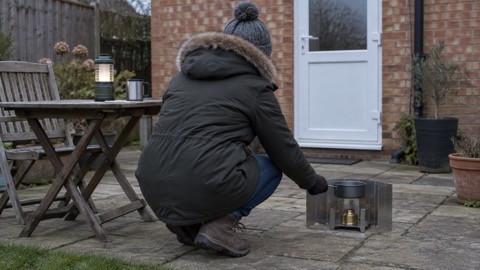
 Trangia 27 Small Stove
 Trangia Triangel Stove
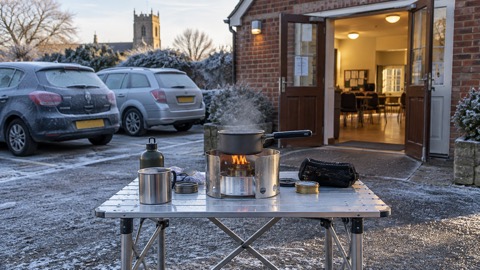 Trangia Mini Spirit Stove
 Flogas Gold Butane Cylinder
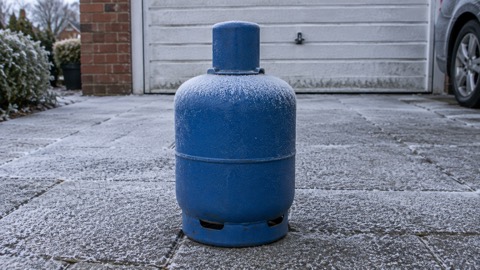 Calor 4.5kg Butane Cylinder
 MSR Trail Lite Pot
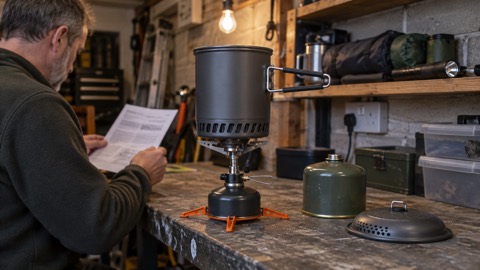 MSR Reactor Stove