New data from the Children's Burns Trust, released for National Burns Awareness Day on 15 October, showed that burn injuries from hot water bottles rose 11 per cent in 2024 compared to 2023, with nearly 1,000 cases in 2024, the highest annual total in more than 20 years1. The figures were set out by the Royal Society for the Prevention of Accidents (RoSPA), which said injuries have doubled since 2019, showing a sustained five-year increase1.
In response to concerns raised by RoSPA and members of the public who have suffered serious injuries, the British Standards Institution (BSI) has reinstated the British Standards for these products, meaning manufacturers now have clear guidance on how to ensure the hot water bottles and microwaveable personal warmers available for sale are safe1. The BSI has also appointed RoSPA Head of Policy Adrian Simpson as Chair of the Hot Water Bottles and Microwaveable Personal Warmers Committee, which has the authority to review and revise both standards following full public consultation as needed to reflect industry developments and safety requirements1.
Adrian Simpson said:
"We're pleased that the British Standards for hot water bottles and microwaveable warmers have been reinstated, giving manufacturers clear guidance to improve product safety. RoSPA is proud to lead this work as Chair of the standards committee, helping to ensure these products reflect the latest safety requirements. However, these items can still pose risks - especially older ones - so we urge the public to follow simple safety steps to stay warm without injury."
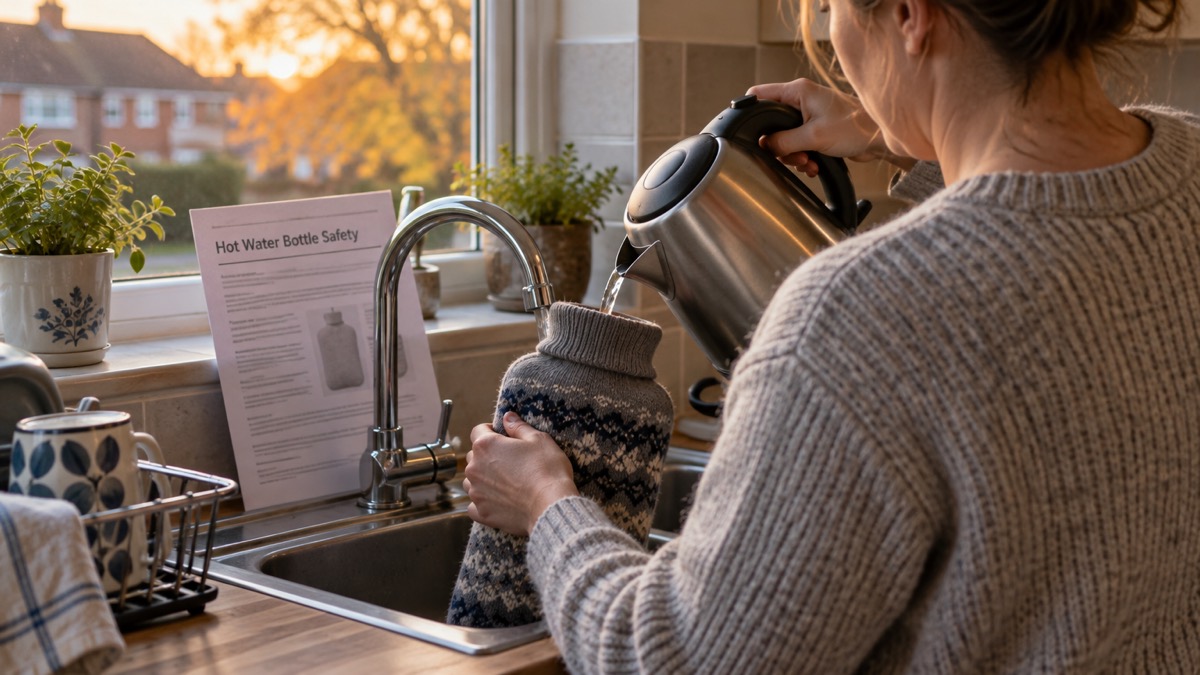
RoSPA said most hot water bottles have a date wheel, a small circular mark resembling a daisy usually stamped near the neck, which indicates the month and year of manufacture, and that as bottles age the materials can degrade, increasing the risk of splitting or leaking1. It advised inspecting a bottle or warmer for cracks, splits or signs of wear before each use and replacing it if in doubt, following the manufacturer's safety instructions, filling hot water bottles to a maximum of two-thirds capacity with hot rather than boiling water, using a fabric cover or wrapping the bottle in a towel to prevent direct contact with skin, and avoiding sitting or lying on them because pressure can cause the bottle to burst or leak1. For microwaveable warmers, it said to heat only for the recommended time and never reheat before the item has fully cooled1.
Why it matters for households
The figures cover burns treated in 2024 and were published on 15 October 2025, as colder weather draws in and households begin using hot water bottles and microwaveable warmers again1. RoSPA said the reinstated standards give manufacturers clear guidance, but that these items can still pose risks, especially older ones, and urged the public to follow simple safety steps to stay warm without injury1. Its published checks cover identifying a bottle's age from the date wheel, inspecting for damage before each use, filling limits, using a cover, avoiding pressure on the bottle and heating times for microwaveable warmers1. The practical steps for filling, checking and replacing bottles are set out in the guide to hot water bottles, with background on choosing between a hot water bottle or wheat bag and general guidance on preventing accidents at home.
What happens next
RoSPA said it will consider the issue in future engagement with policymakers and standards bodies1. The BSI committee chaired by Adrian Simpson has the authority to review and revise both standards following full public consultation as needed1. No dates for any review or consultation have been reported.
 Hot Water Bottle or Wheat Bag
 Preventing Accidents at Home
 Hot Water Bottle Safety