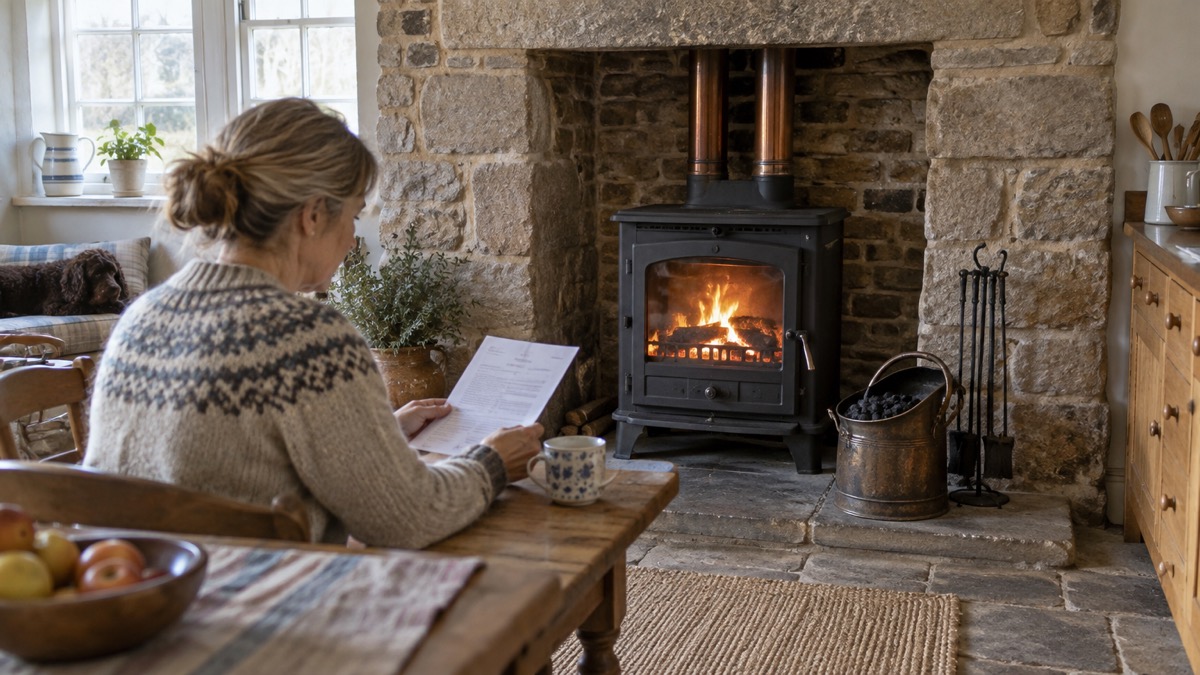
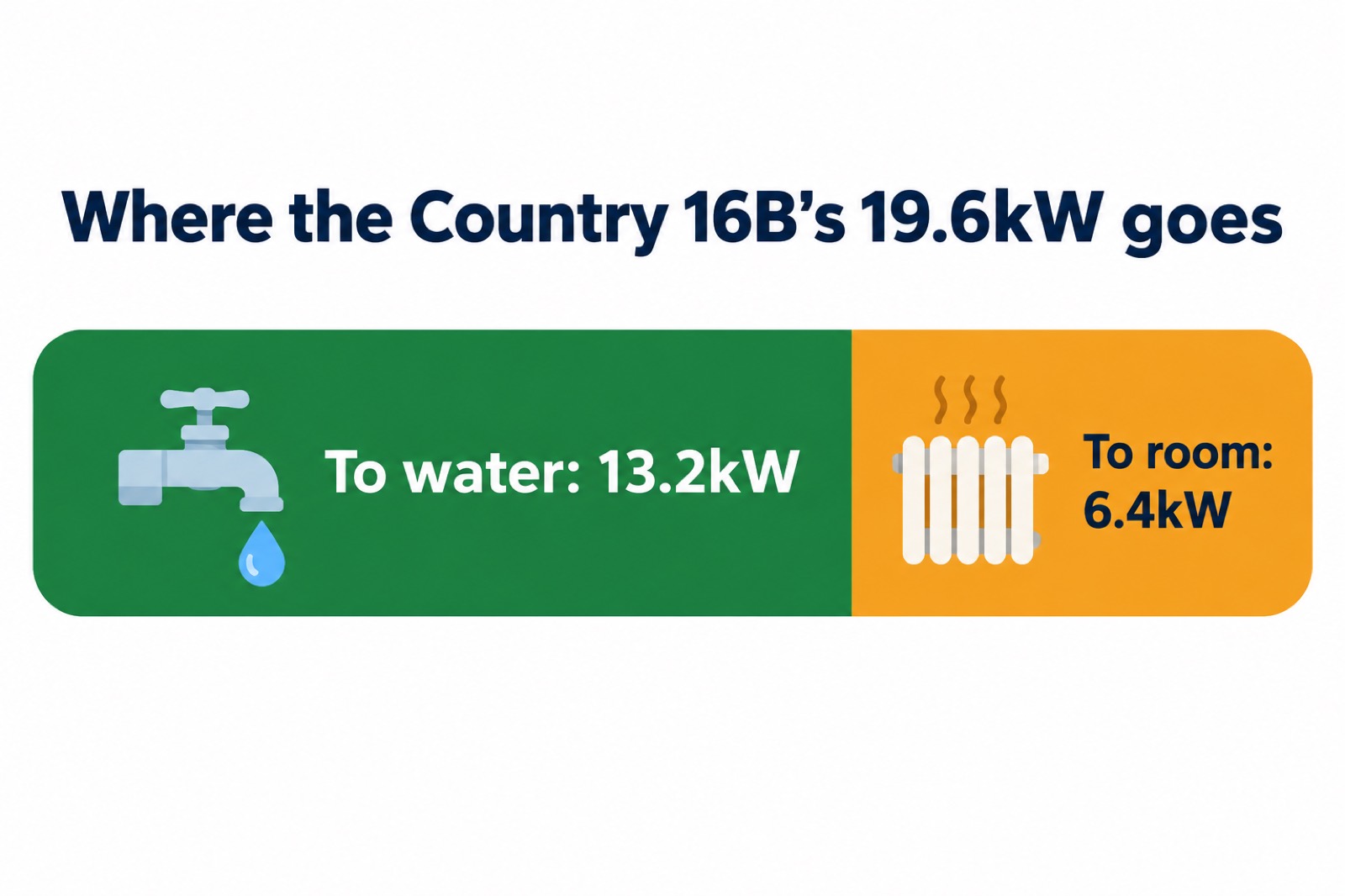
The Country 16B MF is a multi-fuel boiler stove made by Charnwood. It is a single appliance that does two jobs: it heats the room it stands in and it heats water for a cylinder and radiators. The maker gives it a total output of 19.6kW, split into 13.2kW to the water and 6.4kW to the room, with the room figure ranging from 2kW to 8kW depending on how it is run1. Charnwood says it delivers heat suitable for domestic hot water plus around 10 radiators1.
The first thing a household needs to know is that you cannot buy one new. Charnwood states that, as part of the new 2022 Ecodesign regulation, the stove was discontinued from 31 December 20211. Since January 2022, new stoves entering the UK market must be Ecodesign compliant2. That does not make an existing one useless. It does mean that anyone buying secondhand is buying a used appliance, and should treat condition, flue suitability and safe installation as the deciding questions rather than the model name.
For an emergency-preparedness plan, the stove's value is easy to state and easy to overstate. It burns solid fuel without needing mains electricity, so it can keep one room warm when the power fails. Its water side is a different matter, because a boiler stove relies on pumps and controls to move heat around a house, and most boilers use electricity for pumps, fans and electronic controls3. Plan for the room heat; do not count on the radiators.
Discontinued under Ecodesign rules, so what does that mean for a buyer?
The Country 16B MF left the Charnwood range at the end of 2021. The maker's own wording is that "as part of the new 2022 Ecodesign regulation this stove will be discontinued from 31 December 2021"1. The rule behind that is straightforward: since January 2022, new stoves entering the UK market must be Ecodesign compliant2, and any new stove placed on the market in the UK must now be Ecodesign compliant4.
For a household, this changes the buying question rather than the using question. A new Ecodesign stove is the only kind a retailer can sell as new. A Country 16B that is still in use is a pre-regulation appliance, and the practical checks are the ones that apply to any secondhand solid-fuel stove:
- Condition of the body and door. Plate steel, cast iron, fire brick and ceramic glass all wear, and a cracked fire brick or a warped door lets air in where it should not go1.
- Flue and chimney suitability. The stove has to connect to a chimney that is clean, sound and the right size for it. Have the installation checked by a competent person before first use.
- Hearth and clearances. The maker states it meets UK building requirements for installation with a 12mm non-combustible hearth1. That is a minimum construction detail, not a substitute for a proper installation survey.
- Whether it is the MF or the WB. The wood-only Country 16B WB was discontinued on the same date under the same regulation5. Check the data plate so you know which fuel the appliance was built for.
There is no recall in the information available here, and nothing to suggest owners of an existing stove should stop using it. The sensible position is that an installed, serviced, correctly flued stove can keep doing its job, and that a stove of unknown history should be inspected before it is lit in earnest.
Output: 19.6kW in total, split between water and room
The headline figure is 19.6kW, and the split is the part that matters. Charnwood gives 13.2kW to the water and 6.4kW to the room, and separately lists the room output as 6.4kW with a range of 2kW to 8kW1. Read together, that means the appliance is designed mainly as a water heater with a useful room-heating side effect, not the other way round.
That shape suits a house with a cylinder and radiators and a household that wants hot water and warmth from one fire. It suits an emergency plan less neatly, because the larger share of the output only reaches the house if water can be circulated.
| Output | Figure | What it does for the household |
|---|---|---|
| Total | 19.6kW | The appliance's combined rated output1 |
| To water | 13.2kW | Heats domestic hot water and feeds radiators1 |
| To room | 6.4kW, range 2kW to 8kW | Warms the space the stove stands in1 |
The range is worth understanding rather than treating as a single number. A stove run gently gives nearer the bottom of the 2kW to 8kW band; run hard, it approaches the top. Running it hard for long periods is not free: overfiring is the result of the production of an excessive amount of heat and can cause irreparable damage to the appliance or even a chimney fire6. The room figure you can rely on in a cold snap is the one you can sustain without driving the stove beyond its limits.
What it can heat: hot water and around 10 radiators
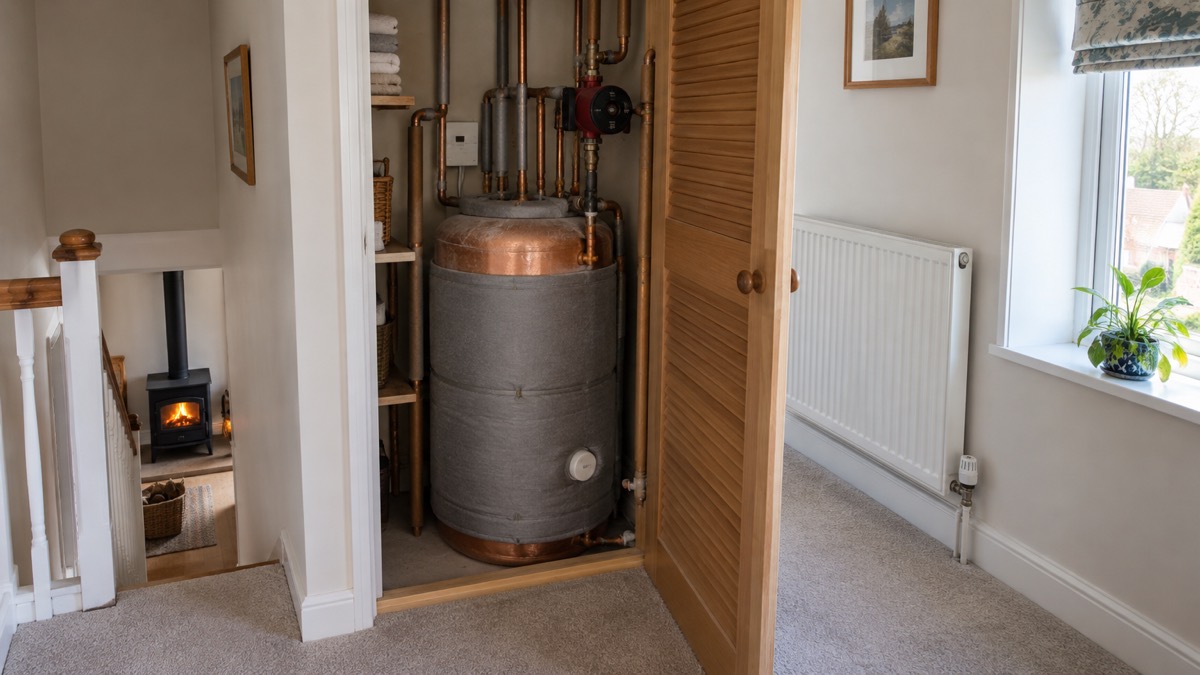
Charnwood describes the Country 16B MF as delivering heat suitable for heating domestic hot water, plus around 10 radiators1. That places it at the larger end of the boiler-stove market. Multi-fuel stoves with boilers range from small units that supply domestic hot water only to large output units capable of heating radiators and domestic hot water7. Decorative and free-standing stoves are capable of providing both space and water heating7, and some range cookers have integral boilers making them capable of providing central heating and hot water too8.
For a household weighing up a boiler stove, the useful way to think about it is by what it replaces. A stove of this size is doing the work of a conventional boiler for part of the year, which is why the water output is so much larger than the room output. The trade-off is that the whole system depends on the water circuit working: the stove, the cylinder, the pump, the controls and the radiators are one machine, and the weakest part sets the limit.
In an emergency, that dependency is the thing to plan around. If you want a stove that keeps a room warm with no moving parts, a boiler stove is not the simplest choice; the wood burner and multi-fuel stove guide sets out how these appliances behave when the power is off. If you already have a 16B, the one warm room approach is the practical fallback: concentrate on the room the stove serves and let the rest of the house cool.
Fuels it burns, and how Cleanburn Airwash helps
The MF in the name means multi-fuel. Charnwood states the stove is thermostatically controlled with a multi-fuel riddling grate, allowing a wide range of solid fuels to be burnt1. The main advantage of a multifuel stove is that it can burn a range of solid fuels as well as wood7. The wood-only alternative in the same range was the Country 16B WB5.
Burning a range of fuels is not the same as burning anything. Two rules sit on top of the maker's specification.
Burn legal, dry fuel. The Ready to Burn mark helps consumers to easily identify solid fuels that are legal to burn at home in compliance with the new Air Quality Regulations9. In a smoke control area, what you may burn is restricted further; the smoke control areas guide explains where the rules apply and what they allow. The firewood guide covers how dry logs should be and how to season them.
Give it air and keep the flue clean. Welsh fire and rescue guidance is to ensure plenty of air comes into the room at all times and that the chimney is clean, which helps burning and reduces airborne particles in the room, which are dangerous to health, especially for people with existing respiratory illness10. Fuel-burning appliances include ovens, stoves, cookers, fires, wood burners, heaters and boilers11, and where fuel-burning equipment is used indoors there must be good ventilation12.
Cleanburn Airwash is the maker's name for the air-wash feature on this stove1. Its job is to keep the glass clearer by passing air across it, which helps you see the fire and judge how it is burning. It is not a substitute for ventilation, a clean chimney or dry fuel, and it does not remove the need for the room to have a permanent air supply.
Overnight burning on a deep fire bed, and the risks that come with it
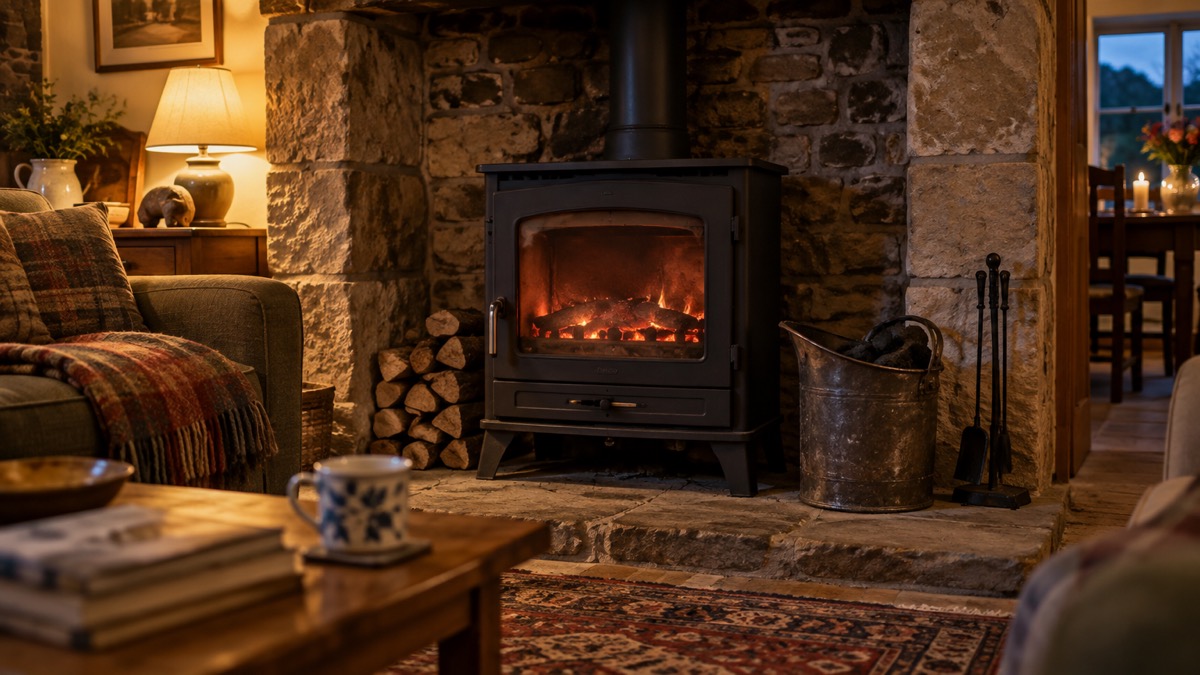
Charnwood says the stove's deep fire bed allows solid fuel to be loaded up for excellent overnight burning performance1. For a household facing a winter power cut, that is the single most useful property of the appliance: one loading in the evening can hold a fire through the night, so the room is still warm in the morning and the fire does not have to be relit from cold.
Overnight burning also carries the best-known risk in solid-fuel heating. North Wales fire and rescue guidance lists overnight burning, or smouldering wood for long periods in wood stoves, as a cause of chimney fires9. The same service advises that if the wood burner has been used slowly, overnight for instance, this should be followed by a period of faster burning to dry out any creosote and to warm up the chimney again10. In practice that means a routine: burn slowly overnight if you need to, then run the stove hotter for a while the next day rather than letting it smoulder indefinitely.
A second risk is a fire box that is overfilled. Stove-maker guidance lists an over loaded fire box laid onto a poor ember bed among the causes of a stove leaking smoke when lit13. Load the fire bed evenly, keep the fuel behind the log retainer, and do not cram the box to stretch the burn.
The fire and rescue service advice that goes with any solid-fuel appliance is short and worth repeating:
- Have wood-burning and multi-fuel stoves serviced annually14.
- Keep the chimney clean and swept on a proper schedule; the chimney sweeping guide covers how often.
- Know the signs of a chimney fire and what to do; the chimney fires guide sets them out.
- Never use barbecues or camping stoves in the countryside or light an open fire there, because they can quickly spread and get out of control15.
Materials, colours and what the specification tells you
The Country 16B MF is built from plate steel, cast iron, fire brick and ceramic glass1. Each material has a job: the steel forms the body and water jacket, the cast iron takes the heat at the grate and door, the fire brick lines the firebox and protects the steel, and the ceramic glass lets you see the fire with the door shut. On a secondhand stove, those are the parts to inspect, because they are the parts that fail.
Charnwood offers a choice of eight colours: Black, Almond, Blue, Bronze, Brown, Green, Gunmetal and Pewter1. Colour is a finish and nothing more. It does not change the output, the fuel the stove takes or how it behaves in a power cut, so it should never be the reason to accept a stove with a doubtful flue or a cracked fire brick.
| Specification | Detail |
|---|---|
| Type | Multi-fuel boiler stove1 |
| Total output | 19.6kW1 |
| Output to water | 13.2kW1 |
| Output to room | 6.4kW, range 2kW to 8kW1 |
| Heating capacity | Domestic hot water and around 10 radiators1 |
| Fuel | Multi-fuel riddling grate, wide range of solid fuels1 |
| Materials | Plate steel, cast iron, fire brick, ceramic glass1 |
| Colours | Eight: Black, Almond, Blue, Bronze, Brown, Green, Gunmetal, Pewter1 |
| Hearth | 12mm non-combustible hearth, meeting UK building requirements1 |
| Air-wash | Cleanburn Airwash Technology1 |
| Status | Discontinued from 31 December 20211 |
The 12mm hearth figure is a construction requirement, not a clearance. It tells an installer what the stove must stand on; it does not tell you how far it must sit from a wall, a curtain or a piece of furniture. Those distances come from the installation instructions and the building regulations, and they are the reason a solid-fuel appliance should be fitted and signed off by a competent person rather than dropped into place.
Using it in a power cut: what still works and what does not
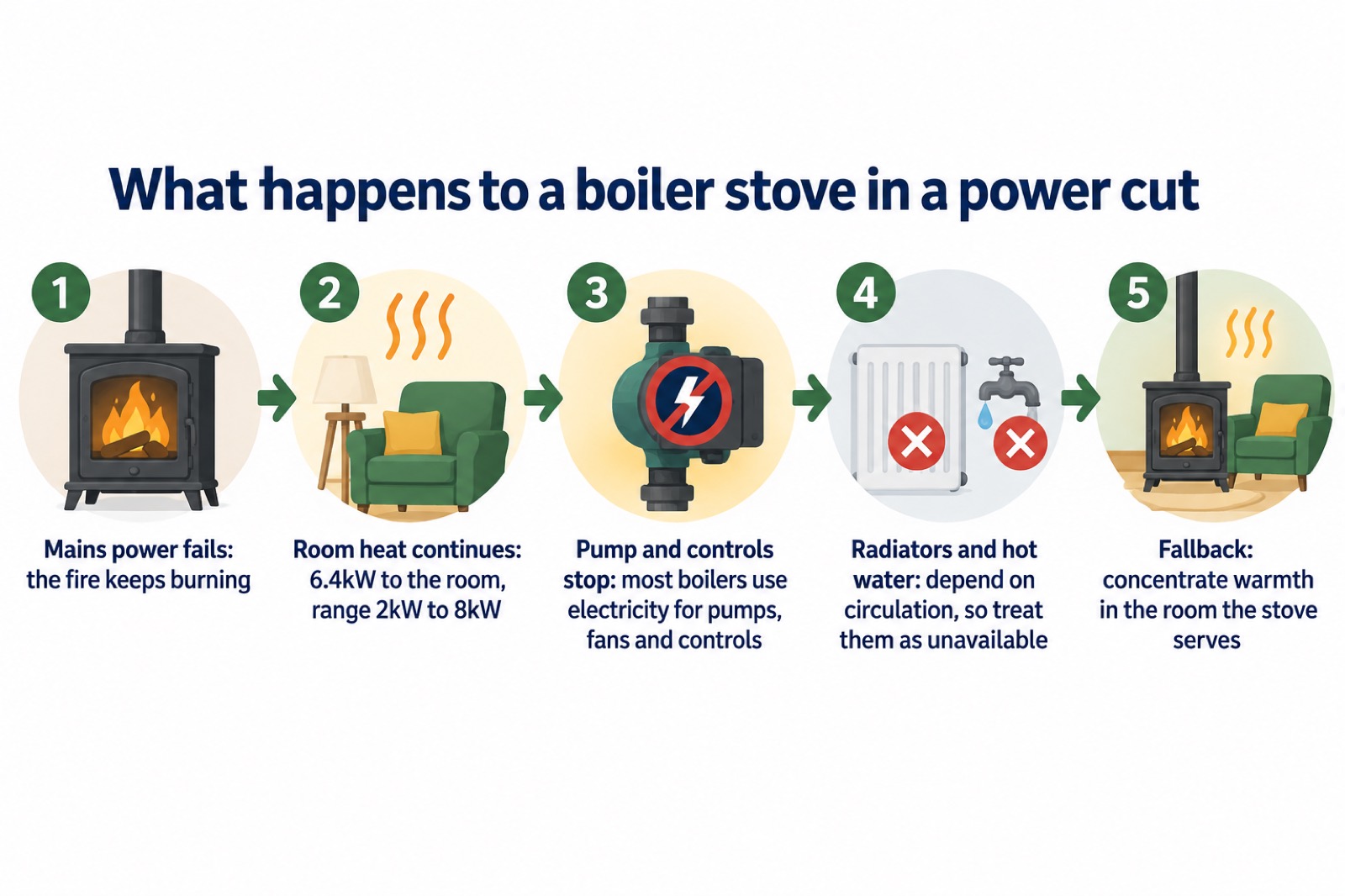
The stove needs no electricity to burn, so the fire itself keeps going when the mains fails. The house around it does not. Gas ovens, boilers, heat pumps and home internet will not work without power, and the mains water supply could also be disrupted during and after power cuts16. Most boilers use electricity for pumps, fans and electronic controls, so a boiler may not work during a power cut and should begin to work when the electricity is restored3.
For a boiler stove, that has a specific consequence. The 13.2kW water output depends on a pump moving water to the cylinder and radiators. With no power, that circulation stops, and the reliable benefit shrinks to the 6.4kW room figure, or whatever part of the 2kW to 8kW range you are running at1. The room the stove stands in stays warm; the rest of the house does not.
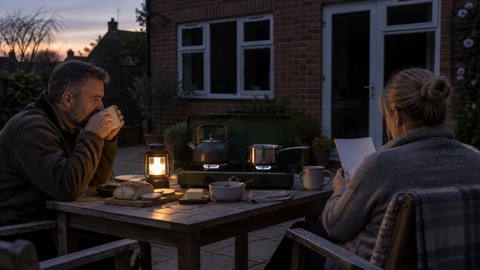
Plan the rest of the household around that. Electric and induction cookers will not work during a power cut, but gas cookers may continue to function17. If you have an electric oven and hob, it probably will not work, and you could use a camping stove or portable gas stove to boil water or cook food on, used outdoors18. The camping stoves guide and the camping stove safety guide cover that choice, and the hobs in a power cut guide deals with gas hobs.
Two more habits belong with a stove in an outage. Keep a supply of candles is standard power-cut advice19, but candles are also listed by fire and rescue services as a cause of house fires20, so use torches as the main light and treat any flame as something to watch. And check your smoke alarms; the home emergencies guide covers alarms, carbon monoxide and what to do if one sounds.
Keeping it ready between emergencies
A stove that has sat unused for a season is not ready. The work of keeping a Country 16B usable is mostly annual and mostly cheap compared with the cost of discovering a problem in January.
- Service it annually. Fire and rescue advice is to have wood-burning and multi-fuel stoves serviced annually14.
- Sweep the chimney on schedule. A clean chimney helps burning and reduces particles in the room10. The chimney sweeping guide gives the intervals.
- Store dry, legal fuel. Look for the Ready to Burn mark when buying9, and keep logs dry; the firewood guide explains seasoning.
- Check the fire brick and door seal. These are the wear parts, and they are what the firebox is built from1.
- Keep the hearth clear. Flammable items left too close to a heat source have started fires; one kitchen fire began after flammable items were left too close to the gas hob and ignited21.
- Run a before-winter check. The before-winter checklist gathers the stove, flue and fuel tasks into one list.
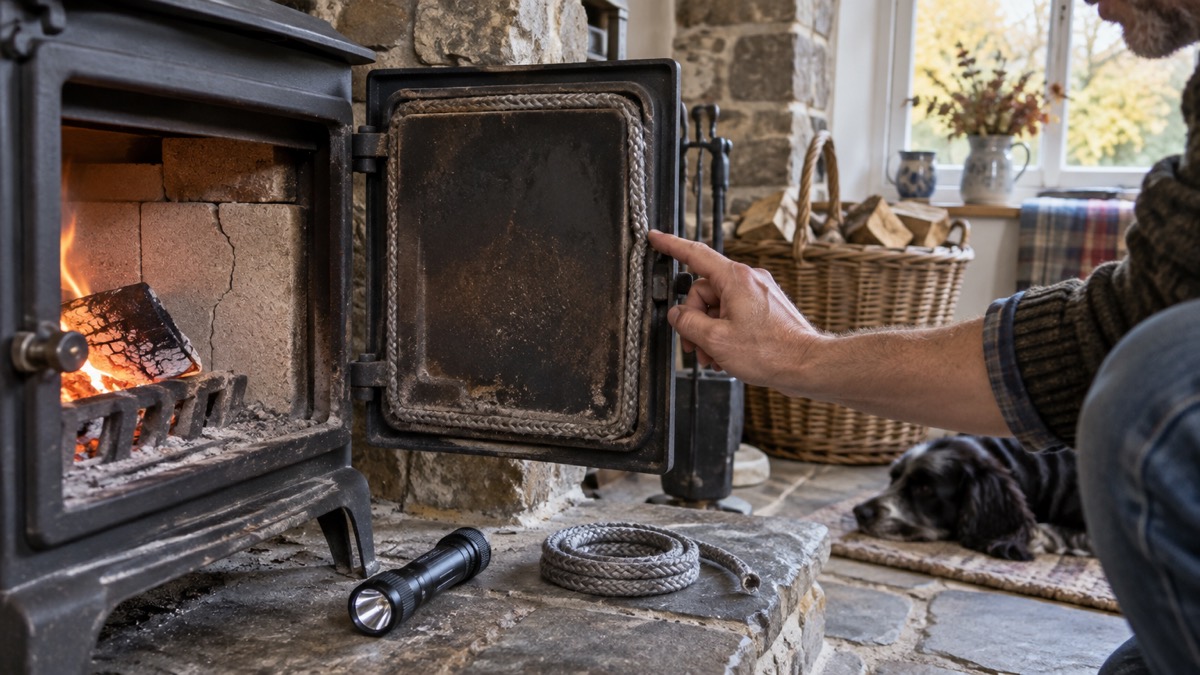
The stove lighting and safety kit checklist lists what to keep beside the stove: dry kindling, a lighter or matches, a torch, a fire guard and a means of dealing with ash. Ash should be cold before it goes anywhere near a bin; the ash disposal guide covers how.
Support, spares and where to get help
Charnwood is the maker, and its product page is the reference for this model's specification and its discontinued status1. For an appliance that is out of production, the practical support questions are about spares and about who can work on it: fire brick, door seals and glass are the parts that wear, and a competent solid-fuel installer or sweep is the person to ask about the flue and the firebox.
If the stove fails during an emergency, the household still needs warmth. The heating and cooking section covers the alternatives, from portable heaters and heater safety to hot water bottles and clothing and bedding. If money is tight or the household includes someone who would struggle in the cold, the extra help guide sets out the support available, and the warm spaces guide explains how to find a warm hub nearby.
For the power cut itself, call 105 to report or get information about a power cut22. Keep the number somewhere you can find it in the dark, and read the power cuts guide before the next one.
Sources (22)
- Country 16B MF product page, Charnwood, 2021-12-31
- Burn better, Defra UK-AIR, 2022-01
- Power cuts, SGN, 2026
- Ready to Burn, Defra UK-AIR, 2023-10
- Country 16B WB product page, Charnwood, 2021-12-31
- How to avoid overfiring your wood burner, HETAS, 2026
- Multi-fuel stoves, Solid Fuel Association, 2026
- Home guide to domestic liquid fuel fired heating and cooking appliances, OFTEC, 2021-05
- Chimney fire safety campaign, North Yorkshire Fire and Rescue Service, 2026
- Chimneys, open fires and wood burning stoves, Mid and West Wales Fire and Rescue Service, 2026-10-29
- Indoor air pollution, NHS Inform, 2026-08-05
- Strong winds: weather warning information and advice, nidirect, 2026-10-24
- What to do if your stove is leaking smoke when lit, Arada Stoves, 2026-10-28
- Chimney fire safety, Oxfordshire County Council, 2026
- Be wildfire aware in the countryside, Surrey County Council, 2026-09-07
- Power cuts, UK Government Be Ready campaign, 2026-10-21
- Food safety in a power cut: advice for consumers, GOV.UK, 2023-07-26
- Prepare for a power cut, Citizens Advice, 2023-11-14
- Strong winds and heavy rain: warning information and advice, nidirect, 2026-01-27
- In the event of a fire, Cheshire Fire and Rescue Service, 2026-10-13
- Reminder issued about working smoke alarms, Dorset and Wiltshire Fire and Rescue Service, 2019-01-09
- Power cut 105, Power Cut 105, 2026-10-25
 Campingaz Camping Kitchen 2 CV
 Campingaz Party Grill 200
 Campingaz Party Grill 400 CV
 Optimus Gemini II Stove
 Trangia 25 Large Stove
 Trangia 27 Small Stove
 Trangia Triangel Stove
 Trangia Mini Spirit Stove
 Flogas Gold Butane Cylinder
 Calor 4.5kg Butane Cylinder
 MSR Trail Lite Pot
 MSR Reactor Stove