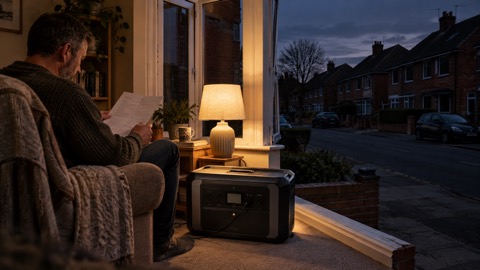
If you are weighing up a Jackery HomePower 2000 Plus v2 for the next power cut, the short answer is this: it is a portable battery unit that stores 2048 Wh and can deliver 2400 W of mains power through its AC outlets, and it can be expanded with add-on battery packs up to 12kWh1. For a household, that means it can keep a fridge, the Wi-Fi router, lights and phone chargers going through an outage, and with expansion it can do so for longer.
It is not a generator and it does not burn fuel, so it produces no exhaust fumes and can be used indoors, which matters in a flat or a house without a safe outdoor spot for a petrol set. What it cannot do is run indefinitely: every hour of use draws down a fixed store of energy, and when that is gone it has to be recharged from the mains, from a solar panel or from another source.
This page sets out what the unit is, what the maker says it can run and for how long, how to charge, use and store it so it is ready when you need it, and the safety points that matter in an emergency. It is written for an ordinary UK household with no prepping background, and every figure comes from the maker's own product information.
What the HomePower 2000 Plus v2 is
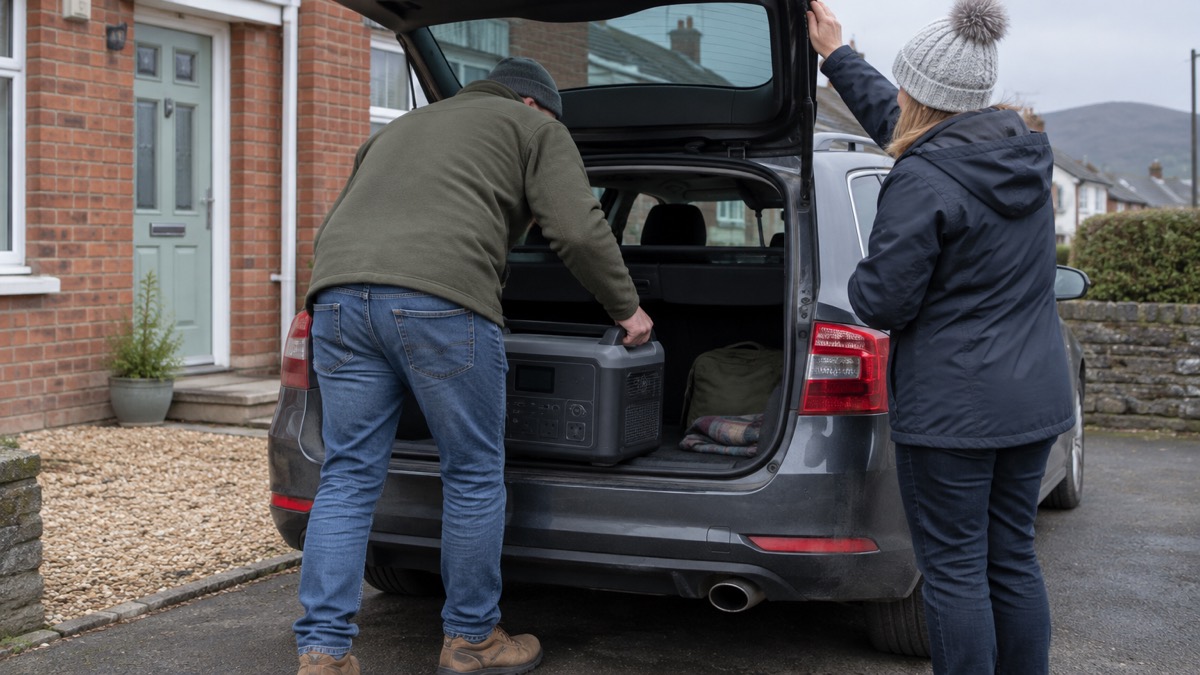
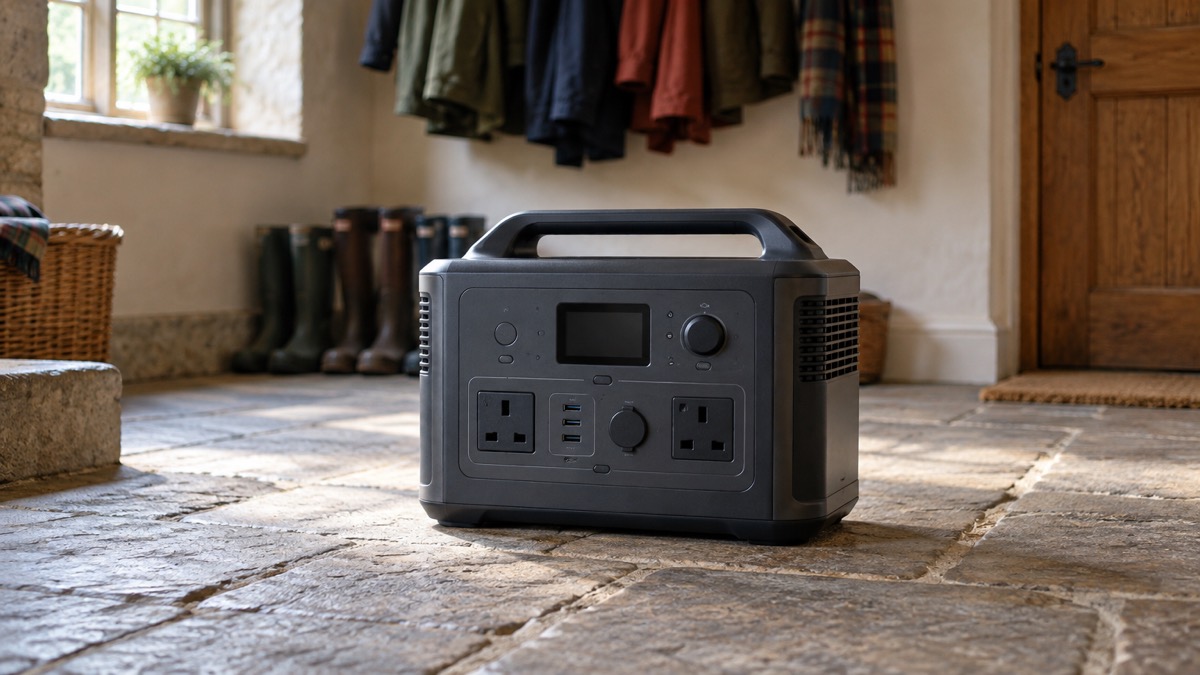
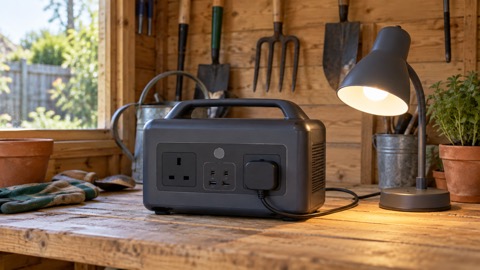
The HomePower 2000 Plus v2 is a portable power station: a large rechargeable battery in a carry case with mains sockets, USB ports and a 12V output built in. The maker describes it as the lightest expandable 2kWh system on the market, with a 34% weight reduction from the previous generation, and says it is 21 lbs lighter than its predecessor2. That matters for prepping because a unit you can actually lift is one you can move to where it is needed, whether that is the kitchen during a power cut or a neighbour's hallway during a flood.
The unit is built around LFP battery cells, which the maker rates at 6000+ cycles and projects to last 16 years on a daily cycle of one charge and discharge2. For a household that uses it occasionally rather than every day, that cycle count is generous headroom.
It is designed to be expanded. Each unit supports connecting up to five Jackery Battery Pack 2000 Plus v2 units, taking total capacity from 2,048Wh up to 12kWh2. The maker is explicit that the HomePower 2000 Plus V2 is only compatible with the Battery Pack 2000 Plus V2, and that the earlier Battery Pack 2000 Plus is not compatible2. If you are buying an expansion pack, check the exact model name.
The maker also describes Smart Energy Management and Jackery Priority Routing, which it says keep essential circuits running during shortages based on your priority2. In an emergency, that is the feature that lets you decide what matters most, such as the fridge and the router, and let the rest wait.
Specifications
The maker's figures for the unit are set out below. Where a specification is not given in the maker's material, it is left out rather than estimated.
| Specification | Maker's figure |
|---|---|
| Battery capacity | 2048 Wh1 |
| AC output | 2400 W1 |
| Expanded capacity | 12kWh with up to five Battery Pack 2000 Plus v2 units2 |
| Battery chemistry | LFP cells, 6000+ cycles2 |
| Projected battery life | 16 years on a daily cycle2 |
| USB-C output | 140W2 |
| USB-C output | 30W2 |
| USB-A output | 18W2 |
| DC input | 2×DC8020 ports2 |
| Noise in Quiet Mode | 30dB at 1 metre2 |
| Weight saving | 21 lbs lighter than its predecessor; 34% weight reduction2 |
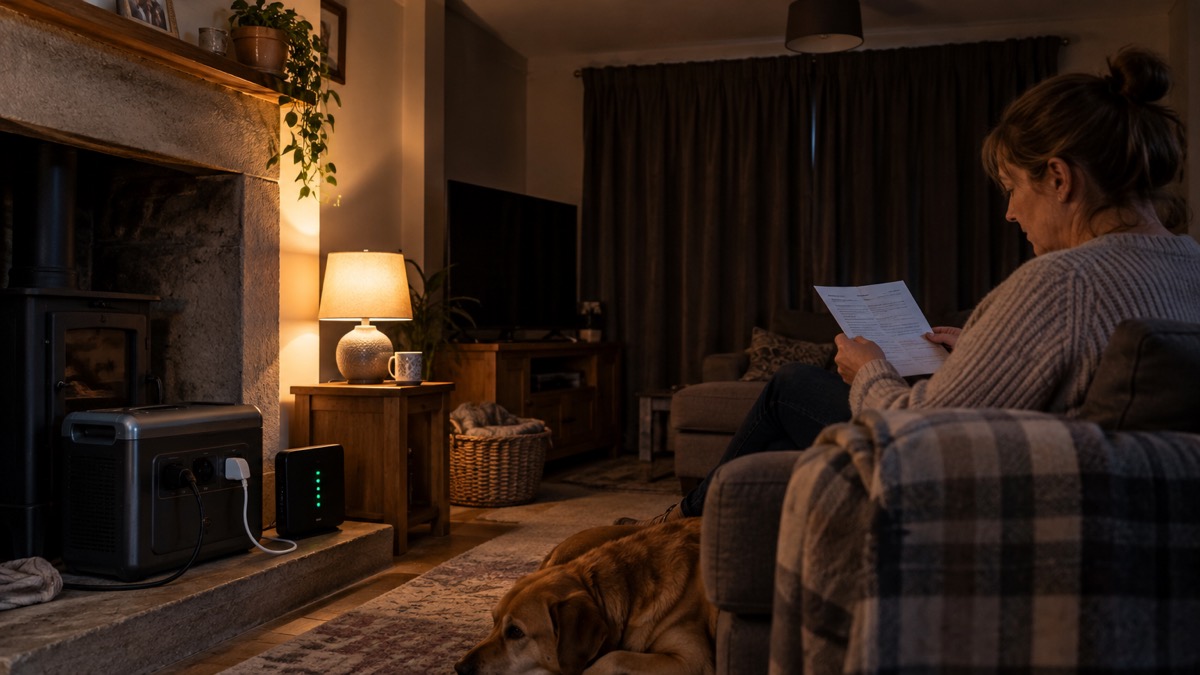
The ports and controls listed by the maker are the main power button, a DC 12V port, a DC/USB power button, the USB-C 30W output, the USB-A 18W output, the USB-C 140W output, an LCD, an LED light button and LED light, AC1 and AC2 power buttons, the AC output, a handle, a DC expansion port, an AC input and the two DC8020 input ports2. In an emergency, the LCD is what tells you how much charge is left, and the two AC buttons let you switch outputs on and off separately.
The 140W USB-C output supports AVS, which the maker describes as Adaptive Voltage Scaling, a fast charging protocol2. That is useful for charging laptops and modern phones quickly when mains power is scarce.
What it can power, and for how long
The maker groups household loads into two patterns. Basic home power protection covers refrigerators, freezers, Wi-Fi and lights as long-term appliances, with phones and computers as intermittent ones2. Flexible backup power adds cooking appliances such as microwaves, electric kettles and coffee makers, plus climate control devices such as window air conditioners2. Which pattern you plan for decides whether the base unit is enough or whether you need expansion.
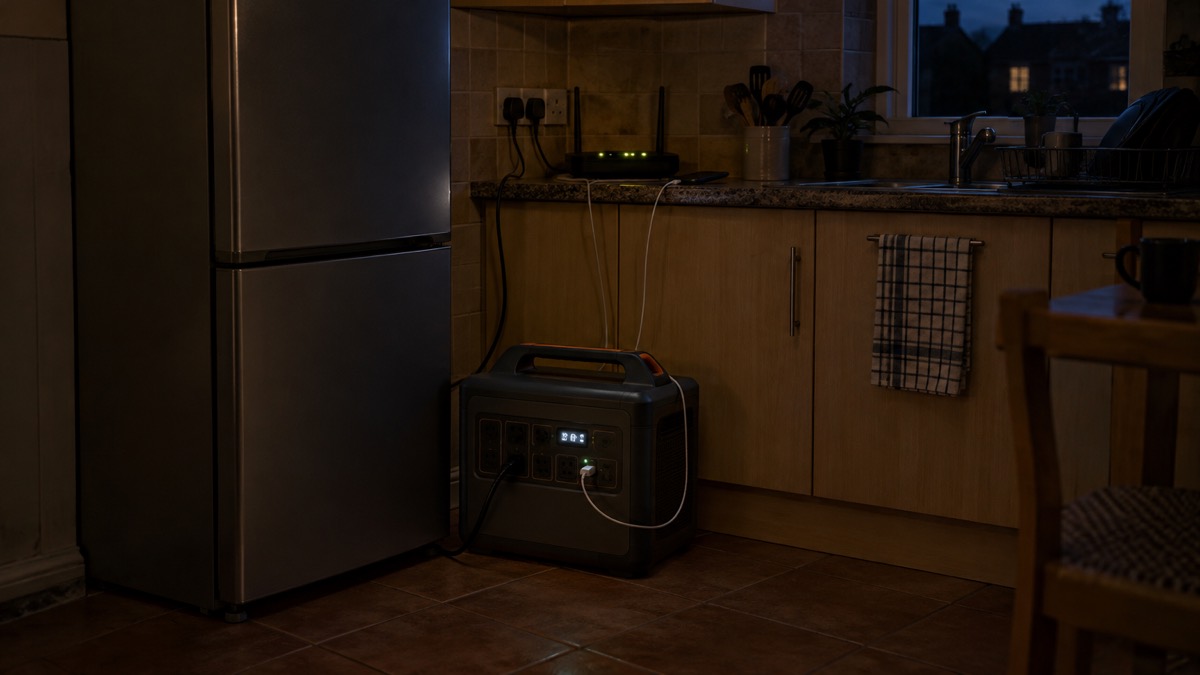
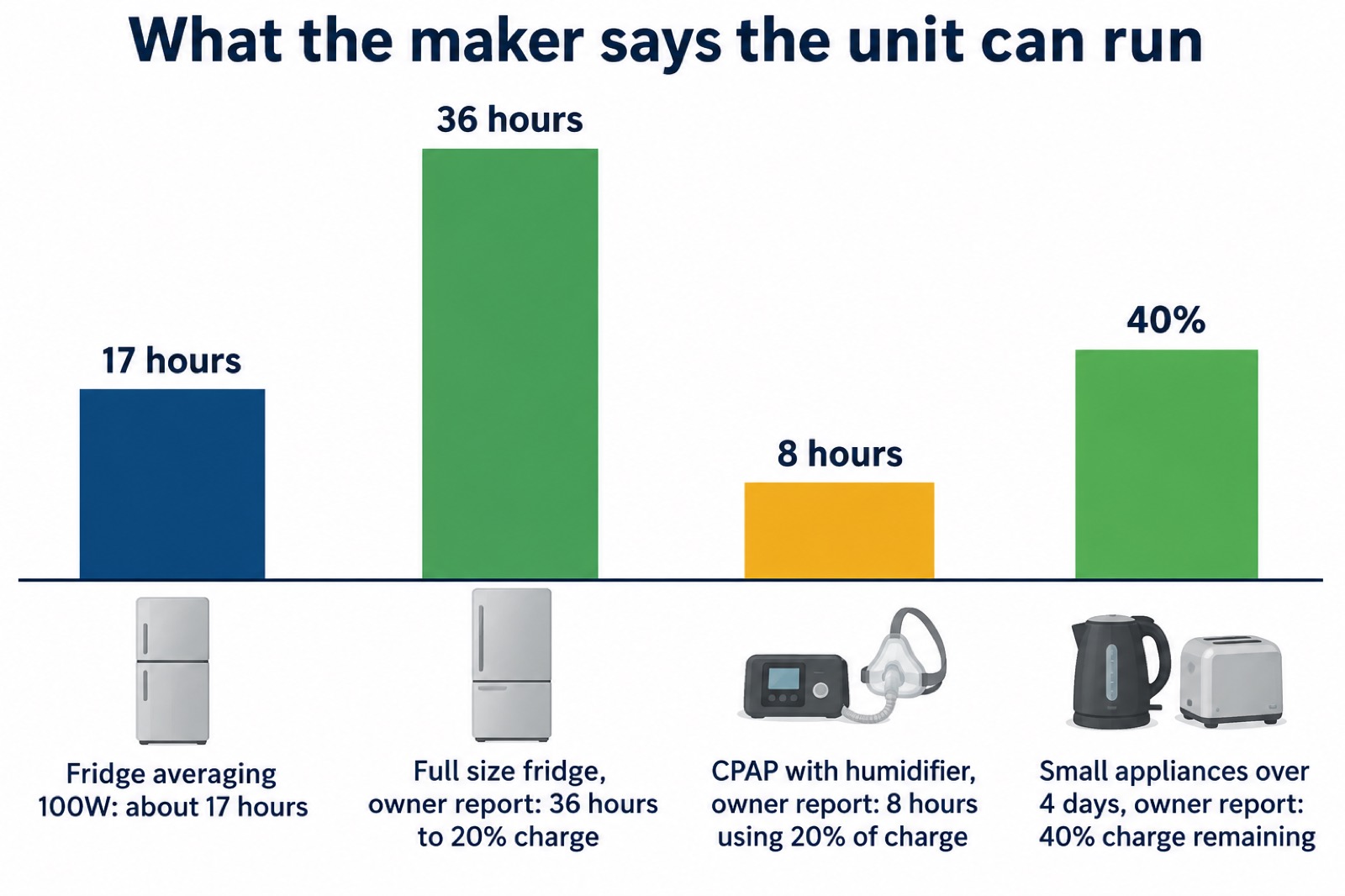
The maker's worked example estimates approximately 17 hours for a refrigerator averaging around 100W, after accounting for normal power conversion losses2. It also warns that refrigerators need a higher startup wattage than their running power, and recommends confirming the startup wattage with the refrigerator manufacturer before use2. That startup surge is the figure most likely to trip a unit that looks big enough on paper.
Owner reports on the maker's page give a sense of real-world use. One reports running a full size refrigerator for 36 hours and stopping at 20% remaining charge, then running various small appliances over a 4 day camping trip with 40% charge remaining2. Another reports a CPAP machine with humidifier working for 8 hours and using only 20% of the charge, and says it should do even better without the humidifier2. These are individual experiences, not guarantees, but they show the range you might see.
The maker also claims that expanded to 12kWh the unit has enough runtime to outlast 2+ days, covering 94% of U.S. power outages2. That is a claim about the United States, not the UK, and should be read as the maker's own marketing rather than a prediction for a British household.
Charging, use and storage
The unit charges from the mains through its AC input, and the maker lists two DC8020 input ports for DC charging2. The maker describes a 2kW pass-through feature, which lets power flow to connected equipment while the unit is charging2. In a planned outage, that means you can leave the unit plugged in and running the fridge, and it will top itself up when the mains returns.
For keeping it ready between emergencies, the practical points are these:
- Charge it before the forecast turns. A storm warning or a flood alert is the moment to bring it to full charge, not the moment the lights go out.
- Check the LCD regularly. The display shows the state of charge, so you know what you have before you need it2.
- Keep the expansion port clear. If you plan to add a Battery Pack 2000 Plus v2, leave access to the DC expansion port2.
- Store it where you can lift it. At 21 lbs lighter than its predecessor, it is more portable than earlier models, but it is still a substantial unit2.
The maker's shipping information says 2 to 5 business days free shipping, a 30-day money back return, and an option to order by 7 AM (PDT) for 2-day delivery1. Those are delivery terms, not storage advice, but they tell you how quickly a replacement or an expansion pack can arrive if you are planning ahead of winter.
Safety
A power station of this size stores a lot of energy, and the maker's instructions should be followed exactly. The maker states that the HomePower 2000 Plus V2 is only compatible with the Battery Pack 2000 Plus V2, and that the earlier Battery Pack 2000 Plus is not compatible2. Using the wrong expansion pack is the kind of mistake that turns a backup plan into a hazard, so check the label before connecting anything.
The unit is quiet in use: the maker measures 30dB at a distance of 1 metre while operating in Quiet Mode2. That is a feature for a flat or a bedroom, but it is not a reason to treat the unit as furniture. Keep it on a hard, dry surface, away from water and damp, and do not block the vents.
The maker's cycle life figure of 6000+ LFP cycles and the 16-year projection are based on a daily cycle of one charge and discharge2. That is a guide to how the battery is expected to age, not a safety limit. The safety points that matter are the ones above: correct expansion packs, dry storage, no damage, and no DIY repairs.
If you rely on the unit for a medical device, tell your electricity supplier so you can be added to the Priority Services Register, and test the device on the unit before you need it. The maker's CPAP example shows the unit can run a machine with a humidifier for 8 hours on 20% of charge2, but a test in your own home is the only way to know your own runtime.
Support and warranty
The maker's product page lists free shipping in 2 to 5 business days, a 30-day money back return and an option to order by 7 AM (PDT) for 2-day delivery1. Warranty terms are not set out in the material available here, so confirm the current warranty and support arrangements with Jackery directly before you rely on them.
The maker's page also carries customer reviews: 13 in total, with 10 at 5 stars (77%), 1 at 4 stars (8%), 1 at 3 stars (8%), none at 2 stars and 1 at 1 star (8%)2. Reviews are individual experiences and not a substitute for the specifications, but they are worth reading alongside the maker's figures.
For a household plan, the support question is less about the warranty and more about what happens if the unit fails during an outage. Keep a smaller backup, such as a power bank for phones, so that a single failure does not leave you with nothing. The power banks page explains the options, and the power station storage page covers how to keep a unit ready between emergencies.
If you are still deciding whether a power station is the right kind of backup for your home, the portable power stations guide sets out how they compare with generators, and the power station sizing page helps you work out what capacity you need.
Sources (2)
- Jackery HomePower 2000 Plus v2 product page, Jackery, 2026-10-25
- Jackery Power Calculator, Jackery, 2026-10-25

 BLUETTI Apex 300 Power Station
 BLUETTI Elite 100 V2
 Anker SOLIX C2000 Gen 2
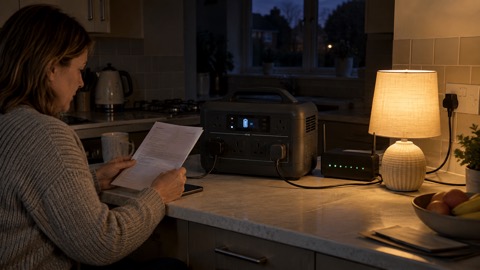 Anker SOLIX C1000 Power Station
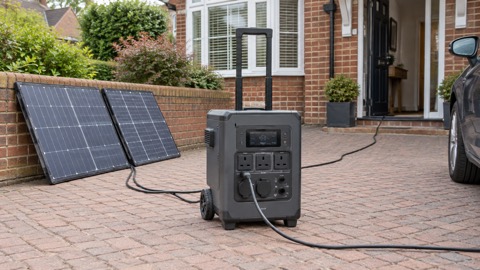 EcoFlow DELTA Pro
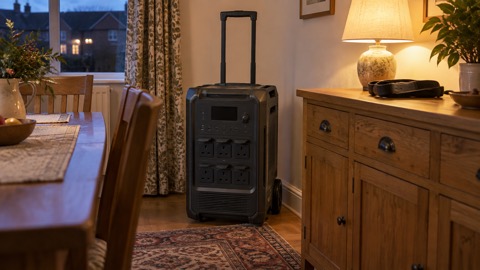 BLUETTI Elite 400
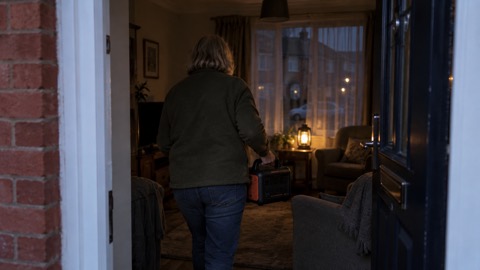 Anker SOLIX C300 Power Station
 EcoFlow DELTA 3
 EcoFlow DELTA 2 and DELTA 2 Max
 EcoFlow DELTA and DELTA Max
 EcoFlow RIVER 3 and RIVER 3 Plus
 EcoFlow RIVER 2 and RIVER 2 Max