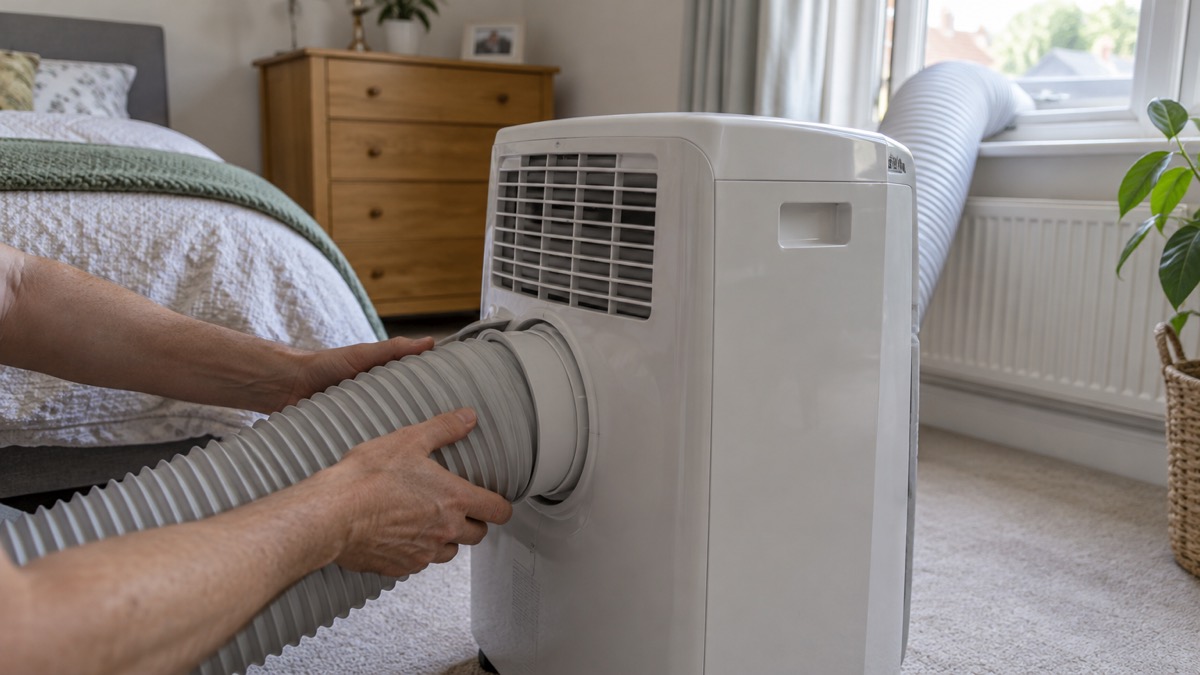
The EcoFlow WAVE 2 is a portable air conditioner and heater that runs from the mains or from a battery, and it is the kind of kit a household buys when it wants one machine that can take the edge off a heatwave or a cold snap without relying on the grid. EcoFlow states that its tailor-made compressor gives 5100 BTUs of cooling and 6100 BTUs of heating, and that it runs for up to 8 hours in Eco Mode on its own battery1. It weighs approximately 14.5 kg and measures 518 × 297 × 336 mm, so it is a moveable appliance rather than something you carry in one hand up a ladder2.
The answer is that it can cool or heat a small room, it can be charged from a car, a solar panel or a power station as well as the mains, and it needs a plan for ducts, drainage and where it sits before you need it1. This page sets out what it does, what it can and cannot manage, and how to keep it ready and safe.
What the EcoFlow WAVE 2 does for a household
The WAVE 2 is a single unit that both cools and heats, and EcoFlow describes it as the world's first wireless portable AC with a heater2. For an ordinary household the practical value is that it does not need installing: the maker states that it requires no installation or drainage, and that air duct adapters let it fit any space3. That matters in an emergency because you can bring it out of storage and have it working in a room without a fitter, a hole in the wall or a plumber.
EcoFlow lists the settings it is designed for as RVs, trucks, off-grid houses, outdoors, tents and boats2. Read that list as a guide to the kind of use it suits: a single room or a confined space, not a whole house. The maker gives the cooling area as no more than 10 square metres, or 107.6 square feet1. A bedroom, a small living room or a caravan is within its reach; an open-plan ground floor is not.
In a household plan it sits in the same place as a fan or a heater: it makes one room survivable rather than making the house comfortable. That is exactly what you want during a heatwave when the upstairs bedrooms are too hot to sleep in, or during a winter boiler failure when one room needs to be kept warm while you wait for a repair. It is not a substitute for a working central heating system, and it is not a whole-home solution.
Treat those as the best case in a small, well-sealed space, not a promise for a room with the door open.
Cooling and heating output: 5100 BTU and 6100 BTU
The headline figures are 5100 BTUs of cooling and 6100 BTUs of heating, and EcoFlow also gives the capacities in watts: 1500W for cooling and 1800W for heating1. The maker's older product pages give the same output in BTUs alone, so the two ways of stating it describe the same machine4. What matters for a household is the input power, because that is what your battery or power station has to supply.
| Specification | Maker's figure |
|---|---|
| Cooling capacity | 1500W / 5100 BTU1 |
| Heating capacity | 1800W / 6100 BTU1 |
| Rated cooling input power (AC/DC) | 550W / 495W1 |
| Rated heating input power (AC/DC) | 600W / 540W1 |
| Max cooling power (AC/DC) | 820W / 700W1 |
| AC input | 100/240V, 50/60Hz, 820W max1 |
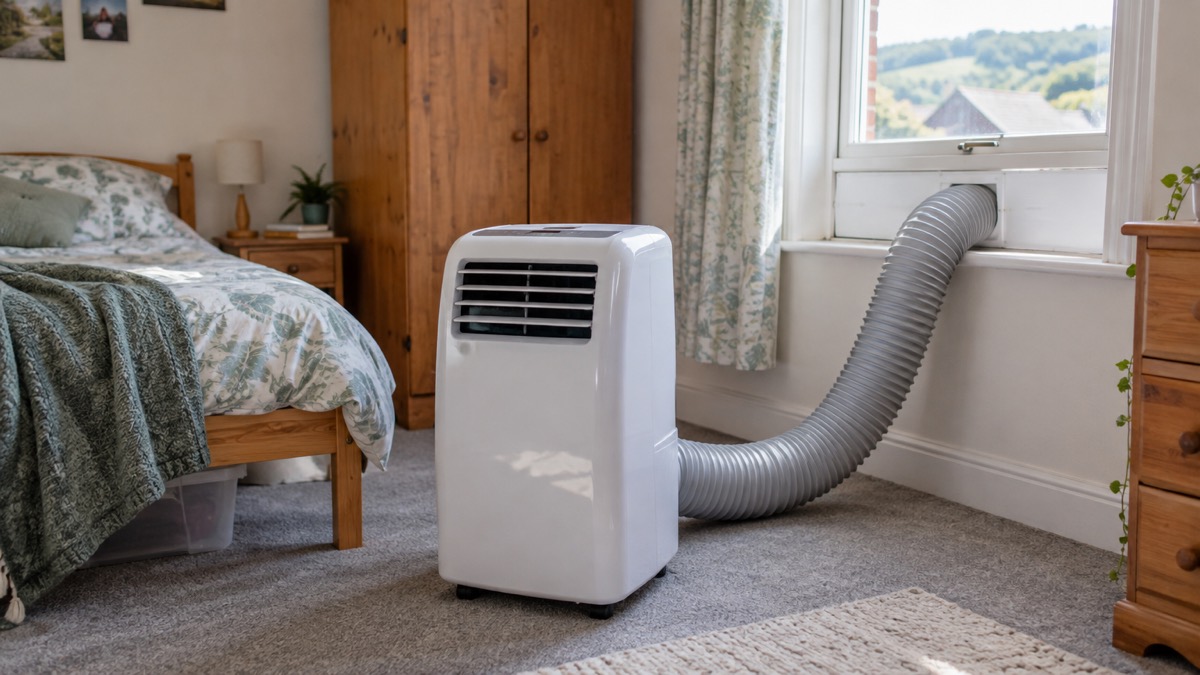
The gap between rated and maximum input is the point to plan around. On a power station the unit draws 495W when cooling at its rated output and up to 700W at maximum, so a power station has to be able to deliver that continuously, not just for a moment1. If you are working out what a battery will run, the watts and watt-hours guide explains how to match the two.
The heating side draws slightly more: 540W on DC at rated output and 600W on AC1. That is why the maker's run-time figures are quoted for Eco Mode, where the machine is working less hard. Running it flat out will always use more than the rated figure suggests.
Run time: up to 8 hours in Eco Mode
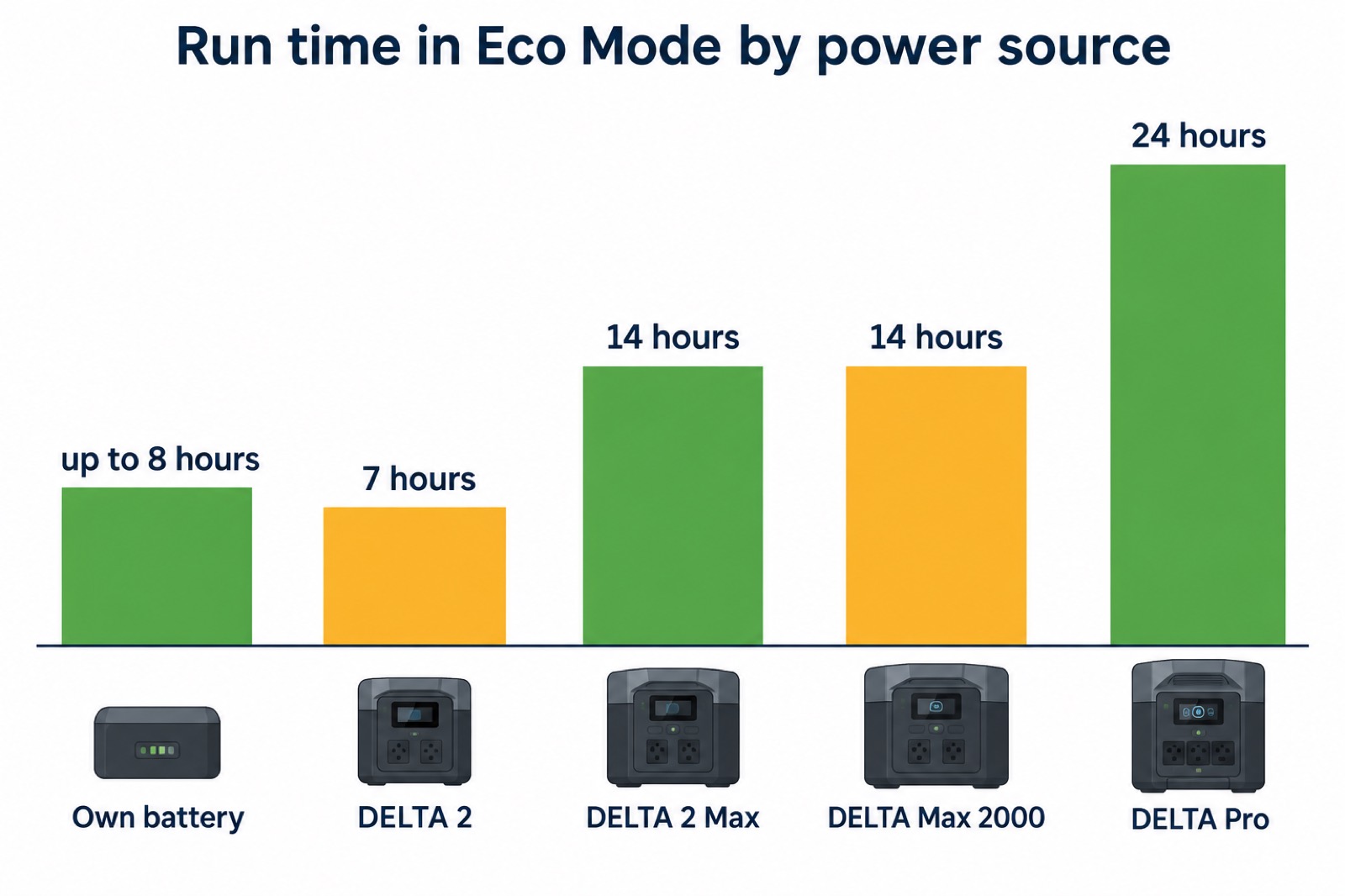
On its own swappable battery the WAVE 2 runs for up to 8 hours in Eco Mode, and EcoFlow quotes the same figure across its product pages1. That is the number to hold in your head for a night without mains power: enough to get a bedroom through the warmest part of a summer night, or to keep one room warm through the coldest hours before morning.
Pair it with an EcoFlow power station and the maker's figures rise:
- With an EcoFlow DELTA 2: 7 hours in WAVE 2 Eco Mode5
- With an EcoFlow DELTA 2 Max: 14 hours in WAVE 2 Eco Mode4
- With an EcoFlow DELTA Max 2000: 14 hours in WAVE 2 Eco Mode6
- With an EcoFlow DELTA Pro: 24 hours in WAVE 2 Eco Mode3
- With a DELTA 2 or DELTA Max or their extra batteries: 7 to 14 hours in Eco Mode1
EcoFlow also states that pairing with its own power stations is 28% more efficient than using other portable power stations1. That is the maker's own comparison and it is worth knowing when you are deciding what to pair it with, but it is not a reason to avoid a power station you already own.
The run time you actually get depends on the room, the outside temperature and how hard the machine is working. A hot room in a heatwave, or a cold room in winter, will use more than a mild day. If you are sizing a power station for this and other kit, the power station sizing guide and the run-time guide set out the method.
Charging from mains, solar, car or a power station
EcoFlow states that you can charge the WAVE 2 fast with AC, solar, a car or power stations1. That flexibility is what makes it useful in an emergency: if the mains is down you are not stuck, and if the sun is out you can top it up without a generator.
| Charging method | Maker's figure |
|---|---|
| AC input | 100/240V, 50/60Hz, 820W max1 |
| Solar charging input | 11-60V, 13A, 400W max1 |
| Car charging input | 96W/192W (12/24V, 8A max)1 |
| Add-on battery input | 700W max2 |
| Third-party power station | any portable power station with an 820W input1 |
The solar input is the one to think about for a long outage. At up to 400W it can take a reasonable charge from a portable panel on a sunny day, and the portable solar panels guide explains what to expect in UK light. The car input is slower, at 96W on 12V and 192W on 24V, so treat it as a top-up while driving rather than a full recharge1. If you are charging from a car, the car charging guide covers the practical limits.
For a third-party power station, EcoFlow states that any portable power station with an 820W input can charge the WAVE 21. The maker's run-time figures, though, are given for its own power stations, so if you pair it with another make, expect a different result and test it before you rely on it. The portable power stations guide explains how to read the input and output ratings.
Why heating falls away below
The WAVE 2 is a heat pump, which means it moves heat rather than making it by burning fuel. That is efficient in mild conditions, but it depends on there being heat in the outside air to move. In a UK winter, that is most of the time.
This is the single most important limit on the machine for a prepping household. It is a useful heater in autumn and spring, and in a cold snap that has not yet driven outdoor temperatures down, but it is not a substitute for a boiler in January. If your plan for a winter power cut depends on heating one room, the WAVE 2 can help at the margins but you need a second answer for the coldest nights.
That is the temperature band where a household is trying to protect the fabric of the building, not to be comfortable, and it is well below the point at which the WAVE 2 stops heating effectively.
The practical approach is to treat the heating function as a shoulder-season tool and to plan your winter backup around other kit. The heating and cooking without mains power guide sets out the alternatives, and the gas and heating failures guide covers what to do when the boiler stops.
Setting up the ducts and managing drainage
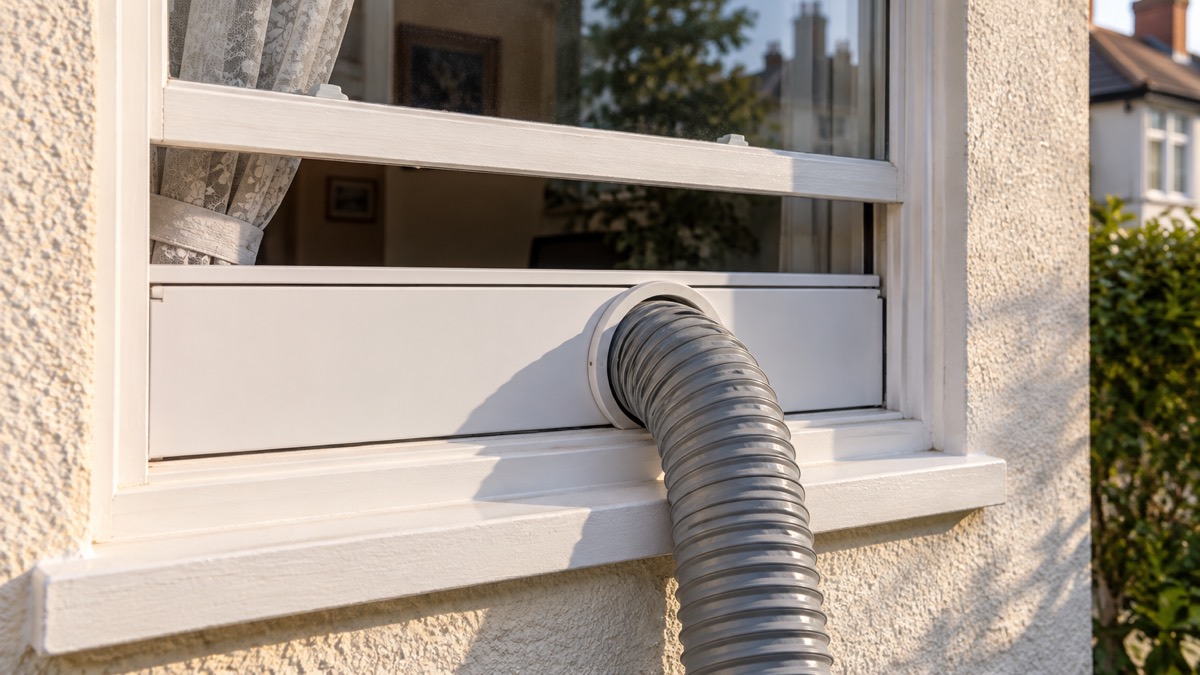
EcoFlow states that the WAVE 2 requires no installation or drainage, and that air duct adapters let it fit any space3. That is true in the sense that you do not need a fitter, but you do need to think about where the exhaust goes. The maker lists four duct arrangements: a single air outlet duct, dual exhaust air ducts, dual exhaust air ducts with a window vent board, and an accessory-free setup2. The box includes exhaust ducts D and E, adapter covers A, B and C, a window vent board, a winder and drain pipe, and the safety instructions, quick start guide and warranty card1.
Drainage is the part households most often get wrong. EcoFlow states that no drainage is needed in cooling mode when humidity is below 70%, but that it is still needed in heating mode1. The maker also lists a no-drain function as supported in the cooling state1. So in a damp British summer, or whenever you use it as a heater, plan for the drain pipe and a container or a route to outside.
A few practical points for setting it up in an emergency:
- Decide where the unit will sit and which window it will vent through before you need it, and check the window opens and the board fits.
- Keep the ducts and adapters together with the unit so you are not hunting for them in the dark.
- Leave space around the unit for airflow, and do not block the exhaust.
- Keep the unit upright when moving it, and let it settle before switching it on after carrying it.
If you are running it from a power station, keep the power station out of the way of the exhaust and any water, and follow the safe charging setup checklist for the battery side of things.
Keeping it ready, and using it safely
The WAVE 2 is a piece of kit that rewards a little preparation. Charge the battery and any spare before winter, and again before summer, so it is not flat when you need it. Store it upright, dry and out of direct sunlight, and keep the ducts with it. If you have an add-on battery, EcoFlow lists an add-on battery input of 700W max, so it can be charged alongside the unit6.
On safety, the maker's own instructions lead. EcoFlow gives the unit an IPX4 rating1. Keep it indoors, out of standing water, and away from floods. If your home floods, the flooding guide covers what to do first, and the home emergencies guide covers burst pipes and water damage.
The refrigerant is R290, 130 g, which EcoFlow describes as a natural refrigerant with lower global warming potential and no ozone emissions2. R290 is flammable in sufficient concentration, so do not tamper with the sealed circuit, keep the unit ventilated as the maker instructs, and if it is damaged, stop using it and seek advice. For battery safety more broadly, the lithium-ion battery safety guide and the battery fire guide set out the warning signs and what to do.
"No drainage is needed in cooling mode when humidity is below 70%, but it is still needed in heating mode."
Support, warranty and where it fits your plan
EcoFlow supplies a safety instructions booklet, a quick start guide and a warranty card in the box3. Keep the warranty card and your proof of purchase together with the unit, and read the safety instructions before first use rather than in an emergency. The maker's UK site is the place to check the current documentation for your model, and the EcoFlow brand page gathers the maker's range.
For a household plan, the WAVE 2 fits best as a single-room comfort and temperature tool rather than a whole-home backup. It earns its place if you have a bedroom or living room that becomes unusable in a heatwave, or a shoulder-season cold snap when the boiler is out, and if you already have or plan to have a power station to extend its run time. It does not replace a boiler in midwinter, and it will not cool an open-plan house.
If you are building out the rest of your backup power, start with the backup power section and the power cut backup power checklist. The deciding what to keep running guide helps you work out whether heating, cooling, medical kit or communications comes first in your household, and the extra help guide covers households with medical or mobility needs. For the wider picture of how the UK plans for emergencies, the UK preparedness guide is the place to start.
Sources (6)
- EcoFlow WAVE 2 Portable Air Conditioner, EcoFlow, 2026-10-29
- EcoFlow WAVE 2 Add-On Battery, EcoFlow, 2026-10-29
- EcoFlow WAVE 2 Portable Air Conditioner | Off-Grid AC Anywhere - EcoFlow UK, EcoFlow UK
- WAVE 2 Portable Air Conditioner with DELTA 2 Max, EcoFlow, 2026-10-25
- WAVE 2 Portable Air Conditioner with DELTA 2, EcoFlow, 2026-10-25
- EcoFlow WAVE 2 + EcoFlow DELTA Max - EcoFlow UK, EcoFlow UK

 BLUETTI Apex 300 Power Station
 BLUETTI Elite 100 V2
 Anker SOLIX C2000 Gen 2
 Anker SOLIX C1000 Power Station
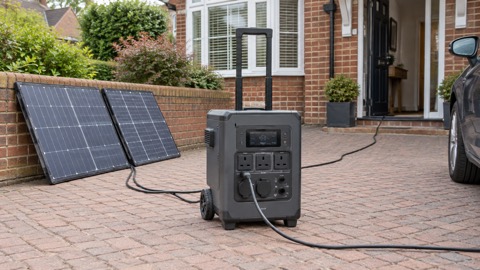 EcoFlow DELTA Pro
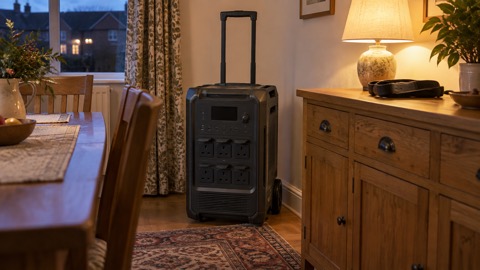 BLUETTI Elite 400
 Anker SOLIX C300 Power Station
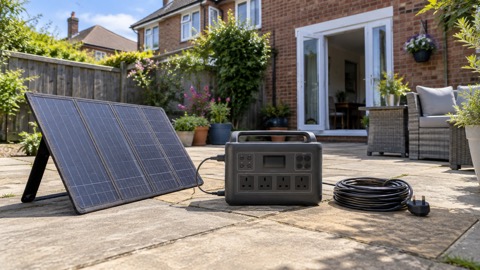 EcoFlow DELTA 3
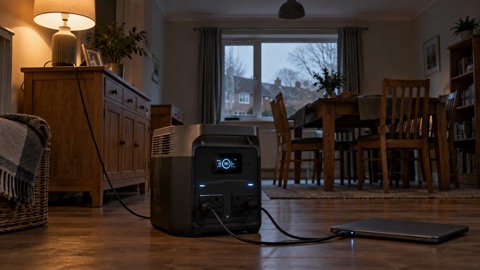 EcoFlow DELTA 2 and DELTA 2 Max
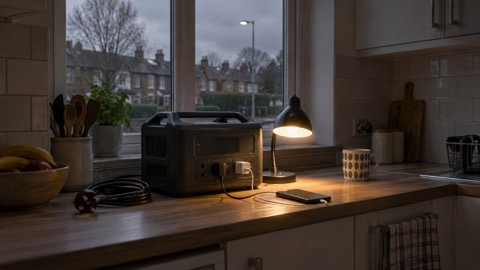 EcoFlow DELTA and DELTA Max
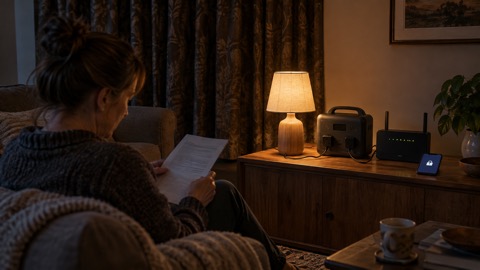 EcoFlow RIVER 3 and RIVER 3 Plus
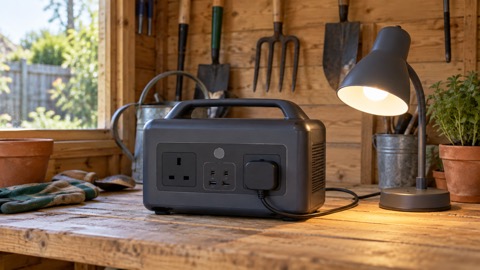 EcoFlow RIVER 2 and RIVER 2 Max