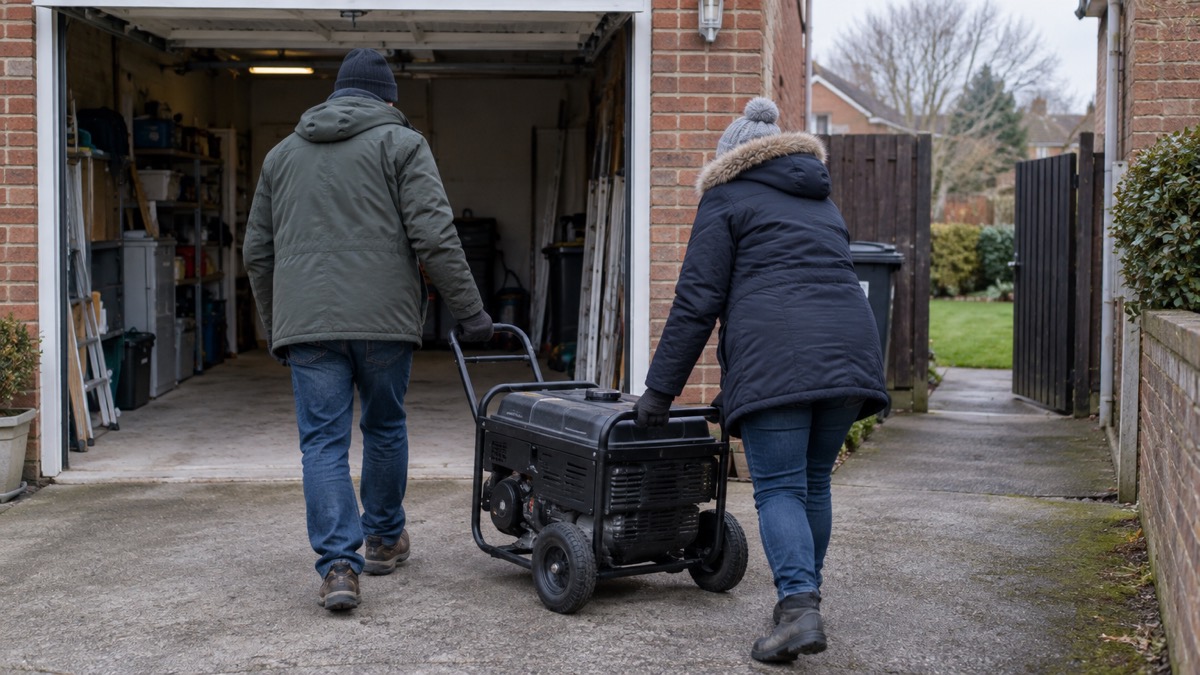
The Ford FG6500iSE is a petrol inverter generator with a listed continuous output of 6.00 kW and a maximum of 6.20 kW, sold in the UK through a distributor rather than by Ford itself. It is no longer sold new: the distributor's product page lists it as out of stock1. If you already own one, or are considering a secondhand one, the useful questions are what it can run, how long it runs for, how to move 61.00 kg of machine, and how to use it without putting your household at risk.
The headline is that all 6.00 kW of continuous power can come from a single 32A 230V socket, so one heavy appliance or a properly rated lead can draw the full output1. A 15.00-litre tank gives a listed run time of 7.50 hours1. It starts on the key or on the recoil cord, and it has low oil and overload protection that shut the engine down automatically1.
What it is not is a plug-in-and-forget appliance. A petrol generator has to run outdoors, away from windows and doors, because of carbon monoxide, and it should not be wired into your home's circuits without an electrician. This page sets out what the machine does, what it suits, and the safety rules that come with it, so you can decide whether it fits your household or whether a battery-based option would serve you better.
What the FG6500iSE is, and who it suits
This is a large petrol inverter generator aimed at domestic backup and site work. The distributor describes it as "the perfect generator to cover most domestic requirements"1, and the specification backs up the scale of that claim: 6.00 kW is enough for a household's essential circuits if they are managed carefully, and the inverter design gives a sine wave output with total harmonic distortion below 3%, which is the figure that matters for sensitive electronics1.
It suits a household with somewhere safe to run it outdoors, a way to move it, and a clear plan for what to plug in. It does not suit a flat with a balcony, a terraced house with no garden, or anyone who cannot lift or wheel 61.00 kg. The maker of a competing battery system describes petrol generators in this class as "noisy, bulky, and inconvenient for long-term use", with weights of 50 to 70 kg2, and that is a fair description of the trade-off: you get a lot of power for the fuel you carry, in exchange for noise, weight and exhaust.
Noise is listed at 68 dB(A) at 7 metres1. That is loud enough to be noticed by neighbours, and worth thinking about before you run one in a suburban garden in the evening. If noise and weight are the deciding factors for you, a portable power station does the same job silently and indoors, at the cost of run time and capacity. The comparison page on portable power stations versus petrol generators sets the two side by side.
Specifications at a glance
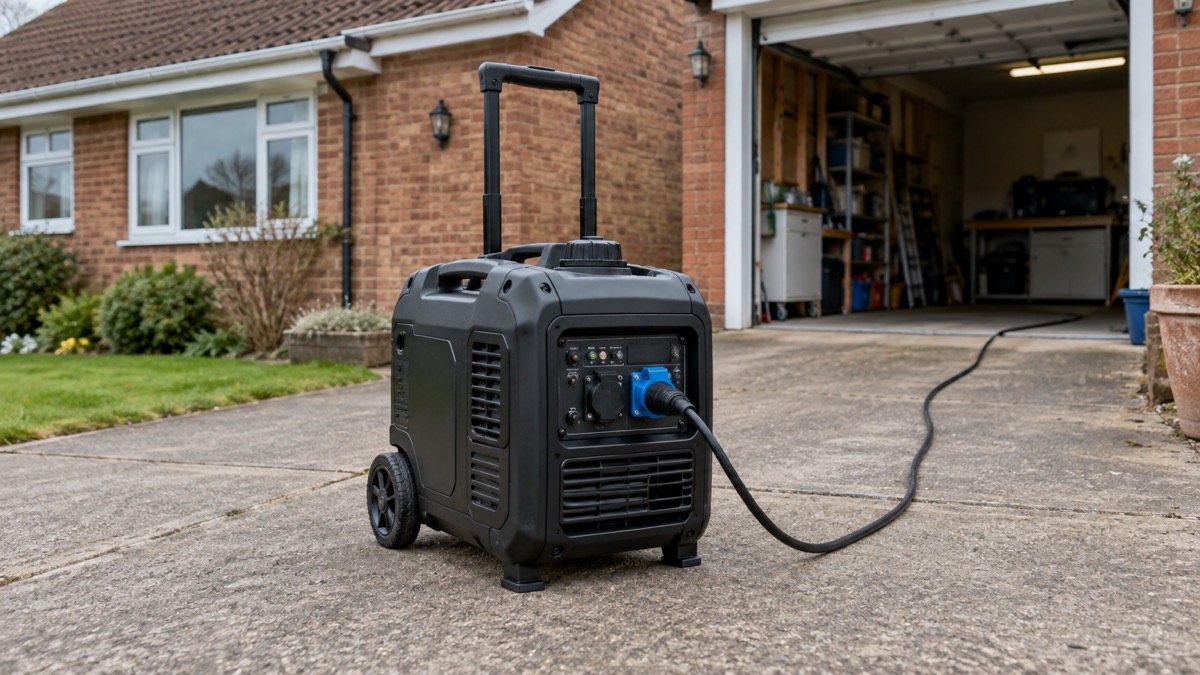
The figures below are the distributor's, from the product page dated 20 May 20261. Where a specification decides whether the machine suits you, the note explains why.
| Specification | Figure | What it means for you |
|---|---|---|
| Type | Petrol inverter generator | Cleaner output for electronics than an open-frame set1 |
| Continuous output | 6.00 kW / 6.00 kVA | The load it can carry hour after hour1 |
| Maximum output | 6.20 kW / 6.20 kVA | Short bursts above the continuous rating1 |
| AC sockets | 1 x 230V 32A, 2 x 230V 13A | One heavy outlet, two standard household outlets1 |
| DC and USB | 1 x 12V 8A DC, 2 x USB | Battery charging and small device charging1 |
| Fuel tank | 15.00 litres | The tank size behind the run time1 |
| Run time | 7.50 hours | Listed figure, not a guarantee at full load1 |
| Fuel type | Petrol | Standard unleaded forecourt fuel1 |
| Oil type and capacity | SAE 10W-30 four-stroke, 0.65 litres | The oil to buy and the sump size1 |
| Noise | 68 dB(A) at 7m | Audible to neighbours1 |
| Dimensions | 530 x 550 x 680mm (WxHxL) | Footprint and height for storage1 |
| Weight | 61.00 kg | Needs two people or a ramp for steps1 |
| Frequency | 50Hz | Matches UK mains frequency1 |
| Distortion | Below 3% THD | Suitable for laptops and sensitive kit1 |
| Starting | Electric and recoil | Key start with a pull cord backup1 |
| Protection | Low oil and overload shutdown | Cuts the engine rather than letting it run dry or strain1 |
| Warranty | 3 year limited warranty, subject to terms | Check the terms before relying on it1 |
Power output and outlets: 6.00 kW, all of it from the 32A socket
The unusual feature of this machine is how the power is distributed. Most generators split their output across several sockets, so no single outlet can give you everything. Here, the distributor states that "using a 32A 230V socket you can draw the full 6kW of continuous power from a single outlet"1. That matters if you want to run one large load, such as a heating appliance or a workshop tool, from a single heavy-duty lead.
For ordinary household kit, the two 13A sockets are the ones you will use. Each is limited by the plug and lead you connect, not by the generator, so the practical ceiling is what a 13A plug can carry. Plan your loads around that: a few modest appliances on the 13A outlets, and the 32A outlet reserved for anything that genuinely needs the full output through a suitably rated lead.
The 6.20 kW maximum output is a short-term figure above the continuous rating1. Treat it as headroom for motor starting, not as a figure you can run at for hours. If you are working out what your household actually needs, the guide to watts, watt-hours and surge explains how motor start-up loads differ from running loads, and the page on what size generator you need walks through the sums.
Run time and fuel: 7.50 hours from a 15.00-litre tank
A 15.00-litre tank and a listed 7.50-hour run time1 set the rhythm of an outage. If you run the generator continuously, you will be refuelling roughly every seven and a half hours, and you should never refuel a hot engine. Plan for that: work out when you will next need fuel, and store petrol safely and legally rather than decanting it in a hurry. The page on how much petrol you can store at home covers the rules.
Run time is not a fixed number. It falls as load rises, so the 7.50 hours is best read as a figure for moderate use rather than a promise at full output. The ECO mode helps here, cutting revs when demand is low1. If you want to understand how load and tank size interact across machines, the guide to generator run time explains the relationship.
For comparison, a small battery power station with a 5-litre-equivalent fuel figure runs about 6 hours at 500W2, which shows how much more energy a petrol tank carries. That is the case for petrol: a lot of hours for a modest amount of fuel. The case against is noise, exhaust and the need to store flammable liquid.
Size, weight and moving a 61.00 kg generator
At 61.00 kg1, this is not a machine you carry. The distributor fits a built-in retractable handle and wheel kit "for easy moving over flat ground"1, and that phrase is the important one: flat ground. A step, a gravel path or a slope turns a wheeled generator into a two-person lift, and a dropped generator is a damaged generator.
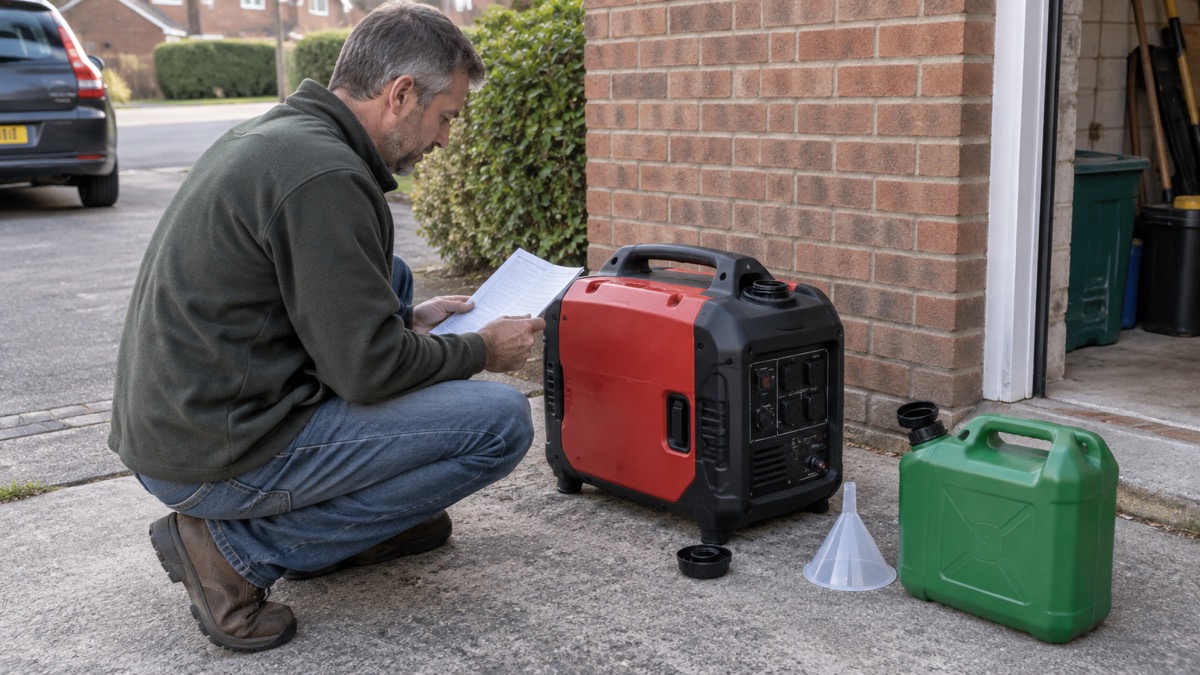
Think about the route from where it is stored to where it will run before you buy or accept one. It needs to go outdoors, away from doors, windows and air bricks, and it needs to stay there while it runs. If your only outdoor space is up a flight of steps, this machine will be a struggle every time: the maker lists it at 61.00 kg1, and fuel generators of this kind are described as noisy, bulky and inconvenient for long-term use2. The maker gives its dimensions as 530 x 550 x 680mm (WxHxL)1, which tells you the floor space it takes up wherever you keep it.
The weight also matters for maintenance. Checking the oil, topping up fuel and moving the machine for an oil change all involve handling 61.00 kg. If you have back or mobility problems, plan for help rather than doing it alone. The page on storing a generator after a power cut covers where and how to keep it between uses.
Starting it: electric start with a recoil backup
The FG6500iSE offers both starting methods, listed as electric and recoil1. The electric start turns the engine on the key or starter button, which is far easier than pulling a cord on a cold morning. The recoil cord is the fallback if the starter battery is flat or the machine has been standing.
Honda, describing generator starter types generally, sets out the same distinction: "Recoil start Manual engine start" and "Electric and Recoil start Both manual and electric engine start"3. The practical point is that an electric start depends on a small battery that you need to keep charged, so check it before winter rather than discovering it is flat during an outage. The page on backup power checks before winter is a good place to build that into a routine.
Before every start, check the oil level and that the machine is outdoors and on level ground. If it will not start, work through the obvious causes in order: fuel, oil level, the starter battery, and the recoil cord as a last resort.
Safe use in a power cut
A petrol generator is an outdoor appliance. Carbon monoxide from its exhaust is invisible and can kill, so it must never run indoors, in a garage, in a shed or in any enclosed or partly enclosed space, even with the door open. The page on whether you can run a generator indoors explains why, and the guide to carbon monoxide from generators covers the warning signs. Keep it well away from windows, doors and vents so exhaust cannot drift back in.
Do not connect the generator to your home's wiring yourself. Feeding power into circuits that the grid may still energise is dangerous to you and to anyone working on the lines. If you want the house wired for backup power, that is a job for a qualified electrician, and the page on connecting a generator to your home's wiring sets out what is involved. For most households, extension leads from the generator's own sockets to the appliances you need are the simpler and safer route, and the guide to extension leads and overloading explains how to size them.
When the power goes, the sequence is straightforward:
- Check whether the outage is yours alone by looking at whether neighbours' lights are on, and check your trip switch before assuming a network fault4.
- Report the outage on 105, the national power cut number5.
- Set the generator up outdoors, on level ground, away from doors and windows.
- Check the oil, connect only the appliances you need, and start the engine.
- Keep the leads tidy and out of walkways, and never run the machine in the rain without shelter that still allows ventilation.
Charging phones, laptops and a car battery
The generator has a 12V, 8A DC socket listed for battery charging, plus two USB sockets1. That gives you a way to top up a car battery and to keep small devices going, but the fire safety rules for charging apply just as they would on mains power.
The fire and rescue services are consistent on this. Charge phones and laptops on a hard surface such as a table or worktop, never on a bed, sofa or carpet, because soft furnishings trap heat and can catch fire6. Do not leave devices charging under pillows or on soft furnishings7, and turn devices off when they have finished charging, because they can get very hot8. Use the charger that came with the device or one from a reputable supplier9, and never leave devices charging overnight or on a flammable surface10.
For laptops specifically, only use the cable and charger specified by the manufacturer, and supervise children charging their own devices11. A damaged battery, dropped or punctured, can become volatile and should not be used11. The page on safe battery charging at home turns these rules into a checklist.
Oil, fuel and routine maintenance
The distributor specifies SAE 10W-30 four-stroke oil, with a capacity of 0.65 litres1. Check the level before every run, top up gradually and use the dipstick rather than guessing. The machine has low oil protection that shuts the engine down automatically1, so if it stops unexpectedly, check the oil before looking for a more complicated fault.
Fuel is standard petrol1. Store it in a proper container, away from the house and from any source of ignition, and never refuel a hot engine. The page on petrol storage at home covers the limits and the safe practice.
A simple maintenance routine keeps the machine ready:
- Check the fuel level and refill outdoors, with the engine off and cool.
- Run the engine periodically so the starter battery stays charged and the fuel does not stale.
- Note the maker's figures for the machine: 68 dB(A) at 7m1 and dimensions of 530 x 550 x 680mm (WxHxL)1, so plan where it sits and how far its noise carries.
What happens on overload
The generator has overload protection with automatic shutdown1, so if you ask too much of it, it should cut out rather than keep straining. That is a safety feature, not a fault. Which magazine warns that overloading a generator "can cause it to fail and potentially damage your connected appliances as well"12, so the protection is there to prevent exactly that.
If it trips, unplug everything, restart the engine, and add appliances back one at a time, leaving the heaviest until last. If it trips again with the same appliance, that appliance is drawing more than the generator can give on that socket, and you need to rethink the load rather than reset and retry.
Overloading is a theme across electrical safety advice. Adaptors with several USB charging ports can be overloaded13, and a survey found that 16% of UK adults admitted overloading adaptor sockets, causing an unsafe rise in temperature14. The same principle applies to the generator: add up what you plan to run before you plug in, and keep the total within the continuous rating.
Warranty, support and UK availability
The FG6500iSE carries a 3 year limited warranty, subject to the manufacturer's terms and conditions1. Read those terms before you rely on them, particularly if you are buying secondhand, because a warranty may not transfer to a new owner.
The bigger practical point is availability. The distributor's page lists the machine as out of stock1, so it is no longer sold new through that route. That means parts, servicing and support may become harder to find over time, and a secondhand purchase should be checked carefully: ask about service history, check the oil and fuel system, and confirm the starter battery holds a charge.
If you are weighing up this machine against alternatives, the section on portable generators explains the different types, and the guide to inverter versus open-frame generators explains why the inverter design matters for sensitive electronics. For a smaller Ford machine, there is a page on the Ford FG2500iS.
Sources (14)
- Ford FG6500iSE 6.00kW Petrol Inverter Generator, Generators Direct, 2026-05-20
- BLUETTI Elite 400 Portable Power Station, BLUETTI, 2026-10-25
- Help me choose a generator, Honda, 2026-10-25
- What to do in a power cut, SP Energy Networks, 2026-10-26
- Power cut plan, Northern Powergrid, 2026-10-26
- Student safety, Devon and Somerset Fire and Rescue Service, 2026
- Mobile phones and tablets, Electrical Safety First, 2026-10-25
- Fire safety indoors, Devon and Somerset Fire and Rescue Service, 2026
- Keeping kids safe: fires, RoSPA, 2026-10-26
- Domestic fire, Prepare campaign, 2026-10-12
- Laptops and notebooks, Electrical Safety First, 2026-10-25
- How to buy the best generator, Which?, 2026-01-20
- Plug sockets: how to avoid overloading your plug sockets at home, Which?, 2026-02-05
- Rising electrical fire danger sparks official warning, Electrical Safety First, 2026-10-25
 EcoFlow Dual Fuel Generator
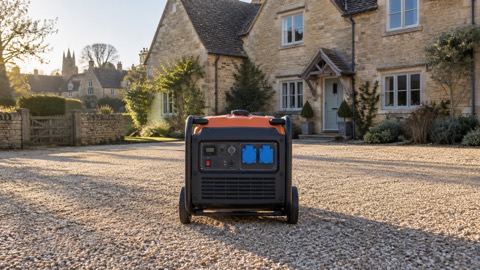 Honda EU70iS Generator
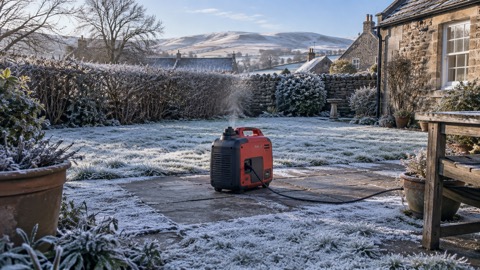 Honda EU32i Generator
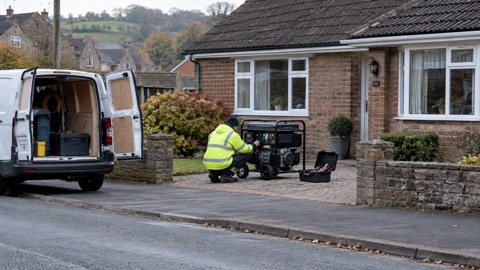 Honda EG3600 Generator
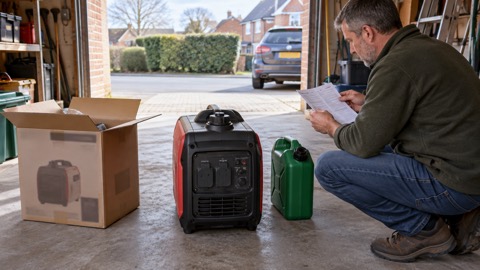 Pramac P3500i Generator
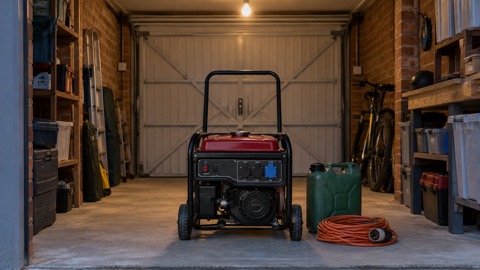 Senci SC6000-II Home Generator
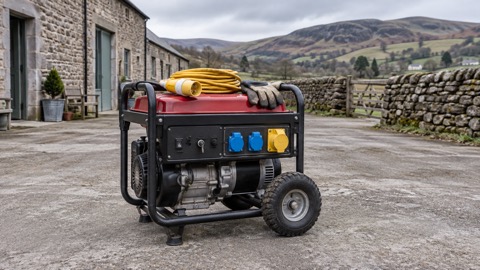 Senci SC10000-II Generator
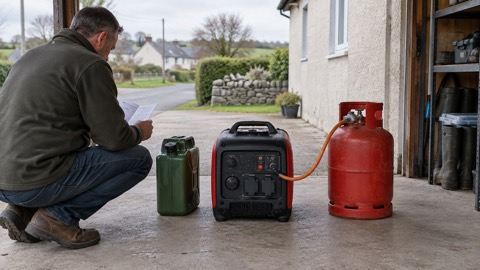 Senci SC6600iED Generator
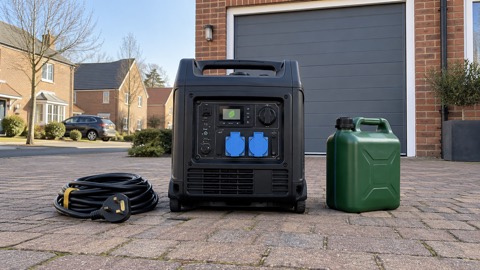 Gorilla Power GP3800iE
 Gorilla Power GP6500E-DF
 Gorilla Power GP3500i
 Hyundai HY2250Si Generator