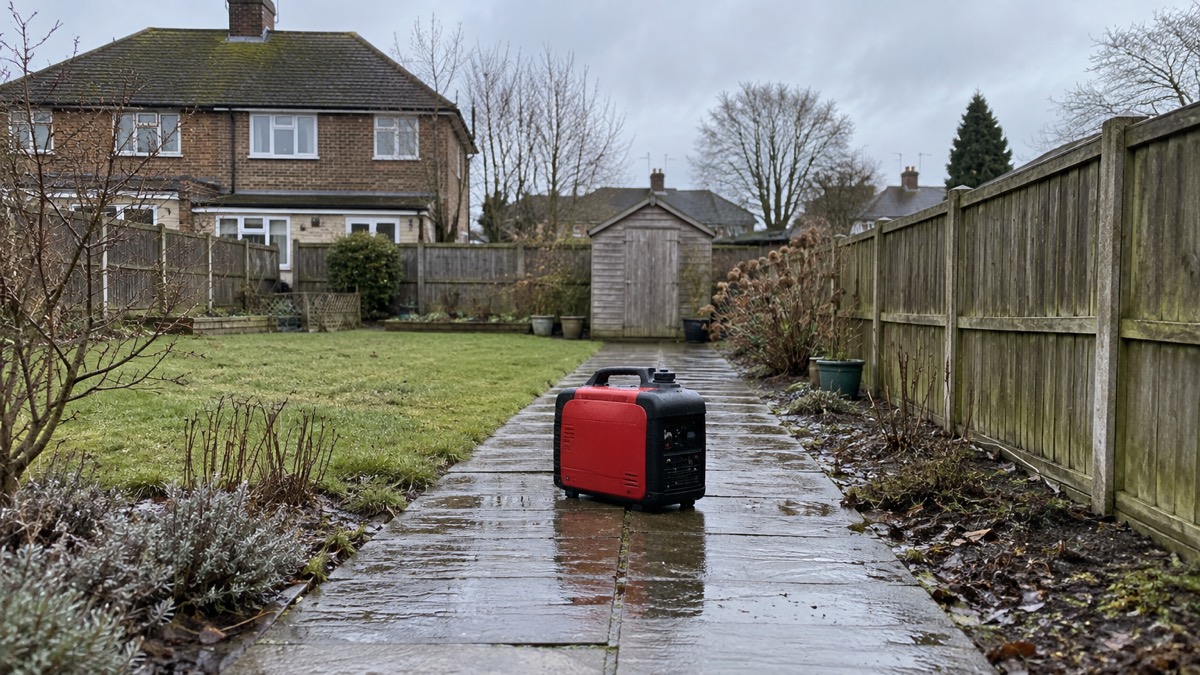
The Ford FG2500iS is a petrol inverter generator rated at 2.00kW continuous and 2.20kW maximum, built around a 98cc four-stroke engine. In a power cut it will run the things a household misses first: the fridge freezer, the lights, the broadband router, phone and laptop chargers, and a television. It is a small, portable machine at 22.00 kg, started with a pull cord and no battery, and it runs for about 6 hours on its 4.50 litre tank1.
It is not a whole-house solution and it is not a machine to run indoors. A petrol generator produces carbon monoxide, an invisible and odourless gas, so it must stand outside, well away from doors, windows and vents. Everything else about owning one follows from those two facts: it is a compact outdoor appliance that covers the essentials for a few hours at a time, refuelled and rested between runs.
This page sets out what the FG2500iS is, the specifications that decide whether it suits you, what it can and cannot power, how long it runs, how to start it, and how to use and store it safely. If you are still deciding between a generator and a battery, the guide to portable power stations and the comparison of a power station or petrol generator will help you choose.
What the Ford FG2500iS is and who it suits
The FG2500iS is a petrol inverter generator. An inverter generator produces mains power electronically rather than directly from the alternator, which is why the distributor describes its output as a pure sine wave, the same shape of wave the mains supplies1. That matters for sensitive electronics: the distributor lists laptops, phone chargers and televisions among the devices it is designed to supply, alongside small electrical appliances, camping equipment and lighting1.
The practical difference between an inverter generator and a conventional open-frame machine is noise and quality of power. The FG2500iS is quoted at 60 dB(A) at 7 metres1. It also has an ECO mode to save fuel consumption, which throttles the engine back when the load is light1. If you are weighing up the two types, the guide to inverter or open-frame generators sets out the trade-offs.
Who it suits: a household that wants to keep a fridge, a few lights, the router and device charging going through a cut of a few hours, and that has somewhere outdoors to stand the machine, away from doors and windows, with room to store petrol safely. It does not suit a flat with no outdoor space, anyone who cannot lift 22.00 kg safely, or a household that wants silent, fume-free backup. For those, a battery based option is the better fit.
The machine is a Ford Official Licensed Product, carrying the Ford Official Licensed Product label, rather than a machine built by Ford itself1. It comes with a 3 year limited warranty subject to the manufacturer's terms and conditions1. Keep the receipt and the manual with the generator.
Specifications
The figures below are the distributor's published specifications for the FG2500iS1. Where a specification decides what the machine can run or how you look after it, the table says so.
| Specification | Figure | What it means for you |
|---|---|---|
| Continuous output | 2.00kW (2.00 kVA) | The load it will carry hour after hour1 |
| Maximum output | 2.20kW (2.20 kVA) | Short bursts only, for motor start-up1 |
| Engine | Single cylinder, 4-stroke, OHV, air cooled, 98cc | Petrol, air cooled, no radiator to check1 |
| Fuel | Petrol, 4.50 litre tank | About 6 hours running1 |
| Oil | SAE 10W30 4-stroke, 0.35 litres | Check the level before every run1 |
| Starting | Recoil pull cord, no battery required | Nothing to go flat in storage1 |
| Sockets | 1 x 230V 13A, 1 x 12V DC 8A, 1 x 1.5A USB | One mains appliance at a time on the 13A outlet1 |
| Output waveform | Pure sine wave | Safe for laptops and TVs1 |
| Frequency | 50Hz | Matches UK mains1 |
| Noise | 60 dB(A) at 7m | Roughly the level of a lively conversation1 |
| Weight and size | 22.00 kg, 330 x 480 x 540mm | A two person lift for most people1 |
| Casing | Impact resistant PP and PA | Wipe clean, keep vents clear1 |
| Spark plug | E6TC, E6RTC or BPR7HS | Keep a spare1 |
| Warranty | 3 year limited warranty, manufacturer's terms | Keep your proof of purchase1 |
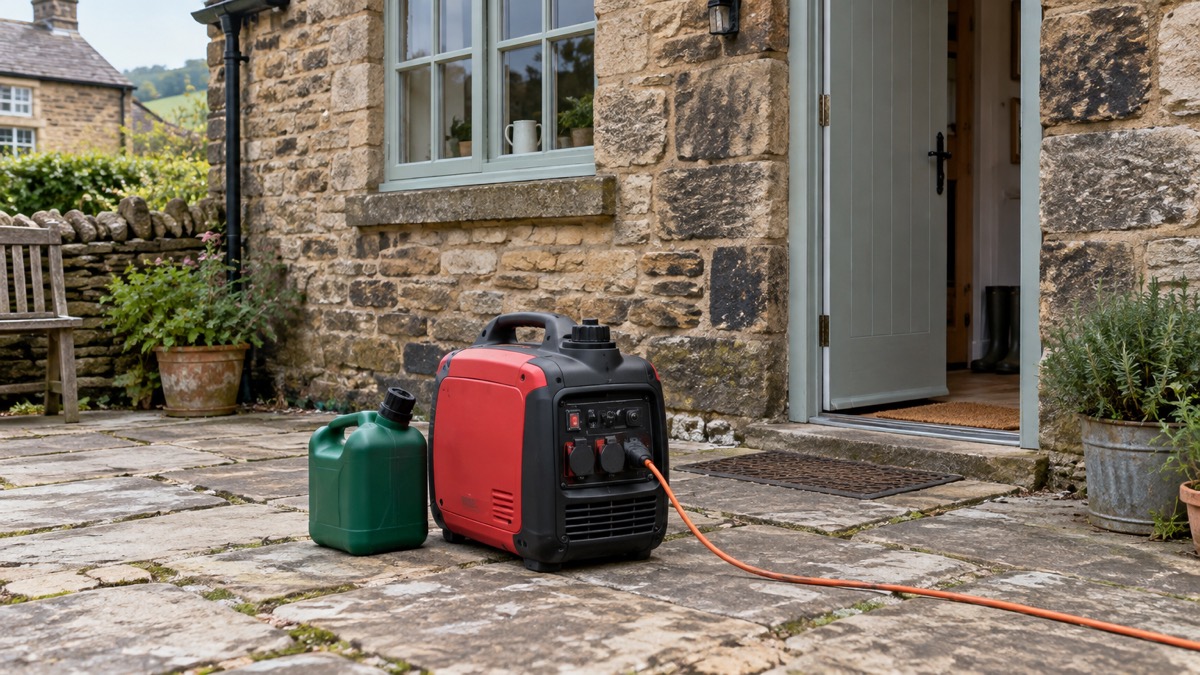
The headline number is the continuous rating. The 2.20kW maximum is there to absorb the surge when a motor starts, such as a fridge compressor kicking in, and should not be treated as a working load. The guide to watts, watt-hours and surge explains why the difference matters.
What it can power in a power cut
The FG2500iS is designed for small electrical appliances, lighting, camping equipment and sensitive electronics such as laptops, phone chargers and televisions1. The table below puts common household loads against its 2.00kW continuous rating, using appliance figures published by Electrical Safety First and by generator makers2.
| Appliance | Typical draw | Fits within 2.00kW? |
|---|---|---|
| Standard fridge freezer | 150W | Yes, with plenty to spare2 |
| Freezer | 200W | Yes2 |
| American style fridge freezer | 350W | Yes2 |
| Jig saw | 350 to 750W | Yes3 |
| Coffee maker | 550W | Yes4 |
| Air conditioner | 500 to 2500W | Only the smallest units3 |
The pattern is clear: the everyday essentials of a power cut sit far below the generator's ceiling, and the things that do not fit are heating and cooling appliances that draw kilowatts. Add up what you plan to run at once and keep the total under 2.00kW, leaving headroom for start-up surges. The guide to what size generator you need walks through the sum.
Running a fridge or freezer
A fridge freezer is the load most households care about most, and at 150W it is well within reach2. The generator does not change the food safety rules, though. Keep the fridge and freezer doors closed as much as possible during a cut, because the less you open them the longer the food stays cold5. How long a fridge or freezer holds its temperature depends on its age, how fresh the food is, whether the doors stay shut and how full it is7.
Under normal conditions a fridge should run between 0°C and 5°C, checked with a thermometer6. Once the power is back, check the temperature before you trust the contents. Give the appliance space for air to circulate and keep its vents and coils free of dust, because fridges and freezers can cause fires if they are defective or not properly ventilated7.
Charging phones and laptops safely
The FG2500iS has a 1.5A USB socket and a 230V 13A outlet, so you can charge devices directly or through their own chargers1. The fire and rescue service advice is to charge on a hard surface such as a table or worktop, never on a soft surface like a bed or carpet, where a device can overheat and catch fire9. The Government's fire safety guidance says to follow the manufacturer's instructions, use a compatible charger, and not to charge devices along your escape route10.
The Royal Society for the Prevention of Accidents adds that you should never leave chargers for phones, tablets and laptops charging overnight or on a flammable surface such as a bed or sofa, and should only use chargers recommended and supplied by reputable retailers11. Electrical Safety First says to use only the cable and charger specified or provided by the manufacturer, and to supervise children charging their own devices12. Do not cover a phone, tablet or charger while it is plugged in, and do not leave devices charging while you sleep or unattended13. The safe charging at home checklist sets these out step by step.
Run time: about 6 hours on a 4.50 litre tank
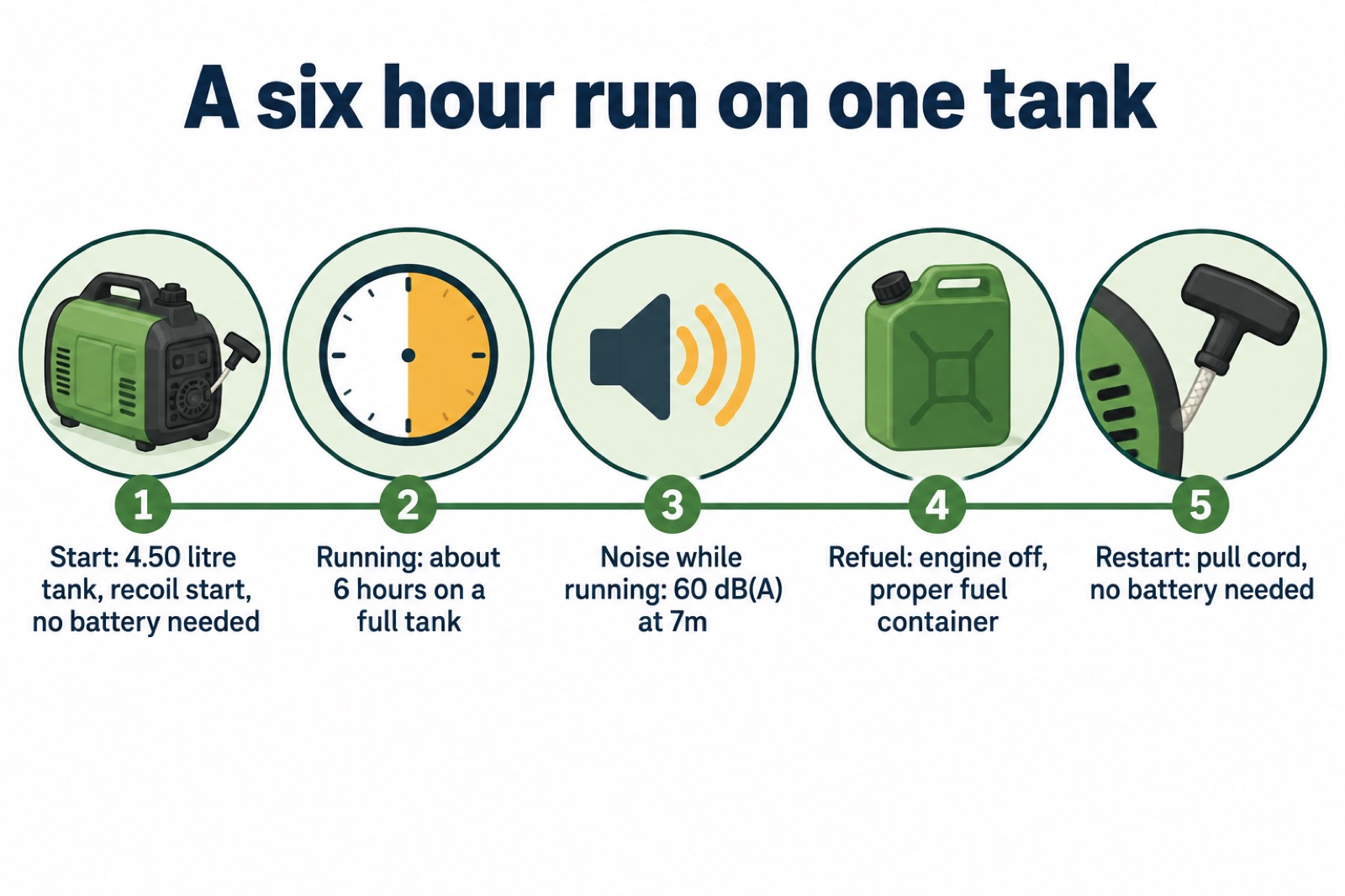
The distributor quotes a run time of 6.00 hours on the 4.50 litre tank1. That is a headline figure, and real running time depends on the load. A generator working hard burns more fuel than one ticking over, and the ECO mode is there to save fuel when the load is light1. For comparison, a standard generator tank is quoted as lasting 2 to 4 hours, so the FG2500iS sits at the longer end for a machine of its size14.
Plan around the tank rather than the clock. Six hours covers an evening and part of a night, or a working day with a refuel in the middle. Refuelling is the moment to be most careful: switch the generator off and let it cool before you open the fuel cap, and refuel outdoors, never near a flame or a smouldering cigarette. Store petrol only in a proper container, and only as much as you can store safely. The guide to how much petrol you can store at home covers the rules, and how long a generator runs on a tank explains how load changes the figure.
Starting it: recoil pull cord, no battery needed
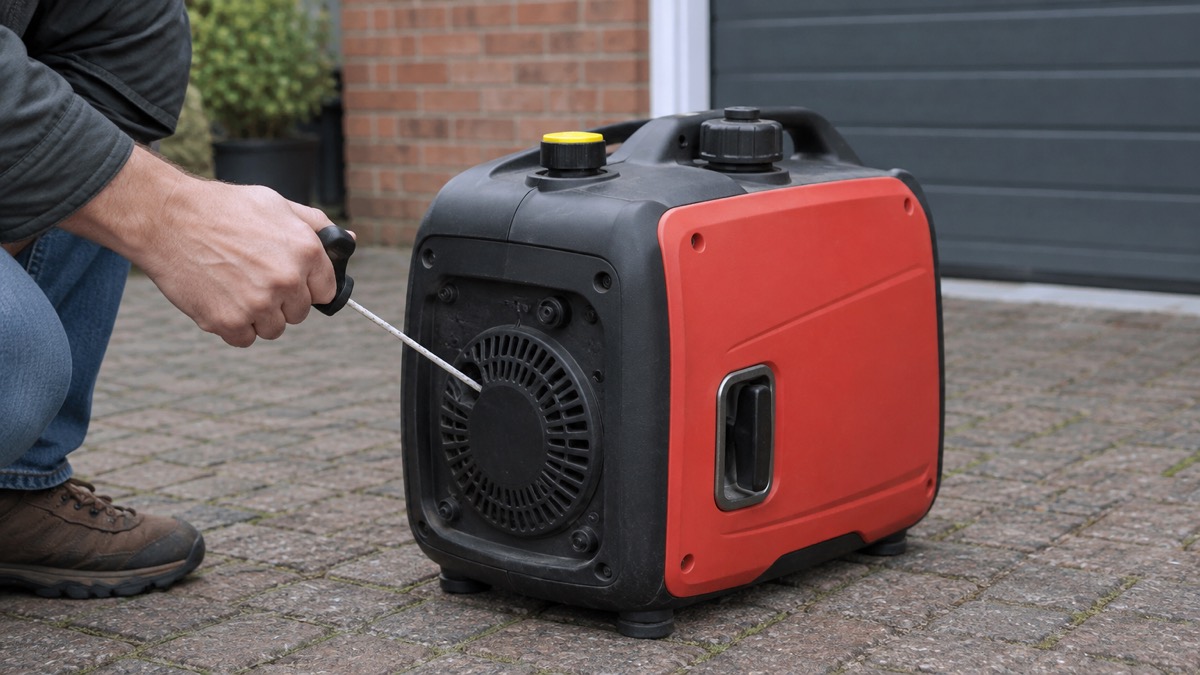
Starting is mechanical. The distributor says you simply pull the cord sharply and the generator will start, with no battery required1. The starting method is listed as recoil1. That is an advantage in a long outage: there is no starter battery to go flat while the machine sits in the shed, which is a common reason electric-start generators fail when they are needed. The trade-off is that you start it by hand every time, so check before winter that the cord pulls freely and the machine is not seized.
Before you pull the cord, check the oil. The engine takes SAE 10W30 four-stroke oil and holds 0.35 litres1. Running a small engine with too little oil will damage it, so check the level on a level surface before each run and top up as the manual directs. Then check the fuel, set the choke as the manual describes, and pull.
If it will not start, work through the simple causes first: fuel, oil, the spark plug and the air filter. The distributor lists the spark plug as E6TC, E6RTC or BPR7HS1. A fouled or worn plug is a common culprit, so keep a spare and the right spanner with the machine. The guide to whether a generator will start in cold weather covers the conditions that make starting harder.
Safety: where it runs and how it is wired
The single most important rule is where the generator stands. It must run outdoors, away from doors, windows and vents, because the exhaust contains carbon monoxide. Never run it in a garage, even with the door open, and never in a shed or conservatory. If anyone in the household develops a headache, dizziness or nausea while it is running, get them into fresh air and seek medical help. The guide to carbon monoxide from generators covers the warning signs, and can you run a generator indoors answers the question directly.
The second rule is how you connect appliances. Plug them into the generator's own outlets with proper leads. Do not connect the generator to your home's wiring unless it is done properly by a competent person, because a generator feeding the house can put power back up the line and endanger the people working to restore the supply. The guide to connecting a generator to your home's wiring explains the safe options, and extension leads and overloading covers keeping the load within the 13A outlet's limits.
Keep the machine dry. Petrol generators should not be run in rain without protection, and water and electricity are a poor combination. Give it a stable, level surface, keep children and pets away from it while it runs, and let it cool before you move it or cover it. The full set of rules is in generator safety.
Weight, carrying and storage
At 22.00 kg and 330 x 480 x 540mm, the FG2500iS is portable but not light1. Treat it as a two person lift or a careful short carry, and decide where it will stand before you need it. A paved spot outside, away from doors and windows, with a clear route to it, is what you are looking for. Lift with your legs, keep your back straight, and never carry it while it is running or hot.
Storage matters as much as use. Drain or stabilise the fuel if the machine will sit for months, change the oil as the manual directs, and keep the spark plug spanner and a spare plug with it. Store it somewhere dry and out of the weather, with the vents clear. The guide to storing a generator after a power cut sets out the routine, and the backup power checks before winter is a good annual reminder.
The 12V DC output at 8A is one of the sockets the generator provides, alongside the 230V 13A outlet and the 1.5A USB port1. Anything with a 13A plug belongs on the 230V outlet. If you want to run mains equipment from a battery instead, the guide to 12V inverters explains how that works.
Support, warranty and availability
The FG2500iS carries a 3 year limited warranty subject to the manufacturer's terms and conditions1. Keep your proof of purchase, the manual and any service records together, because a warranty claim will ask for them. The machine is a Ford Official Licensed Product, so the warranty is handled under the manufacturer's terms rather than by Ford as a car maker1.
Availability moves. When the distributor's product page was checked it listed the generator as out of stock1. That is a snapshot, not a permanent state, so check with the retailer before you plan around it. If you need backup power sooner, a portable power station covers phones, lighting and a fridge without fuel, exhaust or noise, and a generator can be added later for heavier loads. The guide to using generators and power stations during an outage covers running both, and the power cut backup power checklist lists what to have ready before the lights go out.
Sources (14)
- Ford FG2500iS 2kW Petrol Inverter Generator, Generators Direct, 2026-07-01
- Ratings of electrical appliances, Electrical Safety First, 2026-10-25
- Champion 2800 Watt Petrol Generator CPG3500, Champion Power Equipment, 2026-10-25
- Small generators, Jackery, 2026-10-25
- What to do in a power cut, Northern Powergrid, 2026-10-25
- Food safety in the kitchen: power cuts, Food Standards Scotland, 2026-10-25
- Tips to help you during a power cut, Electricity North West, 2026-10-25
- Your guide to fire safety, Scottish Fire and Rescue Service, 2023-11-03
- Student safety, Devon and Somerset Fire and Rescue Service, 2026
- Domestic fire, Prepare campaign, 2026-10-12
- Keeping kids safe: fires, RoSPA, 2026-10-26
- Laptops and notebooks, Electrical Safety First, 2026-10-25
- Mobile phones and tablets, Electrical Safety First, 2026-10-25
- Generator FAQ, Just Generators, 2026-10-25
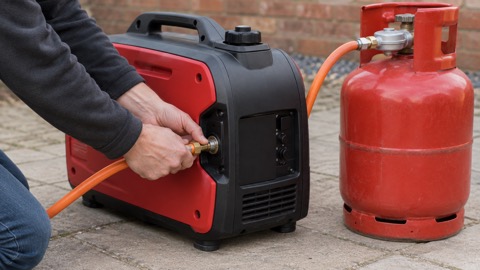 EcoFlow Dual Fuel Generator
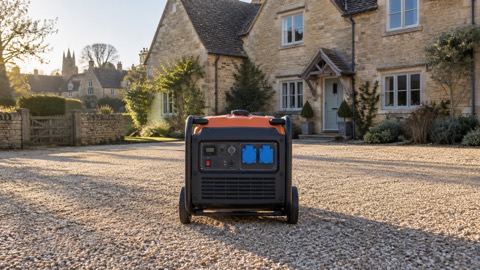 Honda EU70iS Generator
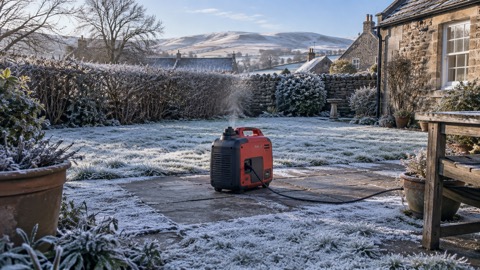 Honda EU32i Generator
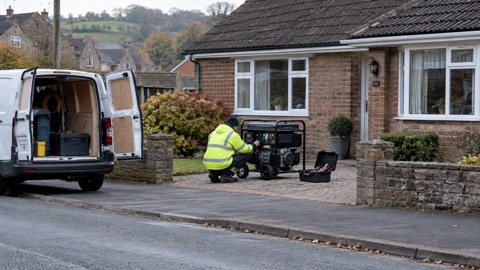 Honda EG3600 Generator
 Pramac P3500i Generator
 Senci SC6000-II Home Generator
 Senci SC10000-II Generator
 Senci SC6600iED Generator
 Gorilla Power GP3800iE
 Gorilla Power GP6500E-DF
 Gorilla Power GP3500i
 Hyundai HY2250Si Generator