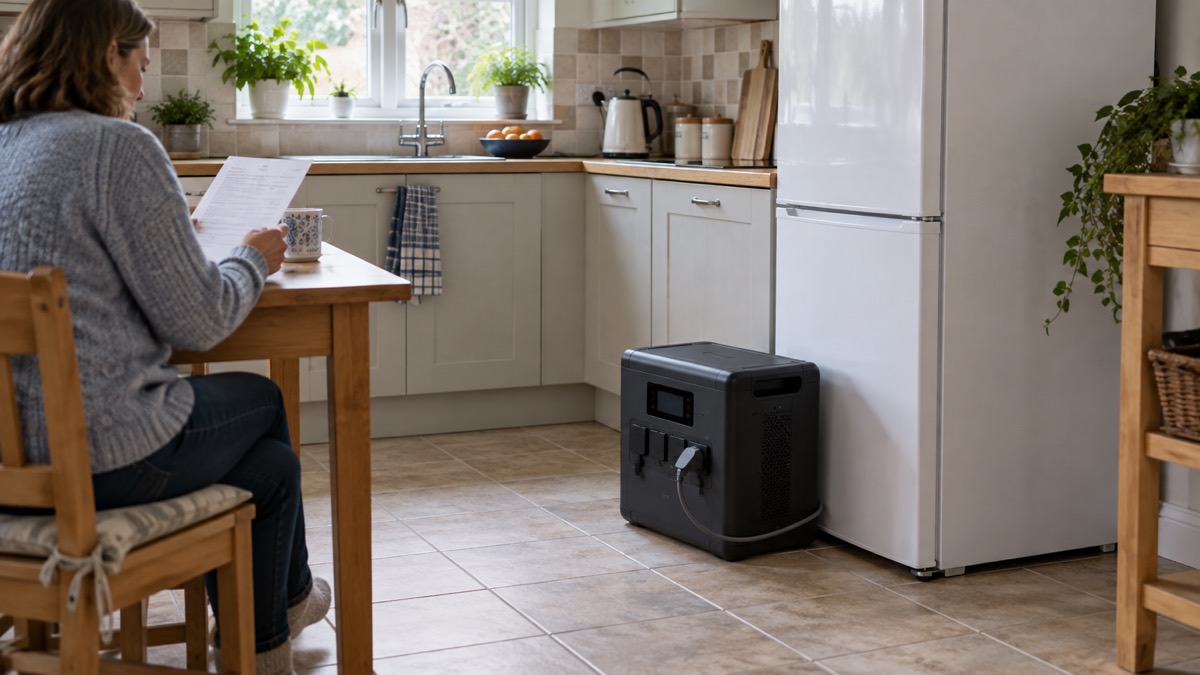
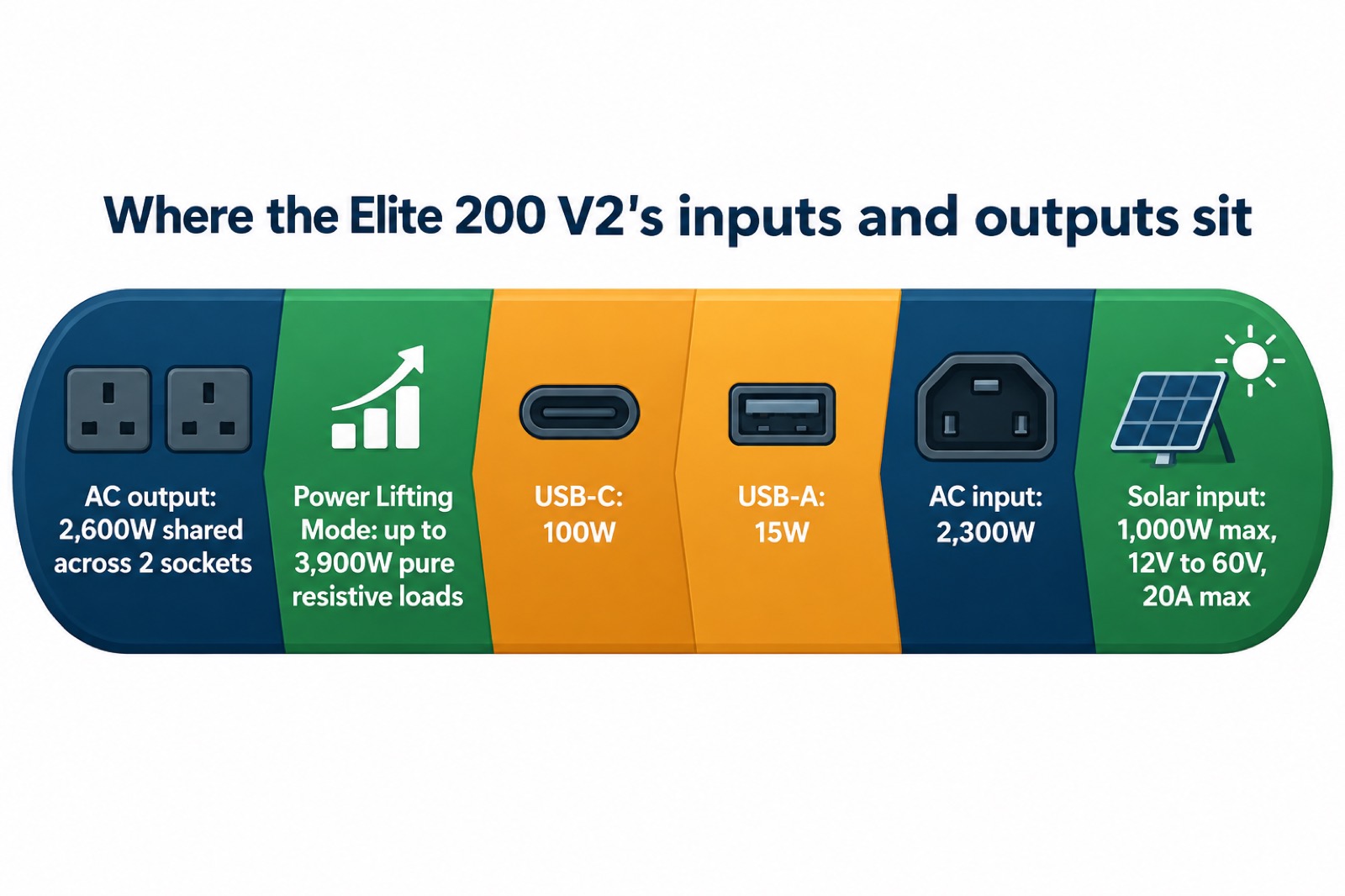
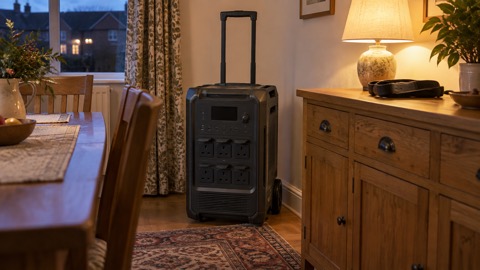
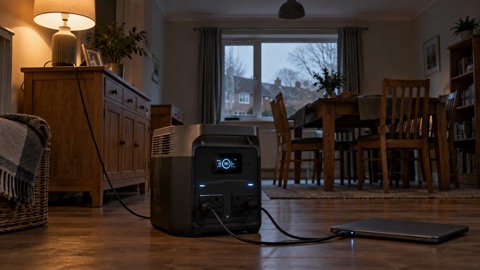
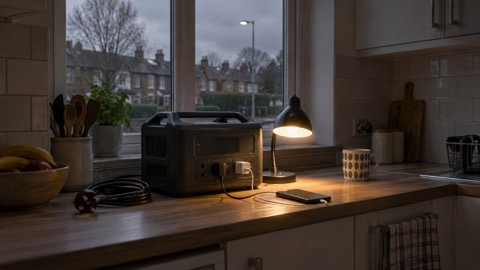
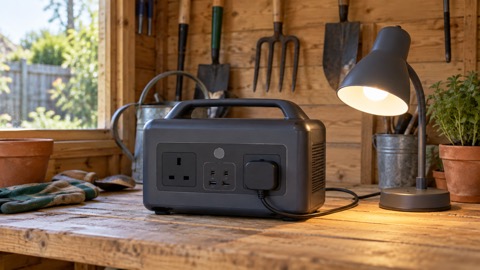
The BLUETTI Elite 200 V2 is a portable power station with a 2,073.6Wh battery and a 2,600W output, built to run mains appliances without a generator1. It has two AC sockets, USB-A and USB-C ports and a cigarette lighter port, and the maker says it can power up to seven devices at once2. For a household, that means a fridge, a lamp, a phone charger and a router can all be kept going from one box that sits in the corner of a room.
The feature that sets it apart is Power Lifting Mode, which the maker says supports pure resistive loads of up to 3,900W, enough for heating appliances such as kettles, electric blankets and hair dryers2. It charges from the wall, from solar panels, from a car, or from two of those at once, and the maker states an 80% charge within an hour with simultaneous AC and DC charging2.
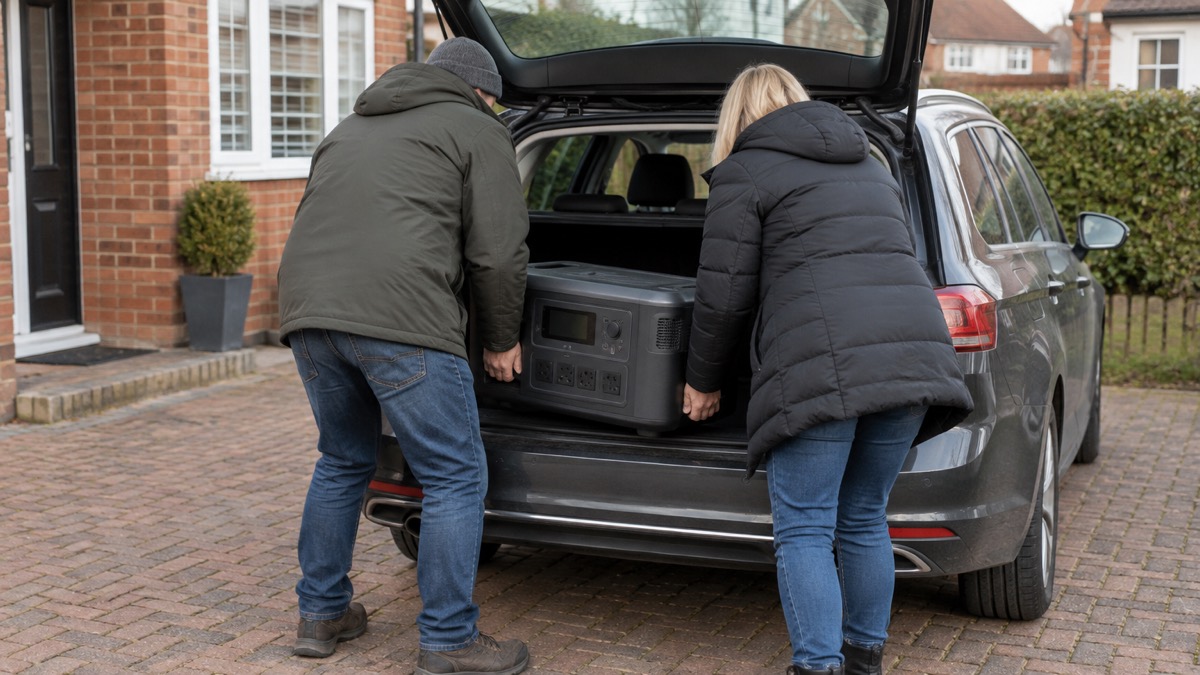
It is not a small unit. The maker puts the weight at 24kg or more, so it is a two-person lift or a permanent fixture rather than something you carry up the stairs each time the power goes4. This page sets out what it can do, how to charge it, how to use and store it safely, and what the maker says about battery life and support.
What the Elite 200 V2 is and who it suits
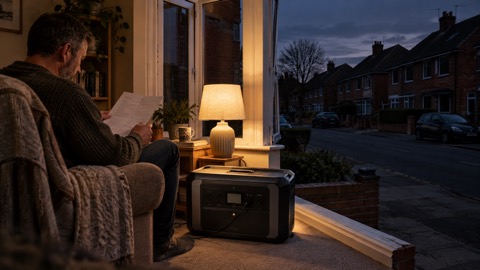
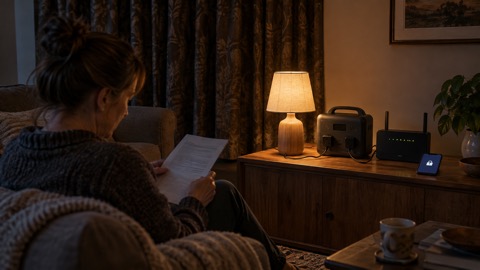
This is a lithium iron phosphate power station aimed at three jobs the maker names: camping, off-grid living and home backup for unexpected power outages2. For a UK household the third is the one that matters. A power cut that lasts a few hours is inconvenient; one that lasts a day or more starts to threaten the fridge, the boiler controls and the phone you need for updates. A unit of this size sits between a small power bank and a fixed home battery: big enough to run real appliances, small enough to wheel into the room where you need it.
The maker describes a modular wireless design that packs 2kWh of capacity into what it calls a 1kWh size, using ABS materials for the casing2. It also lists a grounding terminal with leakage protection as part of the design2. The battery cells are described as automotive-grade LiFePO₄, a chemistry chosen for cycle life rather than for the lightest possible weight5.
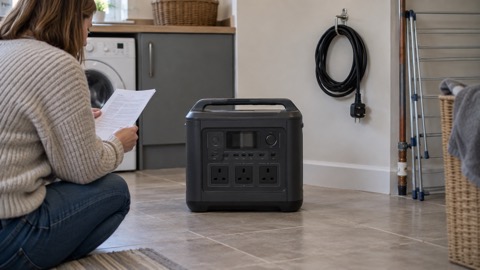
Who it suits is a household that wants to keep a fridge, lighting, communications and a few comfort appliances running through an outage, and that has somewhere at ground level to keep a 24kg unit. It suits less well anyone who needs to carry their backup power between floors or between properties, or who wants to run an electric shower or an immersion heater for long periods, which no unit of this capacity will do.
If you are still deciding what to keep running in an outage, work that out before choosing kit: our guide to deciding what to keep running when the mains fails sets out the order that matters. For how this class of product compares with a petrol generator, see portable power stations: what they do and how to choose.
Specifications
The figures below are the maker's own, from its UK product pages. Where two maker pages give different figures, both are shown.
| Specification | Maker's figure |
|---|---|
| Battery capacity | 2,073.6Wh1 |
| Battery chemistry | Automotive-grade LiFePO₄5 |
| Rated AC output | 2,600W1 |
| Power Lifting Mode | Up to 3,900W, pure resistive loads2 |
| AC outlets | 2 x AC output (2,600W)2 |
| USB outputs | USB-A (15W); USB-C (100W)2 |
| DC output | 1 x cigarette lighter port2 |
| Devices at once | Up to 72 |
| AC input | 2,300W1 |
| Solar input | 1,000W max, 12V to 60V, 20A max1 |
| Combined AC and DC input | 2,400W max2 |
| Charge to 80% | About 1 hour with AC and DC together2 |
| Noise | 16 dB under low power loads1 |
| Weight | 24kg or more4 |
| Warranty | 5 years1 |
The maker's pages agree on noise: the Elite 200 V2 runs at 16 dB under low power loads2. On charge time, one page states 80% in just 1 hour with AC and DC charging together, at a combined input of up to 2,400W1. The maker's charging methods are wall charging, solar charging, car charging and dual charging1.
What it can power, and for how long
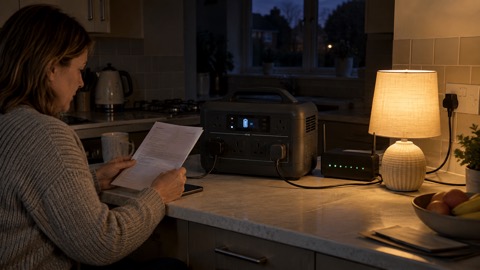
The headline is 2,600W of output shared across up to seven devices2. That is enough for the ordinary loads of a household outage: a fridge cycling on and off, LED lamps, a phone and laptop charger, a broadband router and a television. It is not enough to run an electric shower, an oven or a whole house's circuits, and it is not designed to be wired into your home's wiring.
Power Lifting Mode changes the calculation for heating appliances. The maker states that in this mode the unit delivers up to 3,900W and supports pure resistive loads of up to 3,900W, naming kettles, electric blankets and hair dryers as examples2. Resistive loads are things that turn electricity directly into heat. Motors and electronics are a different matter, and the maker's figure is specifically for pure resistive loads, so do not assume a 3,900W motor will start.
Run time depends entirely on what you plug in, and the maker gives no run time figure for a stated load. What it does give is capacity and output: 2,073.6Wh of battery and 2,600W of AC output2. A user comment quoted on a maker page says around 10 air fryer meals from a full charge when used off grid with a 200W solar panel6. Treat that as an illustration of one person's use rather than a specification. To work out your own figure, see watts, watt-hours and surge explained and how long a power station will run a fridge or laptop.
Charging from the wall, solar and car
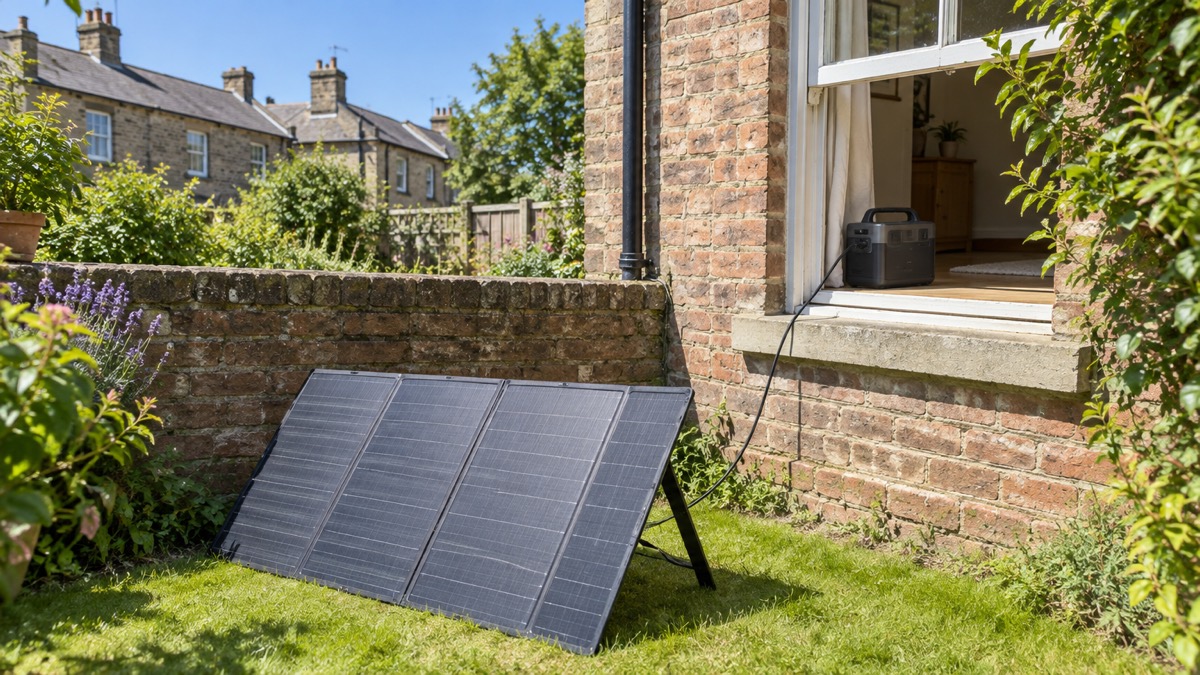
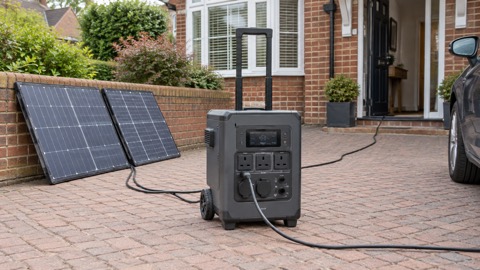
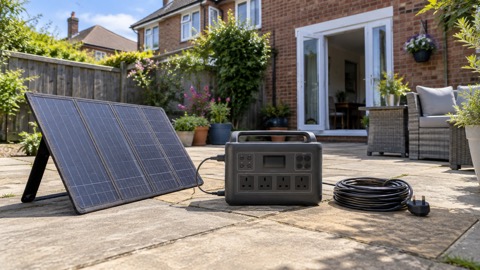
The maker lists four charging methods: wall charging, solar charging, car charging and dual charging2. Wall charging draws up to 2,300W from a mains socket1. Solar charging accepts up to 1,000W at 12V to 60V and 20A, with automatic solar tracking and MPPT technology to get the most from the panel through the day2. Car charging uses the vehicle's socket and is the slowest of the three.
Dual charging is the fast option. With AC and DC input together the unit accepts up to 2,400W, and the maker states this gives an 80% charge within an hour2. That matters in practice: if a storm warning gives you a few hours' notice, you can have the unit most of the way full before the power goes.
For solar, the maker gives panel limits that depend on the panel. It says you can safely connect up to two 100W panels in series, and separately that the unit supports up to three 350W panels in series7. The input ceiling is 1,000W, so check the panel's voltage and current against the 12V to 60V and 20A limits before connecting anything1. Our guide to portable solar panels for charging in a power cut explains how series connection affects voltage, and what size solar panel you need helps size a set.
Safe use and storage at home
The maker states that the unit operates reliably in high temperatures while protecting against overcurrent, overvoltage and combustion, and describes four protective layers, an intelligent protection system and an efficient cooling system2. It also states that an AI battery management system monitors battery performance in real time1. Those are the maker's claims for its own product; they are not a substitute for using it sensibly.
The maker's own safety instruction is worth quoting directly, because it is the one that governs how you treat the unit day to day:
"It operates reliably in high temperatures while protecting against overcurrent, overvoltage, and combustion, ensuring a "
Keep the unit somewhere dry, on a hard surface with the vents clear, and do not block the cooling system. Charge it where you can see it rather than under a pile of coats. For the general principles that apply to any lithium battery in the home, including warning signs and what to do if a battery swells or catches fire, see lithium-ion battery safety at home, warning signs a lithium battery is dangerous and what to do if a lithium battery catches fire.
For storage, the maker supplies a grounding screw and describes a grounding terminal with leakage protection2. Use it as the user manual directs and do not improvise. When the unit is not in use, keep it in a dry place at a sensible temperature and check the charge periodically rather than leaving it flat for months; our guide to storing a power station when not in use covers this, and what temperature batteries should be stored at covers the cold.
Battery life, warranty and support
The maker states that the Elite 200 V2 uses automotive-grade LiFePO₄ cells with a 17-year lifespan, and gives a cycle life of 6,000+ cycles to 80%2. The 17-year figure carries a caveat in the maker's own words: it is calculated on one charge cycle per day and is for reference only2. In other words, the lifespan depends on how hard you work the battery, and a household that cycles it once a day is the assumption behind the number.
The maker also states that the cells are the first CNAS-certified in the industry, achieving 12 times the average durability, and offers a 5-year warranty with dedicated customer support2. The warranty is the figure to hold on to when you are deciding whether this is the right purchase for a household that may only use it a few times a year.
The maker states that the Elite 200 V2 uses automotive-grade LiFePO₄ battery cells with a 6,000+ cycle life to 80%, and gives a 17-year lifespan calculated by one charge cycle per day and for reference only1. It carries a 5-year warranty with dedicated customer support2. The maker also states that the AI-BMS monitors battery performance in real time, protecting against overcurrent, overvoltage and combustion2.
What comes in the box, and what does not
The maker lists four items in the box: the Elite 200 V2 itself, one AC charging cable, one grounding screw and the Elite 200 V2 user manual6. That is the full list across the maker's product pages.
What is not included matters for planning. Solar panels are not in the box, and neither is a car charging cable. If you intend to charge from a panel in an outage, buy the panel and the right cable before you need them, and test the combination on a sunny day rather than discovering a missing connector in the dark. The maker's own solar panel pages set out the panel options and their limits7.
Where to get help and support
The maker offers a 5-year warranty and dedicated customer support1. Keep your proof of purchase and the user manual together with the unit, so that a support call or a warranty claim does not depend on finding a receipt months later.
For the wider picture, our backup power at home guide covers how to plan for an outage from the beginning, and the power cut backup power checklist lists what a household should have ready. If you are weighing this unit against others in the range, the BLUETTI brand page lists the models covered on this site, including the BLUETTI Elite 100 V2 and the BLUETTI Elite 400.
Sources (8)
- BLUETTI Elite 200 V2 500W product page, BLUETTI, 2026-10-25
- BLUETTI Elite 200 V2 portable power station page, BLUETTI, 2026-10-25
- BLUETTI Elite 200 V2 350W product page, BLUETTI, 2026-10-25
- BLUETTI home battery backup page, BLUETTI, 2026-10-25
- BLUETTI Elite 200 V2 with 100W solar panel product page, BLUETTI, 2026-10-25
- BLUETTI Elite 200 V2 charger page, BLUETTI, 2026-10-25
- BLUETTI solar panels page, BLUETTI, 2026-10-25
- BLUETTI Elite 200 V2 charger page, BLUETTI, 2026-10-25

 BLUETTI Apex 300 Power Station
 BLUETTI Elite 100 V2
 Anker SOLIX C2000 Gen 2
 Anker SOLIX C1000 Power Station
 EcoFlow DELTA Pro
 BLUETTI Elite 400
 Anker SOLIX C300 Power Station
 EcoFlow DELTA 3
 EcoFlow DELTA 2 and DELTA 2 Max
 EcoFlow DELTA and DELTA Max
 EcoFlow RIVER 3 and RIVER 3 Plus
 EcoFlow RIVER 2 and RIVER 2 Max