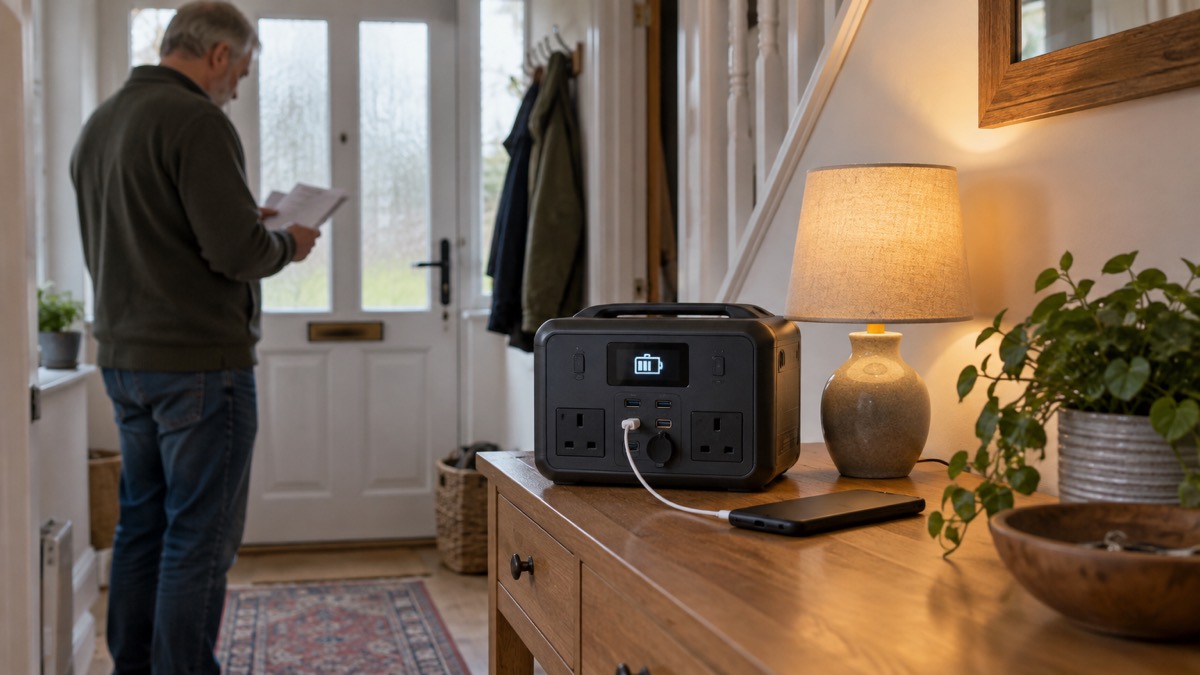
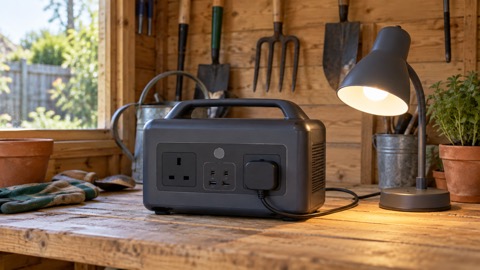
The Anker SOLIX C300X is a small portable power station built around a 288Wh lithium iron phosphate (LFP) battery, with a rated output of 300W and a 600W surge through Anker's SurgePad feature1. In plain terms, it is a battery in a box with mains sockets, USB ports and a car socket, sized for charging phones and laptops, running a lamp or a fan, and keeping small devices going when the mains fails. It is not a whole-house backup: at 300W it will not run an oven, a kettle or a heater.
For a household thinking about power cuts, the useful numbers are these. It recharges to 80% in about 50 minutes from a wall socket1. It takes up to 100W of solar through an XT60 connector, from panels rated between 11 and 28V1. It has seven charging ports, and it runs quietly, at 25dB from a metre away1. Anker lists it for camping, backyard parties, fishing, photography and emergencies1.
Before you buy, check which version you are looking at. Anker sells the C300X with AC and DC outlets, and a separate C300 DC model that is DC only1. The two have different box contents and different charging cables, and the DC version appears on Anker's refurbished page as well as new2. This page covers the C300X, and notes where the DC version differs.
What the C300X is and who it suits
The C300X is a portable power station, which means a battery, an inverter to turn its stored DC power into mains AC, and a set of charging ports, all in one carryable case. Its 288Wh capacity is the size of the tank; its 300W rating is the width of the pipe1. Anker describes the unit as 15% smaller than similar power stations, and the carry strap is sold separately1.
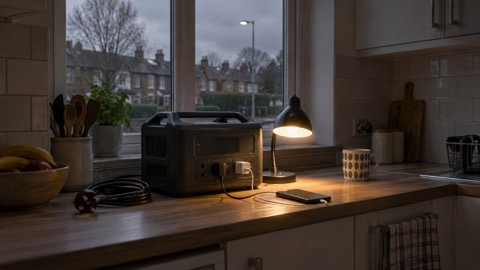
That combination suits a particular household. It is enough for phones, a router, a laptop, a lamp, a small fan and a radio, which is what most people actually miss in a short cut. It is not enough for anything that heats: kettles, toasters, irons, fan heaters and hairdryers all draw far more than 300W. If you want to know how to work out what your own appliances need, see Watts, Watt-Hours and Surge Explained and What Capacity Power Station Do I Need?.
Anker's own list of intended uses puts emergencies alongside camping and photography1, which is a fair summary of the design: light, quiet and quick to recharge, rather than powerful. For a wider view of the category, see Portable Power Stations: What They Do and How to Choose.
Output: 300W rated and 600W surge
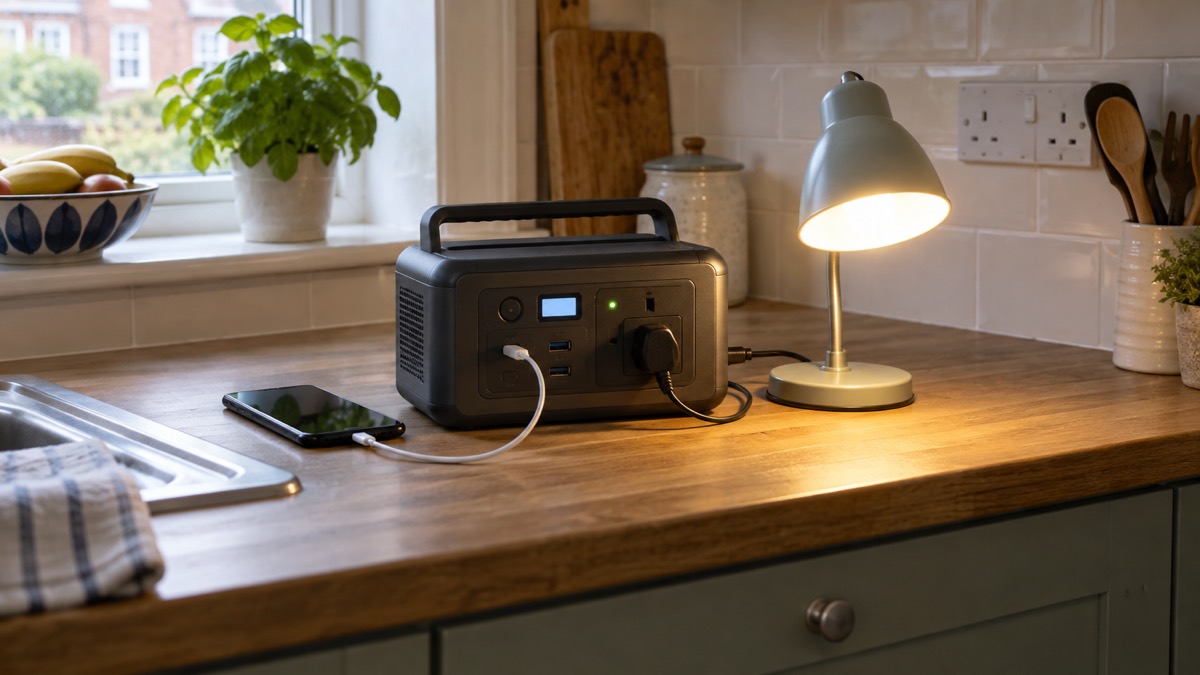
Anker rates the AC outlets at a maximum of 300W to connected devices, rising to 600W with SurgePad1. Which? lists the same figures, describing the output as up to 300W with a 600W surge3. The surge figure matters because motors and compressors draw a brief spike of current when they start, well above what they use once running. SurgePad is Anker's name for the headroom that lets the unit cope with that spike, and Anker states that all AC outlets support it1.
The practical rule is to add up the running watts of everything you plan to plug in at once and keep the total under 300W. A device that surges above 600W will trip the unit even if its running draw is modest. If you are unsure how surge works, Watts, Watt-Hours and Surge Explained sets it out.
| Rating | Figure | What it means for you |
|---|---|---|
| Rated AC output | 300W | The continuous load the outlets will carry1 |
| Surge output | 600W with SurgePad | Brief start-up spikes, on all AC outlets1 |
| Battery capacity | 288Wh | The stored energy available1 |
| Noise | 25dB at 1m | Quiet enough for a living room or bedroom1 |
Seven ports and what each one delivers
Anker lists seven device charging ports on the C300X1. Which? describes the layout as a pair of AC outlets, a car socket, two high-power USB-C ports, one lower-power USB-C and a single USB-A3. The roles are not identical: Anker states that USB-C1 and USB-C3 are output only, while USB-C2 is input and output1. That matters because USB-C2 is the port you use to recharge the unit from a USB-C charger as well as to charge a device from it.
The USB-C ports support 140W two-way fast charging, and Anker describes the 288Wh battery as supporting 140W two-way USB-C fast charging1. The lower-power ports are modest: Anker lists USB-C1 at 15W on its own, and USB-C1 and USB-A together at 20W1. USB-A alone is listed at 12W4. In practice, plug your fastest-charging device into USB-C2, and expect the smaller ports to trickle.
| Port | What Anker states it delivers |
|---|---|
| AC outlets (pair) | 300W rated, 600W with SurgePad1 |
| Car socket | A socket for car accessories3 |
| USB-C2 | 140W two-way, input and output1 |
| USB-C1 and USB-C3 | Output only1 |
| USB-C1 alone | 15W1 |
| USB-C1 and USB-A together | 20W1 |
| USB-A alone | 12W4 |
If you want the background on what those wattages mean for charging speed, USB-C Charging, Power Delivery and Cables Explained covers it.
Recharging: 50 minutes to 80% from the wall
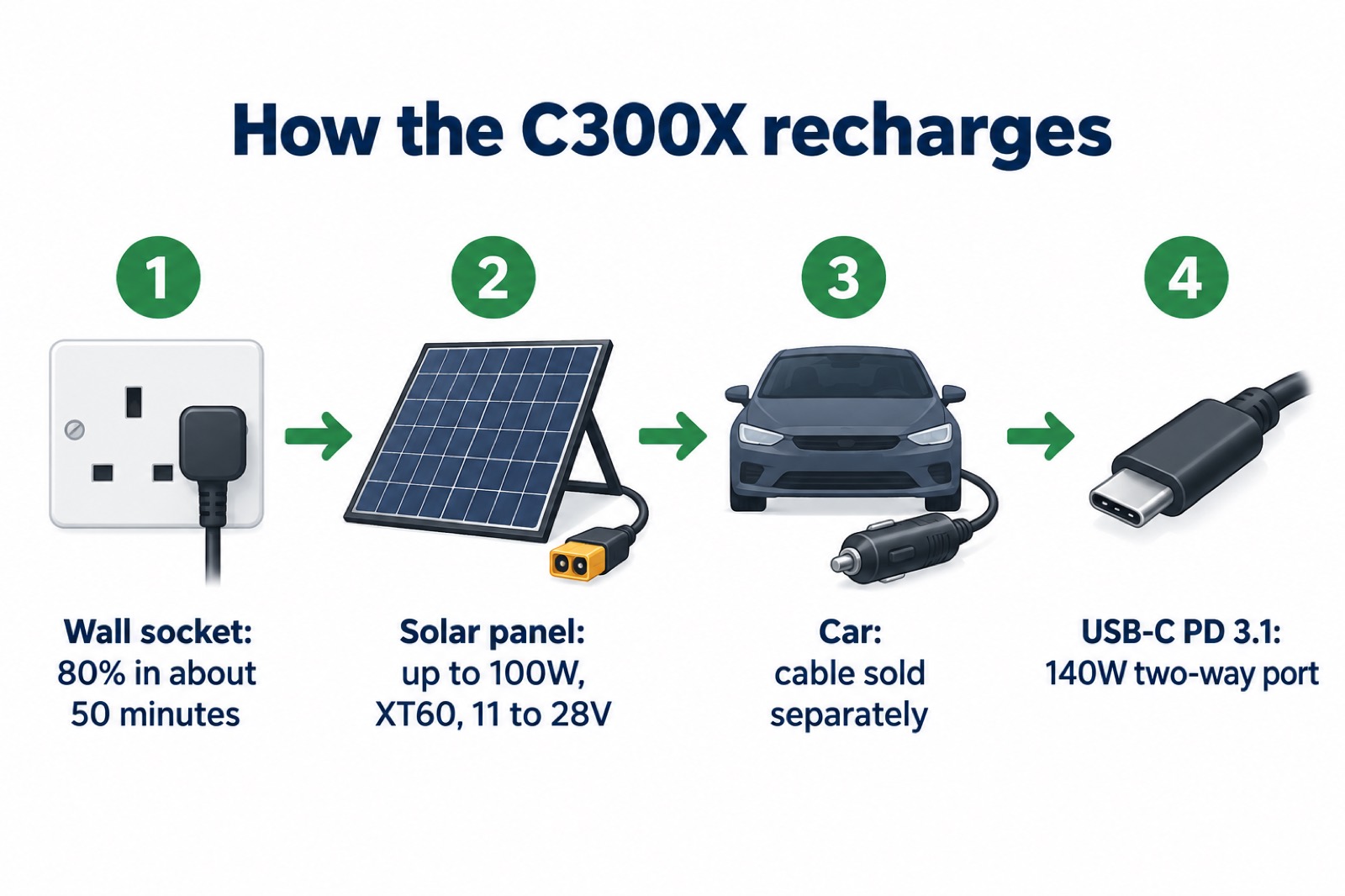
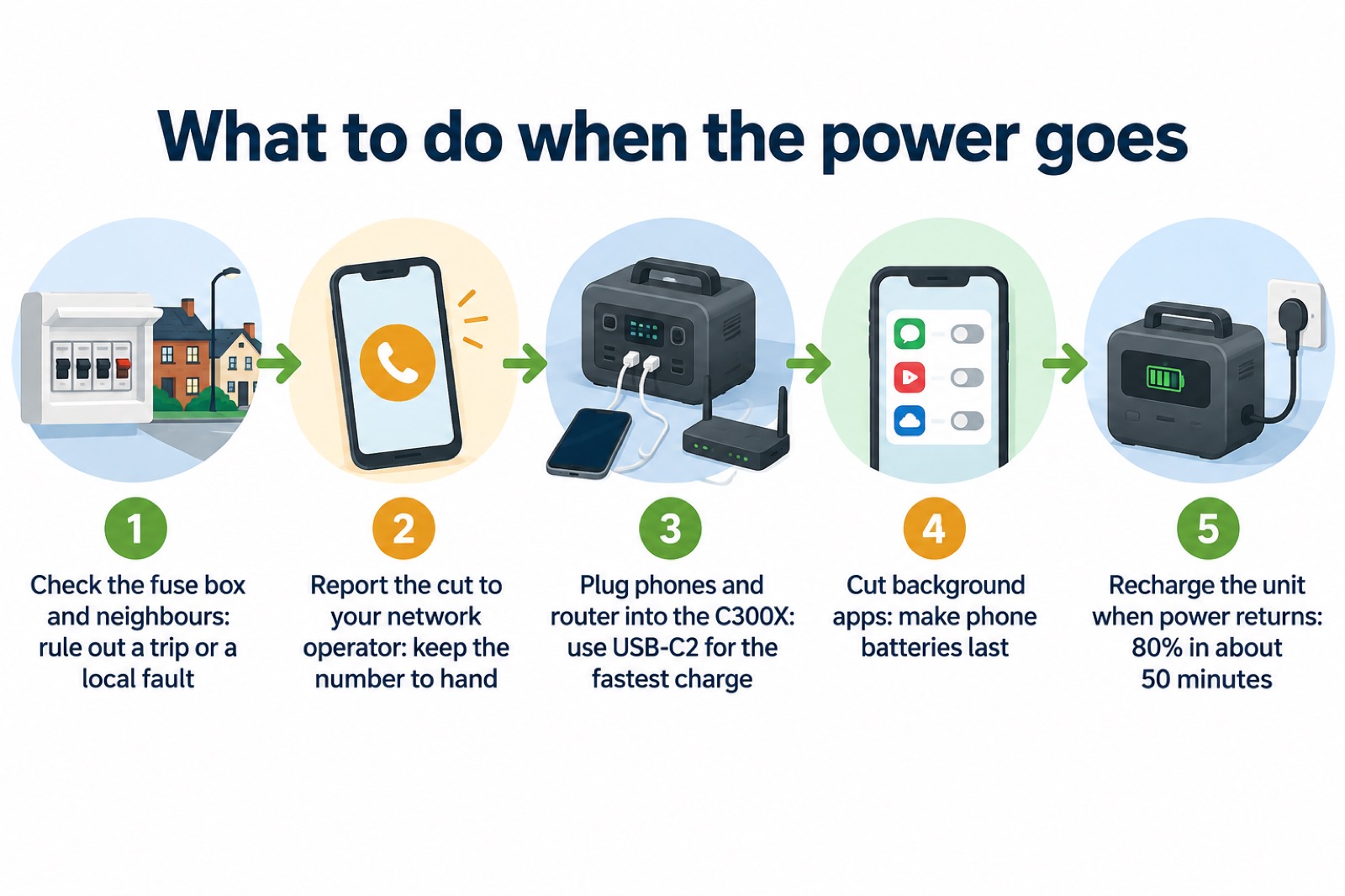
Anker states that the C300X recharges to 80% in just 50 minutes from a wall socket1, and Which? repeats the claim3. That speed is the unit's most useful feature in a cut: plug it in when the power returns and it is ready again within the hour. The DC version is listed differently, at 80% in an hour with the dual PD 3.1 USB-C port5.
Anker lists four ways to charge it: a wall outlet, solar panels, a car, or the PD 3.1 USB-C port1. The car and solar cables are not in the box and can be purchased separately, with Anker advising you to contact its support team for details1. For the car route, see Can You Charge a Power Station from Your Car?.
Solar charging: up to 100W through XT60
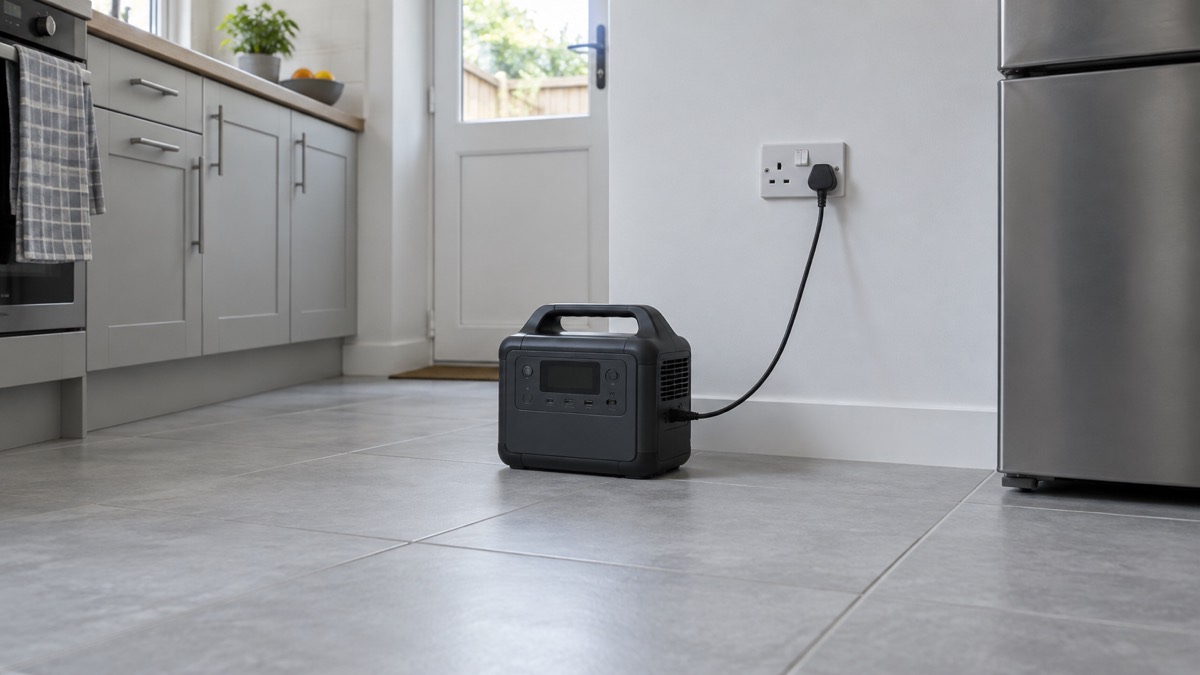
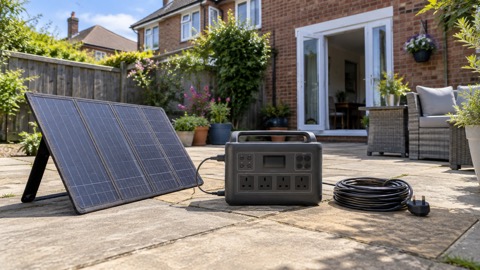
Solar charging is capped at up to 100W, and Anker is specific about the panel: only use solar panels between 11 and 28V and with an XT60 connector1. Anker suggests pairing the unit with the Anker SOLIX 100W Solar Panel1. The voltage window is the safety-critical part. A panel outside that range, or one wired with a different connector, is not what the maker specifies.
Anker also states plainly that the power station is not compatible with the Anker SOLIX PS30 or other 5V~3A USB-C solar panels1. Those small USB-C panels are common accessories, so check before assuming one will work. For panel sizing in general, see What Size Solar Panel Do I Need to Charge a Power Station? and Portable Solar Panels for Charging in a Power Cut.
A 100W panel in British weather will not deliver 100W for long, so treat solar as a top-up rather than a guaranteed recharge. How Long Does Solar Charging Take in the UK? explains why.
Charging it safely before first use
Anker's instruction is to recharge before activating for the first time, using a PD charger of 9V or higher, MPPT solar panels outputting between 11 and 28V, or AC charging, and to unplug the AC cable when finished1. Follow the maker's own sequence rather than switching on a unit that has sat in storage.
For lithium batteries generally, the fire and rescue services and battery safety guidance advise charging on a hard, non-flammable surface, away from soft furnishings, and not leaving charging unattended for long periods. Our Safe Battery Charging at Home Checklist and Lithium-Ion Battery Safety at Home set out the routine. If a battery swells, stops charging normally or gets hot, stop using it: see What to Do If a Battery Starts Swelling and Warning Signs a Lithium Battery Is Dangerous.
Using it in a power cut
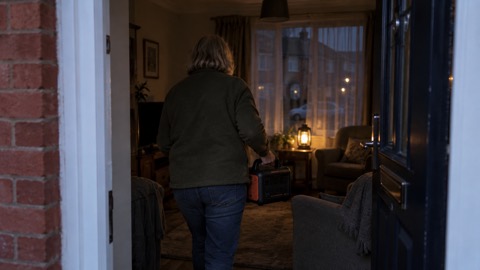
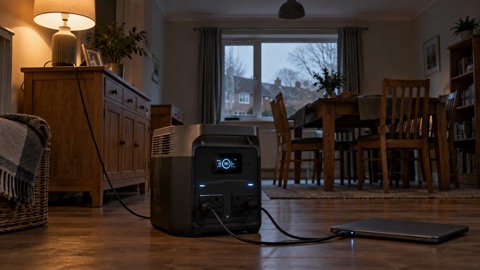
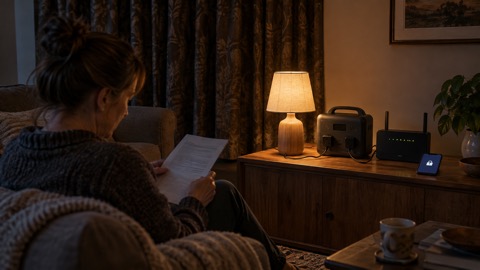
In a cut, the C300X does what a power station does best: it runs quietly and keeps small loads going. Anker states the unit emits 25dB from 1 m away1. That makes it usable in a living room or bedroom overnight, unlike a petrol generator, which must never be run indoors because of carbon monoxide. If you are weighing the two, see Portable Power Station or Petrol Generator for a Power Cut and Generator Safety: Carbon Monoxide, Fuel and Electric Shock.
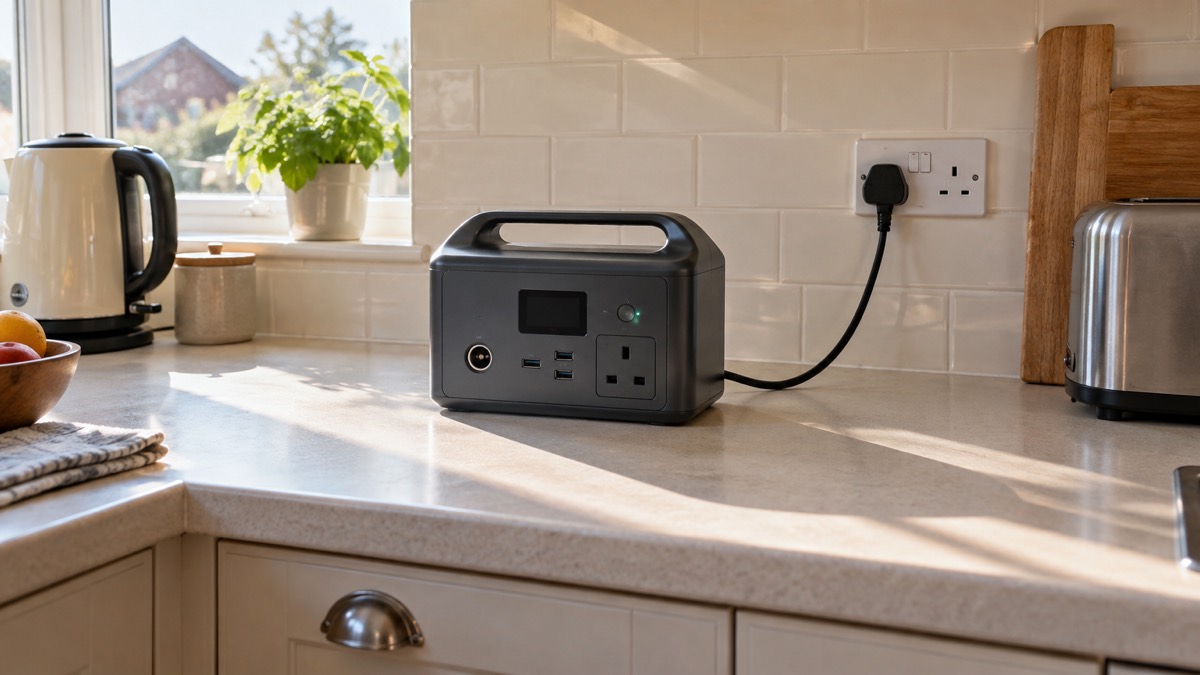
Anker states the unit can be controlled through the Anker app, connecting by Bluetooth or Wi-Fi, for what it calls intelligent customisation1. That lets you check charge and switch outlets without crouching over the unit. In a cut, the priority is usually the phone: Energy Networks Association advice includes cutting apps running in the background to make a phone battery last6. Our Power Cuts: A Household Guide and Using Generators and Power Stations During an Outage cover the wider routine.
Versions, box contents and accessories
Anker lists several variants: the C300X with 288Wh and 300W AC and DC outlets, the C300 DC with 288Wh and 300W DC only, a C300 with a protective cover, a C300X with a PS60 portable solar panel, and a C300X with a 100W solar panel1. The DC version also appears as a refurbished unit described as 90% new2. Check the model name on the listing before you order.
| Version | Outlets | In the box |
|---|---|---|
| C300X | AC and DC1 | Power station, AC charging cable, safety manual, warranty info1 |
| C300 DC | DC only1 | Power station, USB-C to C charging cable, safety manual, warranty info2 |
The carry strap is sold separately for both1. Anker describes attaching it for easier carrying, and the DC version is described as a 30% smaller power station7. The DC version's manual is digital only, accessed by scanning the QR code on the first page of the safety instructions in the package7.
Warranty, support and the power bank recalls
Anker's pages give different warranty periods for different versions: one page states a 5-year warranty1, while the DC version is listed with a 3-year warranty5. Anker also provides support for accessories and cables through its support team1.
On recalls: Anker recalled power bank models A1647 and A1652, with an ACCC recall advertisement dated 2 October 2024 and an expanded recall in June 20258. Anker asks customers who received 2024 recall information to re-check all their power banks using the 2025 submission form9. Those recalls concern power banks, not the C300X6. If you own an affected power bank, check the model number and follow Anker's recall instructions. For general battery safety, see Power Banks: Keeping Phones Charged in an Emergency.
Sources (9)
- Anker SOLIX C300X product page, Anker, 2026
- Anker SOLIX C300X DC refurbished page, Anker, 2026
- How to buy the best generator, Which?, 2026
- Anker SOLIX C300X with 60W solar panel, Anker, 2026
- Anker SOLIX C300X DC product page (EU), Anker, 2026
- Power cuts, Energy Networks Association, 2026
- Anker SOLIX C300 DC product page, Anker, 2026
- Anker power bank A1647 recall, Anker, 2024
- Anker power bank recall (EU), Anker, 2025

 BLUETTI Apex 300 Power Station
 BLUETTI Elite 100 V2
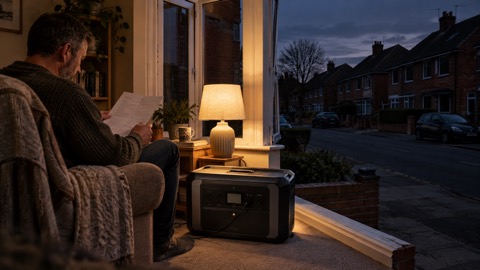 Anker SOLIX C2000 Gen 2
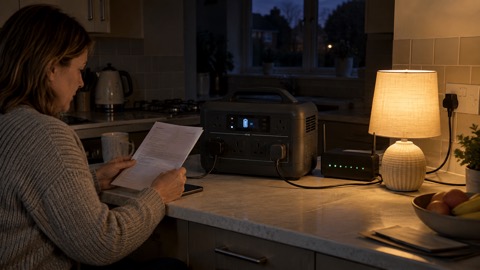 Anker SOLIX C1000 Power Station
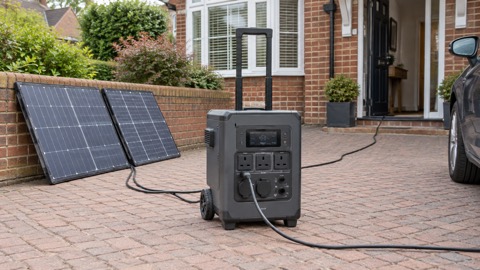 EcoFlow DELTA Pro
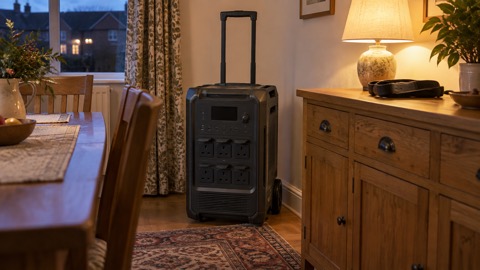 BLUETTI Elite 400
 Anker SOLIX C300 Power Station
 EcoFlow DELTA 3
 EcoFlow DELTA 2 and DELTA 2 Max
 EcoFlow DELTA and DELTA Max
 EcoFlow RIVER 3 and RIVER 3 Plus
 EcoFlow RIVER 2 and RIVER 2 Max