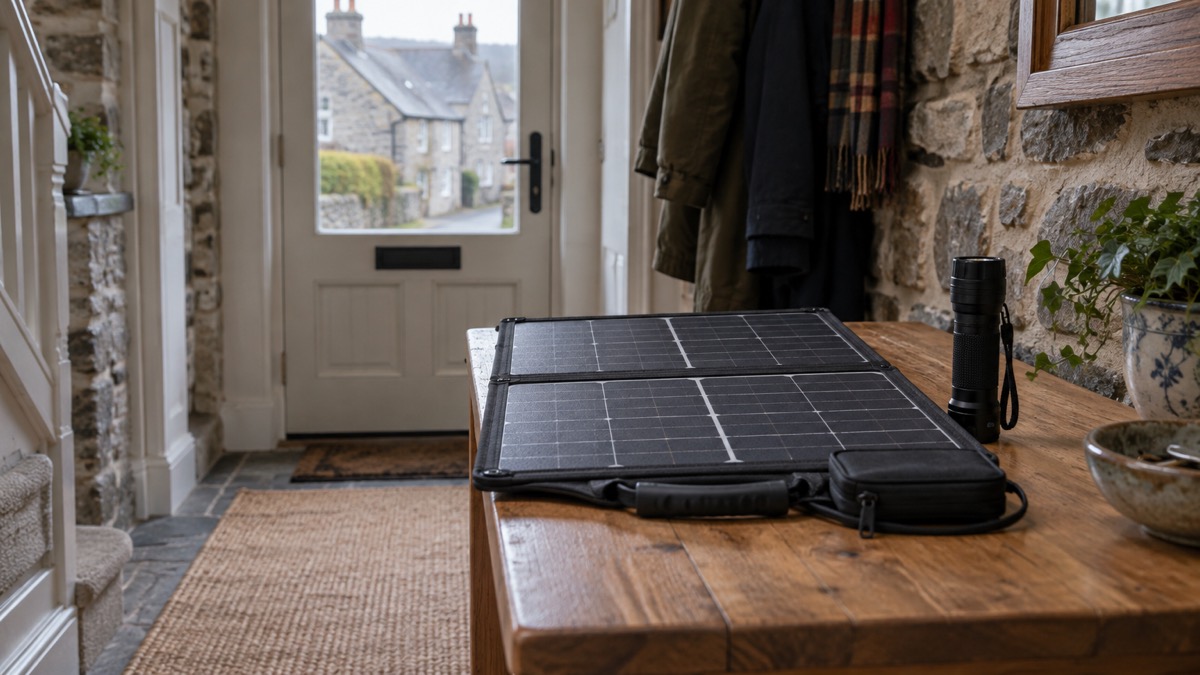
If you are thinking about an Anker SOLIX 100W Solar Panel for emergencies, the short answer is that it is a folding panel for charging a small Anker SOLIX power station when the mains is down, and it is a supplement rather than a replacement for grid charging. Anker lists it as pairing with the SOLIX C300 Portable Power Station, and its C300X bundle page pairs the same panel with the C300X1. It will not run your fridge or your boiler on its own; it tops up a battery that does.
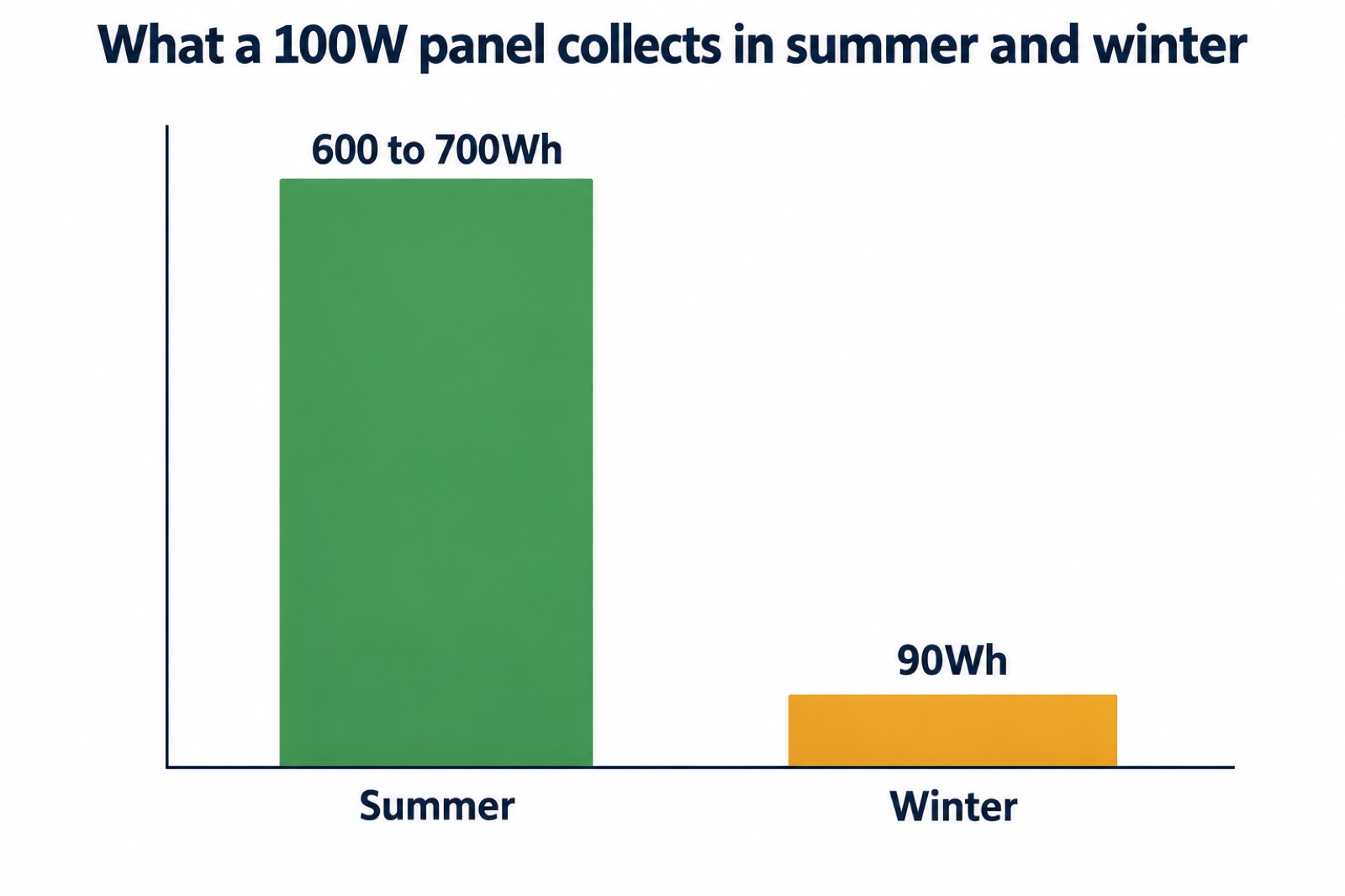
The realistic output matters more than the headline wattage. Independent guidance from the Caravan and Motorhome Club puts a 100W panel at 600 to 700Wh in summer and 90Wh in winter3. That is the difference between a useful trickle and a token one, and it is why a panel is best treated as a way to stretch a stored battery through a long outage, not as your only source of power.
Before anything else, one safety point that has nothing to do with this panel but sits in the same household kit. Anker has recalled several power bank models over lithium-ion battery fire risk, and owners should check their own power banks now4.
What the Anker SOLIX 100W Solar Panel is
The Anker SOLIX 100W Solar Panel is a portable solar panel rated at 100W, made by Anker as part of its SOLIX range of solar generators and power stations. Anker's own product page describes it simply as something to pair with the C300X power station, and the C300 bundle page uses the same wording for the C3001. In a household emergency plan it belongs in the same category as a power bank or a small power station: a way to keep phones, a radio and a torch charged when the mains has failed, using daylight rather than stored fuel.
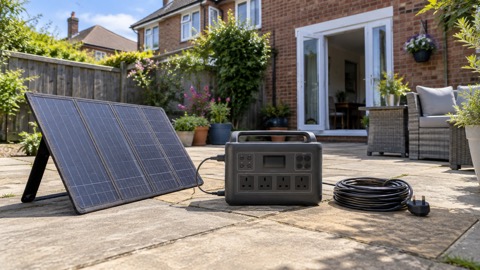
What it does for you in a power cut is convert sunlight into low-voltage DC electricity that goes straight into a compatible power station's solar input. It has no battery of its own, so it stores nothing. That single fact shapes everything about how you use it: it is only useful when the sun is up, it only helps if you have a power station to plug it into, and its value in an emergency is measured by how much charge it puts back into that station over a day.
Anker states that its SOLIX solar panels convert up to 23% of sunlight into solar energy6. That figure describes the panel's efficiency at turning light into power, not a promise about what you will collect on a cloudy day in February. For a household, the practical question is not the efficiency percentage but the daily yield, which the independent figures below set out.
The panel suits a household that already owns, or plans to own, a small Anker SOLIX power station and wants a way to recharge it without mains power. It does not suit a household expecting to run mains appliances directly from a panel, because a panel of this size cannot do that. If you are still deciding what backup power you need at all, start with deciding what to keep running when the mains fails and portable power stations: what they do and how to choose.
Pairing it with the C300 and C300X power stations
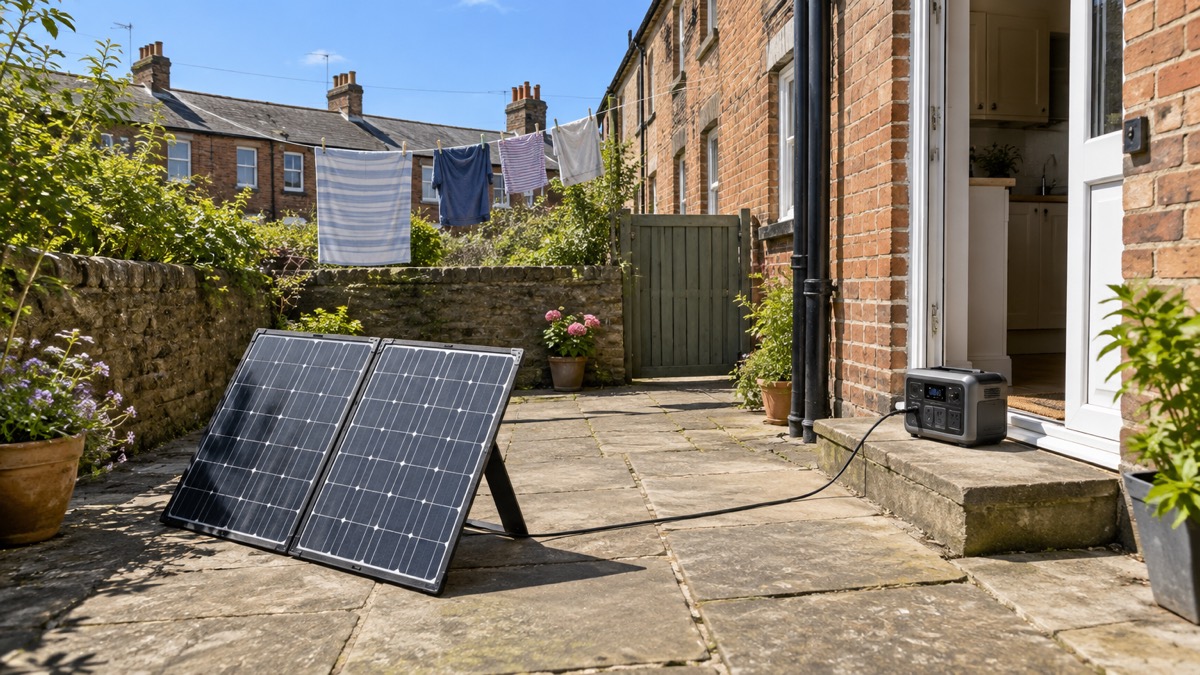
Anker lists the 100W panel as pairing with the SOLIX C300 Portable Power Station, and its C300X bundle page pairs the same panel with the C300X1. Those are the two combinations the maker names, and they are the ones to plan around. If you own either station, the panel is the matching solar input; if you own neither, the panel on its own does nothing.
The pairing matters because the power station is where the energy is stored and where the mains sockets are. Anker describes its SOLIX solar generators as having 2000W+ AC output and various output ports including AC outlets, USB ports and DC outlets8. Those figures describe the wider SOLIX range rather than the C300 or C300X specifically, so check the output of your own unit before you plan what to run from it. The panel's job is to refill the station's battery; the station's job is to run your kit.
In an emergency, the sequence is straightforward. Set the panel out in direct sun, connect it to the station's solar input, and let it charge while you go about your day. Bring it in before dark or before rain, and treat the charge you gain as a top-up that extends how long the station lasts. If you want to work out how far that charge goes, watts, watt-hours and surge explained sets out the arithmetic, and what size solar panel do I need to charge a power station? helps you judge whether 100W is the right size for your household.
A panel of this size will not keep a fridge running through a multi-day outage on its own. It will help keep phones, a radio and lighting going, which is often the difference between an inconvenience and a crisis. For the wider picture of how a panel fits a solar charging plan, see portable solar panels for charging in a power cut and how long does solar charging take in the UK?.
Versions: the SOLIX 100W Solar Panel and the 100W Rigid Solar Panel
Anker's range includes more than one 100W panel, and they are not the same product. The SOLIX 100W Solar Panel is the portable one described on the C300 and C300X pages1. The 100W Rigid Solar Panel is a fixed panel with its own published specifications, and Anker lists it at 100W (+/-5W), measuring 172.2 × 113.3 × 3.5 cm, with a short-circuit current of 13.79A7. Those figures belong to the rigid panel, not to the folding one, so do not apply them to the portable version.
| Feature | SOLIX 100W Solar Panel | 100W Rigid Solar Panel |
|---|---|---|
| Form | Portable, paired with C300 and C300X power stations1 | Rigid panel with published dimensions7 |
| Rated output | 100W | 100W (+/-5W)7 |
| Dimensions | Not stated in the maker's pairing pages | 172.2 × 113.3 × 3.5 cm7 |
| Short-circuit current | Not stated in the maker's pairing pages | 13.79A7 |
| Warranty | Check with Anker for your model | 10 years7 |
The choice between them comes down to how you would use it. A portable panel can be packed away, moved around the garden to follow the sun, and taken with you if you leave the house; a rigid panel is fixed in place and better suited to a permanent mounting where it will not be moved. For an emergency kit that lives in a cupboard and comes out during a power cut, the portable version is the one that matches the job. For a household that wants a panel permanently mounted and wired in, the rigid version's published specifications and 10-year warranty are the relevant facts7.
Whichever you choose, the panel is only part of a system. If you are weighing a panel against other ways of charging, wind-up and small solar chargers for phones and radios covers the smaller end of the market, and power banks: keeping phones charged in an emergency covers the battery side.
Using the panel as part of an Anker SOLIX Solar Generator
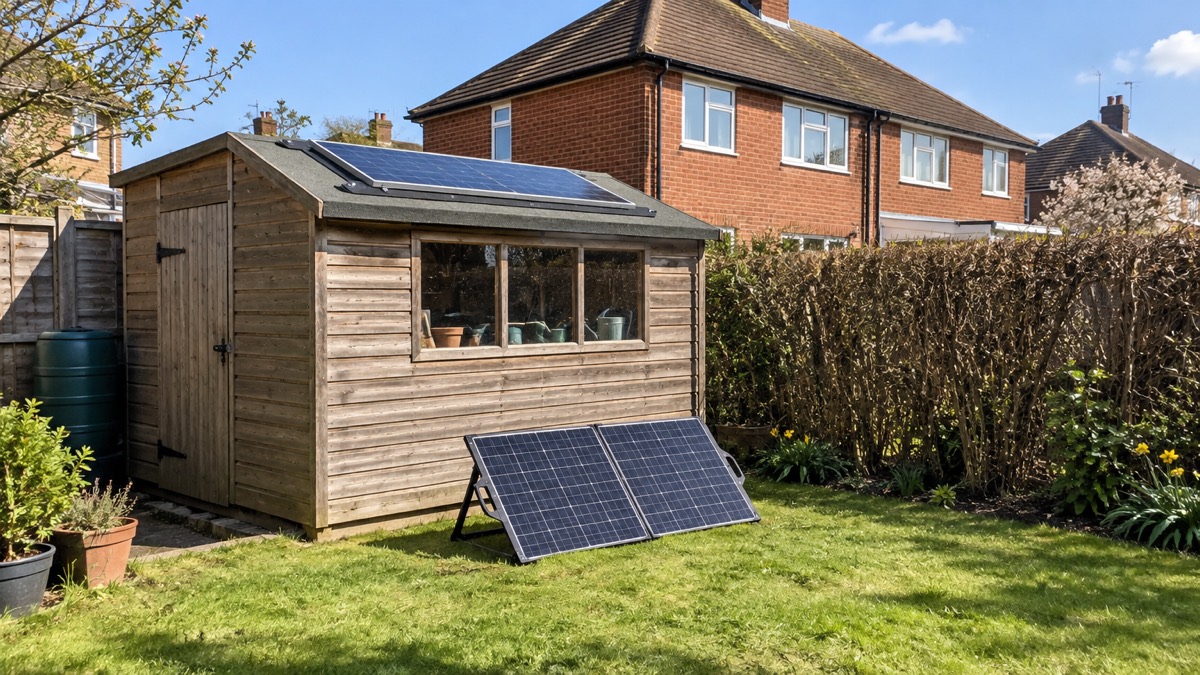
A solar generator is the combination of a panel and a battery, and Anker sells its SOLIX range on that basis. Anker states that its SOLIX solar generators have 2000W+ AC output and a 5-year full device warranty, and that its Suncast technology optimises your panel's alignment to the sun so they capture the most direct and efficient energy possible6. Suncast is a feature of the wider range, so check whether your own model has it before relying on it.
The independent yield figures are the ones to plan with. The Caravan and Motorhome Club's guidance gives a 100W panel 600 to 700Wh in summer and 90Wh in winter3. That is a wide spread, and it tells you two things. First, a summer outage is a very different proposition from a winter one: the same panel that comfortably tops up a station in June will barely register in December. Second, you should not plan to run anything essential from solar alone in winter.
Anker also states that its SOLIX solar panels convert up to 23% of sunlight into solar energy6. That is a panel efficiency figure, and it sits alongside the daily yield rather than replacing it: a more efficient panel makes better use of the light it gets, but it cannot manufacture light on a dark afternoon. For a household, the daily yield is what decides whether the panel is worth the space in the cupboard.
To get the best from the panel in an emergency, treat it as a daily routine rather than a one-off. Put it out in the morning facing the sun, move it once or twice as the sun crosses the sky if you can, and bring it in before it rains or gets dark. Keep the cable run short and out of walkways. If you want to understand how the panel's output compares with what your appliances draw, how long will a power station run a fridge or laptop? and what capacity power station do I need? set out the sums.
Smart Temperature Control and charging safely
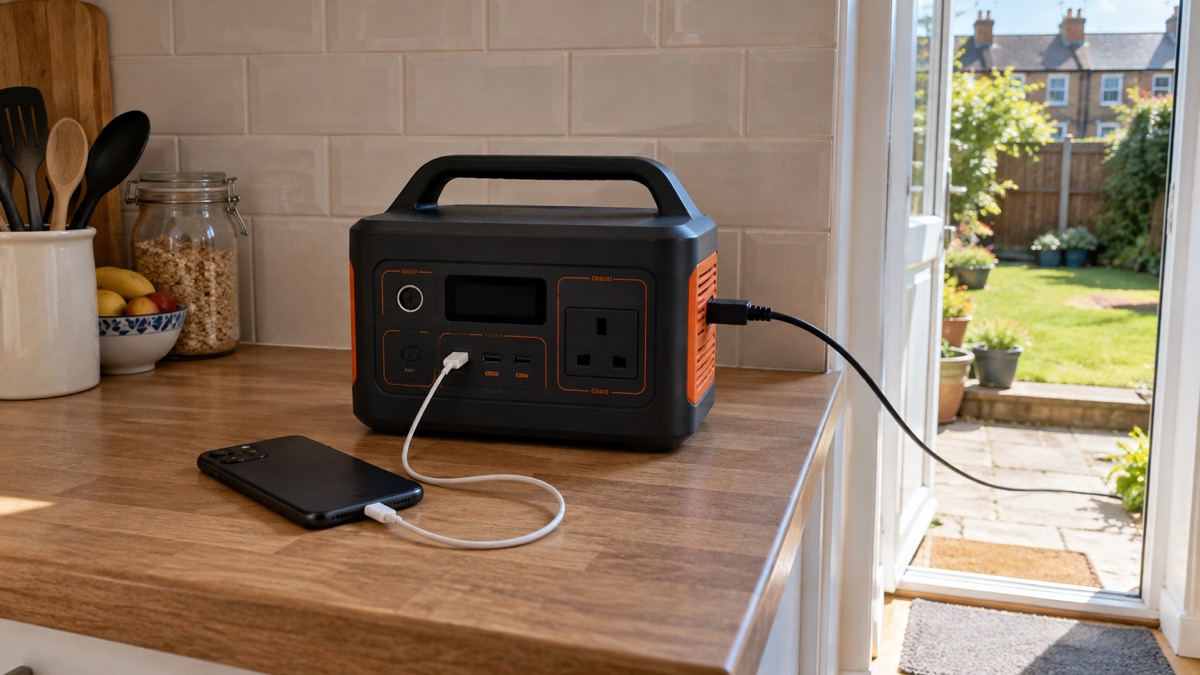
Anker lists Smart Temperature Control as a feature of its SOLIX solar generators8. For a household, this is reassurance rather than a licence to be careless. The system is designed to watch the battery's heat while it charges and discharges, but it does not change where you should put the kit.
The maker's own safety instructions for its products are the ones to follow, and the general rules for lithium batteries apply to this panel's companion power station. Keep the power station out of direct sun while it charges, do not cover it, and do not leave it on soft furnishings or in a hot car. The panel itself has no battery, so the fire risk sits with the station it charges, not with the panel. Lithium-ion battery safety at home and safe battery charging at home checklist set out the routine, and is it safe to charge overnight? covers the question most households ask first.
Storage is the other half of keeping the kit ready. Store the panel folded, dry and out of direct sun when it is not in use, and check the cable and connectors before each season. A panel that has sat in a damp shed for a year may still work, but a corroded connector will not carry the current. How to store a power station when not in use and backup power checks before winter set out a seasonal routine, and can you charge lithium batteries below freezing? covers cold-weather charging.
Warranty: 10 years on the 100W Rigid Solar Panel
Anker lists a 10-year warranty on the 100W Rigid Solar Panel3, and states a 5-year full device warranty on its SOLIX solar generators4. Those are the maker's figures, and they apply to the products named. The portable SOLIX 100W Solar Panel's own warranty period is not stated on the pairing pages, so confirm it with Anker for your model before you rely on it.
| Product | Warranty stated by the maker |
|---|---|
| 100W Rigid Solar Panel | 10 years7 |
| Anker SOLIX solar generators | 5-year full device warranty6 |
| SOLIX 100W Solar Panel | Not stated on the pairing pages; confirm with Anker1 |
To check your cover, keep the proof of purchase and note the model and serial number of both the panel and the power station. Warranty terms sit with the maker, so the product page for your exact model and Anker support are the places to confirm the period and what it covers. A panel bought as part of a bundle may be covered under the bundle's terms rather than as a separate item, so check the paperwork that came with it.
For context on how panel warranties compare, Marlec lists a 10-year product warranty on its Alpex solar panels9. That is a different maker's product and says nothing about Anker's terms, but it shows that a 10-year panel warranty is not unusual in the market. The point for a household is to record the date of purchase and the warranty period somewhere you will find it, because a warranty you cannot evidence is hard to claim on.
Anker power bank recalls: models A1647 and A1652
Anker has recalled several power bank models over lithium-ion battery fire risk, and the recall is the first thing to check if you keep Anker kit in your emergency bag. Anker's safety notice asks owners to check the model number on the back or side of the power bank against A1647, A1652, A1257, A1681 and A16897. The recall notice for the A1642, A1647 and A1652 models explains how to identify an affected unit: look at the bottom of the power bank for the model name and the model number, and find the 16-digit serial number, noting that serial numbers do not contain the letter "O" or the letter "I"9.
The recall has a history worth knowing. Anker's safety notice covers models A1647, A1652, A1257, A1681 and A1689, so the list of affected models is wider than the A1642, A1647 and A1652 units identified on the recall notice7. If you checked your power bank in 2024 and did nothing since, check again.
This matters for a prepping household because power banks are the most common backup power item in a UK home, and a recalled one sitting in a drawer or a bedside table is a fire risk rather than a backup. Check every Anker power bank in the house, not just the one in your emergency kit. Anker A1647 Power Bank, Anker A1652 Power Bank, Anker A1257 Power Bank (recalled), Anker A1681 Power Bank (recalled) and Anker A1689 Power Bank (recalled) cover the individual models, and what to do if a lithium battery catches fire and how to dispose of a damaged lithium battery cover what to do next.
Where the panel fits in a household plan
The panel is one component of a backup power plan, and it is worth being clear about what it can and cannot do. It can top up a compatible Anker SOLIX power station during daylight, which extends how long that station keeps phones, a radio and lighting going. It cannot run mains appliances directly, it cannot store energy, and in a British winter it will collect very little. Plan for it to supplement a charged power station, not to replace one.
For a household building a plan, the sensible order is to decide what you need to keep running, buy or charge the battery that can run it, and then add a panel as a way to stretch that battery through a longer outage. Deciding what to keep running when the mains fails and the power cut backup power checklist set out the first steps, and what is a solar generator? explains how panel and battery work together.
If you are comparing a panel with other ways of keeping charged, portable power station or petrol generator for a power cut and power bank or portable power station set out the trade-offs without ranking one above another. For the wider context of living with less mains power, self-reliance at home covers rainwater, off-grid power and the practicalities of doing without.
Sources (9)
- Anker SOLIX C300X with 100W solar panel, Anker SOLIX, 2026
- Anker SOLIX C300 with 100W solar panel offer, Anker SOLIX, 2026
- Solar power technical advice, Caravan and Motorhome Club, 2026
- Anker power bank recall: A1642, A1647 and A1652, Anker, 2025
- Anker safety notice: power bank model check, Anker, 2026
- Anker SOLIX solar generators, Anker SOLIX, 2025
- Anker SOLIX 100W Rigid Solar Panel, EcoFlow, 2026
- Best Solar Generator 2024 - Anker SOLIX EU, Anker SOLIX
- Alpex solar panel, Marlec, 2026

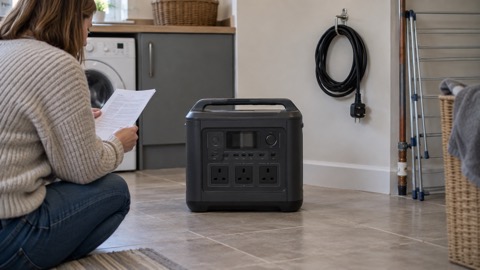 BLUETTI Apex 300 Power Station
 BLUETTI Elite 100 V2
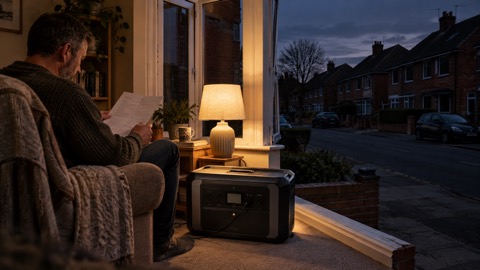 Anker SOLIX C2000 Gen 2
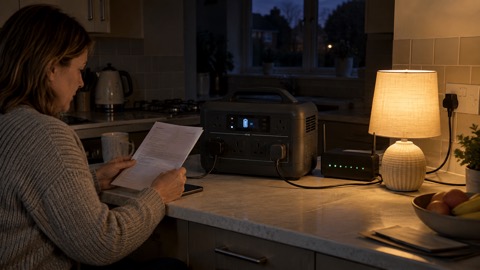 Anker SOLIX C1000 Power Station
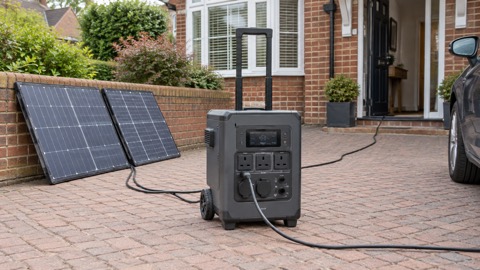 EcoFlow DELTA Pro
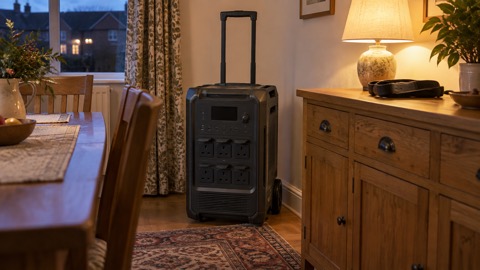 BLUETTI Elite 400
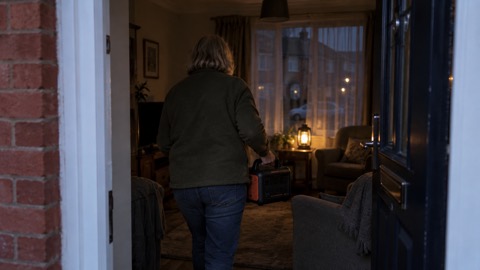 Anker SOLIX C300 Power Station
 EcoFlow DELTA 3
 EcoFlow DELTA 2 and DELTA 2 Max
 EcoFlow DELTA and DELTA Max
 EcoFlow RIVER 3 and RIVER 3 Plus
 EcoFlow RIVER 2 and RIVER 2 Max