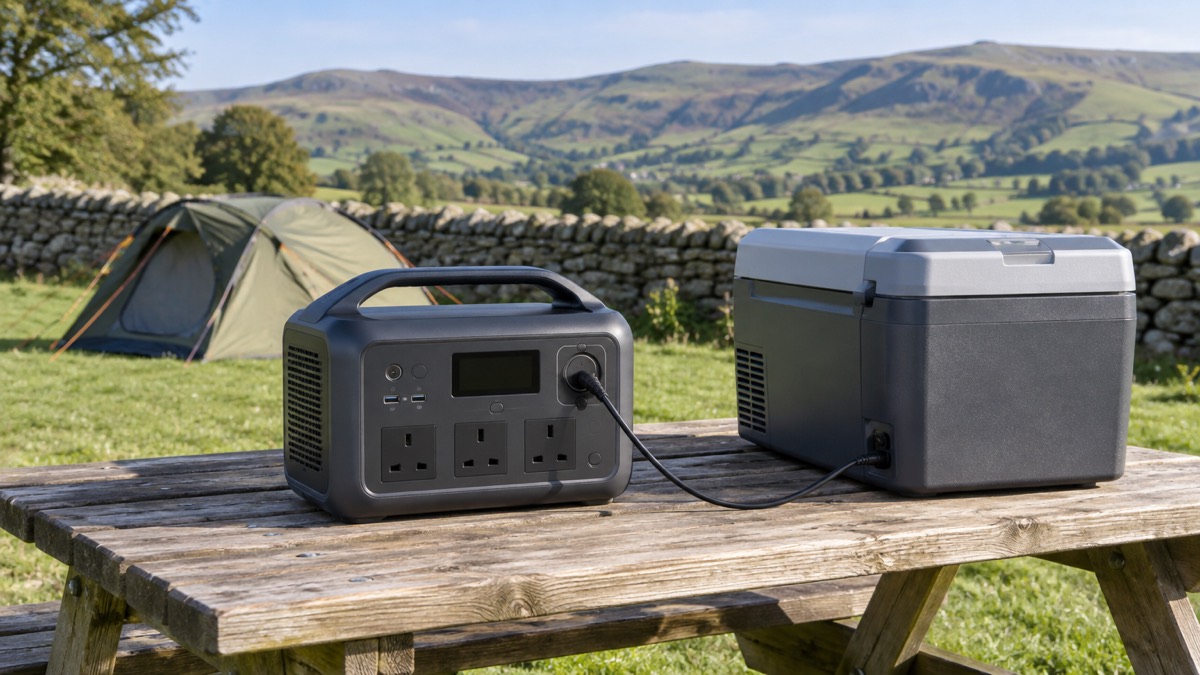
The BLUETTI Elite 300 is a portable power station with a 3,014.4 Wh battery and a 2,400 W output, which the maker says surges to 4,800 W for high-demand appliances such as microwaves and heaters1. It is built around LiFePO₄ cells rated for 6,000+ cycles, and the maker describes it as the world's smallest 3 kWh power station, a claim it says is certified by Frost & Sullivan2. In plain terms it is a large battery in a box that you charge from the mains, from solar panels or from a vehicle, and then plug ordinary appliances into when the power fails4.
For a household, the useful question is what it will actually run. The maker gives a mini refrigerator drawing 0.6 kWh a day up to 99.8 hours, and a 60 Wh laptop 32.6 charges2. It also states the unit gives enough power for 1 to 2 days under practical use while several essential appliances run together5. Those are the maker's figures for a modest set of essentials, not a promise for a whole house.
This page sets out what the Elite 300 is, what it can and cannot do, how to charge and store it safely, and where to get help if something goes wrong. It does not compare it with other products or give a price.
What the BLUETTI Elite 300 is and who it suits
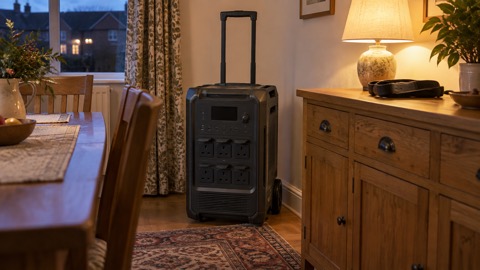
The Elite 300 is a single unit that integrates the battery, inverter, charger, controllers and protections, which the maker calls a plug-and-go design2. You do not wire it into the house. You charge it, put it where you need it, and plug appliances into its sockets. The maker lists home backup, road trips, outdoor activities and emergencies as its intended uses1.
That combination matters for a UK household. A unit that lives in a cupboard and comes out for a power cut is doing one job; the same unit in a campervan or taken camping is doing another. The Elite 300 is sized for both, with a capacity that the maker pitches at the 3 kWh mark and a form it says is the smallest at that capacity2.
| Specification | Figure | Source |
|---|---|---|
| Battery capacity | 3,014.4 Wh | 1 |
| Battery chemistry | LiFePO₄ | 3 |
| AC output | 2,400 W | 1 |
| Surge output | 4,800 W | 1 |
| Cycle life | 6,000+ cycles | 1 |
| DC output | 12 V / 30 A | 6 |
| UPS switchover | 10 ms | 1 |
| Charging methods | Wall outlet, solar panels, vehicle | 4 |
The 10 ms UPS switchover is worth understanding. The maker states the unit switches instantly to backup, keeping essentials running without interruption1. That is fast enough for many devices to ride through a brief cut, but it is not the same as a professionally installed home battery. If you want to know how switchover times work in practice, see Using a Power Station as a UPS: Switchover Times.
How long it runs a fridge, laptop or phone in a power cut
Run time is the question that decides whether a power station is worth the space. The maker publishes figures for common appliances, and they are the best guide available for this unit.
- Mini refrigerator (0.6 kWh a day): up to 99.8 hours2
- Laptop (60 Wh): 32.6 charges2
- Drone (62 Wh): 31.8 charges2
- General essentials: 1 to 2 days with several appliances running together, per the maker5
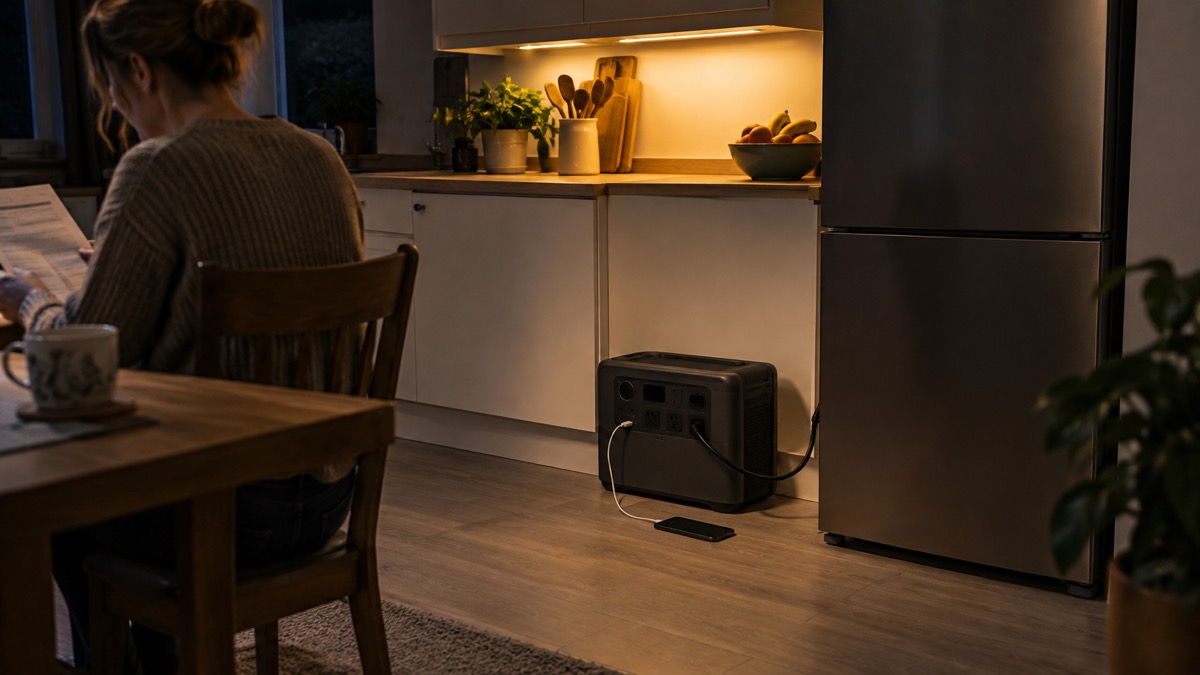
The fridge figure is the one most households care about. A mini fridge at 0.6 kWh a day is a small appliance, not a full-size kitchen fridge, so treat 99.8 hours as the maker's figure for that specific load rather than a promise for your own fridge2. The maker also lists a 45.3 hours figure on its home battery backup page, without stating the appliance it applies to, so it cannot be matched to a device8.
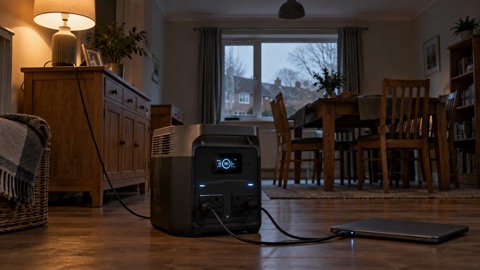
The laptop and drone figures show the other side of the unit: it is large enough to keep small electronics going for weeks of normal use, not just days. For a household charging phones, a laptop and a router, the capacity is generous. For heating, cooking or a full kitchen, it is not.
If you want to work out your own loads, Watts, Watt-Hours and Surge Explained sets out the arithmetic, and How Long Will a Power Station Run a Fridge or Laptop? covers the variables that change the answer.
The 12 V / 30 A DC port for fridges, pumps and heaters
The Elite 300 has a 12 V / 30 A DC port, which the maker describes as delivering stable 12 V power to car fridges and other vehicle appliances during camping or road trips6. On its van life page the maker is more specific: the high-current DC output is designed to run high-draw onboard devices such as fridges, water pumps, fans and diesel heaters7.
That is a different job from the mains sockets. A 12 V appliance does not need the inverter, so it can run more efficiently from the DC port. For a household, the port matters if you have a 12 V fridge, a small pump or a diesel heater that you want to keep running. The maker describes the port as delivering stable 12 V power to car fridges and other RV appliances during camping or road trips, and lists fridges, water pumps, fans and diesel heaters among the high-draw onboard devices it is designed to run7.
If you are weighing up whether a power station can run a gas boiler, that is a separate question with its own limits: see Can a Power Station Run a Gas Boiler in a Power Cut?.
LiFePO₄ battery: 6,000+ cycles and what that means
The Elite 300 uses LiFePO₄ cells, which the maker rates for 6,000+ cycles and describes as reliable power for years of daily use1. A cycle is a full charge and discharge, so the figure is a guide to how long the battery should last rather than a countdown you need to track.
LiFePO₄ is a lithium chemistry the maker says it was one of the first to adopt in portable power stations9. The maker also states that its expansion batteries use LiFePO₄ cells rated for over 2,500 cycles and describes them as offering higher safety than conventional lithium-ion batteries10. Those are the maker's own claims about its own products.
For a household, the practical points are:
- The battery is built to be charged and discharged regularly, not left untouched for years.
- Store and charge it within the conditions the maker's manual sets out.
- Watch for swelling, heat or damage, and stop using a battery that shows warning signs.
Lithium-Ion Battery Safety at Home covers the general precautions, and Warning Signs a Lithium Battery Is Dangerous explains what to look for.
What comes in the box and what you need to add
The maker lists four items in the box: the Elite 300 itself, an AC charging cable (1.5 m / 59.05 in), a grounding screw (M5 x 10 mm) and the Elite 300 user manual4. That is the full standard contents.
What is not in the box matters as much. Solar panels are not included, and the maker lists solar as a charging method rather than a supplied accessory4. The Charger 2, which the maker says pulls up to 1,200 W from a vehicle alternator and solar panels, is a separate product11. If you want to charge from the sun, you will need to add panels and check they are compatible.
| In the box | Not in the box |
|---|---|
| Elite 300 unit4 | Solar panels4 |
| AC charging cable, 1.5 m4 | Charger 2 vehicle charger11 |
| Grounding screw, M5 x 10 mm4 | Extra batteries |
| User manual4 | Extension leads |
The grounding screw is there for earthing the unit where that is wanted. If you are unsure whether your set-up needs it, follow the user manual or ask a qualified electrician rather than improvising.
Charging the Elite 300 safely
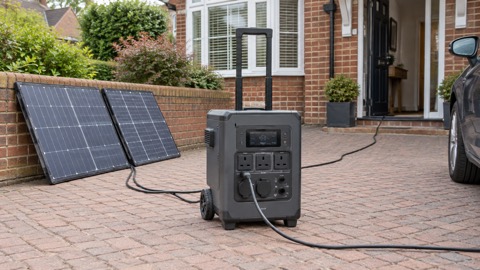
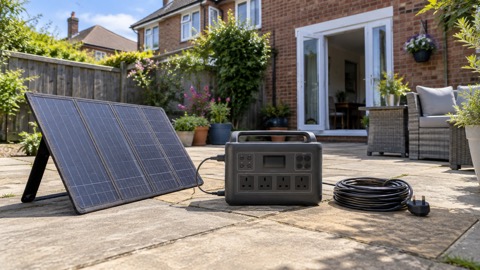
The maker states the unit can be recharged from a wall outlet, solar panels or a vehicle4. It also states the unit can charge and power devices at the same time, which the maker calls pass-through charging3.
For charging while driving, the maker says the Charger 2 pulls up to 1,200 W from both the vehicle's alternator and solar panels, and describes it as charging 13 times faster while driving than a standard 12 V car socket11. The maker also states that BLUETTI units can charge from both the car and solar panels while driving, powering the main storage and leisure battery without draining the reserve6. Those are the maker's figures for its own accessory.
For general guidance on charging from a car, see Can You Charge a Power Station from Your Car?, and for solar, What Size Solar Panel Do I Need to Charge a Power Station?. If you are charging indoors, Safe Battery Charging at Home Checklist sets out the precautions.
App control, remote waking and the grounding screw
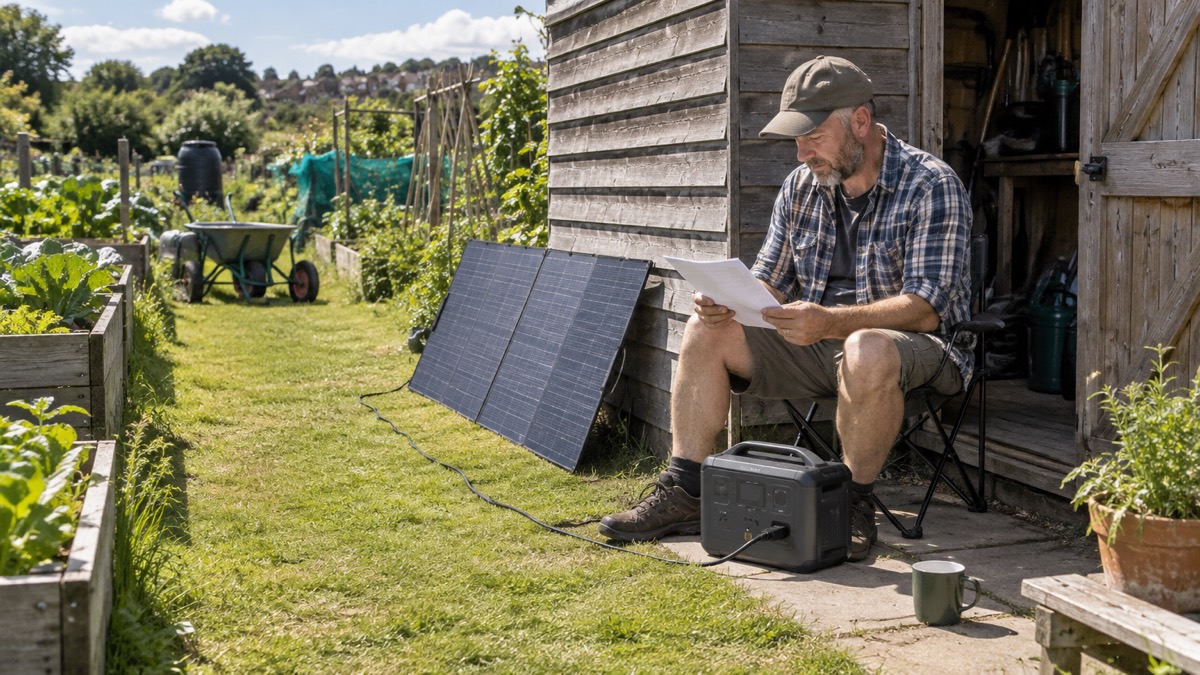
The maker states the app lets you monitor energy, remotely wake the unit and schedule device automation over Bluetooth and Wi-Fi3. In practice that means you can check the charge level from your phone, bring the unit out of standby before an outage, and set simple schedules.
Remote waking is useful if the unit is stored out of the way. It is not a substitute for knowing how the unit works by hand, so test it before you rely on it. The maker states the app connects over Bluetooth and Wi-Fi3.
The grounding screw is the other small item people ask about. It is included in the box4, and it is there so the unit can be bonded to earth where that is wanted. If you are unsure whether your set-up needs it, follow the user manual or ask a qualified electrician.
Using the Elite 300 as home backup for one to two days
The maker states the Elite 300 gives enough power for 1 to 2 days under practical use while multiple essential appliances run together, and lists a Home-Backup Kit (2 days) with green energy charging as a typical use5. That is the maker's figure for a modest set of essentials, and it is the clearest guide to what the unit is for.
The 10 ms UPS switchover supports that role: the maker states the unit switches instantly to backup, keeping essentials running without interruption1. For a router, a fridge or a medical device, that speed matters. For a whole house, it does not, because the unit is not wired into the consumer unit.
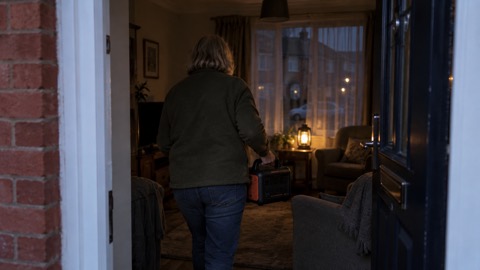
If you are planning what to keep running, Deciding What to Keep Running When the Mains Fails helps you rank the loads, and Portable Power Stations: What They Do and How to Choose sets out the general principles. For medical devices, Powering CPAP, Oxygen and Other Medical Devices From a Battery covers the specific checks.
Reverse charging another battery
The maker states that BLUETTI units deliver up to 800 W of reverse charging power, which it describes as quickly reviving a battery and getting you back on the road safely6. That is a maker figure for the range rather than a tested result for every connected battery.
If you are charging a leisure battery or a vehicle battery from the Elite 300, follow the maker's instructions for the battery you are charging and never connect anything the manual does not cover. Leisure and LiFePO4 Batteries for Emergency Use explains the general principles.
Where to get help and what to do if something goes wrong
The Elite 300 is a BLUETTI product, and the maker's own instructions for the unit are the first place to look for how to use it4. Keep them with the unit. If the unit is damaged, swollen or giving off heat or smoke, stop using it and follow the maker's safety instructions and your local authority's arrangements for damaged batteries.
For general help with power cuts, see Power Cuts: A Household Guide and Backup Power at Home: A Household Guide. If you rely on electricity for medical equipment, ask your supplier about the Priority Services Register, which is covered in Powering CPAP, Oxygen and Other Medical Devices From a Battery.
BLUETTI is the maker of the Elite 300; its wider range is covered on the BLUETTI page.
Sources (11)
- Elite 300 200W product page, BLUETTI, 2026-10-25
- BLUETTI Elite 300 page, BLUETTI, 2026-10-25
- Elite 300 500W product page, BLUETTI, 2026-10-25
- Elite 300 Charger 1 product page, BLUETTI, 2026-10-25
- Disaster preparedness page, BLUETTI, 2026-10-25
- Camping portable power station page, BLUETTI, 2026-10-25
- Elite 300 2 200W product page, BLUETTI, 2026-10-25
- Home battery backup page, BLUETTI, 2026-10-25
- Homebackup page, BLUETTI, 2026-10-25
- Expansion battery page, BLUETTI, 2026-10-25
- Elite 300 Charger 2 product page, BLUETTI, 2026-10-25

 BLUETTI Apex 300 Power Station
 BLUETTI Elite 100 V2
 Anker SOLIX C2000 Gen 2
 Anker SOLIX C1000 Power Station
 EcoFlow DELTA Pro
 BLUETTI Elite 400
 Anker SOLIX C300 Power Station
 EcoFlow DELTA 3
 EcoFlow DELTA 2 and DELTA 2 Max
 EcoFlow DELTA and DELTA Max
 EcoFlow RIVER 3 and RIVER 3 Plus
 EcoFlow RIVER 2 and RIVER 2 Max