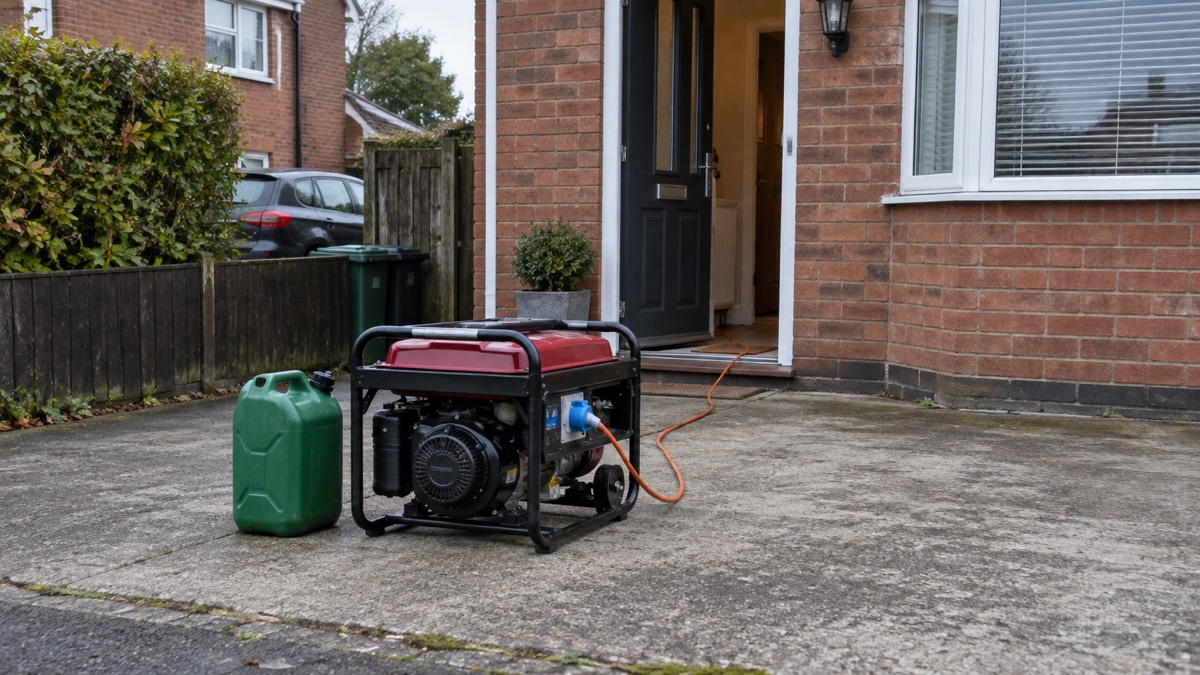
The Briggs & Stratton ProMax 7500EA is a large petrol generator built for serious loads: it supplies 6000 running watts and 7500 starting watts from a 230V output, with electric key start1. For a household preparing for power cuts, that puts it in the category of machines that can carry a whole house's essentials at once, or a few heavy items such as a heating pump or a freezer, rather than a small unit for charging phones.
The trade-off is that it is a petrol generator, and every fire and health body whose guidance covers generators says the same thing: it must be run outdoors, in well-ventilated air, never indoors or in an enclosed space2. Carbon monoxide from a petrol engine can build up and kill, and the safety rules around siting, fuel and leads matter more with a machine this size than with a small one.
This page covers what the ProMax 7500EA can do, how long a tank lasts, how to keep it ready between emergencies, and how to use and store it safely. It does not cover price, and it does not set it against other machines.
What the ProMax 7500EA is and who it suits
The ProMax 7500EA is a portable petrol generator from Briggs & Stratton, the engine maker whose name is on the machine1. It uses a VANGUARD OHV V-Twin engine with a cast iron cylinder sleeve, and the maker states that the engines are made in Japan1. It is an open-frame design on 38mm steel tubing, with a Power Surge alternator and automatic voltage regulation that the maker says limits voltage variation to plus or minus 2% to keep equipment running smoothly and safely1. It is CE compliant1.
In an emergency, that combination of features means one thing for a household: it can start and carry motor-driven appliances whose start-up draw would stall a smaller generator. The maker's own definition of starting watts is the maximum current that can momentarily be supplied when starting a motor, multiplied by the generator's rated voltage1. A fridge compressor, a freezer, a central heating pump or a well pump all draw a surge as they kick in, and the 7500 starting watts is the headroom for that surge.
It suits a household that has somewhere safe to run it, outside and away from doors and windows, and that is willing to store petrol properly and check the machine before winter. It does not suit a flat, a terraced house with no outdoor space, or anyone who wants something they can use inside during an outage. If you are weighing up whether a generator is the right kind of backup at all, the guide to portable generators and their types sets out the alternatives, and the comparison of a portable power station or petrol generator covers the quieter, fume-free option.
Power output: 6000W rated, 7500W starting
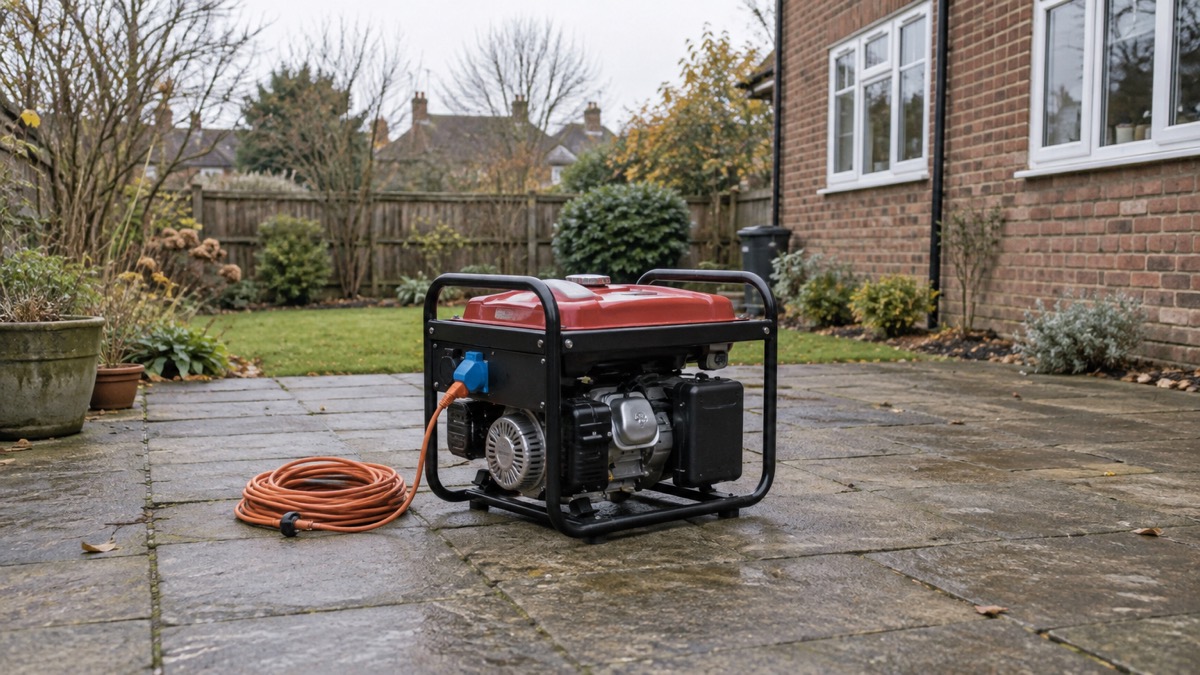
The two figures that decide what the generator can run are its rated output and its starting output. The ProMax 7500EA is rated at 6000 watts and gives 7500 starting watts1. Rated watts are the continuous supply; starting watts are the brief surge available when a motor starts1.
To use those figures, add up the running watts of everything you want on at the same time, then check the largest motor's starting demand against the 7500 watt surge. If the total running load sits comfortably under 6000 watts, the machine has room to cope with a motor starting. If it does not, something has to be left off. The guide to watts, watt-hours and surge explains how to read appliance labels, and what size generator you need walks through the sum for a whole house.
| Specification | Figure | Source |
|---|---|---|
| Running (rated) watts | 6000 W | 1 |
| Starting watts | 7500 W | 1 |
| Voltage | 230V | 1 |
| Outlets | 2x 230V/16A, 1x 230V/32A | 2 |
| Engine | VANGUARD OHV V-Twin, 479 cc | 1 |
| Starter | Electric start, key | 1 |
| Alternator | Power Surge / AVR | 1 |
| Frame | 38mm steel tubing | 1 |
| Certification | CE compliant | 1 |
The 32A outlet is the high-current connection, and it is the one to think about before an emergency rather than during one. It is intended for heavy loads or a proper distribution lead, not a domestic extension reel. Whatever you plug in, the lead and plugs must be rated for the current they will carry, and the lead should be fully unwound so it cannot overheat. The guide to extension leads and overloading covers the ratings in detail.
Run time: up to 7h 5min on a tank
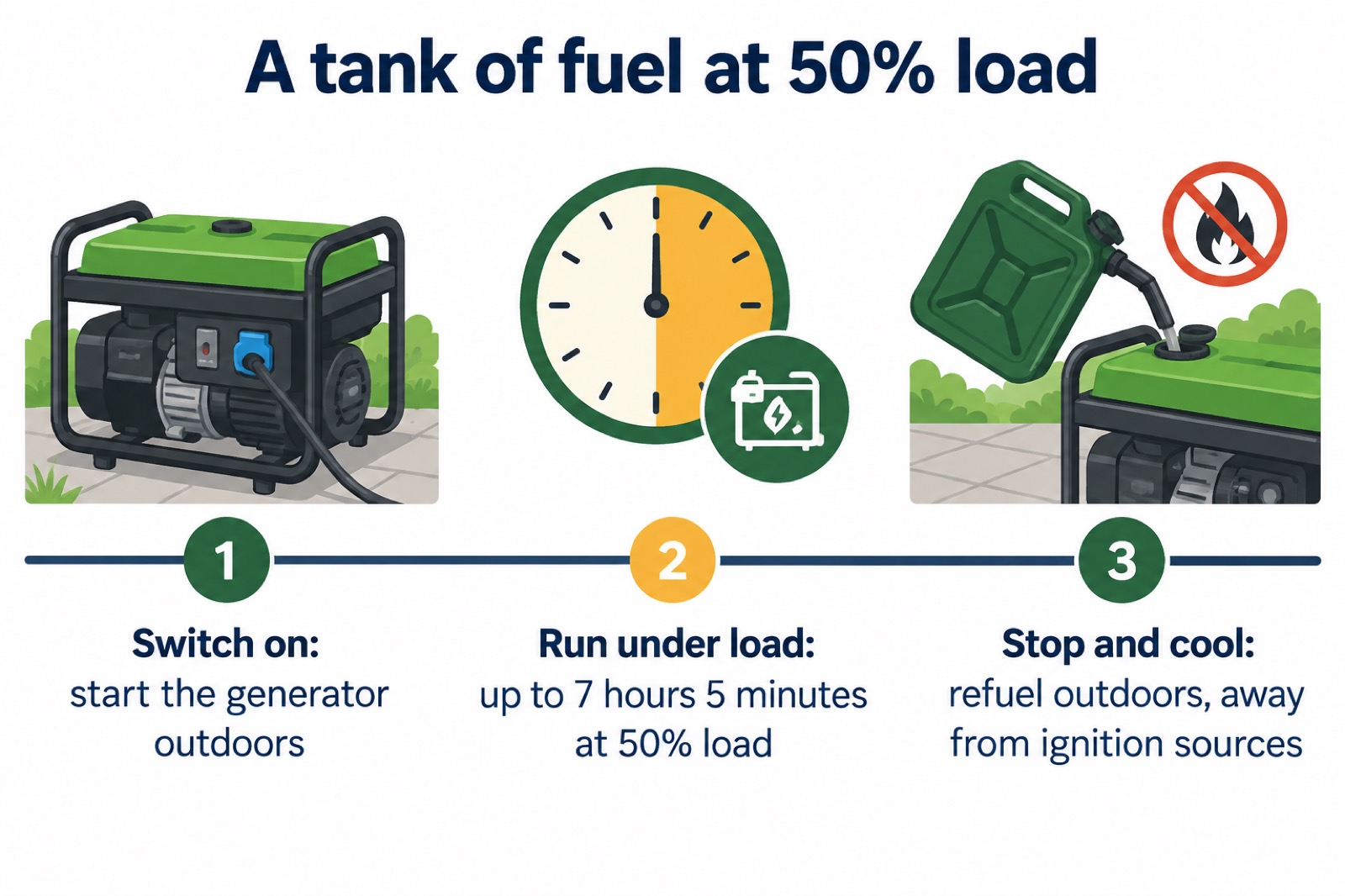
Briggs & Stratton gives the run time as up to 7 hours and 5 minutes, and specifies that figure at 50% load1. That is the number to plan around: a full tank will run the machine for roughly seven hours if it is carrying about half its rated output, and less if it is working harder1.
For a household, that shapes the whole plan for an outage. Seven hours is enough to cover a working day or an evening, but not a full day and night without refuelling. Refuelling means stopping the machine, letting it cool, and filling it outdoors, away from any source of ignition. The guide to how long a generator runs on a tank sets out how load changes that figure, and using generators during an outage covers how to ration running hours so the fuel lasts.
The practical approach is to run the generator in blocks: a stretch in the morning to bring the freezer and heating pump back up, then off, then another stretch in the evening. That keeps the noise down, keeps fuel consumption predictable, and means you are awake and alert whenever the machine is running. The guide to generator noise and neighbours covers what to expect from a machine of this size.
Where a petrol generator must never go
This is the part of the page that matters most. Every official source that addresses generators says the same thing, and the ProMax 7500EA is no exception.
The list of places that count as enclosed is longer than most people expect. Fire and rescue services and health bodies advise that a generator must never be run inside a house, garage, shed, tent or caravan8. Humberside Fire and Rescue Service puts it plainly for anyone in a caravan, motorhome, tent or awning: never run a gas, petrol or diesel-powered generator or a heater that is not designed for that purpose inside9. Scottish Borders Council's flooding advice is equally direct: petrol or diesel generators and other fuel-driven equipment should never be brought indoors4. The same warning appears in the Welsh fire services' carbon monoxide guidance5.
The reason the garage and the shed are on the list is that they are enclosed spaces attached to, or close to, the house. Carbon monoxide can gather in them and drift into the building through openings. The Health and Safety Executive's wording is about exactly that: fumes must be able to disperse and must not gather or drift into building openings3. Shropshire Fire and Rescue Service adds that a petrol-driven generator should always be kept and operated outdoors10.
"Petrol or diesel generators and other fuel-driven equipment should never be brought indoors."
After a flood, the temptation is strongest, because the power is off and the house is wet. The government's flood recovery advice is explicit: never bring petrol or diesel generators and other fuel-driven equipment indoors or into enclosed spaces, because using these devices can be fatal, and outdoor equipment should not be used inside for drying, heating, cooking or power supply11.
Keeping it ready between emergencies
A generator that will not start is no use in a power cut, and a machine this size needs a routine. The maker's specification gives you the things to check: the electric key start, the engine and the AVR alternator1. Before winter, run the machine briefly under a light load to confirm it starts and the outlets work, and check the fuel is fresh. The backup power checks before winter checklist sets out a seasonal routine, and how to store a generator after a power cut covers what to do with it once the emergency is over.
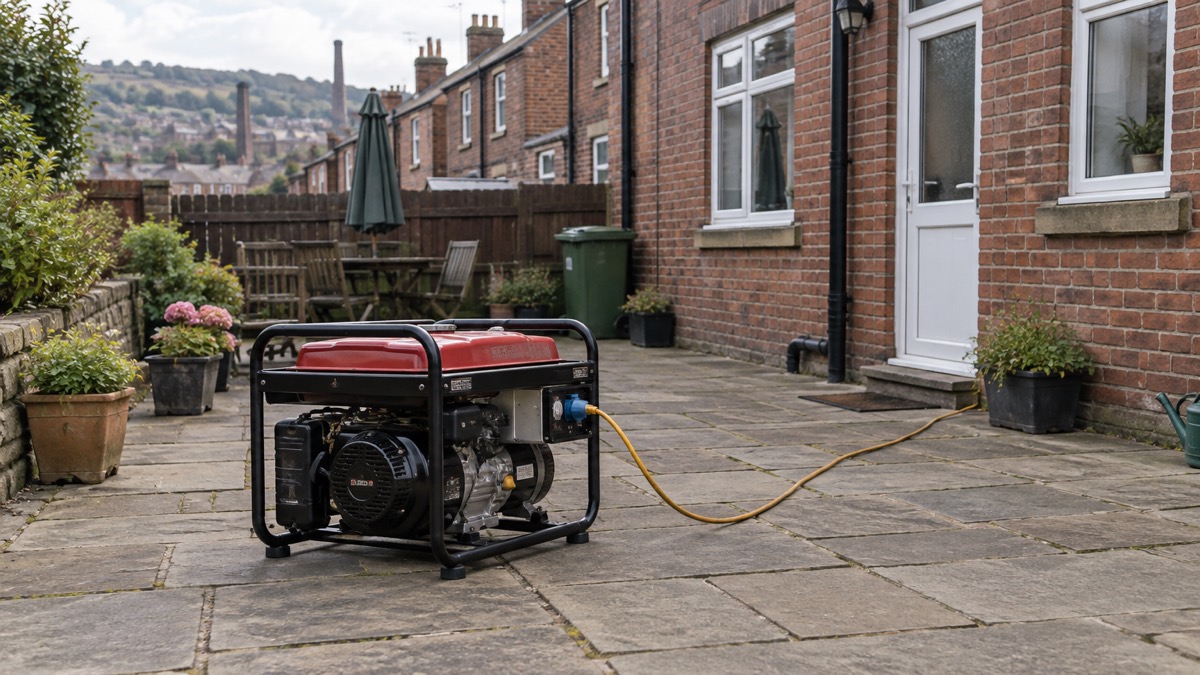
Fuel is the part that catches households out. Do not store fuel for your generator in your house: petrol, propane, kerosene, diesel and other flammable liquids should be stored outside living areas in properly labelled containers6. Greater Manchester Fire and Rescue Service advises storing petrol in a garage or shed away from other buildings, in a well-ventilated area away from sources of ignition such as electrical equipment and naked flames12. Petrol must not be dispensed at the storage place, either manually or electrically from a storage tank13. The guide to how much petrol you can store at home covers the limits.
- Store petrol outside living areas, in a properly labelled container, in a well-ventilated garage or shed away from ignition sources6.
- Keep flammable materials clear of where the generator will stand6.
- Have battery lighting ready so you are not relying on the generator after dark.
Cold weather is worth planning for as well. The guide to whether a generator starts in cold weather covers the conditions that make starting harder.
Support, warranty and where to get help
Briggs & Stratton publishes the specification and product information for the ProMax 7500EA on its own site, and that is the place to check the details of your model, including the outlets and the run time figure1. The maker's page for its open-frame generators explains how this type of machine differs from an inverter generator, which is quieter and produces cleaner power but generally smaller.
For safety questions, the fire and rescue service is the body to turn to. If you smell fumes, feel dizzy or develop a headache while a generator is running, treat it as a possible carbon monoxide exposure: stop the machine, get everyone into fresh air, and call 999 if anyone is unwell. The guide to carbon monoxide warning signs sets out the symptoms, and generator safety covers fuel, electric shock and siting in one place.
If your household depends on powered medical equipment, plan the backup around that first. The guide to powering medical devices from a battery covers CPAP, oxygen and similar equipment, and extra help in an emergency explains how to register for priority support. For the wider picture of what to keep ready, the power cut backup power checklist and the backup power section are the places to start.
Sources (13)
- ProMax 7500EA Portable Petrol Generator, Briggs & Stratton, 2026
- Portable Petrol Generators, Briggs & Stratton, 2026
- Carbon Monoxide, Health and Safety Executive, 2026
- Flooding Advice, Scottish Borders Council, 2026
- Carbon Monoxide Safety, Mid and West Wales Fire and Rescue Service, 2026
- Safety Tips for Using a Portable Generator in an Emergency, Health and Safety Executive for Northern Ireland, 2025
- Home Backup Guide, Champion Power Equipment, 2026
- Generators, Clarke International, 2026
- Caravan, Motor Home and Campervan Safety, Humberside Fire and Rescue Service, 2026
- Increased Use of Petrol Driven Generators Prompts Fire Service Reminder About Carbon Monoxide, Shropshire Fire and Rescue Service, 2020
- How to Recover from Flooding, GOV.UK, 2023
- Domestic and Non-Workplace Storage, Greater Manchester Fire and Rescue Service, 2026
- Safe Storage of Petrol, Dorset and Wiltshire Fire and Rescue Service, 2023

 BLUETTI Apex 300 Power Station
 BLUETTI Elite 100 V2
 Anker SOLIX C2000 Gen 2
 Anker SOLIX C1000 Power Station
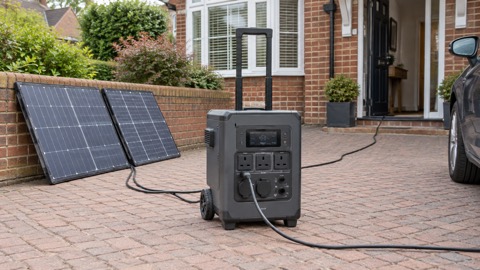 EcoFlow DELTA Pro
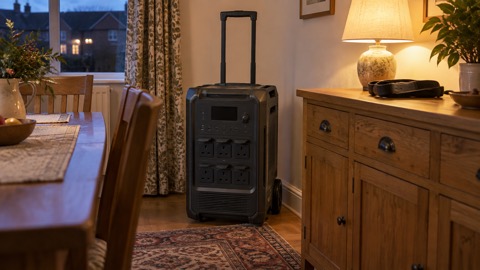 BLUETTI Elite 400
 Anker SOLIX C300 Power Station
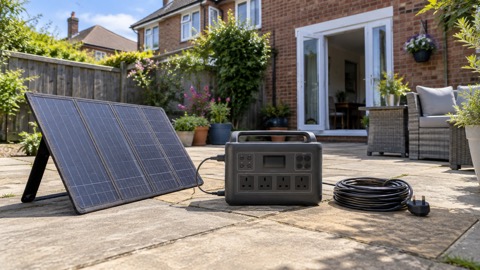 EcoFlow DELTA 3
 EcoFlow DELTA 2 and DELTA 2 Max
 EcoFlow DELTA and DELTA Max
 EcoFlow RIVER 3 and RIVER 3 Plus
 EcoFlow RIVER 2 and RIVER 2 Max