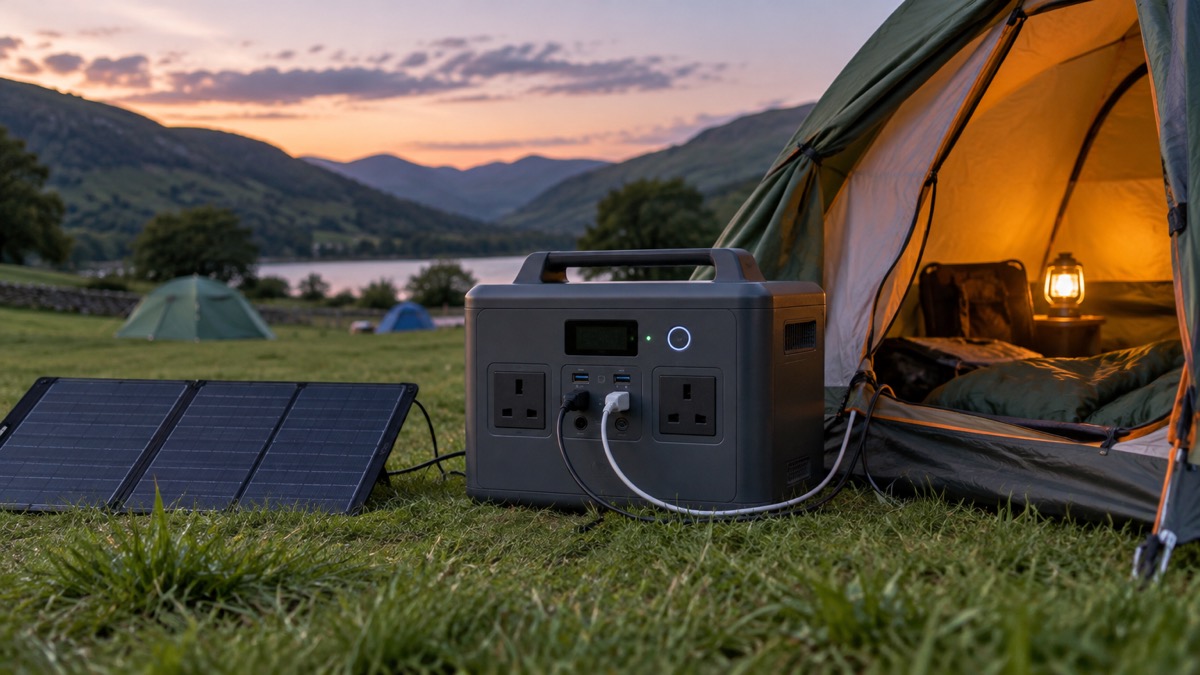
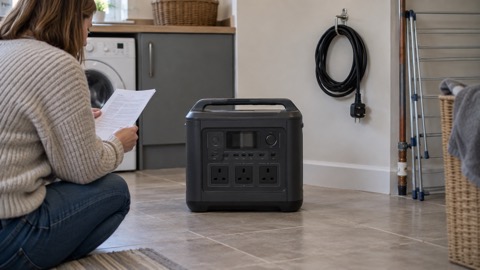
A BioLite BaseCharge is a portable power station: a large lithium-ion battery in a carry case, with mains sockets, USB ports and a 12V car socket on the front. For a household preparing for a power cut, it does one job well. It keeps a chosen set of appliances running when the mains fails, without petrol, exhaust fumes or a generator running in the garden. The maker's own figures give a realistic picture of what that means: on a BaseCharge 1500, a fridge runs for 20 hours, a 55 inch TV for 16 hours, a CPAP machine for 31 hours and a laptop takes 22 charges1.
The model most people will meet is the BaseCharge 1500+. BioLite states that this model is discontinued as of Summer 2025, and that existing owners keep full warranty and customer service support2. That matters if you are buying: units are still in circulation, and the maker's specification and support pages still apply to them. The 1500+ carries a 1521 Wh lithium-ion (NMC) battery, 1200W of continuous output with a 2400W surge, and a 2-year warranty2.
This page sets out what the BaseCharge can and cannot do in an emergency, how the versions differ, how long it runs the things a household actually misses, how to charge it from the wall, a car or solar panels, and how to keep it ready and safe between outages. If you are still deciding what kind of backup power suits your home, start with Portable Power Stations: What They Do and How to Choose.
The BaseCharge 1500+ has been discontinued
BioLite's product page carries a plain note: the BaseCharge 1500+ is discontinued as of Summer 20252. The same announcement confirms that owners keep full warranty and customer service support. For a household, that changes the buying question rather than the using question. A unit already in the house is not orphaned, and the maker's specification, setup guide and support pages remain the reference for it.
If you are considering a unit secondhand or from remaining stock, three checks are worth making before you pay. First, that the serial number is present and legible, because the maker's warranty registration depends on capturing it3. Second, that the 400W AC wall adapter is included, since that is what the maker lists in the box alongside the power station and instruction manual2. Third, that the seller's returns position is clear, because a discontinued line may not be replaceable like for like.
The discontinuation does not make the unit unsafe or unsupported. It does mean that anyone buying now should treat the purchase as a known, documented product with a fixed specification, and should keep the receipt and registration confirmation with the household's emergency paperwork.
BaseCharge 1500 and 1500+: how the versions differ
Two versions matter here. The BaseCharge 1500 is the model behind the maker's runtime table, which is the most useful single document for a household working out what will keep running1. The BaseCharge 1500+ is the later unit, with a larger battery and a much faster mains recharge, and it is the one now discontinued2.
| Specification | BaseCharge 1500+ | BaseCharge 1500 |
|---|---|---|
| Battery | 1521 Wh, Li-Ion (NMC), 21.6V, 70.4 Ah2 | Runtime figures published by the maker1 |
| Mains output | 1200W continuous, 2400W surge, three sockets2 | Not stated in the figures used here |
| Recharge from wall | As little as 3.5 hours2 | Original model quoted at 12 hours2 |
| USB | 2 x USB-A, 2 x USB-C, 1 x USB-C PD at 100W2 | Not stated in the figures used here |
| Wireless pad | 10W2 | Not stated in the figures used here |
| 12V outputs | Car port 120W, two barrel outputs 120W2 | Not stated in the figures used here |
| Solar input | 400W, 10 to 30V DC, 20A maximum2 | Up to four SolarPanel 100 panels1 |
| Warranty | 2 years2 | 2 years3 |
The headline difference for an emergency is charging speed. The 1500+ fills from a wall outlet in as little as 3.5 hours, which the maker describes as a major improvement on the original model's 12 hour time frame2. In a planned outage, or between outages, that is the difference between an evening's recharge and an overnight one. The 1500+ also carries a 12 Checkpoint Safety System covering over and under voltage limits, charge current limit, short circuit protection, high and low temperature limits, discharge current limit and inverter temperature limit, and it has been drop-tested from 1 metre and put through surge, vibration, overload and thermal shock testing2.
Neither unit is waterproof. The maker states plainly that the BaseCharge is not waterproof because of all the ports required for its functions2. For a household, that rules out a garage floor that floods, a shed with a leak, and any use outdoors in rain.
Run time: about 20 hours for a fridge and 16 for a TV
The question every household asks is how long the thing will last. BioLite publishes a table of run times for the BaseCharge 1500, and it is the best guide to what a unit of this size does in a real outage1. The figures assume the appliance is running from the unit alone, so treat them as a planning baseline rather than a guarantee.
| Appliance | Run time on a BaseCharge 1500 |
|---|---|
| Fridge | 20 hours1 |
| 55 inch TV | 16 hours1 |
| CPAP machine | 31 hours1 |
| 45L RV cooler | 37 hours1 |
| Microwave | 62 minutes1 |
| Corded drill | 57 minutes1 |
| Circular saw | 51 minutes1 |
| Laptop | 22 charges1 |
| DSLR battery | 82 charges1 |
| Drone | 20 charges1 |
Read the table by what a household actually misses. A fridge at 20 hours covers the first day of an outage, which is when food safety is most at risk; after that, the unit has to be recharged or the fridge left off. A TV at 16 hours is a comfort and information item, not a necessity, and it competes with the fridge for the same battery. The small-device figures are the ones that stretch furthest: 22 laptop charges or 82 camera battery charges from one unit is a lot of ordinary use.
For comparison, the maker's own guidance on larger home backup describes a bigger class of unit that powers a 200W fridge for 24 to 48 hours or a 1500W heater for about 1.7 hours4. A BaseCharge sits below that tier. It is a portable unit for a chosen set of appliances, not a whole-house supply. If your plan needs the fridge, the boiler and the lights all at once, see What Capacity Power Station Do I Need? and Deciding What to Keep Running When the Mains Fails.
CPAP on battery: up to 31 hours
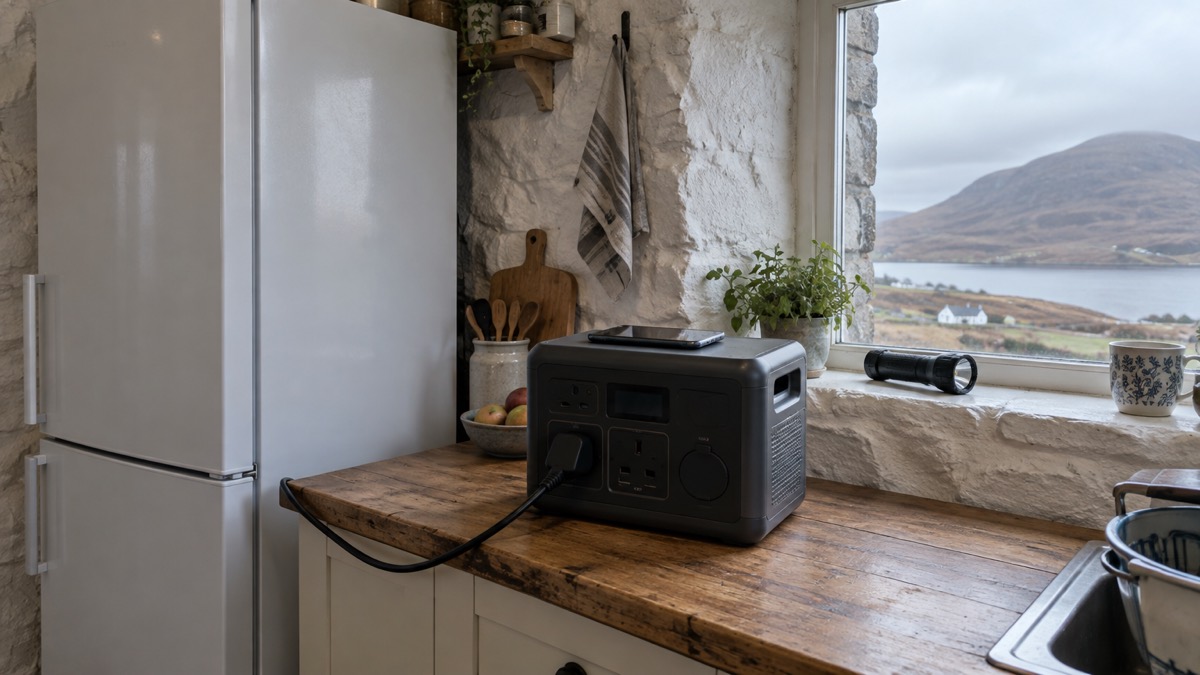
For a household with a medical device, the BaseCharge is one of the more useful pieces of kit available, because it runs silently and can be recharged indoors. BioLite quotes 31 hours for a CPAP machine on a BaseCharge 1500, with the caveat that exact runtimes will vary by model1. That is a full night and more, and it is the figure to plan around.
Real-world reports vary, as you would expect with different machines and pressure settings. One user quoted by a maker describes getting two nights on a full charge in ideal conditions in trials at home5. Another reports at least 4 hours from PAP machines running off battery, and says either PAP can run 10 hours easy5. A forum poster describes a homemade battery box that powers a CPAP machine for around 5 nights6. These are individual experiences, not specifications, and they should not replace the maker's figure when you plan.
The practical routine for a medical device is to keep the unit charged to full at all times, to test the device on it before you need it, and to know how long a recharge takes so you can plan around daylight if you are charging from solar. The 1500+ fills from the wall in as little as 3.5 hours2, which makes a daytime top-up realistic.
Solar charging: up to four SolarPanel 100 panels
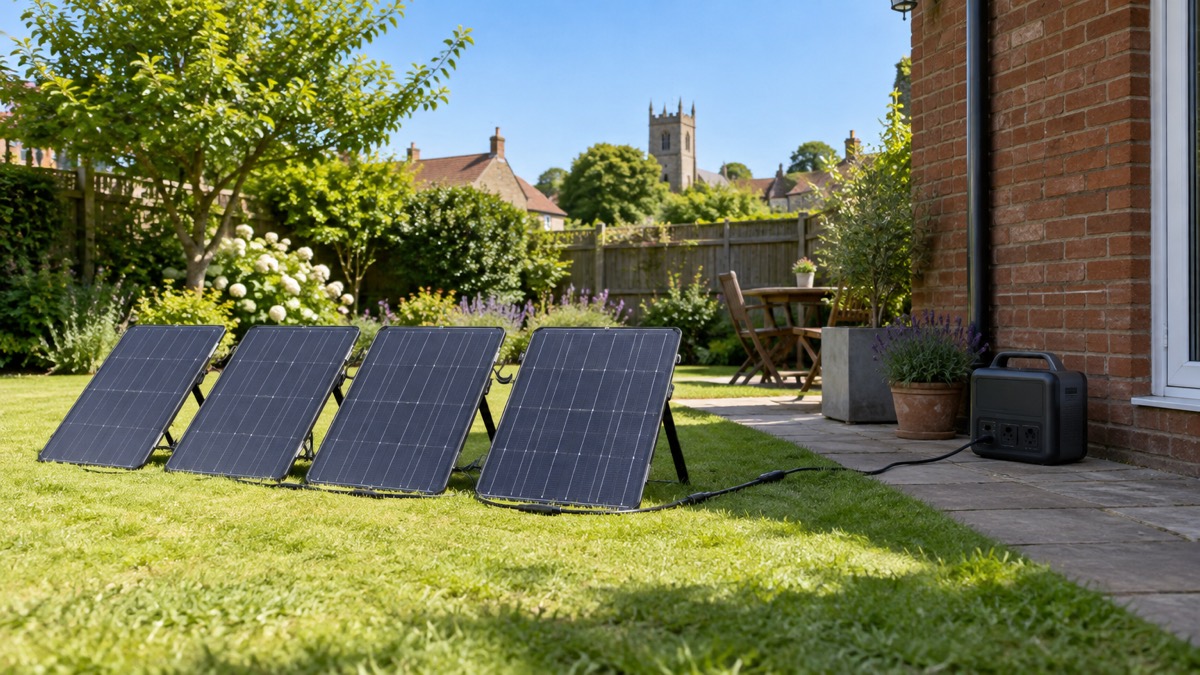
The BaseCharge can be charged three ways: from a wall outlet, from a car, or from solar panels, which the maker describes as pairing with a SolarPanel 100 for a fully independent solar generator system2. The 1500+ accepts up to 400W of solar input at 10 to 30V DC and 20A maximum, and the maker states it works with any non-BioLite 12V solar panel rated up to 400W2. BioLite's own guidance for the BaseCharge 1500 is that you can connect the SolarPanel 100, or up to four of them, for extended runtimes1.
Solar charging is what turns a power station from a one-off reserve into something that recovers during a long outage. It also has limits a UK household should understand before relying on it. Output depends on weather, season and how the panels are angled, and the maker's 400W figure is an input ceiling, not a promise of 400W on a cloudy November afternoon. The unit uses Maximum Power Point Tracking to manage the charge2, which helps get the most from whatever light there is, but it cannot manufacture sunshine.
The sensible pattern is to treat solar as a top-up and a fallback rather than the main source. Charge to full from the mains before winter, use solar to stretch the unit through a multi-day outage, and keep the panels dry and angled towards the sun. For the detail, see Portable Solar Panels for Charging in a Power Cut, What Size Solar Panel Do I Need to Charge a Power Station? and How Long Does Solar Charging Take in the UK?. The BioLite SolarPanel 100 has its own page.
Keeping it ready between emergencies
A power station that has sat unused in a cold garage for a year is not ready. BioLite's own instruction is to recharge and use the unit at least once every six months to maintain optimal performance of the internal battery2. That is the single most important maintenance habit for a household.
- Charge to full before winter. Winter is when outages are most likely and when a full battery matters most. See Backup Power Checks Before Winter.
- Recharge and use it every six months, as the maker instructs2.
- Keep it dry. The unit is not waterproof2, so store it indoors, off a floor that could flood.
- Keep it out of extreme cold and heat. Lithium batteries are sensitive to temperature; see What Temperature Should Batteries Be Stored At? and Can You Charge Lithium Batteries Below Freezing?.
- Test your plan. Plug in the fridge, the CPAP machine or whatever you intend to run, and confirm it works before the night you need it.
The maker also quotes a cycle life of 1000 full discharge and recharge cycles before efficiency loss in the battery2. For a household using the unit a few times a year, that is far beyond what most will ever use, which is reassuring for a long-term reserve.
Using it safely in an outage
The BaseCharge is a lithium-ion battery with mains sockets on the front, so the safety rules are the ones that apply to any large battery. The maker's own safety system covers over and under voltage, charge current, short circuit, high and low temperature, discharge current and inverter temperature2, but that is a backstop, not a substitute for sensible use.
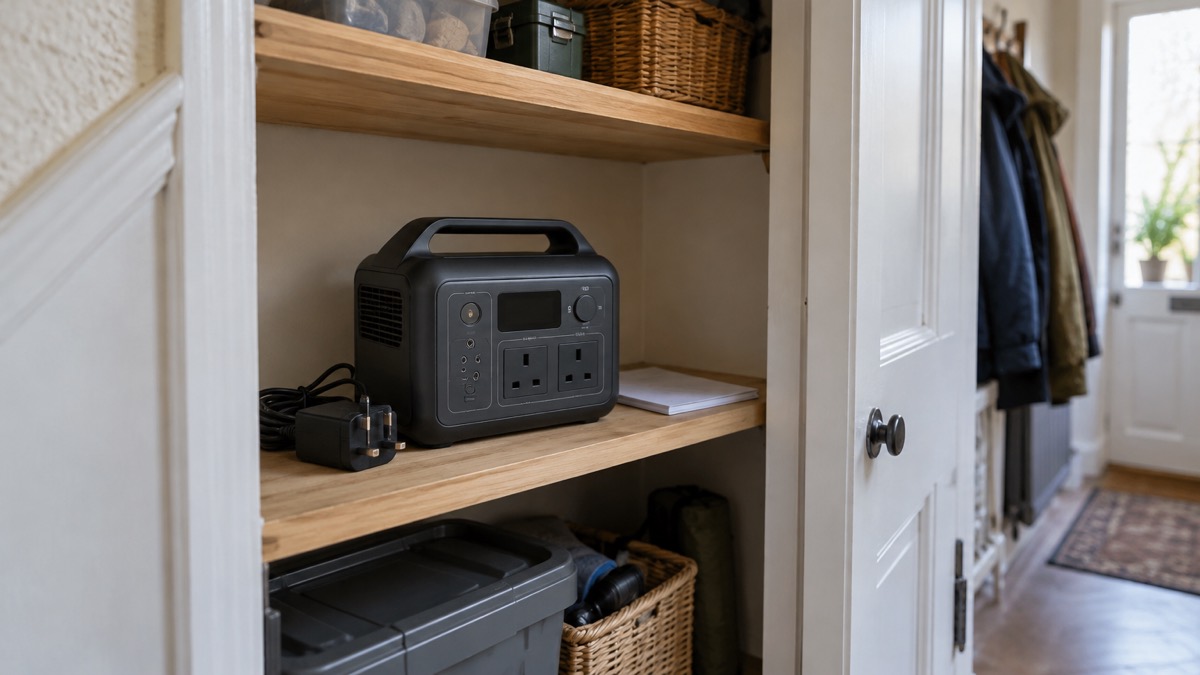
Keep the unit dry and ventilated, and do not block its vents. Do not exceed its rated output: the 1500+ is rated at 1200W continuous with a 2400W surge2, and appliances that draw more than that, or that surge hard on startup, will trip it or refuse to run. Check the wattage on the appliance label against the unit's rating before you plug in. Watts, Watt-Hours and Surge Explained covers how to do that.
Do not take a BaseCharge on a plane. The maker states that both the BaseCharge 600 and 1500 exceed the FAA's regulated limit of 100 Watt Hours for lithium-ion batteries, and must be transported by ground7. For general battery safety at home, including warning signs and what to do if a battery swells or catches fire, see Lithium-Ion Battery Safety at Home, Warning Signs a Lithium Battery Is Dangerous and What to Do If a Lithium Battery Catches Fire.
Support and warranty: register your BaseCharge
BioLite's setup guide states that the unit comes with a standard 2-year warranty, and asks owners to register it so the serial number is captured for any potential warranty claim3. The 1500+ product page lists the same 2-year warranty2. Registration is the step that makes a claim straightforward later, so do it when the unit arrives and keep the confirmation with your household paperwork.
The maker's support site carries a product guide for the BaseCharge 1500 covering setup and first use3. That guide is the place to check anything specific to your unit, including the first-charge instruction to charge to 100% to help condition the battery3. For a household, the support question that matters most is what happens if the unit fails during an outage: the answer is that the warranty covers the unit, not the food in your fridge, so a plan that depends on one battery should have a second way to charge it or a smaller fallback for phones and torches. See Power Banks: Keeping Phones Charged in an Emergency and the Power Cut Backup Power Checklist.
Where the BaseCharge fits a household plan
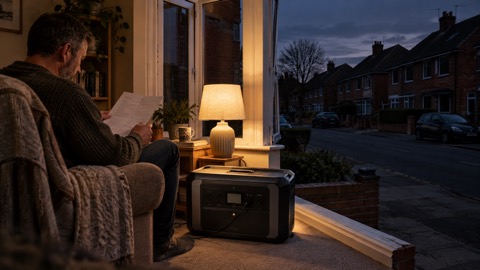
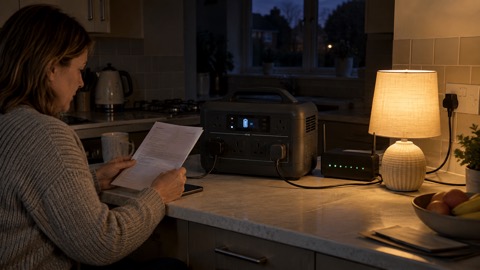
A BaseCharge suits a household that wants silent, fume-free backup for a chosen set of appliances, indoors, without fuel storage. It is at its best running a fridge for the first day, a CPAP machine overnight, and phones and laptops across a multi-day outage, with solar to stretch it. It is not a whole-house supply, it is not waterproof, and it cannot be taken on a plane.
If you are weighing it against other options, Portable Power Station or Petrol Generator for a Power Cut sets out the trade-offs, and Power Bank or Portable Power Station covers the smaller end. For the wider picture of what to keep running and in what order, start at Backup Power at Home: A Household Guide and Using Generators and Power Stations During an Outage. BioLite's other products are listed on the BioLite page.
Sources (7)
- BaseCharge: powering your off-grid experiences, BioLite, 2026
- BaseCharge 1500+ product page, BioLite, 2025
- BaseCharge 1500 Product Guide, BioLite, 2026
- UK winter power outage advice, Jackery UK, 2026
- Jackery Solar Generator 1000 v2, Jackery, 2026
- Preparing for winter, MoneySavingExpert Forum, 2022
- BaseCharge 600 portable power station, BioLite, 2026

 BLUETTI Apex 300 Power Station
 BLUETTI Elite 100 V2
 Anker SOLIX C2000 Gen 2
 Anker SOLIX C1000 Power Station
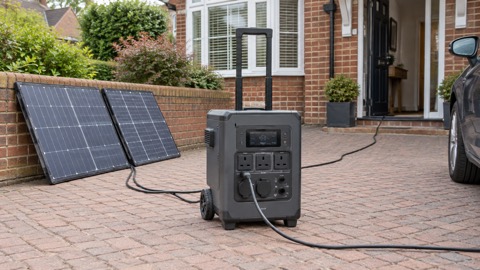 EcoFlow DELTA Pro
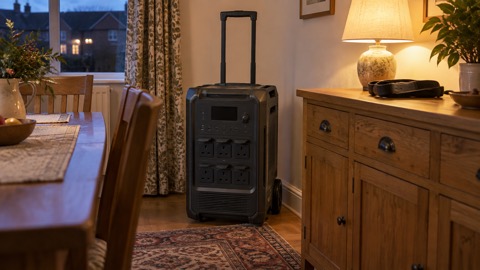 BLUETTI Elite 400
 Anker SOLIX C300 Power Station
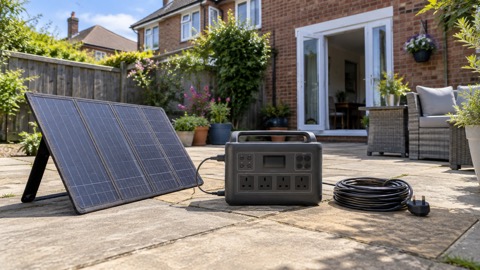 EcoFlow DELTA 3
 EcoFlow DELTA 2 and DELTA 2 Max
 EcoFlow DELTA and DELTA Max
 EcoFlow RIVER 3 and RIVER 3 Plus
 EcoFlow RIVER 2 and RIVER 2 Max