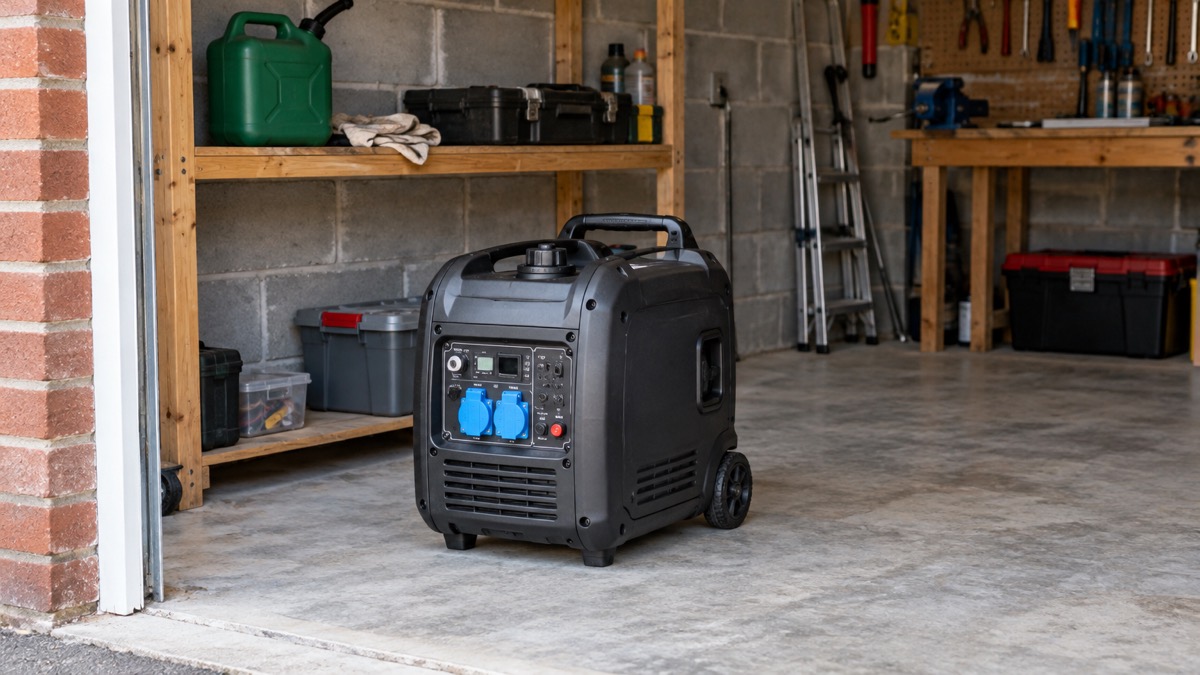
The Champion 3600W Digital Hybrid is a petrol inverter generator: a portable engine-driven unit that makes its own mains power when the grid fails. The maker rates it at 3500W running and 4500W starting, with a maximum of 3600W, and says it produces clean power at less than 3% total harmonic distortion, a pure sine wave suitable for sensitive electronics such as laptops and TVs1. A full 11 litre tank runs it for 14 hours at 25% load1.
For a household, that means a machine that can carry a fridge, freezer, lights, broadband and phone charging through a long outage, and can start motor-driven appliances briefly on its higher starting figure. It is not a whole-house solution and it is not a battery: it burns petrol, it must run outdoors, and it needs fuel, oil and servicing to stay reliable.
This page sets out what the maker says the machine can do, what it weighs and sounds like, how to fuel and run it safely, and what the warranty covers. Every figure here is the maker's own published specification for this model1.
What the Champion 3600W Digital Hybrid is and what it does for a household
This is a frame-type inverter generator built around a 224 cc engine producing 6.9 hp1. "Inverter" matters to a household: rather than feeding raw engine output to your appliances, it converts the power electronically to a steady sine wave, which is why the maker can describe it as safe for sensitive electronics1. If the difference between inverter and open-frame machines is new to you, our guide to inverter and open-frame generators explains it.
The practical case for it is a long outage. A petrol generator of this size runs as long as you have fuel, unlike a battery that empties and must be recharged. The trade-offs are equally real: it weighs 43.9 kg, so the included wheel kit with never-flat tyres and a foldaway easy-grip handle is not a luxury1. It is rated IP23M, which is a degree of protection against rain, not a licence to leave it out in a downpour1. It is single phase, with a power factor of 1.0, and it has an automatic voltage regulator and overload protection1.
It is a petrol-only machine. The maker lists the fuel as petrol and the certifications as including E10 Petrol Compliant, EU Stage V, RED and UKCA, with emissions to EC and EPA standards1. If you want the option of running on LPG as well, that is a different kind of machine; our comparison of LPG and petrol generators sets out the difference.
Output and power quality: 3500W rated, 4500W starting, pure sine wave
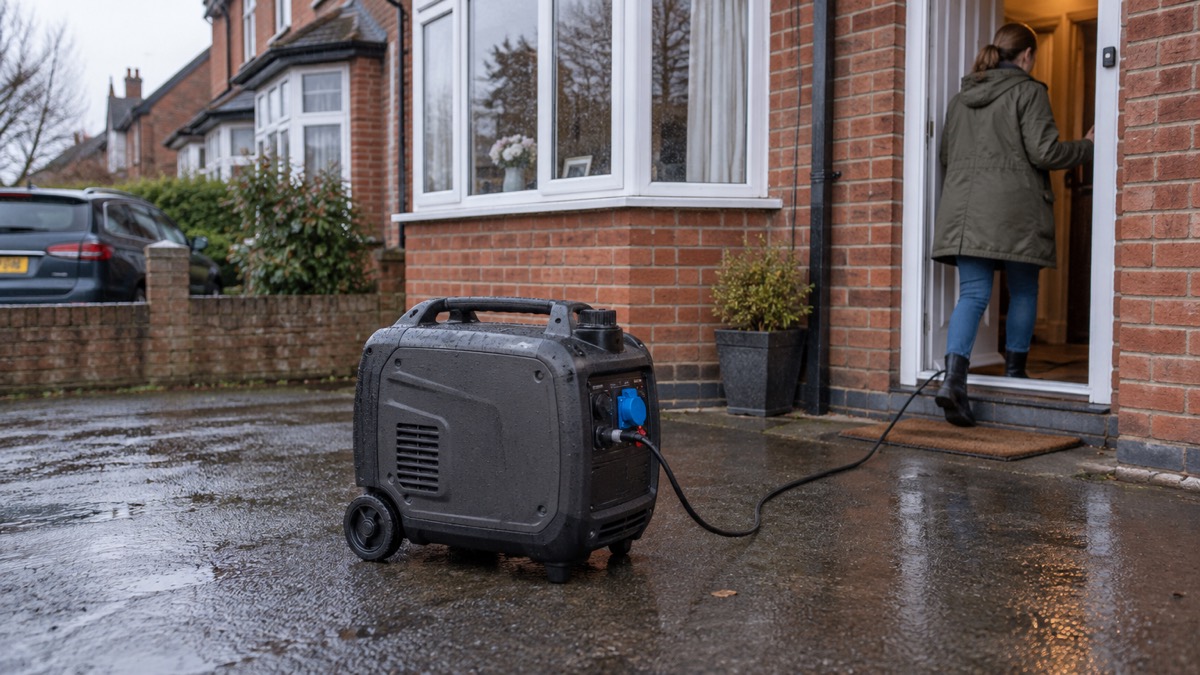
The numbers that decide what you can plug in are three: 3500W rated, 4500W starting and 3600W maximum1. Rated output is what the machine can supply continuously. Starting output is the brief surge available when something with a motor, such as a fridge compressor, first kicks in. Maximum output sits between the two. If those terms are unfamiliar, our explainer on watts, watt-hours and surge covers them.
The maker's claim on quality is specific: the machine "Produces only Clean Power (less than 3% THD)"1. A low distortion figure is what lets the maker say it is safe for sensitive electronics like laptops and TVs1. That is the reason to choose an inverter machine over a cheaper open-frame type for a household with computers and a router.
| Specification | Maker's figure |
|---|---|
| Rated watts | 3500W1 |
| Starting watts | 4500W1 |
| Maximum watts | 3600W1 |
| Power quality | Pure sine wave, less than 3% THD1 |
| AC outlets | 1 x 240V 13A, 1 x 240V 16A1 |
| Phase | Single1 |
| Power factor | 1.01 |
| Voltage regulation | AVR fitted1 |
| Overload protection | Yes1 |
The two sockets do different jobs. The 13A outlet takes a standard UK three-pin plug, so ordinary appliances connect directly. Whichever you use, add up what you are plugging in and keep the total within the rated figure, leaving headroom for starting surges. Extension leads have their own limits; our guide to extension leads and overloading explains how to avoid overloading them.
Run time and fuel: up to 14 hours on an 11 litre tank
The headline run time is 14 hours at 25% load with the 11 litre tank full1. That is a quarter of the rated output, which is enough for a fridge, a freezer, lights, broadband and phone charging if you manage the load. Run it harder and the tank empties faster. The maker's fuel consumption figures show the curve:
Only the 25% load figure is given by the maker as a run time; the rest are consumption rates, and the tank empties sooner the harder you work the machine. The lesson is to run it at low load wherever you can. Deciding in advance what actually needs power is the single biggest lever on run time; our guide to deciding what to keep running helps you make that list, and our explainer on generator run time goes further into the arithmetic.
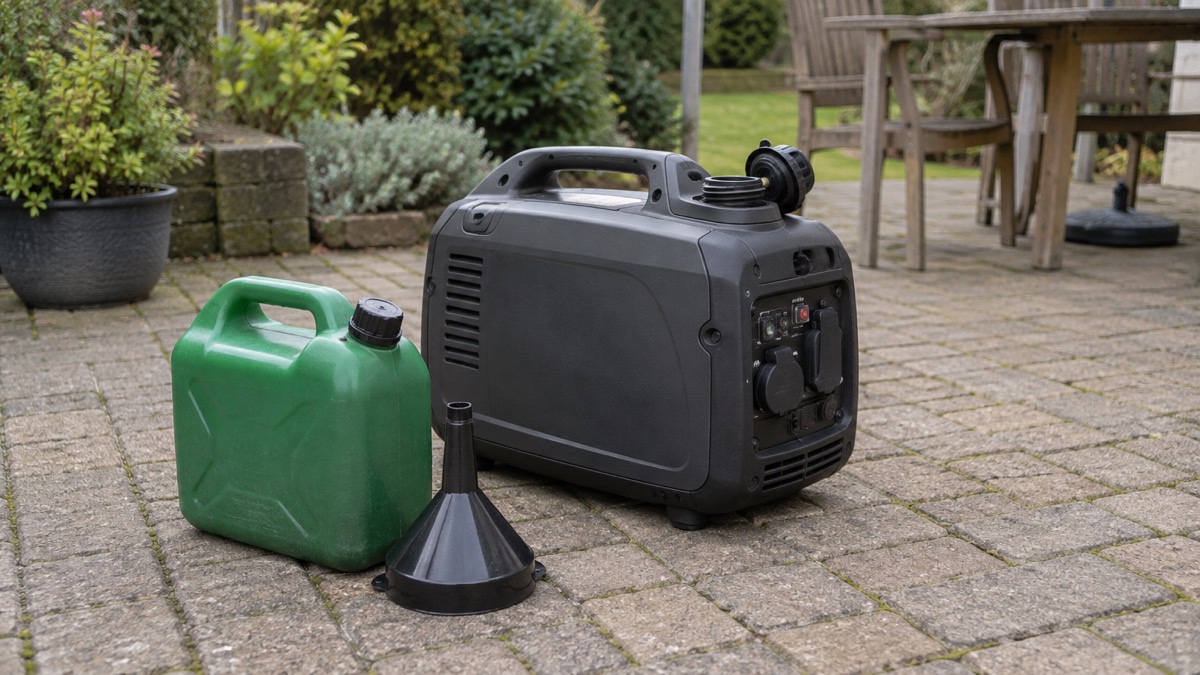
Fuel is petrol, and the maker lists the machine as E10 Petrol Compliant1. Petrol does not keep indefinitely, so store only what you can use and rotate it. How much you may keep at home is a safety question with legal limits; our guide to storing petrol at home sets them out. Never refuel a hot engine, and never store fuel near the running machine.
Oil, starting and day-to-day running
The engine holds 600 ml of oil, and the maker recommends 10W-301. Check the level before each run. The machine has an automatic low oil shutoff, which stops the engine if the oil runs too low1; if it cuts out for no obvious reason, check the oil before assuming a fault. The maker's operating manual, supplied in the box, is the authority on servicing intervals and the running-in procedure.
Starting is flexible. The maker lists the start type as recoil, electric and remote, and supplies a remote key in the box1. The wireless remote starts and stops the machine from up to 24m away1. That is convenient, but it does not change where the generator stands: it must run outdoors, well away from windows, doors and vents, because of carbon monoxide. The engine speed is automatic, based on load, which is part of how an inverter machine keeps fuel use down when demand is light1.
Cold weather is where petrol engines struggle. The maker lists Cold Start Technology as a feature1, which is intended to help in low temperatures, but the sensible household habit is to test-start the machine before winter rather than during a storm. Our guide to generators in cold weather covers the practical steps.
Noise is part of living with a generator. The maker gives 64 dBA at 7m1. That is a working-machine level, audible to neighbours, so think about where you site it and when you run it; our guide to generator noise and neighbours covers the practicalities. The machine measures 520 x 598 x 630 mm (H x L x W) and weighs 43.9 kg1, so plan where it will live and how you will move it before you need it. Our guide to storing a generator after a power cut covers fuel, oil and siting between uses.
Warranty, certifications and support
The maker offers a 3 year warranty on this model1. Keep the receipt and the operating manual, and follow the maker's servicing instructions, because warranty terms normally depend on the machine being used and maintained as specified. The manual supplied in the box is the document to consult for service intervals and for any claim.
The certifications the maker lists are E10 Petrol Compliant, EU Stage V, RED and UKCA, with emissions to EC and EPA standards1. UKCA is the UK conformity marking; our guide to UKCA, CE and safety markings explains what the marks mean on backup power kit. The machine also carries overload protection and an automatic voltage regulator1, both of which protect your appliances as well as the generator.
Champion is the maker, and its wider range is covered on our Champion brand page. If you are still deciding between a petrol generator and a battery power station, our comparison of power stations and petrol generators sets the two side by side. For the wider picture of keeping a household running through an outage, start with our guide to backup power at home.
Sources (1)
- Champion 3600 Watt Digital Hybrid Frame Type Inverter (CPG4000DHY), Champion Power Equipment, 2026-10-25

 EcoFlow Dual Fuel Generator
 Honda EU70iS Generator
 Honda EU32i Generator
 Honda EG3600 Generator
 Pramac P3500i Generator
 Senci SC6000-II Home Generator
 Senci SC10000-II Generator
 Senci SC6600iED Generator
 Gorilla Power GP3800iE
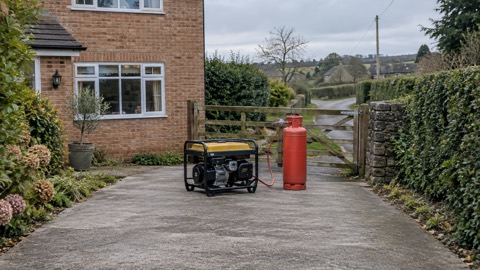 Gorilla Power GP6500E-DF
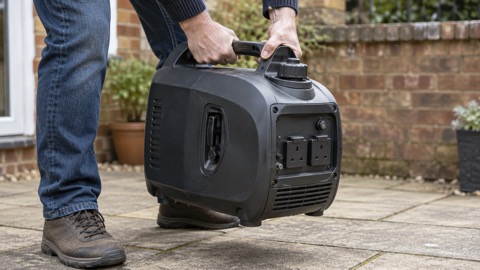 Gorilla Power GP3500i
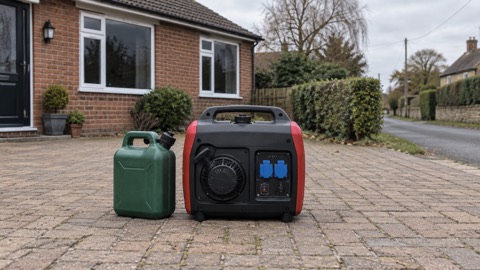 Hyundai HY2250Si Generator