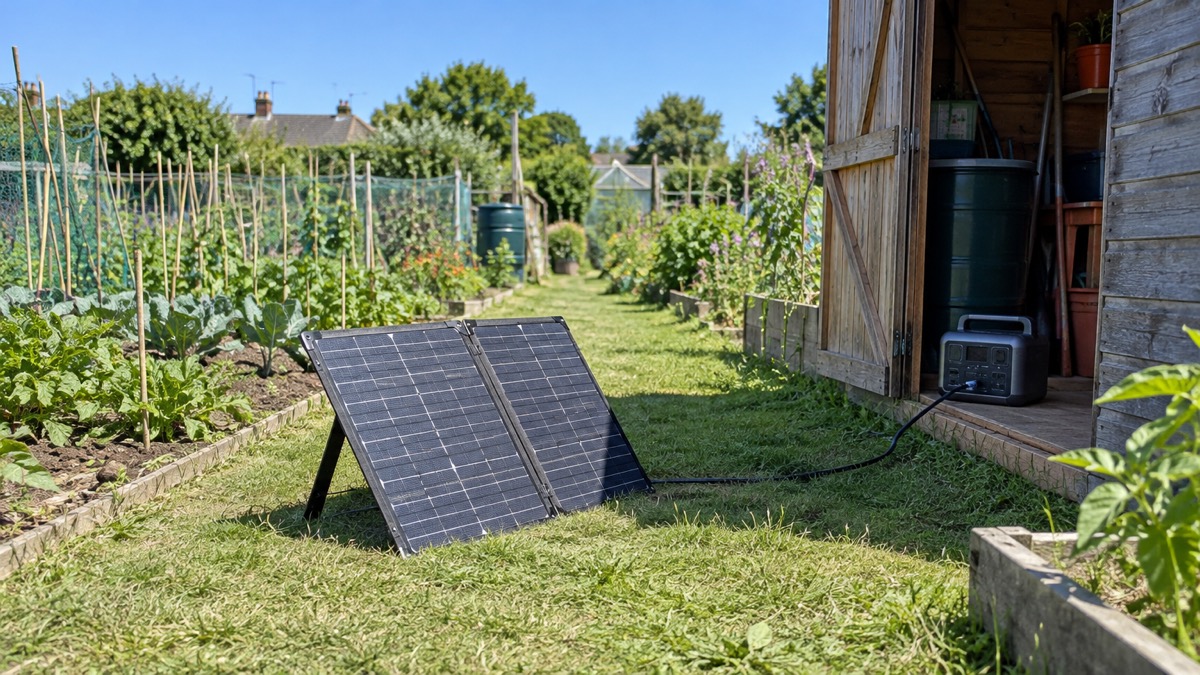
The Jackery Solar Generator 600 v2 is a small portable power station with a 640Wh battery, a 500W output and a 1000W surge, sold by Jackery as a package with a folding solar panel1. For a household preparing for power cuts, it is the size of unit that keeps the essentials going: phones, a router, a laptop, a light, a small fridge or a medical device, for hours rather than days. It is not a substitute for mains power and it will not run an electric heater or an oven.
What it does well is sit in a cupboard, ready. Jackery states the battery loses only 5% of its charge or less in six months, so a unit charged in autumn is still usable in spring1. It can be topped up from a wall socket in 100 minutes, from a car in 7.5 hours, or from a solar panel in 8 hours1. The maker rates the battery at 6,000+ cycles with a 10-year lifespan1.
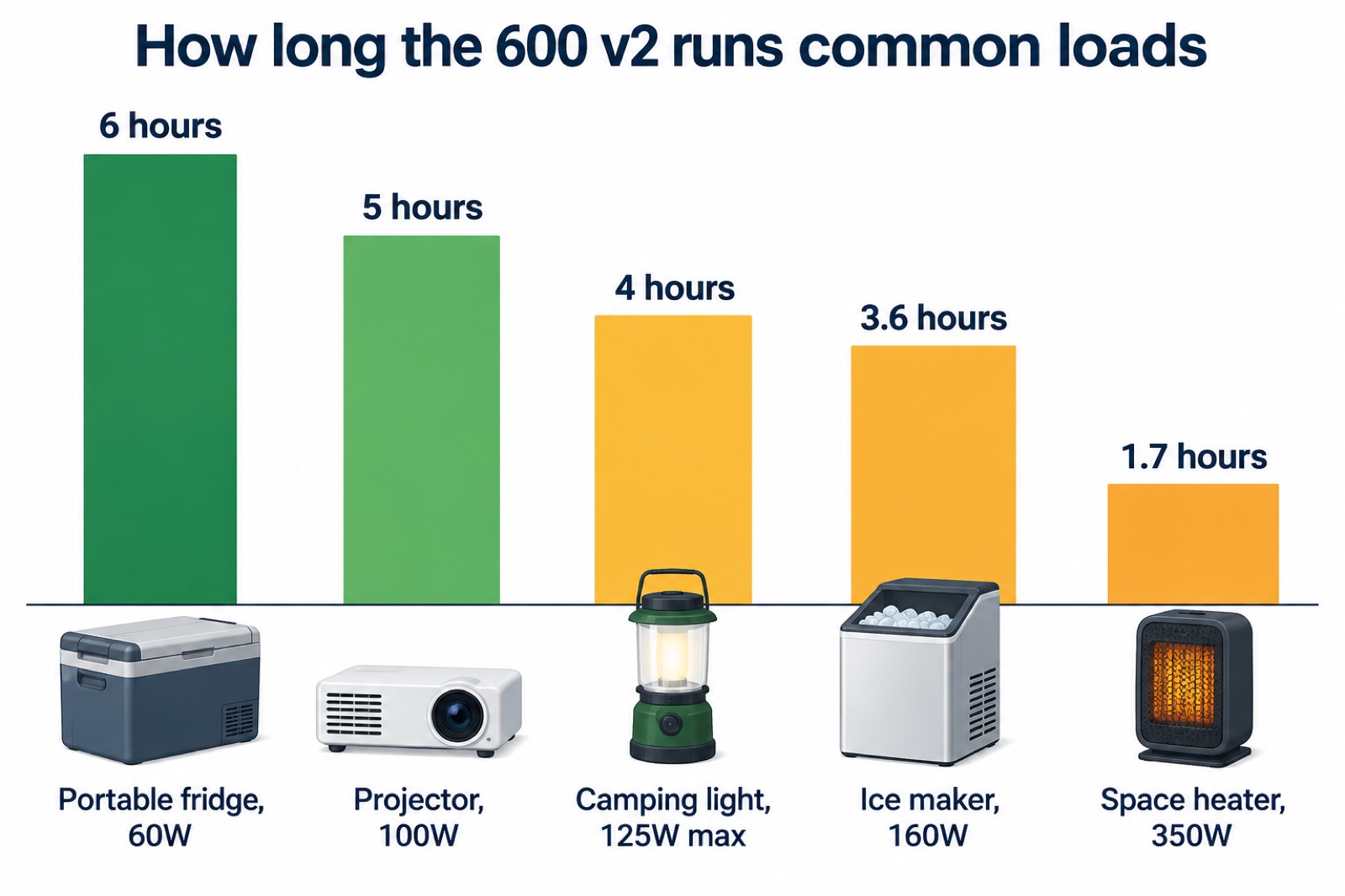
The limits matter as much as the figures. The 500W rated output decides what you can plug in, and the 640Wh capacity decides for how long. A 350W space heater runs for 1.7 hours; a 100W projector for 5 hours; a 60W portable fridge for 6 hours1. Plan around those numbers, not around the socket count.
What the 600 v2 is, and what it suits in an emergency
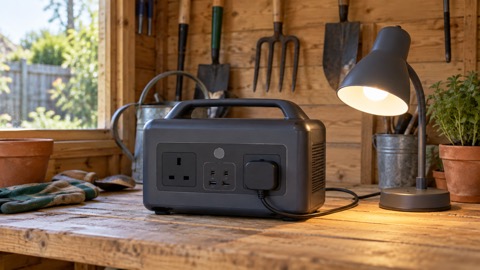
This is a lithium iron phosphate (LiFePO4) power station with a mains socket on the front and a solar input on the back. Jackery describes the chemistry as chosen for high temperature resistance, safety stability and better circulation performance1. In practice that means a unit you can leave charged and largely forget about until you need it, which is exactly what an emergency backup should be.
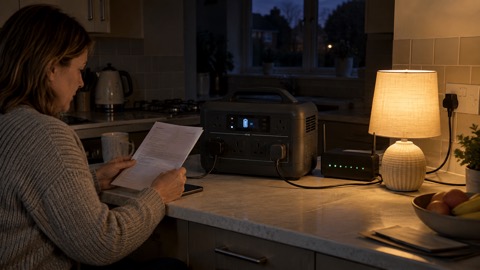
It suits a household that wants to ride out a short outage without drama: a few hours without mains, a storm that takes the power down overnight, a flood that cuts supply while you are already dealing with other things. Jackery's own guidance describes a solar generator as giving a temporary energy backup for a few hours to use electrical appliances and remain safe during a rolling blackout2. That is an honest description of the job.
It does not suit a household expecting to run heating, cooking or a whole house. For that scale of need, the site's guide to portable power stations sets out the larger options, and deciding what to keep running is the step to take before choosing any unit. The 600 v2 is the small end of that range: enough for the things that keep a household informed, warm enough to sleep, and in contact with the outside world.
Specifications: 640Wh, 500W output, 1000W surge
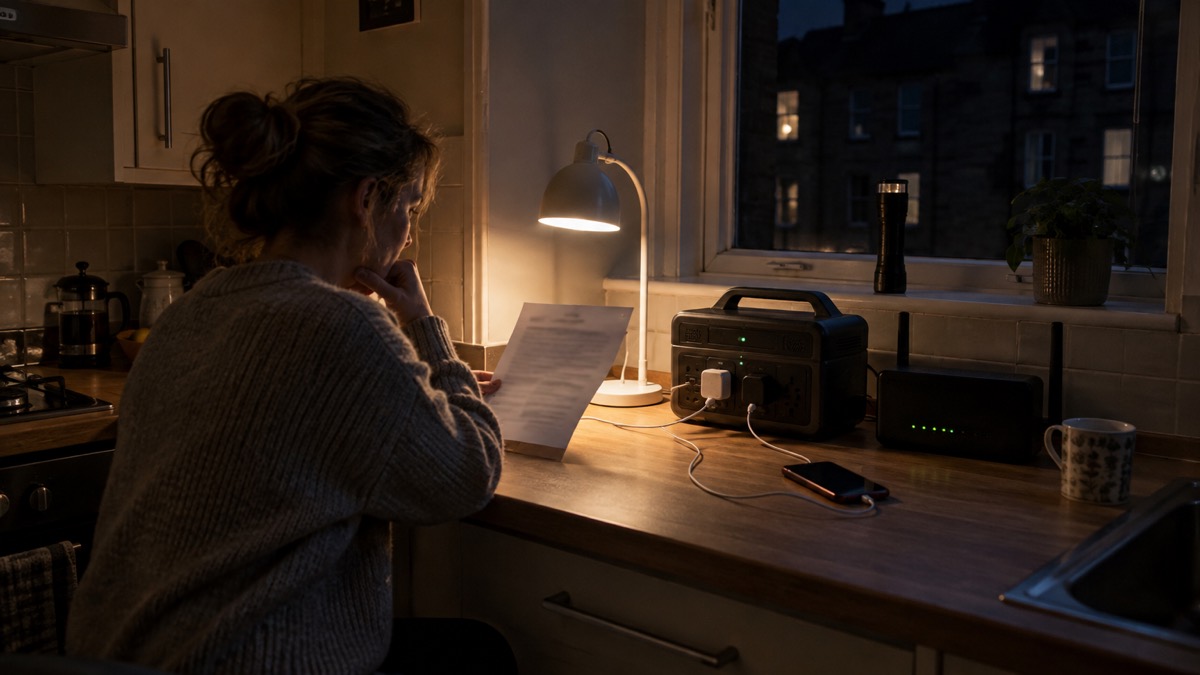
The three figures that decide everything else are the capacity, the continuous output and the surge. Capacity is the size of the tank; output is the width of the pipe; surge is the short burst a motor or compressor draws as it starts. The site's explainer on watts, watt-hours and surge covers the arithmetic, but the practical rule is simple: add up the watts of everything you want to run at once and keep the total under 500W, and check that nothing you plug in draws more than 1000W as it starts.
| Specification | Figure | What it means for you |
|---|---|---|
| Battery capacity | 640Wh1 | The total energy available; a 100W load runs for roughly six hours |
| Rated output | 500W1 | The most it will supply continuously through the AC outlets |
| Surge output | 1000W1 | The brief peak a motor or compressor can draw at start-up |
| AC outlets | Dual 500W AC outlets, six ports in total1 | Two mains sockets plus USB ports |
| USB outputs | Dual 100W USB-C, plus USB-A1 | Fast charging for laptops and tablets |
| Surge protection | Up to 3KV / 1000J1 | Protection for equipment plugged into the unit |
| Battery chemistry | LiFePO41 | Stable chemistry suited to being stored charged |
| Casing | UL94V-0 fire-rated1 | The maker's stated fire rating for the casing |
| Weight | 14.11 lbs1 | Light enough for one adult to move between rooms |
| Operating temperature | -4°F to 113°F1 | The maker's stated range; see the storage section for the narrower figure |
Jackery describes the unit as the world's lightest 600Wh LFP power station at 14.11 lbs1. That claim is the maker's own; what matters for a household is that it can be carried up and down stairs by one person, which many larger units cannot.
What it will run, and for how long
Jackery publishes run times for a set of appliances, and they are the most useful planning tool on the product page. They are the maker's figures for its own product, measured against stated wattages, so treat them as a guide to the shape of the load rather than a promise for your particular appliance.
| Appliance | Load | Run time stated by Jackery |
|---|---|---|
| Space heater | 350W | 1.7 hours1 |
| Portable refrigerator | 60W | 6 hours1 |
| Ice maker | 160W | 3.6 hours1 |
| Projector | 100W | 5 hours1 |
| Camping light | 125W maximum | 4 hours1 |
| Laptop | 80W | 5 charges1 |
| iPad | 10W | 10 charges1 |
| GoPro Hero 10 | 1,720 mAh | 80 charges1 |
Read the table by what it tells you about the household. The small loads, phones, tablets, a laptop, a light, stretch a long way: five laptop charges and ten tablet charges will carry a family through several days of an outage if they are careful. The heating loads do not. A 350W heater for 1.7 hours is a short burst of warmth, not a way to heat a room through a cold night.
Running a space heater
A space heater is the load most people ask about, and the answer is that this unit is not the right tool for heating a room. The 350W heater in Jackery's table runs for 1.7 hours1, and the station's rated output is 500W, so a 1500W heater is well beyond what it can supply continuously. Jackery's own run-time tables for its larger units show a 1500W space heater running for 1.1 hours on a 2000 Plus, 2.0 hours on a HomePower 3600 Plus and 2.8 hours on a 5000 Plus3. Even those bigger units treat electric heating as a short burst. For warmth, the site's guide to heating and cooking without mains power is the place to start.
Using it as a UPS
Jackery states the unit switches over in 0.01 seconds or less, which it describes as keeping computers, calls and data safe during outages1. That is fast enough for most home equipment to ride through a brief interruption without rebooting. It is a useful secondary job for the unit if you work from home or rely on a landline over broadband, but it is not a substitute for a dedicated uninterruptible supply, and the battery will only carry the load for as long as its capacity allows. The site's page on using a power station as a UPS explains switchover times in more detail.
Surge protection for electronics
Jackery states the unit has surge protection up to 3KV and 1000J, and describes protection against lightning and short circuits1. This protects the equipment you plug into the station. It does not protect your home's wiring, your boiler or anything left plugged into the wall, and it is not a reason to leave sensitive equipment connected during a storm. If a surge has already damaged something in the house, the station cannot undo it.
Charging times by mains, solar and car
How you recharge the unit decides how long it stays useful in a long outage. Jackery gives three routes: mains, solar and car1. Each has a different place in a household plan.
| Method | Time stated by Jackery | When it suits |
|---|---|---|
| Mains wall outlet | 100 minutes1 | Before an outage, or between outages when power returns |
| Hybrid charging | 70 minutes1 | A top-up when time is short |
| Car | 7.5 hours1 | On the move, or when the mains is down and the car is available |
| Solar, 200W panel | 3.5 hours to 80%1 | Daylight, with a suitable panel |
| Solar, 100W panel | 6.5 hours to 80%1 | Daylight, with the bundled panel |
| Solar, general figure | 8 hours1 | The maker's headline solar charging time |
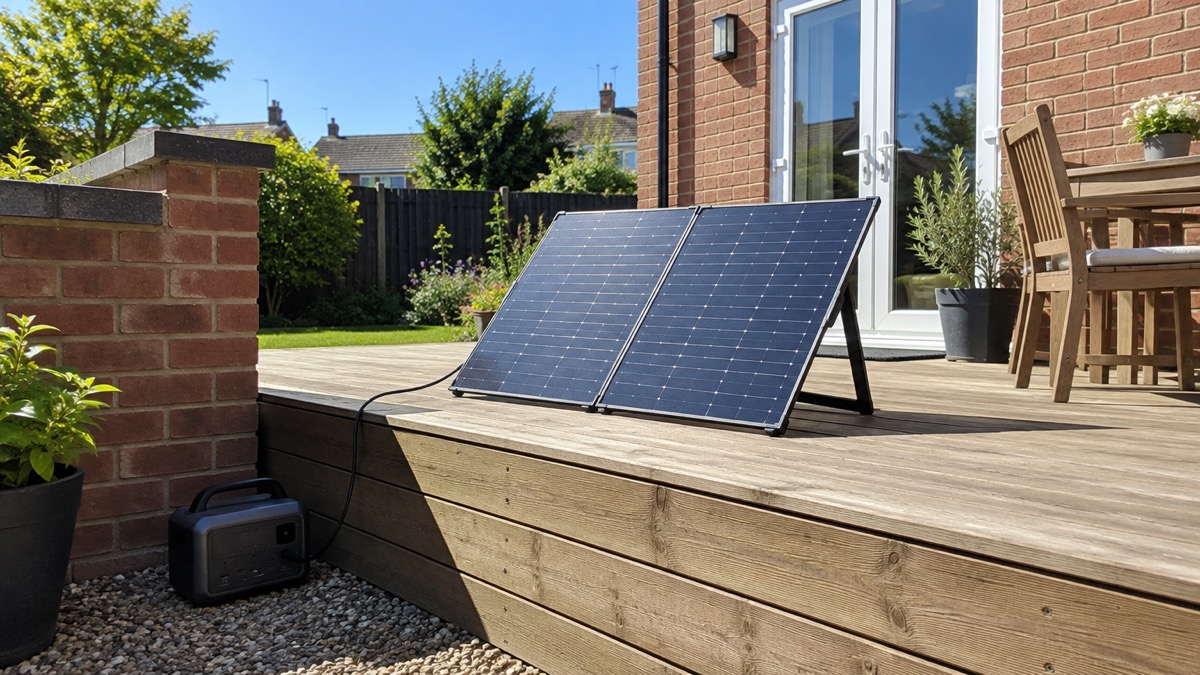
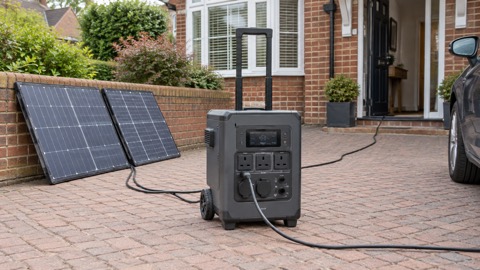
The solar figures are the ones to think hardest about. They are stated for charging to 80%, not to full, and they assume the panel is producing its rated output, which depends on sun, angle and weather. A 100W panel taking 6.5 hours to reach 80% is most of a day of decent daylight. In a UK winter, with short days and low sun, plan on the slower end. The site's guide to portable solar panels for charging in a power cut covers panel choice, and how long solar charging takes in the UK sets out what the weather does to those figures.
Charging from a car is the fallback when the mains is out and the sun is not cooperating. Jackery gives 7.5 hours1, which is a long drive or a long idle with the engine running. The site's page on charging a power station from your car explains what that involves.
Keeping it ready between emergencies
The point of a unit like this is that it works when you reach for it. Jackery states the station loses only 5% of its charge or less in six months, which it attributes to its ZeroDrain technology1. That is the figure that makes it practical to charge the unit, put it away and check it twice a year rather than every month.
A simple routine:
- Charge it to full from the mains before you expect to need it, so it is ready to run a camping light for up to 4 hours at 125W maximum or to charge a GoPro Hero 10 around 80 times1.
- Keep the charging cable and any solar panel with the unit, so nothing is missing when you need it.
- Test it under load once a year by running a lamp or charging a phone from it.
Operating temperature limits
Jackery gives two different figures for temperature, and they do not agree. The product page states the unit works from -4°F to 113°F1. A separate Jackery page gives the working temperature of its power stations as 14 to 104°F, which is -10 to 40°C5. The same page gives the working range of its SolarSaga panels as 14 to 149°F, or -10 to 65°C5. Do not leave it in a shed through a hard frost or in a car in summer sun. The site's page on charging lithium batteries below freezing explains why cold is the bigger risk.
Battery life in cycles
Jackery states the unit uses a 6,000+ cycle LFP battery with a 10-year lifespan1. A cycle is a full charge and discharge; partial top-ups count fractionally. For a household using the unit through a handful of outages a year, that figure is far beyond what normal emergency use will consume. The battery is more likely to be limited by age and storage conditions than by cycles. Store it part charged rather than flat, keep it out of extremes, and it should outlast most of the appliances you plug into it.
Safe use and storage
The unit is a battery in a box, and the safety advice is the same as for any large lithium battery: keep it dry, keep it cool, and do not abuse it. Jackery states the casing is UL94V-0 fire-rated and the chemistry is LiFePO4, chosen for safety stability1. Those are the maker's statements about its own product. They are not a reason to treat the unit carelessly.
- Keep it out of water and away from flood water; do not use it with wet hands or in a damp outbuilding.
- Do not cover it while charging, and do not charge it on a soft surface where heat cannot escape.
- Do not use a unit that is swollen, damaged or giving off a smell; the site's page on warning signs a lithium battery is dangerous sets out what to look for.
- Keep it away from flames and do not store it next to a heater or a cooker.
- Do not attempt to open the case or replace the battery yourself.
The built-in SOS light is a useful secondary function: Jackery describes it as adding emergency illumination for work, safety and blackout readiness1. Use it as a light in a dark room, but keep a separate torch as well, so you are not dependent on the power station for both light and power. The site's guide to emergency lighting at home covers the options.
Warranty, UK delivery and returns
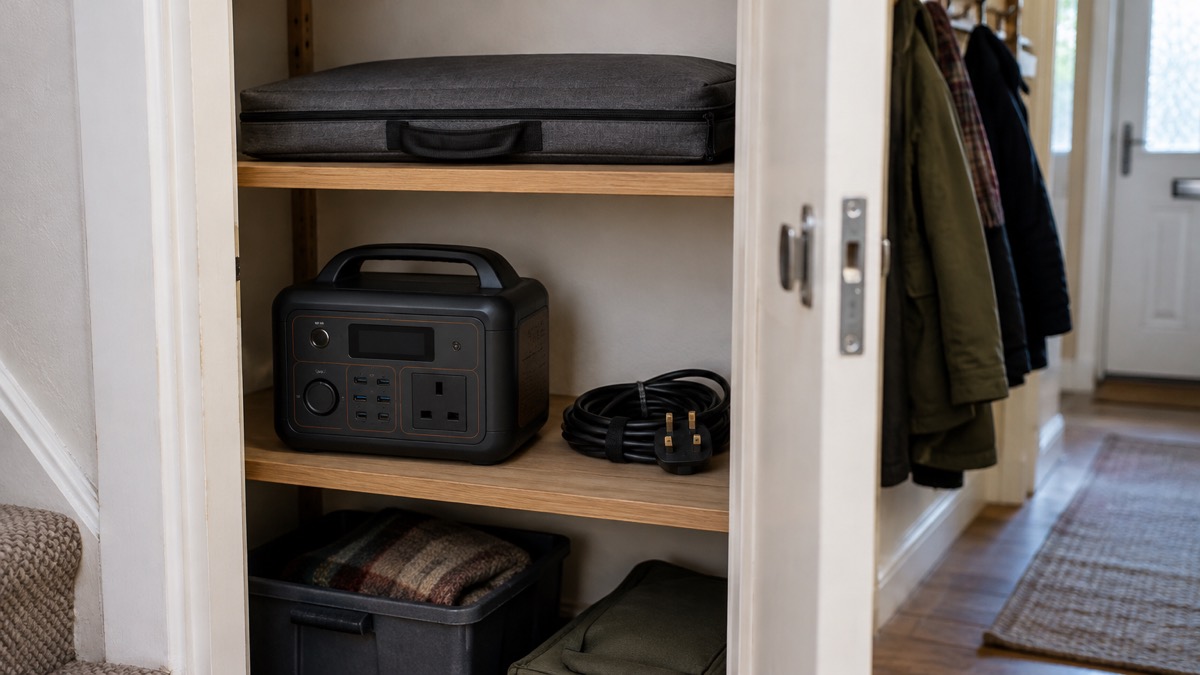
Jackery states the unit is covered by a 3+2 year extended warranty1. A separate Jackery page describes its solar generators as coming with a 2-year or 3-year warranty, with an additional 1 or 2 years if purchased directly from uk.jackery.com6. The two statements are consistent in shape but not identical in figure, so check the warranty terms at the point of purchase and keep the order confirmation.
On delivery and returns, Jackery states 2 to 5 business days shipping and a 30-day money back period1. Those are the maker's own terms for its UK store. If you are buying the unit as part of an emergency plan, order it well before winter rather than in the week a storm is forecast, so you have time to charge it, test it and read the instructions.
Bundle availability
Jackery lists a bundle containing the Explorer 600 v2, one SolarSaga 100 Air panel, the AC power cord and the cable to connect the panel to the station1. At the time of writing the maker's page shows that bundle as sold out1. If solar charging matters to your plan, check availability before you rely on it, and remember the station can also be charged from the mains or a car1. The site's page on Jackery SolarSaga solar panels covers the panels themselves.
Where it fits in a household plan
The 600 v2 is a small, light, well-specified unit for the essentials: communications, light, a few small appliances and a short burst of warmth. It is not a whole-home backup and it will not carry heating or cooking. Used within those limits, and kept charged and tested, it does the job a household most often needs in a power cut: keeping the lights on, the phones charged and the fridge from warming too fast while you wait for the supply to return.
Before you buy, work out what you actually want to keep running. The site's guide to deciding what to keep running when the mains fails and its power cut backup power checklist will tell you whether a unit this size is enough, or whether your household needs something larger. If you are new to backup power altogether, start with the backup power at home guide.
Sources (6)
- Jackery Solar Generator 600 v2 product page, Jackery, 2026-10-25
- How to use solar panels during a power outage, Jackery, 2026-09-28
- How to build a 72-hour household emergency power outage plan, Jackery, 2026-10-10
- How to prepare for a long-term power outage, Jackery, 2026-08-14
- Jackery Solar Generator overview, Jackery, 2026-10-29
- Uninterruptible power supply, Jackery, 2026-10-29

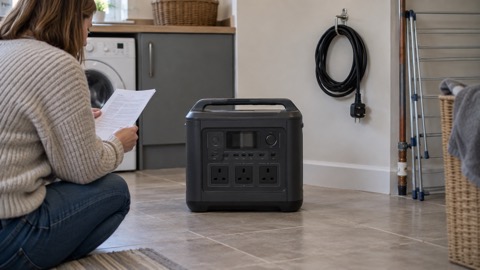 BLUETTI Apex 300 Power Station
 BLUETTI Elite 100 V2
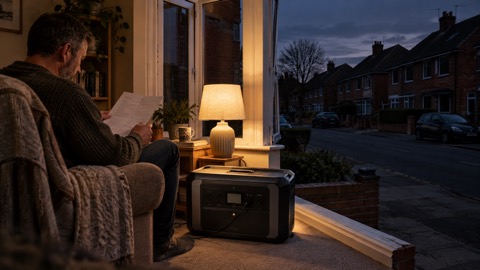 Anker SOLIX C2000 Gen 2
 Anker SOLIX C1000 Power Station
 EcoFlow DELTA Pro
 BLUETTI Elite 400
 Anker SOLIX C300 Power Station
 EcoFlow DELTA 3
 EcoFlow DELTA 2 and DELTA 2 Max
 EcoFlow DELTA and DELTA Max
 EcoFlow RIVER 3 and RIVER 3 Plus
 EcoFlow RIVER 2 and RIVER 2 Max