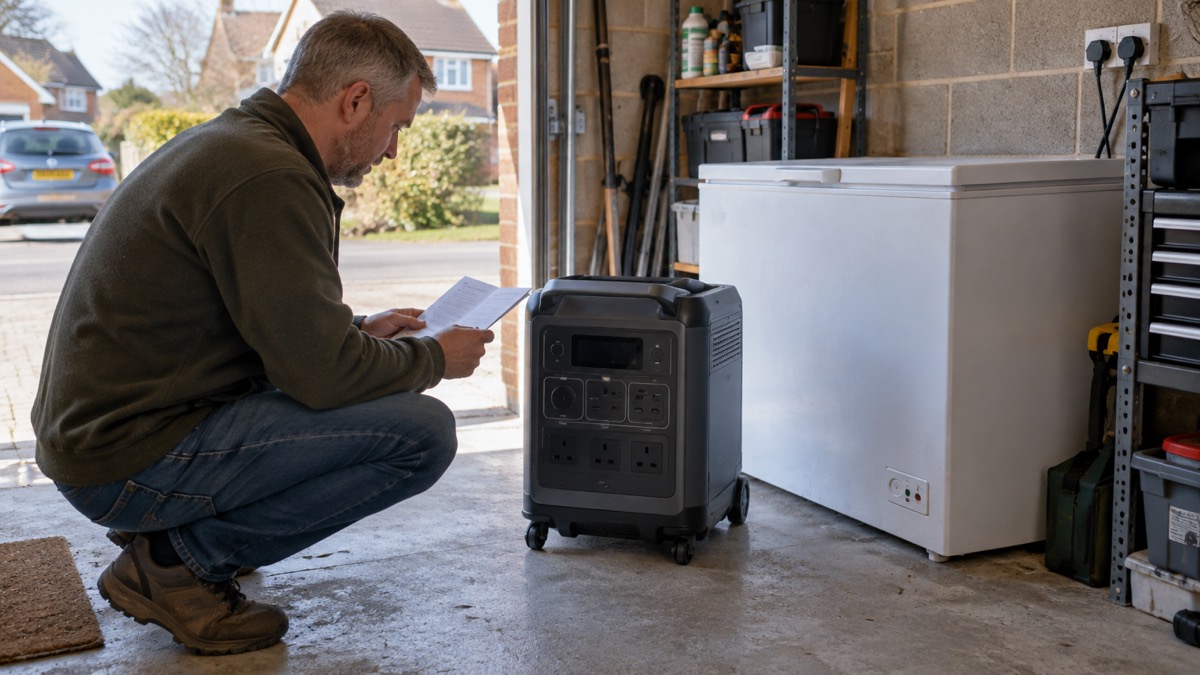
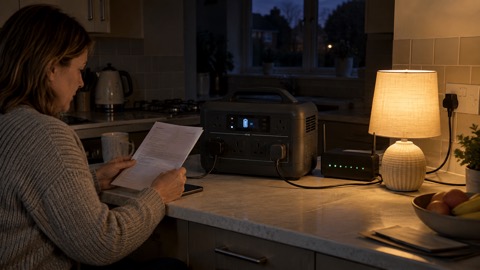
The Anker SOLIX F2000, also sold as the PowerHouse 767, is a portable power station: a battery that stores electricity and gives it back through sockets, rather than a generator that burns fuel. Anker gives its AC output as 2,300W maximum in inverter mode, with a peak of 3,600W, across 10 outlets1. For a household, that means a large battery you charge from the mains before a power cut, then wheel out to run a fridge, a router, lights or a medical device while the supply is down.
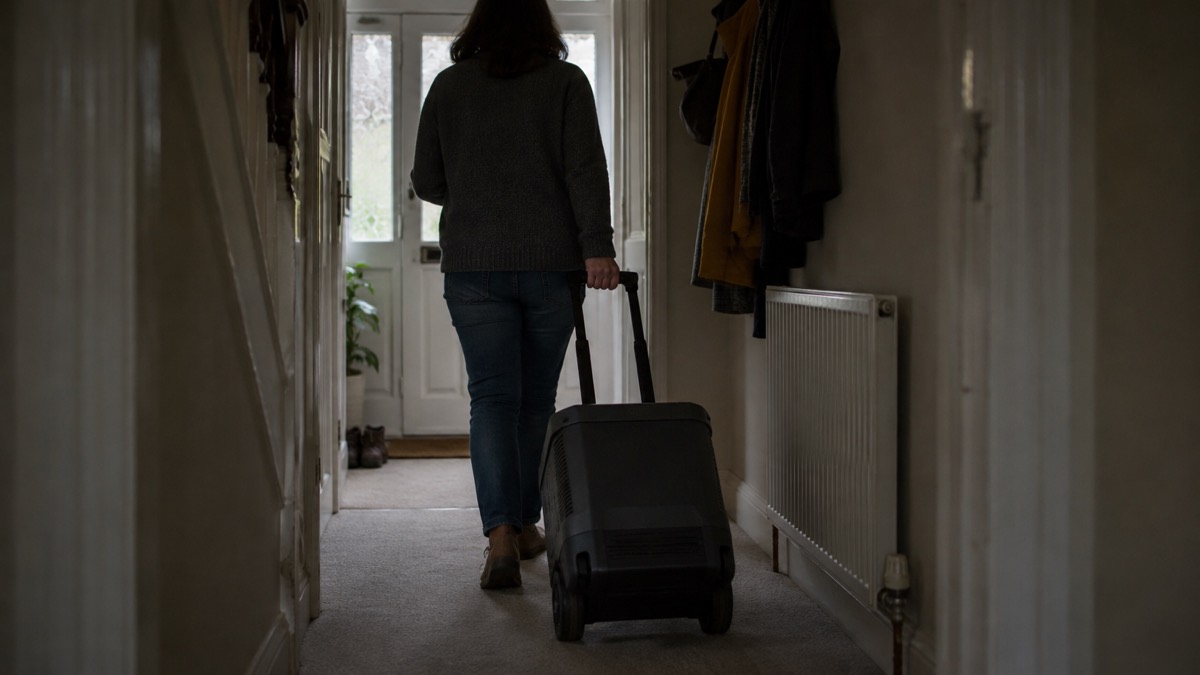
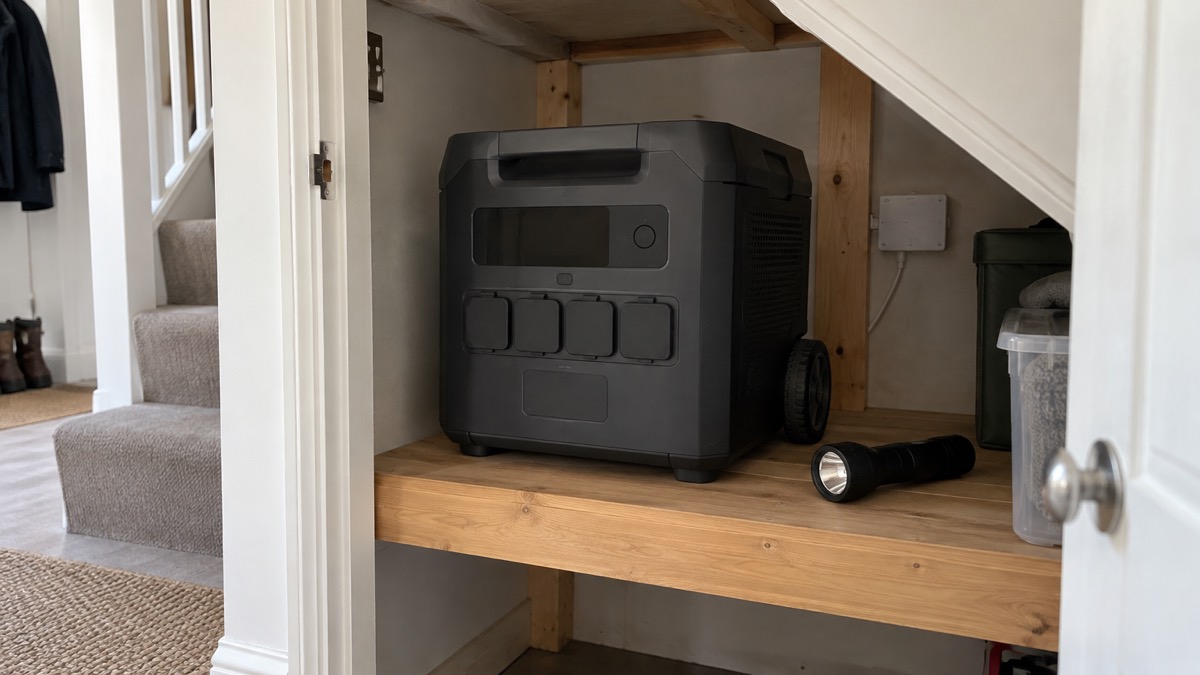
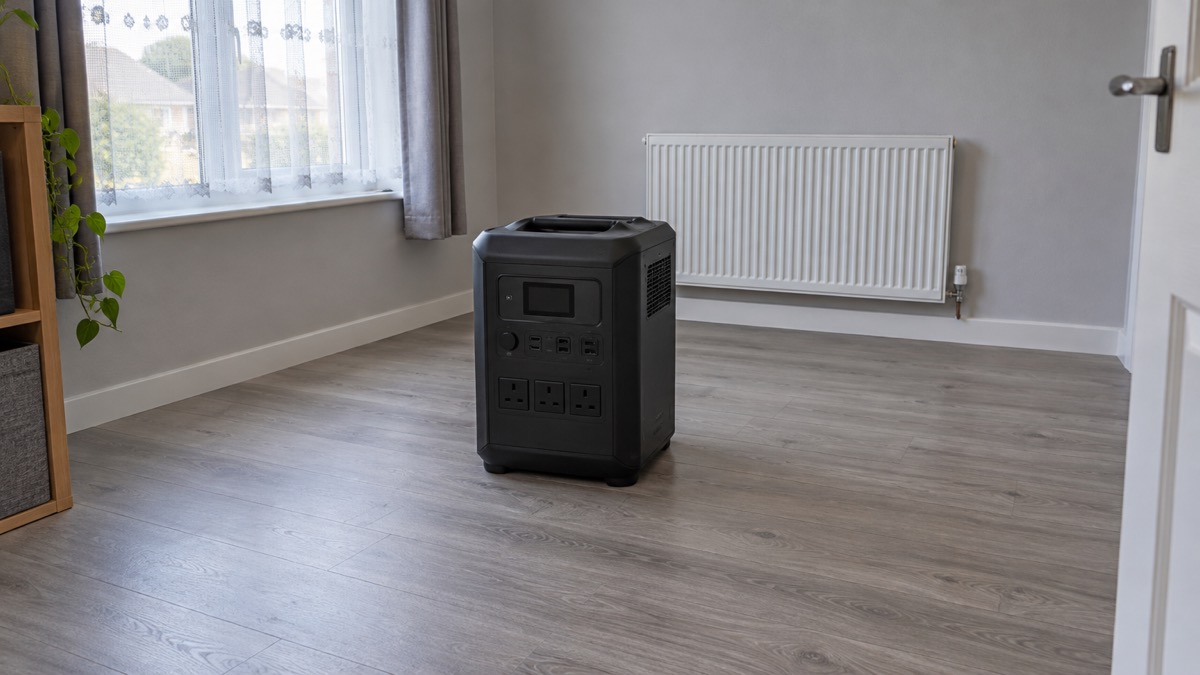
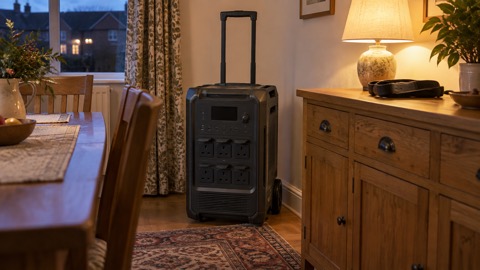
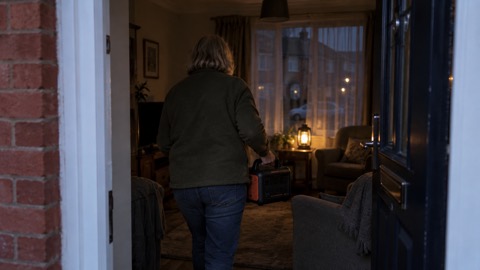
It is not a whole-house solution. Anker positions it for a few home appliances, with its larger F3800 system suggested for long-term use across the home3. It weighs 30.5kg and sits on 4.72-inch wheels with a retractable handle, so it can be moved around a house or loaded into a car, but not carried up stairs easily1.
Before you buy or rely on one, know three things. It cannot take mains and solar charging at the same time, with the mains input taking priority if both are connected2. Anker gives its discharging temperature range as -20°C to 40°C2. The sections below set out what it can do, how to charge and store it, and the safety rules that come with it.
What the Anker SOLIX F2000 is and who it suits
The F2000 is a lithium iron phosphate (LiFePO4) power station with a 2,048Wh battery1. LiFePO4 is the chemistry Anker uses across its larger units, and the maker states the battery is rated for 3,000 charge cycles, which it describes as equivalent to 10 years of use3. That cycle figure matters for a household: it suggests the unit is bought once and kept for a decade of occasional outages rather than replaced every couple of years.
Anker describes the unit as able to run "99.9% of household appliances", a claim it illustrates with an outdoor heated horse trough3. Treat that as the maker's marketing rather than a guarantee: what it can actually run depends on the wattage of each appliance and how long you need it, which is covered below.
The case is described as impact-resistant, shock-proof, anti-UV and flame retardant, and the maker says it is built to last over a decade with everyday use1. Anker also states a smart temperature control system monitors temperatures up to 100 times per second to guard against overheating3.
Who it suits: a household that wants one large battery to cover a fridge, lights, phones and a router for a day or so, and that has somewhere dry and cool to store 30.5kg of kit. It is less suited to someone who needs to carry a battery up and down stairs, or who wants to run heavy appliances such as an electric shower or an oven.
Specifications at a glance
Anker's own figures, from its product pages and manual, are set out below. Where the documents give different numbers, both are shown.
| Specification | Figure | Source |
|---|---|---|
| Battery capacity | 2,048Wh | 1 |
| Battery chemistry | LiFePO4 (LFP) | 1 |
| AC output | 2,300W | 1 |
| Peak output | 3,600W | 4 |
| Total outlets | 10 | 5 |
| AC outlets | 3 | 5 |
| USB-C outlets | 3, up to 100W per port | 5 |
| USB-A outlets | 2, 2.4A maximum per port | 5 |
| Car socket outputs | 2, 12V at 10A | 5 |
| Mains charging input | 1,440W maximum (manual); 2,200W maximum (product page) | 2 |
| Solar input | 1,000W maximum, 11 to 60V, XT-60 connector | 1 |
| Recharge time | 1.4 hours from 0 to 80% | 1 |
| Weight | 30.5kg | 1 |
| Dimensions | 525 x 250 x 395mm | 6 |
| Charging temperature | 0°C to 40°C | 2 |
| Discharging temperature | -20°C to 40°C | 2 |
| Cycle life | 3,000 cycles to 80% capacity | 7 |
| Warranty | 5 years (one page); 12 months (another) | 5 |
Two of these need a note. The mains charging input is given as 1,440W in the manual and 2,200W on the product page; the maker's documents disagree, so do not plan around either figure precisely. The warranty is listed as 5 years on one Anker page and 12 months on another, again a disagreement between the maker's own pages, so confirm the term with the seller before you buy5.
What it can power, and for how long
The headline is 2,300W of AC output, with a peak of 3,600W for devices that draw a surge when they start, such as a fridge compressor1. Anker also states that high-demand devices can be run together up to 3,500W without overloading5. The manual, however, advises not to power devices higher than 2,400W from the AC outlet2. Where the maker's own documents disagree on a limit, stay well below the lower figure.
What that means in practice:
- Small and medium loads such as lights, a router, phone chargers, a laptop and a television sit far below the limit and will run for many hours on 2,048Wh.
- A fridge or freezer draws a few hundred watts when running but surges on start, which is what the 3,600W peak is for.
- Heavy appliances such as kettles, heaters and ovens draw close to or above the AC limit and will drain the battery quickly even where they run.
The unit has 10 outlets in total: 3 AC, 3 USB-C, 2 USB-A and 2 car sockets5. The USB-C ports deliver up to 100W each, enough to fast-charge a laptop or phone5. The car sockets give 12V at 10A2.
Anker's own guidance for backup use is that the F2000 plus an expansion battery suits a few home appliances, while its F3800 system is suggested for long-term use across the home3. If you are working out what to keep running first, see Deciding What to Keep Running When the Mains Fails and What Capacity Power Station Do I Need?.
Charging from the mains, solar or a car
There are three ways to put energy back into the F2000, and each suits a different situation.
From the mains. Plug in the supplied AC charging cable and the unit recharges from 0 to 80% in 1.4 hours4. This is the fastest route and the one to use before a forecast storm or cold snap. Anker gives the AC input as 2,200W maximum1, so treat the 1.4-hour recharge as the maker's stated figure rather than an exact one.
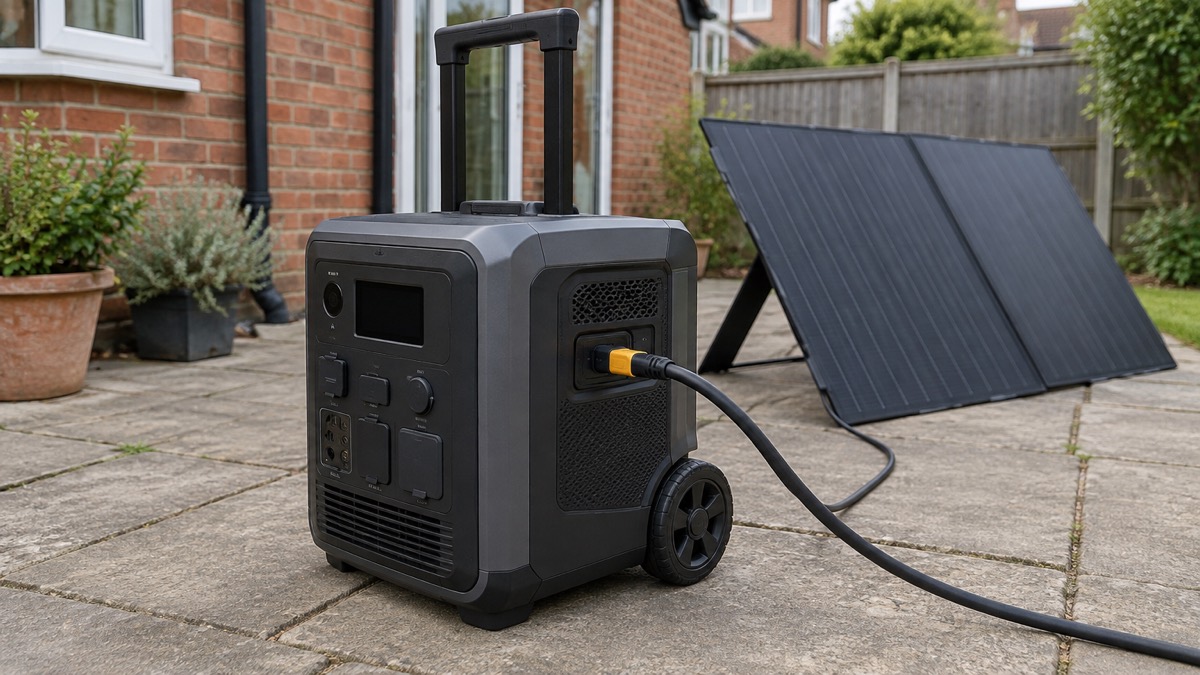
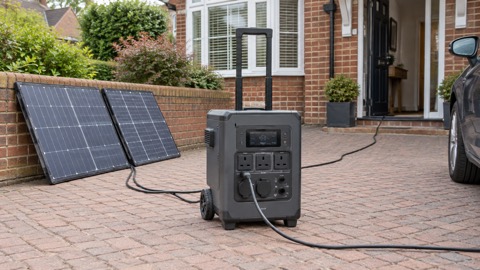
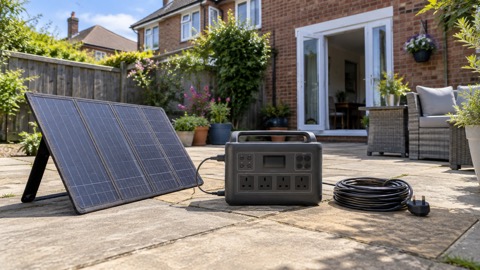
From solar. The solar input takes up to 1,000W through an XT-60 connector, at 11 to 60V1. Anker recommends its 531 Solar Panels (200W) and says up to five can be connected for best compatibility2. Current is limited to 10A for an 11 to 32V charger and 20A for a 32 to 60V charger1. Solar charging is slower and weather-dependent, but it works when the mains is down. For more on panels, see Portable Solar Panels for Charging in a Power Cut.
From a car. A car charging cable is included in the box, along with the AC cable, a 5-port solar charging connector, an accessories bag and the manual1. The car socket output is 12V at 10A2. Car charging is the slowest option and best treated as a top-up on the move.
Using it as backup power when the mains fails
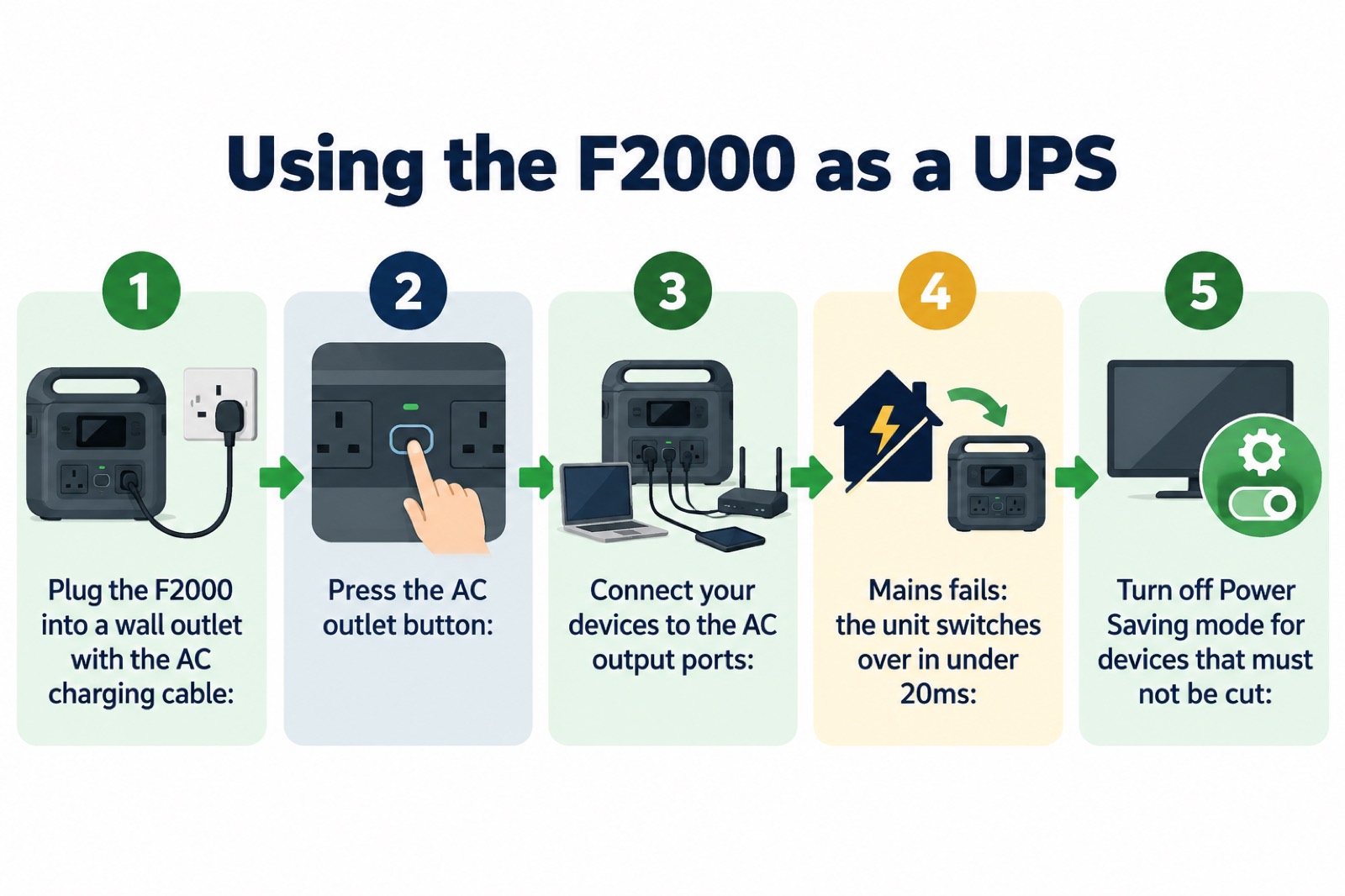
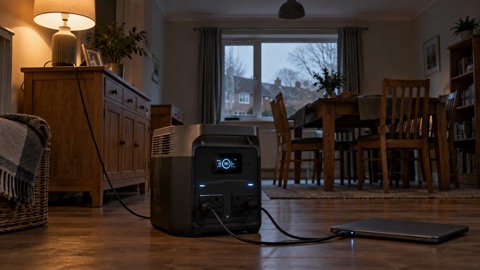
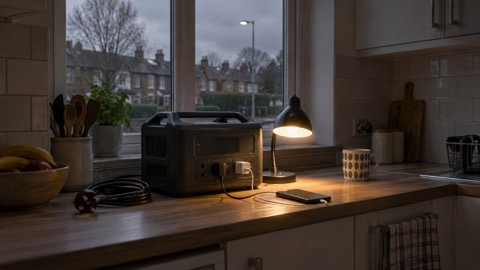
The F2000 can act as an uninterruptible power supply (UPS). Anker gives a switchover time of under 20ms, so connected devices keep running when the mains drops5. To use it this way, the manual says to connect the power station to a wall outlet with the AC charging cable, press the AC outlet button, then connect your devices to the AC output ports2.
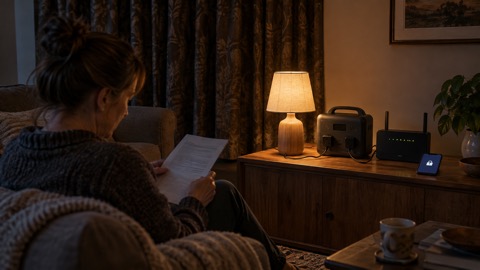
That setup suits a router, a small fridge or a medical device that must not lose power for even a moment. It is not a substitute for wiring a battery into your home's circuits; for that, see Connecting a Generator or Battery to Your Home's Wiring.
One behaviour to know: the AC outlets shut down automatically if no plug is detected for more than 15 minutes2. For most uses that saves battery. For a device that draws power intermittently, such as a CPAP machine, it can cut the supply. Anker's manual says to turn off Power Saving mode for stable charging over an extended period, naming a CPAP machine overnight as an example2. For more, see Powering CPAP, Oxygen and Other Medical Devices From a Battery.
Moving and storing it: 30.5kg on wheels
At 30.5kg, the F2000 is a two-person lift for most people, but it is designed to be rolled rather than carried. Anker fits 4.72-inch wheels and an EasyTow retractable handle, and states the handle supports loads up to 50kg5. The maker says the wheels allow travel over distances up to 125 miles (201.1km), which is a durability claim about the wheels rather than a suggestion to push it that far1.
For storage, Anker's instructions are specific1:
- Turn off all outputs when the unit is not in use, to stop the battery draining.
- Store it in a dry and cool environment, between 0°C and 40°C.
- Check the remaining battery each week; if it is below 30%, charge to 100%.
- Fully charge it once every 3 months.
The manual explains why: a lithium battery stored at low capacity for a long time will self-consume power, which can lead to quick discharge, poor conductivity and a reduced lifespan2. When the battery reaches 1%, the "Remaining Battery" indicator flickers as a warning2. For more, see How to Store a Power Station When Not in Use.
Warning icons, overloads and resets
The F2000 reports problems through icons on its display, and Anker's manual gives the response for each2:
- Overload icon: a port is overloaded and has been switched off to prevent damage. Remove the device causing the overload.
- High temperature icon: stop using the unit and let it cool until the icon disappears.
- Low temperature icon: stop using the unit until the icon disappears.
- AC recharging not working: check whether the overload protection switch is on; if it is, press it down to reset and continue charging.
If the unit stops responding altogether, the manual describes a factory reset: insert a paper clip or pin into the reset hole for 1 second. If it still does not work, contact support@anker.com2.
The unit also has an SOS mode, turned on by pressing and holding the button for 2 seconds, and an ambient light with two brightness levels2. These are useful in an outage but are not a substitute for a torch; see Emergency Lighting at Home.
Where it must never be kept or used
Anker's manual sets out clear limits on where the F2000 can go2:
- Not on aircraft. The manual states: "Not permitted on aircraft." At 2,048Wh it is far beyond cabin limits, and the maker's instruction settles the question.
- Not in fire or high heat. Exposure to temperatures above 130°C may cause explosions, per the manual.
- Only in the stated temperature range. Store between 0°C and 40°C, charge between 0°C and 40°C, and discharge between -20°C and 40°C.
- Only on a grounded outlet. The manual states the product must be grounded, and the plug must go into an outlet that is properly installed and grounded in accordance with local codes.
The unit is a battery, not a fuel-burning generator, so it does not produce carbon monoxide. That makes it fundamentally different from a petrol generator, which must never be run indoors. For the generator rules, see Can You Run a Generator Indoors or in a Garage?. For battery-specific risks, see Lithium-Ion Battery Safety at Home and Are Portable Power Stations a Fire Risk?.
The London Fire Brigade's guidance on storing flammable cylinders is a useful reminder of what not to keep near electrical equipment: it says never to store propane or oxygen cylinders in basements, under stairs or in cupboards containing electric meters or equipment8. The same principle applies to keeping a large battery clear of clutter and heat sources.
Warranty, support and UK availability
Anker lists a 5-year warranty on one product page and a 12-month warranty on another, so the maker's own documents disagree5. Confirm the term with the retailer before buying. Support is available by email at support@anker.com, which the manual gives as the contact if a factory reset does not solve a fault2.
On availability, Anker's UK product pages currently show the F2000 as sold out, and a UK distributor also lists it as out of stock3. That means you may need to check back or look at other models in the range. Anker's UK site sells and compares its products, and the wider range is covered in Portable Power Stations: What They Do and How to Choose and on the Anker brand page.
One point of confusion to clear up: some Anker specification tables list the F2000's expandable capacity as "not supported", while the product page and manual say it can be connected to an expansion battery to double capacity to 4,096Wh1. If expansion matters to you, confirm compatibility with Anker support before buying an expansion battery, and see Anker SOLIX BP2000 Expansion Battery (Gen 2) for the expansion unit itself.
The F2000 is one option among many. If you are weighing a battery against a petrol generator, see Portable Power Station or Petrol Generator for a Power Cut. If you are starting from scratch, the Power Cut Backup Power Checklist sets out what to have ready before the lights go out.
Sources (9)
- Anker SOLIX F2000 product page, Anker SOLIX, 2026-10-25
- Anker SOLIX F2000 (PowerHouse 767) user manual, Anker, 2026-10-26
- Anker SOLIX home backup power, Anker SOLIX, 2026-10-25
- Anker SOLIX F2000 refurbished listing, Anker SOLIX, 2026-10-25
- Anker SOLIX F2000 (PowerHouse 767) specifications, Anker SOLIX, 2026-10-25
- Anker SOLIX F2000 dimensions, Anker SOLIX, 2026-10-25
- Anker SOLIX C2000 Gen 2 expansion battery, Anker SOLIX, 2026-10-25
- Portable heaters, gas fires and open fires, London Fire Brigade, 2026-10-25
- Anker SOLIX F2000 PowerHouse 767, Generators Direct, 2026-09-03

 BLUETTI Apex 300 Power Station
 BLUETTI Elite 100 V2
 Anker SOLIX C2000 Gen 2
 Anker SOLIX C1000 Power Station
 EcoFlow DELTA Pro
 BLUETTI Elite 400
 Anker SOLIX C300 Power Station
 EcoFlow DELTA 3
 EcoFlow DELTA 2 and DELTA 2 Max
 EcoFlow DELTA and DELTA Max
 EcoFlow RIVER 3 and RIVER 3 Plus
 EcoFlow RIVER 2 and RIVER 2 Max