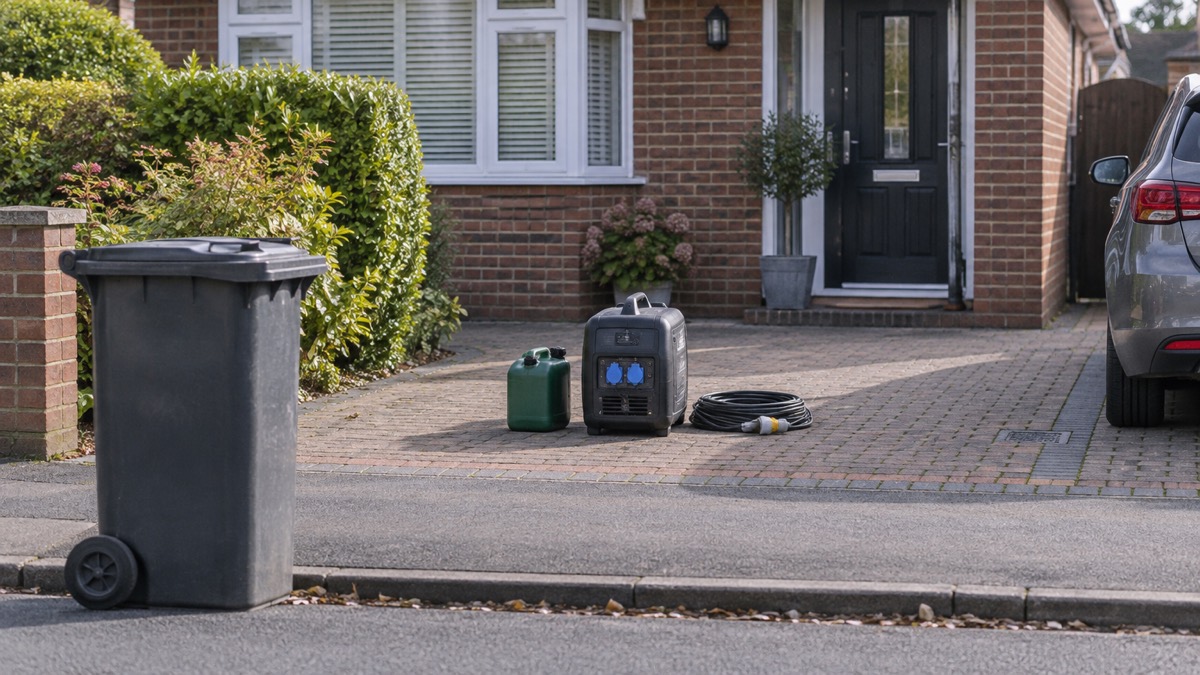
The Cobra IG32ESI is a petrol inverter generator with a 2800W rated output and a 3200W peak, sold as a 4 kVA machine with a 210cc four-stroke engine1. It has two 230V 13 amp sockets and a 12V DC charging socket, a 7.4 litre fuel tank and a listed run time of 7 hours at 50% load1. It weighs 43 kg and is listed at 54 dB at 7 metres1.
For a household, that means it can carry a fridge or freezer and a few small appliances at once, but it is a petrol engine that must run outdoors, away from windows and doors, because of carbon monoxide2. It is not a plug-in appliance and it cannot be connected to your home's wiring by a plug alone.
This page sets out what the IG32ESI is, what it can realistically power, how long it runs, how to start and run it safely, where it must never go, and how to store fuel and the machine itself. It does not cover price, and it does not rank it against other generators.
What the Cobra IG32ESI is and who it suits
The IG32ESI is a compact portable inverter generator built around a Cobra 210cc four-stroke single cylinder petrol engine running on unleaded petrol1. The inverter label matters: an inverter generator produces mains power electronically rather than directly from the engine, which is the type usually chosen where the load includes electronics. The portable generators guide explains how inverter and open-frame types differ.
It suits a household that wants a compact portable inverter generator running on unleaded petrol, with a Cobra 210cc 4-stroke single cylinder engine, and that has somewhere outdoors and secure to run it, with good airflow1. It does not suit a flat with no outdoor space, a household that cannot lift 43 kg safely, or anyone who wants something they can use indoors. For those, a portable power station is the alternative, and the comparison of power stations and petrol generators sets out the trade-offs.
| Specification | Figure |
|---|---|
| Type | Inverter generator, petrol unleaded1 |
| Engine | Cobra 210cc 4-stroke single cylinder1 |
| Rated output | 2800W1 |
| Peak output | 3200W1 |
| Listed rating | 4 kVA1 |
| Voltage | 230V1 |
| AC sockets | 2 x 230V 13 amp1 |
| DC output | 12V DC charging socket1 |
| Fuel tank | 7.4 litres1 |
| Run time | 7 hours at 50% load1 |
| Noise | 54 dB at 7 metres1 |
| Weight | 43 kg1 |
| Dimensions | 580mm x 508mm x 450mm1 |
| Starting | Remote start, with recoil backup1 |
| Safety feature | Low oil auto shutdown1 |
| Warranty | 2 years domestic1 |
| EAN | 50554850377941 |
Power and sockets: 2800W rated, 3200W peak at 230V
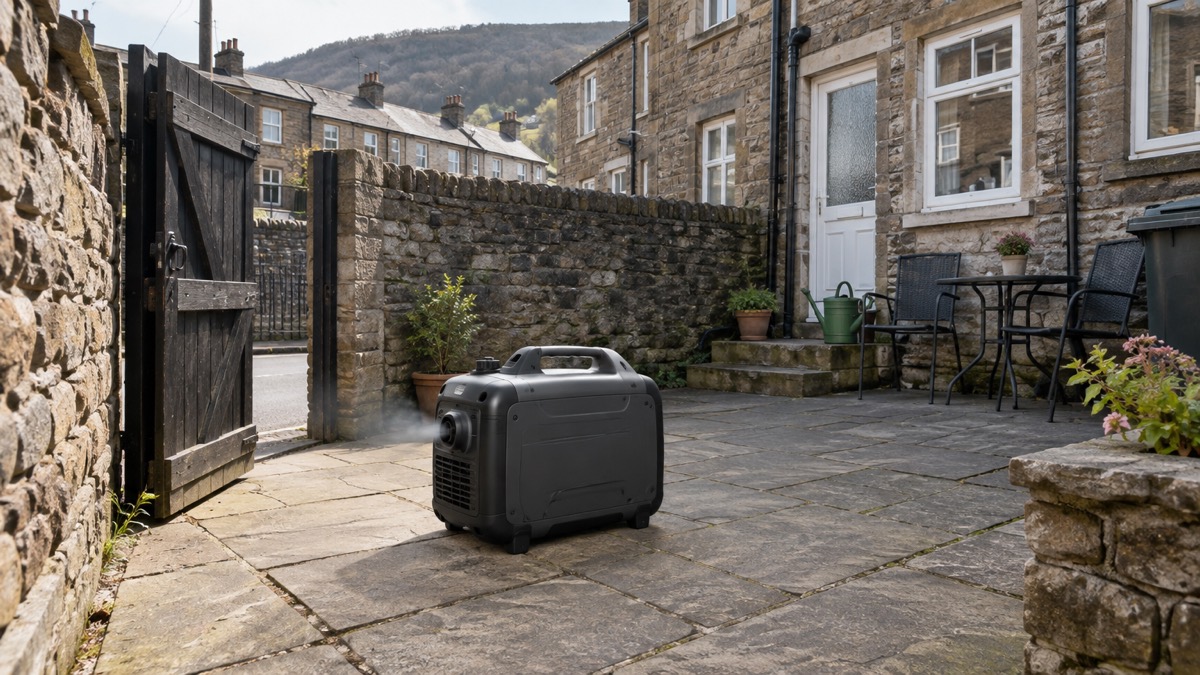
The IG32ESI is listed at 2800 rated watts and 3200 maximum watts, at 230V, with two 230V 13 amp sockets and a 12V DC charging socket1. The rated figure is what it can supply continuously; the peak is the short burst available when a motor starts. Plan loads around 2800W and treat 3200W as headroom, not a working limit. The guide to watts, watt-hours and surge explains why motors draw more at start-up.
To put that in context, Electrical Safety First lists a freezer at 200 watts and 0.86 amps4. A fridge or freezer is therefore a small fraction of the generator's capacity, and the IG32ESI could run one alongside lighting, a router and phone chargers without strain. The limit is not the appliance count but the total: add up the wattage of everything you plan to plug in and keep it under 2800W.
The 12V DC socket is for charging, not for running mains appliances. A 12V battery charger from the Sterling Power Pro Batt Ultra range, rated up to 800W, is a separate piece of equipment with its own rating, not something the generator's DC socket is described as supplying2. For phones, the simplest route is a mains charger in one of the 13 amp sockets, or a power bank charged in advance.
Run time and fuel: about 7 hours at half load from 7.4 litres
The IG32ESI has a 7.4 litre tank and a listed run time of 7 hours at 50% load1. The maker does not give a figure for lighter loads, so a household running a freezer, a few lights and a router should treat the listed run time as the figure to plan around rather than a guaranteed minimum. Run time falls as load rises, so a heavy load shortens the interval between refuels. The guide to generator run time covers how load affects it.
For comparison, BLUETTI describes a fuel generator with a 5 litre tank running about 6 hours at 500W5. That is a different machine with a different tank, but it shows the shape of the trade: bigger tanks and lighter loads mean longer runs.
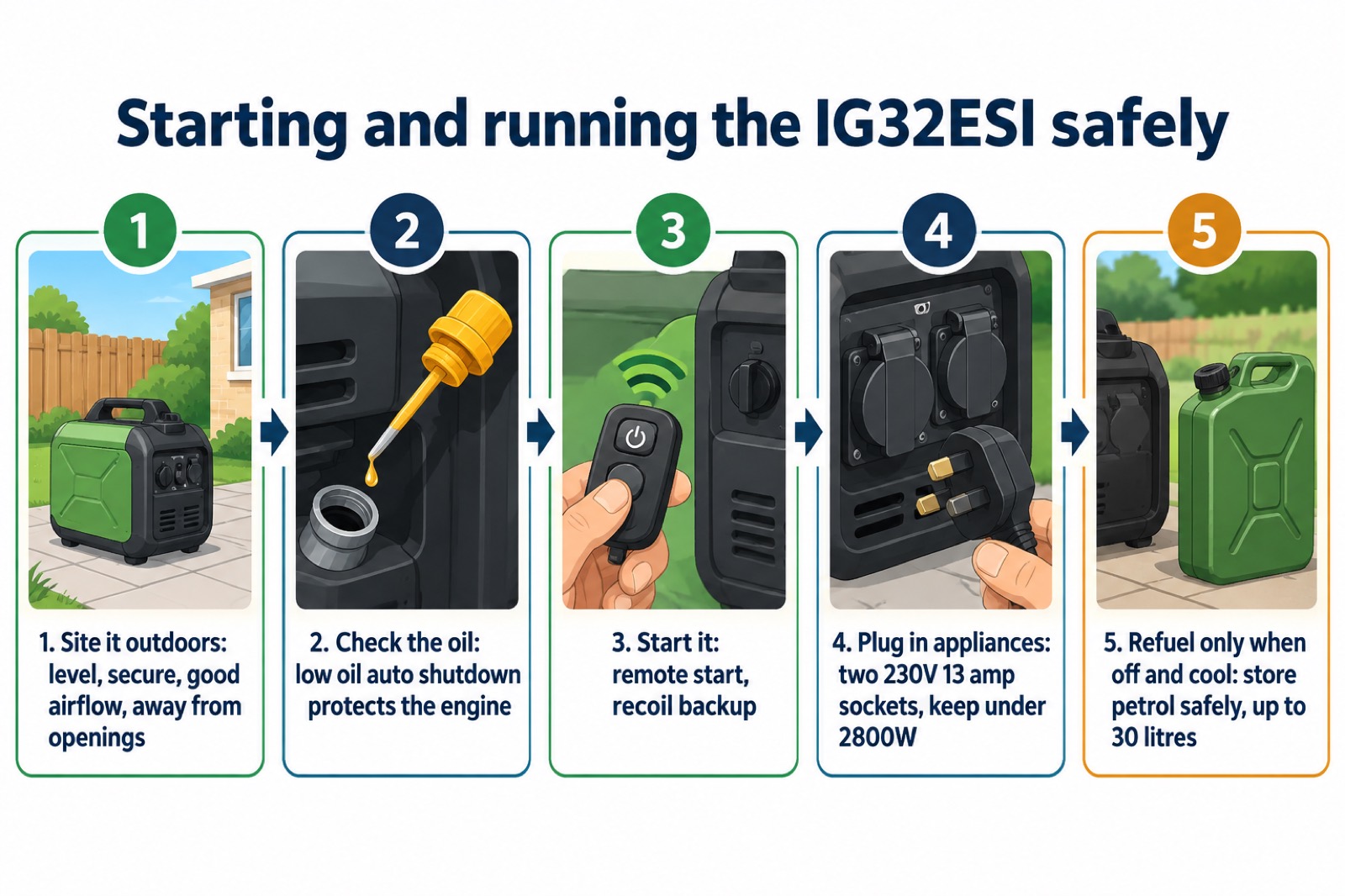
Refuelling is the point where most accidents happen. Turn the generator off and let it cool before refuelling, keep fuel away from the hot engine, and never refuel while it is running. Store petrol in suitable portable metal or plastic containers, or one demountable fuel tank, or a combination, and no more than 30 litres at home without informing your local Petroleum Enforcement Authority3. The petrol storage guide sets out the limits in more detail.
Size, weight and noise: 43 kg and 54 dB at 7 m
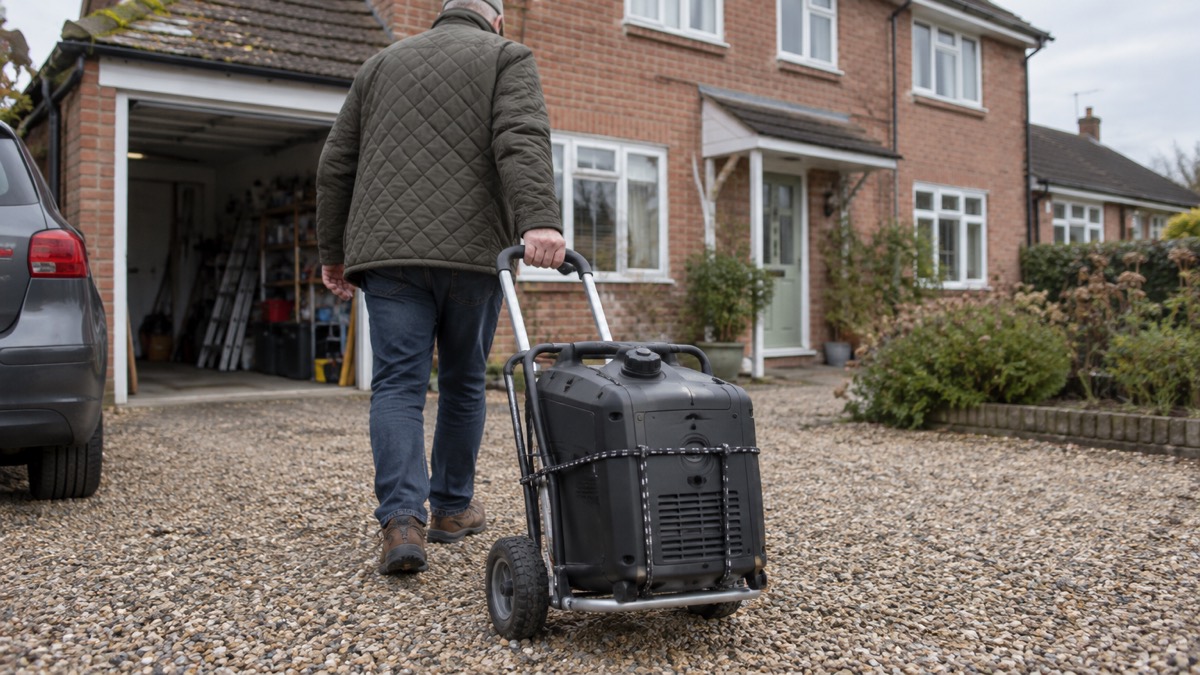
At 43 kg and 580mm x 508mm x 450mm, the IG32ESI is a two-person lift or a trolley job1. BLUETTI describes fuel generators generally as 50 to 70 kg, noisy, bulky and inconvenient for long-term use5; the IG32ESI sits at the lighter end of that range but is still not something to carry up a flight of stairs alone. Decide where it will stand before you need it, and keep the route to that spot clear.
Noise is listed at 54 dB at 7 metres1. That is a background-level figure at that distance, but petrol engines are audible to neighbours, and in a terrace or close the sound carries. Run it at reasonable hours, tell neighbours in advance if a long outage is expected, and site it as far from their windows as your own. The guide to generator noise covers this in more depth.
Storage between outages matters too. Keep the machine dry and covered, and store petrol only in the containers described above, within the 30 litre limit at home without informing your local Petroleum Enforcement Authority3. The guide to storing a generator sets out a routine.
Starting and running it safely
The IG32ESI has remote start with a recoil backup1, so you can start it from a distance and pull-start it if the remote fails. Before starting, check the oil: the machine has low oil auto shutdown, which cuts the engine if the oil level drops too low1. Check the oil before each run and top it up as the manual instructs.
Run it on a stable, level surface outdoors, with good airflow and secure from theft or tampering6. Keep the area around it clear, and do not store fuel next to a running machine. If you are charging lithium batteries from it, charge them away from hallways and communal areas that serve as escape routes, as the Scottish Fire and Rescue Service advises7.
Never connect the IG32ESI to your home's wiring with a plug-to-socket lead. Connecting a generator to the fixed wiring is a job for a qualified electrician with the right changeover arrangement, and the guide to connecting to the home explains why. For most households, the safe pattern is extension leads to individual appliances, kept dry and not overloaded; the extension leads guide covers ratings.
Where a petrol generator must never go
The IG32ESI must never run indoors, in a garage, in a shed, in a conservatory, in a tent, in a caravan or on a boat. The Health and Safety Executive is explicit that petrol generators must be located outside in well ventilated spaces so that fumes disperse and cannot gather or drift into building openings2. Fire and rescue services warn that carbon monoxide can travel through walls, and that portable or disposable barbecues, grills and charcoal fuel burners must never be taken into a home or any confined space such as a tent, houseboat or caravan3.
The same rule applies to anything else that burns fuel. Never use barbecues or portable fuel-burning equipment indoors or in enclosed spaces9. Never take portable or disposable barbecues, grills or charcoal burners into your home, a tent, a houseboat or a caravan, and remember that an extinguished barbecue can keep producing carbon monoxide for hours8. Never block ventilation for a gas appliance10.
Keep escape routes clear. Heaters must not be placed where they will block an escape route11, and lithium batteries should not be charged in hallways or communal escape routes7. If you use a camping stove outdoors, never change gas cartridges indoors or near ignition sources12. Store spare cylinders upright and outside where possible11, and never change a cylinder on a stairway or other escape route13.
Warranty, support and finding one in the UK
The IG32ESI carries a 2 year domestic warranty1. Keep the receipt and the manual, and follow the servicing schedule in the manual to keep the warranty valid. The distributor lists it as in stock with expected delivery of 2 to 3 working days1, and the EAN is 50554850377941, which is the number to quote when checking that a listing is the exact model.
Buy from a reputable retailer and check that electrical equipment complies with the required safety standards, as the Northern Ireland Fire and Rescue Service advises14. For a petrol generator, that means a UK plug and socket arrangement and a machine built for the UK market. The guide to safety markings explains what to look for.
Before winter, test the machine under load, check the oil and fuel, and confirm your outdoor siting spot is still clear. The winter readiness checklist and the power cut backup power checklist set out the routine. If you are still deciding what size of machine you need, the generator sizing guide starts from your appliances rather than the machine.
Sources (14)
- Cobra IG32ESI 4kVA 4-Stroke Inverter Generator, Just Generators, 2026-10-25
- Carbon monoxide, Health and Safety Executive, 2026
- Storing fuel, Devon and Somerset Fire and Rescue Service, 2026
- Ratings of electrical appliances, Electrical Safety First, 2026-10-25
- BLUETTI Elite 400 portable power station, BLUETTI, 2026-10-25
- Generators, Wiltshire and Swindon Prepared, 2026-10-25
- Lithium-ion batteries, Scottish Fire and Rescue Service, 2025-11-27
- Carbon monoxide safety, London Fire Brigade, 2026-10-25
- Carbon monoxide, North Wales Fire and Rescue Service, 2026
- Your planned power cut explained, SSEN, 2026
- Heating your home, North Yorkshire Fire and Rescue Service, 2026-03-09
- Power cuts, Scottish Fire and Rescue Service, 2026-10-25
- Heating and gas, Scottish Fire and Rescue Service, 2024-11-21
- Safe for the season, Northern Ireland Fire and Rescue Service, 2025-12-01
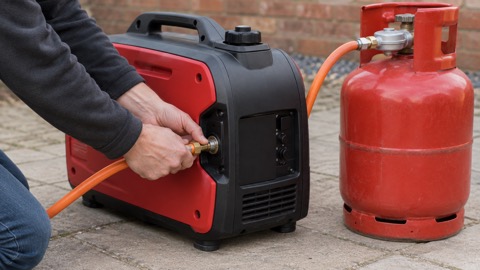 EcoFlow Dual Fuel Generator
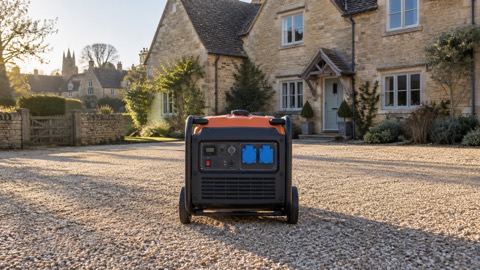 Honda EU70iS Generator
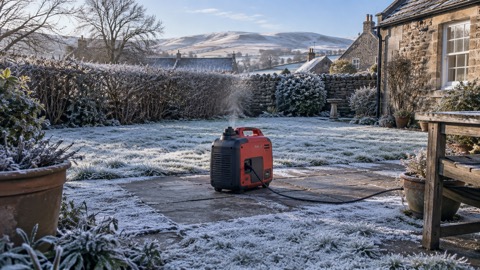 Honda EU32i Generator
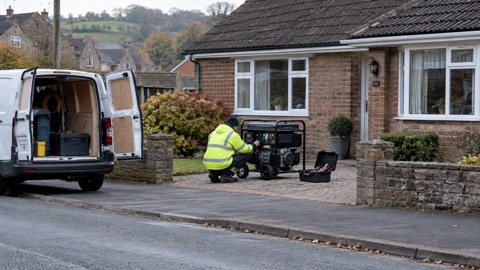 Honda EG3600 Generator
 Pramac P3500i Generator
 Senci SC6000-II Home Generator
 Senci SC10000-II Generator
 Senci SC6600iED Generator
 Gorilla Power GP3800iE
 Gorilla Power GP6500E-DF
 Gorilla Power GP3500i
 Hyundai HY2250Si Generator