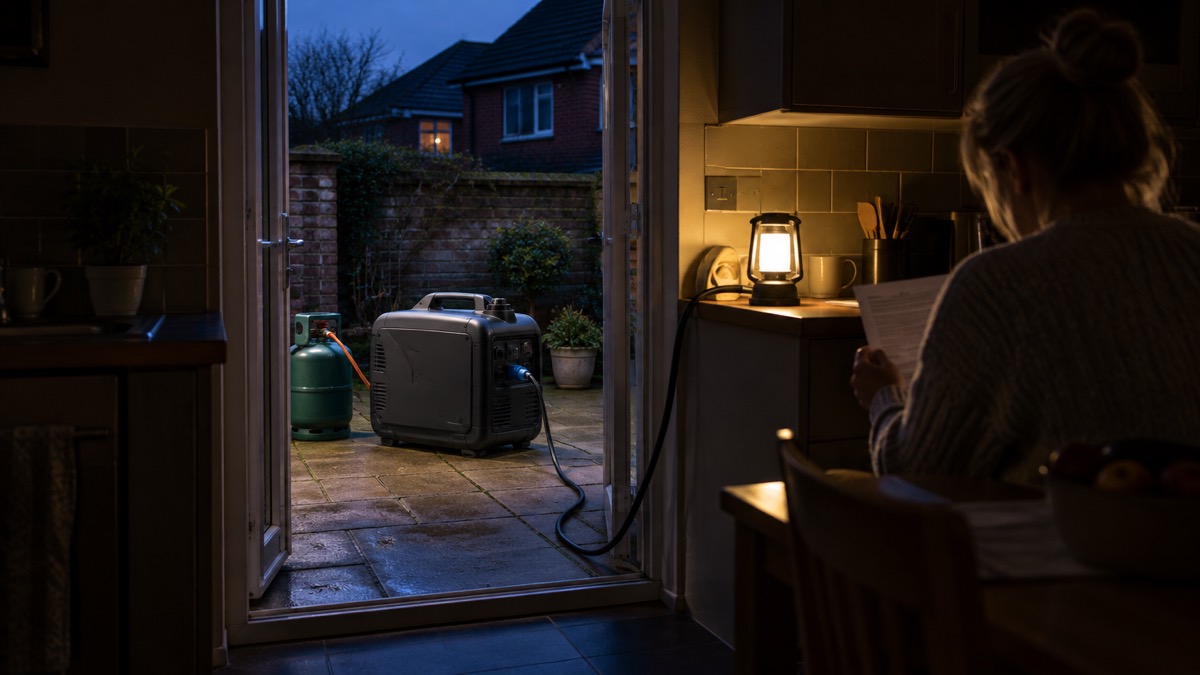
The Champion 2200W Mighty Atom LPG Dual Fuel is a small portable inverter generator that runs on either petrol or propane. Champion lists it as the world's lightest 2kW inverter generator at only 17.9kg1, which is the figure that decides whether one person can lift it out of a shed and carry it to a safe spot outdoors. It produces 1900W rated on petrol and 1710W on LPG, with 2500W of starting power on either fuel1.
For a household, that means it can carry a fridge, a freezer, lights, a router and phone charging at the same time, provided you add the loads up first and keep them within the rated figure. It is not a whole-house machine: it has a single 240V AC outlet1, so an extension lead and a plan for what gets plugged in come with the territory.
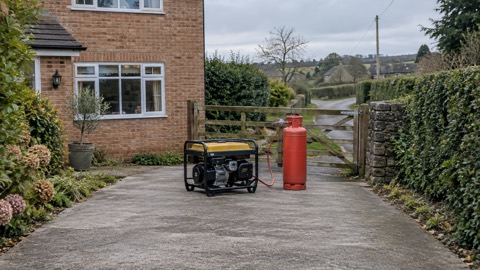
The two things to settle before you buy are where it will run and how you will fuel it. Like every petrol or LPG generator it must run outdoors, away from windows, doors and vents, because of carbon monoxide. And the dual fuel choice is real: petrol from a forecourt, or propane from a cylinder through the 37mBar regulator included in the box1.
What the Mighty Atom is and who it suits
The Mighty Atom is a dual fuel inverter generator with a 2.4 HP engine and an 80.0 cc displacement1. Champion's launch material for the original petrol version dates the Mighty Atom to July 2020, when it was described as lighter than the lightest 2000 Watt inverter generator then on the market1. The dual fuel version carries the same compact idea forward.
Inverter technology matters for a household because it changes what you can plug in. Champion states that True Sine Wave inverter technology makes this generator ideal for sensitive electronics such as computers, laptops and televisions1. That is the difference between a generator you use for lights and a fridge and one you are willing to put a laptop or a router on. Our guide to inverter and open-frame generators explains the distinction in more detail.
It suits a household that wants a compact unit for short outages, can store and handle a petrol can or a propane cylinder, and has an outdoor spot where the generator can run safely. It does not suit anyone who needs to run it indoors, in a garage or in a shed, or who wants to power the whole house through the consumer unit. For the wider picture of what generators can and cannot do, see Portable Generators: Petrol, Diesel, Dual-Fuel and Inverter Types.
Output: what 1900W on petrol and 1710W on LPG will actually run
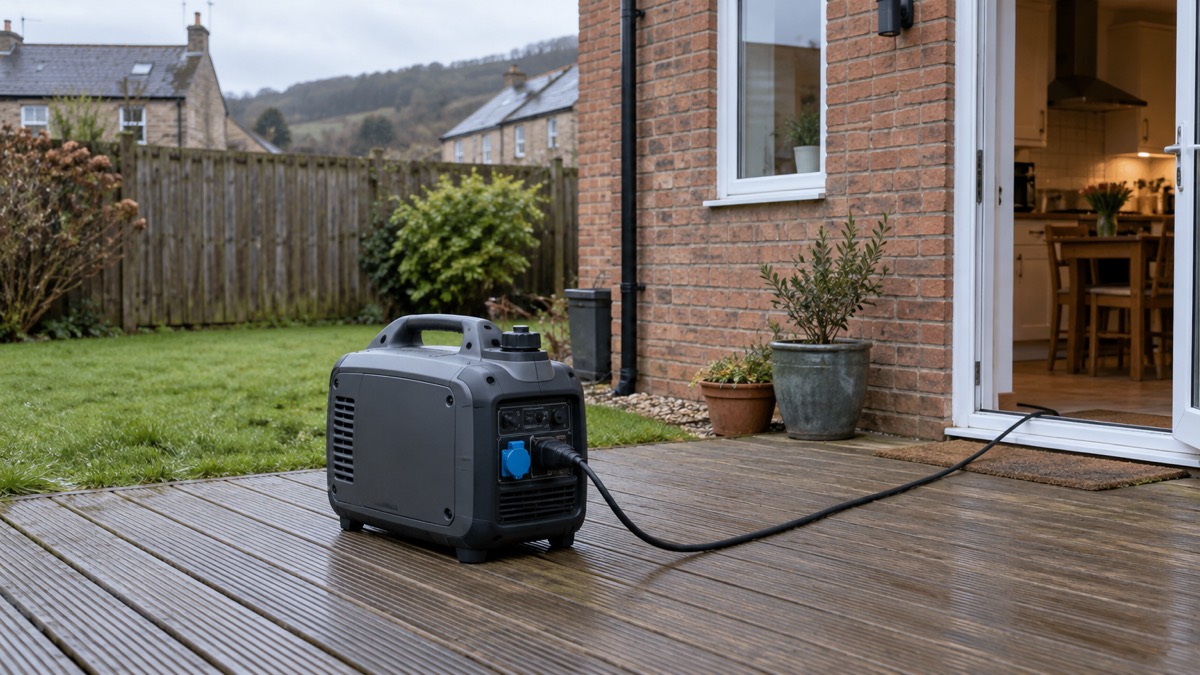
The headline figure is the rated output, not the maximum. Champion lists rated watts as 1900 on petrol and 1710 on LPG, with maximum watts of 2200 on either fuel and starting watts of 2500 on either fuel1. Rated output is what the generator will supply continuously; starting watts are the brief surge a motor draws as it starts.
That surge is why a fridge or a freezer needs headroom. Add up the running watts of everything you want on at once, then check the largest motor's starting demand against the 2500W starting figure. Our guide to watts, watt-hours and surge walks through the arithmetic, and what size generator do I need helps you match a machine to a household.
| Load | What to check |
|---|---|
| Fridge or freezer | Running watts plus starting surge, one motor at a time |
| Lights and router | Low draw, easy to carry on either fuel |
| Laptop, TV, phone charging | Suited by the inverter's True Sine Wave output1 |
| Kettle, heater, power tools | High draw; check against 1900W petrol or 1710W LPG1 |
The LPG figure is lower than petrol, so a load that sits comfortably within 1900W on petrol may exceed 1710W on propane. Plan your loads around the fuel you will actually be using. The generator has one 240V AC outlet, a 12V DC output listed as 12 / 8.3, and a USB connection1, so a properly rated extension lead is part of the set-up. See extension leads and overloading before you daisy-chain anything.
Running on LPG with the included 37mBar regulator
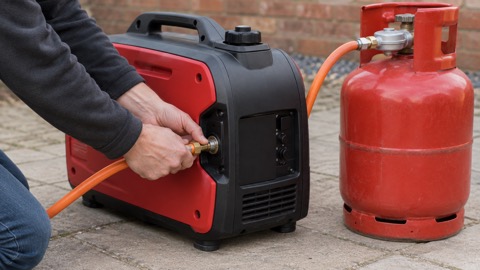
The dual fuel appeal is that propane stores indefinitely and does not go stale the way petrol does. Champion includes a 37mBar regulator with the generator1. That pressure is the standard for domestic propane in the UK: independent guidance states that a propane regulator is pre-set to 37mbar for domestic applications2, a figure repeated in earlier guidance3.
It is not the same as a caravan regulator. The same guidance notes that touring caravan and motorhome installations built to standard EN 1949 use regulators pre-set at 30 mbar for both butane and propane2, and that butane regulators for domestic use are typically pre-set at nominally 28-30 mbar2. If you already own caravan kit, do not assume it matches. Use the regulator supplied with the generator, and treat the regulator as a safety device: the guidance is clear that you should not operate its mechanism using excessive force2.
Run time on propane is the strongest argument for the LPG side. Champion states up to 34 hours run time with a 19kg propane bottle, against up to 10.5 hours at 25% load on the built-in tank1. Fuel consumption at 25% load is listed as 0.47 L/hour on petrol or 0.33 kg/hour on LPG1. Our guide to LPG cylinders and regulators for dual-fuel generators covers cylinder handling and connection.
Weight, size and noise: 17.9kg and 58 dBA at 7 m
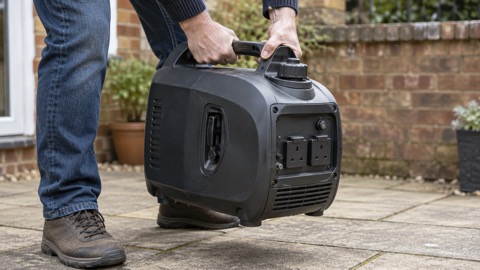
At 17.9kg the Mighty Atom is light enough for one adult to lift, which is unusual for a generator. For comparison, a maker of portable power stations describes fuel generators generally as weighing 50 to 70 kg and being noisy, bulky and inconvenient for long-term use4. That is a description of the category, not of this machine, but it shows why weight is the specification that decides whether a generator actually gets used.
The dimensions are 450 x 440 x 292 mm (HxLxW)1. Noise is listed at 58 dBA at 7 m1. That is a measurement at a distance, not at the garden fence, and it will carry to neighbours. Think about where it will sit and what time of day you will run it. Our guide to generator noise and neighbours covers the practical side.
Specifications at a glance
All figures below are Champion's own published specifications for this model1.
| Specification | Figure |
|---|---|
| Fuel | Dual fuel, petrol or propane1 |
| Rated watts | 1900 (petrol), 1710 (LPG)1 |
| Maximum watts | 2200 (petrol), 2200 (LPG)1 |
| Starting watts | 2500 (petrol), 2500 (LPG)1 |
| Engine | 80.0 cc, 2.4 HP1 |
| Start type | Recoil1 |
| Fuel tank | 4.0 litres1 |
| Run time | Up to 10.5 hours at 25% load; up to 34 hours with a 19kg propane bottle1 |
| Fuel use at 25% load | 0.47 L/hour petrol, 0.33 kg/hour LPG1 |
| Fuel use at 50% load | 0.69 L/hour petrol, 0.43 kg/hour LPG1 |
| Fuel use at 75% load | 0.95 L/hour petrol1 |
| Fuel use at 100% load | 1.17 L/hour petrol, 0.65 kg/hour LPG1 |
| Outlets | 1 x 240V AC, 12V DC (12 / 8.3), USB1 |
| Weight | 17.9 kg1 |
| Dimensions | 450 x 440 x 292 mm (HxLxW)1 |
| Noise | 58 dBA at 7 m1 |
| IP rating | IP23M1 |
| Regulator | 37mBar, included1 |
| Certification | E10 Petrol Compliant, EU Stage V, UKCA1 |
| Warranty | 3 years1 |
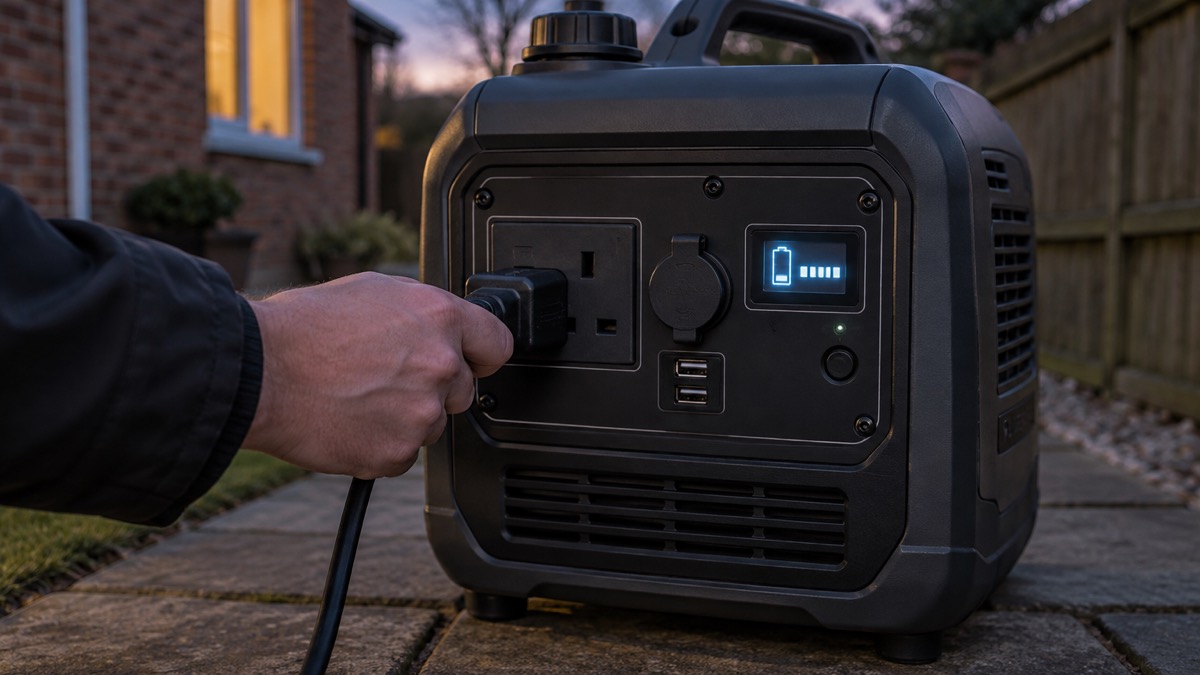
Champion also lists automatic low oil shutoff, automatic RPM based on load, a power factor of 1.0, single phase, Cold Start Technology, overload protection, parallel connectivity and an Intelligauge voltmeter1. The engine displacement is given as 80.0 cc in the specification table and as 79cc in the product description on the same page1; the table figure is the one to quote.
Running it safely: carbon monoxide, fuel and electricity
A generator is an outdoor appliance. Carbon monoxide from a generator is invisible and can kill, and no generator is safe to run in a garage, shed, conservatory or any space connected to the house. Run it outside, well away from windows, doors and air bricks, and fit a carbon monoxide alarm in the rooms you use. Our guides to generator safety, carbon monoxide from generators and can you run a generator indoors set out the detail.
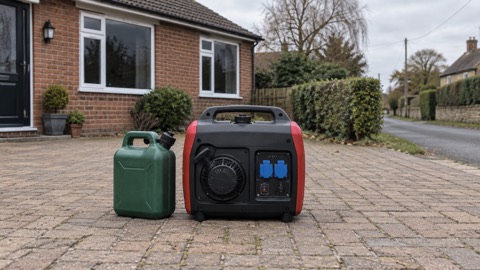
Fuel brings its own rules. Petrol must be stored in a suitable container, away from ignition sources, and you should never refuel a hot engine. The Mighty Atom is E10 Petrol Compliant1, so standard forecourt petrol is fine. For how much you can keep at home, see how much petrol can I store at home safely. For propane, handle the cylinder upright, connect the regulator firmly and check for leaks at the joint before starting.
On electricity, the generator has one 240V outlet, so extension leads do the work. Use leads rated for the load, fully uncoiled, and never plug one generator into a house circuit through a normal socket. Connecting a generator to your home's wiring needs a proper changeover arrangement installed by a competent person; see connecting a generator or battery to your home's wiring. Our guide to running a generator in the rain explains why.
Starting, charging and storing it
Starting is by recoil pull1. Check the oil first: the sump holds 500 ml1 and the generator has automatic low oil shutoff1, so it will protect itself but will not run if the level is low. The box includes an oil funnel and oil1, so you can fill it before first use. Cold Start Technology is listed as a feature1; our guide to generators in cold weather covers storage and starting in low temperatures.
For charging, the box includes a 12V DC automotive battery charging cable and a 12V DC USB adapter1, and the generator has a 12V DC output listed as 12 / 8.31. Follow the operating manual for the connection order and never reverse polarity. If you are charging a car battery, do it outdoors or in a well-ventilated space, away from sparks.
Storage matters as much as use. Run the fuel out of the carburettor before storing, keep the unit dry and covered, and store petrol separately in a suitable container. Our guide to storing a generator after a power cut sets out the routine. Before winter, work through the backup power checks before winter and the power cut backup power checklist.
Support, warranty and where to get help
Champion backs the Mighty Atom with a 3 year warranty1. Keep the receipt and the operating manual, which lists the box contents and the starting and maintenance procedures. The manual is the document to follow for anything the product page does not cover, including parallel connection and 12V charging.
If you are weighing this generator against a battery-based option, our comparison of a portable power station or a petrol generator for a power cut and of LPG or petrol for emergencies set out the trade-offs. For the wider subject, start at Backup Power at Home: A Household Guide, and for what to do when the lights actually go out, see using generators and power stations during an outage and Power Cuts: A Household Guide. Champion's other models are listed on the Champion brand page.
Sources (4)
- Champion 2200 Watt "Mighty Atom" LPG Dual Fuel Inverter Generator, Champion Power Equipment, 2026-10-25
- LPG regulator guidance, Liquid Gas UK, 2022-04
- Propane regulator guidance, Liquid Gas UK, 2014-01
- BLUETTI Elite 400 portable power station, BLUETTI, 2026-10-25

 EcoFlow Dual Fuel Generator
 Honda EU70iS Generator
 Honda EU32i Generator
 Honda EG3600 Generator
 Pramac P3500i Generator
 Senci SC6000-II Home Generator
 Senci SC10000-II Generator
 Senci SC6600iED Generator
 Gorilla Power GP3800iE
 Gorilla Power GP6500E-DF
 Gorilla Power GP3500i
 Hyundai HY2250Si Generator