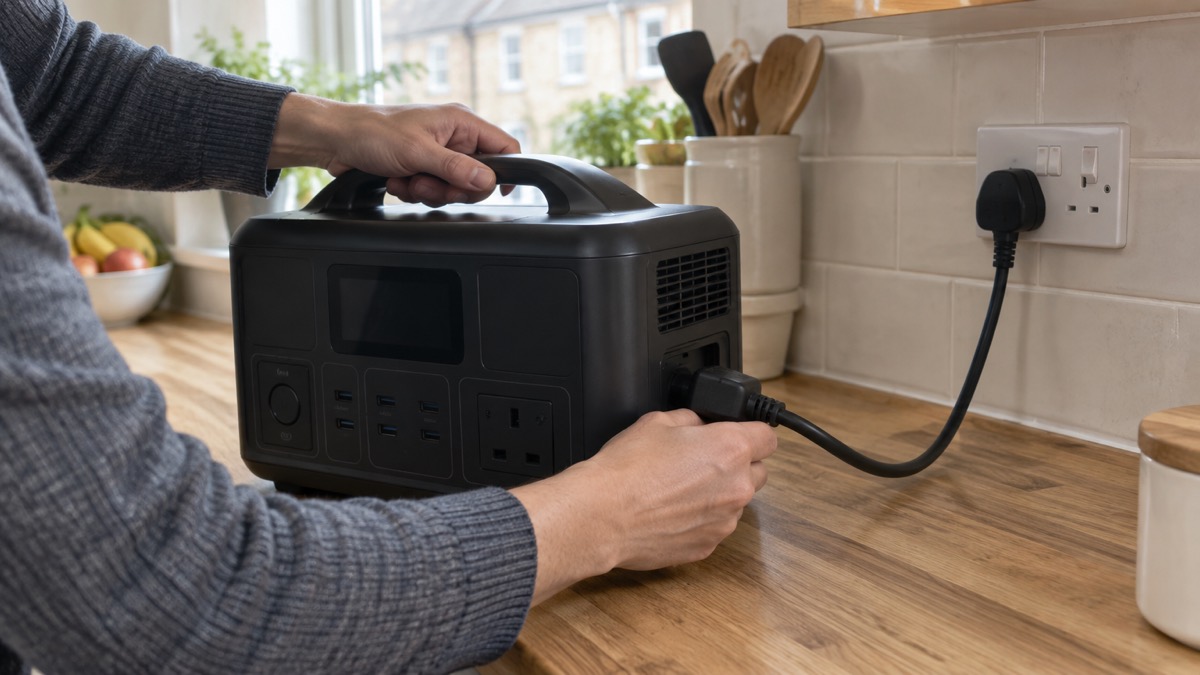
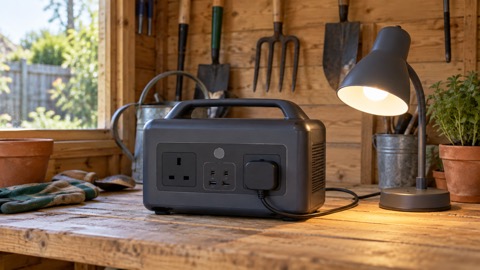
The BLUETTI AC70 is a portable power station: a battery in a carry case with mains sockets on the front, which you charge from the wall and then use to run appliances when the mains fails. It stores 768Wh and delivers 1,000W through two 230V sockets, with a 2,000W surge in Power Lifting Mode for appliances that draw a burst of power as they start1. It weighs 10.2kg, so one adult can move it between rooms1.
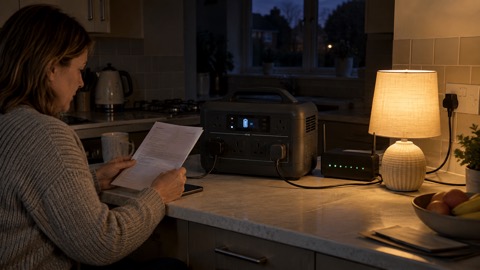
For a household preparing for a power cut, that makes it a way to keep a few essentials going: the fridge or freezer, the router, phones and laptops, a lamp or two. It is not a whole-house backup. It will not run an electric shower, an oven or a heat pump, and it is not designed to be wired into your home's circuits. Think of it as a bridge that carries the most important loads for hours rather than days, and plan around that.
This page sets out what the AC70 can run and for roughly how long, how to recharge it from the mains, a car or solar panels, how to keep it ready between outages, and what the maker's warranty covers. For the wider picture, our backup power guide explains how power stations fit alongside generators and home batteries, and Portable Power Stations: What They Do and How to Choose covers the choices across the category.
What the AC70 is and who it suits
The AC70 sits in the middle of the portable power station range: big enough to run real appliances for a while, small enough to carry and store in a cupboard or on a shelf. Its 768Wh battery and 1,000W output are the two figures that decide what it can do for you3. The battery sets how long it runs; the output sets what it can start at all.
It suits a household that wants a self-contained backup for a short outage, or a way to keep phones, lighting and a fridge going through a longer one without the fuel, fumes and noise of a generator. It also suits flat dwellers and renters, because it needs no installation and no outdoor space. It does not suit anyone expecting to run heavy heating or cooking appliances, or to power the whole house.
| Specification | Figure |
|---|---|
| Battery capacity | 768Wh (32V, 24Ah)1 |
| Rated AC output | 1,000W1 |
| Power Lifting Mode output | 2,000W1 |
| AC sockets | 2 x 230V/4.3A, 1,000W in total1 |
| USB-C | 2 x 100W maximum1 |
| USB-A | 2 x 5V/2.4A1 |
| Maximum AC input | 950W1 |
| Maximum solar input | 500W, VOC 12-58VDC, 10A1 |
| Weight | 10.2kg (22.5lbs)1 |
| Dimensions | 314mm x 209.5mm x 255.8mm1 |
The maker's own product pages describe the AC70 as a 1,000W, 768Wh portable power station3. If you are weighing it against other options, our comparison of a portable power station or petrol generator sets out the trade-offs, and What Capacity Power Station Do I Need? helps you size a unit to your household.
What it can run in a power cut
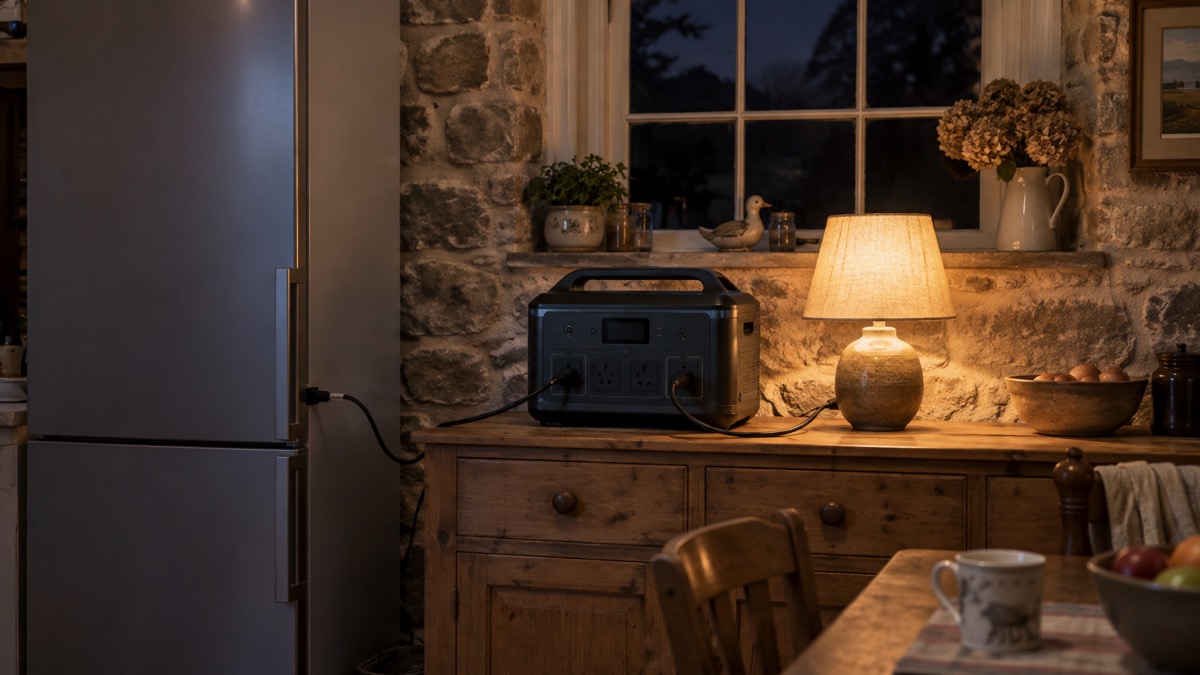
The AC70's two 230V sockets deliver 1,000W in total, and Power Lifting Mode raises the ceiling to 2,000W for appliances that need a surge to start1. That matters for anything with a motor or compressor, such as a fridge or freezer, which draws a brief spike of current when it kicks in. The maker's own description is that the AC70 "has a rated output power of 1,000W and 2,000W lifting power"1.
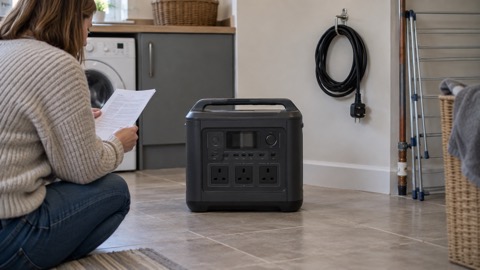
In practice, that means it can run one or two modest appliances at a time: a fridge, a lamp and a router together, or a freezer on its own. It cannot run an electric kettle, an oven, a tumble dryer or an electric shower, all of which draw far more than 1,000W. Our guide to watts, watt-hours and surge explains how to add up what your appliances draw.
How long it lasts depends entirely on what you plug in. The maker gives one worked example: a customer account describes the AC70 powering a cooler freezer box down to -20 and keeping it there all night, with charge left the next day4. That is the maker's account of one freezer box, not a promise for every freezer. For independent context, Electrical Safety First lists a freezer as drawing 0.86 amps5, which tells you it is a modest load, but the run time still depends on the appliance, the room temperature and how full it is.
For a fuller method, see How Long Will a Power Station Run a Fridge or Laptop? and Deciding What to Keep Running When the Mains Fails.
Charging the AC70 from the mains, a car or solar panels
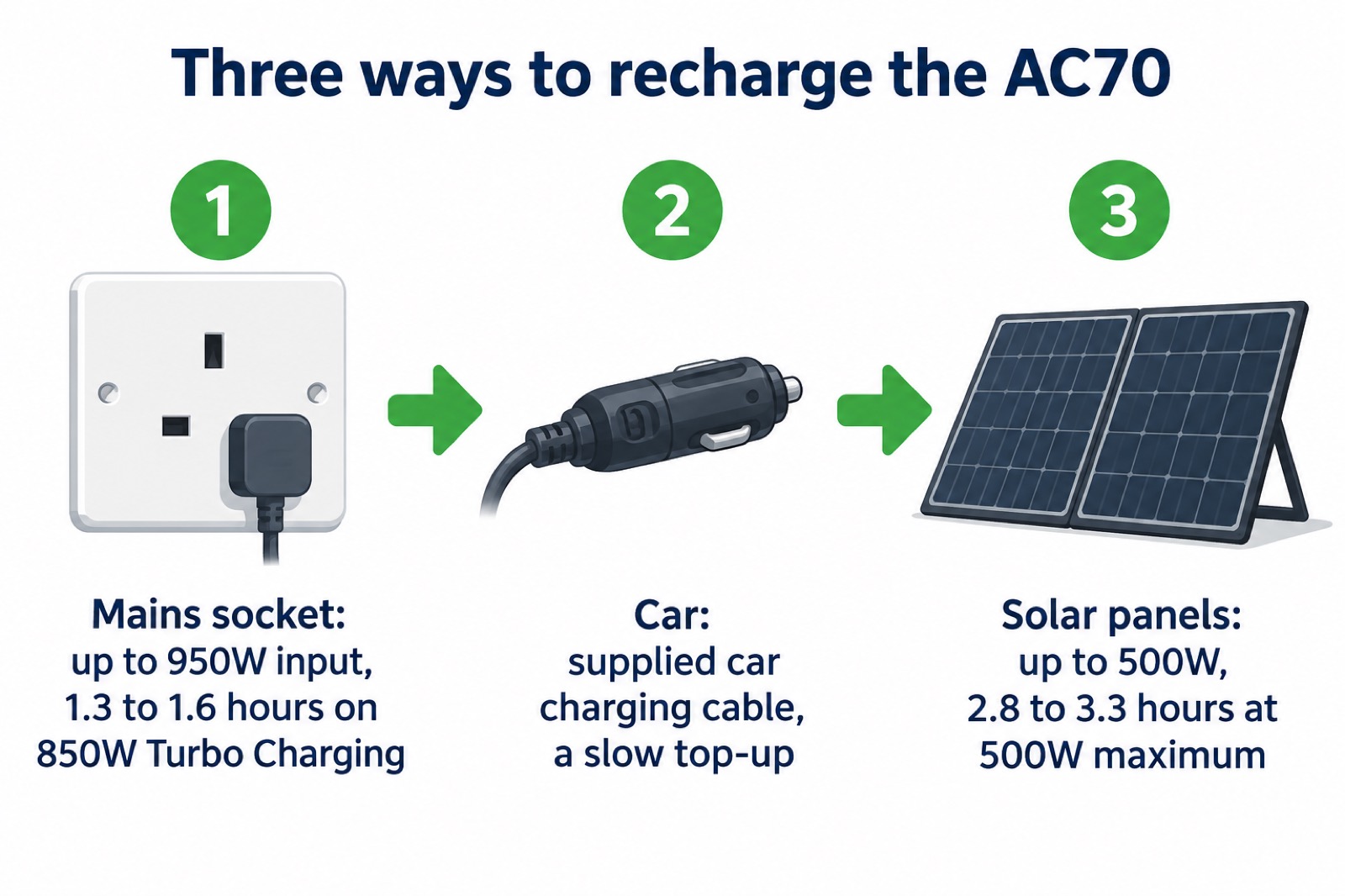
The AC70 comes with three charging cables: an AC charging cable, a car charging cable and a solar charging cable1. That reflects the three ways to top it up: from a wall socket, from a vehicle, or from solar panels. The maker describes its solar generators generally as charging "via AC outlets, solar panels, car chargers, or generators"6, and its portable power stations as recharging "via a wall outlet, a vehicle, or compatible solar panels" depending on the model7.
From the mains, the AC70 accepts up to 950W and recharges in 1.3 to 1.6 hours on 850W Turbo Charging1. One maker page gives a figure of 1.8 hours for the same unit8; the product page's 1.3 to 1.6 hours is the more specific figure, so plan around that and treat 1.8 hours as a slower case. Charging at that rate draws a lot from a single socket, so use a circuit that is not already loaded and avoid daisy-chaining extension leads. Our guide to extension leads and overloading explains the risks.
From a car, the supplied car charging cable lets you top up while driving. The maker notes that you can charge a power station from solar while driving if it is connected to mounted panels or your alternator4. Car charging is slow compared with the mains, so treat it as a top-up rather than a full recharge. See Can You Charge a Power Station from Your Car? for the practicalities.
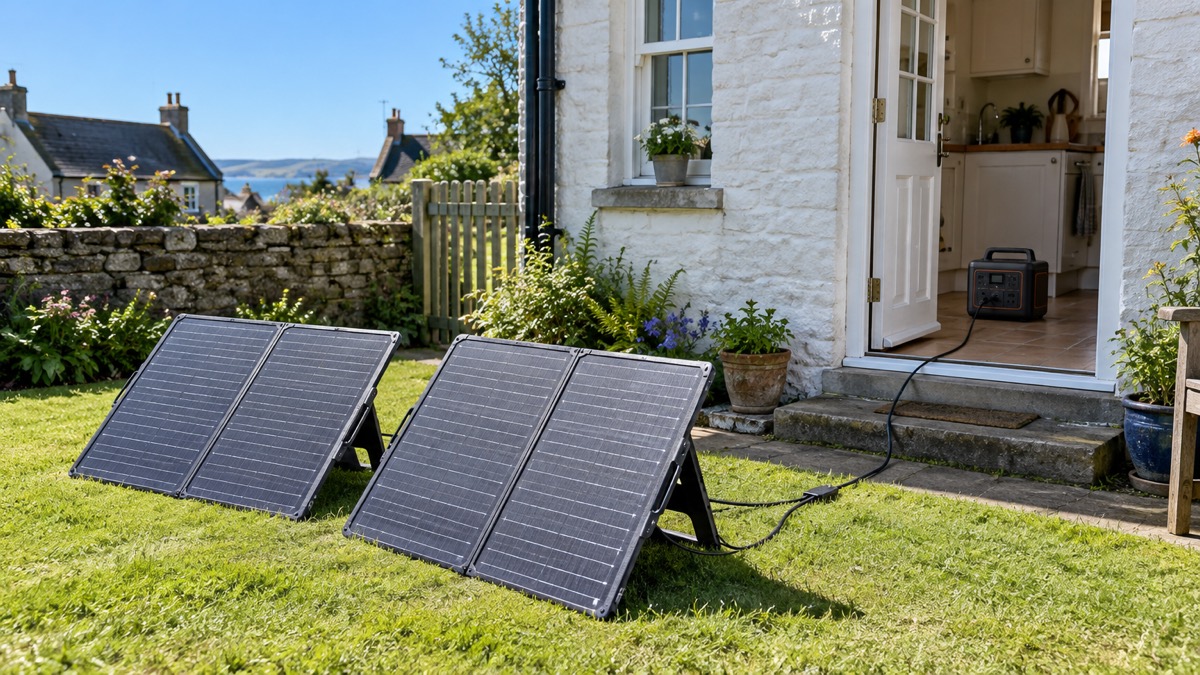
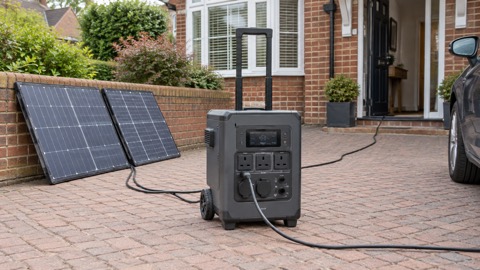
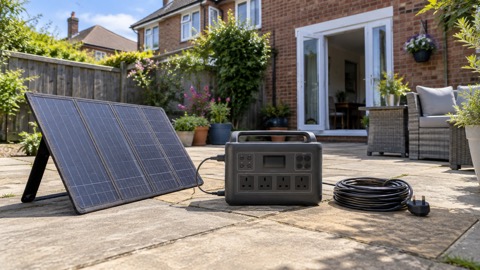
From solar, the AC70 accepts up to 500W at 12 to 58V open circuit and 10A1. The maker recommends one BLUETTI PV350 or two BLUETTI MP200 panels1, and gives a solar charge time of 2.8 to 3.3 hours at 500W maximum1. In a UK winter, expect far less than the maximum for much of the day. Our guide to portable solar panels for charging in a power cut covers siting and realistic expectations.
Keeping going for longer: solar panels and expansion batteries
A single 768Wh battery will not carry a household through a multi-day outage on its own. The AC70 supports capacity expansion with B80, B230 and B300 expansion batteries1, which add storage without replacing the unit. The maker's general advice is that "the more panels and batteries you have, the longer you can keep power flowing in your home during an outage"6.
The expansion battery range uses LiFePO4 chemistry, which the maker says lasts for over 2,500 cycles and offers higher safety than conventional lithium-ion batteries9. The same range can be topped up by solar panel, wall socket, car outlet or lead-acid battery9. If you are adding storage, our guide to leisure and LiFePO4 batteries for emergency use explains the chemistry and its limits.
Solar is the other half of the equation. The maker's blog notes that as long as the sun shines, panels keep producing energy, so you never run out of fuel10. That is the appeal for a household that wants to recharge without relying on the mains coming back. The catch in the UK is weather: a 500W array will rarely deliver 500W for long, and in winter it may deliver very little. Size your panels for a dull day, not a bright one. Our guide to what size solar panel you need and how long solar charging takes in the UK will help you plan.
If you are thinking about a larger, fixed system rather than portable panels, our guides to home battery storage and whether home solar panels work in a power cut explain why a grid-tied system usually shuts down when the mains fails.
Keeping the AC70 ready and using it safely
A power station is only useful if it is charged and working when the power goes off. The AC70 should be stored charged, dry and within reach, with its cables alongside it. Check it every few months and top it up, so it is not flat when you need it. Our guide to how to store a power station when not in use and the backup power checks before winter checklist cover the routine.
Lithium batteries need care. Store the AC70 away from damp, heat and anything flammable, and do not charge it in a place you would not want a fire to start. If the case swells, gets hot for no reason or smells unusual, stop using it and follow our guides to warning signs a lithium battery is dangerous and what to do if a battery starts swelling. For charging routines, see is it safe to charge overnight? and the safe battery charging at home checklist.
The AC70 is a battery, not a generator, so it produces no carbon monoxide and needs no fuel. That makes it safe to use indoors in a way a petrol generator is not. It still needs ventilation around its vents and should not be covered while running. For the contrast, see Generator Safety: Carbon Monoxide, Fuel and Electric Shock.
Warranty, supplied cables and support
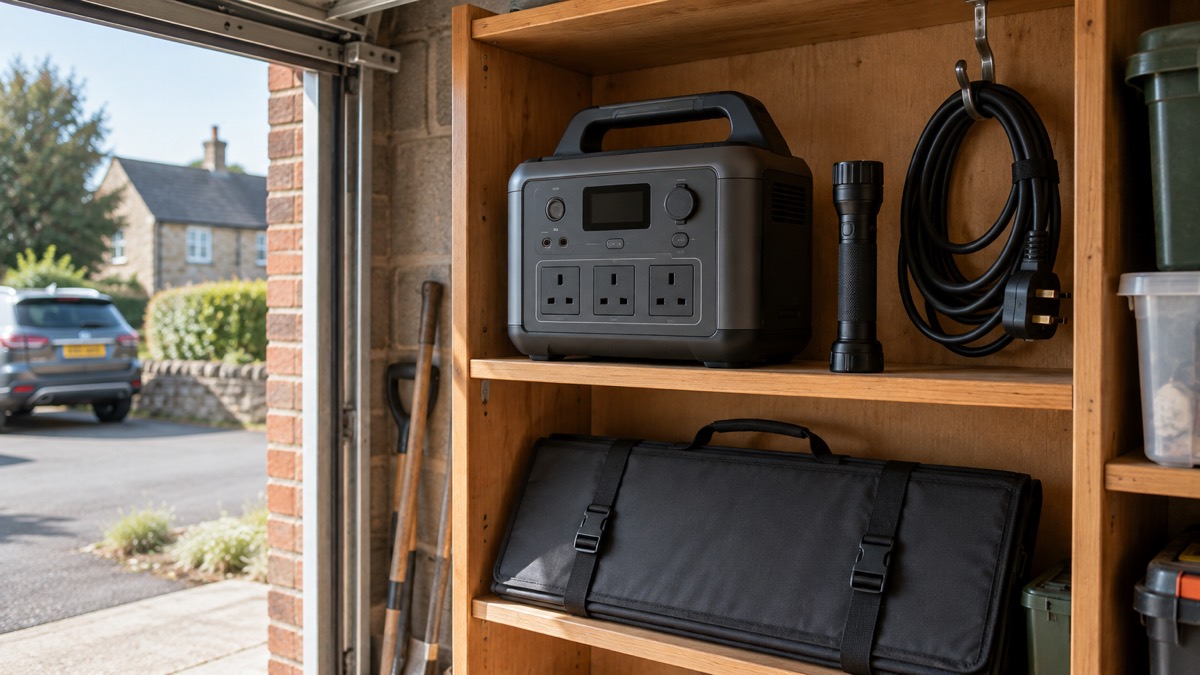
The AC70 comes with an AC charging cable, a car charging cable and a solar charging cable in the box1. The maker's warranty page lists a 60-month warranty period for the AC70 and AC70P2. Keep your proof of purchase, because a claim will normally need it.
The maker also runs a separate extended warranty scheme, but it does not cover the AC70. That scheme applies only to the AC200Max, AC200P and B230 bought from the official website, and purchases from other platforms must submit an application11. It doubles the standard two-year warranty on those models11 and does not apply to accessories, even if they are packaged and sold with the covered units11. If you are buying an AC70, the 60-month warranty on the product page is the cover that applies2.
For support, the maker's own product and support pages are the place to start. Our BLUETTI brand page gathers the maker's UK pages in one place. If you are comparing the AC70 with other units in the range, our pages on the BLUETTI AC60, BLUETTI AC180 and BLUETTI Elite 100 V2 set out what each offers. For the wider context of keeping a household going through an outage, see our guide to power cuts and using generators and power stations during an outage.
Sources (11)
- BLUETTI AC70 product page, BLUETTI, 2026-10-25
- Warranty, BLUETTI, 2026-11-02
- Home battery backup, BLUETTI, 2026-10-25
- Caravan power station, BLUETTI, 2026-10-29
- Ratings of electrical appliances, Electrical Safety First, 2026-10-25
- BLUETTI solar generator, BLUETTI, 2026-10-25
- Portable power station collection, BLUETTI, 2026-11-02
- Charger 1, BLUETTI, 2026-10-25
- Expansion battery, BLUETTI, 2026-10-25
- Solar generator for your house, BLUETTI, 2023-02-17
- BLUETTI extended warranty, BLUETTI, 2026-11-02

 BLUETTI Apex 300 Power Station
 BLUETTI Elite 100 V2
 Anker SOLIX C2000 Gen 2
 Anker SOLIX C1000 Power Station
 EcoFlow DELTA Pro
 BLUETTI Elite 400
 Anker SOLIX C300 Power Station
 EcoFlow DELTA 3
 EcoFlow DELTA 2 and DELTA 2 Max
 EcoFlow DELTA and DELTA Max
 EcoFlow RIVER 3 and RIVER 3 Plus
 EcoFlow RIVER 2 and RIVER 2 Max