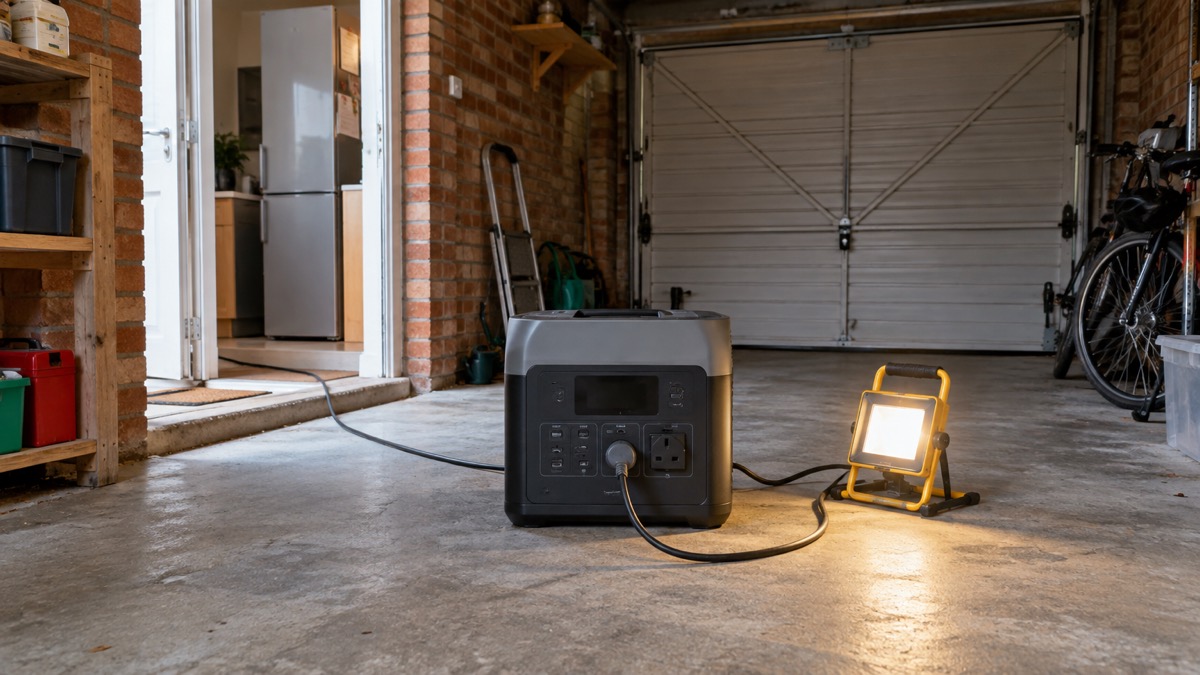
The BLUETTI AC200MAX is a portable power station: a large rechargeable battery in a case, with sockets on the front, that you charge from the mains or from solar panels and then draw on when the power goes off. For a household preparing for outages, the two numbers that matter most are its capacity, 2,048Wh, and its maximum output, 2,200W1. Capacity sets how long it runs; output sets what it can run at once.
It is not a generator and it does not connect to your home's wiring in the way a fixed home battery does. It is a thing you wheel or carry to where it is needed, plug appliances into, and recharge afterwards. BLUETTI describes its portable power stations as suited to indoor home backup, outdoor camping and van life, and emergency use including CPAP machines and disasters2. That range is the honest picture: it is a general-purpose store of electricity that a household can call on in an emergency.
This page sets out what the AC200MAX is, what its figures mean in a power cut, how to charge it, how to keep it ready and safe between outages, and what support and warranty come with it. If you are still deciding what to keep running when the mains fails, start with deciding what to keep running and come back to the specifications.
BLUETTI AC200MAX specifications
The AC200MAX sits in BLUETTI's range of portable power stations, and the maker's own figures describe a unit built to run a fair amount of household kit rather than just phones. The headline specification is a 2,048Wh battery feeding a 2,200W maximum AC/DC output3. In plain terms, the battery holds the energy and the output figure is the ceiling on what you can draw from it at any one moment.
| Specification | Figure | Source |
|---|---|---|
| Battery capacity | 2,048Wh | 1 |
| Maximum AC/DC output | 2,200W | 3 |
| Maximum AC input (mains charging) | 500W | 3 |
| Maximum total input (AC plus solar) | 1,400W | 3 |
| Maximum solar input | 900W, with 2,400W also listed | 3 |
| Ports | 14 | 4 |
| Expansion batteries | Up to 2× B300 | 5 |
| Warranty period | 48 months | 6 |
Two of those rows need a caveat. The maker's product page gives the maximum solar input as 900W and also lists 2,400W on the same page, so the two figures disagree3. The capacity figure is similarly unsettled: the maker's support article gives 2,048Wh, while the product page also lists 3,072Wh and 4,096Wh1. Treat 2,048Wh as the figure for the unit on its own and check the label on your own machine.
What the unit does not do matters as much as what it does. It is a standalone battery, not a wired-in home battery system, and BLUETTI's own description of a home backup battery, that it keeps fridges, lights and Wi-Fi on with no manual switchover once the grid fails, describes a permanently installed system rather than a portable unit you plug things into by hand7. If you want to know how a portable unit differs from a fixed home battery, read home battery storage.
Charging from the mains and from solar
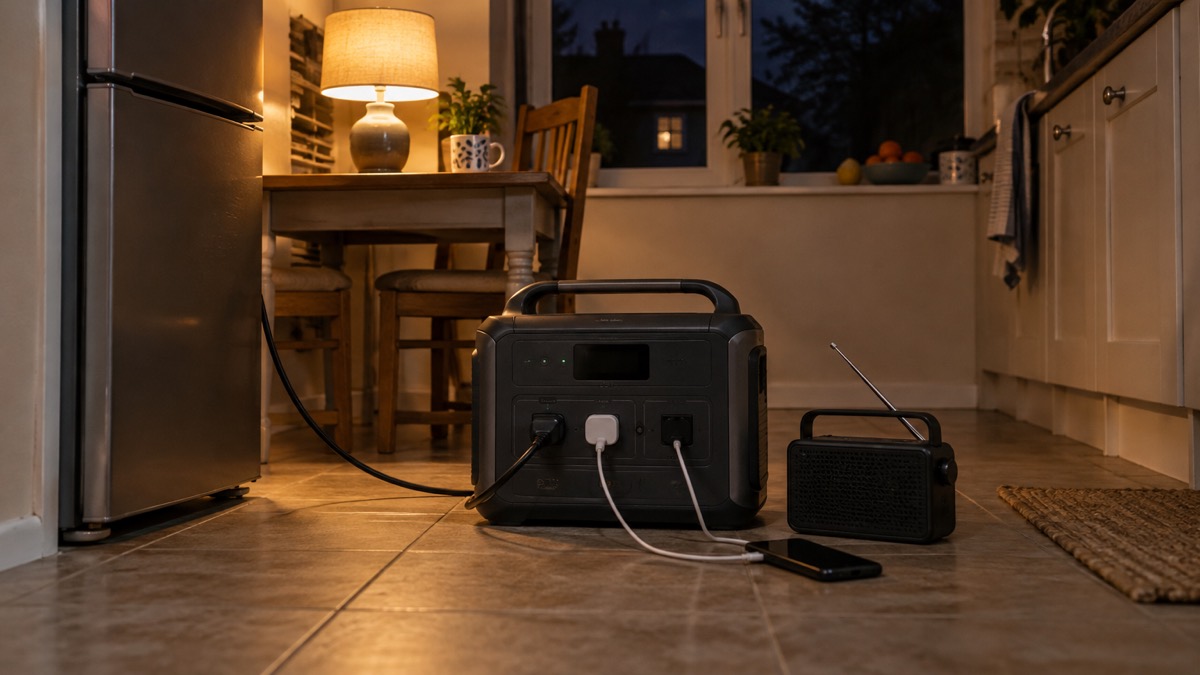
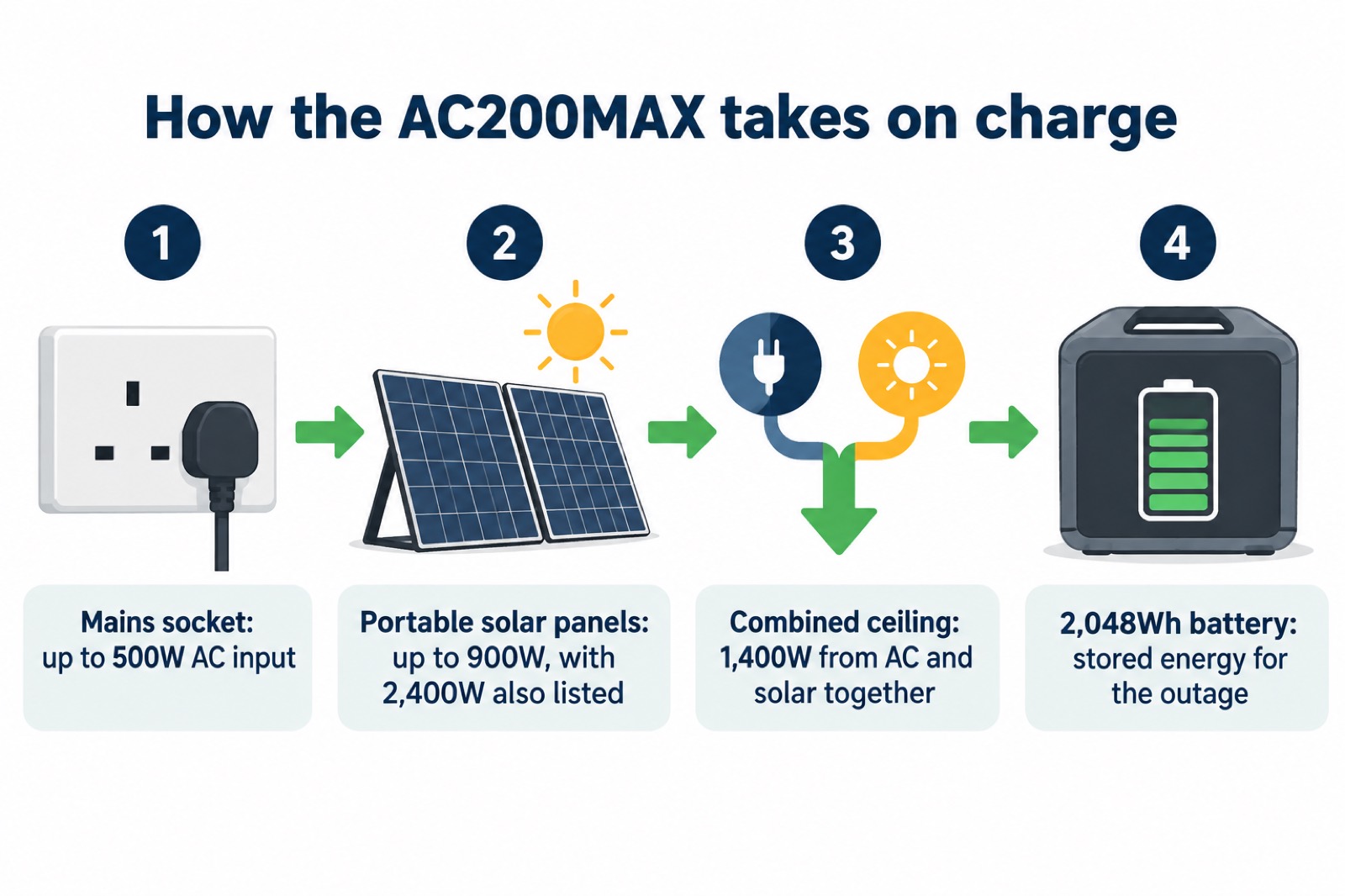
There are two ways to put energy back into the AC200MAX, and a household should think about both. The first is the mains: the maker gives a maximum AC input of 500W3. That is the rate at which the unit refills from a wall socket, and it is the method you will use most, because it is the one available before an outage rather than during it. Keep the unit charged as part of your normal routine so that it is full when you need it, in the same way you would keep a torch battery fresh.
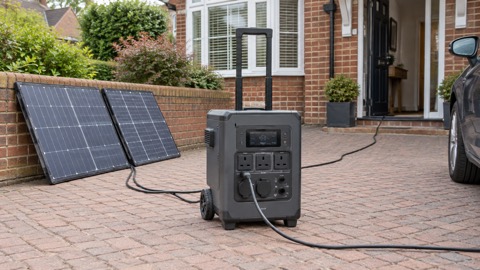
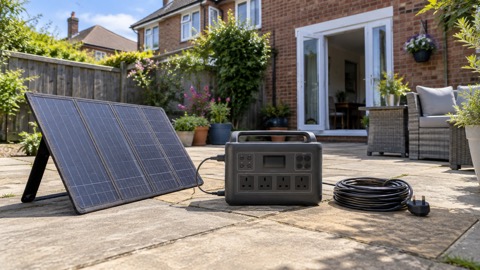
The second is solar. The maker gives a maximum solar input of 900W, and also lists 2,400W on the same page3. Combined, the maker gives a maximum total input of 1,400W from mains and solar together3. That combined figure is the one to plan around if you intend to charge from panels while the mains is off: it is the ceiling on what the unit will accept from both sources at once.
Solar charging in the UK is a fair-weather friend. Output depends on light, season and how the panels are angled, and a grey winter day will not deliver anything like the panel's rated figure. If you plan to rely on panels, read portable solar panels for charging in a power cut and what size solar panel do I need before you buy, and check the solar input figure on your own unit's paperwork given the disagreement in the maker's published figures.
What it can power, and for how long
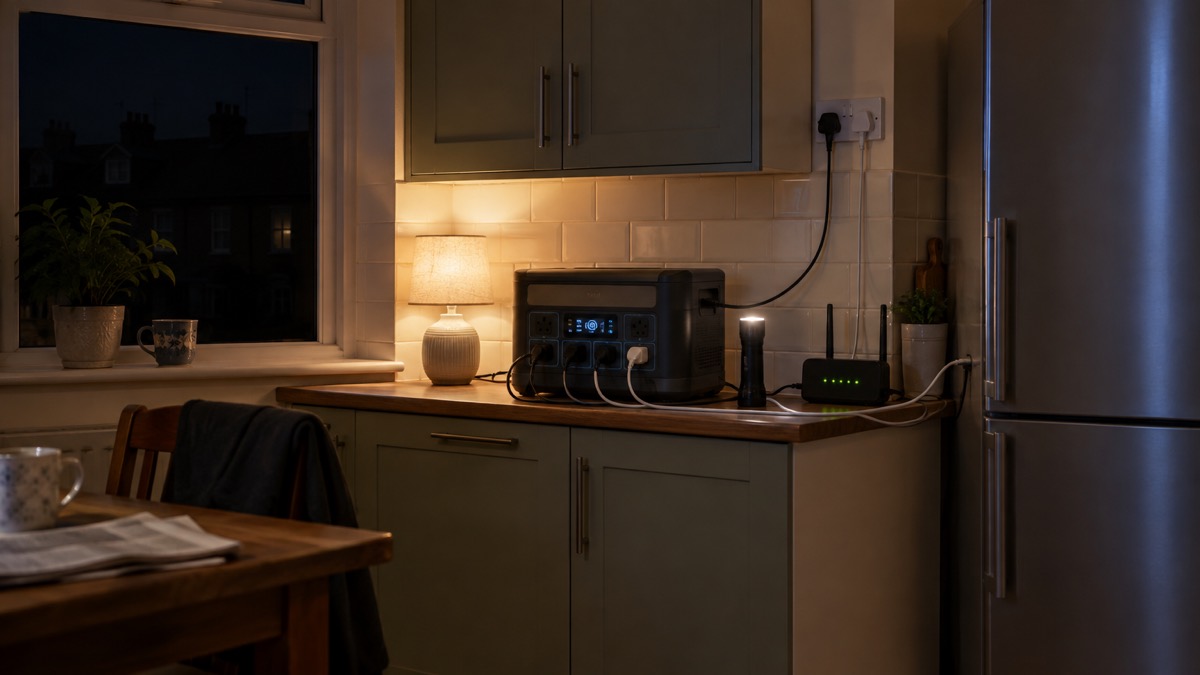
The 2,200W output figure is the ceiling on what the AC200MAX can supply at any one moment3. The 2,048Wh capacity is the size of the tank1. How long the unit lasts is the sum of everything you plug in: a low-power load such as a lamp or a router draws little and the battery lasts a long time, while a high-power appliance such as a heater or a kettle draws a great deal and flattens it quickly. The arithmetic of watts, watt-hours and start-up surges is set out in watts, watt-hours and surge explained, and it is worth reading before you decide what to plug in.
The practical approach for a household is to decide in advance what the unit is for. BLUETTI lists indoor home backup, outdoor use and emergency use including CPAP machines among its applications2. That suggests three broad jobs:
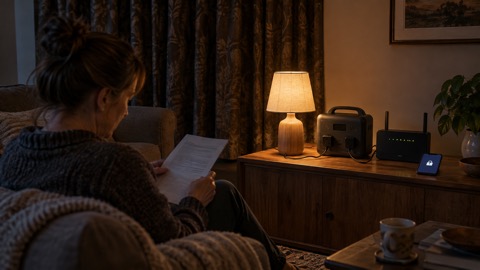
- Keeping the essentials going: a fridge, a few lights, the broadband router and phone charging, so that the household stays warm, fed and in touch.
- Medical and care needs: running a CPAP machine or similar device through an outage. If anyone in the house depends on powered equipment, read powering medical devices from a battery and tell your electricity network operator, who keeps a register of vulnerable customers.
- Short, targeted use: running one demanding appliance for a short period rather than trying to run the whole house.
What it cannot do is run everything at once. A household that plugs in a heater, a kettle and a washing machine together will trip the unit's output limit, and the 2,048Wh battery will not carry heavy heating loads for long in any case. Plan the load, and if you are unsure of the size you need, work through what capacity power station do I need and how long will a power station run a fridge or laptop.
Using it for home backup in a power cut
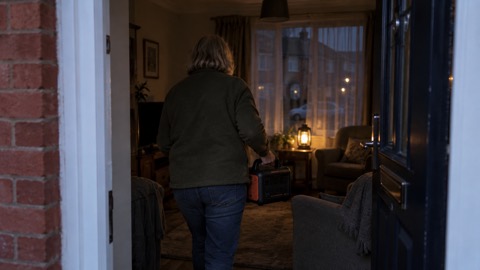
The AC200MAX is a portable unit, so using it in an outage is a matter of plugging things into it rather than throwing a switch. That has advantages and limits. The advantage is that you can move it to wherever it is needed, run a lead to the fridge, and keep it out of the way when the power is on. The limit is that it will not back up your whole house's wiring by itself, and connecting a battery or generator to your home's circuits is a job with real risks that needs proper advice: see connecting a generator or battery to your home's wiring.
A sensible routine for an outage looks like this:
- Check the unit is charged before you need it, and top it up from the mains while power is on.
- Decide the priority loads and plug only those in, checking each appliance's rating against the 2,200W output1.
- Use extension leads carefully, without daisy-chaining them or overloading a single socket: see extension leads and overloading with backup kit.
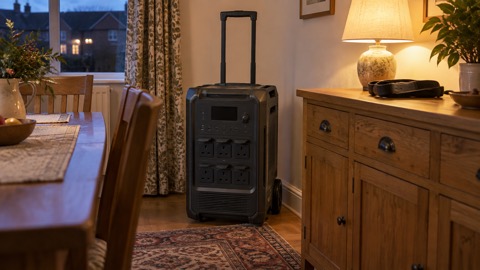
- Keep the unit where you can see it, on a hard, dry surface, and away from anything that could fall on it.
- Recharge it once the mains returns, so it is ready for the next time.
Your electricity network operator's own advice for a power cut is worth having alongside the unit: keep a warm blanket to hand, and know who to call8. A battery does not replace the basics of a household plan, it supports them. For the wider picture, see using generators and power stations during an outage and the power cut backup power checklist.
Battery, expansion and app control
The AC200MAX uses lithium iron phosphate chemistry, written LiFePO4. BLUETTI lists the AC200MAX among its products with LiFePO4 batteries, and states that every BLUETTI unit uses that chemistry9. For a household, the point is not the chemistry lesson but the care: lithium batteries of any kind need sensible handling, sensible storage and sensible charging. Read lithium-ion battery safety at home and how to store a power station when not in use before you put yours in a cupboard for the winter.
If you need more stored energy, the maker lists the AC200MAX as taking up to two B300 expansion batteries5. Adding them increases the capacity available, which extends how long you can run your chosen loads. Check compatibility and the correct connection procedure in the maker's own guide for the B300 before buying.
App control is more limited than you might assume. BLUETTI states that the AC200MAX supports Bluetooth only, while the AC200L supports both Bluetooth and Wi-Fi11. In practice that means you need to be near the unit to use the app. It is useful for checking the state of charge and adjusting settings while you are in the same room; it is not a way to watch your home's power from elsewhere. Do not build a plan that depends on remote monitoring.
Keeping it ready between outages
A power station that is flat when the lights go out is no better than no power station. The routine that keeps the AC200MAX useful is simple, and it fits alongside the rest of a household's preparations:
- Keep it charged. Top up from the mains at 500W maximum1 as part of a regular routine, and check the level before winter.
- Store it sensibly. Keep it dry, at a steady temperature, and away from damp and frost. See what temperature should batteries be stored at and can you charge lithium batteries below freezing.
- Check the leads and sockets you plan to use, and keep a short set of extension leads with the unit rather than hunting for them in the dark.
- Run a test now and then: plug in a lamp and confirm the unit works as expected.
- Know your loads. Keep a note of which appliances you would run and their ratings, so nobody has to work it out by torchlight.
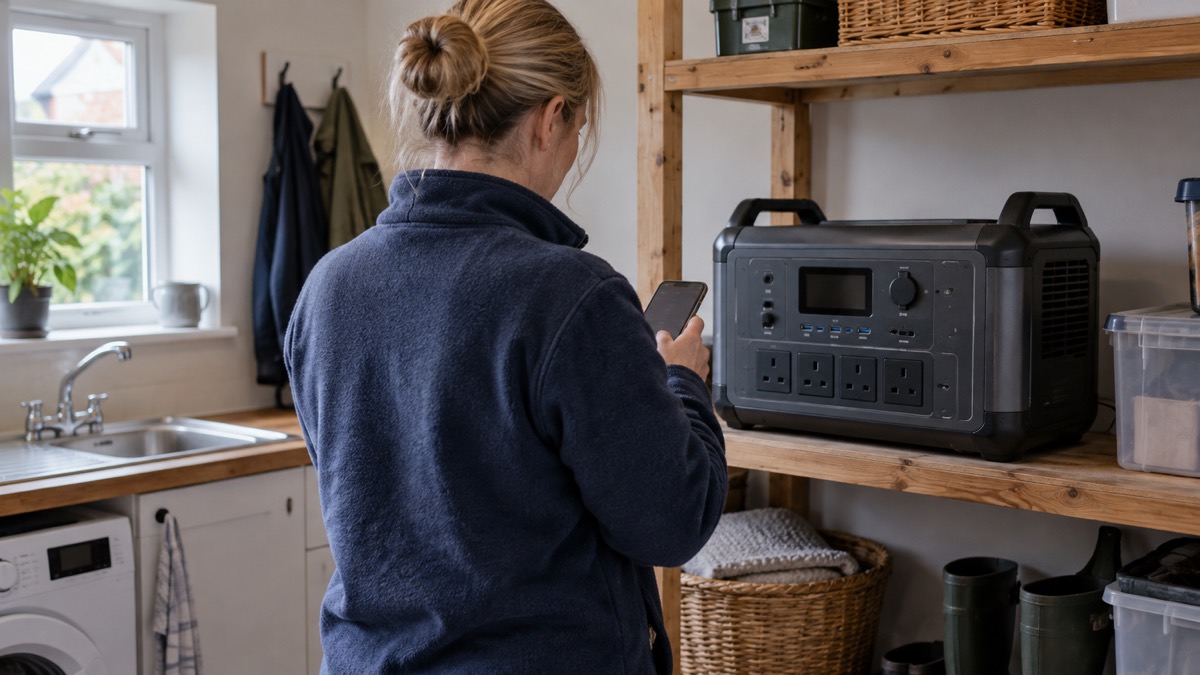
The backup power checks before winter checklist covers the seasonal version of this routine, and the safe battery charging at home checklist covers the charging side. If you are weighing a power station against a petrol generator for your circumstances, portable power station or petrol generator for a power cut sets the two side by side.
Warranty and support
BLUETTI's warranty page lists a 48-month warranty period for the AC200MAX6. The firm's support article describes the AC200P, AC200Max and B230 as coming with a two-year limited warranty, which an extended warranty doubles1. The documents give both figures and do not reconcile them, so keep your proof of purchase and check which applies to your unit. Elsewhere the maker describes its portable power stations as carrying a two-year warranty for new units and a six-month warranty for refurbished ones12, and its range as a whole as having two to six years of warranty depending on model14.
The extended warranty has a condition worth knowing before you buy. BLUETTI states that it is only applicable for the AC200Max, AC200P or B230 purchased from the BLUETTI official website, and that purchases from other platforms must submit an application1. If you buy from a retailer, check what cover you have and whether you can register for the extension.
For support, BLUETTI maintains a support page and user guides for its products2. The maker's own user guide for the unit is the place to check the socket layout, the charging procedure and the storage instructions for your exact model. Keep the guide with the unit, on paper, so that it is there when the power is off and you cannot look it up online.
If you are comparing this unit with others in the range, the BLUETTI brand page lists the models the site covers, and portable power stations: what they do and how to choose explains the trade-offs in general terms. For the wider household plan, start from backup power at home.
Sources (15)
- BLUETTI Extended Warranty, BLUETTI, 2026-11-02
- BLUETTI Support, BLUETTI, 2026-11-02
- BLUETTI EP500Pro product page, BLUETTI, 2026-10-25
- User guide, BLUETTI, 2026-10-25
- Expansion battery, BLUETTI, 2026-10-25
- Warranty, BLUETTI, 2026-11-02
- Home battery backup, BLUETTI, 2026-10-25
- Being prepared for a power cut, SP Energy Networks, 2026-10-26
- Cell introduce, BLUETTI, 2026-10-29
- Home battery backup collection, BLUETTI, 2026-10-25
- AC200L product page, BLUETTI, 2026-10-25
- BLUETTI portable power station, BLUETTI, 2026-10-25
- Caravan power station, BLUETTI, 2026-10-29
- Charger, BLUETTI, 2026-10-25
- User guides, BLUETTI, 2026-11-02

 BLUETTI Apex 300 Power Station
 BLUETTI Elite 100 V2
 Anker SOLIX C2000 Gen 2
 Anker SOLIX C1000 Power Station
 EcoFlow DELTA Pro
 BLUETTI Elite 400
 Anker SOLIX C300 Power Station
 EcoFlow DELTA 3
 EcoFlow DELTA 2 and DELTA 2 Max
 EcoFlow DELTA and DELTA Max
 EcoFlow RIVER 3 and RIVER 3 Plus
 EcoFlow RIVER 2 and RIVER 2 Max