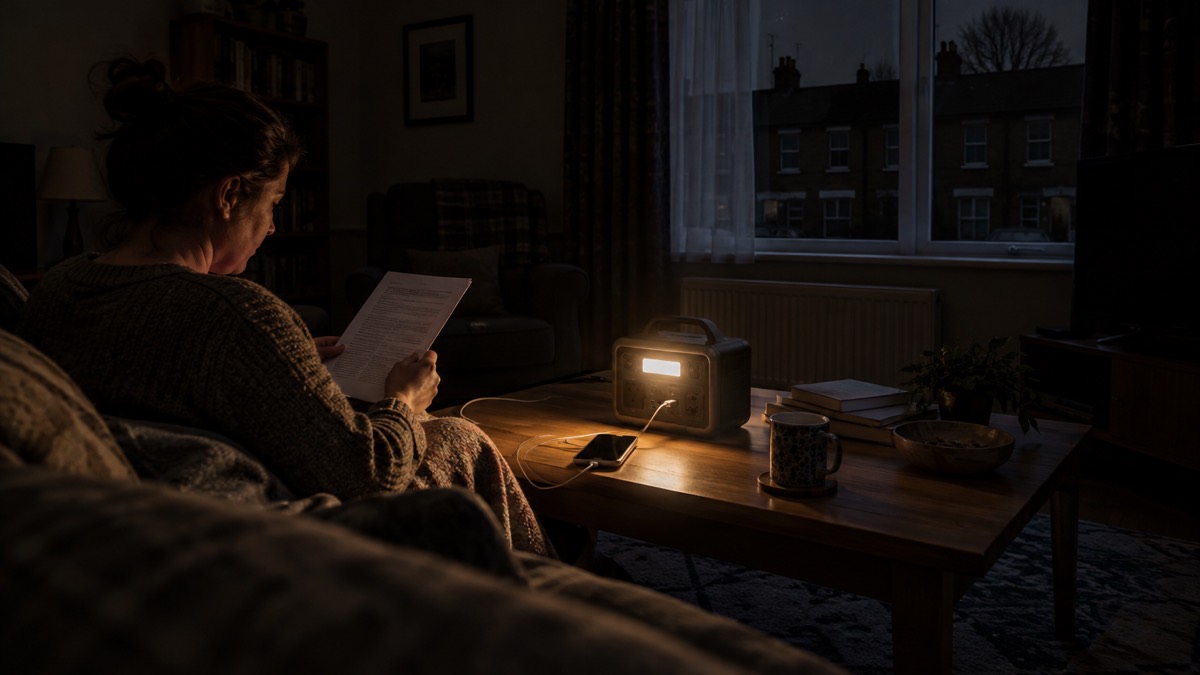
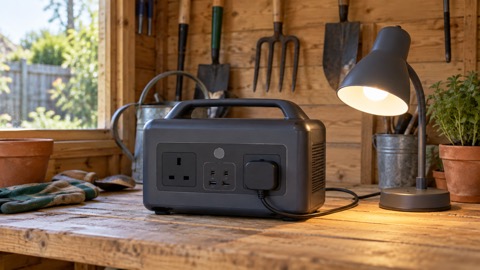
The BLUETTI Elite 10 is a small portable power station: a 128Wh battery with a 200W mains socket, five DC outlets and a built-in LED light, made by BLUETTI. It is the size of a large lunchbox and is built for small loads, not for running a fridge or a boiler. If you are looking at one for a power cut, the question is not whether it is good, but whether 128Wh and 200W is enough for what you actually need to keep running.
The honest answer is that it suits phones, a laptop, a light and a router, and not much more. The maker quotes a 70-minute fast recharge, a 50-hour run time on the built-in light, and a LiFePO₄ battery rated for 3,000+ cycles to 80%1. Those three figures tell you most of what you need: it charges quickly, it lights a room for two days, and it should last years of occasional use.
This page sets out what the Elite 10 can and cannot do, how to charge it from the mains, a car or a solar panel, and how to store and use it safely. It does not compare it with other products or give a price. For the wider picture, start with Portable Power Stations: What They Do and How to Choose.
What the Elite 10 is, and what it is for
The Elite 10 is a lithium iron phosphate (LiFePO₄) power station with a 128Wh capacity and a 200W AC output, which the maker describes as "128Wh capacity with 200W AC output in a palm-sized body"1. LiFePO₄ is the chemistry BLUETTI says it was one of the first to adopt in portable power stations4. In practice it is the chemistry that gives the long cycle life quoted below, and it is why the unit is heavier and more expensive than a plain lithium-ion power bank of the same capacity.
The 128Wh figure is the one that decides what it can do. A watt-hour is a unit of energy: 128Wh means the battery can deliver 128 watts for one hour before it is flat. If that arithmetic is unfamiliar, Watts, Watt-Hours and Surge Explained sets it out properly. The 200W figure is the ceiling on the mains socket at any one moment: anything that draws more than that, such as a kettle or a fan heater, will not run from it.
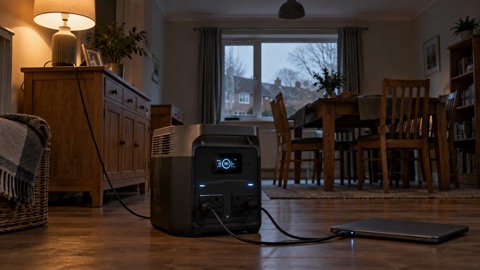
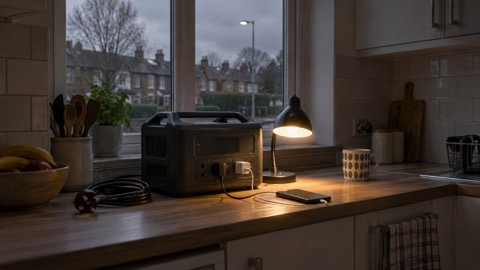
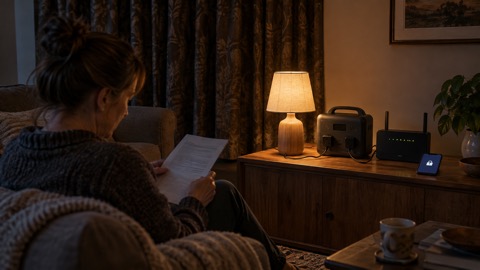
That makes the Elite 10 a device for small, specific jobs. It is the sort of thing you keep charged on a shelf and reach for when the lights go out: to top up phones, run a router for a while, keep a laptop going, or light a room. It is not a whole-home backup and it is not designed to be wired into your house. If you are deciding what actually needs to keep running, Deciding What to Keep Running When the Mains Fails is the place to start.
Outputs: one 200W AC socket and five DC outlets
The maker lists six outputs in total: "1 AC + 5 DC outlets power laptops, cameras, mini fridges, and more simultaneously"1. The single AC socket is the one most households will use, because it takes a standard three-pin plug. The five DC outlets cover USB devices and other low-power accessories, which is where the unit is most efficient, since converting battery power to mains and back loses some energy.
| Outlet | What it is for | What to watch |
|---|---|---|
| 1 x AC socket, 200W | Laptops, lamps, small fans, a router | Anything over 200W will not run; check the label on the appliance1 |
| 5 x DC outlets | Phones, tablets, cameras, USB lights | The most efficient way to use the battery1 |
| Built-in LED | Room lighting, with cold, warm and SOS modes | 50 hours of run time in total2 |
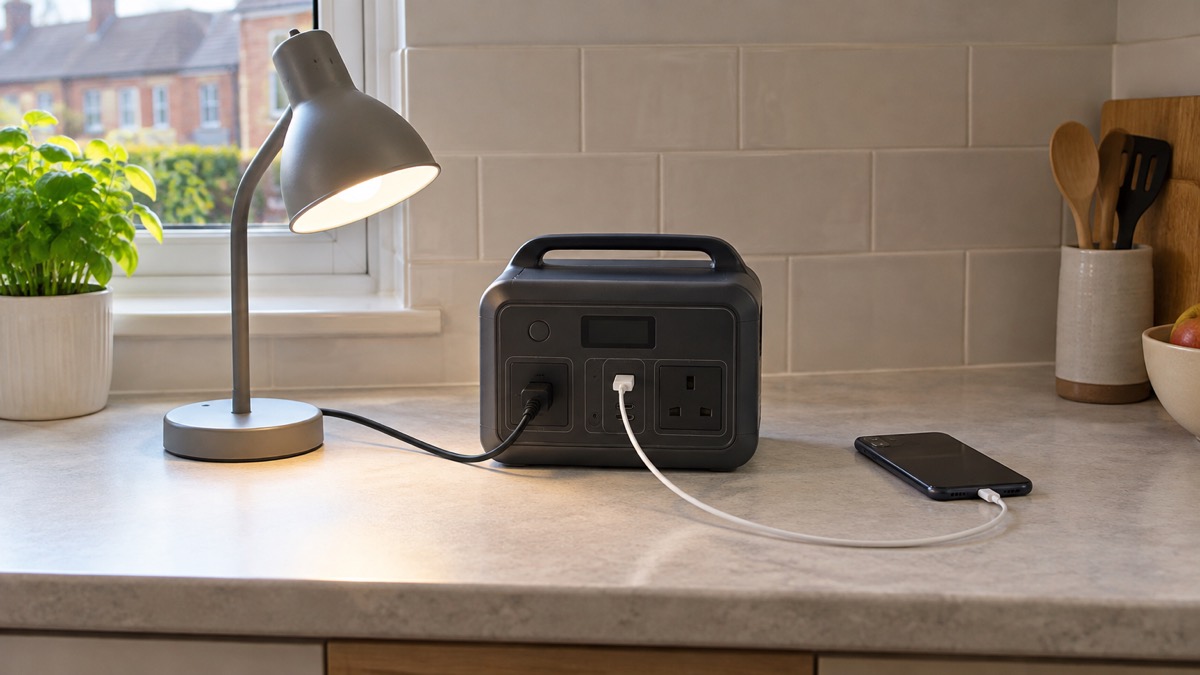
The maker's own examples of what the outlets can power are laptops, cameras and mini fridges1. A mini fridge is at the top end of what a 200W socket will take, and a fridge cycling on and off will drain 128Wh quickly. For anything with a motor or a compressor, check the start-up draw as well as the running draw, because motors can pull several times their rated power for a moment. Watts, Watt-Hours and Surge Explained explains surge properly.
The practical rule is to plug in one thing at a time on the AC side and use the DC outlets for everything else. Six outlets does not mean six heavy loads at once: the total draw still has to stay within what the battery and the AC socket can supply.
Run time depends on the load: about 4 hours, or 50 hours on the light
How long the Elite 10 lasts is entirely a question of what you plug into it. The maker gives two figures. The built-in LED runs for 50 hours across its three modes, cold, warm and SOS2. Separately, the maker's home backup page lists a run time of 4 hours for the Elite 105. Treat 4 hours as the conservative planning figure and expect it to vary with the load.
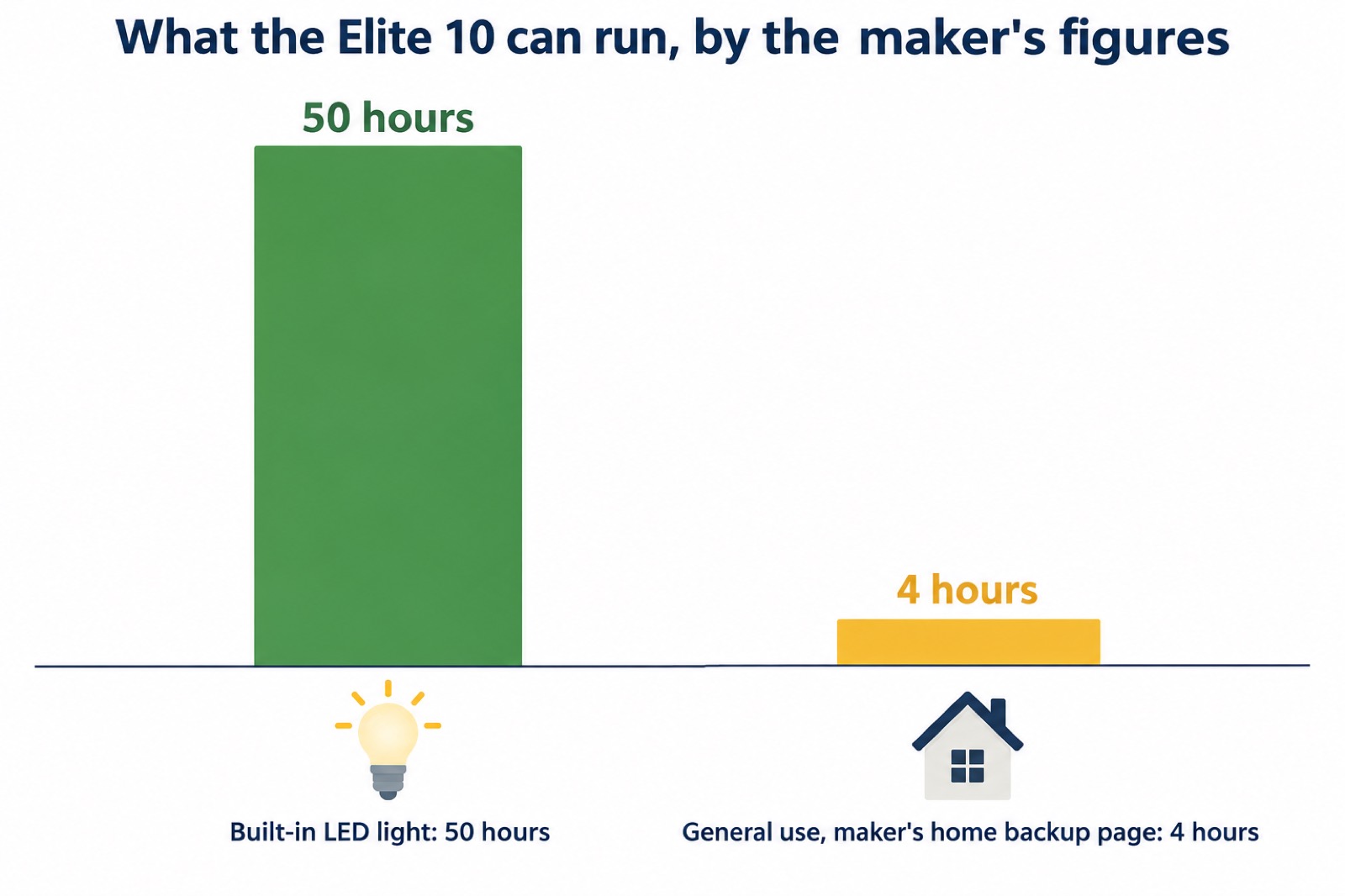
The 50-hour light figure is the most useful one for an emergency. A light that runs for two days on a single charge is a genuine comfort in a power cut, and it is the reason the unit earns its place on a shelf even if you never plug anything else into it. The SOS mode is there to signal for help; the cold and warm modes are ordinary room lighting.
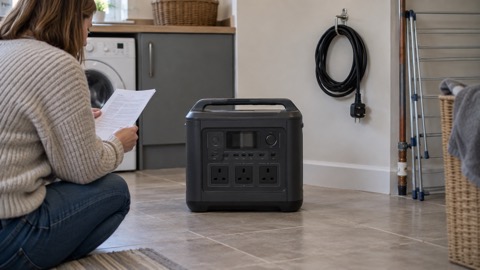
The 4-hour figure is a general run time and will not apply to every load. A phone charging from a DC outlet draws very little and will barely touch the battery; a laptop on the AC socket draws more; a mini fridge draws a lot. If you want to work out your own run time, add up the watts of what you plan to run and divide 128 by that number. How Long Will a Power Station Run a Fridge or Laptop? does the same calculation for common appliances.
Charging it: mains, car, solar, or two at once
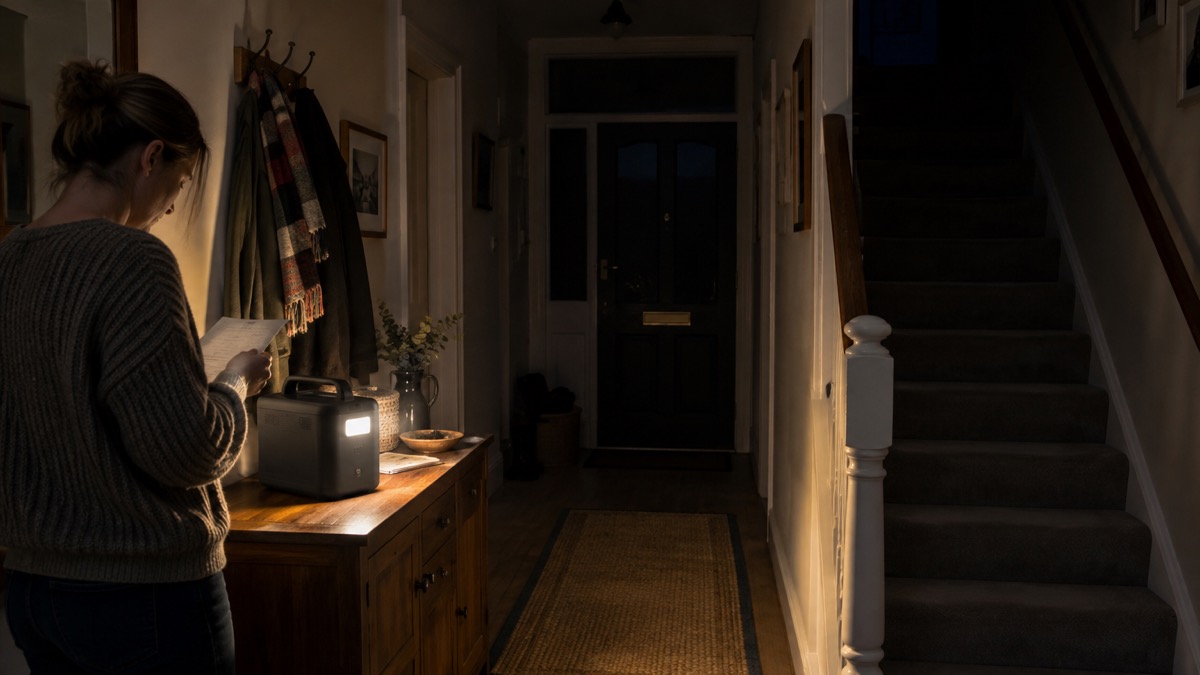
The maker lists four charging options: AC, car, solar at 60W, and AC plus solar charging together1. That flexibility matters in a power cut, because it means you are not dependent on a single source. The headline figure is the 70-minute fast recharge from the mains, which the maker describes as getting you ready for travel in a coffee break1.
- Mains: the fastest option, at the quoted 70 minutes1. Charge before an outage rather than during one.
- Car: useful if you are out and about, but slower than mains1.
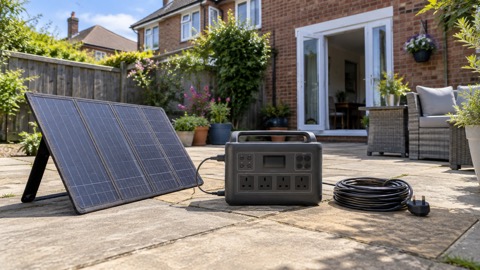
- Solar: the maker specifies a 60W solar input1. A panel within that rating is the one to look for; Portable Solar Panels for Charging in a Power Cut covers how to size and site one.
- AC plus solar together: the quickest way to top up when both are available1.
The 60W solar figure is modest, and UK sunlight is not reliable, so solar should be treated as a top-up rather than a primary plan. If you want to understand what a panel will realistically deliver in this country, How Long Does Solar Charging Take in the UK? sets out the variables.
Safe use and storage: keep it cool, dry and out of the rain
The Elite 10 is not waterproof. The maker's own instruction is direct: "No, the Elite 10 is not waterproof. Please store it in a cool, dry place"3. The operating humidity range is 10% to 90%1, which is wide, but it describes the air the unit can work in, not whether it can get wet. It cannot.
That instruction is consistent with what the fire and rescue services say about lithium batteries generally. The Scottish Fire and Rescue Service advises: "Store the product and their batteries in a cool place, avoiding exposing them to extreme heat or cold"6. The London Fire Brigade gives the same advice for e-bike and e-scooter batteries, to "Store batteries in cool, dry places"7. Electrical Safety First adds that outdoor electrical equipment should be kept "in a dry, safe place" and checked for water damage before use8, and that electrical equipment should be stored "in a dry place and safely out of reach of children"9.
"Store the product and their batteries in a cool place, avoiding exposing them to extreme heat or cold."
In practice, that means a cupboard or shelf indoors, away from radiators, windows and damp. Not a shed with a concrete floor, not a garage that floods, not a greenhouse. If the unit has been somewhere cold, let it come back to room temperature before charging. If it has got wet, do not plug it in: let it dry thoroughly and check it before use, in line with Electrical Safety First's advice on outdoor equipment8.
Battery life: 3,000+ cycles to 80%
The maker states the Elite 10's LiFePO₄ battery is rated for "3,000+ cycles to 80%", and describes that as "over 10 years of reliable backup"2. A cycle is one full charge and discharge; partial charges count as fractions of a cycle. The 80% figure means the battery is expected to retain 80% of its original capacity after that many cycles, not that it stops working.
That is a long life for a small unit, and it is the main argument for buying a LiFePO₄ power station rather than a cheaper lithium-ion power bank if you want something to keep for years. The maker's wider claim is that BLUETTI was one of the first to adopt LiFePO₄ in portable power stations4, and that it has over 3.5 million users in 110+ countries10. Those are the maker's own figures, not independently verified.
Two things shorten battery life in practice. Heat is the first: the fire and rescue services both warn against extreme heat and cold6, and a unit left on a sunny windowsill or in a hot car will age faster than one kept in a cupboard. The second is being left flat for long periods. The maker quotes a standby consumption of 4.5W and up to 50% less self-consumption1, which is efficient but not zero. If you store the unit for months, charge it to a sensible level and check it periodically rather than leaving it drained.
What it can and cannot do in a power cut
The Elite 10 is a small unit, and being clear about its limits is more useful than a list of what it can run. The maker's own examples are laptops, cameras and mini fridges1, and the built-in light is the standout feature for an outage2.
| Job | Can the Elite 10 do it? | Why |
|---|---|---|
| Charge phones and a tablet | Yes, easily | Low draw on the DC outlets1 |
| Run a laptop | Yes, for a while | Within the 200W AC limit1 |
| Light a room | Yes, for 50 hours | Built-in LED with three modes2 |
| Keep a router going | Yes, briefly | Small continuous draw, but 128Wh is limited1 |
| Run a mini fridge | Marginally | Within 200W, but drains the battery quickly1 |
| Run a kettle, heater or boiler | No | Draws far more than 200W1 |
| Power the house's wiring | No | Not designed for it; see Connecting a Generator or Battery to Your Home's Wiring |
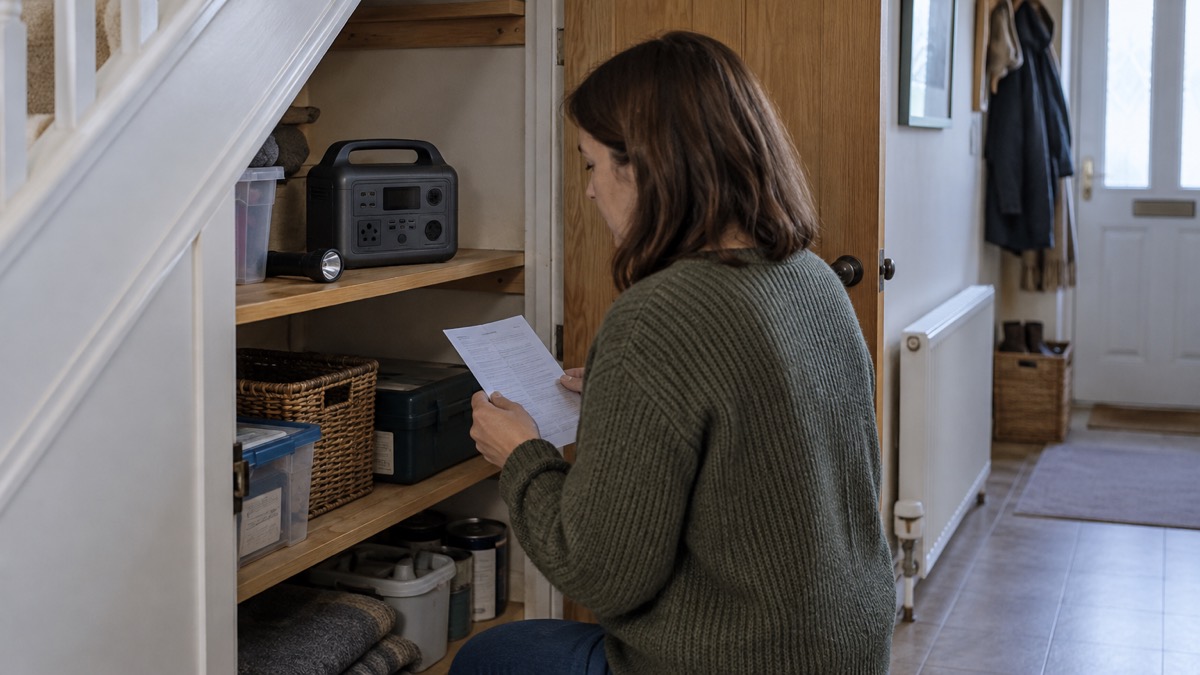
The unit has a UPS mode with a 10ms switchover, which the maker describes as keeping work and gaming online without interruption1. That is useful for a desktop computer or a router on a short outage, but 128Wh will not carry a desktop for long. Using a Power Station as a UPS: Switchover Times explains what the switchover figure means.
For anything beyond small loads, you need a larger power station or a generator. Portable Power Station or Petrol Generator for a Power Cut sets out the choice, and Power Bank or Portable Power Station helps if you are deciding whether you need a power station at all.
Support, warranty and where to get help
The Elite 10 is sold by BLUETTI in the UK, and the maker's UK site is the place to go for the manual, support and warranty terms. The box contains the power station, an AC charging cable and the user manual3; there is no solar panel included, so a panel is a separate purchase if you want one.
If something goes wrong with the unit, the maker's support channel is the first point of contact. Keep the manual and the order details. If the unit is damaged, swollen or has been wet, do not use it: the fire and rescue services advise storing batteries safely and disposing of damaged ones properly, and What to Do If a Battery Starts Swelling and How to Dispose of a Damaged Lithium Battery cover what to do.
For the wider question of how to prepare for a power cut, the Power Cut Backup Power Checklist is a practical starting point, and Backup Power at Home: A Household Guide covers the whole subject. If you need help during an outage and have a medical or mobility need, ask your electricity network operator about the Priority Services Register; Power Cuts: A Household Guide explains how.
Sources (11)
- BLUETTI Elite 10 product page, BLUETTI, 2026-10-25
- BLUETTI Elite 10 60W page, BLUETTI, 2026-10-25
- BLUETTI Elite 10 portable power station, BLUETTI, 2026-10-25
- BLUETTI home backup, BLUETTI, 2026-10-25
- BLUETTI home battery backup, BLUETTI, 2026-10-25
- Lithium-ion batteries, Scottish Fire and Rescue Service, 2025-11-27
- Heat, cold and rain: how weather conditions affect e-bikes and e-scooters, London Fire Brigade, 2026-10-25
- Get smart in the garden, Electrical Safety First, 2026-10-25
- Don't have a DIY disaster, Electrical Safety First, 2026-10-25
- BLUETTI portable power station, BLUETTI, 2026-10-25
- BLUETTI Elite 300 200W page, BLUETTI, 2026-10-25

 BLUETTI Apex 300 Power Station
 BLUETTI Elite 100 V2
 Anker SOLIX C2000 Gen 2
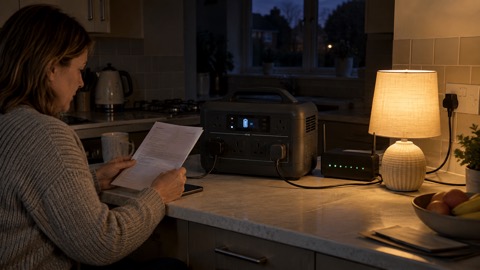 Anker SOLIX C1000 Power Station
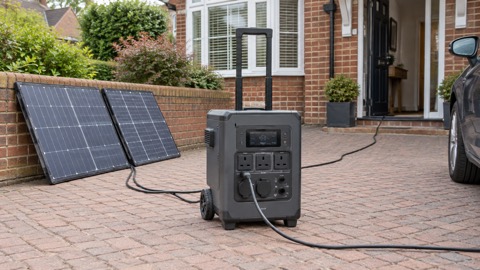 EcoFlow DELTA Pro
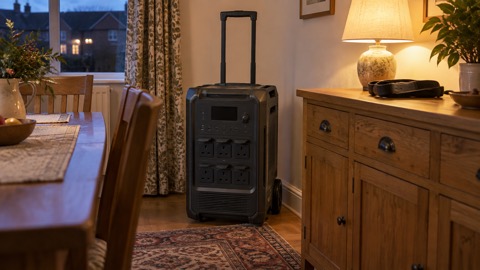 BLUETTI Elite 400
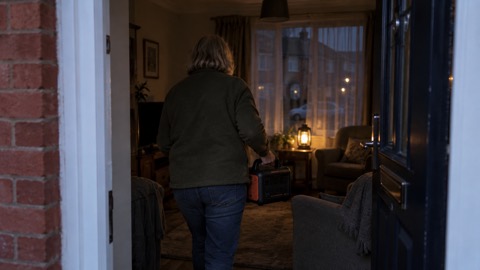 Anker SOLIX C300 Power Station
 EcoFlow DELTA 3
 EcoFlow DELTA 2 and DELTA 2 Max
 EcoFlow DELTA and DELTA Max
 EcoFlow RIVER 3 and RIVER 3 Plus
 EcoFlow RIVER 2 and RIVER 2 Max