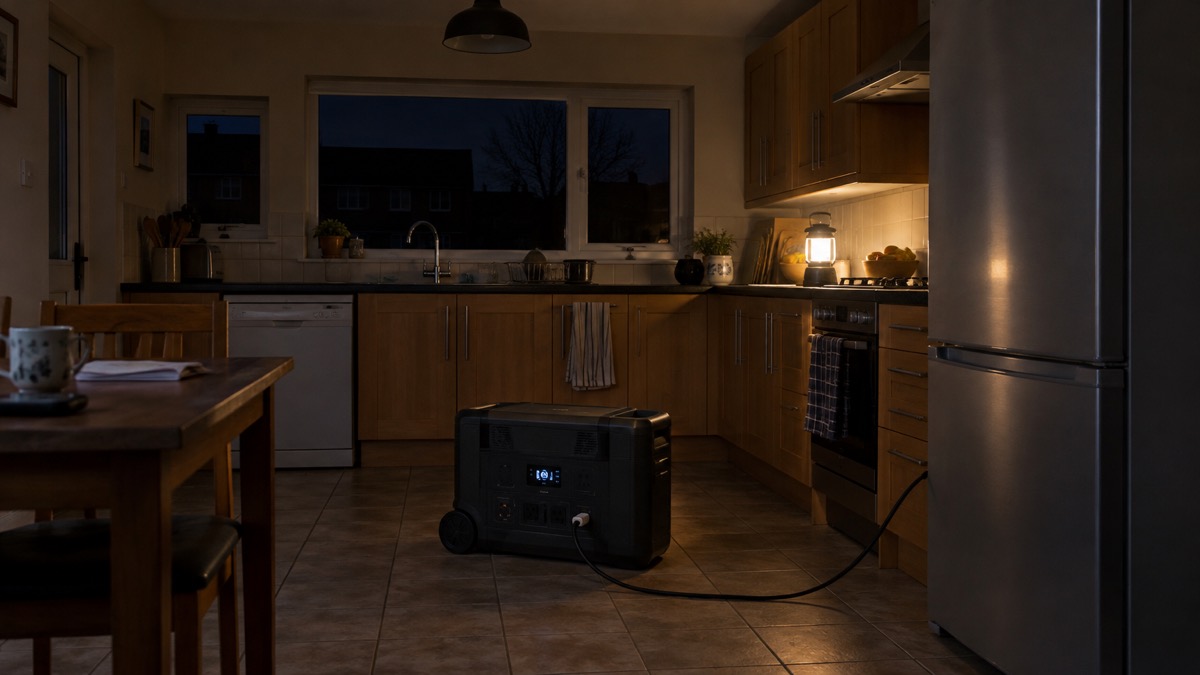
The BLUETTI AC240 is a portable power station with a 1,536Wh lithium iron phosphate (LiFePO₄) battery and a 2,400W rated output across four 230V sockets1. For a household preparing for a power cut, that means a single unit you can keep charged indoors and plug appliances into when the mains fails, without fuel, exhaust or a generator running outside. It can also be used as a UPS, switching over in 15ms, so a fridge, router or similar load can stay on through a short interruption1.
What it will not do is run your whole house. The 2,400W output sets the ceiling on what you can plug in at once, and the 1,536Wh battery sets how long it lasts. The maker's own instructions matter here: do not run air conditioners or washing machines with lifting power, do not charge it below freezing, and do not use it in the rain even though it carries an IP65 rating1. Those three rules cover most of what goes wrong.
This page sets out what the AC240 is, what it can run, how to charge it, how to keep it ready between emergencies, and where to get support. It is written for an ordinary UK household deciding whether this unit fits a plan, and for owners who want to use it safely.
What the AC240 is and what it suits
The AC240 sits in BLUETTI's Armor series, which the maker describes as built for outdoor and maritime use, with a double-layered design certified to IP65 for dust and water spray resistance2. The battery chemistry is LiFePO₄, which the maker lists alongside a 10-year lifespan and 3,500+ life cycles in Silent Mode1. In household terms, that is a unit designed to be kept for years and cycled regularly rather than used once and forgotten.
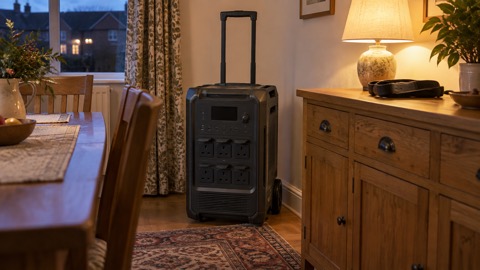
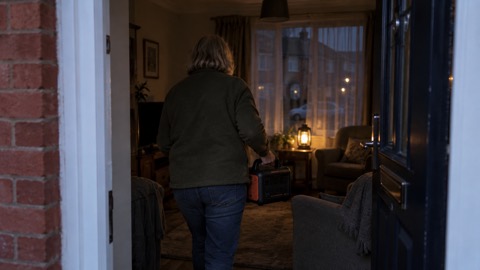
It weighs and measures like a small suitcase: 419.5 × 293.5 × 409.5mm1. That matters for prepping because you need to be able to move it to where the load is, and to move it out of a hallway or escape route when it is charging. It is not a fixed home battery; it is a portable unit you position when you need it.
Where it fits a household plan is as a bridge. A power cut that lasts a few hours is handled by a charged AC240 running the fridge, the router, a lamp and phone chargers. A cut that lasts days is handled by the same unit plus a way to recharge it, whether from the mains when power returns, from a car, or from solar panels. The portable power stations guide sets out how this class of kit compares with other options, and the backup power section covers the wider plan.
| Specification | Figure |
|---|---|
| Battery capacity | 1,536Wh1 |
| Battery type | LiFePO₄ (Lithium Iron Phosphate)1 |
| Rated AC output | 2,400W1 |
| AC sockets | 4 × 230V/11A, 2,400W in total1 |
| Inverter type | Pure Sine Wave1 |
| UPS switchover | 15ms1 |
| IP rating | IP651 |
| Dimensions | 419.5 × 293.5 × 409.5mm1 |
| Warranty | 6 years1 |
| Certifications | UL2743, UKCA, TELEC, RCM, FCC ID, CE, PSE, NTC1 |
Outputs: what you can plug in
The AC240 gives you four 230V sockets rated 11A each and 2,400W in total, plus two 18W USB-A ports and two USB-C ports at up to 100W1. There is also a 12VDC/30A output at 360W maximum and a cigarette lighter port at 12V/10A1. The inverter is pure sine wave, which matters for anything with a motor or sensitive electronics1.
For a household, the practical split is:
- Mains sockets: fridge, freezer, router, lamp, television, phone chargers, a fan or a small heater within the output limit.
- USB ports: phones, tablets, radios and small lights, without using a mains socket.
- 12V output: car-style accessories and 12V lighting.
The maker's general warning for its portable power stations applies: make sure your device's power usage does not exceed the unit's maximum output3. Add up what you plug in. A fridge cycling on and off is fine; a fridge plus a kettle plus a heater at the same time is not.
Power Lifting Mode raises the ceiling for heating devices only. The maker states the AC240 can handle high-power heating devices up to 3,600W, such as space heaters, hairdryers and irons, but instructs that you do not run air conditioners or washing machines with lifting power1. Treat it as a short boost for a heater, not a way to run a larger appliance.
Backup during a power cut: the 15ms UPS switchover
The AC240 can be used as a UPS, and the maker lists a switching time of 15ms1. In practice, that means if you leave it plugged into the mains and run a device from it, the unit takes over almost instantly when the grid drops. The maker's other pages quote different figures for other products: under 10 milliseconds for its home battery backup range, ≤10ms for its power stations generally, and 0.02s for its solar generators4. Those are different products, not a contradiction about the AC240.
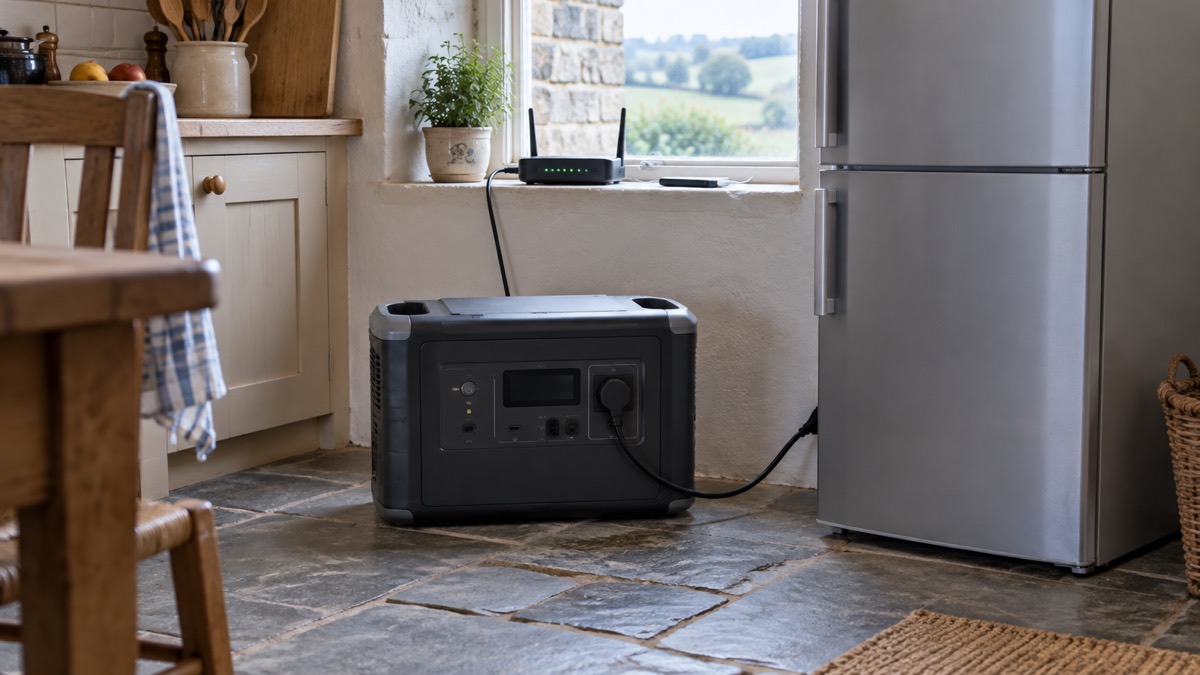
Why the switchover time matters: some loads tolerate a brief gap and some do not. A fridge compressor will usually ride through a short interruption; a desktop computer or a router may not. Independent guidance on medium-scale backup power puts a UPS at under 20ms switchover for a fridge, router or medical devices tier7. The AC240's 15ms sits inside that. If you are relying on it for a medical device, read the medical devices page and check with the device's own maker before depending on any power station.
Charging times: 70 minutes to 14.6 hours, depending on the source
How fast the AC240 recharges depends entirely on what you plug it into. The maker lists several modes1:
| Charging source | Time to full |
|---|---|
| Turbo Charging, 2,200W input (single unit) | 0-80% in 45 mins; 0-100% in 70 mins1 |
| Standard | 0-80% in 100 mins; 0-100% in 130 mins1 |
| Silent, 800W max input | 0-80% in 105 mins; 0-100% in 140 mins1 |
| Solar, 1,200W | 0-100% in 1.5 hours, with prime sunshine, ideal orientation and low temperature1 |
| Car outlet, 12V (100W) | 0-100% in 14.6 hours1 |
| Car outlet, 24V (200W) | 0-100% in 7.3 hours1 |
The maker notes that the AC240 has a built-in intelligent battery management system that adjusts charging power in response to battery temperature and state of charge, and that the fast charging cable and the AC and car charging cables are sold separately1. Check what comes in the box before you rely on a particular charging route.
For prepping, the mains figure is the one that matters most: a 70-minute recharge means that when power returns after a cut, you can have the unit full again before the next interruption. The car figure matters if the outage is long and the mains stays off; 14.6 hours from a 12V socket is slow but workable overnight. Solar is the wildcard. The maker's 1.5-hour figure assumes ideal conditions, which a UK winter will not provide. The solar charging time page explains what to expect here.
Rated IP65, but not for use in the rain
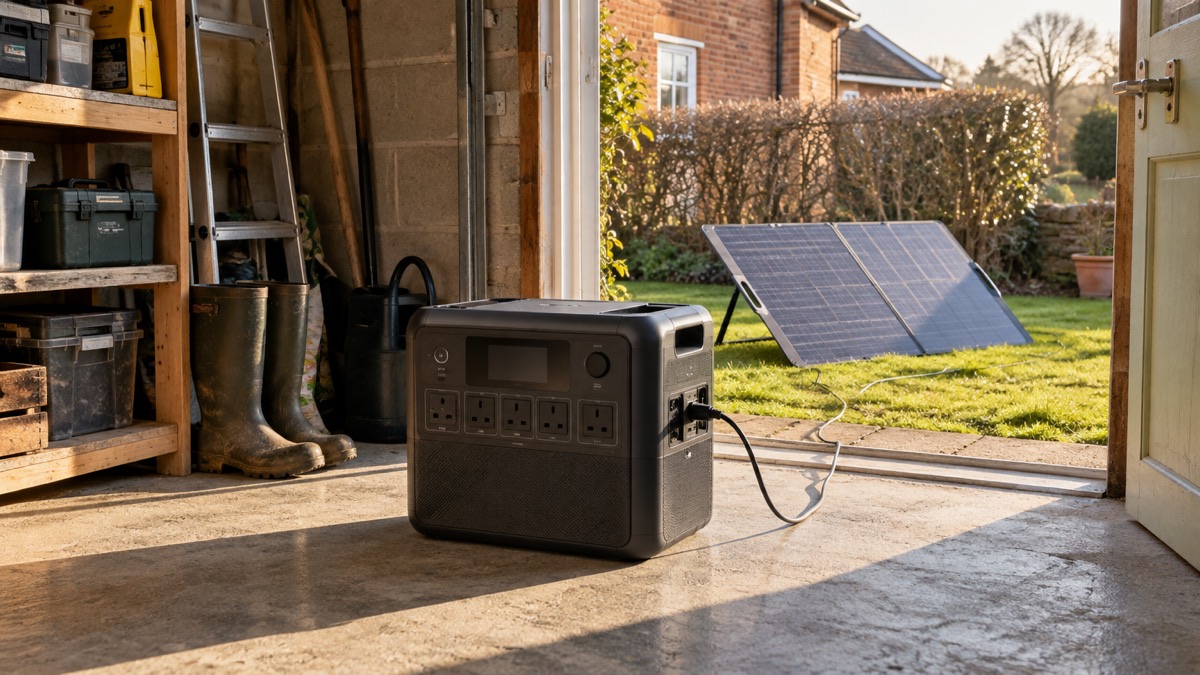
The AC240 carries an IP65 rating2. The maker describes the Armor series, which covers the AC240 and AC60, as certified to IP65, withstanding water sprays from all angles and achieving dust resistance to the same rating, with an exterior rubber cover and water-resistant socket built to prevent water ingress1. That rating is not a licence to use it wet: the maker states the AC240 should not be used in the rain, that water entering the output ports may cause damage or short circuits, and that the ports should be dried thoroughly before use again if they get wet2. BLUETTI's wider guidance for its power stations is that they are water-resistant but not fully waterproof and should be kept dry during use7.
It does not mean you can use it in the rain. The maker states plainly that the AC240 is IP65 water-resistant but should not be used in the rain, that water ingress to the output ports may cause damage or short circuits, and that if the ports get wet you should dry the surfaces thoroughly before using it again1. The maker's wider guidance for its power stations is the same: they are water-resistant, but not fully waterproof, and should be kept dry during use3.
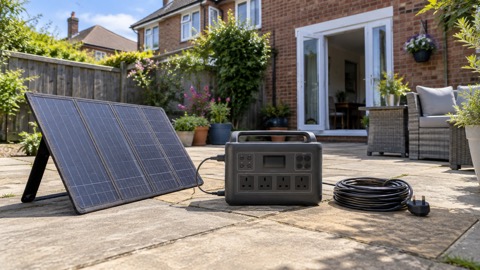
For a household, this shapes where you put it during a storm or flood. Keep it indoors, on a dry surface, away from windows and doors where rain can reach it. If you are charging from a solar panel in the garden, bring the unit inside and run the panel cable to it, rather than leaving the unit out.
Safe use: what not to run and when not to charge
The AC240 is a lithium battery in a box, and the fire and rescue services' advice on lithium batteries applies to it as much as to e-bikes and power banks. The maker's own instructions and the official guidance line up on the main points.
What not to run. Do not run air conditioners or washing machines with lifting power1. Do not exceed the unit's maximum output with whatever you plug in3. Add up the loads before you switch them on.
When not to charge. The maker gives a charging temperature range of 0℃ to 40℃, so do not charge below freezing1. Discharging is listed from -20℃ to 40℃, so the unit can still supply power in the cold1. If it has been stored in a cold garage or shed, let it come up to temperature before charging.
Where to charge. The fire and rescue services advise never charging batteries near exits, hallways or sleeping areas, which must remain clear for safe and quick evacuation9. They also advise not charging devices when you are not at home or overnight while you are asleep10. Do not cover the unit when charging11. Do not overload sockets or use unsuitable extension leads; use uncoiled extension cables rated for what is plugged in12. Avoid charging near flammable materials15.
What to check. Do not use or charge batteries that are damaged, swollen, leaking or unusually hot, and do not put damaged batteries in household waste16. Do not continue to use a battery or charger identified as unsafe17. The lithium-ion battery safety page and the safe charging setup checklist set out the full routine.
Pass-through charging is supported, so the AC240 can charge and discharge at the same time1. The maker's support guidance, however, says it is not recommended, to better protect the cycle life of the battery18. If you are using it as a UPS, that is the trade-off: convenience against long-term battery life.
Storage: recharge to 80% every 3-6 months
A power station that has been sitting empty in a shed for a year is not ready for a power cut. The maker's storage instruction is specific: store the AC240 in a dry and well-ventilated place and recharge it to 80% every 3-6 months1. The storage temperature range is -10℃ to 45℃1.
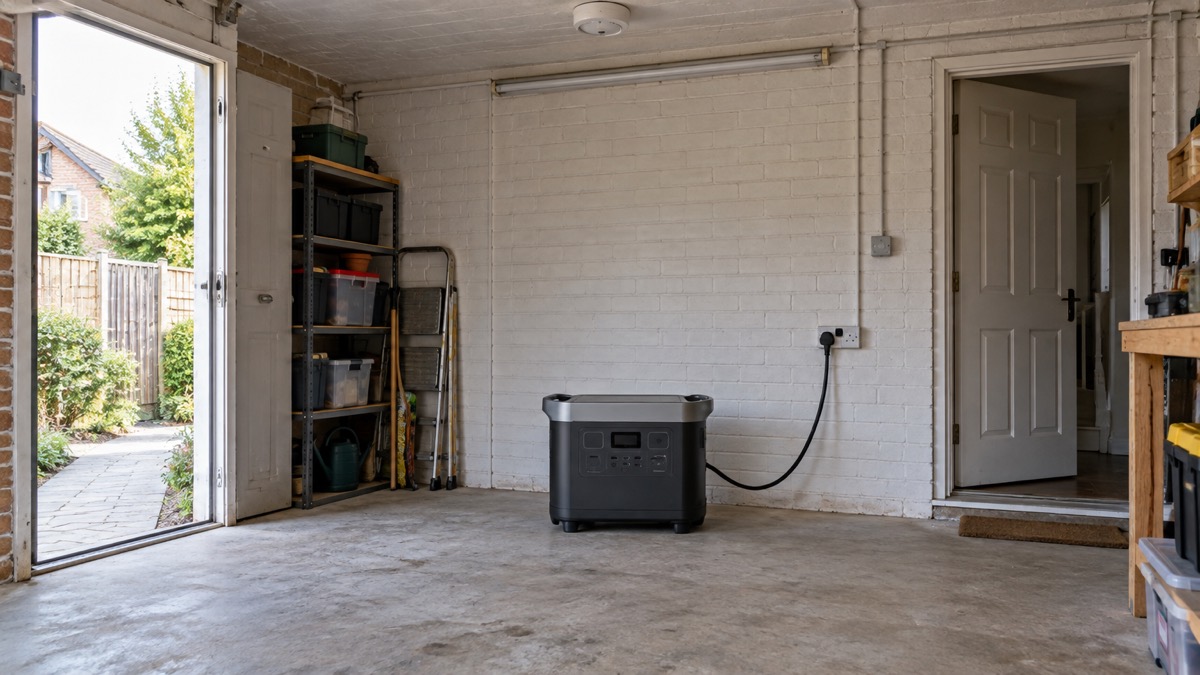
That routine is the single most useful habit for a household. Put a reminder in the diary for every three months, plug the unit in, bring it to 80%, and put it back. The power station storage page covers the wider routine, and the winter readiness checklist is a good time to do it before the season when cuts are more likely.
A few practical points:
- Keep it where you can reach it. A dry cupboard or utility room is better than a loft or a shed you cannot get to in the dark.
- Keep the cables with it. The AC and car charging cables are sold separately, so store them together with the unit1.
- Check it before winter. Run a small load from it to confirm it is holding charge.
- Do not store it in a hallway or escape route. The fire and rescue services advise against storing battery-powered items in escape route hallways19.
Adding B210 batteries and expanding capacity
The maker lists the AC240 as scalable with up to four B210 batteries1. A kit pairing the two is listed at 3,686Wh capacity, still with 2,400W output2. The B210 is also one of the charging methods the maker lists for the unit1. When paired with a B210, the AC240's AC input can reach 2,400W, up from 2,200W on its own1.
What that means for a household: adding batteries extends run time, not the size of appliance you can start. If your plan is to keep a fridge and a router running for longer, expansion helps. If your plan is to run a kettle and a heater at the same time, it does not. The watts and watt-hours page explains the difference.
Support, warranty and UK certification
The maker lists a 6-year warranty for the AC240, alongside a stated 10-year lifespan1. That is longer than the 2-year warranty the maker lists for its portable power stations generally, so check the warranty stated for the model you buy20. The maker's extended warranty page gives a two-year original warranty for some other models, again showing that warranty terms vary by product21. Keep your proof of purchase.
The AC240's certifications include UKCA, alongside UL2743, TELEC, RCM, FCC ID, CE, PSE and NTC1. UKCA is the marking used for goods placed on the Great Britain market. The safety markings page explains what to look for on the unit and its paperwork.
The internal battery is not user-replaceable; the maker states that if the internal battery pack malfunctions, you should contact BLUETTI Customer Service1. The maker's support pages are the route for warranty claims and technical questions18. For a household, the practical step is to register the product if the maker asks you to, keep the receipt, and note the serial number somewhere you can find it.
Connecting to boat shore power
The maker states that the AC240 can be connected with shore power to provide power to boats, and that an extra cable is required and sold separately1. The Armor series is described as resisting saltwater erosion for maritime use2. If you are using the unit on a boat, follow the maker's instructions for the cable and for the boat's own electrical arrangements, and keep the unit dry as the maker instructs3.
Where it fits a household plan
The AC240 is one option among several for keeping a household running through a power cut. It suits a household that wants a unit it can keep indoors, charge from the mains, and move to where the load is, without fuel or exhaust. It does not suit a household expecting to run heavy appliances or a whole house. The backup power section sets out the wider choices, the priorities page helps you decide what to keep running, and the power cut kit checklist lists what to have ready alongside it. The maker's own page is at BLUETTI.
Sources (21)
- BLUETTI AC240 product page, BLUETTI, 2026-10-25
- AC240 and AC60 water-resistant, dust-proof portable power, BLUETTI, 2026-10-25
- BLUETTI portable power station, BLUETTI, 2026-10-25
- BLUETTI home battery backup, BLUETTI, 2026-10-25
- Off-grid solar power, BLUETTI, 2026-10-25
- Solar generator vs fuel generator, BLUETTI, 2026-10-25
- UK winter power outage advice, Jackery UK, 2026-04-29
- Caravan power station, BLUETTI, 2026-10-29
- Battery safety, Greater Manchester Fire and Rescue Service, 2026-10-29
- Ring in 2025 with a safer home, Northern Ireland Fire and Rescue Service, 2025-01-02
- Battery safety, Portsmouth City Council, 2026-10-26
- E-bikes and e-scooters, Scottish Fire and Rescue Service, 2026-10-25
- E-bikes and e-scooters, Greater Manchester Fire and Rescue Service, 2026-10-29
- E-bikes and e-scooters, South Wales Fire and Rescue Service, 2026-07-29
- Lithium-ion batteries, Scottish Fire and Rescue Service, 2025-11-27
- Lithium-ion batteries, National Fire Chiefs Council, 2026-10-09
- Registering your e-bike or e-scooter for safety alerts and product recalls, London Fire Brigade, 2026-10-25
- BLUETTI support, BLUETTI, 2026-11-02
- Home safety partnerships, Devon and Somerset Fire and Rescue Service, 2026
- BLUETTI EP500Pro, BLUETTI, 2026-10-25
- BLUETTI extended warranty, BLUETTI, 2026-11-02

 BLUETTI Apex 300 Power Station
 BLUETTI Elite 100 V2
 Anker SOLIX C2000 Gen 2
 Anker SOLIX C1000 Power Station
 EcoFlow DELTA Pro
 BLUETTI Elite 400
 Anker SOLIX C300 Power Station
 EcoFlow DELTA 3
 EcoFlow DELTA 2 and DELTA 2 Max
 EcoFlow DELTA and DELTA Max
 EcoFlow RIVER 3 and RIVER 3 Plus
 EcoFlow RIVER 2 and RIVER 2 Max