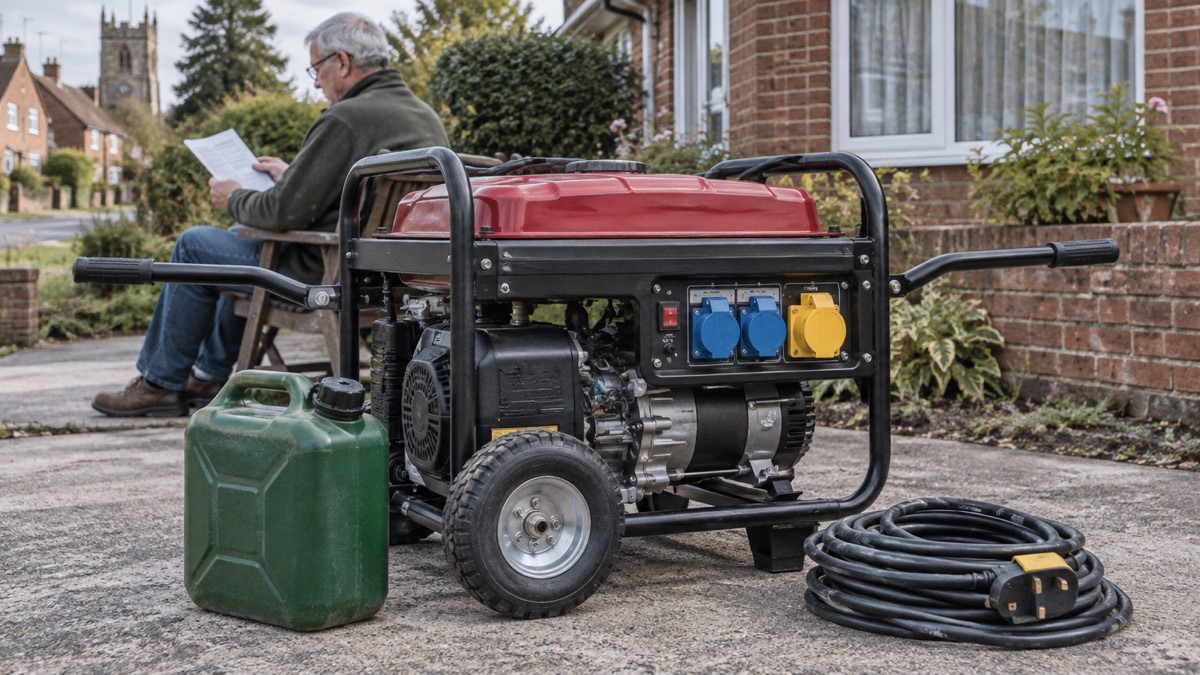
The Champion CPG4000E1 is a petrol generator with a 3000W rated output and a 3750W starting output, built for running appliances rather than wiring into a house1. Champion lists it with a 15.0 litre fuel tank, a run time of up to 12 hours at 50% load, and a choice of recoil or electric starting1. It is a substantial machine at 51.55 kg, so the first decision is not what it can run but where it will stand and who will move it1.
For an ordinary household, the practical questions are simple. What will it actually power? How long will a tank last? How do you start it, and what are the rules that keep your family safe? This page answers those from the maker's own specifications and from the safety guidance that applies to any petrol generator in the UK. It does not rank the machine against others; it sets out what it does and how to use it properly.
The one thing to settle before anything else: a petrol generator must never be run indoors, in a garage, in a shed or in any enclosed or partly enclosed space, because of carbon monoxide. That rule applies to this machine as much as any other, and no feature on the generator removes it.
What the CPG4000E1 is, and what it suits
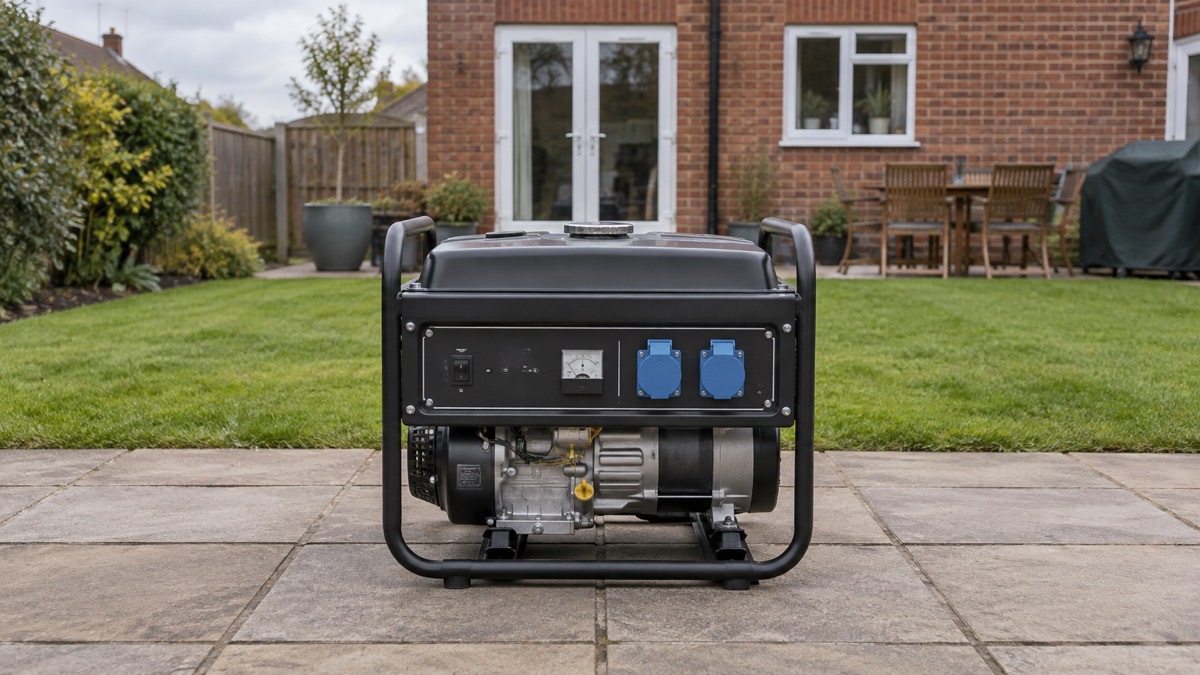
The CPG4000E1 is a frame-type petrol generator with a 224.0 cc engine, listed by Champion at 6.9 hp1. It is a single-phase machine with a power factor of 1.0, and it carries UKCA, EU Stage V and E10 Petrol Compliant certification1. In plain terms, it is a general-purpose outdoor generator for a household that wants to keep a few mains appliances running during a power cut, rather than a small portable unit you would carry in one hand.
Its size tells you what it suits. At 51.55 kg and roughly half a metre in each direction, it is not a machine to lift out of a cupboard mid-outage1. If you are weighing up whether a petrol generator or a battery power station is the better fit for your household, the generators or power stations comparison sets out the trade-offs, and the wider portable generators guide explains the different types.
Champion's own range shows where this model sits. The CPG4000E1 is a dual voltage generator, and the maker notes that dual voltage generators will only give approximately 50 to 60% of the rated output wattage on 120v per socket1. That matters for what you plug into it: plan your loads around the socket you are using rather than the headline rating.
Specifications at a glance
| Specification | Champion's figure |
|---|---|
| Starting output | 3750W1 |
| Rated output | 3000W1 |
| Max watts | 3500W1 |
| Engine | 224.0 cc, 6.9 hp1 |
| Engine speed | 3000 rpm1 |
| Fuel | Petrol, E10 compliant1 |
| Fuel tank | 15.0 litres1 |
| Run time | Up to 12 hours at 50% load1 |
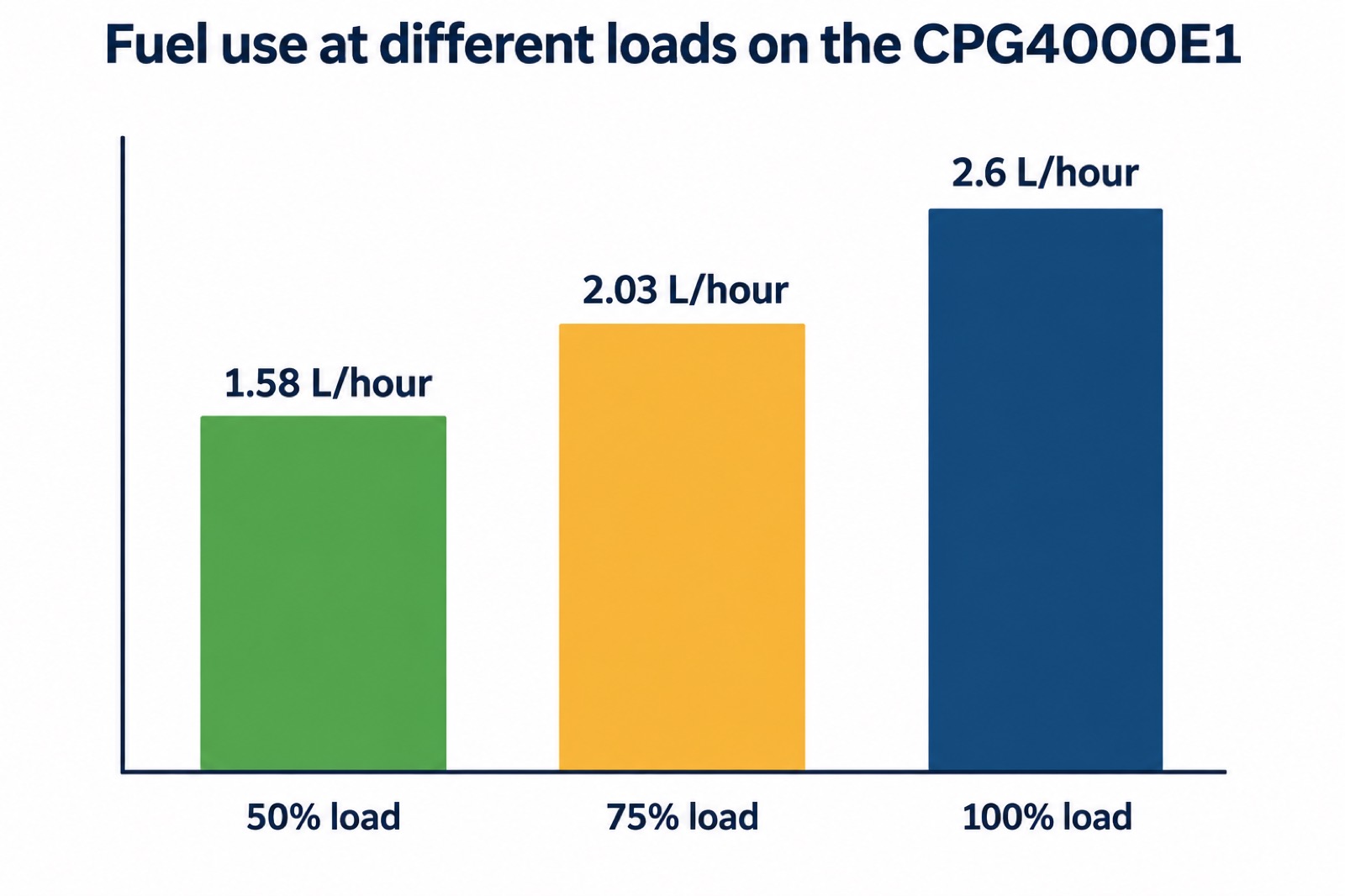
| Fuel use at 50% load | 1.58 L/hour1 |
| Fuel use at 75% load | 2.03 L/hour1 |
| Fuel use at 100% load | 2.6 L/hour1 |
| Oil capacity | 600 ml1 |
| Start type | Recoil, electric1 |
| Outlets | 1 x 120V 16A, 1 x 240V 16A1 |
| DC output | 12 / 8.31 |
| Noise | 68 dBA at 7 metres1 |
| IP rating | IP23M1 |
| Weight | 51.55 kg1 |
| Dimensions | 475 x 615 x 485 mm (HxLxW)1 |
| Warranty | Up to 3 years domestic1 |
Two of these figures need a word of explanation. The 120V outlet is a US-style socket, and Champion notes that dual voltage generators will only give approximately 50 to 60% of the rated output wattage on 120V per socket1. For a UK household, the 240V 16A outlet is the one that matters. The DC output is a low-power charging outlet, not a route to running household appliances1.
What it can power, and for how long
The rated output is the figure to plan around: 3000W continuous, with 3750W available briefly to start appliances that draw a surge, such as a fridge compressor or a pump1. Champion's own fuel figures show how load changes run time. At 50% load the engine uses 1.58 litres an hour and the tank lasts up to 12 hours; at 75% it uses 2.03 litres an hour; at full load it uses 2.6 litres an hour1. The harder you work it, the shorter the tank lasts, and the arithmetic is straightforward: a 15.0 litre tank at 2.6 litres an hour is a much shorter run than the headline figure1.
What that means in practice is that the machine rewards restraint. Run the fridge, the freezer, a few lights and a phone charger, and you are well inside its comfort zone. Add an electric heater, a kettle or a power tool and you climb towards the limit quickly. The watts and watt-hours guide explains how to add up what your appliances draw, and the generator sizing page helps you check whether 3000W is enough for your household. Deciding in advance which circuits matter most is covered in deciding what to keep running.
Starting it: recoil or electric
The CPG4000E1 offers both recoil starting, with a pull cord, and electric starting1. Distributor guidance describes the choice in the same terms: electric or recoil, with a pull cord2. Clarke's guidance on electric-start models explains why the electric option exists: a key or switch makes larger engines easier to operate, but the battery must be kept charged and maintained, and some models keep a recoil starter as a backup3. Honda's own range lists the same two options, recoil start for manual engine start and electric and recoil start for both4.
For this machine, that means the electric start is a convenience, not a guarantee. Keep the starter battery charged as part of your pre-winter checks, and know how to use the pull cord if it is flat. Champion lists both recoil and electric starting for the CPG4000E1, so the pull cord is there as a backup1. The cold weather starting page covers the practical steps, and the winter readiness checklist is a good place to build the habit of test-starting before you need the machine.
Safety: carbon monoxide, fuel and electricity
Every instruction in this section comes from the fire and rescue service, the Health and Safety Executive and the maker's own manual, and the first one is absolute. Never run a petrol generator indoors, in a garage, in a shed, in a conservatory or in any enclosed or partly enclosed space. Carbon monoxide is colourless and odourless, and it kills. The generator safety guide and the carbon monoxide warning signs page set out the symptoms and what to do, and the can you run a generator indoors page answers that question directly.
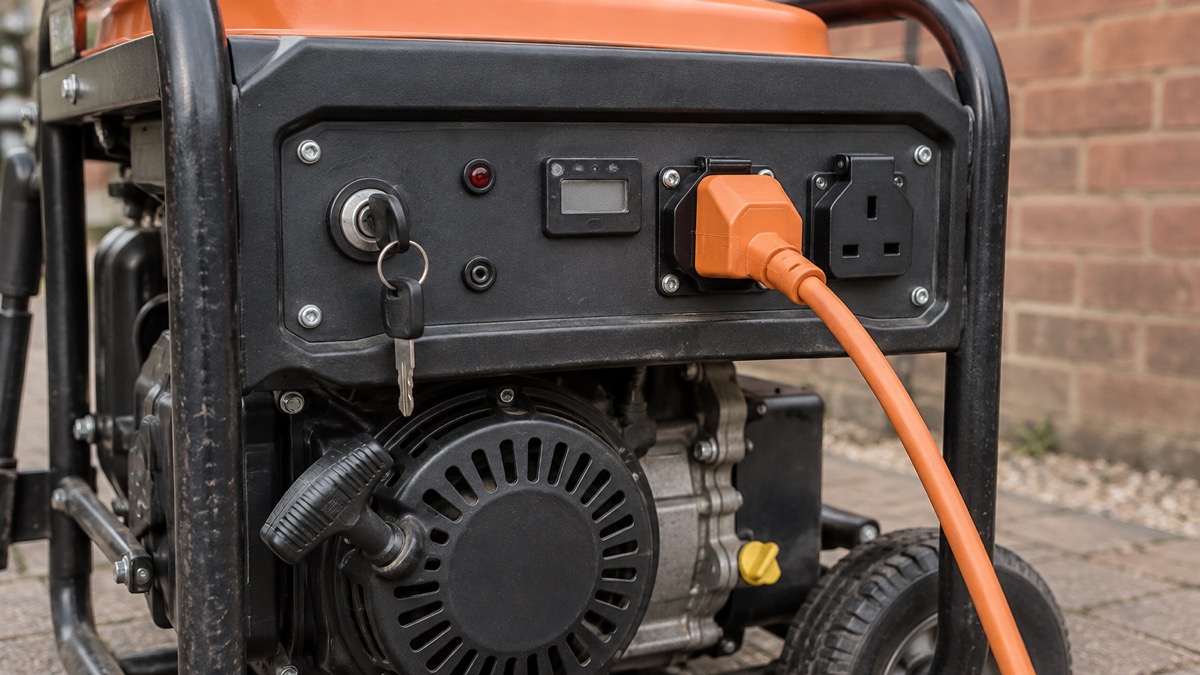
The IP23M rating is worth understanding rather than trusting. The generator in rain page explains the limits, and the safe approach is to keep the machine on dry, level ground, keep leads and plugs out of standing water, and stop it if conditions worsen.
On fuel, Champion lists the CPG4000E1 as E10 Petrol Compliant1. Store petrol only in a proper container, never indoors in a living space, and never refuel a hot engine. The petrol storage page covers how much you can keep at home safely. On electricity, the machine has automatic low oil shutoff, overload protection and an automatic voltage regulator, and Champion lists Volt Guard as fitted1. Those features protect the machine and your appliances, but they do not make it safe to back-feed a house through a socket. Connecting a generator to your home's wiring needs a proper changeover arrangement, covered in connecting to your home's wiring, and extension leads need to be rated for the load, as the extension leads guide explains.
Servicing, storage and the first oil change
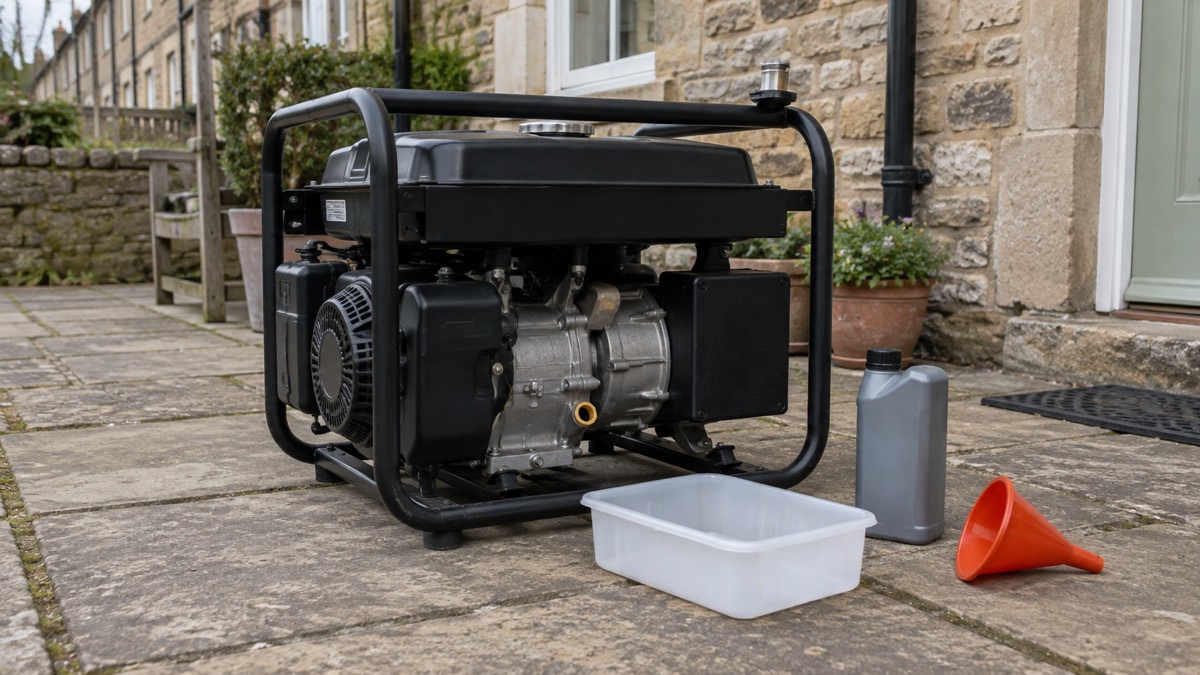
Champion's service schedule for the CPG4000E1 says to change the oil after the first 5 hours of running, during the break-in period1. The same first-5-hours oil change appears across Champion's generator guidance and product pages, so it is a consistent maker instruction rather than a quirk of this model5. The engine holds 600 ml of oil1. Follow the manual for the oil grade and the procedure, and treat the first change as part of commissioning the machine.
After an outage, the machine needs putting away properly. Run the tank down rather than leaving petrol sitting in it, let the engine cool before moving it, and store it under cover and out of the weather. The generator storage page sets out the routine. Champion's warranty terms are also worth knowing before you store it: the warranty is voided if the product is misused, neglected, abused, overloaded beyond the generator's limits, modified, installed improperly, connected incorrectly or used for hire1. That makes correct storage and sensible loading part of protecting your cover.
Warranty and support
Champion warrants the CPG4000E1 to the original purchaser for up to 3 years for domestic usage: year one covers parts and labour, years two and three cover parts only, or 1000 hours, whichever comes first1. The same domestic terms appear across Champion's generator range, and the maker describes a standard 2 year warranty for Warrior Diesel and selected Champion products alongside a 3 year warranty for Champion generator models only8. For industrial and commercial use, the CPG4000E1's cover is year one parts and labour and year two parts only, or 1000 hours, whichever comes first1.
Keep your proof of purchase, and keep a note of the hours you have run the machine, because the 1000 hour limit is a real condition rather than a formality. Champion's service guidance for its generators is a useful reference for routine maintenance5. For the wider Champion range, see the Champion brand page, and for how this machine fits into a household plan, start with the backup power guide and the power cut backup power checklist.
Sources (8)
- Champion CPG4000E1 product page, Champion Power Equipment, 2026-10-25
- Generators buyer's guide, Machine Mart, 2026-10-25
- Generators, Clarke International, 2026-10-25
- Help me choose a generator, Honda, 2026-10-25
- Service guide: inverters, Champion Power Equipment, 2026-10-25
- Champion CPG9000E2 product page, Champion Power Equipment, 2026-10-25
- Champion 3200W petrol generator product page, Champion Power Equipment, 2026-10-25
- Champion 3200 Watt Petrol Generator | Champion Power Equipment, Champion Power Equipment (Winch Solutions Ltd)

 EcoFlow Dual Fuel Generator
 Honda EU70iS Generator
 Honda EU32i Generator
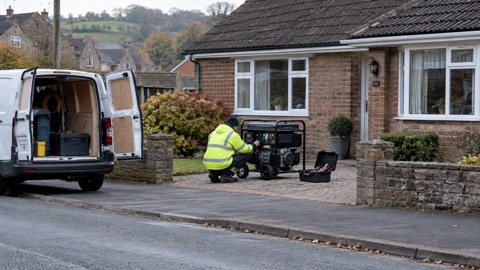 Honda EG3600 Generator
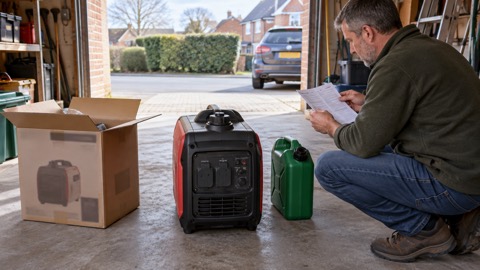 Pramac P3500i Generator
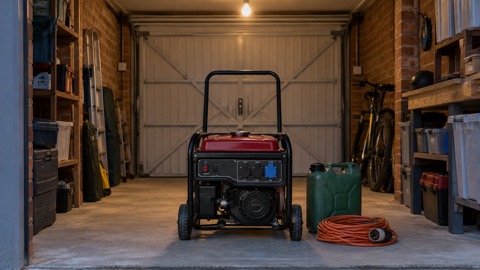 Senci SC6000-II Home Generator
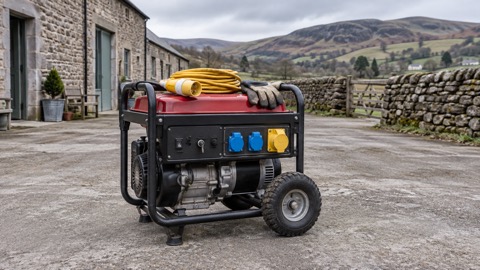 Senci SC10000-II Generator
 Senci SC6600iED Generator
 Gorilla Power GP3800iE
 Gorilla Power GP6500E-DF
 Gorilla Power GP3500i
 Hyundai HY2250Si Generator