Warrior is a maker of diesel generators sold in the UK, and its machines are the kind a household might look at when it wants backup power for a power cut, a storm or a flood. The thing to understand first is the warranty: Warrior states that its diesel generators carry a standard two year warranty without the need to register the purchase1. For home use that is year one parts and labour, year two parts only, or 1000 hours, whichever comes first1.
That cover has conditions that decide whether it is worth anything to you. It applies only to the original purchaser and is not transferable, so a secondhand machine carries no warranty for the buyer1. Without proof of purchase, Warrior states, any warranty claim will be delayed or rejected1. And fitting a transfer switch from anyone other than Warrior invalidates all warranties1.
A generator is also the most dangerous piece of kit a household is likely to buy. The Health and Safety Executive advises that portable generators should never be used indoors or in a confined space, because they produce carbon monoxide2. Read the safety section below before you buy, not after.
What Warrior makes for UK households
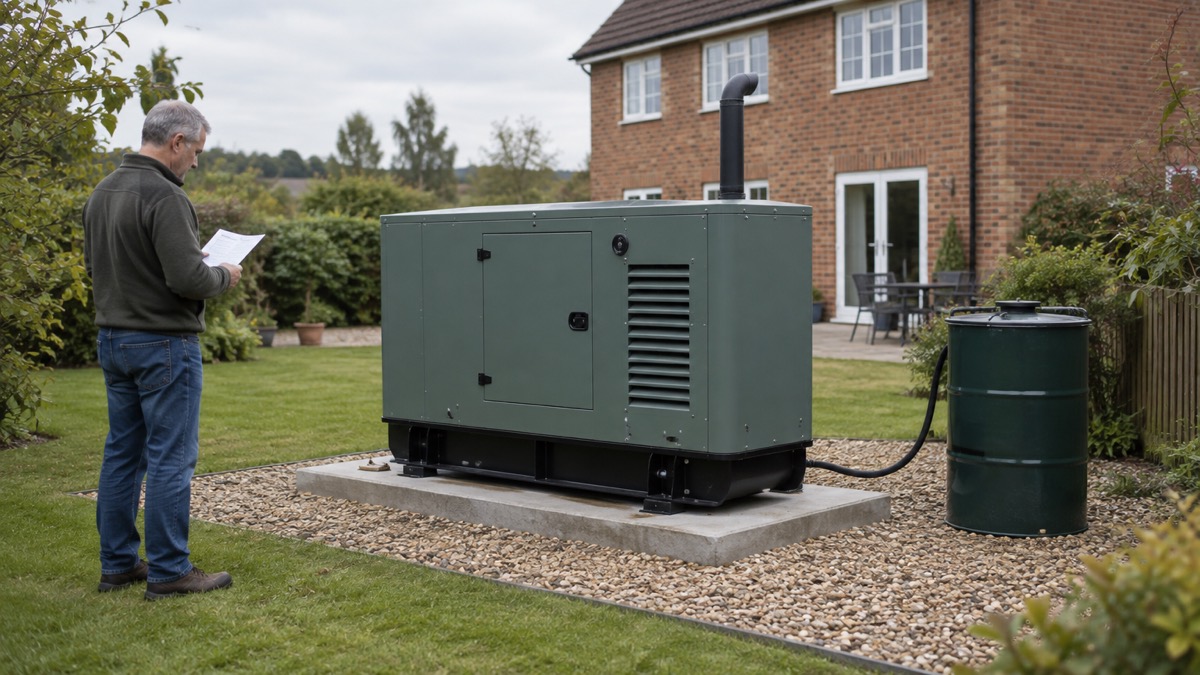
It is a diesel machine with remote starting and overload protection listed among its features1. For a household, that combination matters in an emergency for two reasons: diesel stores for long periods compared with petrol, and a remote start means you are not standing next to the machine to get it going.
The same UK product pages also carry Champion branded generators, and the warranty terms are written to cover both names. Champion states that it offers a standard two year warranty on Warrior Diesel and selected Champion products, and three years on Champion generator models3. The two brands sit under the same warranty document, so the terms below apply to a Warrior diesel machine whichever page you read them on.
If you are weighing up whether a generator belongs in your plan at all, the place to start is the Backup Power at Home: A Household Guide, which sets out what backup power can and cannot do for a household. A generator is one option among several, and it is the one with the most safety conditions attached.
Diesel generators: what they do in an emergency
A diesel generator turns fuel into mains-style electricity for a limited set of appliances. In a power cut it lets you run the things you have decided matter: a fridge or freezer to stop food spoiling, a heater or a fan depending on the season, lights, and charging for phones. It does not restore the whole house unless it is properly connected through a transfer switch by a qualified person, and it only runs as long as you have fuel and can keep the machine serviced.
Two practical points decide whether it works when you need it. The first is where it sits. Wiltshire and Swindon's preparedness guidance asks how you will deploy a generator and answers its own question: it will need to be secure with good airflow4. That means outdoors, fixed so it cannot be moved or tampered with, and not boxed in. The second is load. The Health and Safety Executive advises not to overload a generator, and to limit the wattage of connected equipment to the allowable loading of the generator, referring to the instruction manual2. Check the maker's own instructions for your model before connecting anything, and keep the total load within what they allow.
Keeping it ready between emergencies is its own routine. Fuel has to be stored safely and turned over, the battery has to hold charge, and the machine has to be started and run under load now and then so that it does not fail on the day. The Power Cuts: A Household Guide covers what a household needs during an outage, and the Self-Reliance at Home: Rainwater, Off-Grid Power and Living Without Mains guide covers living without mains power for longer stretches.
Safety: carbon monoxide, load and where the machine runs
Generators kill people through carbon monoxide, and the advice on this is unambiguous. The Health and Safety Executive states that portable generators should never be used indoors or in a confined space, and that they produce carbon monoxide2. That includes a garage, a shed, a porch or a cellar, even with the door open. The gas has no smell and no colour, and it builds up.
Load is the second danger. The Health and Safety Executive advises limiting the wattage of connected equipment to the allowable loading of the generator, as set out in the instruction manual2. Overloading trips the machine at best and damages it at worst, and Warrior lists overload beyond limits among the things its warranty does not cover1.
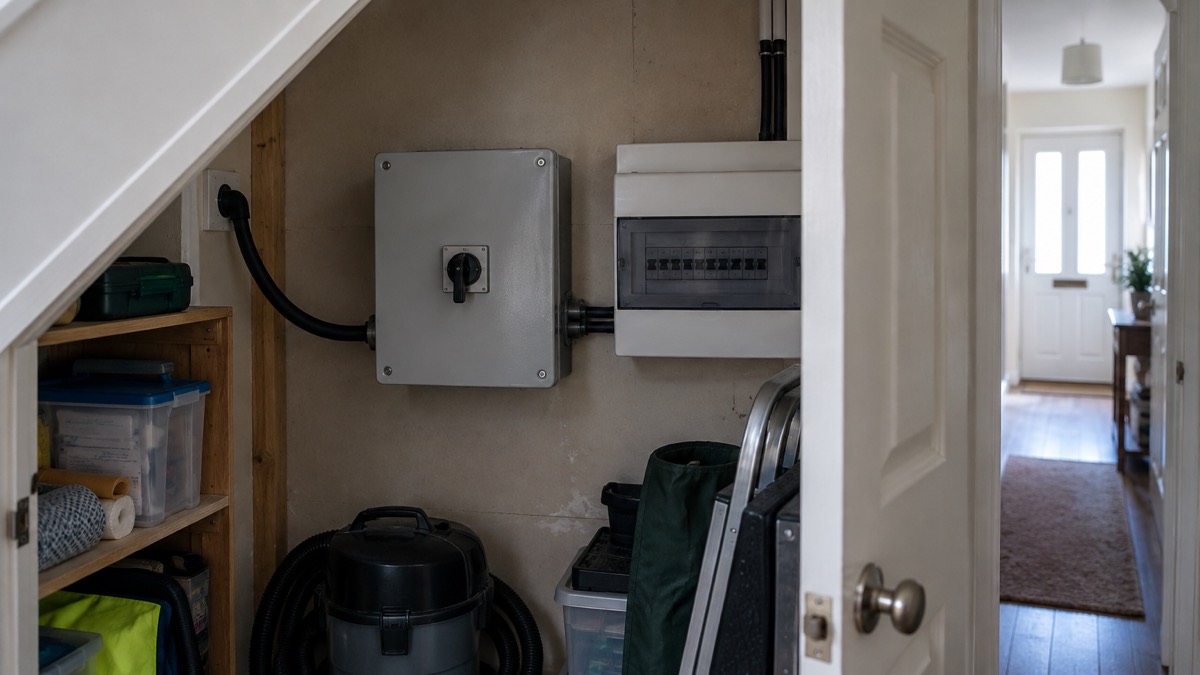
Connecting a generator to a home's fixed wiring is not a DIY job. It needs a transfer switch, and Warrior states that any manual or automatic transfer system other than one it supplies itself will not be considered suitable and will invalidate all warranties, and that you should contact the maker before installing any transfer system1. The maker's own automatic transfer switch is described as not supporting smart guard or solar set up, and its manual mode is recommended only for qualified personnel5. It also has a built in trickle charge unit that keeps the generator battery fully charged when the generator is not in use, which is the sort of detail that decides whether a machine starts after six months in the shed5.
How long the warranty lasts
Warrior's warranty is measured in two ways at once: by calendar time from the original date of purchase, and by running hours. Whichever limit is reached first ends the cover. The maker's product page gives the domestic terms as year one parts and labour, year two parts only, from the original date of purchase or 1000 hours, whichever comes first1.
| Use | Parts and labour | Parts only | Hours limit |
|---|---|---|---|
| Home (domestic) | Year one | Year two | 1000 hours1 |
| Commercial and industrial | One year | None stated | 500 hours1 |
The commercial and industrial terms are shorter: one year parts and labour, or 500 hours, whichever comes first1. If you run a machine at a business premises, or hire it out, expect the shorter cover.
There is a disagreement in the maker's own documents on one point. One product page describes the Warrior diesel warranty as two years for domestic use and one year for industrial and commercial use, or 500 hours1, while another sets out the domestic cover as year one parts and labour and year two parts only, and the industrial cover as one year or 500 hours3. The two agree on the industrial limit and differ on how the domestic two years is split. Ask the retailer which applies to the machine you are buying, and keep the answer with your paperwork.
The 1000 hour limit is worth thinking about in household terms. A generator run for a few hours at a time through occasional outages will not come close to it in two years. A machine run for long stretches during a prolonged outage, or used regularly for other reasons, can.
What the warranty covers and what it does not
The warranty is a defects warranty: it covers faults in materials and workmanship, not wear, damage or the consequences of how the machine was used1. Warrior lists a long set of exclusions, and they are worth reading before you buy because several of them are things a household is quite likely to do.
- Misuse, neglect, accident, abuse, and overload beyond the machine's limits1
- Modification, improper installation or incorrect connection1
- Normal maintenance, and cosmetic defects such as paint and decals1
- Worn parts, including piston and rings, spark plugs and filters1
- Accessory parts, including wheels and recoil assemblies1
- Acts of God1
- Non-original parts and alterations1
- Hoses, reducing valves and regulators1
- Third party electrical equipment1
- Batteries supplied over one year old1
Two of these deserve a plain warning. Improper installation or incorrect connection is excluded, which means a fault traced to how the machine was wired in is your cost, not the maker's1. And third party electrical equipment is excluded, so if a connected appliance damages the generator, the warranty does not answer for it1.
Transfer switches that invalidate the warranty
This is the condition most likely to catch a household out, because it is easy to do the right thing for safety and the wrong thing for the warranty. Warrior states that any manual transfer or automatic transfer systems other than ones supplied by the maker under the Warrior or Champion names will not be considered suitable and will invalidate all warranties, and that you should contact the maker direct before installing any transfer system1.
The practical rule is simple: if you are having a transfer switch fitted, buy the maker's own and tell them before the work starts. The maker's automatic transfer switch has a built in trickle charge unit that keeps the generator battery fully charged even when the generator is not in use, and a manual mode that is recommended only for qualified personnel5. It does not support smart guard or solar set up5, so if you were planning to pair a generator with a solar set-up, that combination is not supported by this switch.
A transfer switch is not optional if you want to power fixed circuits in the house. It is what stops generator power feeding back into the network and endangering the people working to restore your supply. Have it fitted by a qualified person, use the maker's own unit, and keep the installation paperwork with your proof of purchase.
Keeping your proof of purchase and registering the machine
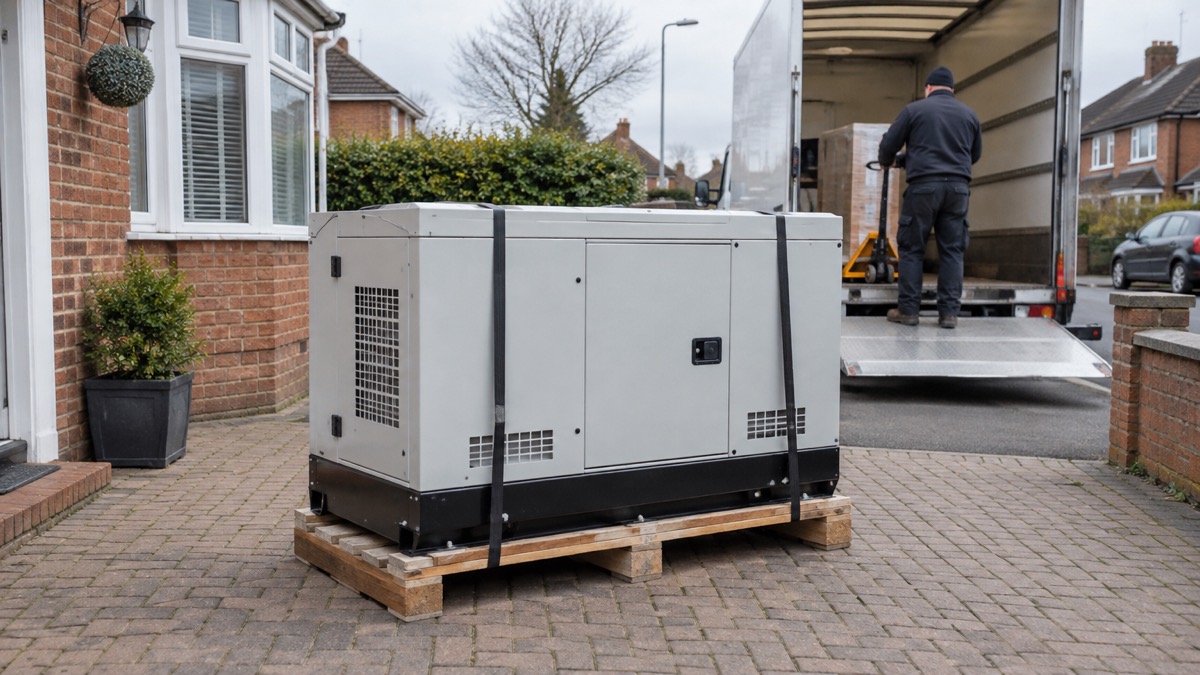
Warrior states that without proof of purchase any warranty claim will be delayed or rejected, and that what is needed is a copy of the original proof of purchase or invoice from the retailer1. Keep it somewhere other than the shed the generator lives in, and keep a photograph of it on your phone. If your home is flooded, the paperwork is as likely to be lost as the machine.
Registration is not needed for the Warrior diesel warranty, which the maker describes as standard without the need for registering your purchase1. Registering is still worth doing where a maker offers it, because it lets the manufacturer contact you if the item is found to be faulty or dangerous7. Fire and rescue services make the same point about appliances generally: register your appliance so manufacturers can contact you about faults or recalls8. If you are registering anything, the details usually needed are the brand name, model, serial number and date of purchase, or as near to it as you can remember9.
If a fire or flood has destroyed your paperwork, warranties and registration documents are held by manufacturers, or you can contact the retailer where you bought the goods11. After a flood, keep a record of all your conversations, receipts and emails12.
Buying secondhand, and what the warranty will not do for you
A used Warrior generator is a machine with no warranty, because the cover applies only to the original purchaser and is not transferable1. That does not make it a bad buy, but it changes what you are doing: you are assessing a machine on its condition, not on a promise. Ask to see it running, check it is complete, and check the hour meter if it has one, because the 1000 hour limit is what would have ended the original cover anyway1.
The same caution applies to anything electrical you buy secondhand. Electrical Safety First advises buying from a reputable retailer rather than a third-party seller online, as it may not have passed all the necessary safety checks13. If you have bought something unsafe, it advises leaving feedback to warn other shoppers, sticking to the facts and making sure any claims are accurate14.
If something goes wrong: exchanges and claims
If Warrior replaces a machine under warranty, the replacement does not come with a fresh two years. The maker states that a unit provided as an exchange will be subject to the warranty of the original unit, calculated by reference to the purchase date of the original unit1. So a machine replaced in month 20 of a two year cover has four months left, not two years.
To make a claim, have the original proof of purchase or retailer invoice ready, describe the fault plainly, and be ready for the maker to ask how the machine was installed and what was connected to it, because those are the questions the exclusions turn on1. If the fault traces to a transfer switch the maker did not supply, or to an overload, or to a connection made by someone unqualified, the claim is likely to fall outside the cover1.
For the wider picture of what to do when the power fails, and how a generator fits alongside torches, batteries and a plan for the freezer, start with Getting Started: Preparing Your Household for an Emergency and the Emergency Kit: What a UK Household Should Keep Ready. For heating and cooking when the mains is off, see Heating and Cooking Without Mains Power or Gas: A Household Guide.
Sources (15)
- Bimson Power 6.25 kVa Diesel Generator - Wireless Start, Champion Power Equipment, 2026-10-25
- Safety tips for using a portable generator in an emergency, Health and Safety Executive Northern Ireland, 2025-01-26
- Champion 2200 Watt Inverter Petrol Generator 110V, Champion Power Equipment, 2026-10-25
- Generators, Wiltshire and Swindon Prepared, 2026-10-25
- Diesel ATS Automatic Transfer Switch, Champion Power Equipment, 2026-10-25
- Champion 3600 Watt LPG Dual Fuel Inverter CPG4000DHY-DF, Champion Power Equipment, 2026-10-25
- Fire safety around the home, Electrical Safety First, 2026-10-26
- Kitchen safety, North Yorkshire Fire and Rescue Service, 2026-03-23
- Register your appliance, Cornwall Fire and Rescue Service, 2026-10-29
- First aid, Electrical Safety First, 2026-10-25
- After fire or flood, Devon and Somerset Fire and Rescue Service, 2020-12-01
- Flood Recovery Information, Devon County Council, 2026-01-29
- Chainsaws, Electrical Safety First, 2026-10-25
- Electrical product safety database, Electrical Safety First, 2026-10-26
- After a flood: flood recovery leaflet, Tewkesbury Borough Council, 2023