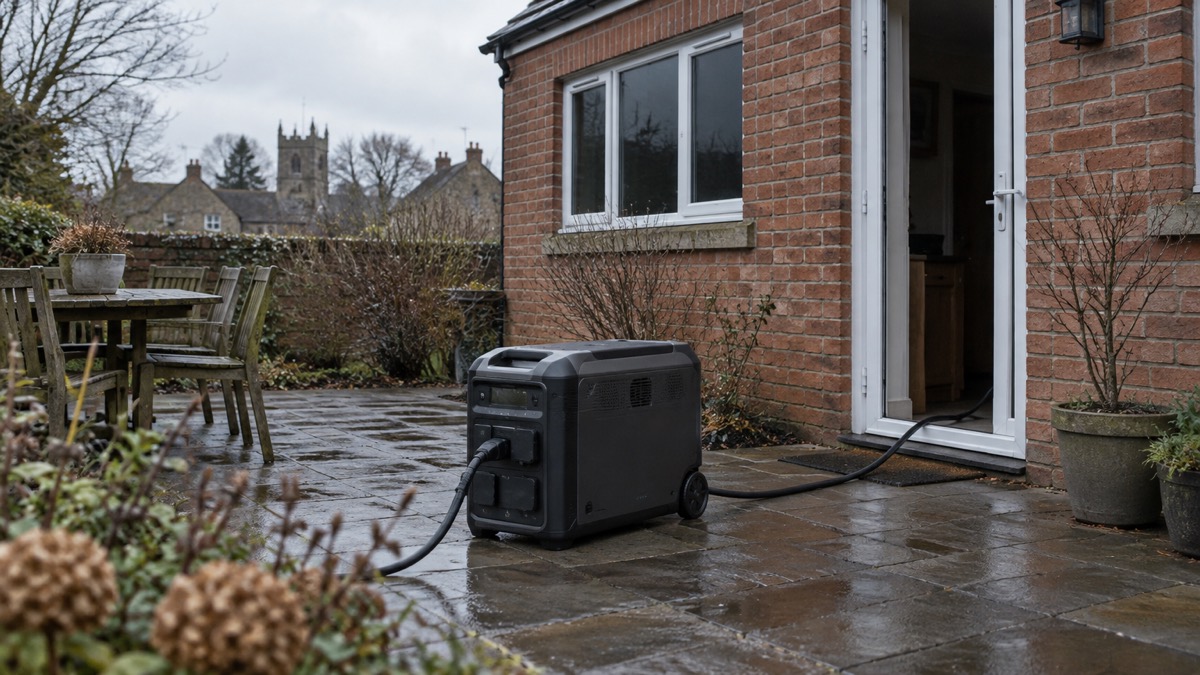
The Jackery Explorer 2000 is a portable power station: a large lithium battery in a carry-case with mains sockets, USB ports and a 12V car socket, charged from a wall socket, a car or solar panels. Jackery sells two versions under this name, the Explorer 2000 Plus and the Explorer 2000 v2, and they are not the same machine. The Plus is the expandable one, with a rated output of 2400W and a peak of 4800W, and capacity that grows from 2 kWh to 12 kWh with add-on packs1. The v2 is a fixed-capacity unit rated at 2200W with a 4400W surge, weighing 17.9 kg2.
For a household, the question is not what the box contains but what it will keep running when the mains goes off. Jackery's own figures put a 520W fridge at 3.2 hours and a 5W light at 160 hours (6 days) on the Plus1. Those numbers are the maker's estimates, and real run time depends on what you plug in and how often it cycles on.
Both models are listed as sold out on Jackery's UK product pages at the time of writing, with the Plus page pointing buyers to a HomePower 2000 Plus v2 as an in-stock alternative3. If you already own one, the sections below cover charging, storage, safety and warranty.
What the Explorer 2000 Plus and v2 actually are
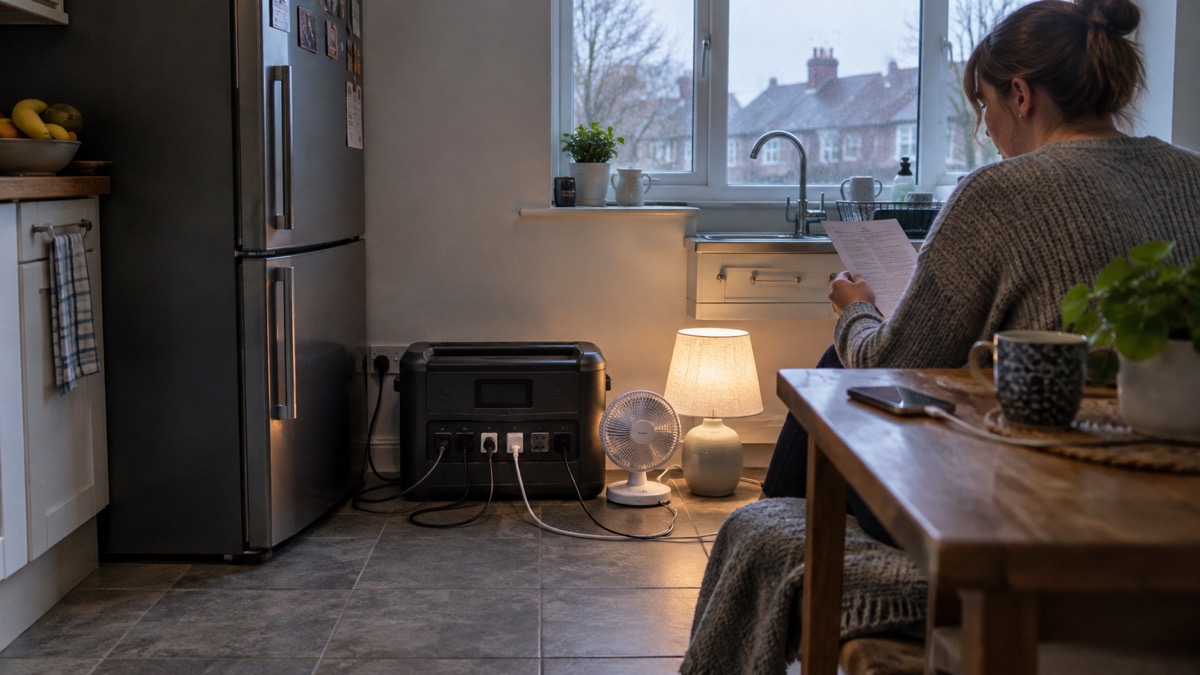
Both units are built around a LiFePO4 battery, the chemistry Jackery uses across this range for its high temperature resistance and stability3. The Plus is the larger, heavier machine of the two, with four AC outlets rated at 20A and a further AC output at 25A, two USB-A ports at 18W and two USB-C ports at 100W, plus a 12V car port3. The v2 is the more portable option at 17.9 kg, with three AC outlets, a USB-A 18W port and USB-C ports at 100W and 30W2.
The difference that matters most for a household planning ahead is expandability. Jackery states that the Explorer 2000 v2 is not expandable2. The Plus is: a single unit supports up to 5 add-on battery packs, taking capacity from 2 kWh to 12 kWh, and two Plus units connected in parallel reach 24 kWh6. Jackery describes the capacity ladder in plain terms: 2 kWh powers one-day camping, 4 kWh powers hours of professional work, and 24 kWh supports 2 weeks of home backup6.
The Plus also supports an EPS mode, which Jackery describes as switching over in 20ms so that appliances such as a fridge or a CPAP machine stay powered during a cut6. The v2's UPS mode is quoted at 20ms or less4. Neither is a substitute for a properly installed home battery, and neither should be wired into your house circuits by anyone other than a qualified electrician; see Connecting a Generator or Battery to Your Home's Wiring for how that works.
Specifications side by side
The two models share a capacity figure but differ on output, ports and weight. Where Jackery's own pages give more than one figure for the same attribute, both are shown.
| Specification | Explorer 2000 Plus | Explorer 2000 v2 |
|---|---|---|
| Battery capacity | 2042 Wh3 | 2042 Wh2 |
| Battery chemistry | LiFePO43 | LiFePO44 |
| Rated AC output | 2400W max1 | 2200W rated2 |
| Surge or peak output | 4800W peak1 | 4400W surge2 |
| AC outlets | 4 x 20A max, plus 25A output3 | 3 outlets4 |
| USB ports | 2 x USB-A 18W, 2 x USB-C 100W3 | USB-A 18W, USB-C 100W and 30W2 |
| 12V output | Car port 12V, 10A3 | Not listed on the specification page |
| Expandable | Yes, 2 kWh to 12 kWh with add-on packs1 | No2 |
| Weight | Not listed on the pages used here | 17.9 kg2 |
| Dimensions | Not listed on the pages used here | 33.5 x 26.4 x 29.2 cm2 |
| Warranty | 3+2 years6 | 3+2 years2 |
Two figures on Jackery's own pages do not agree. The v2's output is given as 2200W rated with a 4400W surge on its product page2, while the power calculator page lists 4400W for the same model7. The Plus capacity appears as 2042 Wh on the product page3 and 2048 Wh in the buying guide1. Treat the lower, rated figure as the one to plan against, and check the label on the unit you receive.
If you are new to the difference between watts and watt-hours, Watts, Watt-Hours and Surge Explained sets out why a kettle and a fridge need very different things from a battery.
What it can power, and for how long
Jackery says the Explorer 2000 Plus will power up to 99% of devices3. That is a broad claim, and the useful detail is in the run-time table the maker publishes for common appliances. These are estimates at the stated wattage, not guarantees.
| Appliance | Wattage | Run time on the Plus |
|---|---|---|
| 5W light | 5W | 160 hours (6 days)1 |
| Refrigerator | 520W | 3.2 hours1 |
| Portable air conditioner | 1000W | 2.33 hours3 |
| Electric pressure cooker | 1080W | 1.7 hours3 |
| Kettle | 850W | 1.9 hours3 |
| Coffee maker | 550W | 2.8 hours3 |
| Electric oven | 800W | 2.1 hours3 |
| Outdoor electric grill | 1700W | 1 hour3 |
| Hand drill | 400W | 3.1 hours3 |
| Angle grinder | Not stated | 4 hours3 |
| Drone | 90W | 45 charges3 |
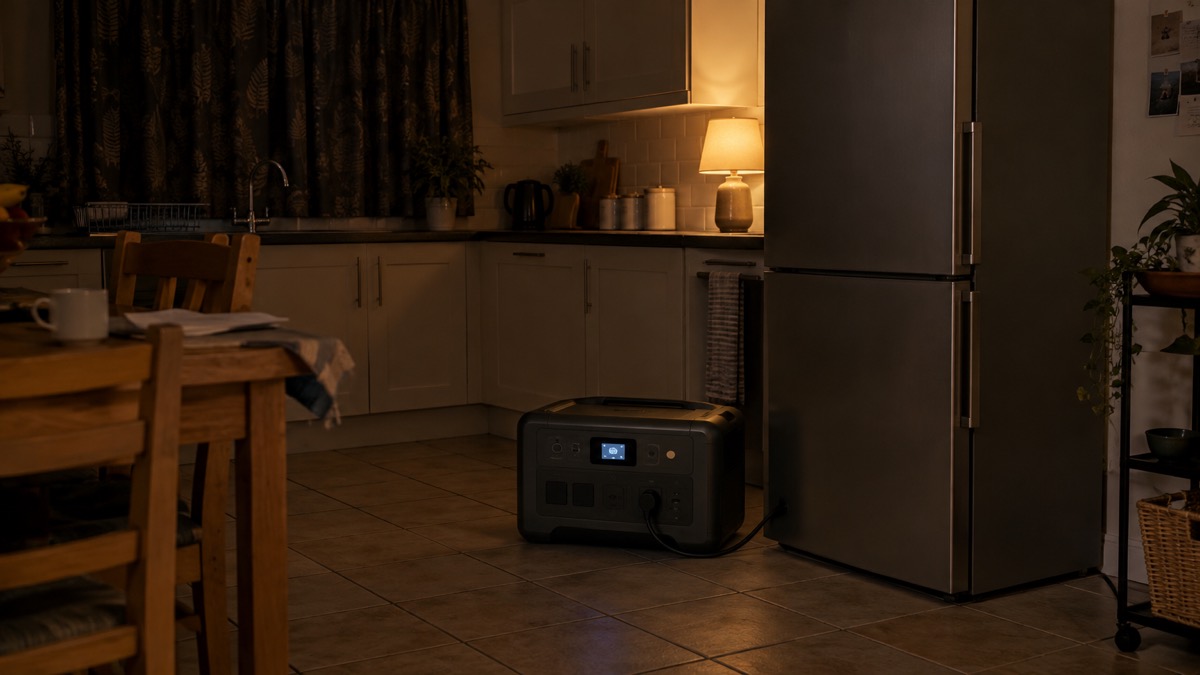
For the v2, Jackery gives 80 charges of a 29W mobile phone and 1.8 hours for a 1120W coffee maker4. The pattern is the same on both: small electronics last for days, heating appliances last for an hour or two, and anything with a heating element will drain the battery fastest.
Two practical points follow. First, a fridge compressor does not run continuously, so the maker's 3.2 hours is a worst-case figure for continuous draw; in practice it may last longer, but do not plan on it. Second, if you want to know what your own appliances will do, use the maker's running time simulator, which accepts appliance wattage up to 2200W on the Plus6 and up to 4400W on the v24. Our guide to how long a power station runs a fridge or laptop explains the arithmetic.
Charging, use and storage
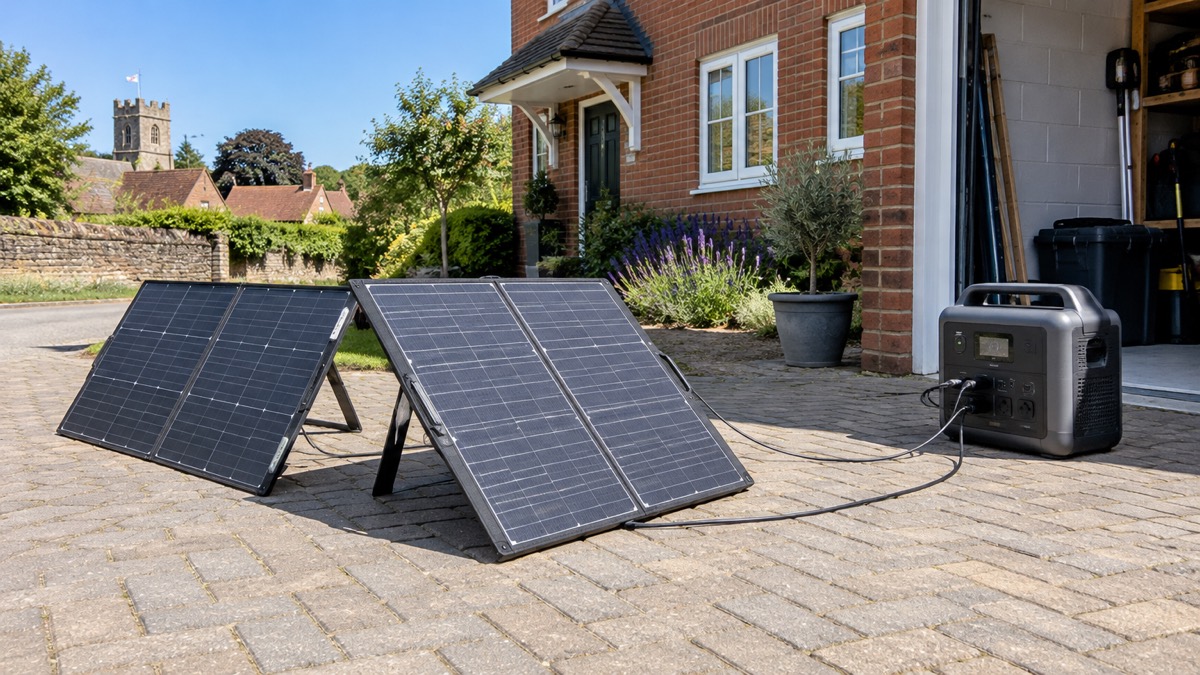
Charging is where the two models differ most in the detail. Jackery gives a wall charge time of about 2 hours for the Plus3 and 2 hours for the v24, though the v2's own specification page also lists a 15-hour figure, so the two figures disagree and you should expect the slower time on a standard UK circuit. Solar charging on the Plus takes about 2 hours with six SolarSaga 200W panels3, and the unit accepts up to six panels at once6. Jackery lists the 80W, 100W and 200W panels as compatible3, and strongly advises against using other brands of solar panel to recharge its power stations, because it cannot guarantee compatibility6.
The Plus has a silent charging mode, activated through the Jackery app, which Jackery says runs at up to 30dB, about library level, and takes 4.5 hours for a full charge3. The v2 runs at 30dB in Quiet Mode and 45dB at full load2. Both support pass-through charging, so you can use the unit while it is plugged in6.
For storage, Jackery says the Plus holds a 50% charge for up to 2 years in standby3, and that 30% of stored power after a year will still leave 20% or more3. The v2 retains about 95% of its charge after 12 months2. Store either unit indoors, within the operating range: -10 to 45°C for the Plus3 and -10 to 45°C discharge for the v2, with charging between 0 and 45°C2. Our guide to storing a power station when not in use covers the routine.
Safety: what the maker says, and what to avoid
Jackery builds a number of protections into both units. The Plus uses ChargeShield, which the maker describes as providing 62 protective mechanisms, 12 protective algorithms and 4 types of physical safety protection3. The v2 carries the same count, plus 12 BMS safeguards4. The Plus is described as 94V-0 fireproof and meeting UL2743 certification requirements3. The v2's battery is rated for 4000 cycles to 70% or more capacity2, and the Plus for 4000 full charge cycles with about 70% of original capacity remaining6.
Beyond the maker's own warnings, the general rules for lithium batteries apply. Do not charge a unit in freezing conditions; the v2's charging range starts at 0°C2. Do not block the vents or charge on a soft surface. If a battery swells, overheats or smells unusual, stop using it and follow our guidance on warning signs a lithium battery is dangerous and what to do if a lithium battery catches fire. For a wider grounding in safe charging at home, see Lithium-Ion Battery Safety at Home.
The v2 also has a low temperature protection kit for winter conditions4, and an energy saving mode that you switch on by long-pressing the AC button and the main power button until the icon lights up4. Both are worth knowing before the first cold snap.
Support and warranty
Jackery offers a 3+2 year warranty on the Explorer 2000 v22 and on the Explorer 2000 Plus, with a 5-year total including a 2-year extension for orders placed on the Jackery website6. For Amazon orders, the extra two years requires registering at support.jackery.com/extend-warranty6. The warranty applies only to customers who buy from the official Jackery website, Jackery-branded third-party platforms or authorised dealers2.
Refurbished units are different. Jackery gives a 6-month warranty on every refurbished product5, and a 30-day money-back period on the refurbished Plus5. Refurbished stock is also listed as sold out5.
For support, Jackery's European contact address is hello.eu@jackery.com9. The v2 is quoted with an 11+ year lifespan backed by a 5-year warranty2, and the Plus with a battery lifespan of up to 10 years even if used once a day6. Those are the maker's projections, not guarantees.
If you are weighing up whether a power station is the right kind of backup for your home at all, our portable power stations guide and the comparison of a power station or a petrol generator for a power cut set out the trade-offs. The Jackery brand page lists the other models in the range.
Sources (9)
- Jackery buying guide, Jackery, 2026-10-25
- Explorer 2000 v2 product page, Jackery, 2026-10-25
- Explorer 2000 Plus product page, Jackery, 2026-10-25
- Solar Generator 2000 v2 with 100 Mini product page, Jackery, 2026-10-25
- Explorer 2000 Plus (Refurbished) product page, Jackery, 2026-10-25
- Solar Generator 2000 Plus product page, Jackery, 2026-10-25
- Jackery power calculator, Jackery, 2026-10-25
- Explorer 2000 v2 (Refurbished) product page, Jackery, 2026-10-25
- Jackery Explorer 1000 v2 user manual, Jackery, 2024

 BLUETTI Apex 300 Power Station
 BLUETTI Elite 100 V2
 Anker SOLIX C2000 Gen 2
 Anker SOLIX C1000 Power Station
 EcoFlow DELTA Pro
 BLUETTI Elite 400
 Anker SOLIX C300 Power Station
 EcoFlow DELTA 3
 EcoFlow DELTA 2 and DELTA 2 Max
 EcoFlow DELTA and DELTA Max
 EcoFlow RIVER 3 and RIVER 3 Plus
 EcoFlow RIVER 2 and RIVER 2 Max