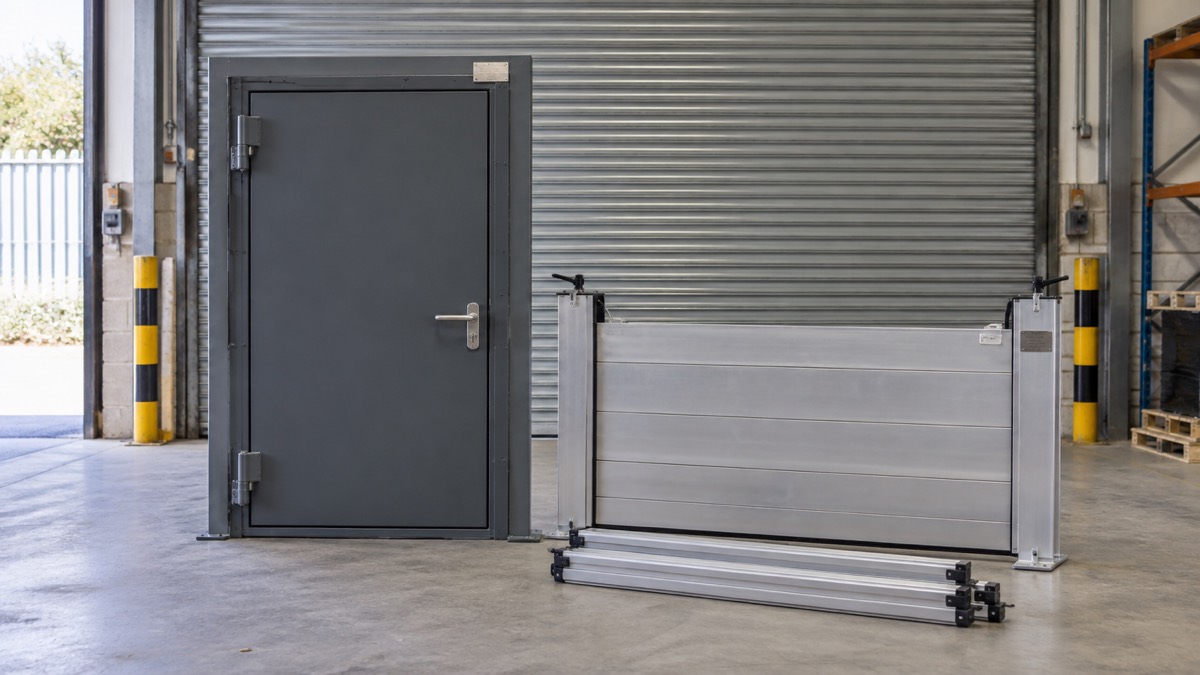
When you spend money on flood protection for your home, the question that matters is simple: will it actually work on the night? Natural Resources Wales gives the answer in one line of official advice: "Choose BSI kitemark certified flood protection products that meet the British standard for quality and safety"1. The same guidance carries a warning worth reading twice: "Installing the wrong flood protection products could mean they are ineffective, or even cause more damage in a flood"2.
This page explains what that Kitemark means, what the underlying standards cover, how to check that a certificate is genuine before you part with money, and how certified products fit into the wider approach known as property flood resilience. It also covers the products you will see most often, flood doors and floodguards, and what to do when the flood has already happened and the drying out begins.
Choose flood products with a BSI Kitemark
The BSI Kitemark is a certification mark of the British Standards Institution, and it appears on products that have been tested and assessed against a standard by an independent body. You will recognise it from other household safety purchases. The Scottish Fire and Rescue Service tells people buying portable gas or paraffin heaters to "buy a heater that carries the BSI kitemark"6, and North Wales Fire and Rescue Service advises: "Only buy blankets that carry the BEAB Approved mark or a British Standard Kitemark"7. The same principle, that an independent body has checked the product against a published standard, is what Natural Resources Wales applies to flood protection1.
For flood products the stakes are higher than for most household purchases, because a failure only reveals itself when water is at the door. Natural Resources Wales is explicit that installing the wrong products could make them ineffective or cause more damage2. A barrier that does not seal, or that directs water into a weaker part of the building, can leave a household worse off than no barrier at all.
There is also a financial reason to insist on certification. The Scottish Environment Protection Agency (SEPA) notes that "some insurers may require flood defence products to be industry-approved and certified"4. A certificate can therefore matter twice: once for the product's performance, and again when you insure the home. Our page on home insurance in a flood risk area and Flood Re covers the insurance side in more detail.
A practical way to think about it:
- The Kitemark tells you the product was tested against a British standard for quality and safety by BSI, an independent body1.
- It does not tell you the product suits your home. That depends on the type of flooding, the building and how the product is fitted, which is where a survey helps8.
- It does not cover every product on the market. Many products are sold without it, and directories list them alongside certified ones2.
What the standard covers: from PAS 1188 to BS 851188
Flood protection products in the UK have been tested under a family of standards known as PAS 1188, and the Kitemark scheme for flood products has operated against it for many years. BSI Kitemark PAS 1188-1:2003 accredited floodguards were being commissioned and installed as long ago as 2017, after the buyer at that time found a lack of high quality accredited products on the market. That history tells you two useful things: the Kitemark scheme for flood products is long established, and products certified to older versions of the standard are still in service in real homes.
The standard has since been developed into a full British Standard, BS 851188. At least one manufacturer, Lakeside Flood Solutions, states that its door flood barrier is "Certified to new British Standard BS 851188 and Approved for use under Environment Agency 2018 Framework Specification"3. The Environment Agency framework approval is a separate, additional assurance that the product has been accepted for use under that agency's framework, which is the route through which public flood defence work is procured.
What does this mean when you are buying? Ask any supplier two questions:
- Which standard is the product certified to? A product certified to the current BS 851188 meets the standard as it stands today; a product certified to an older PAS 1188 version was tested against the standard as it then stood.
- Who certified it, and can I see the certificate? The Kitemark is issued by BSI, and a genuine certificate can be checked with the certifier2.
The government's own flood preparation guidance supports the approach: getting flood protection products, for example flood doors or self-closing air bricks, reduces flood damage9. Certification is how you know the product you are buying has been independently tested rather than simply marketed. For the products themselves, see our pages on door flood barriers and flood doors and flood windows.
How to check a Kitemark certificate is genuine
The starting point for most households is the National Flood Forum's Blue Pages. The Greater London Authority describes it plainly: "Blue Pages provides a directory of property flood products and services to help reduce the risk of flooding to your home"10. The government's flood preparation guidance also directs households to "find flood protection products and services at Blue Pages"9, and Suffolk Fire and Rescue Service notes that information on purpose-made flood protection products is published there11.
But a directory listing is not a certification, and Natural Resources Wales gives a warning that every buyer should heed: "Not all products listed on the blue pages are BSI Kitemark certified products"2. The Blue Pages exists to help you find products and services; the Kitemark tells you a specific product has been independently tested. Those are two different things, and conflating them is the most common mistake households make.
A sensible checking routine before you buy:
- Find the product on the Blue Pages or through a supplier10.
- Ask the supplier which standard the product is certified to, and by whom.
- Ask for the certificate details and verify them with the certifier.
- Check the certificate covers the exact model and size you are buying, not just the product range.
- Keep a copy with your household flood plan.
The same discipline applies to other safety purchases around the home, and official bodies apply it consistently. Peterborough Trading Standards advises motorbike helmet buyers to make sure the helmet "carries the BSI Kitemark" alongside the relevant standard labels, precisely because marks can be copied or misapplied. The same advice runs through household appliances: buyers are told to "check for British or European safety marks" on washing machines and tumble dryers12. Where a mark matters, verifying it matters too.
Claims of equivalence without independent testing
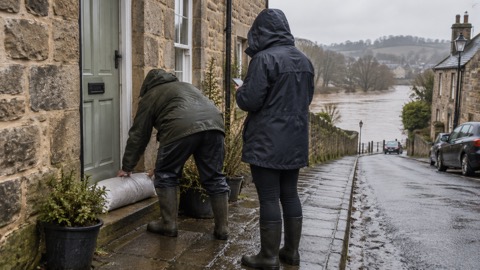
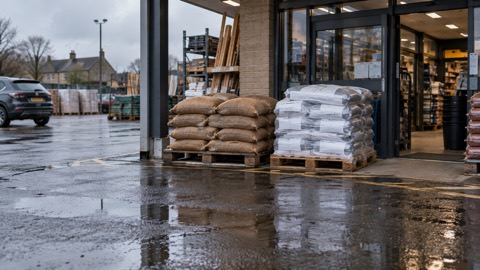
Not every product sold for flood protection has been independently tested, and some of the most familiar options are the least effective. Nottinghamshire County Council's flood advice is blunt about sandbags: "They are relatively ineffective when compared to purpose-designed flood protection products. They are of no use if the property is already flooded"5. Sandbags have a role, and our page on sandbags and sandless alternatives explains how to use them properly, but they are not a substitute for a certified barrier.
Between sandbags and certified barriers sits a range of products marketed as modern equivalents. Westminster City Council notes that households can use "Floodsax: self-inflating, sand-less sandbags made of absorbent materials"13. Products of this kind may have a genuine use, but the question to ask is the same one you would ask of any barrier: has it been independently tested, to which standard, and can I see the certificate? Absorbent bags and certified barriers are compared on our page sandbags or absorbent bags at a doorway.
Be wary, too, of endorsements by association. A Derbyshire County Council property flood resilience publication states its policy plainly: "None of the products or interventions shown can be endorsed. When purchasing resilience products, it is advised that the" products should have reached the required standards14. In other words, appearing in an official case study or guidance document is not itself a certification. The only thing that certifies a product is a certificate from a certifying body, checked against the product you are actually buying.
Kitemarked flood doors, floodguards and the products themselves
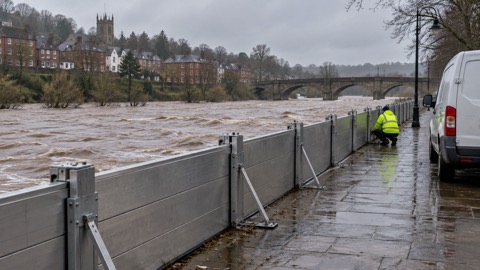
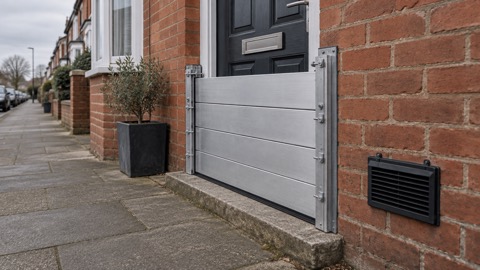
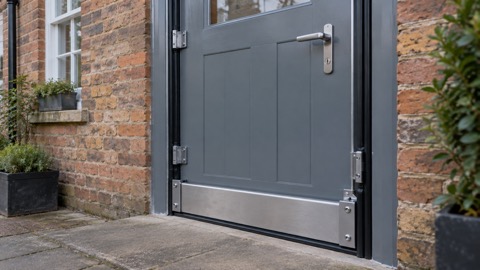
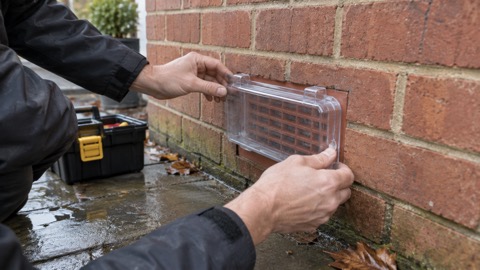
The range of certified and purpose-designed products is broader than many households expect. The Greater London Authority lists "sealable air bricks, flood doors, demountable flood barriers and flood boards"10. The Met Office adds that "floodboards can be fixed to your doors and windows" and that plastic covers can seal airbricks15. West Yorkshire Prepared lists flood gates, flood sacks and specialist doors and seals for airbricks16. Natural Resources Wales gives examples including flood doors, air bricks and hydrosacks, and makes a distinction that matters for planning: "Some flood protection products can be in place permanently, while others need to be installed when flooding is expected"1.
| Product | What it does | When it is in place |
|---|---|---|
| Flood door | Replaces an ordinary external door and keeps water out | Permanently1 |
| Self-closing or sealable airbrick | Stops water entering through wall vents | Permanently or fitted in advance10 |
| Demountable flood barrier | Clips or fixes across a doorway when flooding is expected | Fitted when a warning is issued10 |
| Flood board | Fixed to doors and windows to block openings | Fitted when needed15 |
| Flood gate | Hinged barrier at a doorway | Permanent or deployed on warning16 |
| Hydrosack or flood sack | Absorbent bag placed at openings | Deployed when flooding is expected1 |
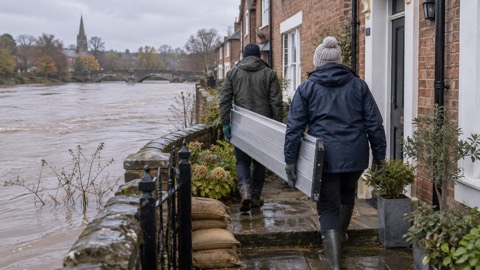
That permanent-versus-deployed distinction should shape what you buy. A permanent flood door protects a household that may not receive much warning, such as one at risk of flash flooding. A demountable barrier suits a household that receives flood warnings and has someone at home to fit it. SEPA's community flooding guide notes that installing products such as airbrick covers or flood barriers "could help to reduce overall damage and the amount of silt and mud that enters your property"17, and Croydon's flood evacuation checklist includes fitting flood boards, airbrick covers and sandbags as part of the response when flooding threatens18. Public health guidance for frontline responders lists flood doors, barriers, gates and walls as resistance measures that can be installed to keep water out19.
Real households have used Kitemarked products with grant support. In a Derbyshire case study, a homeowner in Todmorden used a government £5k grant to buy 2 Kitemarked flood doors14. Our page on property flood resilience grants explains how such grants work, and door barriers or flood doors for a home compares the two approaches.
Property flood resilience: the wider code of practice
Certified products work best as part of a planned approach, and that approach has a name: property flood resilience, or PFR. Argyll and Bute Council explains that "PFR provides property owners with practical and cost-effective measures to help reduce flood risk, through identifying products appropriate for the type of flooding, the property and the needs of owners", including barriers on windows and doors, non-return valves, automatically closing airbricks and pump systems for groundwater flood risks8. Cambridgeshire County Council publishes an introduction described as "A guide to the different types of property flood resilience measures that could help protect your home or business"20.
PFR has two halves, and public health guidance sets them out: "resistance (keeping water out) and recoverability (adapting the property to reduce damage from water entry)"19. Resistance is the certified barrier at the door. Recoverability is the work that means less damage when water does get in. Central Bedfordshire Council describes PFR measures as "both cost-effective and easy to implement, providing homeowners with more control over managing flood risk", and encourages property-level protection that goes beyond sandbags, such as flood barriers and water-activated flood bags21.
Why does this matter to a household choosing products? Because the right product depends on the diagnosis:
- The type of flooding determines the measure. Groundwater risk calls for pump systems; sewer flooding calls for non-return valves; surface water at the door calls for barriers8.
- The property determines what can be fitted.
- The owners' needs matter too.
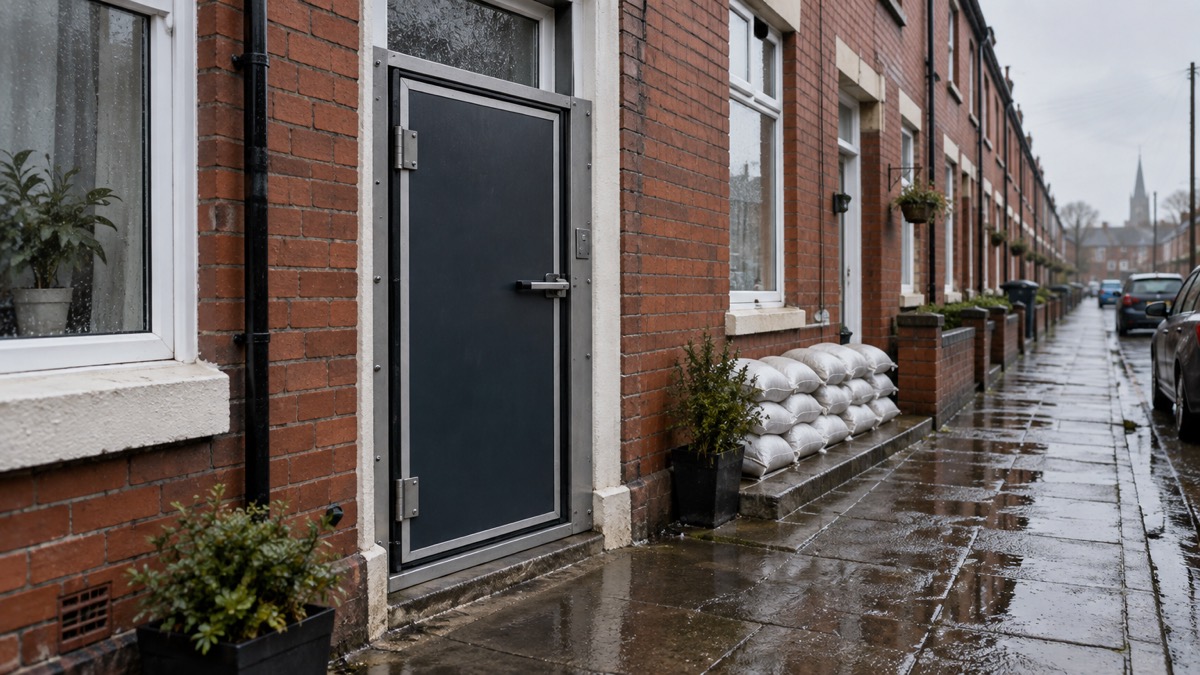
Local resilience forums and fire services encourage households in this direction. Wiltshire and Swindon Prepared advises those in high-risk areas to consider investing in property-level flood protection products such as flood gates or barriers22, and North Yorkshire Fire and Rescue Service advises households liable to flooding to "Investigate property flood resilience options"23. Water companies have also invested at property level: between April 2019 and March 2020 they invested £2 million in property-level protection and mitigation measures to reduce the likelihood of sewer flooding24.
A professional survey is the recommended route, and our page on property resilience surveys and professional installation covers it in detail. Case studies show what a planned approach looks like in practice. One Lancashire household installed wall-mounted fires, wall cupboards, brickwork sealed with special cement, flood doors, interlocking waterproof flooring, sealed pipes and 100 absorbent packs placed around the house which swell up and block water, and formed a local flood action group14. Another installed self-closing airbricks, flood barriers to both doors, non-return valves to the washing machine and dishwasher, and plug sockets higher up the wall14. Those are recoverability and resistance working together.
Drying out and recovering a water-damaged home
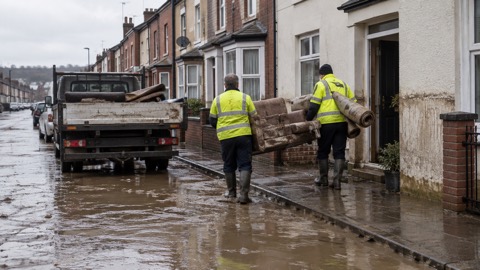
Standards and certification also have a place after the flood, in the recovery and drying out of a water-damaged home. Specialist companies can be hired to dry out a property; the London Fire Brigade advises searching for "flood recovery service near me" and checking with your insurer or landlord whether the work is covered25. Choosing a firm with recognised credentials matters here as much as choosing a certified barrier, because drying out done badly leads to mould and long-term damage. Our page on drying out a house with dehumidifiers covers the practical side.
Safety comes first while cleaning up. Derbyshire County Council advises that you "cover open cuts and wounds on exposed skin with a waterproof plaster"26, and that appropriate personal protective equipment, gloves and a disposable plastic apron of the kind available from DIY stores, should be worn when using cleaning products, following the manufacturer's instructions correctly26. Northern Ireland's nidirect guidance repeats the same instruction on covering open cuts and wounds27.
A short recovery checklist:
- Cover open cuts and wounds with a waterproof plaster before any contact with floodwater or cleaning26.
- Wear gloves and a disposable plastic apron when using cleaning products, and follow the manufacturer's instructions26.
- Consider hiring a specialist drying company, and check with your insurer or landlord whether it is covered25.
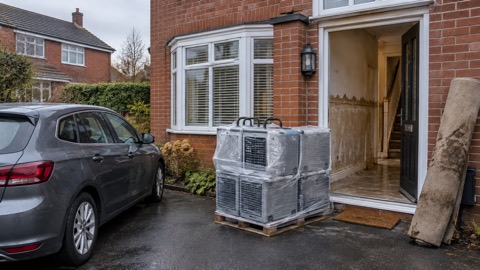
- Record what was done, and what was spent, for any insurance claim.
That is the logic of the whole standards story. A Kitemarked product is independently tested to keep water out; recoverability measures are chosen so that if water gets in anyway, the home recovers quickly. Both are decisions made calmly in advance, not on the night of the flood.
Where to get help and more information
Help is available at every stage, and it differs between the nations. In Wales, check flood warnings on Natural Resources Wales and get advice on what to do before and after a flood from the same service28. Its flood warning service covers floods from rivers and the sea, and reaches around 90% of the properties at risk of flooding from rivers or the sea in Wales29. The warning tells you the type of flood warning, the location affected, the expected timing and the action to take29. Our page on Wales: Natural Resources Wales warnings and risk maps covers this in full.
In England, the government's flood preparation pages cover protecting your property9. nidirect's preparing-for-a-flood page covers preparing for a flood for Northern Ireland households30.
For insurance, Flood Re offers affordable insurance to homes identified as at risk of flooding31. Our pages on checking your home's flood risk by postcode, making a household flood plan and protecting your home: resistance and resilience measures take the subject forward from here.
Sources (31)
- Preparing for a flood, Natural Resources Wales, 2026
- Preparing for a flood, Natural Resources Wales, 2026
- Door flood barrier, Lakeside Flood Solutions, 2026
- Flooding FAQs, Scottish Environment Protection Agency, 2026
- Flooding before, during and after: frequently asked questions, Nottinghamshire County Council, 2026
- Heating and gas, Scottish Fire and Rescue Service, 2024
- Electric blanket safety, North Wales Fire and Rescue Service, 2026
- Property flood resilience questions and answers, Argyll and Bute Council, 2026
- Protect your property, GOV.UK, 2026
- How to prepare for flash flooding, Greater London Authority, 2026
- What to do in a flood, Suffolk Fire and Rescue Service, 2026
- Student Fire Safety - South Wales Fire and Rescue Service, South Wales Fire and Rescue Service
- Plan and prepare for floods, Westminster City Council, 2026
- Property flood resilience case studies, Derbyshire County Council, 2024
- Protecting your property from flooding, Met Office, 2026
- Flooding, West Yorkshire Prepared, 2026
- Flooding guide for communities, Scottish Environment Protection Agency, 2026
- Flood evacuation checklist, Croydon Council, 2025
- How to prepare for flooding, GOV.UK, 2023
- Community flood group resources, Cambridgeshire County Council, 2026
- Homeowner flood protection responsibilities and prevention tips, Central Bedfordshire Council, 2026
- Prepare for potential flooding, Wiltshire and Swindon Prepared, 2026
- Advice for those at risk of flooding, North Yorkshire Fire and Rescue Service, 2023
- Flood and coastal erosion risk management report 2019 to 2020, GOV.UK, 2019
- After a flood, London Fire Brigade, 2026
- Cleaning up and returning home after flooding, Derbyshire County Council, 2026
- After a flood: clearing up, nidirect, 2026
- Flood warnings and help, Welsh Government, 2026
- Sign up to receive flood warnings, Natural Resources Wales, 2026
- Preparing for a flood, nidirect, 2025
- Before, during and after a flood, Scottish Environment Protection Agency, 2026
 Flood Warning Checklist
 First Steps After a Flood
 Insurance Claim Records
 Checking Flood Risk by Postcode
 Types of Flooding
 Flood Alerts and Flood Warnings
 Flood Guidance Statement
 Wales Flood Warnings and Maps
 Making a Household Flood Plan
 Protecting Your Home
 Door Flood Barriers
 Sandbags and Alternatives
 Flood Doors and Windows
 Airbrick Covers
 Non-Return Valves and Bungs