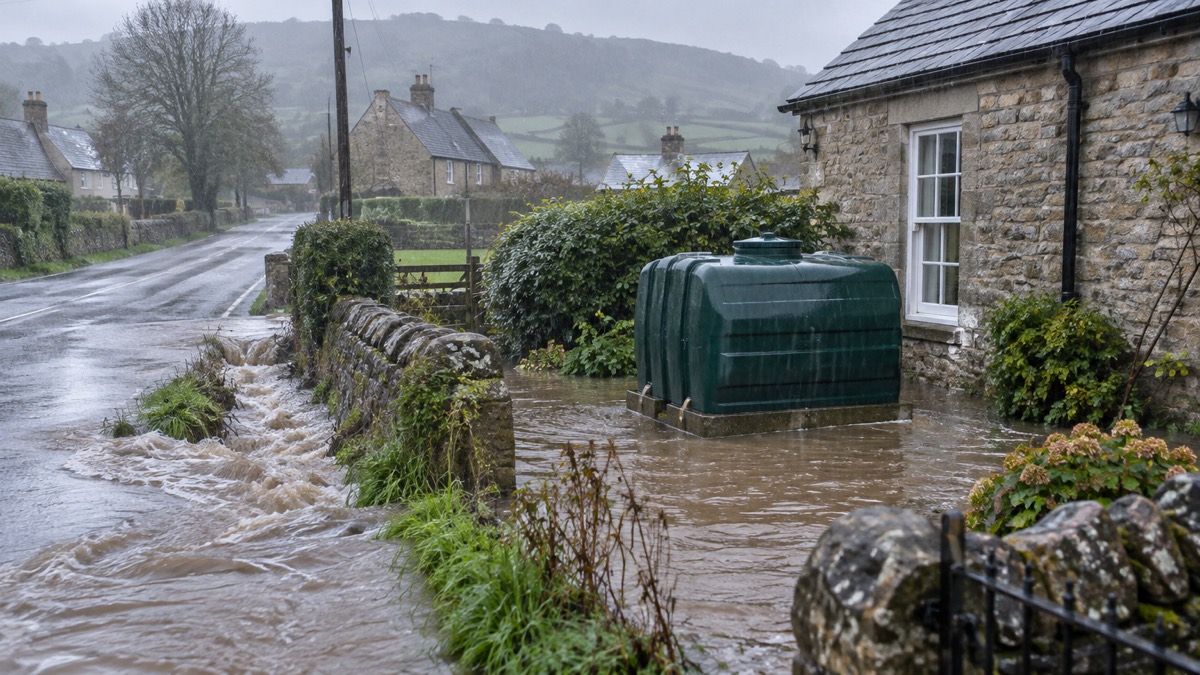
If you heat your home with oil or LPG, your tank or bottles are the part of the property most exposed to floodwater. A tank can float, tilt or be pushed off its base; bottles can be submerged or swept away. The first thing to do is make a plan before water arrives, because official advice is clear that you should not wait until a flood happens to make these plans, as there may not be enough time to prepare fully1.
If a tank or set of bottles does go under water, call your supplier. Official guidance is to contact your utility suppliers after a flood, because they may need to check gas, electricity and water supplies for safety2. For an oil tank, get help from your insurer and your oil supply company3. If a leak could reach a stream, pond or other water supply, call the Environment Agency4.
After the water has gone, do not switch anything back on until it has been checked. Have your gas or oil central heating checked by a qualified person before switching on the gas or trying to light any appliance5. The sections below set out what to plan, what to check, and who to call.
Make a flood plan for your oil or LPG tank before water arrives
Being prepared and having an emergency plan in place is the core advice for anyone with an oil storage tank6. The Met Office's heavy rain guidance is to check if your property is at risk of flooding, and if it is, to prepare a flood plan and an emergency flood kit7. To plan for a flood, check your risk from rivers or the sea and from surface water8; our guide to checking your home's flood risk by postcode explains how.
A household flood plan should include a checklist to help you decide what you need to do before a flood, such as listing which belongings, electrical items or furniture you would want to move to safety, and what you would want to take with you if you had to evacuate9. For a tank, that means deciding in advance where the supplier's number is kept, who will check the tank, and what you will do if the tank itself is surrounded by water. Our guide to making a household flood plan covers the wider household side.
As a flood approaches, the practical steps are the same as for any home. Turn off gas and electricity or move important items to a safe place before a flood happens10. Two days before, monitor flood warnings and weather forecasts, start your grab bag, charge phones, power banks and torches, move important items upstairs, and check on neighbours or vulnerable people11. Check that your household insurance cover is adequate and up to date, and make sure it covers oil leaks or spills4.
What to check on the tank itself, and the signs of damage
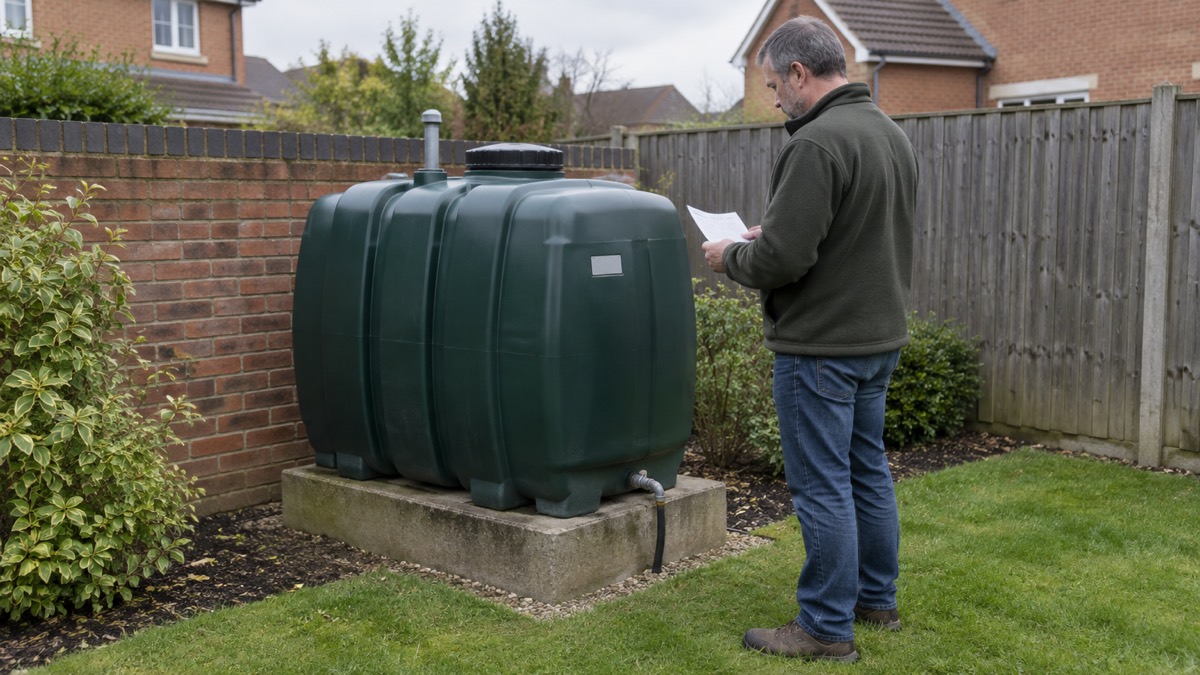
Regular checks are the best protection. Check the condition of your tank and boiler regularly, watch out for black stains, know how much oil you use, get your heating system serviced regularly, do not overfill your oil tank, keep the fill points clear, and review your home insurance policy to make sure you are covered for oil leaks or spills4.
The clearest early sign of a problem is the oil level. If you notice the level in the tank drops more than you would expect it to, based on your usage, this could indicate a leak14. Knowing your normal usage is what makes that comparison possible, which is why the advice to know how much oil you use sits alongside the physical checks4.
| What to check | What you are looking for |
|---|---|
| Tank and boiler condition | Wear, damage or black stains4 |
| Oil level against your normal usage | A drop bigger than expected, which could indicate a leak14 |
| Fill points | Kept clear4 |
| Tank lid and screens | Securely in place, with no build-up of scale or deposits on the tank floor15 |
| Insurance | Cover for oil leaks or spills4 |
The lid and screen check comes from guidance on cold water storage tanks, and the same habit applies to any tank on your property: a periodic visual check that the lid and screens are securely in place15. If you find damage or a leak, stop the oil spreading if you can, and follow the advice on your tank sticker and on the Oil Care website3.
If your LPG tank or bottles go under water, call your supplier
Submerged gas equipment is a job for the supplier, not the householder. Official advice after a flood is to contact your utility suppliers, because they may need to check your gas, electricity and water supply for safety2. In Northern Ireland the same instruction applies: if your home is flooded, contact your utility suppliers16.
Do not reconnect or use bottles that have been under water or damaged. If you use a gas heater, the Health and Safety Executive says to ensure that the correct size and type of gas bottle is being used17. That is a maker-level safety rule for the appliance, and it matters most when bottles have been moved, replaced or mixed up during a flood. Replacement bottles should come from your supplier, and the correct size and type for the appliance should be confirmed before use17.
If you smell gas or suspect a leak, contact National Gas20. Our guide to turning off gas, electricity and water before a flood covers the shut-off steps, and gas and heating failures covers what to do if the supply fails.
Damaged tanks or bottles: report them straight away
A damaged tank is both a safety problem and a pollution problem, and the response depends on what has happened.
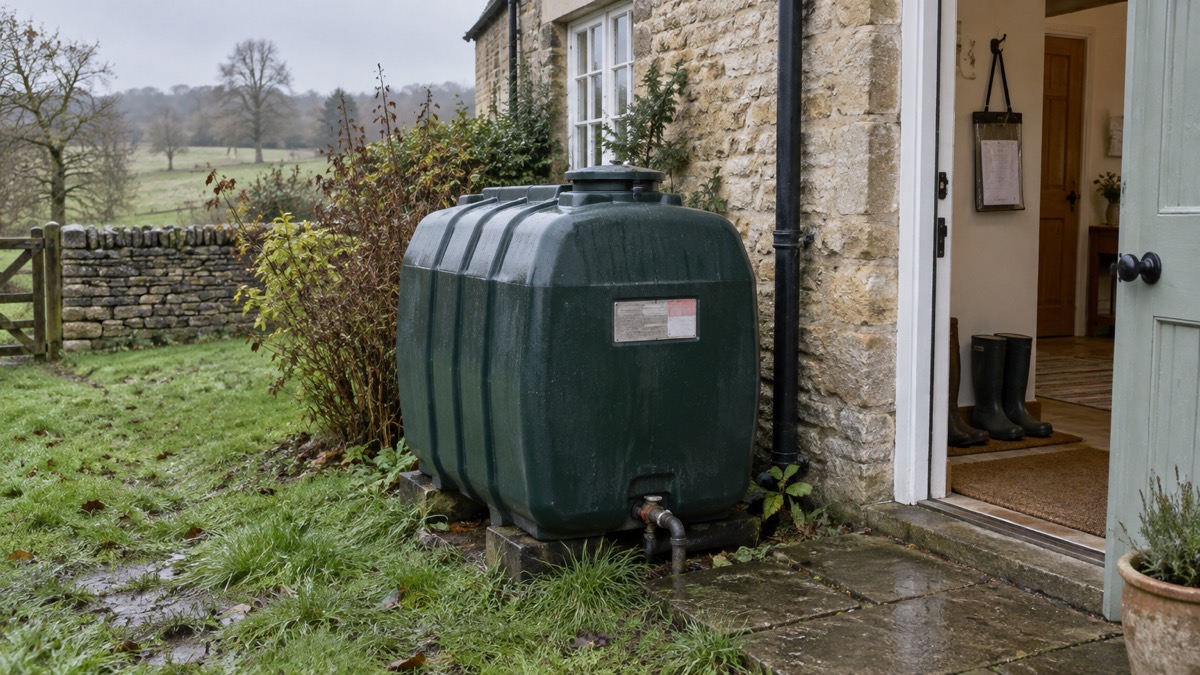
- Oil leaking or spilled: stop the oil spreading if you can, and follow the advice on your tank sticker and on the Oil Care website3. Get help from your insurer and your oil supply company3.
- Leak that could reach a stream, pond or other water supply: call the Environment Agency4.
- Gas leak: contact National Gas20.
- Sewer flooding or a backing-up toilet or sink during floods: call your local water company21.
- Road flooding, a burst water main or a blocked drain: the flooding incident line takes reports of flooding problems on roads, burst water mains and blocked drains22.
Contact your insurers as soon as possible, and do not throw damaged items away until your insurers have inspected them12. Our guide to who to report flooding to sets out the wider list of agencies, and making an insurance claim after a flood covers the claim itself.
Who to contact about an oil tank
For an oil tank, the first call is your fuel supplier. Independent guidance lists your fuel supplier as the contact for oil leaks6, and official guidance says to get help from your insurer and your oil supply company3. If you have concerns about your oil tank or need to install a new one, contact your local UKIFDA heating oil distributor or an OFTEC-registered engineer23.
| Situation | Who to contact |
|---|---|
| Oil leak or spill | Your fuel supplier6, your insurer and your oil supply company3 |
| Leak that could reach a stream, pond or water supply | The Environment Agency4 |
| Concerns about the tank, or a new installation | A UKIFDA heating oil distributor or an OFTEC-registered engineer23 |
| Gas leak | National Gas20 |
| Sewer flooding | Your local water company21 |
Knowing who to contact if flooding happens is part of being prepared24. Write the numbers down and keep them with your flood plan, so you are not searching for them in the middle of an emergency.
Technician inspection visits: what to expect
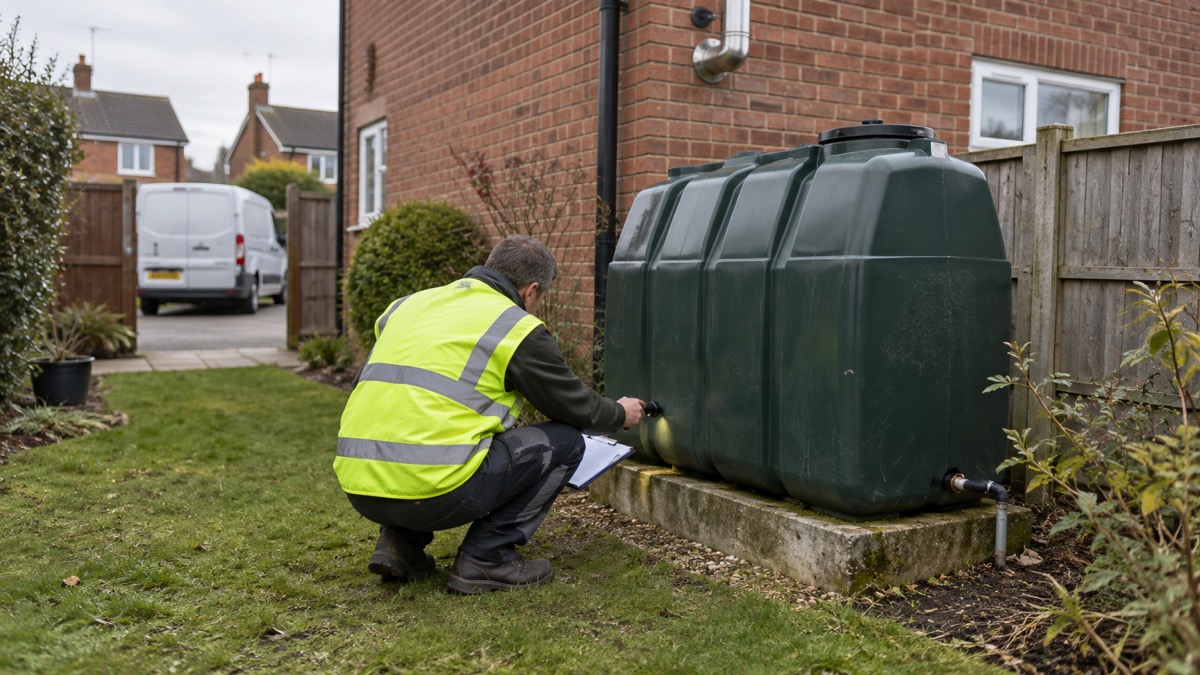
Have the oil tank inspected at the same time as the annual boiler service. The OFTEC-registered engineer inspects overall condition, checks for water or condensation, and provides a report of observations and actions23. That report is useful for insurance and for planning any repair.
For gas, have gas appliances inspected by a Gas Safe Register engineer, as the flue or ventilation systems may be affected even if appliances appear to be working normally25. If you use gas heating or gas appliances, get a Gas Safe-registered engineer to do an inspection after a flood26. Make sure your gas and central heating has been checked by an engineer before turning it on27.
Using gas and heating after a flood
The rule is simple and it is repeated by council after council: do not turn on gas or gas appliances until your system has been checked by a Gas Safe registered engineer18. After a flood, do not turn back on gas supplies until they have been checked by a qualified technician19. Make sure your gas and central heating has been checked by an engineer before turning it on27.
Have your electricity and gas checked by your supplier or qualified technician before switching them on12. Have your gas or oil central heating checked by a qualified person before switching on the gas or trying to light any appliance5. If you use gas heating or gas appliances, get a Gas Safe-registered engineer to do an inspection after a flood26.
If your tap water changes colour, taste or smell, contact your water company29. Our guide to after a flood: returning home safely covers the wider return, and is it safe to turn the electricity back on? covers the electrical side.
Where the arrangements differ across the UK
The core safety advice is the same across England, Scotland, Wales and Northern Ireland: call your supplier, do not use flooded gas equipment, and have heating checked before it is switched on. What differs is who you contact and which body publishes the guidance.
| Nation | Where the advice comes from | Who to contact |
|---|---|---|
| England | GOV.UK after-flood guidance29, local councils2 | Supplier, insurer, oil supply company3; Environment Agency for a leak reaching water4 |
| Scotland | Scottish Borders Council flooding advice25; Scottish Environment Protection Agency24 | Supplier and a Gas Safe Register engineer25 |
| Wales | Natural Resources Wales, what to do in a flood21 and after a flood27 | Supplier and an engineer before switching on27 |
| Northern Ireland | nidirect preparing for flood16 and after-flood clearing26; Belfast City Council18 | Utility suppliers16; a Gas Safe-registered engineer26 |
In Northern Ireland, the flooding incident line takes reports of flooding problems on roads, burst water mains and blocked drains22. Our guide to Wales: Natural Resources Wales warnings and risk maps covers the Welsh warning system in more detail.
Sources (29)
- Personal responsibility, Derbyshire County Council, 2026
- Housing help if your home is flooded, Somerset Council, 2026
- Oil storage regulations and safety, GOV.UK, 2026
- Domestic oil, Northumberland County Council, 2026
- During a flood, Nottinghamshire County Council, 2026
- Oil storage and leaks, Wessex Water, 2026
- Stay safe in heavy rain, Met Office, 2026
- Flood preparedness, Southend-on-Sea City Council, 2026
- Preparing for flooding, Surrey County Council, 2026
- Preparing for flooding, Somerset Council, 2026
- Resident grab bags, Harborough District Council, 2026
- Thunderstorms weather warning advice and information, nidirect, 2026
- Northumbria Local Resilience Forum, Northumberland County Council, 2026
- Oil fuel and other hydrocarbons, Drinking Water Inspectorate, 2026
- Responsibilities for flooding, Scottish Environment Protection Agency, 2026
- After flood clearing, nidirect, 2026
- Clearing flood, Oxford City Council, 2026
- Flooding, Runnymede Borough Council, 2026
- After a flood, Surrey County Council, 2026
- Help during a flood, GOV.UK, 2026
- What to do after a flood, Natural Resources Wales, 2026
- Hot weather, Ready Scotland, 2026
- Tank care and security, UKIFDA, 2026
- Flooding advice, Mid and West Wales Fire and Rescue Service, 2026
- Gas domestic FAQs, Health and Safety Executive, 2026
- Flooding advice, Belfast City Council, 2026
- Water storage tanks and cisterns, Drinking Water Inspectorate, 2026
- Flooding advice, Scottish Borders Council, 2026
- After a flood, GOV.UK, 2026
 Flood Warning Checklist
 First Steps After a Flood
 Insurance Claim Records
 Signing Up for Flood Warnings
 Flood Warnings Without Email
 Who to Report Flooding To
 Reporting a Blocked Gully
 Garden Safety After Sewage
 Council Sandbag Duties
 Filling and Laying Sandbags
 Makeshift Sandbags
 Disposing of Used Sandbags
 Turning Off Utilities
 Walking or Driving in Floodwater
 Turning Electricity Back On