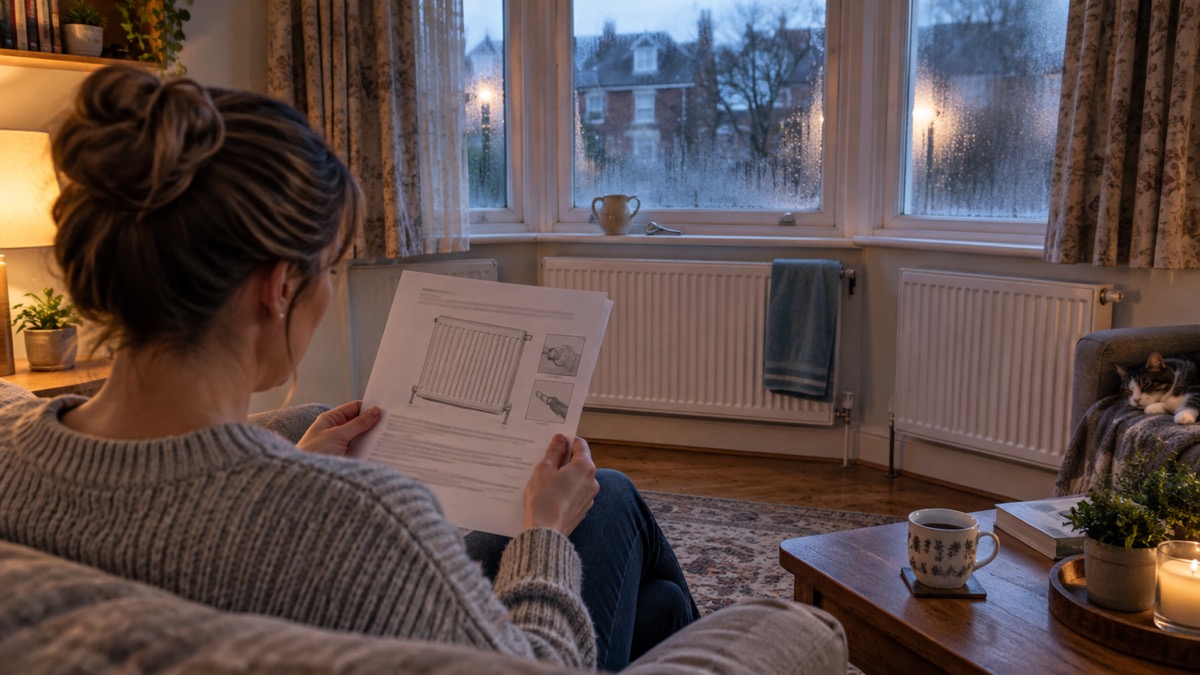
Most radiator noises are harmless. A radiator that ticks as it warms up or cools down is doing what metal does when it expands and contracts, and there is nothing to fix. The noises worth acting on are the ones that point to a problem in the system: gurgling with a radiator that is cold at the top, whistling, or banging and hammering in the pipework.
The first thing to do is listen to what kind of noise it is. Banging, hammering or juddering can come from air in the pipework, faulty taps or ball valves, or loose pipework1. Gurgling, slow water flow or frost on pipes in cold spots such as lofts, cellars, garages or external walls can mean a frozen pipe3. In cold weather, a loud banging noise from the heating system could mean a pipe is freezing, and the advice is to turn the system off and call a plumber immediately4.
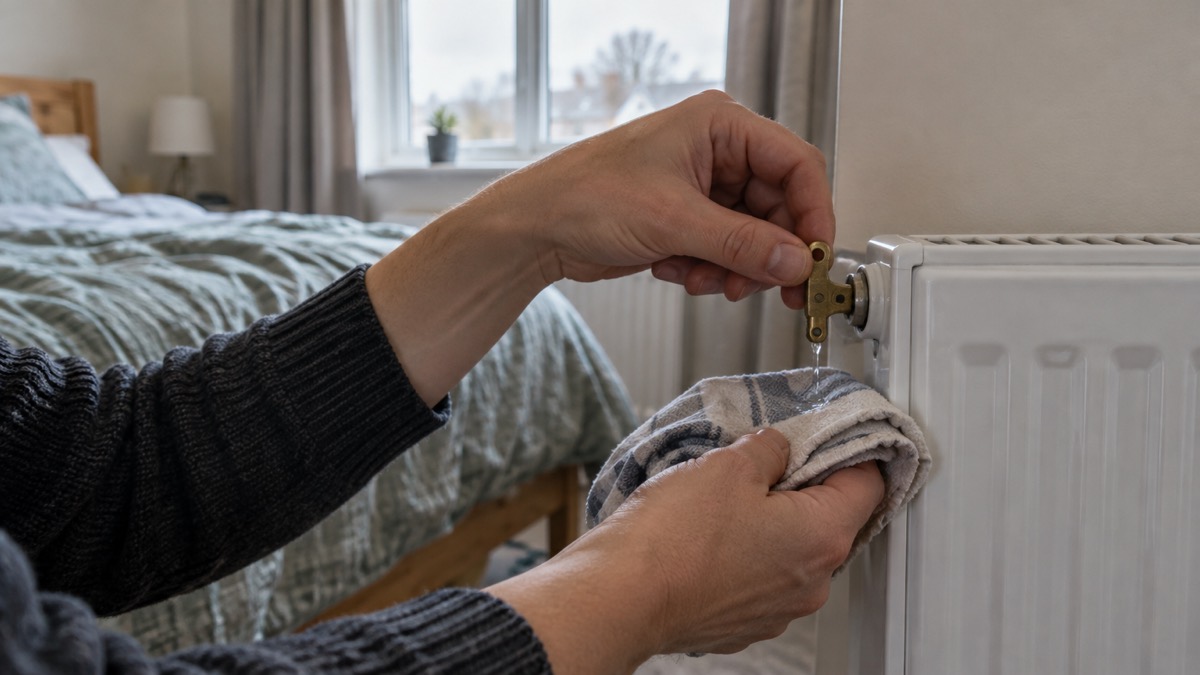
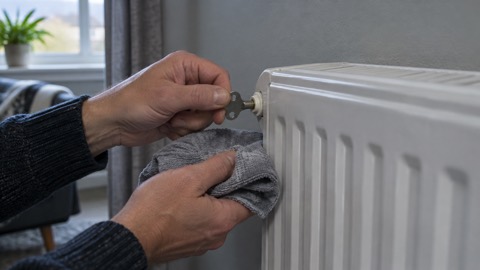
For trapped air, the fix is usually simple: use a radiator key to gently open the valve at the top of the radiator, and when a drop of water comes out, twist the valve shut5. If the noise continues after that, have the heating, radiators and boilers serviced6, and for anything involving a gas boiler or gas appliance, call a Gas Safe registered engineer or your gas supplier7.
A ticking radiator is normal: it is warming up or cooling down
Ticking is the sound of the radiator itself, not the water inside it. As hot water enters, the metal panel and the brackets holding it warm and expand; as the heating goes off, they cool and contract. The tick is that movement, and it is most noticeable in the minutes after the boiler starts or stops, and in the evening when the heating switches off. It is not a sign of a fault, and it does not need a repair.
The useful distinction is between a tick and the noises that mean something is wrong. Ticking is regular, quiet and tied to the heating coming on or going off. Banging, hammering or juddering is louder, often sudden, and can come from air in the pipework, faulty taps or ball valves, or loose pipework1. A constant noise of flowing water in pipes is listed as a tell-tale sign of a leak8. If you hear that, or a rushing noise, it is worth checking for a leak rather than assuming it is normal heating noise.
It also helps to know what your system normally sounds like. If a radiator has always ticked, it will keep ticking, and that is fine. If a radiator that used to be silent starts ticking loudly, or the tick becomes a knock, that change is the thing to pay attention to. The same applies to the rest of the system: check for warning signs that your appliances are not working properly9, and if an appliance begins making a strange noise or is not working properly, do not ignore it10.
Where the noise is a tick, there is nothing to do. Where it is a knock or a bang, work through the sections below in order: check the valves, check for trapped air, and if the noise persists, get the system serviced.
Ticking under the floorboards: pipes expanding against joists
A tick that seems to come from under the floor, rather than from the radiator itself, is usually the pipework moving. Pipes that are not clipped correctly may move and hit against walls or flooring, creating noise1. As the heating warms the pipes, they expand along their length, and if they are resting against a joist or a floorboard, that movement becomes a tick or a creak at the point of contact.
This is a common and usually harmless noise, but it is worth knowing the difference between movement and a leak. A constant noise of flowing water in pipes is a tell-tale sign of a problem8, and a hissing or knocking noise at the internal stop tap is something to listen for when you are checking for leaks11. If the noise under the floor is a tick that comes and goes with the heating, it is movement. If it is a rush or a hiss that does not stop, investigate.
Cold weather makes pipework noise more likely and more serious. Water expands as it freezes, increasing pressure inside pipes and joints12, and as the ice expands it increases pressure on the pipes and joints, often causing them to split or joints to pull apart13. Unusual sounds from your plumbing system can indicate underlying issues14, so in a cold snap, treat a new noise under the floor as a reason to check the pipes in cold areas: lofts, cellars, garages and external walls3.
If the noise is clearly movement against a joist, it is a job for a plumber to clip the pipe properly rather than something to fix yourself. If it comes with any sign of a leak, treat it as urgent.
Whistling radiators and how turning the valves fully on can stop it
A whistle is a different sound from a tick or a bang, and it usually comes from water being forced through a narrow gap. The most common cause in a heating system is a valve that is only partly open, so the water squeezes through a small opening and makes a high-pitched note. The practical first step is to check the valves on the radiator and turn them fully on, then see whether the whistle stops.
Valves are also worth checking because they are a known source of pipe noise more generally. Faulty taps or ball valves can lead to banging, hammering or juddering sounds1, and a faulty ball valve can cause rushing or whistling2. If turning the valve fully on does not stop the whistle, and the noise is coming from the pipework rather than the radiator, it may be the valve itself that needs attention.
There is a balance to strike with valves, because turning radiators down or off is also a way to save energy. Turning down radiators in empty or already warm rooms can save energy12, and turning off radiators in spaces that are not often used, keeping them on in the rooms you use most, is recommended13. The point is to turn them fully to one position or the other rather than leaving them half open, which is what causes the whistle.
If the whistle continues with the valves fully open, and especially if it comes with banging, it is worth having the system looked at by a Gas Safe registered engineer7. Do not force a valve that will not turn.
Tapping or hammering usually means a badly fitted thermostatic valve
A tap or a hammer is the noise people worry about most, and it usually has a straightforward cause. Air in the pipework, faulty taps or ball valves, and loose pipework can all lead to banging, hammering or juddering sounds1. On a radiator with a thermostatic valve, the valve opens and closes as the room warms, and a valve that is badly fitted or worn can tap or hammer as it does so.
There is a second cause that matters more in winter. If the heating system fails or makes a loud banging noise, this could indicate that a pipe is freezing; turn off the system and call a plumber immediately4. That is the one banging noise to treat as urgent, because a frozen pipe that splits causes water damage. The risk is highest in cold snaps, and after heavy snow you should check that radiator pipes have not frozen15.
For the everyday tap or hammer that is not tied to cold weather, the fix is usually to have the valve and pipework checked. Upgrading to slow-closing valves can help minimise the issue1. That is a job for a plumber or heating engineer rather than a DIY task, because it involves draining and working on the system.
If the noise comes with any sign of a leak, a drop in boiler pressure or a radiator that will not heat, treat it as a system fault and get it looked at. The boiler breakdowns in cold weather page covers what to do when the heating stops working altogether.
Gurgling and cold patches: trapped air and how to bleed a radiator
Gurgling is the sound of air moving through water, and it usually comes with a radiator that is cold at the top and warm at the bottom. The fix is to bleed the radiator. Use a radiator key, which you can get from DIY stores, and gently open the valve at the top of the radiator; when a drop of water comes out, twist the valve shut5.
Bleeding is one of the routine jobs worth doing before winter. Bleeding radiators, reducing draughts around doors and windows, improving insulation where possible and using heating controls effectively are all recommended to improve energy efficiency16. Getting heating, radiators and boilers serviced is part of the same routine6. The how to bleed a radiator page walks through the job step by step.
Gurgling is not always trapped air, though. Slow or no water flow, gurgling noises from your central heating, or frost on pipes in cold areas like lofts, cellars, garages or external walls are the signs used to identify a frozen pipe3. If the gurgling comes with any of those, treat it as a frozen pipe rather than air, and see the frozen condensate pipes page for the cold-weather side of the system.
A radiator that stays cold at the bottom, or cold in patches after bleeding, points to a different problem: sludge or a valve that is not opening. The cold radiators page covers air, sludge, valves and balancing in more detail.
When to call the installer or an engineer
Most radiator noise is a nuisance rather than a danger, but some noises are a signal to stop and get help. The clearest is the loud banging in cold weather that could mean a pipe is freezing: turn the system off and call a plumber immediately4. The same applies if the heating system fails altogether in freezing conditions, and if there is a risk of frost with the heating not working, consider calling a plumber to drain the pipework17.
For anything involving a gas boiler or gas appliance, call a Gas Safe registered engineer or your gas supplier7. Contacting a Gas Safe registered engineer to make sure heating and cooking appliances are working properly is part of staying well in winter18. The finding a Gas Safe registered engineer page explains how to check their card.
There is a separate set of warning signs that belong to electrical appliances rather than radiators, and they are worth knowing because they are easy to mistake for a plumbing noise. Burn marks, arcing (buzzing or crackling) sounds, fuses blowing, circuit-breakers tripping, or an appliance that feels too hot to touch are all reasons to stop using it19. If you find a fault with your wiring or an appliance, stop using it immediately and contact a registered electrician10. If white goods start making a strange noise, unplug them and contact the manufacturer or a qualified repair technician21.
If you smell gas at any point, turn off all gas appliances22 and follow the gas emergency advice on the National Gas Emergency Service page.
Sources (22)
- I can hear a banging noise coming from my pipework, what could it be?, WaterSafe, 2026-10-29
- Drinking water FAQs, Bournemouth Water, 2026-10-28
- What should I do if a pipe freezes?, WaterSafe, 2026-10-29
- Adverse weather events, Llangattock Community Council, 2026-10-25
- Prepare your home for winter, Southern Water, 2026-10-28
- Keeping warm in winter, Nottinghamshire County Council, 2026-10-29
- Support during a storm, British Red Cross, 2026-10-25
- New homeowners: saving water and leaks, WaterSafe, 2026-10-29
- Heaters and electric blankets, Lincolnshire County Council, 2026-10-29
- Looking after the electrics, North Wales Fire and Rescue Service, 2026-10-25
- Unmetered leak test, Wessex Water, 2026-10-28
- How do I protect against frozen pipes?, WaterSafe, 2026-10-29
- How do I protect against frozen pipes?, WaterSafe, 2026-10-29
- Frozen pipes, Affinity Water, 2026-10-28
- Alarm clocks, Electrical Safety First, 2026-10-25
- Get ahead for winter 2026, Liquid Gas UK, 2026
- Cold, snow and ice, Ready Scotland, 2026-03-25
- Stay well this winter, NHS Cheshire and Merseyside, 2026-10-28
- Ovens and grills, Electrical Safety First, 2026-10-25
- Patio heaters, Electrical Safety First, 2026-10-25
- Electrical safety at home, South Wales Fire and Rescue Service, 2026-09-08
- Electrical fire safety, Warwickshire County Council, 2026-10-29
 Checks Before Calling Engineer
 Boiler Checks When Moving In
 Power Cut Kit Checklist
 Stop a Condensate Pipe Freezing
 Repressurising a Combi Boiler
 Hot Water but No Radiators
 Resetting a Boiler Lockout
 Programmer Reset After Power Cut
 Boiler Leaking Water
 Boiler Overheating
 How to Bleed a Radiator
 Boiler On When Away in Winter
 Missed Reconnection Visit
 Prepayment Credit but No Gas
 Low Supply Pressure