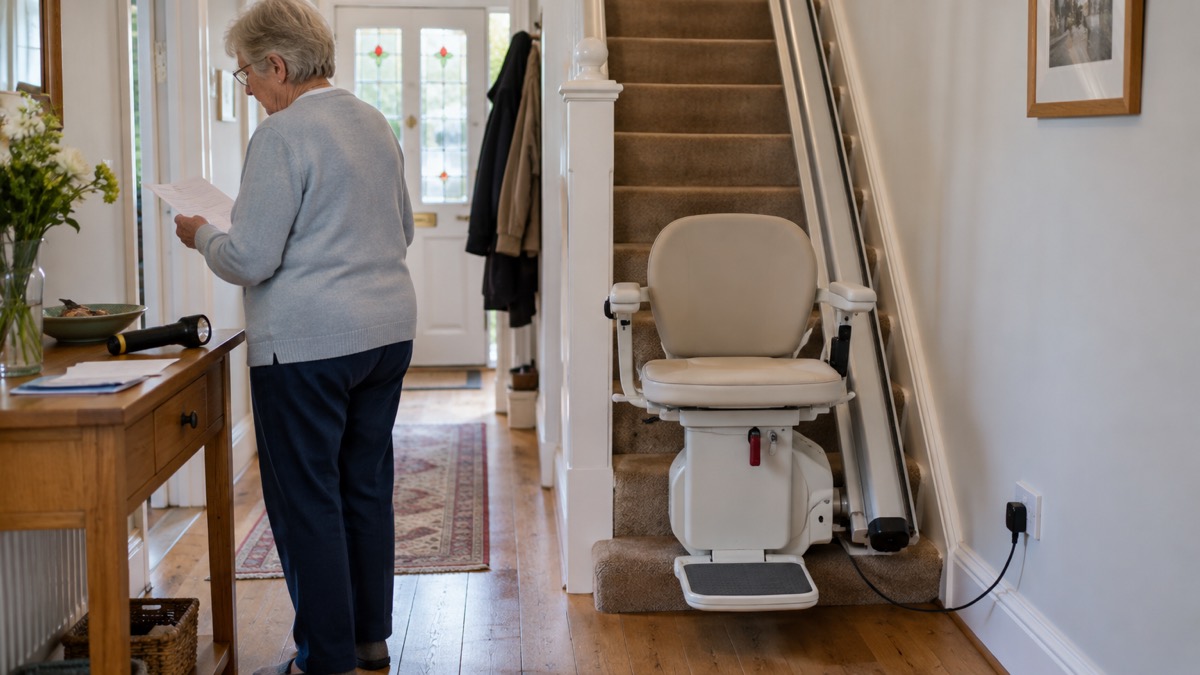
A power cut affects equipment such as stair lifts, bath hoists and adjustable beds, so if you rely on a stairlift the time to act is before the lights go out1. The single most useful thing you can do now is check that your stairlift has a manual release handle, which you can use to return the lift to the ground floor if the power fails2. If you have a mains operated stair lift, check whether there is a manual release handle that can be used to return it safely to ground level if it stops working3.
Most stairlifts also have a battery backup, so yours may keep running for a time after the mains supply drops4. How long it lasts depends on the lift and its battery, so check how long your backup battery is expected to last, and if you are unsure, speak to your manufacturer5. If a cut is planned, make sure you have access to a ground floor exit, a telephone and heating for the duration you are scheduled to be without power6.
This page sets out what to check now, what a power cut means for a mains-powered lift, how to get back downstairs safely if the lift stops, and how to register for extra help. It applies across the UK, with the network operator and supplier arrangements noted where they differ.
Check now that your stairlift has a manual release handle
The advice from councils, network operators and consumer bodies is consistent: if you have a stair lift, check it has a manual release handle you can use to return the lift to the ground floor if you have a power cut2. The same instruction appears in guidance for planned power cuts, which asks you to check that your stair lift has an override or manual release option and to speak to your manufacturer if you are not sure8. National Grid's power cut pages repeat it, and so do the distribution network operators4.
The handle matters because a mains-powered lift will not move under its own power when the supply fails. The release lets you bring the carriage back to ground level by hand, so you are not stranded partway up the stairs. What the handle looks like, and where it sits, varies between makes and models, so there is no single position to describe. Your installer should show you where it is and how it works when the lift is fitted, and you should ask them to demonstrate it and let you try it under supervision.
A few practical points to settle before you need it:
- Find it and label it. Know exactly where the handle is and keep the area around it clear.
- Learn the sequence. Ask your installer to walk you through releasing the lift, moving it to the floor and resetting it afterwards.
- Check it works. Check that your stair lift has a manual release handle you can use to return the lift to the ground floor if you have a power cut10.
- Keep the number. Have your manufacturer's or installer's contact details to hand so you can ask questions before an emergency rather than during one.
If you cannot find the handle or you are not sure how it works, contact your manufacturer or installer and ask them to show you. Do not guess at levers or panels you have not been shown.
Mains-powered stairlifts: what a power cut means for yours
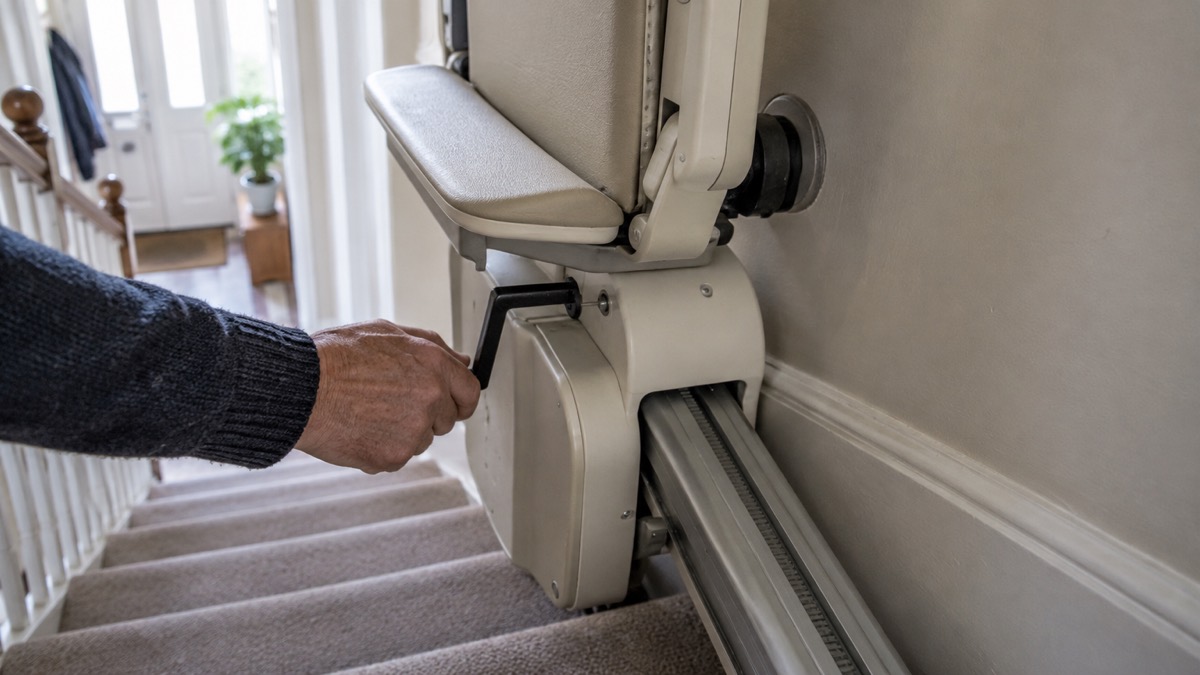
A power cut will affect equipment such as stair lifts, bath hoists and adjustable beds1. For a mains-powered lift, that means the carriage will not move under power until the supply returns. The lift is not broken; it has simply lost its supply. The question is what you can do in the meantime.
The first step is to rule out a fault in your own home. Check your trip switch, which should be in the UP position11. If it has operated, switch off all of your appliances and attempt to reset the switch to the ON position; if it has not operated, call your network operator's contact centre to report the issue12. That tells you whether you are dealing with a local trip or a wider cut. Our page on how to check whether it is just your trip switches walks through this.
If the supply is genuinely off, the lift will stay still until power returns or until you use the manual release. Most stairlifts have a battery backup, which may keep the lift running for a time, but you should check how long the backup battery can last and speak to your manufacturer if you are unsure5. A battery backup is not a guarantee for an indefinite cut, so plan on the basis that the lift may stop.
Power cuts happen for reasons outside anyone's control: wires, cables and other equipment that are faulty, damaged for example during a storm, or need to be maintained or upgraded13. That is why planned cuts are notified in advance, and why storms can take a lift out of action without warning. If a cut is planned, you will usually be told, which gives you time to check the battery and arrange help. Our guide to planned interruptions explains what to expect.
| Situation | What it means for your lift | What to do |
|---|---|---|
| Planned power cut | Supply off for the notified period | Check battery duration, arrange help, keep a ground floor exit, phone and heating available5 |
| Unplanned cut | Supply off without warning | Check your trip switch first, then use the manual release if you need to move11 |
| Storm damage | Supply off, possibly for longer | Report the cut, use the release, and plan for a longer outage13 |
Getting back downstairs safely when the lift stops
If the lift stops while you are on it, stay calm and do not try to climb over or step off the carriage partway up the stairs. Use the manual release handle to return the lift to the ground floor2. If you cannot operate it yourself, call for help from someone in the house, or ring 999 if you are in danger.
Once you are down, or if you are staying put, there are a few things to do around the house. Switch off appliances and equipment to help prevent damage when the power returns14. In particular, turn off electrical appliances at the socket, especially heating or cooking appliances, because power could be restored at any time and cause a safety hazard15. Switch off all electrical appliances that shouldn't be left unattended, ready for when the power comes back on16. Our page on what to check and switch back on covers this in more detail.
Keep a light or torch handy in case of a power cut or failure19. Leave a light on so you know when power is restored20. If you are staying upstairs for a short cut, make sure you have a phone, a torch and a way to keep warm, and check on neighbours who may be in the same position21.
Battery-powered stairlifts and how long they last
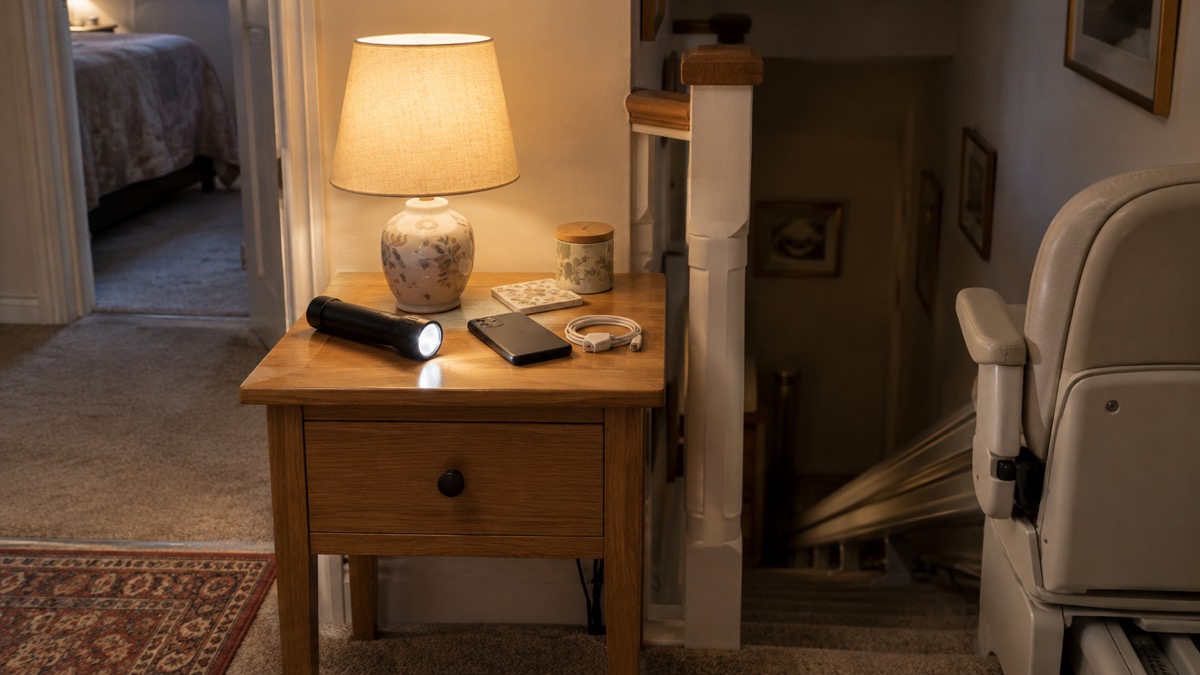
Most stairlifts have a battery backup, and many run from rechargeable batteries charged from the mains, so they may keep working for a time when the power fails4. That is reassuring, but it is not a promise for an indefinite cut. The advice is to check how long your backup battery is expected to last, and if you are unsure, speak to your manufacturer5. The same guidance appears in winter-ready advice from network operators: stairlifts often have backup batteries, but you should check how long the backup battery can last5.
How long it lasts depends on the battery, the lift and how much it is used during the cut. A lift used once to get downstairs will draw less than one used repeatedly. If a cut is planned, check the battery beforehand and make sure you have access to a ground floor exit, a telephone and heating for the duration you are scheduled to be without power6. If the battery runs down, the manual release is still your fallback.
Staying upstairs during a power cut
Staying upstairs can be the right choice for a short cut if you are warm, safe and have a phone, but plan for it in advance. Keep a supply of candles19, have a phone charged, and make sure you could get downstairs another way if you had to leave in a hurry, such as for a fire17. If a cut is planned, check how long your backup battery lasts and arrange help if you might be stranded5.
If you are staying put, keep warm and keep the room you use safe. Do not leave electrical appliances switched on at the socket, particularly heating or cooking appliances, because power could be restored at any time and cause a safety hazard15. Keep combustible materials such as clothes, papers and cleaning materials away from the service head, electricity meter and consumer unit, particularly if these are under the stairs, which is an escape route from upper floors22. Our guides to keeping warm without electricity and staying safe in the dark cover the wider household arrangements.
If you use candles for light, take care: keep them away from anything that could catch fire and never leave them unattended. Keep a supply of candles in case of a power cut19.
Registering for extra help
Sign up to your energy supplier's Priority Services Register to let them know that you need additional support during a power cut24. You can join the register if you rely on electricity for medical reasons, use a stair lift, hoist or electric bed, have a specific communication need when contacting National Grid, or would find an unexpected power cut particularly distressing or difficult to cope with7. Using a stairlift is one of the listed reasons, so you do not need any other qualifying condition.
The register lets your supplier know you need additional support during a power cut24. It is free, and you can ask your supplier to add you, or a relative on your behalf. Our page on the Priority Services Register explains who can join and what it gives, and there is a separate guide on registering a relative for extra help.
Arrangements differ slightly across the UK. In Northern Ireland, NIE Networks handles emergency power cuts and can advise on support6. In England, Scotland and Wales, your supplier and the local distribution network operator work together. If you are unsure who to contact, your supplier can tell you. Our page on extra help from network operators during long outages sets out what is available.
Sources (24)
- 12 Tips to Prepare for a Power Cut, Horsted Keynes Parish Council, 2026
- Power Cuts, National Grid, 2026
- Adverse Weather Events, Llangattock Community Council, 2026
- What to Do During a Power Cut, SSEN, 2026
- Be Winter Ready, Electricity North West, 2026
- Emergency Power Cuts, NIE Networks, 2026
- Priority Services FAQs, National Grid, 2026
- Your Planned Power Cut Explained, SSEN, 2026
- Planned Power Cuts, SSEN, 2026
- Fire Safety for People with Mobility Difficulties, Devon and Somerset Fire and Rescue Service, 2026
- Be Prepared, Northern Powergrid, 2026
- Preparing for a Power Cut, National Grid, 2022
- Power Cuts, Ofgem, 2026
- Repeat Power Cuts, SSEN, 2026
- We're Prepared to Support Customers During Storm Bert, Northern Powergrid, 2024
- Stay Safe in Lightning, Met Office, 2026
- In an Emergency, Scottish Fire and Rescue Service, 2026
- In the Event of a Fire, South Wales Fire and Rescue Service, 2026
- Looking After the Electrics, North Wales Fire and Rescue Service, 2026
- Storm Advice, Powercut 105, 2026
- Met Office Weather Ready Tips for Snow and Ice, Met Office, 2025
- Fire Prevention Tips, Electrical Safety First, 2026
- High Rise Living, South Wales Fire and Rescue Service, 2026
- Priority Services, Prepare Campaign, 2026
 Power Cut Kit Checklist
 What to Keep Charged
 Household Emergency Plan
 Food to Throw Away After a Cut
 Keeping One Room Warm
 Heating a Room With a Gas Hob
 Hot Water Bottles and Children
 Unplugging Appliances in a Cut
 Checking Your Trip Switches
 Vehicle Touches Overhead Line
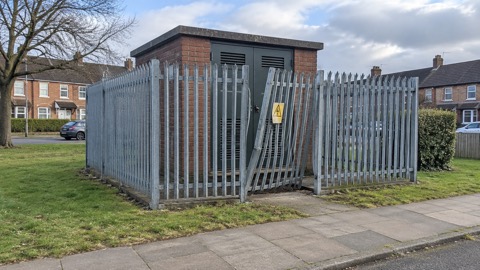 Reporting a Damaged Substation
 Protected Sites
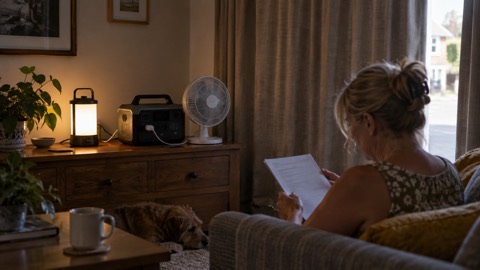 Heatwaves and Power Cuts
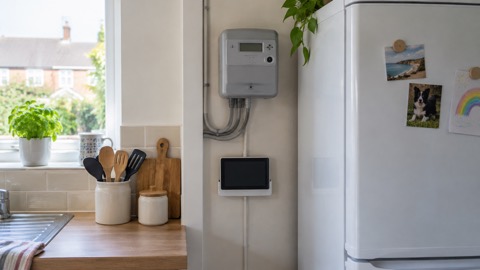 Smart Meters and Power Cuts
 Keeping Medicine Cold