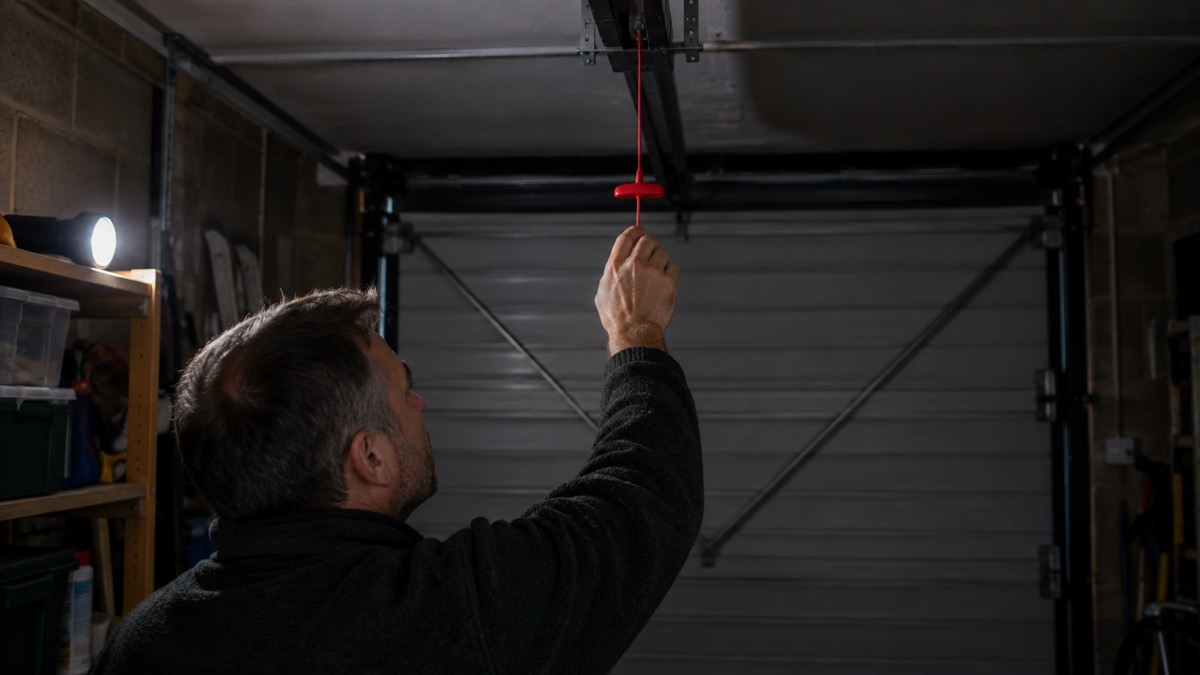
If the electricity goes off and your car is behind an electric garage door, you can usually open it by hand. Electric doors are built with a manual release, and network operators advise households to learn how to operate electric gates and garage doors manually and to keep the operating manuals accessible, so the override can be used without power1. The same advice appears in power cut preparation guidance from councils and network operators: know how to manually open your garage door if you have an electric one, so you can get the car out if needed1.
The release is normally a cable or handle that disconnects the door from the motor. Once it is disengaged, the door moves by hand, but it may be heavy, and how it behaves depends on the type of door. Before you pull anything, find the release, read the maker's instructions, and check that the door is closed and the area beneath it is clear.
This page covers how the release works, how the main door types differ, how to lock up again while the power is off, and where to get help if the release will not work. It also covers the safety side: a garage door is a heavy moving object, and a door that will not open can affect how you leave the house in an emergency.
Opening the door by hand during a power cut
The first step is to confirm the power is actually off, rather than a tripped circuit. If the lights elsewhere in the house are working, the fault may be at your own trip switches rather than a network outage, and resetting them may restore the door without any manual work. If the whole street is dark, treat it as a power cut and use the manual release.
The release is designed to be used when the door is closed. Disengaging it with the door part way open can let the door drop or run, so close the door fully first, then follow the maker's instructions to disengage the motor. Once released, lift the door by hand, steadily and without forcing it. If it will not move, stop: a door that is too heavy by hand may have a spring or balance fault, and that needs a qualified individual to repair2.
Keep the operating manual somewhere you can find it in the dark. Network operators specifically advise keeping manuals accessible so electrical equipment can be overridden without power1. A torch kept in the garage, and a copy of the instructions with it, turns a stressful moment into a two minute job.
How the manual release works: a cable from the door handle
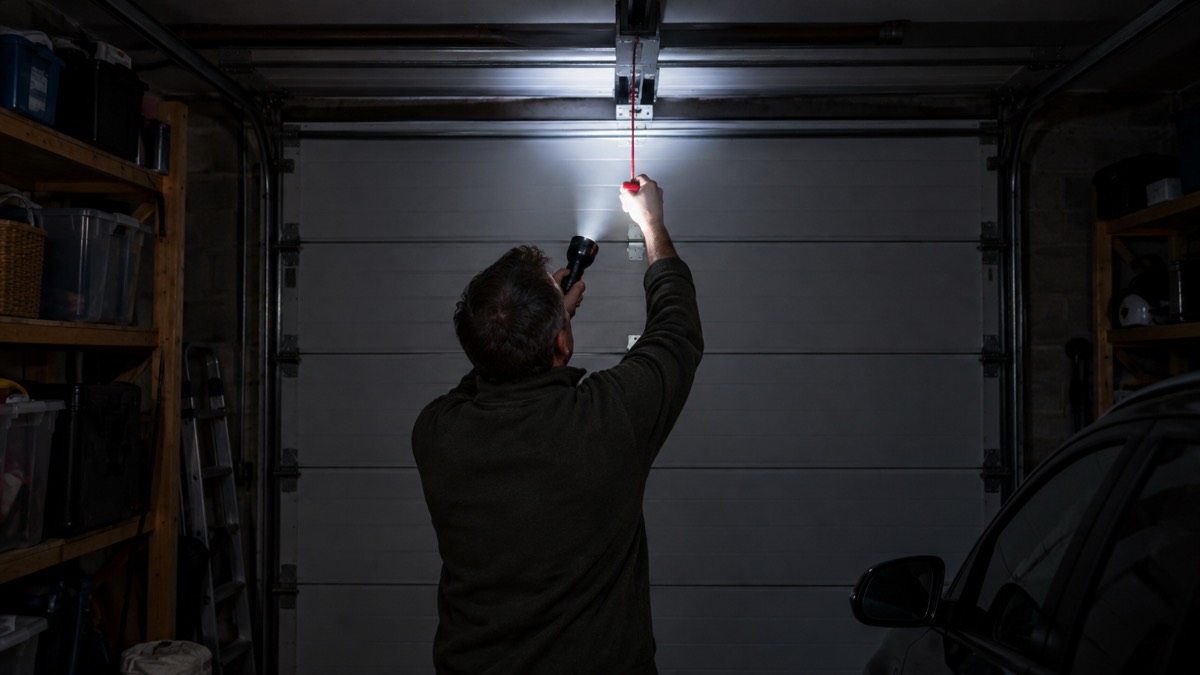
On most electric doors the manual release is a cable that runs from a handle, usually on the inside of the door or on the motor housing, to a mechanism that disengages the drive. Pulling the handle releases the door from the motor, and the door then moves on its own springs and tracks. The exact arrangement varies by maker, which is why the maker's own instructions are the ones to follow.
The principle is the same as other household equipment with a manual override. Network operators advise checking that a mains operated stair lift has a manual release handle that can be used to return it safely to ground level if it stops working5. A garage door release does the same job: it gives you a way to move the door when the motor cannot.
Two things decide whether the release will work when you need it. The first is access: the handle has to be reachable, and on some doors it is inside the garage, which is no help if you are locked out. The second is condition: a cable that has seized, stretched or snapped will not disengage the door. Check both before an emergency, not during one.
Up and over, side hinged and sectional doors
The type of door changes how it behaves once released, and how much care it needs.
| Door type | How it moves by hand | What to watch |
|---|---|---|
| Up and over | Swings out and up on springs | Heavy; can swing back. Keep clear of the path |
| Side hinged | Opens like a pair of doors on hinges | Check the hinges and handles are sound2 |
| Sectional | Runs up on tracks in panels | Needs the tracks clear; can be heavy to start |
Up and over doors rely on springs to balance the weight, and a released door can move quickly. Side hinged doors are the simplest to open by hand, but their hinges and handles take the strain, and fire door guidance is clear that handles, hinges and hardware should be replaced when worn and that repairs should always be carried out by a qualified individual2. Sectional doors run on tracks, so check nothing is blocking the track before you pull.
Whatever the type, the same rule applies: the door is a heavy moving object, and you should keep hands and feet clear of the moving parts. If the door will not lift with reasonable effort, stop and arrange a repair rather than forcing it.
Locking the door again when the power is off
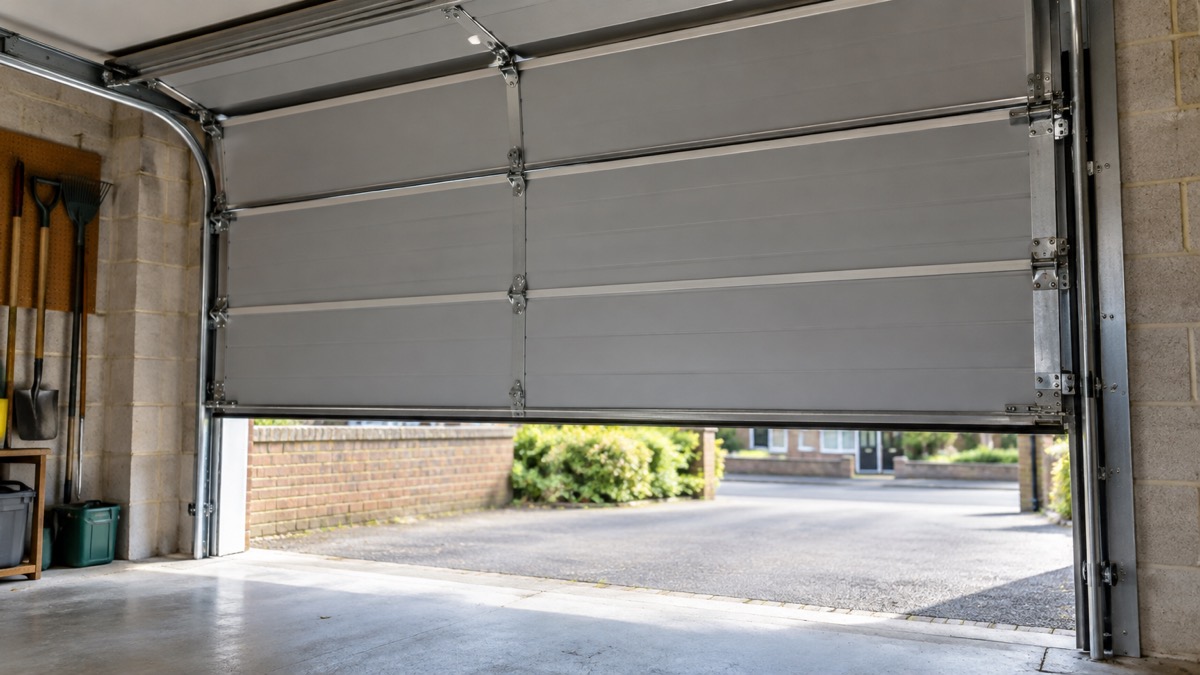
Once the car is out, or you have finished in the garage, the door needs to be secure again. With the power off, the motor cannot lock the door, so the door stays on its manual release until you re-engage it. Close the door fully, then re-engage the release in the reverse of how you disengaged it, following the maker's instructions. If the door will not re-engage, do not force it; have it checked by a qualified individual2.
While the door is on manual release, treat the garage as less secure than usual. Do not leave valuables in a car parked inside, and do not leave the door part way open. If the power cut is planned, the simplest approach is to open the door and move the car before the supply goes off, so the door can stay closed and locked throughout.
Keeping a car inside during a power cut
You do not have to move the car. A car can stay in the garage through a power cut, and there is no need to open the door unless you need to drive. If you want news and information while the power is off, a car radio can be used, though in severe weather it might be safer to stay inside6. A battery powered or wind up radio is the alternative recommended in Scotland's emergency planning guidance, which suggests trying both digital and FM stations7.
If you do keep the car inside, do not run the engine in an enclosed garage. And if the garage is your route to the car and the door will not open, plan around that: keep anything you might need during an outage, such as a torch, a radio and warm clothing, in the house rather than in the car.
The same principle applies to the fridge and freezer if the power is out: keep the doors closed as much as possible to hold the cold in8. A garage door is a much bigger opening, but the habit is the same: open it only when you need to, and close it again promptly.
Where to get help if the release will not work
If the release cable has snapped, the door is jammed, or the door is too heavy to lift, the answer is a repair by a qualified individual, not a workaround2. Until then, use another route in and out of the house, and make sure everyone in the household knows the garage is out of action.
If you are trapped in the garage, or cannot get out of the house because the garage is your only exit, treat it as an emergency. Fire and rescue services advise opening a window and shouting for help until someone calls 999 for the Fire Service4. If you cannot get out, get everyone into one room, ideally with a window, and choose a room whose window opens easily and, if possible, has a phone for calling 9999. Put blankets or towels around the bottom of the door to block out smoke, then open the window and call for help10.
This is also why escape planning matters before an outage. Fire services advise identifying your nearest and best exits, including how to escape all bedrooms at night, and making sure everyone knows what to do11. If you have additional security gates or shutters, make sure they can be easily opened from the inside without a key in a fire3. Keep escape routes clear and keys close by to windows and doors so they can be reached quickly in an emergency12.
Checking the release before an emergency
The time to find out whether the release works is a quiet afternoon, not a dark night. Network operators advise learning how to manually operate electric gates and garage doors and keeping the operating manuals accessible1. A short check now covers most of what can go wrong.
- Find the release handle or cable and confirm you can reach it.
- Read the maker's instructions and keep them with the door or in the house.
- With the power on and the door closed, test that the release disengages the door, following the maker's instructions.
- Check the door lifts by hand with reasonable effort, and stop if it does not.
- Check the hinges, handles and tracks for wear, and have any repairs carried out by a qualified individual2.
- Make sure everyone in the household knows where the release is and how to use it.
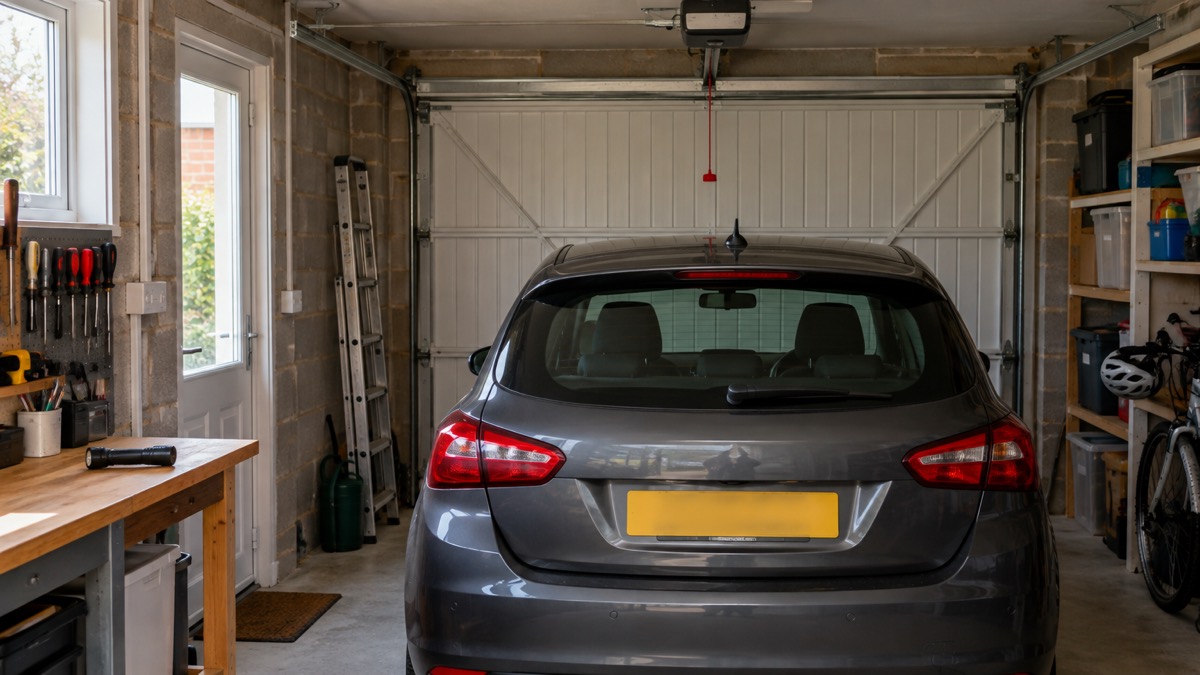
If your garage is also your emergency exit, check that route too. Fire services advise keeping exits clear and checking that doors close properly, and fire door guidance notes that a door only works when it is closed and is useless if it is wedged open or cannot close fully2. The same care applies to a garage door on an escape route.
If the power cut is planned
Planned interruptions are announced in advance, which gives you time to move the car and leave the door closed and locked. Network operators publish advice for planned cuts, and the preparation is the same as for any outage: know how to override electrical equipment without power and keep the manuals to hand1. If you have a stair lift, the same guidance applies: check it has a manual release handle you can use to return the lift to the ground floor if you have a power cut5.
For more on preparing the whole household, see Getting Your Home Ready for a Loss of Supply and the Power Cut Kit Checklist. If the lights have already gone out, What to Do When the Electricity Goes Off sets out the first steps, and How to Report a Loss of Electricity: Ring 105 explains how to report it.
Sources (12)
- 12 tips to prepare for a power cut, Horsted Keynes Parish Council, 2026
- Fire doors, London Fire Brigade, 2026
- Escape plan: houses and converted flats, London Fire Brigade, 2026
- In an emergency, Scottish Fire and Rescue Service, 2026
- Tips to prepare for a power cut, Electricity North West, 2026
- Be informed about hazards: power cuts, UK Government, 2026
- Emergency plan, Ready Scotland, 2026
- Power cuts, Food Standards Scotland, 2026
- If you have a fire, Devon and Somerset Fire and Rescue Service, 2026
- Fire safety for people with mobility difficulties, Devon and Somerset Fire and Rescue Service, 2026
- Escape plan, Devon and Somerset Fire and Rescue Service, 2026
- NIFRS issues safety plea following two house fire fatalities in one day, Northern Ireland Fire and Rescue Service, 2025
 Power Cut Kit Checklist
 What to Keep Charged
 Household Emergency Plan
 Food to Throw Away After a Cut
 Keeping One Room Warm
 Heating a Room With a Gas Hob
 Hot Water Bottles and Children
 Unplugging Appliances in a Cut
 Checking Your Trip Switches
 Vehicle Touches Overhead Line
 Reporting a Damaged Substation
 Protected Sites
 Heatwaves and Power Cuts
 Smart Meters and Power Cuts
 Keeping Medicine Cold