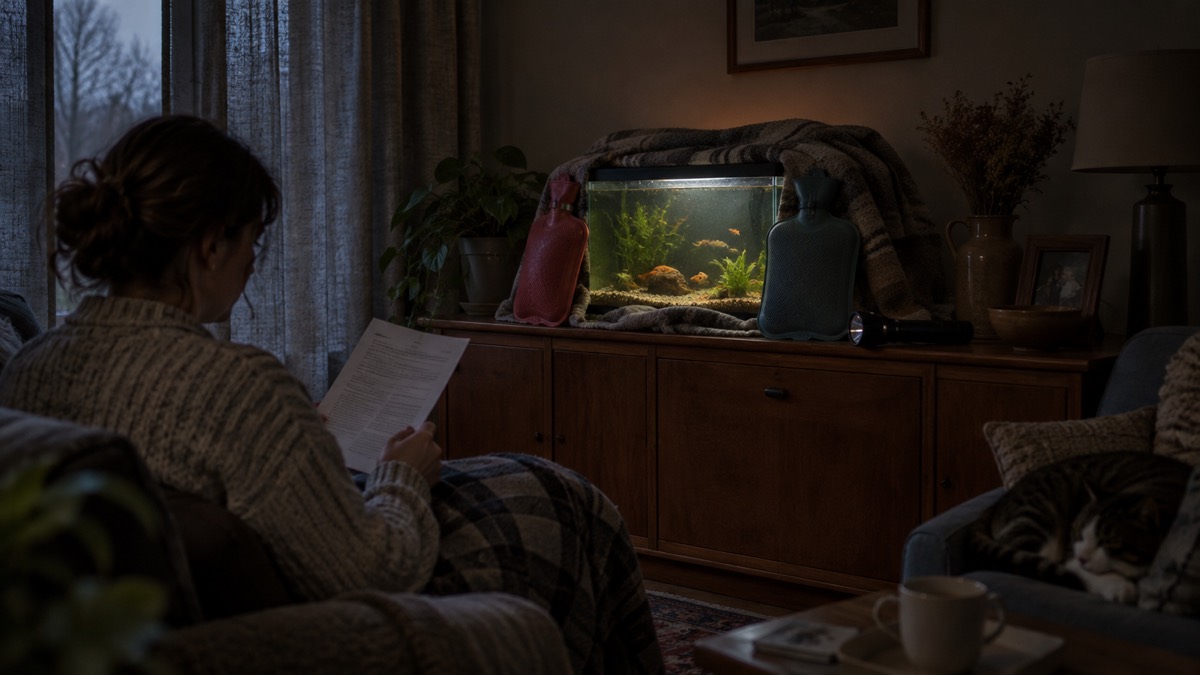
When the electricity goes off, a fish tank starts to cool, and a tropical tank is the one that suffers first because it depends on a heater. The advice from the electricity network operators is straightforward: wrap the tank in blankets for insulation, cover the top to trap warmth, and if you can, fill hot water bottles with warm water and place them around the outside of the tank1. Do this early, while the water is still at its normal temperature, rather than waiting for the tank to cool.
SSEN, the network operator for northern Scotland and central southern England, says fish and reptiles should manage for a couple of hours without power. After that time you may need to unplug your filter to stop harmful toxins entering the water, and disturbing the water can help2. Citizens Advice adds that a battery powered filter for a tropical tank can be used for short times during power cuts3.
The other thing to know is what not to do. Keep the tank warm, keep the filter safe, and leave the water alone at first.
Keep the tank warm: wrap it in blankets
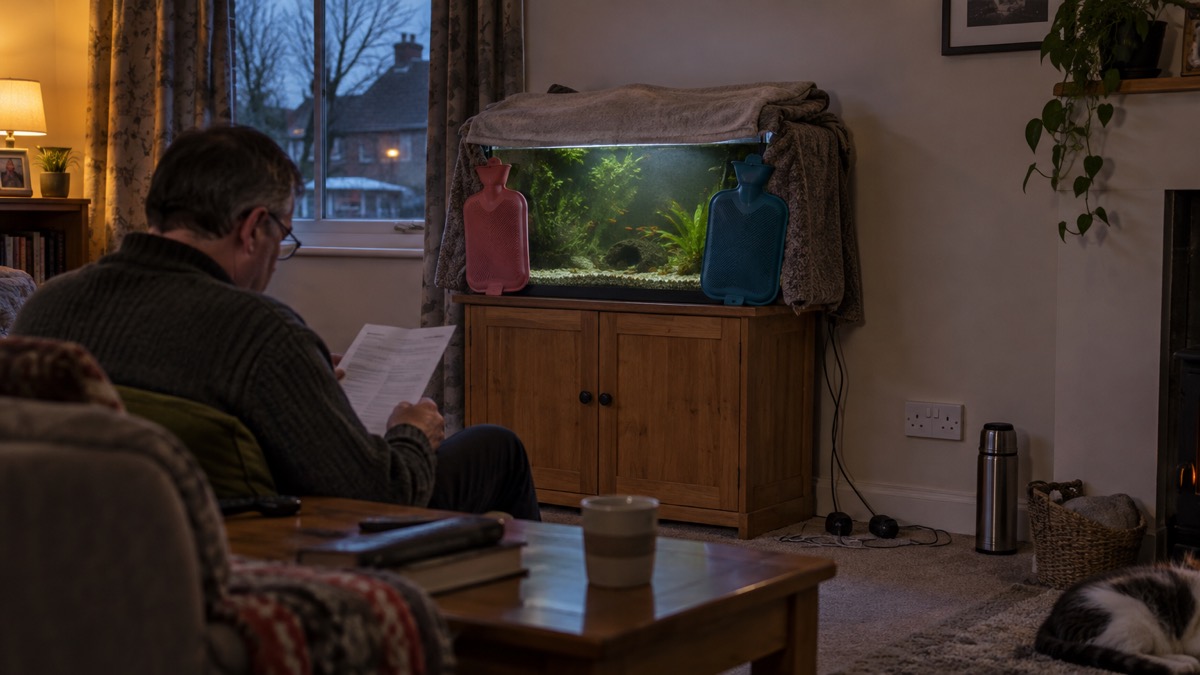
Insulation is the main job, and it is the same method whichever network operator you ask. NIE Networks sets it out as three steps: wrap the tank in blankets, use hot water bottles to retain heat, and cover the top to trap warmth1. SP Energy Networks gives the same advice for tropical fish and reptiles during a planned power cut: wrap the tank in blankets for insulation and, if possible, fill hot water bottles with warm water and place them around the outside of the tank5. Northern Powergrid's version is shorter again: cover tanks with blankets to help maintain temperature if the outage is long6.
The point of wrapping early is that a blanket slows heat loss rather than adding heat. Once the water has cooled, wrapping it keeps it cool. So start as soon as the lights go out, or before a planned interruption begins.
Where the hot water bottles go
Place them around the outside of the tank. Do not put a bottle inside the tank, and do not rest one on the lid where it could tip into the water. If you have several, spread them along the sides rather than crowding one end, so the heat is even.
Covering the top
Covering the top traps warmth1. The tank lid does part of this job already; a blanket over the top does the rest. Keep the cover clear of any light fitting that is still hot, and do not seal the tank so tightly that you cannot check on the fish.
Getting ready for a planned power cut
A planned interruption is the easy case, because you know when it is coming. Network operators advise boiling water in advance and keeping it in a flask for tea, coffee or soup7, and SSEN suggests boiling water and keeping it in a thermos flask so you can make hot drinks or fill a hot water bottle if it gets too cold8. That flask is also your supply for refilling hot water bottles around the tank.
Before the supply goes off:
- Boil water in advance and keep it in a flask for tea, coffee or soup if you know a planned power cut is coming8.
- Wrap the tank and cover the top before the power goes off, not after1.
- Unplug the tank filter if you are preparing for an outage, and have a blanket or foil ready to wrap the tank7.
- Check your battery powered filter is charged and to hand, since it can be used for short times during power cuts3.
- Leave a light on so you know when power is restored9.
If you are unsure how your own fish or reptiles will cope, contact your local fish or tropical animal supplier for further information5. For the wider household job, see getting your home ready for a loss of supply and the power cut kit checklist.
Reptile tanks need the same warmth
The network operators treat fish and reptiles together. SSEN's advice covers both: fish and reptiles should manage for a couple of hours without power, after which you may need to unplug your filter2. For heated tanks or aquariums, consider a battery-powered backup or insulation methods10.
A vivarium heat lamp will not work without electricity, so the warmth has to come from insulation and hot water bottles instead. Northern Powergrid advises that if you rely on heated tanks or aquariums, you should consider a battery powered backup or insulation methods6. For a reptile tank, that means the same blanket wrap and the same bottles around the outside.
If you are unsure, contact your local fish or tropical animal supplier for further information5. The general advice for pets and livestock is to make sure they are comfortable and have plenty of food and water10.
Tropical fish, coldwater fish and feeding
Tropical fish are the ones the guidance singles out, because they depend on a heater. For heated tanks or aquariums, consider a battery-powered backup or insulation methods10. Citizens Advice names a battery powered filter for a tropical fish tank as the backup to buy3.
On feeding, the general guidance for pets and livestock is to ensure they are comfortable and have plenty of food and water10. With fish, the caution is not to overfeed. Uneaten food spoils the water, and while the filter is off the water is already under strain. Feed sparingly and remove what they do not eat.
| Tank type | What the guidance says | What to do |
|---|---|---|
| Tropical fish | Named specifically by network operators and Citizens Advice1 | Wrap in blankets, cover the top, hot water bottles outside, battery powered filter for short times1 |
| Reptiles in a vivarium | Treated alongside tropical fish2 | Same insulation method; the heat lamp will not work without power1 |
| Coldwater fish | Not covered by specific advice | Ask your local fish supplier if unsure5 |
What to do, and not do, while the power is off
Work through this in order:
- Wrap the tank in blankets and cover the top to trap warmth1.
- Put hot water bottles filled with warm water around the outside of the tank1.
- Wait 1 to 2 hours before making any changes to the aquarium4.
- After a couple of hours without power, unplug the filter to stop harmful toxins entering the water, and disturb the water to help2.
- Use a battery powered filter for short times if you have one3.
- Leave a light on so you know when the supply returns9.
"Fish and Reptiles should manage for a couple of hours without power. After this time, you may need to unplug your filter"
Do not make an immediate water change4. Do not put hot water bottles in the water. And do not leave a filter running dry or half empty once the flow has stopped.
Staying safe with hot water and blankets
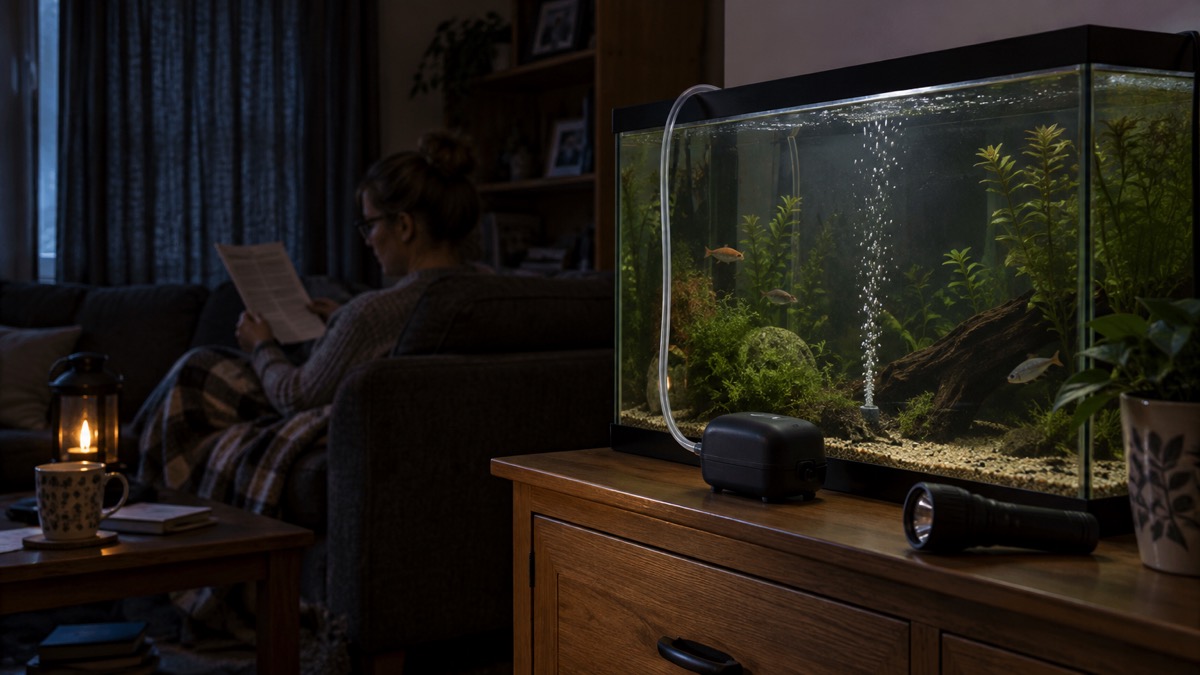
Hot water bottles are the practical way to get warmth to a tank, but they carry a burn risk if they are old, overfilled or filled with boiling water. Fill them with warm water for this job, check them for leaks before they go near the tank, and keep them out of reach of children.
Candles are a fire risk, and the Scottish Fire and Rescue Service advises that lit candles are kept in candle holders11. Keep a torch handy for checking on a tank in the dark9. If you are using a generator or any fuel-burning appliance during an outage, keep it outside and away from openings, and fit a carbon monoxide alarm that will work without mains power. See carbon monoxide risks when the heating is off and staying safe in the dark.
Keep the room itself warm too. Official guidance is to keep warm with blankets and layered clothing, keep doors of unused rooms closed and close curtains to keep the heat in12. The same blankets do double duty for you and the tank. For more on keeping the house warm, see keeping warm without electricity.
When the power comes back
Leave a light on so you know when power is restored9. When it does return, check the tank before you switch the filter back on: look at the water level, the temperature and the fish themselves. Restart the filter and let it run, and check the heater is working again. If the outage was long, the water may need attention, but make changes gradually rather than all at once.
For more on what to check when the supply returns, see when the supply returns.
Sources (12)
- Emergency power cuts, NIE Networks, 2026
- What to do during a power cut, SSEN Distribution, 2026
- Prepare for a power cut, Citizens Advice, 2023
- What about my tropical fish?, NIE Networks, 2026
- Planned power cuts, SSEN Distribution, 2026
- What to do in a power cut, Northern Powergrid, 2026
- Tips to prepare for a power cut, Electricity North West, 2026
- Electricity Supply Emergency Code, SSEN Distribution, 2026
- Storm, Power Cut 105, 2026
- Be prepared, Northern Powergrid, 2026
- Power cuts, Scottish Fire and Rescue Service, 2026
- Be informed about hazards: power cuts, UK Government Prepare campaign, 2026
 Power Cut Kit Checklist
 What to Keep Charged
 Household Emergency Plan
 Food to Throw Away After a Cut
 Keeping One Room Warm
 Heating a Room With a Gas Hob
 Hot Water Bottles and Children
 Unplugging Appliances in a Cut
 Checking Your Trip Switches
 Vehicle Touches Overhead Line
 Reporting a Damaged Substation
 Protected Sites
 Heatwaves and Power Cuts
 Smart Meters and Power Cuts
 Keeping Medicine Cold