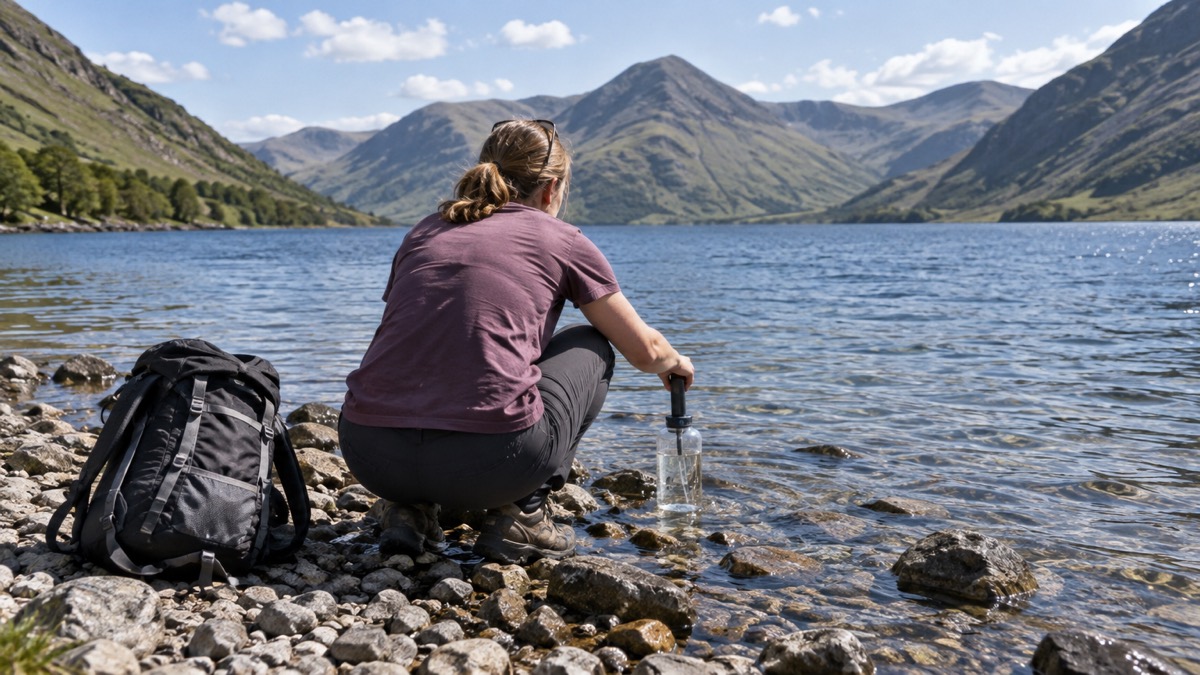
The SteriPEN UltraLight is a UV water purifier the size of a marker pen. You fill a bottle with clear water, put the lamp in, and the ultraviolet light treats one litre in 90 seconds1. It weighs 76.5 g according to the maker's product page, and the lamp is rated for up to 8,000 treatments1. It is the smallest and lightest model in the SteriPEN series2.
It is not a filter and it does not clean dirty water. The maker lists its suitable water sources as tap water and clear water1. If your supply is off and you are collecting water from elsewhere, the UltraLight is one option among several, and it works best on water that is already clear. For the wider picture, see how to make water safe to drink in an emergency and UV purifier pens: how they work and their limits.
This page covers what the UltraLight does, its specifications, how to charge it, how to treat a litre properly, and what the maker's warranty requires. Every instruction here comes from the maker's own manual or product pages, and is named as the maker's advice.
What the SteriPEN UltraLight does: UV treatment for clear water
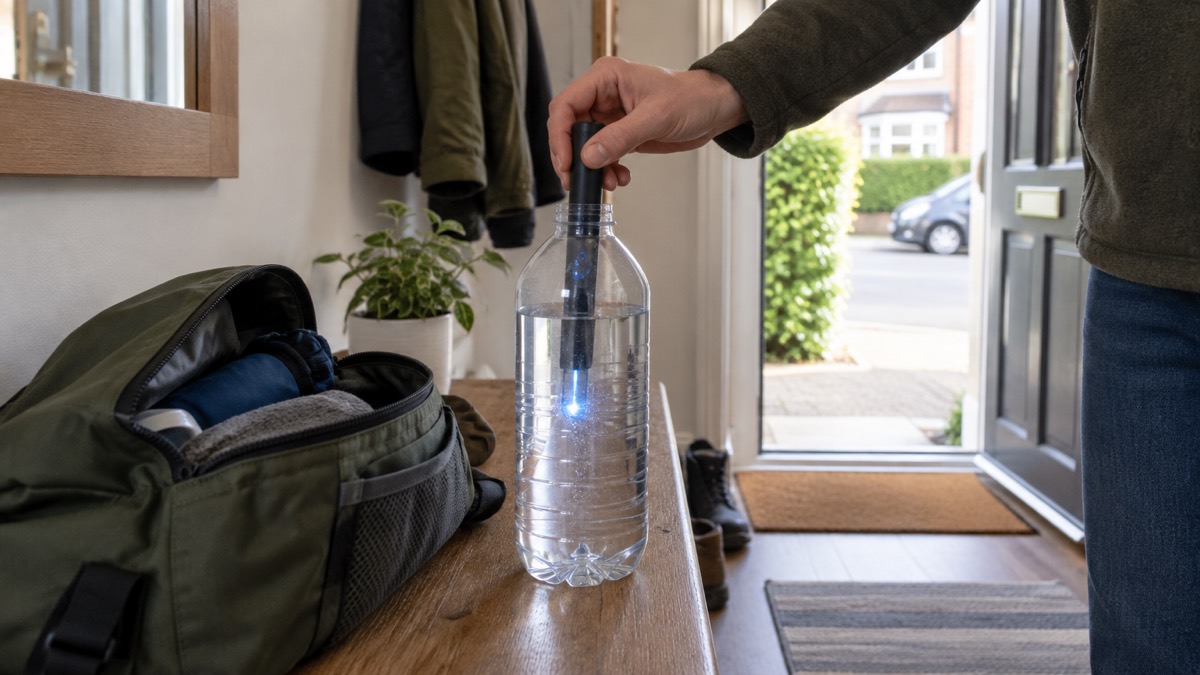
The UltraLight is a UV pen, not a filter1. It works by placing the UV lamp directly into clear water and switching it on. The maker's manual instructs you to place the lamp in clear water and completely submerge the metal water sensor pins, then gently stir the water with the SteriPEN to ensure uniform purification3. The ultraviolet light does the work; nothing is pushed through a cartridge and nothing is removed from the water.
That distinction matters for a household. A filter physically traps particles and some organisms. A UV pen relies on the water being clear enough for light to reach through it. The maker's own specification for suitable water sources is tap water and clear water1, so the UltraLight is designed for water that is already visually clean, not for muddy floodwater or a murky stream. If you are drawing from a stream, river or other outdoor source, read drinking from streams, rivers and other sources safely before you rely on any treatment method.
The maker describes the UltraLight as the smallest and lightest model of the SteriPEN series, able to treat 1 litre per application2. The lamp life is given as up to 8,000 treatments1, and the manual notes that the UV lamp is good for less than 100 uses when it is nearing the end of its life3. That warning is your cue to think about a replacement before a trip or an emergency, not during one.
One litre in 90 seconds: specifications
The headline figure is simple: one litre in 90 seconds1. The maker repeats it across its product pages, describing the UltraLight as treating 1 L in 90 seconds4. The manual gives the treatment size as 1 litre3. That is the unit of work: one bottle, one cycle, 90 seconds.
The rest of the specifications decide whether it suits your household. The table below sets out what the maker lists.
| Specification | Maker's figure |
|---|---|
| Product type | UV pen1 |
| Treatment size | 1 litre per application, 90 seconds1 |
| Lamp life | Up to 8,000 treatments1 |
| Treatments per full battery | Approximately 203 |
| Battery type | Internal USB rechargeable lithium-ion1 |
| Charging input | 5V 2.5W 0.5A3 |
| Weight | 76.5 g4 |
| Group size | 1, 2 to 5 person1 |
| Water sources | Tap water, clear water1 |
| Model number | ULL-MP-EFG1 |
| Barcode | 06043752047685 |
Two of these figures are not settled. The maker's product pages give the weight as 76.5 g4 and, on another page, as 76 g5, so treat the weight as around 76 g. The group size is listed as 1, 2 to 5 person on one page1 and as 1 on another6, so the two listings disagree. In practice the UltraLight treats one litre at a time, so it suits one person or a very small group who are prepared to run several cycles.
Charging by USB from a wall plug, computer or solar panel
The UltraLight has a permanently installed battery that is charged using a USB cable1. The maker's manual says to charge using a solar panel, wall plug in, or your computer3. The charging input is 5V 2.5W 0.5A3, and the port is a USB Micro-B, protected by a dust cover3.
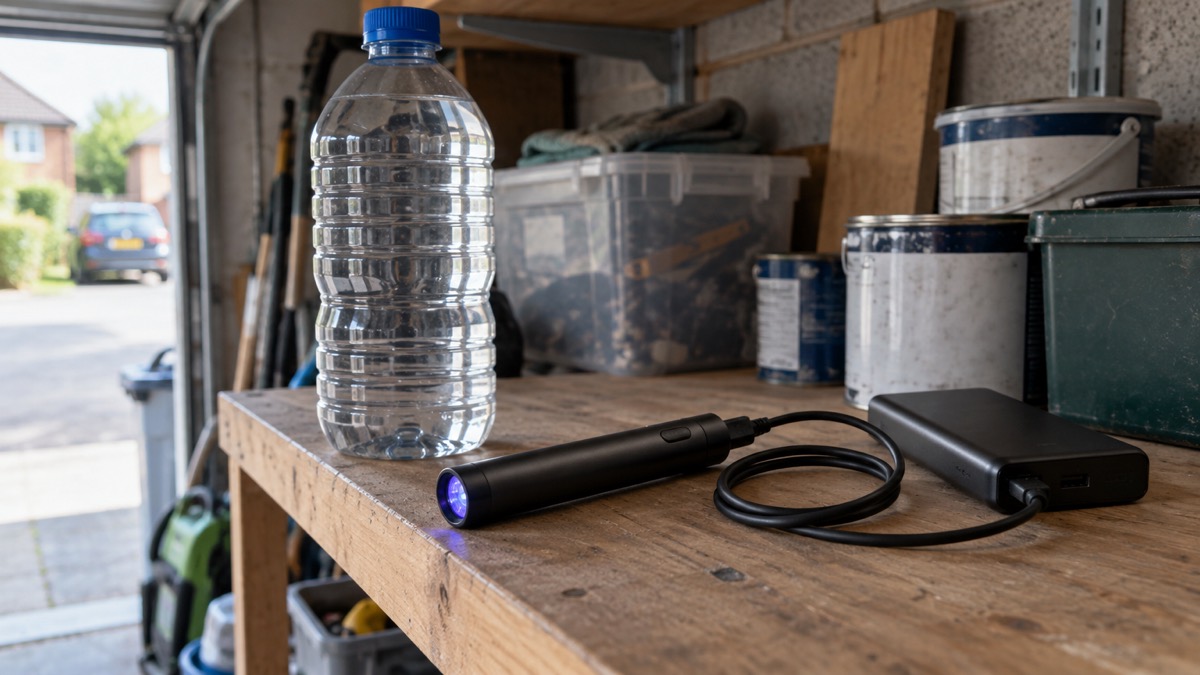
A full battery gives approximately 20 treatments3. That is the figure to plan around: if your household is treating a litre at a time, expect roughly 20 treatment cycles between charges. For a single person that may last several days; for a family it will not. Keep the charging cable with the pen, and if you are relying on it during a power cut, think about where the charge will come from. A power bank or a solar panel can top it up, but the maker does not give a charging time, so do not assume a quick top-up.
The maker of a different product, Luci lanterns, notes that charging via USB is about six times faster than via solar because of the input power7. That is a statement about Luci lanterns, not the UltraLight, but it illustrates the general point: a wall plug or computer will usually be quicker than a small solar panel. If you are preparing for a power cut, our guide to backup power at home sets out the options for keeping small devices charged.
How to treat a litre safely
The maker's manual gives the sequence. Place the lamp in clear water and completely submerge the metal water sensor pins3. Gently stir the water with the SteriPEN to ensure uniform purification3. The treatment size is 1 litre3, and the cycle takes 90 seconds1.
- Fill a clean bottle with 1 litre of clear water8.
- Place the lamp in the water and make sure the metal water sensor pins are completely submerged3.
- Switch on and gently stir the water with the pen to ensure uniform purification3.
- Treat 1 litre per application, as the maker states8.
- Watch the indicator LED: a green LED flashing means treatment is in progress, and it also tells you to recharge the batteries9.
The water sensor is not an obstacle to work around. The maker's manual says: do not attempt to bypass water sensor; it is an important safety feature3. If the pen will not start, check that the lamp is fully submerged and the battery is charged rather than trying to defeat the sensor.
"It is a violation of Federal law to use this product in a manner inconsistent with its labeling."
If you are treating water because your supply has been interrupted, the UltraLight is only one part of the job. Read what to do if you get a boil water notice and boiling to kill germs: how to do it properly for the official alternatives, and purification tablets: chlorine, chlorine dioxide and silver if you want a method that does not depend on a battery.
Cloudy or murky water: what to do instead
The UltraLight is specified for tap water and clear water1. Cloudy or murky water is outside that, so do not rely on the pen to make it safe. If your tap water looks cloudy, the water companies have simple checks. Yorkshire Water advises running your kitchen tap to help it clear, and says the cloudy, brown or yellow appearance is caused by disturbance of natural sediment in the main and is not harmful but is not recommended for drinking8. United Utilities says cloudy or white water usually disappears after leaving a glass of water to stand for a few minutes13. Its leaflet adds that if the water clears from the bottom upwards, the cause is trapped air14.
For a household, the practical sequence is: let the water stand or run the tap, and if it clears, it is likely to be clear enough for the pen. If it does not clear, treat it as not suitable for the UltraLight and use another method. Our pages on why is my tap water cloudy or milky and brown or discoloured tap water explain what the water companies say. If you are collecting from a private supply such as a well or borehole, the Drinking Water Inspectorate's guidance on storage describes disinfecting a system with a 20 mg/L solution of chlorine left to stand for several hours, preferably overnight, then drained and rinsed thoroughly using treated water15; that is a job for the system, not for a pen.
Warranty, registration and support
The UltraLight carries a 3 year limited warranty3. The maker's manual states that product registration is required for warranty, at www.katadyn.com3. Register the pen when you buy it, and keep the model number ULL-MP-EFG1 and the barcode 06043752047685 to hand if you need to contact the maker.
The manual also records that the device complies with part 15 of the FCC Rules and was tested to comply with the limits for a Class B digital device3. That is a US regulatory statement; it does not change how you use the pen in the UK, but it is part of the maker's documentation. The manual adds that it is a violation of Federal law to use the product in a manner inconsistent with its labelling3. The plain reading for a UK household is the same as the safety advice above: follow the maker's instructions.
Katadyn is the company behind the SteriPEN range. Its own description of itself is that it has been trusted since 1928 and develops Swiss-engineered water treatment, nutrition and cooking solutions for the world's toughest conditions16. For the wider SteriPEN range, see SteriPEN Ultra, SteriPEN Adventurer Opti and SteriPEN Classic 3.
Where the UltraLight fits in a household plan
The UltraLight is a personal purifier. It treats one litre at a time1, gives approximately 20 treatments per full battery3, and is specified for clear water1. That makes it a good fit for one person, a walker, or a small household treating a bottle at a time, and a poor fit for a family trying to process several litres a day during a long outage.
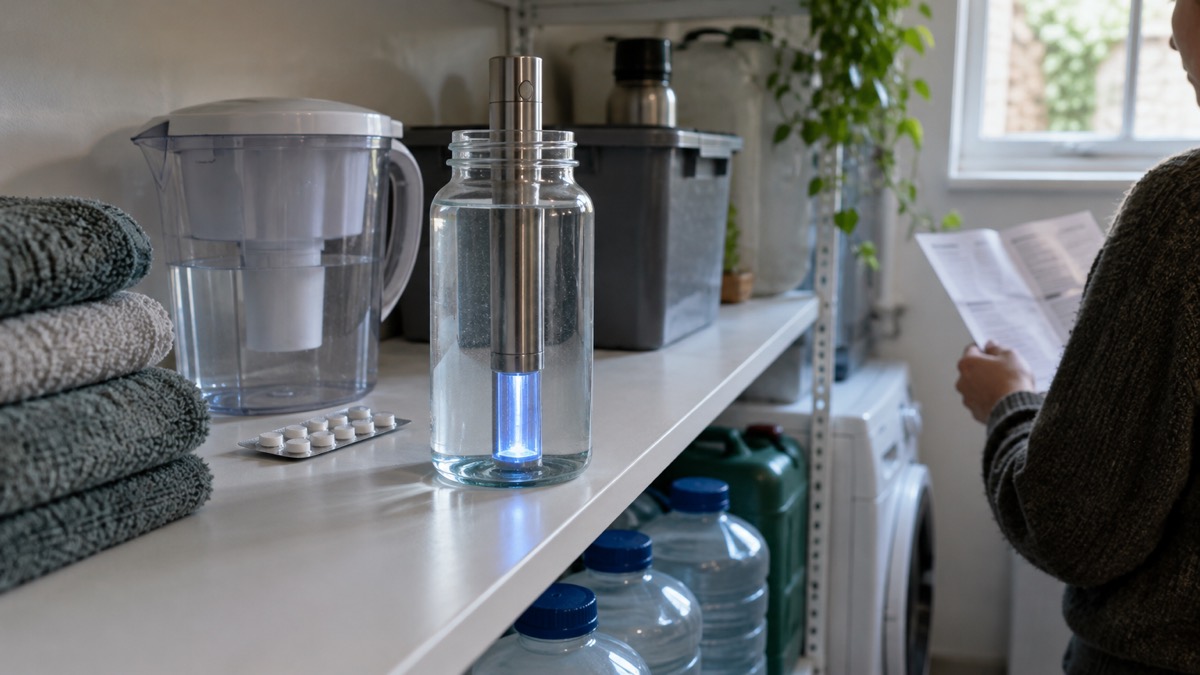
If you are building a water plan, start with how much you need to store. Our guide to how much drinking water to store per person and the home drinking supply storage checklist set out the quantities. For treatment methods side by side, see emergency filters: gravity, pump, bottle and straw types and purification tablets or a gravity filter. The UltraLight sits alongside those as a lightweight, battery-dependent option for clear water.
Sources (15)
- Katadyn SteriPEN UltraLight product page, Katadyn, 2026-10-28
- SteriPEN UV disinfection collection, Katadyn, 2026-10-28
- SteriPEN UltraLight manual, Katadyn, 2020
- Katadyn SteriPEN UltraLight product page (DE), Katadyn, 2026-10-28
- Katadyn SteriPEN UltraLight product page (FR), Katadyn, 2026-10-28
- Katadyn SteriPEN pre-filter product page, Katadyn, 2026-10-28
- How we manage incidents, Yorkshire Water, 2026-10-28
- Manual_Steripen_Ultra_Light_EN_DE_FR_ES_a33d6fec-abdc-4d76-ab03-9e566f41b7fe.pdf, Katadyn North America, Inc.
- Tips to prepare for a power cut, Electricity North West, 2026-10-25
- Resilience partner information, National Grid, 2026
- Cost of living leaflet, Greater Manchester Fire and Rescue Service, 2022
- White water, United Utilities, 2026-10-28
- Understanding water leaflet, United Utilities, 2022
- Water storage in private supply networks, Drinking Water Inspectorate, 2025-11-05
- Katadyn home page, Katadyn, 2026-10-28
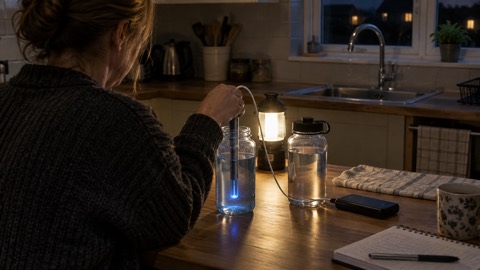 Katadyn SteriPEN Ultra
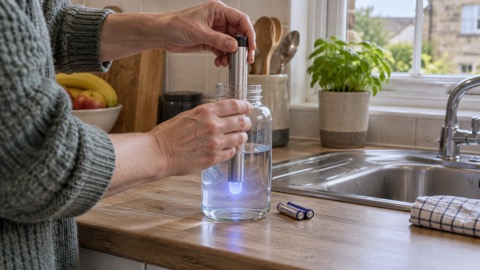 Katadyn SteriPEN Adventurer Opti
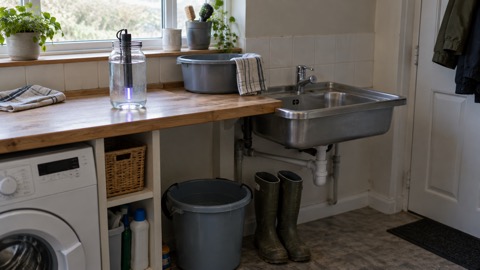 Katadyn SteriPEN Classic 3