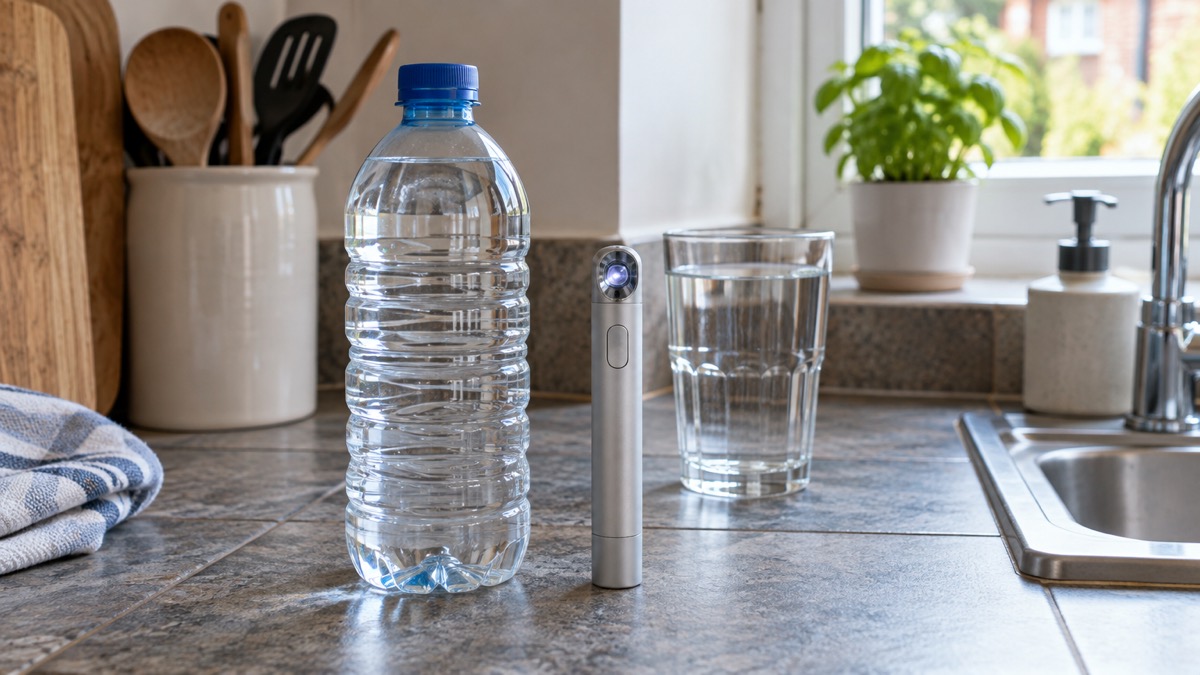
The SteriPEN Ultra is a battery-powered ultraviolet water purifier made by Katadyn, a Swiss company that has been making water treatment equipment since 19281. It is the flagship model in the SteriPEN range, with an OLED display that shows treatment status and battery level2. The maker states that it eliminates bacteria, protozoa and viruses from water3. It does that with a UV lamp, not a filter, so it does not remove grit, sediment or cloudiness: the maker's instruction is to use it only on clear water, because cloudy, sediment-laden water hinders its effectiveness3.
For a household, the practical numbers are these. One click of the activation button treats 1 litre, two clicks treat 0.5 litre, and the treatment takes 90 seconds for a litre or 48 seconds for half a litre3. A full charge gives approximately 50 one-litre treatments, and the lamp is rated for 8,000 activations7. Charging is by USB, from a mains socket, a computer or a portable solar panel, and the maker says a full charge can take up to 5 1/2 hours7.
That makes the Ultra a compact way to make clear water safe for one person or a small group, provided you have a way to charge it and a supply of water you can see through. It is not a way to turn muddy floodwater into drinking water, and it does not replace the water you should already have stored at home. This page sets out what it does, how to use it properly, how to charge and look after it, and what the maker's warranty and support cover.
What the SteriPEN Ultra is and what it removes from water
The Ultra is a UV pen: a slim, battery-powered device you stir in a bottle or jug of water while an ultraviolet lamp runs2. The maker describes it as its flagship model with its most advanced user interface, built around a user-friendly OLED display2. It weighs 140 g and measures 7.3 by 1.6 by 1.3 inches, and it runs on an internal USB rechargeable lithium-ion battery that is included with the pen3.
What it does is stated plainly by the maker: it eliminates bacteria, protozoa and viruses3. That is the job of the UV lamp. UV light damages the genetic material of these organisms so they cannot reproduce, which is why the pen needs no chemicals, no tablets and no filter cartridge. The trade-off is that UV only works on what the light reaches. Anything suspended in the water can shield organisms from the light, which is why the maker's instruction to use clear water only is not a suggestion but a condition of the pen working3.
The pen is rated for group sizes of 1 and 2 to 5 people, so the maker sees it as suitable for a small household as well as a solo user3. It is not a bulk treatment device: it treats half a litre or a litre at a time, and every dose is a separate 48 or 90 second operation with the pen in your hand.
Treating water: one click for a litre, two for half a litre
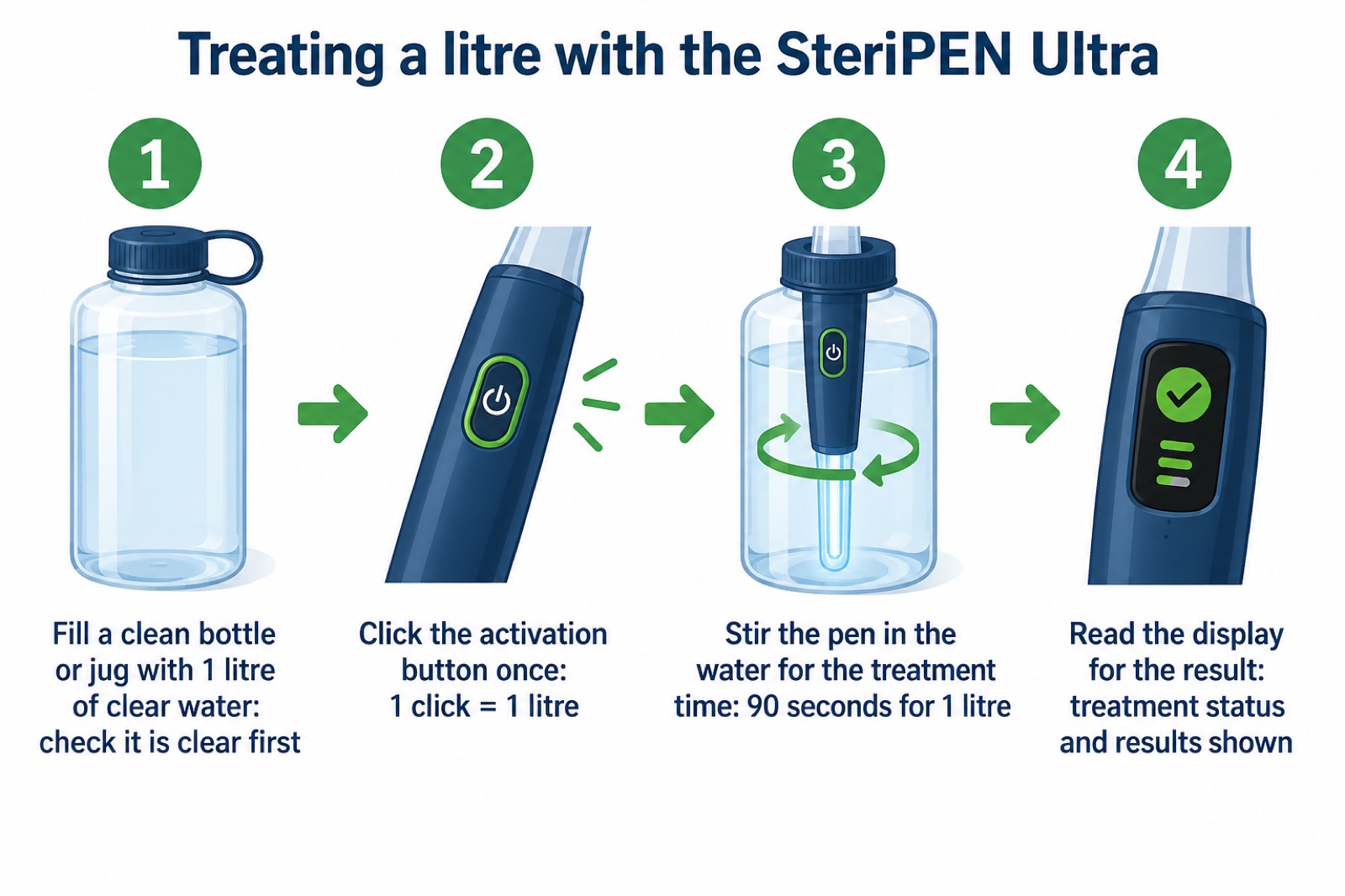
The controls are deliberately simple. The maker's manual says: click the activation button, once for 1 litre and twice for 0.5 litre of water7. The pen then runs for the set treatment time, 48 seconds for half a litre or 90 seconds for a litre, and the display shows the treatment status and results3. When it finishes, the display tells you the dose is complete.
The maker's manual also gives one instruction that is easy to overlook: charge the battery before using the pen7. A pen that has sat in a drawer since last summer may not have enough charge for the doses you need, and the display is there to tell you so before you start.
| What you are treating | Button presses | Treatment time |
|---|---|---|
| 1 litre | 1 click | 90 seconds5 |
| 0.5 litre | 2 clicks | 48 seconds5 |
The maker's product pages give the treatment time as 48 or 90 seconds, and one page states 48 seconds for 0.5 L and 90 seconds for 1 L3. The documents agree on the two doses and their times.
For a household, the arithmetic matters more than the button. A charge gives approximately 50 one-litre treatments7. A family of four each drinking two litres a day needs eight litres, so eight one-litre doses, which is roughly a sixth of a charge each day. That is manageable, but it is eight separate 90 second operations, each with the pen in your hand, so plan to treat in batches into a clean jug or bottle rather than one glass at a time.
Use it only on clear water
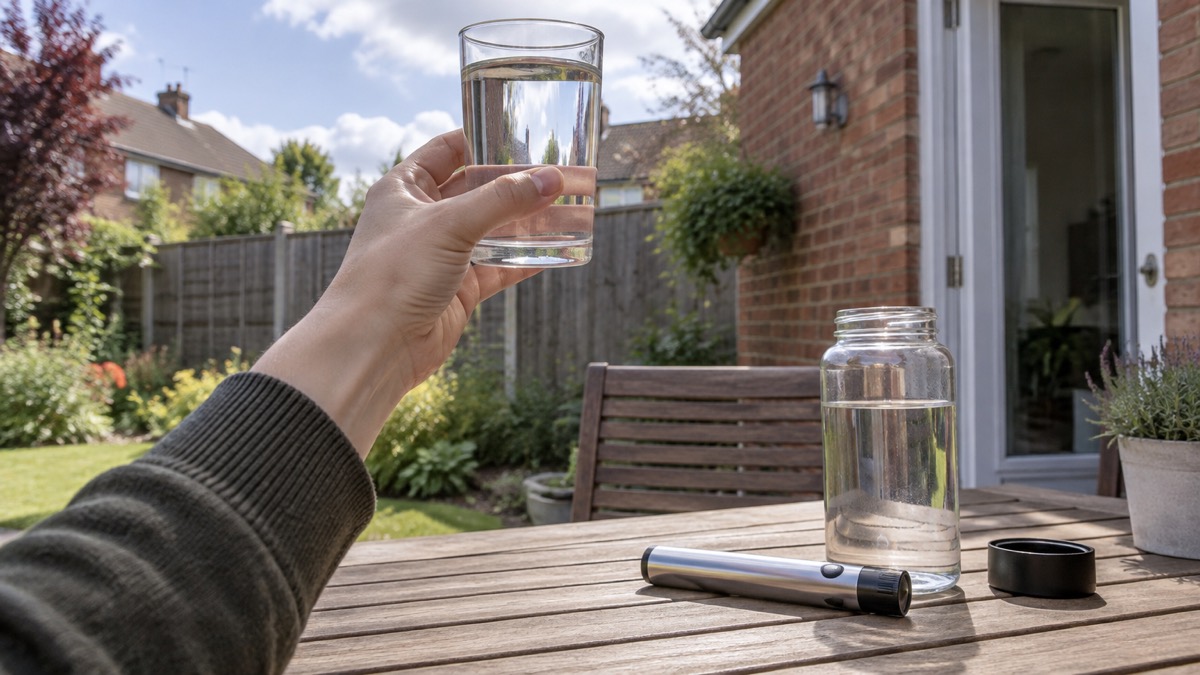
This is the limit that decides whether the pen is right for your household. The maker's instruction is direct: use only on clear water, as cloudy, sediment-laden water hinders effectiveness3. UV light has to reach the organisms in the water. Silt, cloudiness or debris in the water blocks it, and the pen cannot tell you that it has failed to reach something.
"Use only on clear water, as cloudy, sediment-laden water hinders effectiveness."
So the pen is the last step, not the first. If the water you have collected is cloudy, it needs to be cleared before the pen goes anywhere near it: the maker's own instruction is to use the pen only on clear water, as cloudy, sediment-laden water hinders effectiveness9. Our guide to how to make water safe to drink in an emergency sets out the full sequence, and the page on drinking from streams, rivers and other sources safely covers what to think about before you collect.
Two further points for a UK household. First, tap water from a public supply has already been through a treatment process that includes disinfection with chlorine before it reaches your tap, so it is not the water the pen is designed to rescue10. The maker does list tap water and clear water as suitable sources, and describes usage as often, which fits a pen kept for travel and for top-ups rather than a daily household routine3. Second, if your supply is discoloured, the problem is usually the supply, not the water in your glass, and the right response is to follow your water company's advice rather than to treat around it. Our page on brown or discoloured tap water explains what to do.
Charging: about 50 one-litre treatments per charge
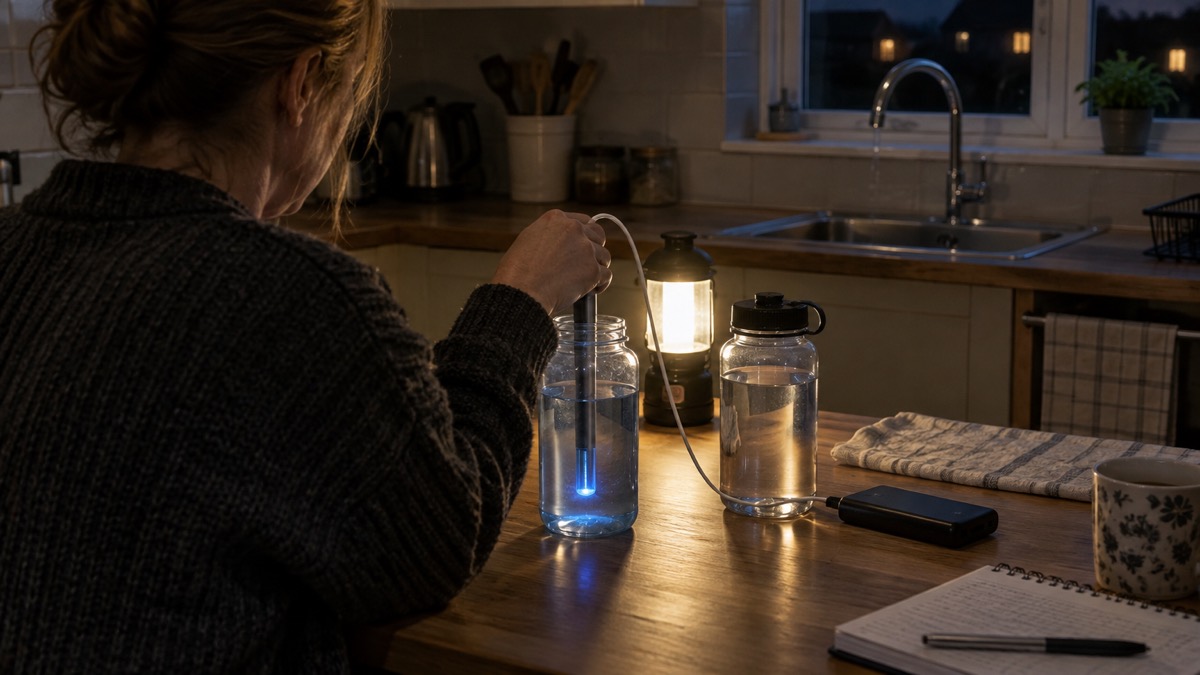
The Ultra charges over USB, and the maker lists a mains socket, a computer USB port and a portable solar panel among the ways to do it7. The power input is 5V 2.5W 0.5A7. A full charge gives approximately 50 one-litre treatments, which is the figure to plan around7.
Charge times in the maker's manual do not all agree, and it is worth knowing that before you rely on one of them:
| Charging from | Time given by the maker |
|---|---|
| A wall socket | 2 to 3 hours6 |
| A computer USB port | 3 to 5 hours6 |
| A full charge, general statement | up to 5 1/2 hours7 |
| A portable solar panel | will vary6 |
The manual gives 2 to 3 hours from a wall socket and 3 to 5 hours from a computer, and separately states that charging will take up to 5 1/2 hours for a full charge6. The figures come from the same manual and are not reconciled, so allow the longer time when you are planning. For solar, the manual simply says charge time for portable solar panels will vary, so treat a panel as a top-up in good light rather than a guaranteed recharge6.
For a household, the sensible routine is to charge from the mains while power is on, keep the pen topped up rather than run it flat, and treat the battery as part of your backup power planning rather than an afterthought. If you are charging from a power bank or a solar panel, check the pen is actually taking charge from the display before you count on it.
Reading the OLED display for lamp life and battery
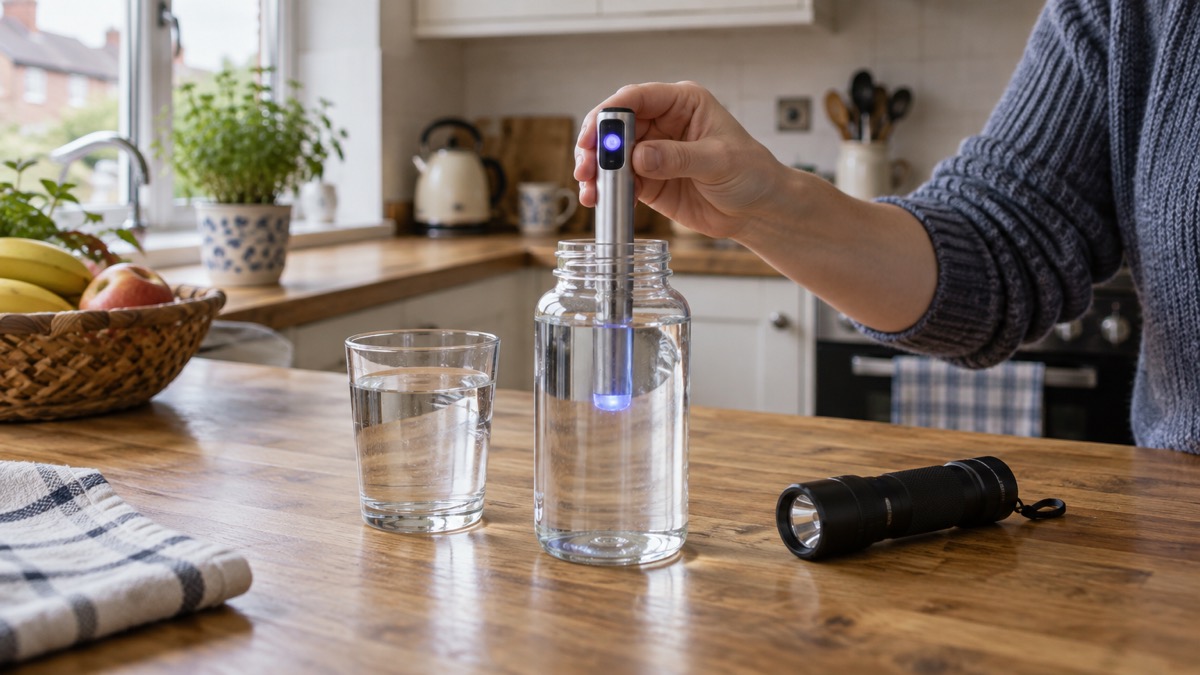
The display is the pen's own status report, and it is worth learning to read before an emergency rather than during one. The maker states that the display shows treatment status and battery level3. The manual gives an example of what an indicator means: the UV lamp has around 75% of its life left and its battery is roughly 75% full7. So the same screen tells you two things at once, how much lamp you have left and how much charge.
The lamp is rated for 8,000 activations7. Each treatment, whether half a litre or a litre, is one activation, so the lamp life is counted in doses rather than litres. A household treating eight litres a day would use eight activations a day, which puts the 8,000 figure in context: it is a long life for occasional and travel use, and it is a finite one if the pen becomes your daily supply.
The pen's parts are listed by the maker as the USB end cap, lamp cover, OLED screen, activation button, water sensor pins and UV lamp7. The water sensor pins are what tell the pen it is in water, so keep them clean and make sure the lamp end is properly in the water before you start a dose. If the display shows a low battery or a lamp warning, stop and deal with it before treating water you intend to drink.
Warranty, registration and support
The Ultra carries a 3 year limited warranty, and the maker's manual states that product registration is required for the warranty, with registration at katadyn.com7. That is worth doing on the day the pen arrives, not when something goes wrong.
Registration is also the route by which a maker can reach you. The National Fire Chiefs Council advises households to register products with the manufacturer to validate any warranties, noting that batteries are usually included in warranties, and that registering makes it easier for manufacturers to contact you in the event of safety or recall information11. That advice was written about e-bikes and e-scooters, but the reasoning applies to any device with a built-in lithium-ion battery, which the Ultra has3.
The maker states that compliance testing of the SteriPEN Ultra for the BV and CE marks was successfully completed by Bureau Veritas7. That is the maker's statement of the testing carried out on the product's compliance; it is not a rating of treatment performance, and it does not tell you how the pen will cope with cloudy water, which remains a matter of using it on clear water only4.
For support, the maker's own product pages and manual are the first place to check the specification and the instructions3. If you are weighing the pen against other ways of treating water, our guide to UV purifier pens: how they work and their limits sets the technology in context, and the emergency filters page covers the filter types that clear water before UV treatment. For the wider question of how much water to keep and how to store it, start with how much drinking water to store per person.
Sources (12)
- Katadyn, Katadyn, 2026
- SteriPEN collection, Katadyn, 2026
- Katadyn SteriPEN Ultra UV Water Purifier, Katadyn, 2026
- Katadyn SteriPEN Ultra UV Water Purifier, Katadyn, 2026
- Katadyn SteriPEN Ultra UV Water Purifier, Katadyn, 2026
- SteriPEN Ultra manual (EN, DE, FR, ES), Katadyn, 2020
- SteriPEN Ultra manual, Katadyn, 2020
- SteriPEN collection, Katadyn, 2026
- Katadyn SteriPEN fits-all filter, Katadyn, 2026
- Water quality FAQs, Cambridge Water, 2026
- E-bikes and e-scooters fire safety guidance, National Fire Chiefs Council, 2025
- NFCC guidance on e-bikes and e-scooters, National Fire Chiefs Council, 2022
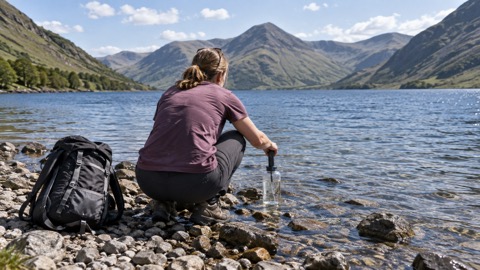 Katadyn SteriPEN UltraLight
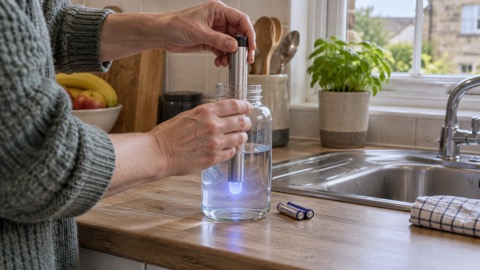 Katadyn SteriPEN Adventurer Opti
 Katadyn SteriPEN Classic 3