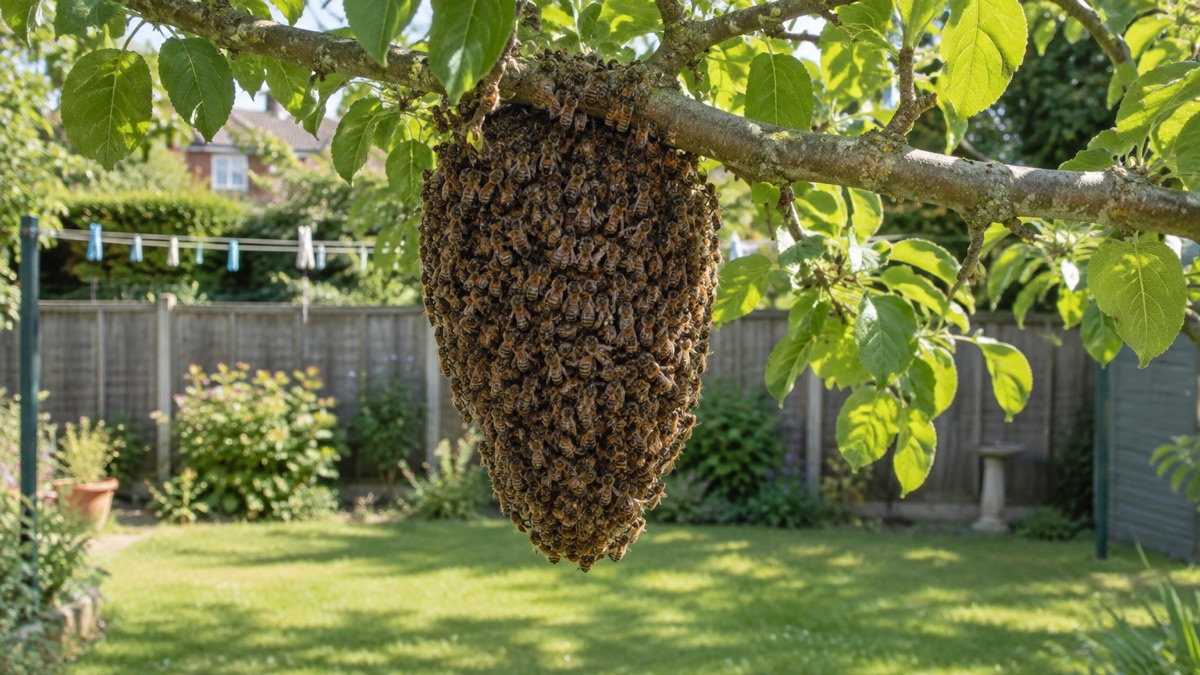
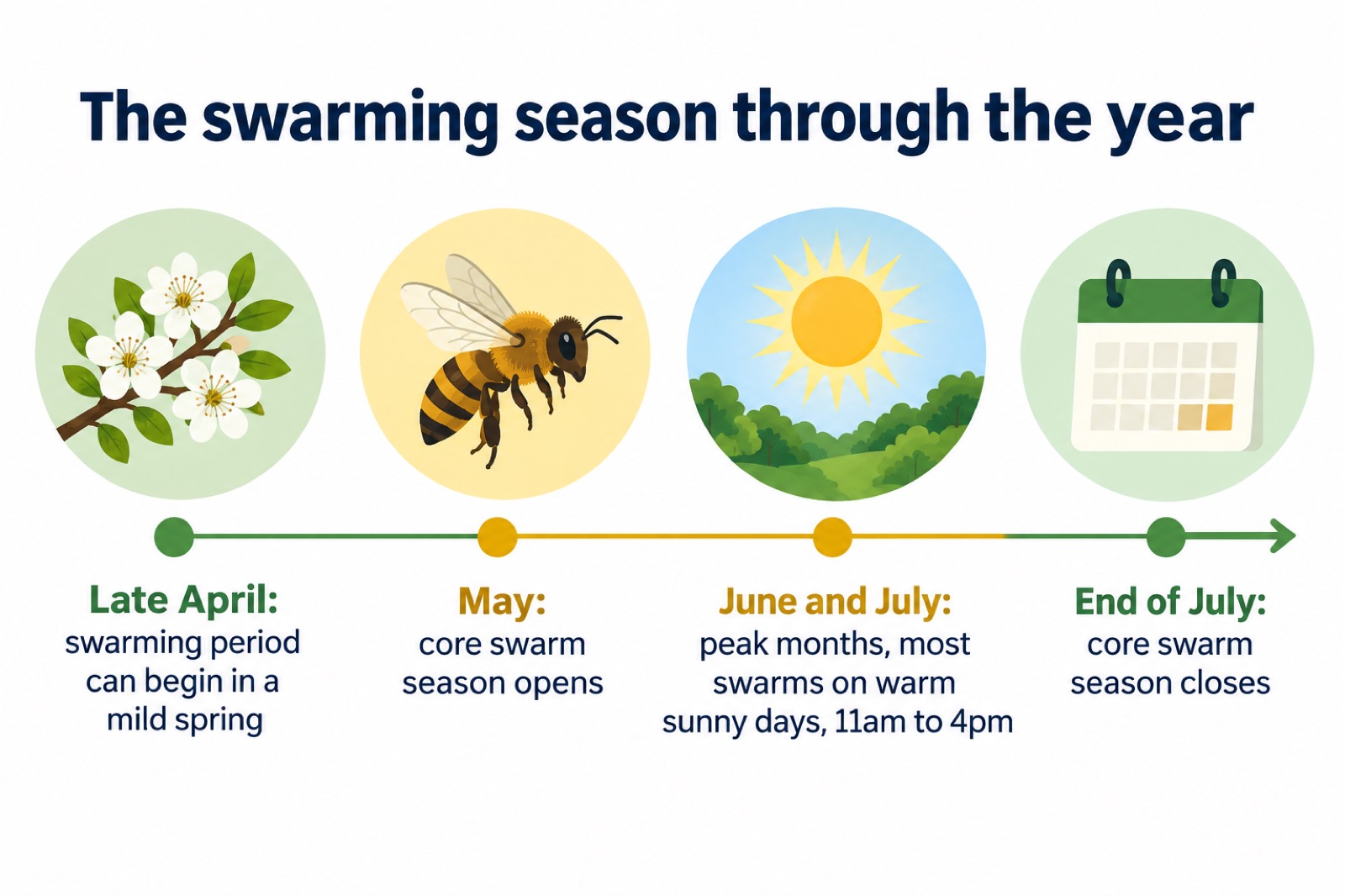
Honey bee swarming season in the UK runs from May to the end of July, with most swarms appearing on warm, sunny days between 11am and 4pm1. A swarm is not an attack. It is a colony reproducing: the old queen leaves with part of the bees to find a new home2. Swarming bees usually do not sting, but the British Beekeepers Association (BBKA) advises staying away from the swarm and keeping children and pets indoors1.
If a swarm lands on your property, the practical answer is to leave it alone and call a beekeeper. Swarm collection is carried out by volunteer beekeepers at their own discretion, and your local beekeeping association can point you to one2. If the swarm moves on before the beekeeper arrives, ring them back so they do not make a wasted journey1.
The rest of this page covers what to do if you are stung, who should take advice before working with bees, what draws bees into a garden, and what keeping a hive at home actually involves.
When swarms appear, and why
Swarming is how a honey bee colony reproduces. The old queen leaves with some of the bees, and the colony that remains raises a new queen2. The bees in the air are not looking for a fight; they are looking for a new home1.
Timing is fairly predictable. Most swarms occur on warm sunny days from May to the end of July, usually between 11am and 4pm1. The BBKA notes that there is often a peak on a fine day after poor weather, when temperatures approach the high teens1. A spell of cool, wet weather holds colonies back; the first bright, warm day afterwards can bring several out at once.
The BBKA also gives a slightly wider window for the swarming period as late April to end July, so do not be surprised by an early swarm in a mild spring6. The two figures come from the same organisation and describe the same season; treat May to July as the core and late April as the outer edge.
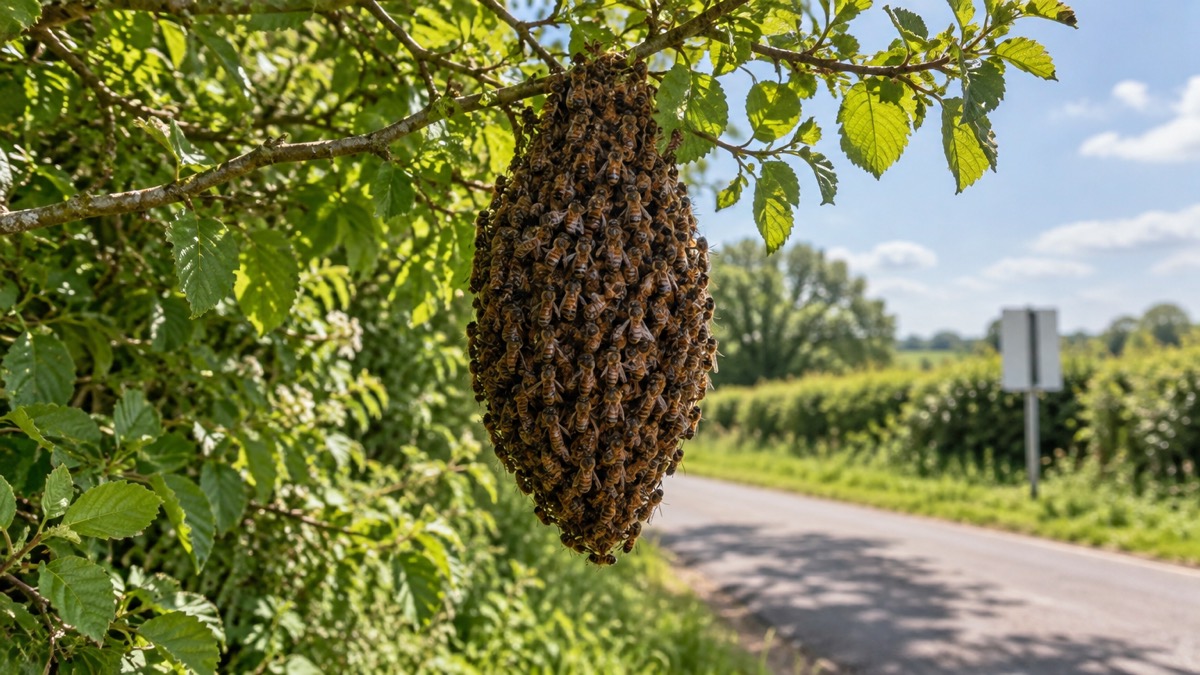
What should you do if you find one? Keep your distance, keep children and pets indoors, and leave the bees alone1. Most honey bee swarms are not aggressive, but they are still wild insects in an unfamiliar place1. Do not spray them, poke them or try to move them yourself.
Then find a beekeeper. Your local BBKA association can advise, and swarm collection is done by volunteer beekeepers at their own discretion2. If the swarm leaves before the beekeeper arrives, or someone else collects it, call them back to save a wasted journey1. There is more detail on what to do when a swarm lands on your property in our guide to a bee swarm on your property.
One reason to act reasonably quickly: if a swarm decides to move into a building, such as a roof or a chimney, it can be very difficult to remove once settled6.
If you are stung: get the sting out, then cool the area
A bee usually leaves its stinger behind, attached to a venom sac3. The sooner it comes out, the less venom goes into the skin, so removal is the first job.
The advice from the NHS and first aid organisations is consistent: brush or scrape the sting off sideways with something firm, such as a fingernail, a credit card or a plastic ruler, as soon as possible7. The Anaphylaxis UK guidance is to flick the sac upwards with one quick scrape of the fingernail or a credit card, which reduces but does not eliminate the risk of a serious reaction8. Do not pinch or squeeze the sac.
After that, treat it at home: wash the area with soap and water, apply a cold compress or ice pack for at least 10 minutes, raise the affected area if you can, and avoid scratching9. The Red Cross gives the same sequence: scrape the sting out sideways, then apply something cold to minimise pain and swelling10.
Watch for signs of a severe allergic reaction in the hours after a sting, and know what anaphylaxis looks like before you need to. Our first aid at home guide covers the wider picture.
Who should get medical advice before working with bees
Beekeeping means regular stings, and for some people that is a serious matter. Anaphylaxis UK advises that any beekeeper who is at risk of anaphylaxis to bee venom should seek medical advice on how to safely continue beekeeping8. That is not a reason to give up on bees, but it is a reason to talk to a doctor first.
The same organisation notes that most people with a large local reaction at the sting site may not need a referral to an allergy clinic, but those at increased risk of future stings, such as beekeepers, may benefit from a referral to an allergy specialist8. If you are considering keeping bees and you have reacted badly to a sting before, raise it with your GP before you buy a hive.
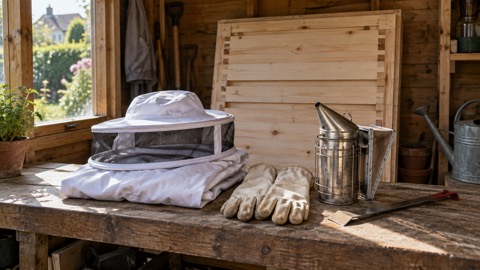
The Scottish Beekeepers Association is blunt about protective clothing: stings are potentially very dangerous in the head or neck areas, and protective clothing must be worn at all times when working with bees12. A veil is not optional kit.
The same sensible step applies before taking up a physically demanding outdoor hobby: if you have an underlying or chronic health condition, speak to a medical professional before you start.
What draws bees into a garden
You do not need a hive to bring bees in, and most gardeners want exactly that. The RHS advises encouraging bees into the garden by planting flowers and herbs that attract pollinating insects, because pollination matters for all fruit13. The BBKA adds that you can help honey bees, bumblebees and solitary bees by planting more flowers for them to feed on, in any size of space from a balcony to open green space, right through the year14.
A few principles make a difference:
- Single, open flowers give easy access to pollen and nectar, and planting several of the same plant together in a group attracts bees better than single specimens15.
- White and red clover are among the plants bees like15. Leaving a patch of clover to flower in the lawn is one of the simplest things you can do.
- A mini meadow on part of the lawn is one of the best and easiest ways to encourage wildlife into a garden, helping not just honey bees but all pollinators15.
- Annual and perennial flowers attract pollinators such as bees, and also aphid-eating insects such as hoverflies16.
Honey bees are reliant on both nectar and pollen throughout their life cycle, and they need food in order to make and store honey15. That is why a garden with something in flower from spring to autumn is more useful than a single burst of colour in June.
If you grow fruit, this is not just charity. The RHS links encouraging bees directly to successful pollination of all fruit13. Our guides to growing fruit at home and gardening for pollinators go further.
Keeping a hive at home: what it really takes
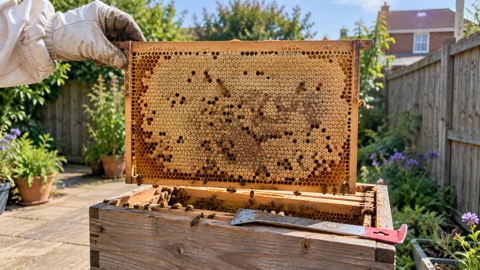
A hive in the garden is a serious commitment, not an ornament. The BBKA sets out the basics plainly.
| What it needs | The BBKA's guidance |
|---|---|
| Space | A reasonably sized site of at least half an acre, with a continual supply of food for the bees throughout the season4 |
| Time in season | Hives checked weekly in late spring and summer, taking up to an hour once a week4 |
| Time across the year | Roughly one afternoon a week from April to August for 3 or 4 hives, plus a few days in August and September to process honey and feed the bees for winter5 |
| Winter | Very little attention from October to March, other than recommended varroa treatments5 |
The Scottish Beekeepers Association gives a similar picture: the active season runs from April to August, with the honey crop and winter feeding following in late summer, and the winter months comparatively quiet apart from varroa treatment5.
There is a legal point that surprises many new beekeepers. Bees are classed as food-producing animals, so beekeepers must maintain documentation containing details of veterinary medicines17. If you keep bees, keep records.
Winter preparation matters too. The BBKA advises uniting small disease-free colonies in late summer or early autumn, fitting mouse guards at hive entrances, adding insulation such as a layer of polystyrene, ensuring adequate ventilation, weighing down the roof on exposed sites and strapping the hive together18. In January the advice is to leave the bees alone, check hives by hefting to estimate remaining stores, clear dead bees from entrances, and always check hives after bad weather19.
Varroa is the other constant. The National Bee Unit publishes guidance on managing it, and some treatments can only be applied to brood-free colonies at the end of autumn or in winter, when the queen stops laying and the bees form a winter cluster20. Read the maker's instructions for any treatment before you use it.
Getting trained before you get bees
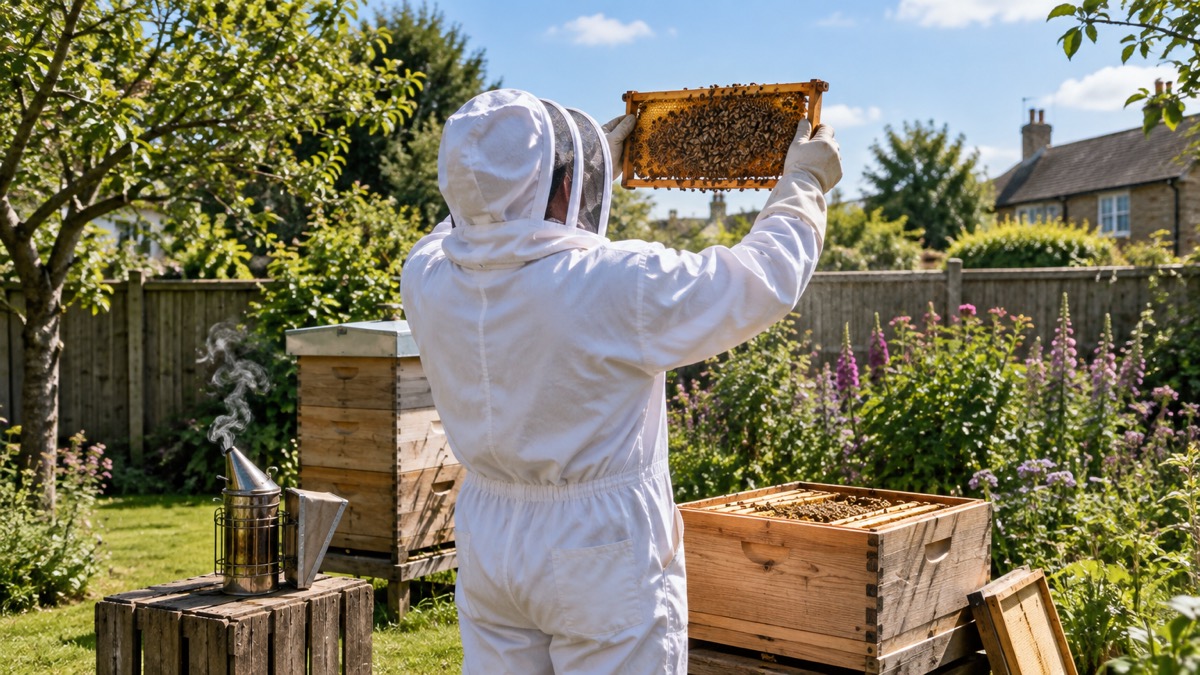
The Ulster Beekeepers Association is clear: anyone who wishes to take up beekeeping, or has an interest in bees, would be strongly advised to do an introduction to beekeeping course, because it gives the necessary knowledge and practical skills to look after bees22.
A typical course is more thorough than people expect. The UBKA's Introduction to Beekeeping course is an Open College Network Northern Ireland Level 1 endorsed course, developed by the UBKA Education and Assessment Team with CAFRE and OCN NI21. It is delivered by qualified tutors in 7 sessions of 2 hours each, which may be held in a classroom or on Zoom, followed by 3 sessions in the local association apiary21. The units cover beekeeping equipment, the natural history of the honeybee, the year's work in the apiary, keeping honeybees healthy, harvesting honey and practical work in the apiary21.
To register, the UBKA directs people to the CAFRE website and to enter "Beekeeping" in the search, where an expression of interest can be given21. Arrangements differ across the UK, so ask your local association in England, Scotland or Wales what is available near you.
Swarms themselves are sometimes offered as a low-cost way to start. The BBKA cautions that swarms are usually free, but you will need guidance from your local association, and if the origin is not known the bees can be diseased or bad tempered4. A course and a mentor are worth more than a free swarm.
Our beekeeping for beginners guide covers hives, registration and the first year in more detail, and the beekeeping starter equipment checklist lists what to have ready.
The neighbours, the law and the wider picture
A hive affects more than the beekeeper. The BBKA warns that if people become alarmed about the presence of bee hives, their complaints can result in the bees being considered a nuisance whether they are or not, and even if neighbours are stung by wasps the bees in your garden may get the blame6. Talk to neighbours before you site a hive, and keep the entrance away from paths and boundaries where people pass.
There is a wider ecological point. The BBKA runs a scheme to offer land to bees, and it is aimed at people who can provide a site rather than necessarily keep bees themselves6. If you have space but not the time, offering it to a local beekeeper is a reasonable middle path.
Honey bees are not the only pollinators, and they are not the only insects that sting. The Scottish Beekeepers Association notes that a colony can build up to 40 or 50 thousand bees in a summer, with the queen laying over 1,000 eggs a day23. That is a lot of insects in one place, which is why siting and neighbour relations matter.
If you are interested in the health side of beekeeping, from varroa to foulbrood, our guide to honey bee health covers the diseases and the reporting duties. And if you are thinking about the wider self-reliance picture, from hens to rainwater, the self-reliance at home section sets out the options.
Sources (23)
- Honey Bee Swarms Information, British Beekeepers Association, 2026
- Honey Bee Swarms, Ulster Beekeepers Association, 2026
- Staying Safe Over the Summer, Healthier Together (NHS), 2026
- Becoming a Beekeeper, British Beekeepers Association, 2026
- Becoming a Beekeeper, Scottish Beekeepers Association, 2026
- Offer Land to Bees, British Beekeepers Association, 2026
- Insect Bites and Stings, St John Ambulance, 2026
- Bee and Wasp Sting Allergies, Anaphylaxis UK, 2026
- Enjoy a Safe and Healthy Bank Holiday, NHS Devon, 2026
- Allergic Reaction, British Red Cross, 2026
- Nettle Sting, St John Ambulance, 2026
- Honey, Scottish Beekeepers Association, 2023
- Planning a Fruit Garden, Royal Horticultural Society, 2026
- Gardening for Bees, British Beekeepers Association, 2026
- Planting for Pollinators, British Beekeepers Association, 2026
- Gardens and Growing, Centre for Alternative Technology, 2025
- How Do I Manage Varroa, National Bee Unit, 2026
- Fighting the Yellow-Legged Hornet, British Beekeepers Association, 2026
- The Beekeeping Year, British Beekeepers Association, 2026
- Oxybee, Thorne, 2026
- Introduction to Beekeeping Course, Ulster Beekeepers Association, 2026
- How to Become a Beekeeper, Ulster Beekeepers Association, 2026
- Bees and Beekeeping Overview, Scottish Beekeepers Association, 2024
 Beekeeping Starter Equipment
 Pet Hens Starter Kit
 Bringing Home Rescue Hens
 Hay Bale Fires
 Livestock in a Heatwave
 Livestock Water Outage
 Sky Lanterns
 BeeBase Registration
 Broody Hen Hatching
 Cleaning a Chicken Coop
 Coop and Run Space for Hens
 Care for Ex-Battery Hens
 Reporting Foulbrood
 Fox-Proofing a Chicken Coop
 Daily Hen Feed Amounts