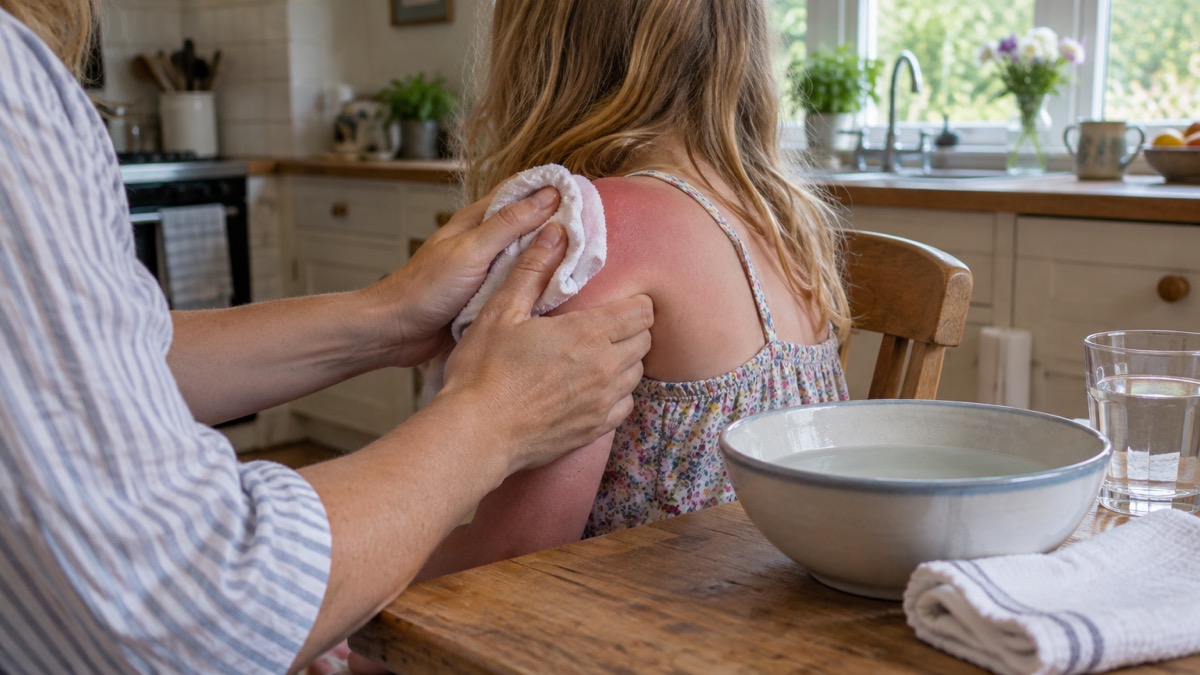
If you have caught the sun, the first thing to do is get out of the sun. Then cool the skin with a cool shower, bath or damp towel, apply aftersun cream or spray, drink plenty of water, and take painkillers such as paracetamol or ibuprofen if you need them1. Keep the burnt skin covered from direct sunlight until it has healed1.
For a child, the same steps apply, but watch more closely. Sunburn usually gets better in 7 days2. It can still blister, and blisters change what you should do: keep the area clean, do not apply creams or greasy substances, and do not burst blisters, because that can lead to infection3.
Most sunburn is treated at home. The exceptions matter: get medical help if you feel unwell or the skin swells badly or blisters4, and for a child get emergency medical care if the burn causes blisters or is extremely painful, causes facial swelling, covers a large area, or comes with fever, chills, headache, confusion, faintness or signs of dehydration1.
Treating sunburn: get out of the sun and cool the skin
Sunburn happens when your skin is overexposed to UV radiation8. That is why the first move is always the same: stop the exposure. Get out of the sun as soon as possible, then cool the skin with a cool shower, bath or damp towel1. The ambulance service in Wales gives the same advice in plainer words: sponge sore skin with cool water or take a cool shower or bath, then apply soothing after sun cream or spray4. The North West Ambulance Service adds that mild sunburn can be treated at home by cooling the skin with a cold bath or shower, sponging it with cold water, or holding a cold flannel to it9.
Cooling is not just comfort. It settles the heat in the skin and makes the next few hours more bearable. Take care not to let a child get cold in a cool bath, and keep the water cool rather than icy.
There is a clear list of things not to do, and it is worth knowing before you reach for the bathroom cabinet. Do not use petroleum jelly on sunburnt skin, do not put ice or ice packs on it, do not pop any blisters, do not scratch or try to remove peeling skin, and do not wear tight-fitting clothes over sunburnt skin1. Once the skin has cooled, aftersun cream or spray is the thing to apply1.
Cool the burn for 10 minutes in a cool shower or bath
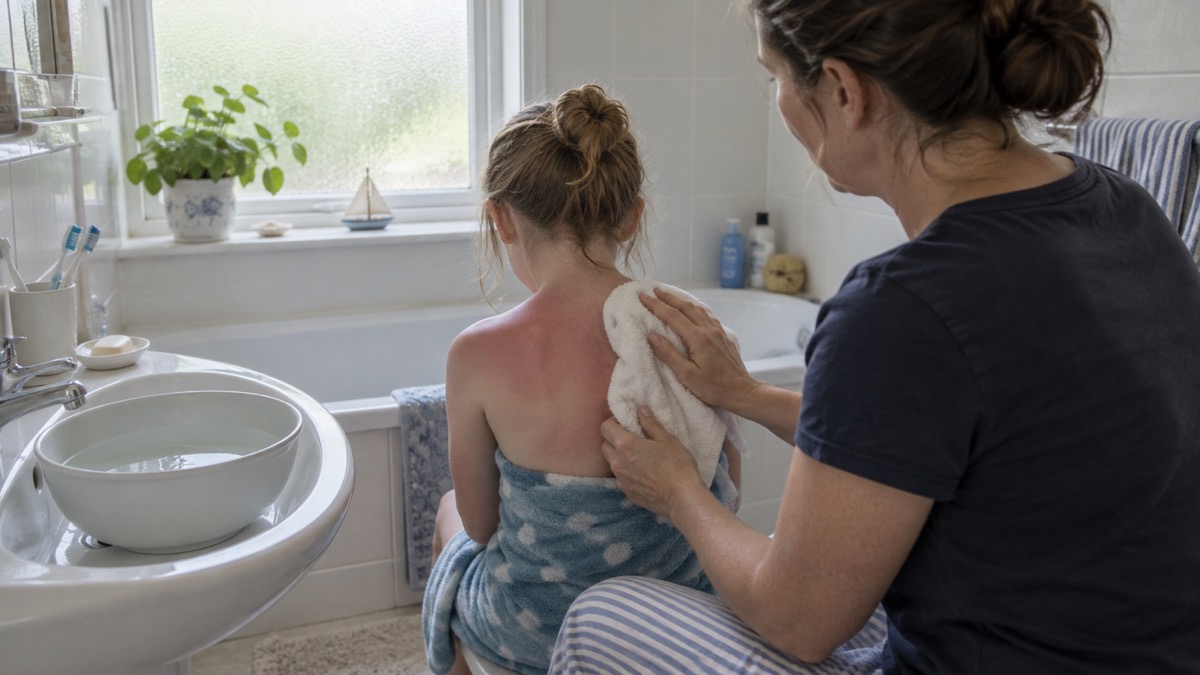
How long should you cool the skin? The advice for burns generally is more specific than the advice for sunburn, and it is the safest guide to follow. Cool the burn with cool or lukewarm running water for at least 10 minutes10. Other official guidance goes further: cool the burn under cool running water for 20 minutes11, cool the burn under cold running water for at least 20 minutes12, and cool the area with water for a minimum of 20 minutes13. The Royal Society for the Prevention of Accidents teaches the same in its Cool, Call, Cover sequence: cool the burn with cool running water for 20 minutes14.
So the range in official advice runs from at least 10 minutes to 20 to 30 minutes10. For sunburn over a large area such as the shoulders and back, a cool shower or bath is the practical way to do it, and 20 minutes is a sensible target. For a small patch, a cool damp towel or a cold flannel held to the skin does the same job9.
A few practical points decide whether this helps or hurts:
- Use cool or lukewarm water, not icy water, and never put ice or ice packs on sunburnt skin1.
- Keep the rest of the body warm while you cool the burnt part, particularly in children.
- If the skin has blistered, keep the area clean and do not apply creams or greasy substances to it3.
Pain relief for sunburn, and no aspirin for under-16s
Sunburn can hurt for a day or two, and ordinary painkillers are the answer. If you have any pain, paracetamol or ibuprofen should help relieve it5. The children's health advice is the same: take painkillers such as paracetamol or ibuprofen1.
The one hard rule is aspirin. Children under 16 years of age should not be given aspirin3. Aspirin must not be given to children under 166. That applies whatever the reason for giving it, including sunburn pain, and it is repeated across official first aid guidance15.
| What you need | What official guidance says | Who it is for |
|---|---|---|
| Pain relief | Paracetamol or ibuprofen should help relieve pain5 | Adults and children, following the dose on the packet |
| Aspirin | Must not be given to children under 166 | Adults only |
| Fluids | Drink plenty of fluids7 | Everyone |
| Skin care | Aftersun cream or spray once the skin is cool1 | Everyone |
Drinking matters as much as pain relief. Drink plenty of fluids7. Water, diluted squash or lower-fat milk are good choices, and high-sugar drinks can dehydrate the body further16. If you feel sick, start with small sips and then gradually drink more, and avoid caffeinated drinks and alcohol as both will dehydrate you15. Signs of dehydration to watch for include increased thirst, less pee, and dry eyes and mouth1. Our guide to dehydration in hot weather sets out the signs in more detail, and how much water to drink covers quantities.
When sunburn needs medical help
Most sunburn settles with cooling, fluids and pain relief. Some does not, and the signs to act on are specific. Seek medical help if you feel unwell or the skin swells badly or blisters4. In Wales, NHS 111 Wales offers further advice on burns and scalds4.
For a child, the list of reasons to get emergency medical care is longer, and it is worth reading before you need it. Get emergency medical care if a sunburn causes blisters or is extremely painful, if your child has facial swelling from a sunburn, if a sunburn covers a large area, or if your child has fever or chills, headache, confusion, faintness, or signs of dehydration such as increased thirst, less pee, or dry eyes and mouth1.
A very serious burn may cause red peeling skin, blisters, swelling and white charred skin10. It is important to get medical help quickly if someone has a severe burn18. If a burn is moderate to severe, you may be referred to a specialist burn care service, and surgery to remove the burnt skin and replace it with a skin graft may be necessary5.
If you are not sure whether the problem is sunburn alone or something more serious, our guide to when to call 999 or NHS 111 for heat illness explains which service to use.
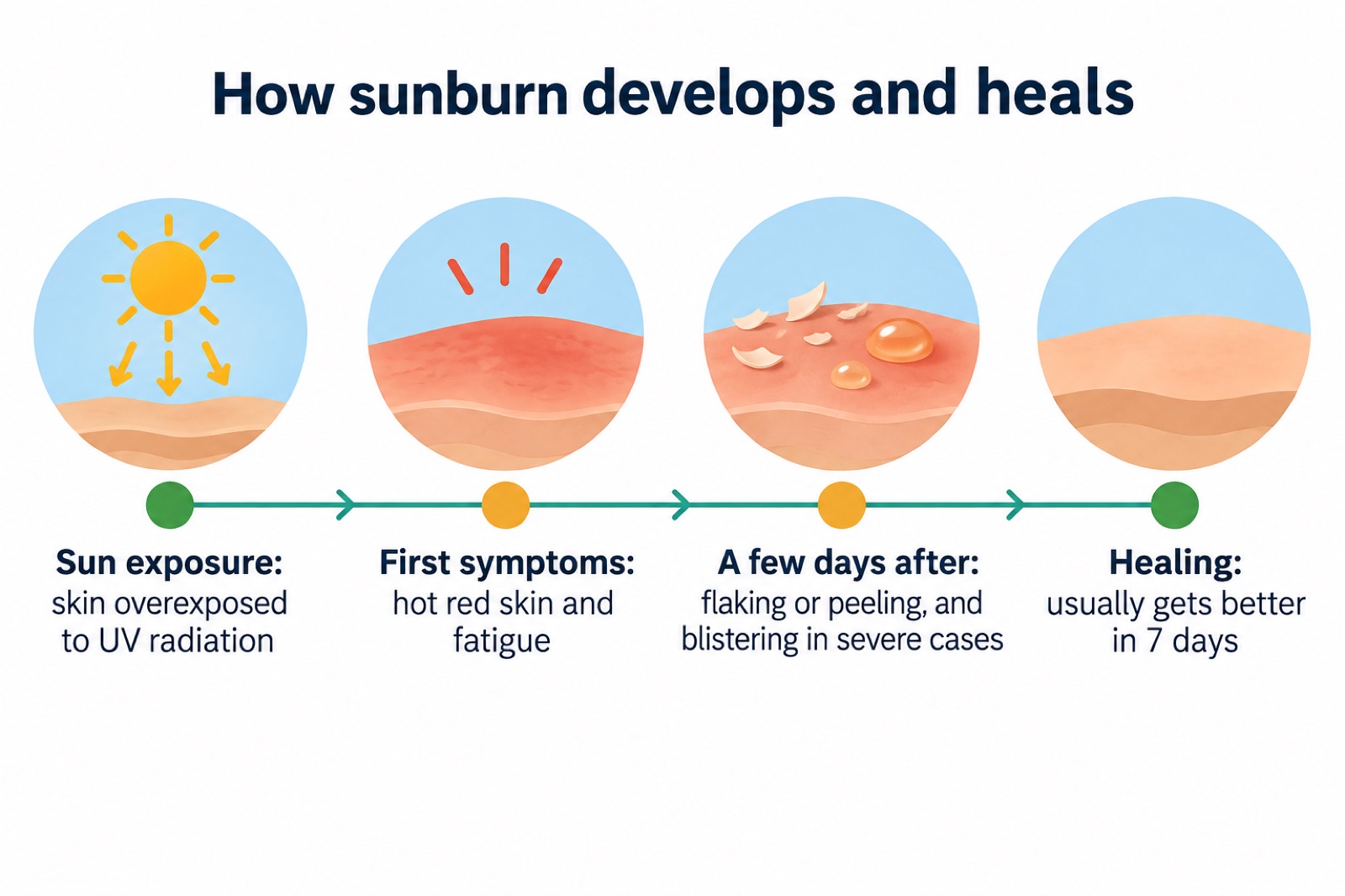
Sunburn usually gets better in 7 days
Sunburn usually gets better in 7 days2. That is the figure to hold on to when the skin is sore and you want to know how long this lasts. The skin may feel hot to touch, feel sore or painful, and flake or peel a few days after you get sunburn, and severe sunburn may blister1.
Other burns take longer. Minor burns normally heal in around 14 days and leave little scarring3, and small burns and scalds can often be treated at home and can take around 2 weeks to heal18. Sunburn is usually the quicker of the two, but a blistered burn behaves more like a minor burn and deserves the same care: keep it clean, do not apply creams or greasy substances, and do not burst blisters3.
While the skin heals, keep it out of direct sunlight. Cover sunburnt skin from direct sunlight until it has healed1. Keep the area covered with cotton clothing, wear a peaked cap or wide-brimmed hat if the burn is on your face, and use sun cream with a high sun protection factor (SPF)3. Peeling skin should be left alone: do not scratch or try to remove it1.
Preventing sunburn in the UK, even on cloudy days
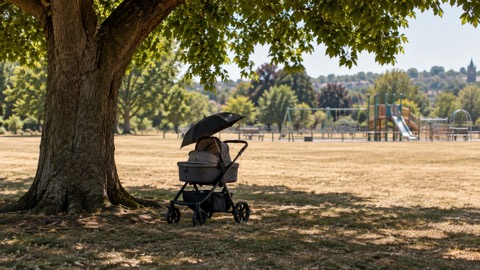
The most useful thing to know about UK sun is that it does not need a heatwave. The sun is often strong enough in the UK to cause sunburn even when it is cloudy7. Sunburn does not just happen on holiday: you can burn in the UK, even when it is cloudy, and there is no safe or healthy way to get a tan16. A tan does not protect your skin from the sun's harmful effects16.
Protection is a combination, not a single product. Protect yourself and your family from sunburn by using a combination of shade, clothing and at least SPF 30 sunscreen when enjoying the sunshine19. If you do go outside, cover up with suitable clothing such as an appropriate hat and sunglasses, seek shade and apply sunscreen20. If you have to go out in the heat, wear UV sunglasses, preferably wraparound, to reduce UV exposure to the eyes, walk in the shade, apply sunscreen of at least SPF15 with UVA protection, wear a hat, and wear light, loose-fitting cotton clothes to minimise the risk of sunburn21. It is also important to avoid too much exposure to the sun by covering up with clothing, staying in the shade, and applying high factor sunscreen22.
Some people burn more easily than others. Some medications can increase the sensitivity of your skin to sunburn, especially ones which suppress the immune system, and your pharmacist can tell you if yours may do this23. Our guide to medicines that raise the risk of illness in the heat covers this in more detail.
At home, closing curtains that receive morning or afternoon sun helps keep rooms cooler, though take care with metal blinds and dark curtains, which can absorb heat24. Our guides to sun safety: sunscreen, SPF and UV for the family and keeping babies and young children safe in hot weather go further on protection for children.
Sources (24)
- Staying safe over the summer, NHS Healthier Together, 2026
- Safety in summer, NHS West Yorkshire Healthier Together, 2026
- Burns and scalds, NHS inform, 2026
- Sun and heat safety, NHS Wales Ambulance Service, 2026
- Burns and scalds, NHS 111 Wales, 2021
- Self care, NHS Cheshire and Merseyside ICB, 2024
- Beat the heat: staying safe in hot weather, UK Health Security Agency, 2026
- Sunburn, Met Office, 2026
- In the sun, North West Ambulance Service, 2025
- Burns and scalds, Just One Norfolk, 2026
- Burns and scalds prevention, NHS Healthier Together, 2026
- Burn awareness, Cheshire Fire and Rescue Service, 2026
- Stay safe this summer, Cornwall Council, 2026
- Child safety hub: burns and scalds, RoSPA, 2026
- Dehydration, NHS, 2026
- How to cope with hot weather, Keeping Well North West London, 2026
- Burns and scalds, Cambridge Community Services, 2026
- Burns and scalds, NHS, 2026
- UV levels, Met Office, 2026
- Coping with hot weather in London, Greater London Authority, 2026
- Heatwave, Dorset Prepared, 2026
- Sunburn, St John Ambulance, 2026
- Advice for vulnerable people, NHS Norfolk and Suffolk ICB, 2026
- Heatwaves | Birmingham Women's and Children's, Birmingham Women's and Children's NHS Foundation Trust
 Baby and Child Hot Weather
 Hot Weather Preparation
 Flood Warning Checklist
 Baby's Room Temperature
 Child Dehydration Signs
 Fans in Very Hot Weather
 Signing Up for Heat Alerts
 Heat Rash
 Calling 999 for Heat Illness
 How Much Water to Drink
 Keeping Cool in a Power Cut
 LPG Tank Safety in Hot Weather
 Medicines and Heat Risk
 New Build Overheating
 Checking On Older Neighbours