
Being unwell at home, or cut off from people while an infection spreads, wears down more than the body. Long stretches alone, worry about relatives, and the loss of normal routines can bring on low mood, anxiety or a sense of being unable to cope. This is a normal response to an abnormal situation, and it is treatable and survivable with the right support. The single most useful thing to know is that free, confidential help exists by phone, day or night, and you do not need to be at breaking point to use it.
If you take one thing from this page, take this: Samaritans is free to call on 116 123, 24 hours a day, 365 days a year, and it is for anyone in emotional distress or struggling to cope, not only people who are suicidal1. In Scotland there is also Breathing Space on 0800 83 85 872, and in Wales you can get emotional support in Welsh on 0808 164 01233. If someone is in immediate danger, call 999.
Talk to someone today: Samaritans on 116 123
The Samaritans free helpline is available 24 hours a day on 116 1231. It costs nothing to call, and it never closes: not at 3am, not on Christmas Day, not during a national emergency. It is there for anyone in emotional distress or struggling to cope1. You can also reach Samaritans by emailing jo@samaritans.org, or through the website at www.samaritans.org1.
Samaritans can provide support to anyone in emotional distress or struggling to cope1. That is deliberately broad. You do not have to have a diagnosed mental health condition, you do not have to be suicidal, and you do not have to justify the call. If isolation during an outbreak has left you feeling flat, frightened, tearful or numb, that is enough. The line is free, it is open 24 hours a day, and the person who answers is there to listen, whatever is on your mind1.
If you would rather write than speak, Samaritans can also be reached by email at jo@samaritans.org, or through its website at samaritans.org/scotland7. Some people find it easier to put difficult feelings into a message than to say them out loud, particularly when sharing a home with others and lacking anywhere private to talk.
One point of housekeeping: older leaflets and posters sometimes show an 08457 number for Samaritans. The number to use today is 116 123, which is free to call from any phone1. If you see the old number printed anywhere, treat it as out of date.
Breathing Space in Scotland: 0800 83 85 87
Scotland has its own dedicated listening service alongside Samaritans. Breathing Space is a free, confidential listening service for people aged 16 and over in Scotland8. It can help if you are experiencing low mood, depression or anxiety4, which are precisely the feelings that long periods of isolation, illness or worry about an outbreak tend to bring on. You can contact a Breathing Space advisor on 0800 83 85 878.
Breathing Space and Samaritans are designed to work together. Breathing Space opens Monday to Thursday, 6pm to 2am, and from 6pm on Friday through to 6am on Monday2, while Samaritans on 116 123 is open 24 hours a day, 365 days a year2. So Breathing Space offers a Scottish service with its own advisors in the evenings and across the weekend, and Samaritans covers the hours and situations Breathing Space does not.
When the line is open
Breathing Space keeps different hours on weekdays and at weekends, and knowing them saves a wasted call:
So on a Saturday night, Sunday or bank holiday Monday, Breathing Space is there round the clock. On a weekday it opens at 6pm and runs into the small hours. During weekday daytime, when Breathing Space is closed, Samaritans on 116 123 is the line to use, as it never closes1. NHS 24 on 111 is also there day or night for urgent mental health support in Scotland5.
Who it is for, and who it is not for
Breathing Space is for people aged 16 and over in Scotland8. If you are under 16, or you are looking for help for someone who is, other services fill the gap. Samaritans on 116 123 takes calls from anyone of any age, at any hour1. SHOUT is a free, confidential, anonymous text support service for anyone struggling to cope, available 24/76, which suits young people who prefer texting to talking. Kooth offers safe and anonymous support for young people aged 11 to 257. None of these needs a referral or an appointment.
Urgent help in a crisis: 111, 999 and local crisis teams
Most of the support on this page is for people who are struggling but safe. If you or someone with you is in a mental health crisis and needs urgent help, there are faster routes.
In Scotland, phone NHS 24 on 111 if you are feeling overwhelmed or need support2. NHS 24 provides urgent mental health support by phone, day or night, and will help you get the right care in the right place, often closer to home and without the need to go to A&E, which may include a phone or video consultation5. That last point matters during an outbreak, when sitting in a waiting room may be the last thing you want or the least safe thing to do.
Elsewhere in the UK, an NHS mental health telephone support helpline provides support to anyone, regardless of age, all day every day9. Cumberland Council's winter health advice adds that if someone is in a mental health crisis and needs urgent help, they can call their local Crisis Team 24 hours a day, 7 days a week10. Your GP surgery's website or answerphone message usually names the local crisis team, or NHS 111 can direct you; see our guide to NHS 111 for how the service works.
If life is in immediate danger, call 999. For deaf people and people with hearing difficulties who need urgent help with their mental health, support is available 24 hours a day, and the 999 BSL service lets deaf users contact emergency services through a British Sign Language interpreter, 24 hours a day, seven days a week, 365 days a year, free of charge11.
Support in Welsh: 0808 164 0123

Emotional support is easier to give and receive in your own language. If you would like emotional support in Welsh, there is a Welsh language line which is free to call on 0808 164 01233. This is a Samaritans line, so the same rules of confidentiality apply, and it exists so that first-language Welsh speakers do not have to discuss distressing feelings in English.
Wales also has the CALL Mental Health Listening Line, a confidential mental health listening and emotional support line which is open 24/7. You can call 0800 132 737, text "help" to 81066, or visit the website12. The Wales Dementia Helpline can be reached on 0808 808 2235, or by text to 8106612. For general health information in Wales, the 111 Wales service covers mental wellbeing alongside physical health.
Other lines that help, and who each suits
Beyond the main services, several helplines cover particular situations. It is worth knowing which exists before you need it, because finding the right line at 2am is much harder than finding it on a quiet afternoon.
| Service | How to reach | What it offers | Who it suits |
|---|---|---|---|
| Samaritans | 116 123, free, 24 hours a day1 | Support for anyone in emotional distress or struggling to cope1 | Anyone, any age, any hour |
| Breathing Space | 0800 83 85 878 | Free confidential listening for low mood, depression or anxiety4 | People aged 16 and over in Scotland8 |
| SHOUT | Text support, available 24/76 | Free, confidential, anonymous text support for anyone struggling to cope6 | People who prefer not to speak aloud |
| SANEline | See the service's details via local crisis leaflets | Out of hours helpline providing support and information, open 4pm to 10pm, 365 days a year6 | People who want information as well as listening |
| The Silver Line | 0800 470 809013 | Helpline for older people13 | Older people feeling isolated |
| Age UK helpline | 0800 678 1602, 8am to 7pm every day14 | Advice if you are worried about a relative or elderly neighbour14 | Families and neighbours of older people |
| Age UK support line | 0800 169 6565, quoting 'WINTER'15 | Support line for people who need extra help in cold weather | Older and vulnerable households |
| CALL (Wales) | 0800 132 737, or text "help" to 8106612 | Confidential mental health listening and emotional support, open 24/712 | Anyone in Wales |
| Kooth | Via its website | Safe and anonymous support for young people7 | Young people aged 11 to 257 |
The Silver Line exists specifically because isolation falls hardest on older people, who may go days without a conversation during an outbreak that keeps visitors away. If you are worried about a relative or elderly neighbour and are not sure whether to step in, the NHS advice for Cheshire and Merseyside is to contact your local council or call the Age UK helpline on 0800 678 1602, open 8am to 7pm every day14.
Some areas also have in-person options. In south west London, for example, Journey Recovery Hubs offer face-to-face support, with the Surbiton hub open Monday and Wednesday 6pm to 10pm and Saturday 2pm to 10pm including bank holidays, and the Twickenham hub open Tuesday, Thursday and Friday 6pm to 10pm and Sunday 2pm to 8pm including bank holidays16. Similar services exist elsewhere; NHS urgent help pages for your area will list what is local to you.
If money worries are part of it: the Breathing Space debt respite scheme
Isolation and worry during an outbreak rarely come alone. Being off work, isolating, or losing income while bills keep arriving makes any low mood worse, and debt letters are a recognised trigger for mental health crises. England and Wales have a scheme built around exactly this connection, and it shares the Breathing Space name with the Scottish phoneline but is a different thing entirely.
The Mental Health Crisis Breathing Space scheme is open to residents of England or Wales with at least one qualifying debt who are receiving mental health crisis treatment. That treatment means being detained under the Mental Health Act, being removed to a place of safety under the Mental Health Act, or receiving crisis care in hospital or in the community from a specialist mental health team3.
If you apply and are eligible, all creditors are informed and must stop any collection or enforcement activity3. In practice that means the chasing letters, phone calls and enforcement action on qualifying debts stop. Two things continue, though. You still need to keep making regular payments if you can afford to3, and the protection is time-limited: your mental health breathing space lasts as long as your mental health crisis, plus an extra 30 days3.
So the route in is to contact a debt advice service first, and to tell them you are receiving mental health crisis treatment. They make the application. If you are supporting someone else through a crisis and debts are piling up, this is one of the most concrete things you can do on their behalf, with their permission.
Getting through the days: keeping well while cut off
Phone lines are for the moments when things overwhelm you. The days between those moments still need filling, and official guidance points to several things that genuinely help.
The NHS five steps to mental wellbeing, at nhs.uk/mental-health/self-help/guides-tools-and-activities/five-steps-to-mental-wellbeing, are the standard starting point, and emergency planning guidance recommends them directly17. Alongside them, the same guidance notes that starting a support group to help others, or making something creative out of bad experiences by, for example, writing, painting or singing, can help you express pain and get through hard times17. During an outbreak, when normal social contact is cut off, both matter more: a support group, even a phone or message-based one, rebuilds connection, and a creative outlet gives difficult feelings somewhere to go.
Contact with other people is not a luxury for those most at risk. Official guidance for health and care professionals is blunt about it: anyone in a high-risk category who is living alone is likely to need at least daily contact during adverse weather, by care workers, volunteers, or informal carers15. The same logic applies during an outbreak, when a household may be isolating for days or weeks. If you know someone in that position, a daily call or message is not a small gesture; it is what the guidance says they need.
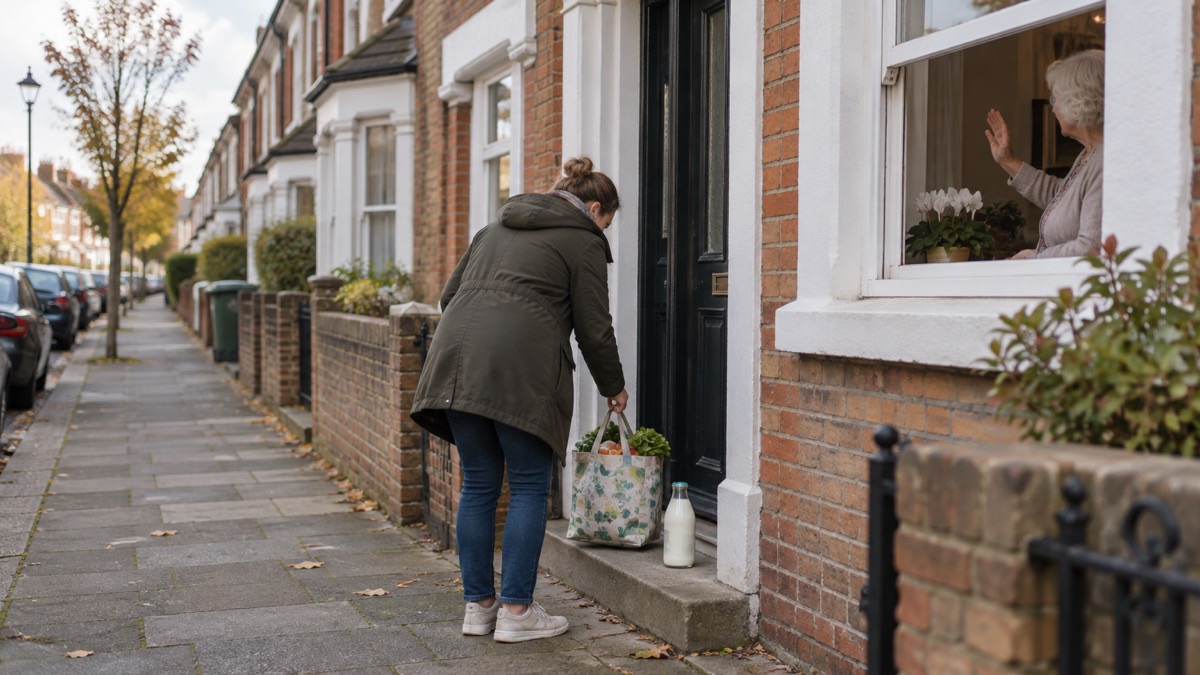
Communities often organise this themselves. Scottish Government guidance on community emergency planning gives simple examples: getting together to clear snow and ice from paths, or offering a helping hand to neighbours who might become vulnerable in an emergency18. During an outbreak the equivalent is checking on neighbours by phone, leaving shopping on doorsteps, or running a street-level message group, all of which keep the person doing the checking well too. Our guide to community resilience covers how to set this up before it is needed.
For day-to-day health information while you are at home, NHS inform provides accurate and reliable health information, including advice on common symptoms, self-help guides and information on where to go for further medical care5. Scotland's Service Directory lists the names, addresses, opening times and service details for a wide range of NHS services in Scotland5, which is useful when you cannot simply drop into a surgery to ask. If you are also managing illness in the household, our guides on staying at home when ill and looking after someone ill cover the practical side.
What to do now: a short checklist
- Save 116 123 in your phone under a name you will recognise, so it is there when you need it and you are not searching for it in a bad moment1.
- If you are in Scotland, save 0800 83 85 87 for Breathing Space as well, and note its hours: 6pm to 2am on weekdays, 24 hours at weekends4.
- If Welsh-language support matters to your household, save 0808 164 01233.
- Write down the number of anyone you would check on daily in an emergency, and anyone who would check on you15.
- If debts are already part of the picture, find the contact details of an FCA-authorised debt advice provider now, before a crisis, so the details are to hand3.
- If you are deaf or have hearing difficulties, note that 999 BSL is available 24 hours a day, seven days a week, 365 days a year, free of charge to deaf users11.
None of this takes more than a few minutes, and all of it removes a barrier at the moment when barriers matter most. The hardest call is always the one you have to look up.
Sources (18)
- How to prepare for flash flooding, Greater London Authority, 2026-10-25
- When should you call 999?, Scottish Ambulance Service, 2026-10-29
- England and Wales energy domestic consumer advice, Ofgem, 2024-11
- How to protect your health when flooding occurs, NHS inform, 2025-11-07
- NHS 24: right care, right place, NHS 24, 2023-10-30
- Flood recovery leaflet, Nottinghamshire County Council, 2025
- Your Health Guide Winter 2025-6, NHS Western Isles Health Board, 2025-12
- How to stay safe during a drought, NHS inform, 2026-05-12
- 111 First, NHS Cornwall and Isles of Scilly Integrated Care Board, 2023-04-05
- Looking after your health: winter advice, Cumberland Council, 2026
- Emergency SMS and 999 BSL, South Tees Hospitals NHS Foundation Trust, 2022-11-10
- Winter health plan, 111 Wales, 2021
- Caring for smokers: advice for carers, Manchester Fire and Rescue Service, 2026-10-29
- Stay well this winter, NHS Cheshire and Merseyside, 2026-10-28
- Supporting vulnerable people before and during cold weather: healthcare professionals, UK Government, 2025-09-24
- Urgent help, South West London and St George's Mental Health NHS Trust, 2026-10-29
- Are You Ready booklet, Culham Parish Council, 2025-09
- Community emergency planning guide: why, Ready Scotland, 2026-03
 Medicine Cabinet Checklist
 Sick at Home Supplies Kit
 Caring for Someone Ill at Home
 Pandemics and UK Household Plans
 Outbreaks Near You
 UK Health Security Agency
 Staying Home When Ill
 Stopping Infections at Home
 Caring for a Sick Person at Home
 Keeping Prescription Medicine
 Medicine Shortages Explained
 Storing Medicines Safely
 Urgent Care and A&E
 Vaccines Against Outbreaks
 Flu Symptoms and Getting Help