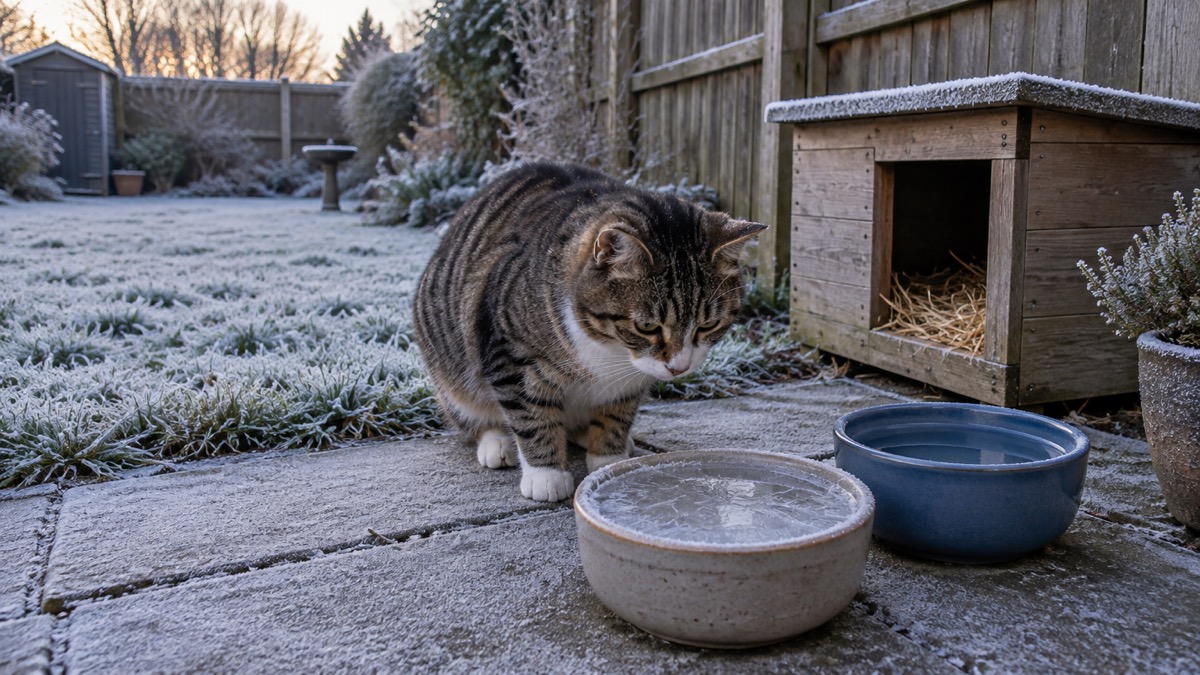
When the weather turns really cold, the first thing an outdoor cat loses is its water. Bowls freeze, puddles ice over, and a cat that relies on what is put out for it can go a day or more without a drink. The single most useful thing you can do is simple: provide fresh water every day, and check the bowl more than once when the temperature stays below freezing1.
If you feed or watch over a cat that lives outside, whether it is yours or a stray, the routine is the same. Refill the water daily, break and remove any ice, and offer water indoors as well in case outside sources freeze2. Alongside the water, give the cat somewhere warm and dry to shelter, and do not leave it outside all night in freezing conditions3.
This page covers the water routine first, because that is what fails fastest in a cold snap, then the shelter and safety points that go with it, and where to get help if a cat looks unwell.
Fresh water every day: why a frozen bowl matters
A cat needs water whatever the weather. In freezing conditions the sources it would normally use, a bowl, a puddle, a garden pond, stop being usable, and the RSPCA's advice is to provide fresh water daily to ensure outdoor cats stay hydrated1. Cats Protection makes the same point from the other direction: make sure your cat has plenty of fresh water indoors in case any outside sources freeze2.
The risk is easy to underestimate because a frozen bowl still looks like a bowl. A cat cannot drink ice, and it will not usually tell you it is thirsty. The PDSA notes that stray cats in particular are at risk of drinking antifreeze, especially as they might not always have access to fresh, clean water6. That is the strongest argument for keeping a clean bowl topped up: a cat with a reliable source of fresh water is less likely to drink from something harmful.
Water also matters for the cat's general condition in cold weather. A cat that is dehydrated and cold is in a worse position to cope with the cold itself. The practical answer is not complicated. Keep the bowl full, keep it clean, and check it often enough that it never sits frozen for a whole day.
Checking and refilling water bowls through a cold spell
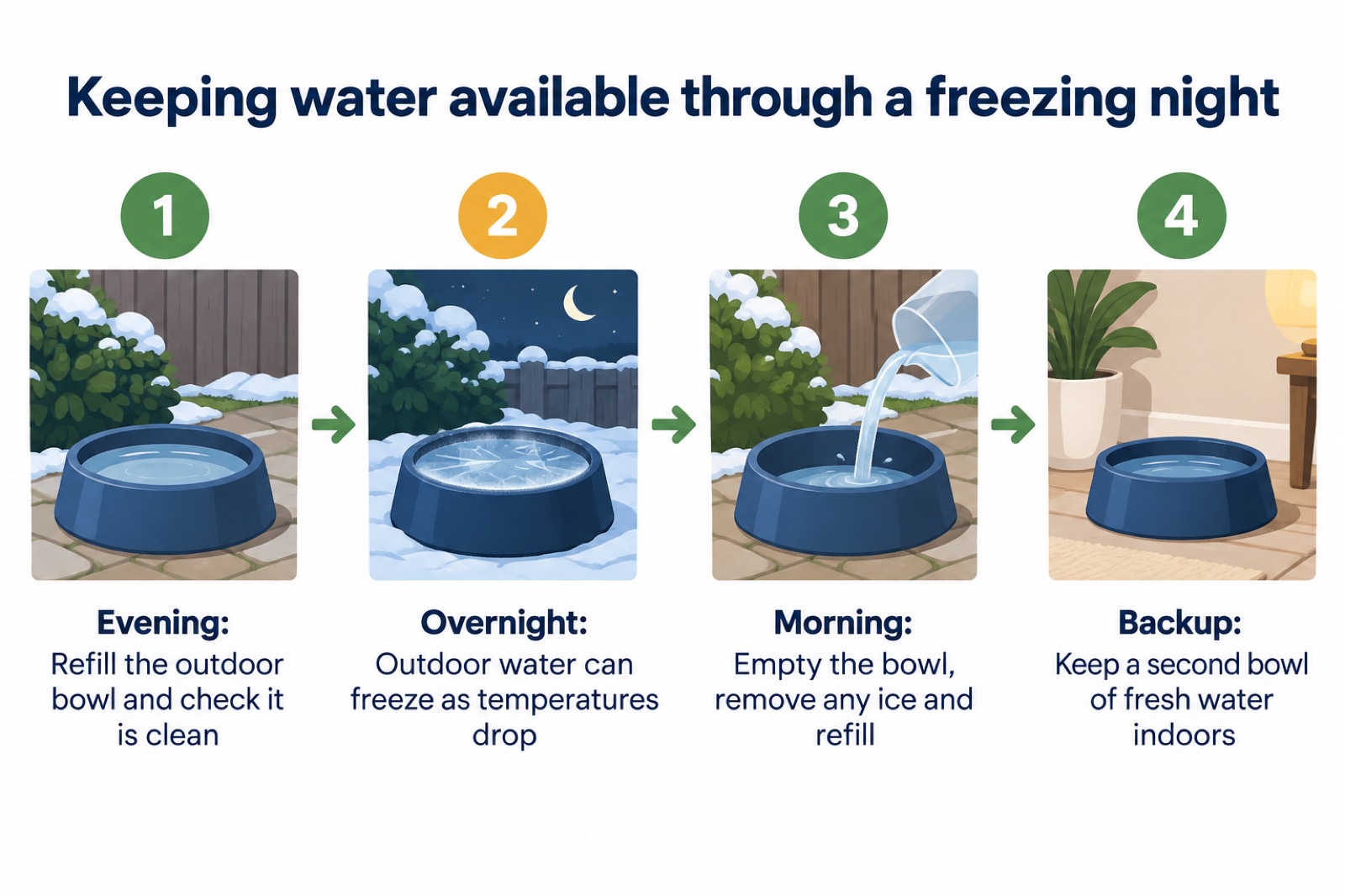
How often you check depends on how cold it is. On a mild winter day, once is usually enough. During a hard freeze, or a spell where the temperature does not rise above freezing, check morning and evening so a bowl that iced over overnight is replaced before the cat goes thirsty through the day.
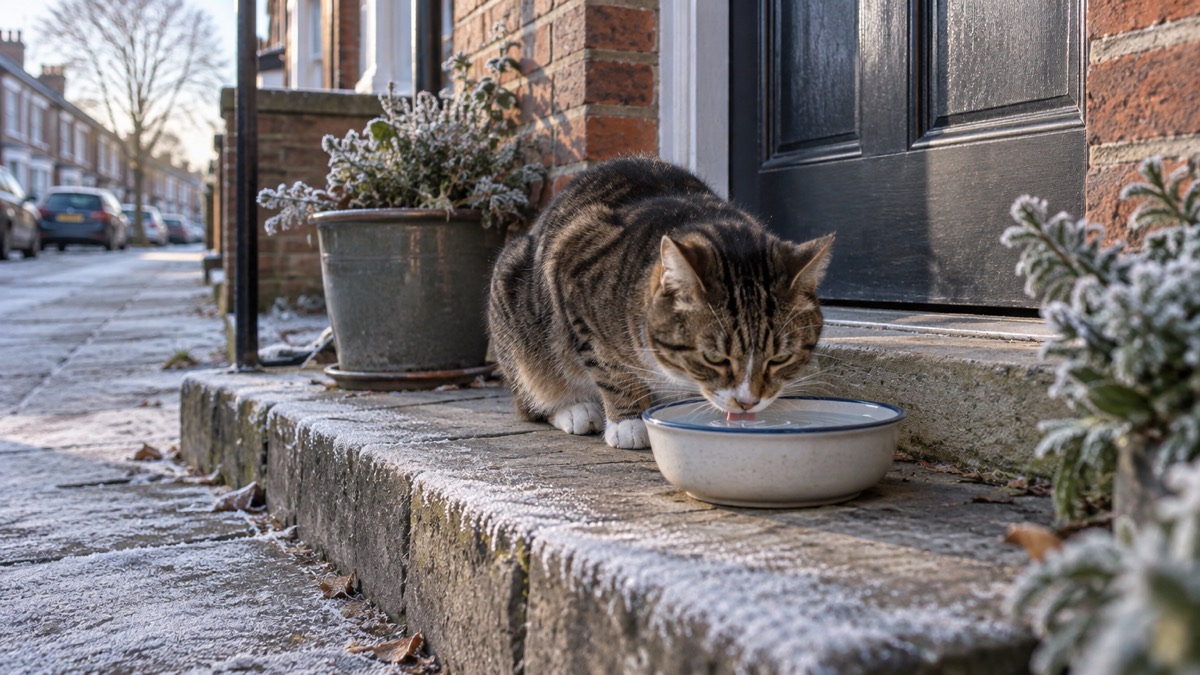
The RSPCA's winter advice for rabbits sets out the standard clearly: they need a constant supply of fresh, clean water, which should be checked twice daily to ensure it hasn't frozen7. The same twice-daily rhythm works well for an outdoor cat's bowl. The British Veterinary Association makes a similar point about checking water bottles regularly to make sure they are not frozen over8.
A simple routine through a cold spell:
- First thing in the morning: empty the bowl, remove any ice, refill with fresh water5.
- Midday or early afternoon: check again, especially if the sun has not reached the bowl.
- Last thing at night: refill, and check rabbit and guinea pig water bottles to make sure they are not frozen over2.
- After snow or sleet: clear the bowl and refill, as snow can fill it and meltwater can refreeze.
Battersea's winter cat care advice is to make sure your cat has access to fresh water both inside and outside the house, and to clean outdoor bowls regularly and get rid of any ice5. Cleaning matters as much as refilling: a bowl that has held frozen water for days can collect debris, and a dirty bowl puts a cat off drinking.
Why a frozen bowl leaves outdoor cats without water
A frozen bowl is not just an inconvenience. It removes the cat's most reliable water source at exactly the time when every other source, puddles, ponds, gutters, is also frozen. The cat has no way to melt the ice and no way to ask for help. It either finds water somewhere else, which may be unsafe, or goes without.
That is why the advice is framed around prevention rather than reaction. The RSPCA's daily-refill instruction exists because water sources can freeze1. Cats Protection's advice to keep water indoors as well is a backup for the same reason2. The two together give a cat a fallback: if the outdoor bowl is solid, there is still water inside.
There is a second reason a frozen bowl matters. Cats are particular about where they drink. Cats Protection suggests keeping water clean and topped up, moving the bowl away from the food and toilet areas, using a glass, ceramic or metal bowl, and choosing a wide bowl so their whiskers do not touch the sides when they drink9. A bowl that meets those conditions is one a cat will actually use. A frozen, narrow, dirty bowl in the wrong spot is one it will avoid even when it is thirsty.
Water for stray cats: what to put out and what to avoid
Stray and unowned cats need the same things as a pet cat, and they are more exposed because no one is responsible for them. A bowl of fresh water, checked and refilled daily, is the most direct help you can give. The PDSA's warning about strays and antifreeze is the reason to be careful about what else is left out: stray cats are at risk of drinking antifreeze, especially as they might not always have access to fresh, clean water6.
Antifreeze is the main hazard to think about in freezing weather, because it is used more in winter and it tastes sweet to cats. The RSPCA advises that if you suspect your pet has come into contact with antifreeze or leaked water coolant, get them to a vet immediately10. The Blue Cross adds that you should keep your cat well away while handling antifreeze, store it securely out of reach, and clean up spills immediately, as cats can be poisoned by walking through antifreeze and grooming it from their paws11. The PDSA also advises disposing of old antifreeze containers, because cats may be poisoned by drinking rain water from containers that previously contained it6.
For a stray, the practical steps are:
- Put out fresh water daily, in a clean bowl, away from any driveway or garage where antifreeze might be spilled6.
- Do not leave antifreeze, or containers that held it, where a cat can reach them6.
- Give the cat a warm, dry shelter with bedding if you can, as the PDSA advises for outdoor cats3.
- Watch for signs of illness and, if you are concerned, contact a vet or a rehoming charity.
If you find a cat that seems unwell, cold or unable to stand, treat it as an emergency. The PDSA's guidance on hypothermia in pets covers the signs and what to do, and a vet should be contacted promptly3.
Shelter, warmth and the limits of what water alone can do
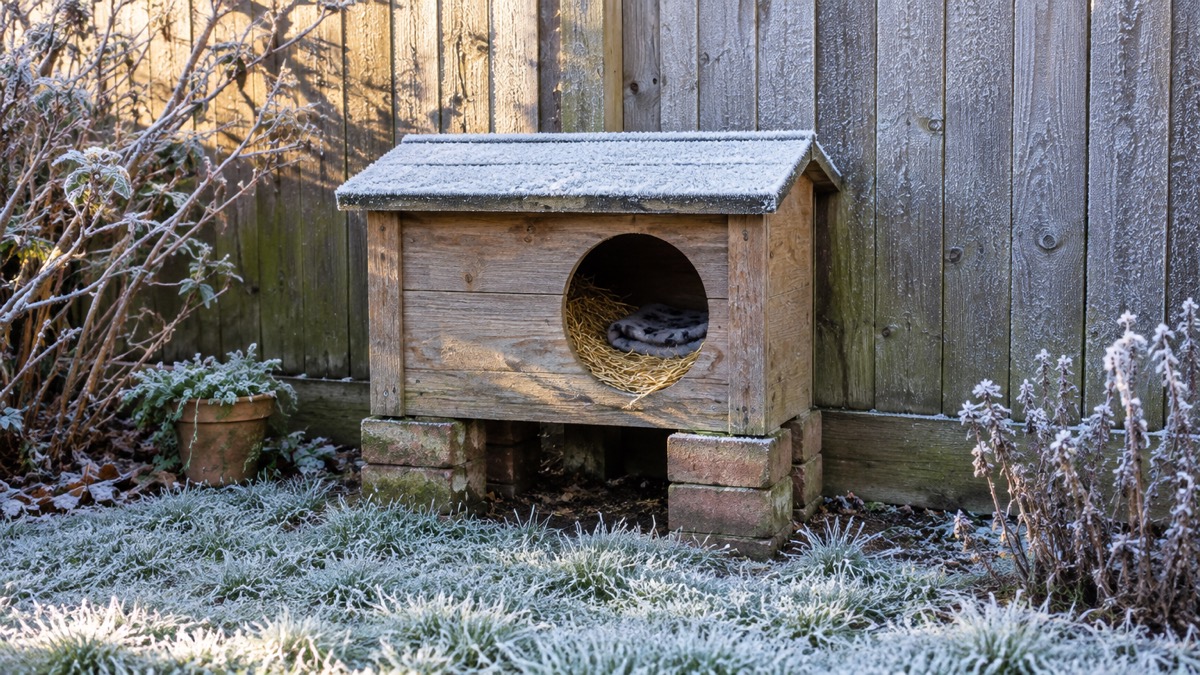
Water keeps a cat hydrated, but it does not keep it warm. In freezing weather an outdoor cat also needs somewhere dry and sheltered to get out of the wind and rain. The PDSA advises providing a warm, comfy bed in a draught-free area, never leaving a cat locked outside, and giving outdoor cats a warm, dry shelter with bedding3. If a cat gets wet and cold, dry it off.
The Northern Ireland government's winter advice is blunt: don't leave your dog or cat outdoors in freezing temperatures for long12. The Met Office, reporting British Veterinary Association advice, goes further: cats too should not be left outside all night4. If you have an outdoor cat, the aim through a cold spell is to give it the option of coming in, or at least a sheltered spot it can use, rather than leaving it to fend for itself.
| What the cat needs | What to do | Source |
|---|---|---|
| Fresh water | Refill daily, remove ice, clean the bowl | 1 |
| A backup water source | Keep fresh water indoors too | 2 |
| Shelter | Warm, dry shelter with bedding, out of draughts | 3 |
| Time outdoors | Do not leave a cat outside all night in freezing weather | 4 |
| Safety from poison | Store antifreeze securely, clean up spills, dispose of old containers | 6 |
If a cat does get wet and cold, dry it off as quickly as you can and make sure it keeps warm12. The PDSA's hypothermia guidance is the place to go if a cat seems lethargic, shivering or unresponsive3.
When to get help
Most of the time, the water routine and a sheltered spot are enough. But cold weather can tip a cat into trouble, and some signs need a vet rather than a refilled bowl. If a cat is very cold, shivering uncontrollably, lethargic or unresponsive, treat it as an emergency and contact a vet3. If you suspect antifreeze poisoning, get the cat to a vet immediately10.
For stray cats, your options depend on the situation. A cat that is unwell or injured needs a vet. A cat that is simply living outside and coping may only need water and shelter from you. If you are unsure, a rehoming charity or your local vet can advise.
For the wider picture of keeping animals safe through cold weather, see Pets in Cold Weather, Snow and Ice and Hypothermia in Dogs and Cats: Signs and What to Do. If you are planning ahead for a winter emergency, Pets and Animals in an Emergency: A Household Guide sets out how to include animals in your household plan, and How Much Pet Food and Water to Store for an Emergency covers supplies.
Sources (12)
- Cats in winter, RSPCA, 2026
- Cats and cold weather, Cats Protection, 2026
- Hypothermia in pets, PDSA, 2021
- Weatherhacks to try as clocks go back, Met Office, 2023
- Winter cat care, Battersea, 2023
- Antifreeze (ethylene glycol) poisoning, PDSA, 2024
- Rabbits in winter, RSPCA, 2026
- WeatherReady weatherhacks, Met Office, 2026
- Cats and warm weather, Cats Protection, 2026
- Antifreeze poisoning, RSPCA, 2026
- Protecting your cat from common toxins, Blue Cross, 2025
- Staying warm in winter, nidirect, 2026
 Pet Emergency Documents
 Storing Pet Food and Water
 Carer's Emergency Plan
 Pet Birds in Cold Weather
 Birds and Chickens in Heat
 Breaking a Car Window for a Dog
 Keeping a Cat Cool in a Heatwave
 Chocolate Poisoning in Dogs
 Christmas Hazards for Pets
 Dog Left Alone on a Hot Day
 Dog in a Hot Car
 Hypothermia in Dogs and Cats
 Dogs in Water or Coast Trouble
 Fireworks and Small Pets
 Fish in a Power Cut