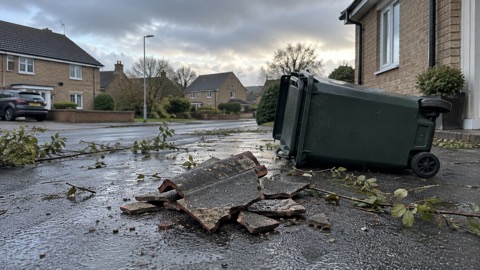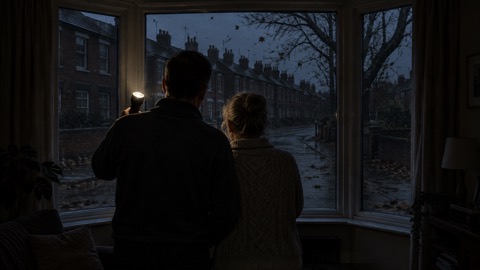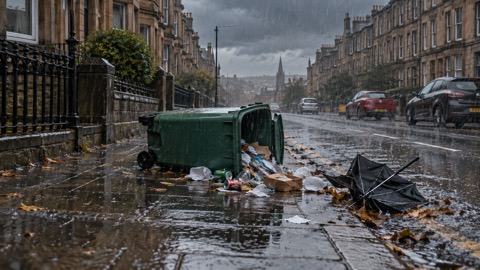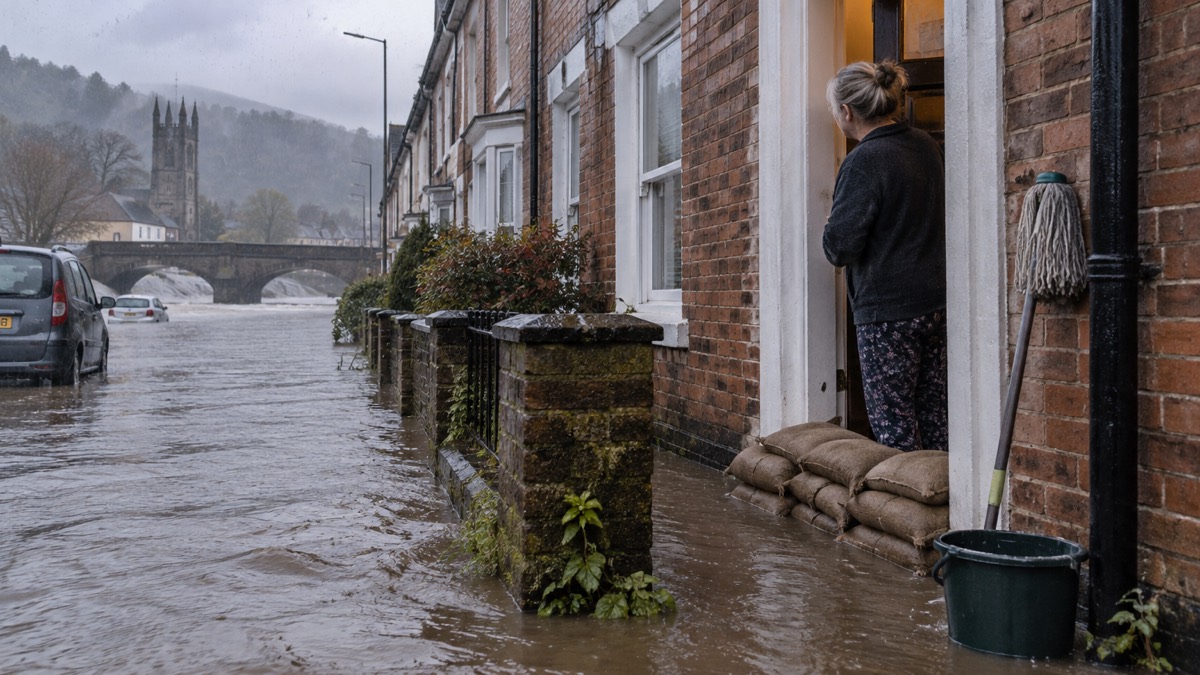
Storm Claudia, the third named storm of the 2025/2026 season, brought extensive heavy rainfall across England and Wales on 14 November 2025, with the worst impacts in South Wales1. The storm was named by the Spanish meteorological agency (AEMet)1.
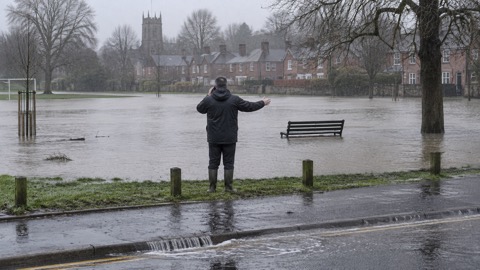
A major incident was declared in Monmouth, due to flooding from the River Monnow, a tributary of the River Wye1. Several severe flood warnings, the highest category, were issued, and more than 50 properties were reported to be flooded, while a further 18,000 were protected by flood defences1. Parts of England and Wales received the whole-month November average rainfall in six days from 9 to 14 November1.
"What made Claudia unusual was the south-easterly direction of airflow. With the Black Mountains the first significant high ground an airflow from this direction would meet, this will have been the critical factor causing the very high rainfall totals in this area and consequent downstream flooding in Monmouth"
Rainfall totals from 13 to 14 November were 50 to 75mm fairly widely across large areas of east Wales and central England, with 75 to 100mm locally1. Over the longer spell from 9 to 14 November, the wettest areas saw 100 to 150mm, with the whole-month average rainfall for November across a swathe from South Wales to Lincolnshire, and some locations as much as 150%1. A rain gauge at Tafolog in the Vale of Ewyas recorded 119.6mm from 13 to 14 November, the highest two-day total at that station since records began in 2007, and 174.2mm from 9 to 14 November1. Herefordshire recorded a provisional county average of 93.6mm over the six days, its wettest six-day spell since the major floods of July 20071.
| Measure | Figure | Period |
|---|---|---|
| Rain, east Wales and central England (widely) | 50 to 75mm | 13 to 14 November |
| Rain, same areas (locally) | 75 to 100mm | 13 to 14 November |
| Rain, wettest areas | 100 to 150mm | 9 to 14 November |
| Tafolog, Vale of Ewyas | 119.6mm | 13 to 14 November |
| Tafolog, Vale of Ewyas | 174.2mm | 9 to 14 November |
| Herefordshire (county average, provisional) | 93.6mm | 9 to 14 November |
| Properties reported flooded | More than 50 | Storm Claudia |
| Properties protected by flood defences | 18,000 | Storm Claudia |
Maximum temperatures on 14 November ranged from 7.3°C at Buxton in Derbyshire to 16.5°C at Wiggonholt in West Sussex1. The Met Office notes that South Wales has experienced a number of significant flood events in recent years, including Storm Bert on 23 to 24 November 2024 and Storm Dennis on 15 to 16 February 2020, but that these followed a more typical westerly or south-westerly airflow1.
Why it matters for households
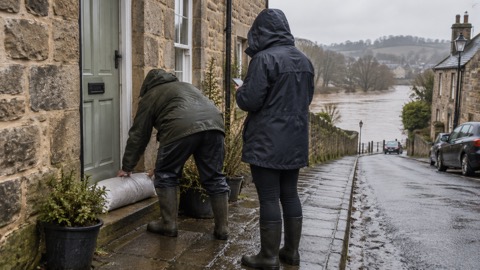
The flooding affected parts of England and Wales, with the worst impacts in South Wales and a major incident declared in Monmouth1. Severe flood warnings, the highest category, were issued during the event1. The Flood Alerts, Flood Warnings and Severe Flood Warnings guide explains what each category means, and Wales: Natural Resources Wales Warnings and Risk Maps covers how warnings are issued in Wales, where the worst impacts occurred. Households can sign up for free warnings as set out in How to Sign Up for Free Flood Warnings, and Floodline Numbers for England, Scotland and Wales lists the numbers to call. The Met Office rainfall figures show how quickly a six-day spell can deliver a whole month's average rain, which is relevant to anyone in a flood risk area reviewing Home Insurance in a Flood Risk Area and Flood Re or considering Flood Doors and Flood Windows. The Checklist When a Flood Warning Is Issued and Who to Report Flooding To set out the practical steps authorities and responders expect. Storm Claudia was the third named storm of the season; Named Storms: How the Met Office Chooses the Names explains the naming system, and Met Office Weather Warnings: Yellow, Amber and Red Explained sets out what each warning level means.
What happens next
The Met Office account was last updated on 21 November 20251. No further dated steps have been reported.
Sources (1)
- metoffice.gov.uk, metoffice.gov.uk
 Flood Alerts and Flood Warnings
 Flood Warning Checklist
 Who to Report Flooding To
 Flood Guidance Statement