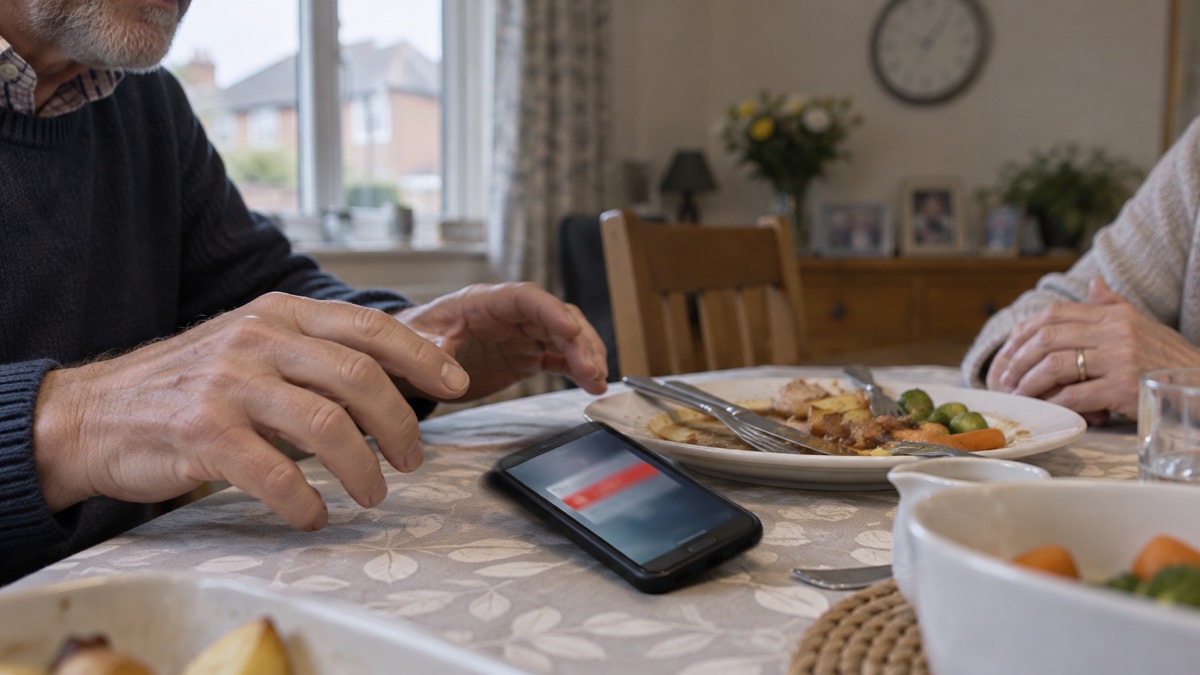
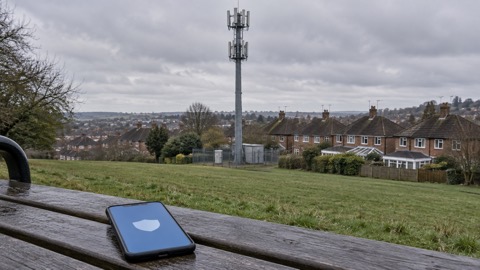
The Cabinet Office announced on 6 April 2023 that a UK-wide test of the public Emergency Alerts system will take place at 3pm on Sunday 23 April1. The test follows pilots in East Suffolk and Reading, and will see people receive a message on the home screen of their mobile phone, along with sound and vibration for up to ten seconds1. The system went live in March2.
The message will be received on 4G and 5G mobile phones1. The Cabinet Office says the public does not need to take any action for the test, and that the sound and vibration will stop automatically after ten seconds1. Recipients need only swipe away the message or click "OK" on their phone's home screen, as with a low battery warning, and continue to use their phone as normal1. The Northern Ireland Ambulance Service says the message will make clear that no action is required and that it is simply a test, and will provide a link for further information3. The Cabinet Office says the system will provide a means to get urgent messages quickly to nearly 90 percent of mobile phones in a defined area when there is a risk to life1.
The Cabinet Office says Emergency Alerts enable urgent messages to be broadcast to a defined area when there is an imminent risk to life, such as wildfires or severe flooding1. West Yorkshire Prepared, the region's Local Resilience Forum, says the most frequent use is expected to be for flooding2. The Cabinet Office says the system will be used very rarely, only where there is an immediate risk to people's lives, so people may not receive an alert for months or years1.
Several bodies state that the alerts do not track location or collect personal data, and that only the government and the emergency services can send them2. The Northern Ireland Ambulance Service says alerts work on all 4G and 5G mobile networks in the UK, and that devices will not receive them if switched off, on aeroplane mode or connected to a 2G or 3G network3. The Cabinet Office FAQ says alerts will not include older "non-smart" phones, and that the 3G technology they use is being switched off next year6.
The Cabinet Office published the following:
The Welsh Government's written statement says the test alert will be sent to most mobile phones across the UK, including in Wales, and that devices will make a distinct, siren-like sound for up to 10 seconds, including on phones switched to silent mode5. It says Wales will participate in the trial in relation to severe weather-related incidents5.
| Body | What it says about the test |
|---|---|
| Cabinet Office | 3pm Sunday 23 April; message on 4G and 5G phones with sound and vibration for up to 10 seconds; no action needed1 |
| West Yorkshire Prepared | Country-wide test at 3pm on Sunday 23 April; loud, siren-like sound and distinct vibration2 |
| Isle of Anglesey County Council | System now live; tested nationally on Sunday 23 April at 3pm4 |
| Northern Ireland Ambulance Service | UK-wide test message to all compatible devices at 3pm; sound even if set on silent3 |
| Welsh Government | National Test message at 15:00; siren-like sound up to 10 seconds, including on silent mode5 |
Why it matters for households
The test will reach compatible phones across the UK, including Wales, Scotland and Northern Ireland; the Cabinet Office FAQ says people living in all parts of the UK will be able to receive emergency alerts6. The Northern Ireland Ambulance Service notes that the alert will play a sound even if a device is on silent, and that survivors of domestic abuse with a secret or secondary phone or tablet should be aware of this3. The RNID, writing ahead of a later test in 2025, said the volume of the alert will be the maximum allowed by the phone, and that this may be uncomfortable for people using hearing devices connected via Bluetooth, people wearing headphones, and people with tinnitus, hyperacusis or sensitivity to sound7.
On opting out, West Yorkshire Prepared says it is strongly recommended that people do not turn off the alerts service, as it will warn when lives are in danger, though it is possible to opt out if absolutely necessary2. The Northern Ireland Ambulance Service says the government advice is to keep them switched on for your own safety3.
For drivers, Brake reports government advice that people must not hold a mobile phone while driving or riding a motorcycle, and that if an alert arrives while driving they should not pick up the phone but continue driving as normal, finding a safe and legal place to pull over first8. The Cabinet Office FAQ says people should not read or respond to an alert while driving or riding, and that if there is nowhere safe or legal to stop close by and nobody else in the vehicle can read it, they should tune into live radio for information6.
For households without a compatible device, the Cabinet Office FAQ says they will still be informed about an emergency as the emergency services have other ways to warn them6. West Yorkshire Prepared says usual forms of communication will continue to be used, such as local news, radio and social media2. Recipients can check an alert is genuine at gov.uk/alerts2.
The Cabinet Office says best practice in other countries has shown that alerts work more effectively in a real emergency if people have previously received a test, so they know what an alert looks and sounds like1. The government has worked with the emergency services and partners including the Football Association and London Marathon to make sure the national test has minimum impact on major events taking place on the day1.
What happens next
The test is scheduled for 3pm on Sunday 23 April 20231. The Cabinet Office points to gov.uk/alerts for further information, including what alerts look and sound like1. The RNID records that a second national test of the Emergency Alerts system was held on Sunday 7 September 2025 at 3pm7.
Households can check whether their phone will receive alerts in the guide to compatible phones, read how the Emergency Alerts system works, and find out what happens during an alert test. There is guidance on what to do when you get an Emergency Alert, on getting your mobile phone ready, on telling whether an alert is genuine, and on whether alerts track your location or cost anything. For those without a mobile, there is advice on getting emergency warnings without a mobile phone, and the 3G switch-off affects which phones and alarms stop working.
Sources (8)
- Time set for UK Emergency Alerts test - GOV.UK, gov.uk
- Date set for UK-wide Emergency Alerts test, West Yorkshire Prepared, westyorkshireprepared.org.uk
- Emergency Alerts Service Test on Sunday 23rd April | NIAS, nias.hscni.net
- New UK Emergency Alerts system now live, anglesey.gov.wales
- Written Statement: UK Emergency Alerts system National Test Message (20 April 2023) | GOV.WALES, gov.wales
- Frequently asked questions about Emergency Alerts, assets.publishing.service.gov.uk
- A national test of the government's Emergency Alerts system - RNID, rnid.org.uk
- Emergency alerts system: Government issues advice for drivers | Brake, brake.org.uk
 Phones That Get Alerts
 Emergency Alerts
 Emergency Alert Tests
 Emergency Exercises
 When You Get an Alert
 Getting Your Phone Ready
 Official Warnings and News
 Spotting a Genuine Alert