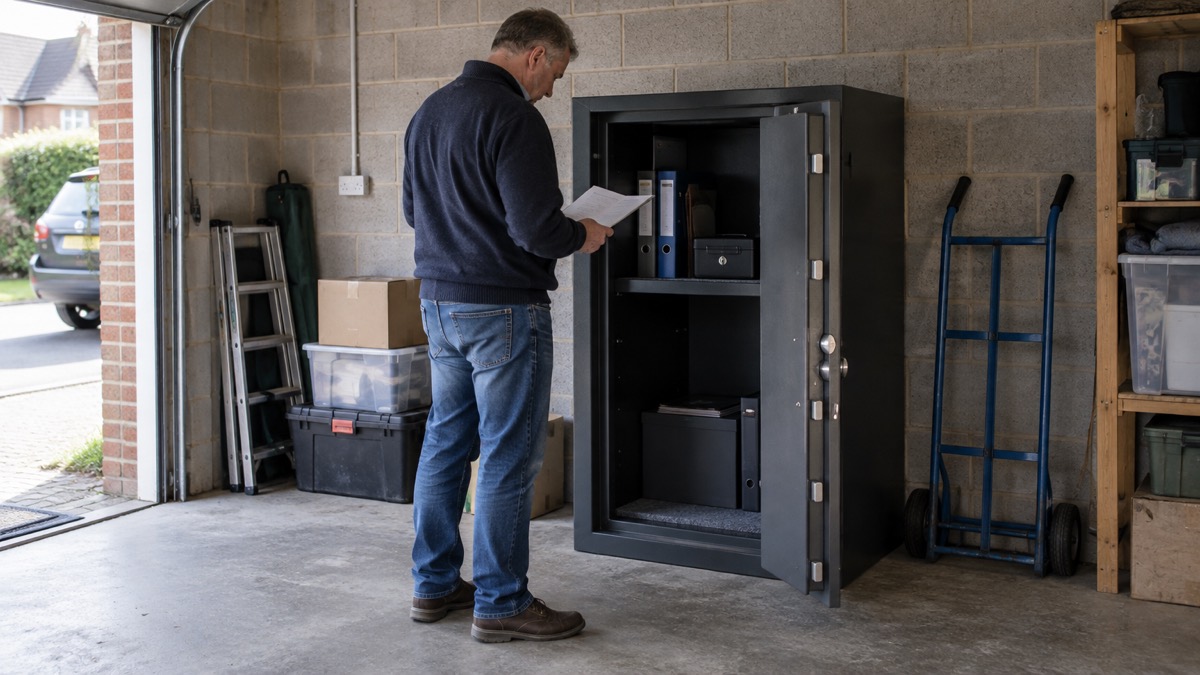
The Burton Home Safe Grade 1 MKII is a burglary safe for a household that wants its documents, cash and small valuables in one locked place that has been independently tested. The maker states it is independently attack tested and certified for insurance purposes to EN1143-1 Grade 1 by ECB•S, and lists it in four sizes, from a 58kg Size 1 with 15 litres of internal space to a 112kg Size 4 with 56 litres1.
For a household getting ready for emergencies, a safe does two jobs. It keeps the paperwork you would need after a fire, flood or break-in, such as insurance details, identification and records, in one place you can reach quickly. And it gives you somewhere to put valuables when you have to leave in a hurry, or when water is coming into the house. It is not a fire safe unless the maker says so, and the documents here do not give a fire rating for this model.
What follows covers what the safe is, the specifications for all four sizes, what the weight means for planning where it goes and how it is moved in, and how to keep it ready as part of a household plan. Where the documents available here do not answer a question, such as fixing, lock options or warranty, this page says so rather than guessing.
What the Home Safe Grade 1 MKII is, and what it does for a household
The Home Safe Grade 1 MKII is one model in the Burton range of home safes. The maker's July 2024 product guide describes it as independently attack tested and certified for insurance purposes to EN1143-1 Grade 1 by ECB•S1. In plain terms, that is a burglary rating: the safe has been tested against attack, and the grade is the one insurers recognise when they set limits for what you can keep in a safe at home.
Grade 1 sits at the bottom of the maker's range. Burton's high security safes run from Grade 1 to Grade 7, which the maker describes as the highest grade safe available in the UK2. That matters for expectations. A Grade 1 safe is the entry point to certified burglary protection, not the strongest box on the market, and it is priced and built accordingly. For most households it is the grade that matches the amount of cash and the kind of valuables an ordinary home keeps.
The MKII is a distinct model from the other Burton home safes. The maker's product page for the Burton Home Safe G0 lists three sizes in that range3, while the MKII guide lists four sizes for this model1. If you are comparing, check which model and which size you are being offered, because the names are close and the ranges differ.
For emergency planning, think of the safe as the fixed point in your household's paperwork. A safe is the opposite kind of storage to a grab bag: heavy, fixed and not for things you need in the first hour. It is for the documents and valuables you would need after the emergency, when you are dealing with insurers, replacing papers or proving what you owned. The Home Safe Grade 1 MKII is independently attack tested and certified for insurance purposes to EN1143-1 Grade 1 by ECB•S1, and it comes in three sizes across the Burton Home Safe range3, with the Size 2 holding 22L and the Size 3 holding 39L1.
Specifications for all four sizes
The maker's guide gives outside dimensions, internal dimensions, weight and internal volume for each size1. The table below sets them out side by side. Dimensions are given as height x width x depth in millimetres, as the maker lists them.
| Size | Outside dimensions (mm) | Internal dimensions (mm) | Weight | Internal volume |
|---|---|---|---|---|
| Size 1 | 310 x 395 x 250 | 260 x 345 x 170 | 58kg | 15L |
| Size 2 | 310 x 435 x 325 | 260 x 385 x 225 | 69kg | 22L |
| Size 3 | 400 x 435 x 395 | 350 x 385 x 295 | 89kg | 39L |
| Size 4 | 550 x 435 x 395 | 500 x 385 x 295 | 112kg | 56L |
All four figures in each row come from the maker's July 2024 product guide1.
The pattern is worth reading carefully. Sizes 1 and 2 share the same outside height of 310mm but differ in width and depth, so the step up from Size 1 to Size 2 buys you more floor space rather than more height. Size 3 adds height as well, at 400mm outside. Size 4 is the big jump: 550mm outside height and 500mm of internal height, which is the size that gives you room for A4 paperwork standing or stacked without folding.
Internal volume runs from 15 litres in Size 1 to 56 litres in Size 41. Volume alone does not tell you whether a particular folder will fit, because the shape of the space matters as much as the litres. Use the internal dimensions for that. Size 1 gives 260 x 345 x 170mm inside, while Size 4 gives 500 x 385 x 295mm, so the taller and deeper Size 4 takes larger items that the smallest size will not1.
Weight and outside size: 58kg to 112kg, and what that means for your floor
The weight range is the fact that shapes most of the practical decisions. Size 1 weighs 58kg and Size 4 weighs 112kg1. That is heavy enough that two people will struggle with the largest size, and heavy enough that where you put it matters.
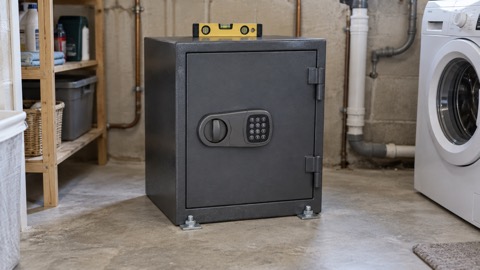
A safe is a concentrated load. A Size 4 at 112kg standing on a small footprint puts more weight on a small area of floor than the same weight spread across a wardrobe. In an upstairs room, that load sits on the joists and the ceiling below. The documents available here do not give floor loading advice for this model, so if you are considering an upstairs location, particularly in an older house, take advice before you commit. A ground floor room with a solid floor is the simpler choice.
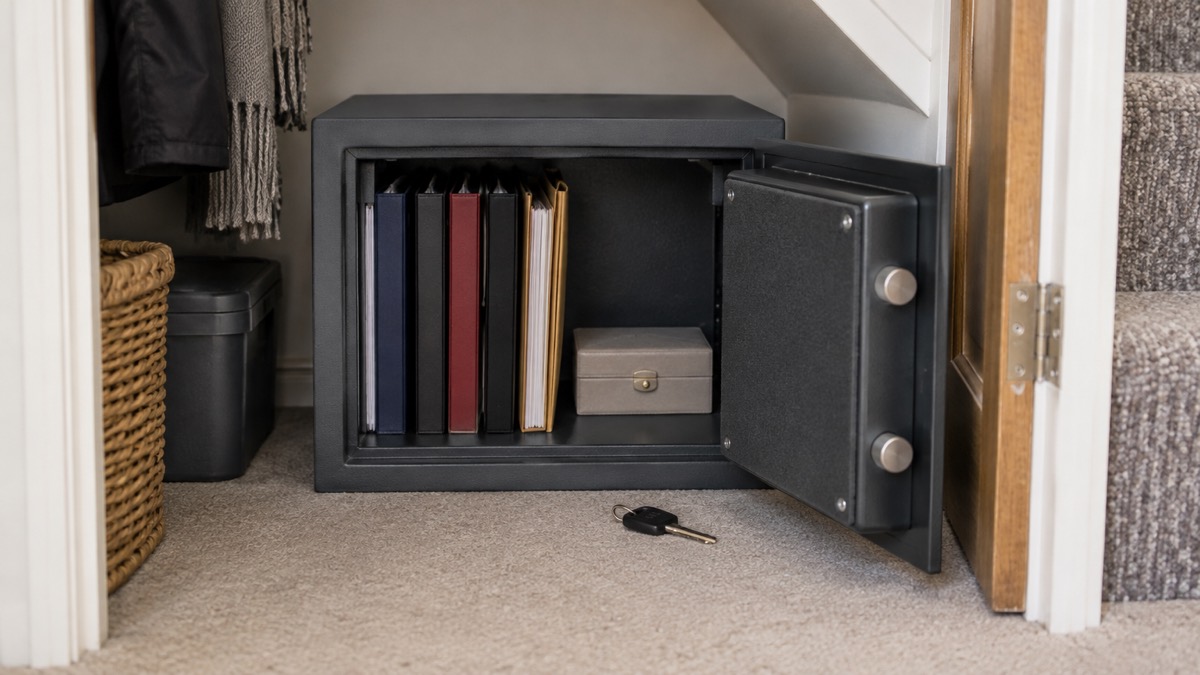
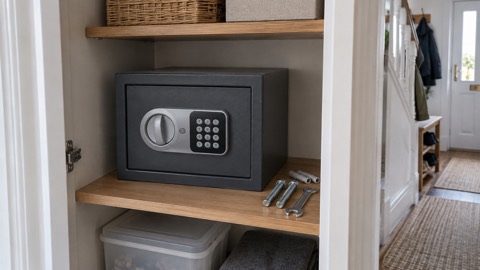
Outside size decides where the safe will physically go. Size 1, at 310 x 395 x 250mm outside, will sit in a cupboard or at the bottom of a wardrobe1. Size 4, at 550 x 435 x 395mm, needs a space with clearance to open the door and to get your hands in, so measure the opening and the swing of the door, not just the footprint.
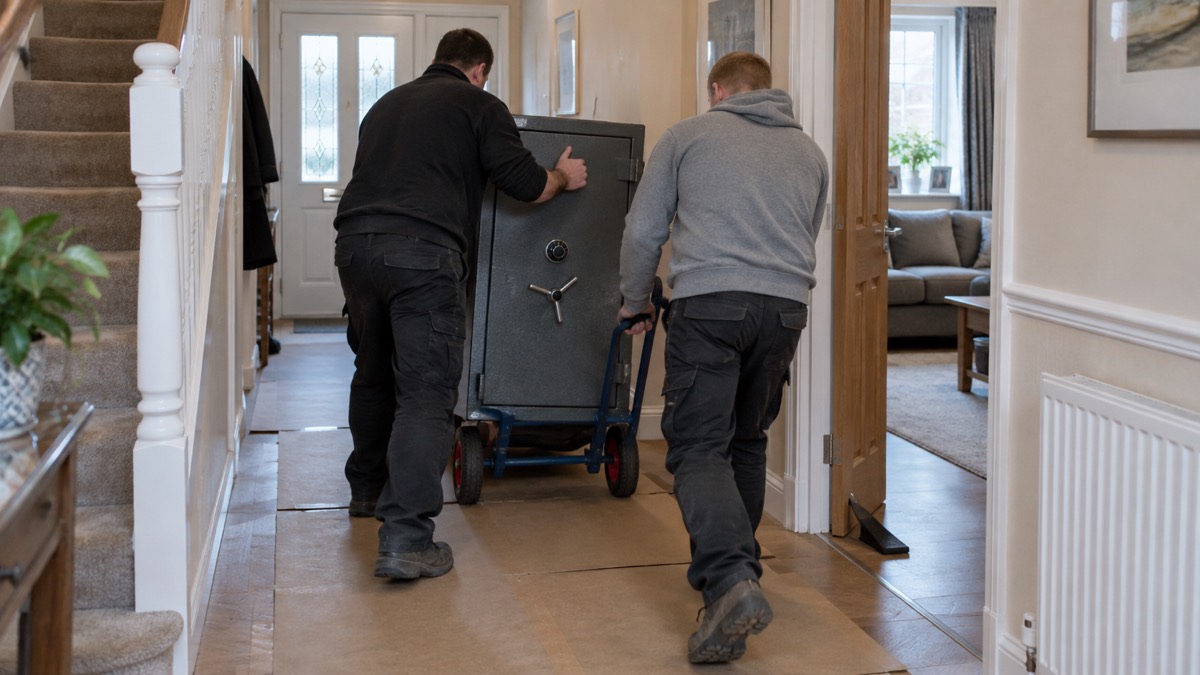
Weight also decides how the safe arrives and how it moves. A 112kg safe is not something to carry up a staircase without planning. Ask the supplier how it will be delivered, and whether they will position it. If you are moving it yourself, plan the route before the day: clear the hallway, protect the floor, and have enough people. The documents here do not give handling instructions, so follow the maker's or supplier's advice for the size you buy.
Planning where it goes and how it is moved in
Where the safe goes is a household decision as much as a security one, and it should be made before you order. The documents available here do not give fixing instructions for the Home Safe Grade 1 MKII, so this section sets out the questions to settle with the maker or retailer, and the general emergency planning advice that bears on them.
Start with the practical constraints:
- Floor strength. A ground floor with a solid floor is the simplest place for a heavy safe. Take advice before putting a large size upstairs.
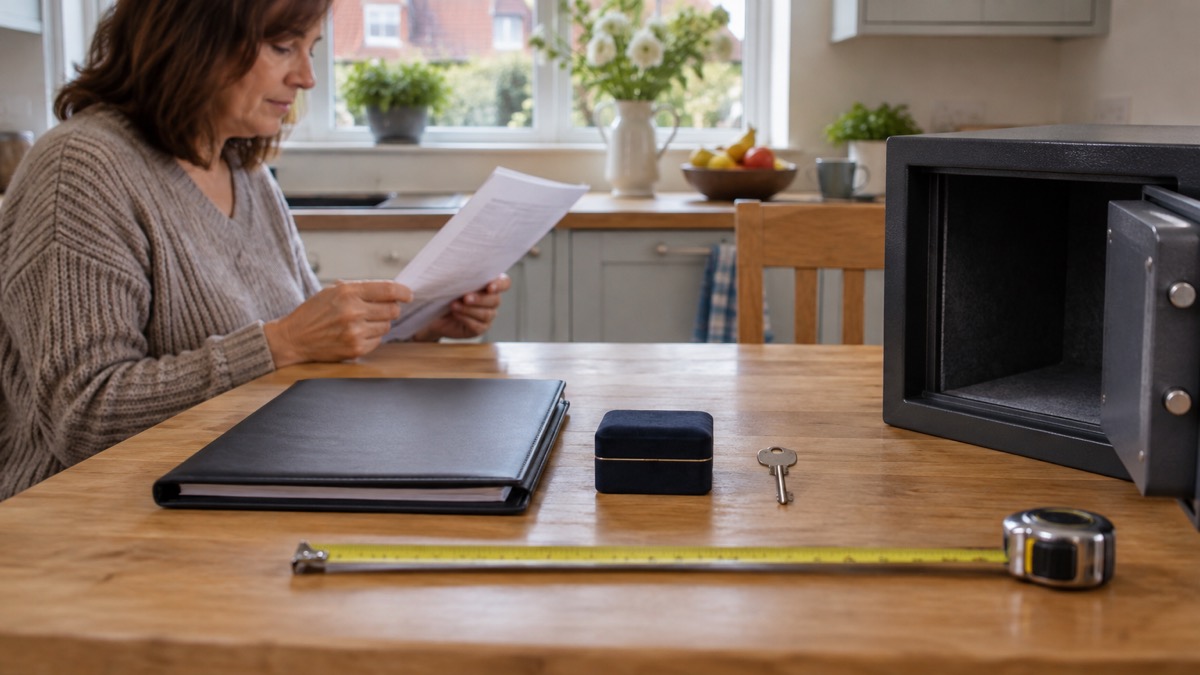
- Clearance. Measure the door opening, the space around the safe and the swing of the safe door, not just the footprint.
- Access for delivery. The route from the front door to the final position needs to be clear and wide enough for the size you have chosen.
- Fixing. Ask the maker or retailer whether the model is supplied with floor or wall fixing bolts and what method they recommend. A safe that is not fixed can be carried out; fixing it makes that much harder.
- Discretion. A safe in a bedroom cupboard is less visible than one in a hallway. Think about who sees it, including visitors and tradespeople.
Then think about the emergency plan. Official advice on preparing for a flood says to plan where you could move people, pets and valuables to safety, and that moving to a room upstairs with a window may be safest, with basement or bungalow occupants thinking about where else to move4. A safe is part of that plan: it is where the valuables that cannot go upstairs in a hurry are kept, and it should be above the level flood water is likely to reach. If your safe is in a basement or a bungalow, the flood advice to think about where else you could move to applies to it as much as to you4.
Fire advice adds a second constraint. Official guidance says to plan and practise your escape route and keep it clear at all times5, and that the best route is the normal way in and out of your home, with a second route planned in case the first is blocked6. A safe is heavy and fixed, so it must not narrow a hallway, block a door or sit where someone would trip over it in the dark. Put it where it does not obstruct the way out.
Keeping the safe ready as part of a household plan
A safe is only useful if you can open it when you need to, and if what is inside is what you would actually want after an emergency. That takes a little planning, and it is the part most households skip.
Decide what goes in. The documents you would need after a fire, flood or break-in are the priority: insurance details, identification, records of what you own, and any paperwork you could not easily replace. Keep a record of valuables, because after a burglary you will be asked what was taken. The site's guide to property marking and keeping a record of valuables explains how to do that. The safe is where that record lives.
Keep the key or code safe, and known. If the safe has a key, a spare kept in the same house defeats the purpose. If it has a code, everyone who needs it should know it, and it should not be written on the safe. The documents here do not set out the lock options for this model, so confirm the lock type before you buy and plan accordingly.
Check it works. Open the safe periodically, check the lock operates smoothly, and if it has an electronic lock, check the batteries. The site's guide to opening an electronic safe when the batteries are flat covers what to do if you are locked out.
Tell the household. Everyone in the house should know where the safe is and what is in it. If you have to evacuate, the safe stays behind, but knowing what is in it helps you decide what to carry and what to leave. The Size 2 holds 22L and the Size 3 holds 39L1, so a larger model can hold more of the papers you might otherwise have to leave.
Review it after any change. A move, a new insurance policy or a change in what you keep at home is the moment to check the safe still suits. The site's guide to home safes and the fire, burglary and cash ratings explains what the grades mean and how insurers use them.
What the safe can and cannot protect
The Home Safe Grade 1 MKII is a burglary safe. Its certification is to EN1143-1 Grade 1 by ECB•S, and the maker describes it as certified for insurance purposes1. That is what it does: it resists attack to a tested standard, and it gives your insurer a grade to work with.
It is not described in the documents here as a fire safe. If fire protection for paper is what you need, ask the maker or retailer for the fire rating of the model you are considering, and do not assume a burglary grade provides it. The Grade 1 MKII is certified to EN1143-1 Grade 1 by ECB•S for insurance purposes1, which is an attack rating, not a fire rating. The site's guide to whether you can keep cash or jewellery in a fire safe explains the difference between the two kinds of rating.
It is also not a flood safe. A sealed safe will keep water out for a time, but the documents here make no claim about water resistance. The flood advice to store valuable or sentimental items up high all year round4 applies to the safe as much as to anything else: put it above the level water is likely to reach, and if you are in a basement or bungalow, think about where else you could move to4.
What it cannot do is replace the rest of your plan. It will not open itself, it will not tell you what is inside, and it will not help if the key is lost or the code forgotten. Those are the things to sort out when you install it, not when you need it.
Support, warranty and where to get help
The documents available here do not state a warranty period or support arrangements for the Home Safe Grade 1 MKII. Ask the maker or the retailer you buy from for the warranty terms in writing, and keep the paperwork with your household records. If the safe has an electronic lock, ask what happens when the batteries are flat and how you get in.
For the product itself, the maker's own documentation is the authority. The Burton Security Product Guide of July 2024 gives the specifications used on this page1, and the maker's Burton page is the place to start for the range. The site's guide to home safes explains the grades and what insurers look for.
For the wider household plan, official advice is free and local. Fire and rescue services offer home fire safety visits, and the Manchester service says staff will help agree an escape plan for the household so that everyone knows what to do if a fire starts7. Warwickshire's safe and well visit scheme covers home security as well as fire safety8. Ask your local fire and rescue service what is available where you live, because the arrangements differ between England, Scotland, Wales and Northern Ireland.
If you need help because of age, disability or a medical condition, ask your local council about the Priority Services Register and other support. The site's guide to extra help in an emergency explains who qualifies and how to register.
Sources (8)
- Burton Security Product Guide July 2024, Burton Safes, July 2024
- High Security Safes, Burton Safes, 2026
- Burton Home Safe G0, Burton Safes, 3 November 2026
- Preparing for a Flood, Natural Resources Wales, 29 October 2026
- Hoarding, Devon and Somerset Fire and Rescue Service, 2026
- Home Fire Safety Guide, West Cheshire and Chester NHS, 24 January 2025
- HFSA - Greater Manchester Fire Rescue Service, Greater Manchester Fire Rescue Service
- Apply for a Safe and Well Visit, Warwickshire County Council, 29 October 2026

 Burton Home Safe G3 Size 1
 Burton Home Safe S2 Size 1
 Chubbsafes Senator