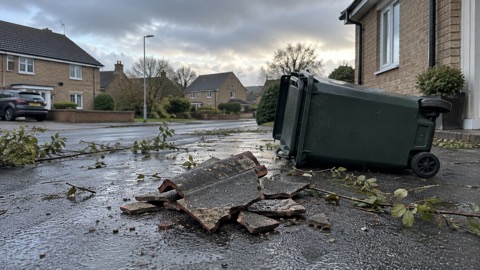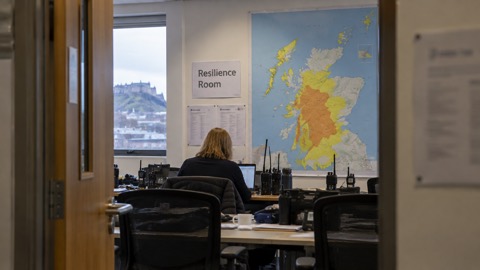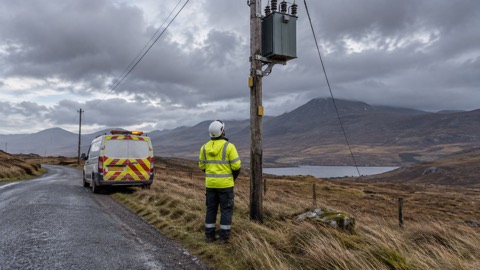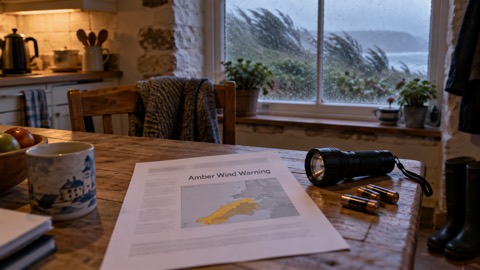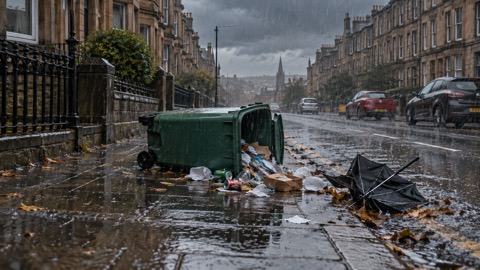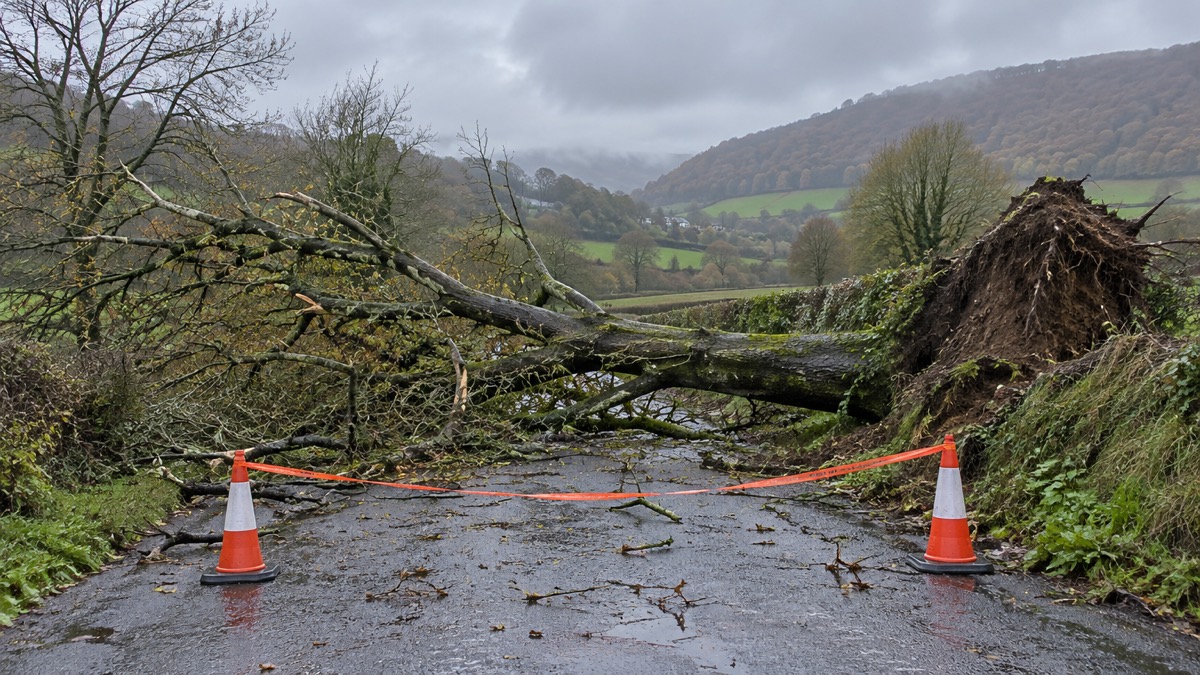
Storm Bert, a deep Atlantic low pressure system, brought extremely wet and windy weather to the UK from 22 to 25 November 2024, followed by Storm Conall on 26 to 27 November1. The Met Office describes Bert as a multi-hazard storm bringing heavy rain, strong winds and snow across many parts of the UK, with the heavy rain causing the greatest impacts and localised flooding in all regions of the UK1. The Met Office reports that a number of deaths were reported over the weekend as Storm Bert impacted the UK1.
The weekend of Saturday 23 to Sunday 24 November was exceptionally wet across South Wales and south-west England, with over 150mm falling in the wettest upland areas, and around three-quarters of the whole-month average rain fell in a swathe from Gwent to Wiltshire to Northamptonshire1. On 23 November the UK recorded its wettest calendar day as an average across the whole country since 3 October 2020, with 24.0mm as an area average1. Gusts exceeded 60 knots (69mph) in south-west England, including some inland locations, and snow depths at 0900 on 23 November included 21cm at Copley, County Durham and 18cm at Middleton Hillside, Derbyshire1.
Reported flooding and disruption included:
| Area | Reported impact |
|---|---|
| South Wales | Pontypridd affected by severe flooding from the River Taff; a landslide at Cwmtillery, Blaenau Gwent, brought deep sludge and mud into a local street1 |
| Wales | The Welsh Government reported 433 properties flooded, the majority in South Wales1 |
| England | The Environment Agency estimated approximately 680 properties flooded, with 35,700 protected1 |
| Worcestershire | Tenbury Wells centre flooded when a wall collapsed under pressure from a local brook; over 50 children rescued from a school bus stuck in a flooded ditch near Evesham1 |
| Northamptonshire | A major incident was declared when a holiday park was inundated from the River Nene; Northampton railway station flooded1 |
| Scotland | The Queensferry Crossing was closed for the first time since 2021 due to the threat of falling ice1 |
The Environment Agency's national report for April 2024 to March 2025 gives a different figure for England, stating that around 1,600 properties flooded across England during Bert and that flood defences protected around 35,800 properties2. The Met Office figure of approximately 680 flooded in England and 35,700 protected1 is lower on both counts; the two accounts have not been reconciled. The Met Office reports that 350,000 homes in England lost power during the storm and 300 flights were cancelled1. Great Western Railway advised against travel on any of its routes, and many ferry services in Scotland were delayed or cancelled1.
"Storm Bert was a multi-hazard storm which brought heavy rain, strong winds and snow across many parts of the UK."
Storm Conall brought a further 30 to 50mm of rain on already very wet ground along the South Coast from south Devon to Surrey and Kent, with overall impacts mostly fairly minor but some travel disruption from flooding1.
Why it matters for households
The Met Office records flooding in all regions of the UK during Bert, with the majority of the 433 flooded properties in Wales in South Wales1. The Environment Agency's updated national assessment, published in December 2024, shows around 6.3 million homes and businesses in England are in areas at risk from flooding, around one in five homes, rising to one in four by the mid-century because of climate change, and 3,500 properties are at risk of coastal erosion by 20552. The agency says it has been building and testing a new flood warning service ahead of an anticipated launch later in 20252. The Met Office notes that a significant number of stations recorded their wettest November day on record on 23 November 2024, including Shap, Cumbria (88.2mm) and Libanus, Powys (95.4mm)1.
What happens next
In February 2025 the government announced a record £2.65 billion investment over two years to build, maintain and repair flood defences across England, which the Environment Agency says will better protect 52,000 properties by March 20262. In March 2025 the government announced an additional £16 million for the Internal Drainage Board Storm Recovery and Asset Improvement fund, increasing it to £91 million in total2. The Environment Agency reports that £36 million was reprioritised in 2024 to 2025 and £72 million in 2025 to 2026 for repairing and restoring critical assets, to hold around 92% of flood risk assets in high consequence systems at the required condition2.
Households can read our flooding guide and the flooding hub, check what flood alerts, flood warnings and severe flood warnings mean, find Floodline numbers for England, Scotland and Wales, and read about Natural Resources Wales warnings and risk maps. Our storms and snow hub covers wind and winter weather, including how to drive safely in strong winds. For properties that have flooded, there is guidance on flood doors and flood windows, property flood resilience grants and home insurance in a flood risk area and Flood Re. Coastal households may also want our guide to coastal flooding, tidal surges and erosion.
Sources (2)
- metoffice.gov.uk, metoffice.gov.uk
- Flood and coastal erosion risk management report: 1 April 2024 to 31 March 2025 - GOV.UK, gov.uk