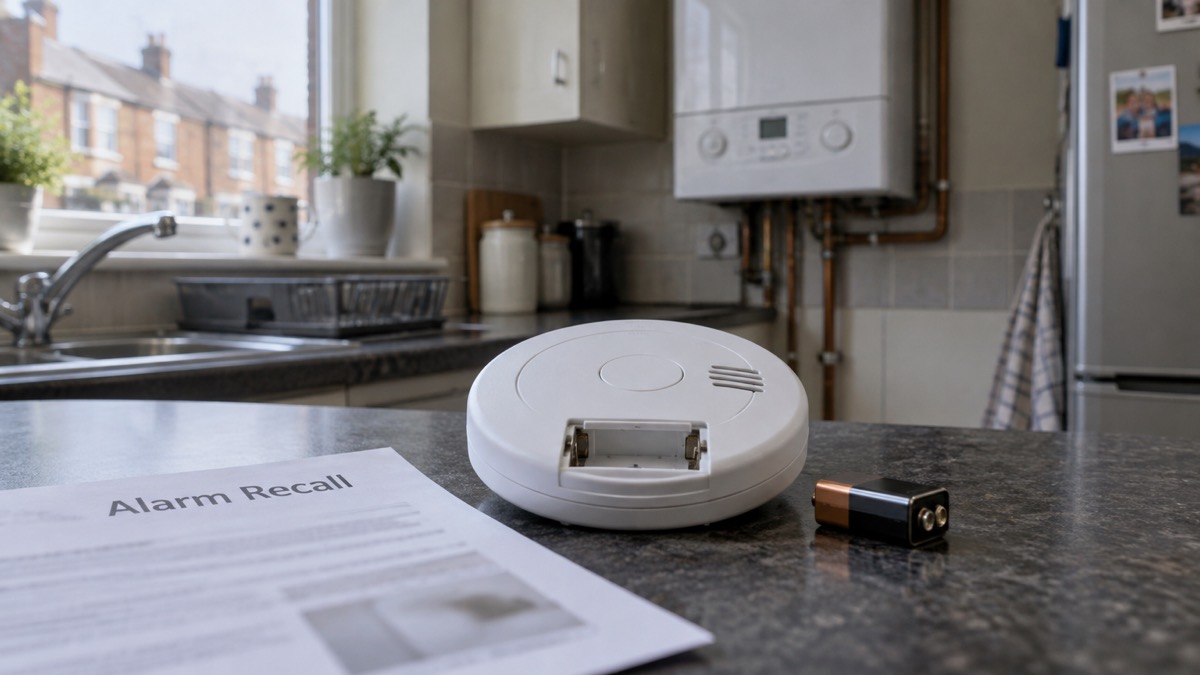
Which? has named the Hispec HSA/BC/10 carbon monoxide alarm a Don't Buy after three samples of the alarm failed to detect carbon monoxide in its laboratory tests1. The consumer organisation says the model failed five CO detection tests in total, and that three of the samples it bought remained silent in the presence of the gas at least once each1.
The alarms tested were bought online, "just as any shopper would", Which? says1. Its testing follows British Standard BS EN 50291-1, and it states that an alarm must detect carbon monoxide in every one of its 20 or more gas detection tests to pass1. The tests start at 30 parts per million (ppm), where alarms should not trigger; at 50ppm alarms should sound between 60 and 90 minutes; at 100ppm between 10 and 40 minutes; and at 300ppm within 3 minutes2. Which? also exposes alarms to 5,000ppm of CO to see whether they detect the gas and keep working afterwards, retests them after 90 days, and requires a noise level of 85dB at one metre2. The page carrying the findings gives the test dates as July 2025 and May 2023, and was last checked in July 20262.
Hispec disputed the outcome. In a statement given to Which?, the manufacturer said:
"Hispec treats product safety and quality with the utmost seriousness. All of our CO alarms, including the HSA/BC/10, are rigorously tested and certified to BS EN 50291-1:2018."
The published extract of the manufacturer's statement ends there, so the remainder of its response has not been reported1. Which? describes the detector as "dangerously unreliable"1. No recall, safety notice or other regulatory action affecting the HSA/BC/10 appears in the published material1.
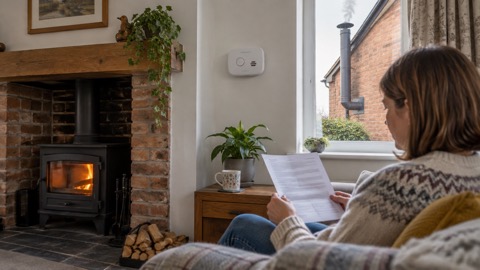
Which? also reports that almost every Don't Buy carbon monoxide detector it has tested was bought from sellers listing cheap and unbranded detectors on online marketplaces, and that many of these models carry instructions saying not to install them in the kitchen, where gas boilers, hobs and ovens are often found in UK homes1. It states that it is essential to have a carbon monoxide detector in the same room as any fuel-burning appliances1.
Why it matters for households
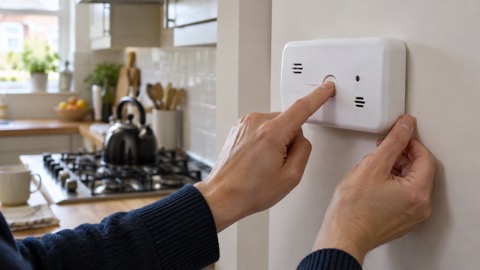
Carbon monoxide is produced by fuel-burning appliances, and an alarm that stays silent during a build-up gives no warning. Households that already have an HSA/BC/10 installed are the group directly affected by the finding, and the published material does not say how many units are in UK homes or whether any replacement programme exists1. Which? advises fitting a detector high up in the same room as the potential source, around 15cm from the ceiling and at least 1 metre from boilers, cookers and fires, and not directly above a source of heat or steam3. It also sets out what to do if an alarm sounds: open all doors and windows, switch off fuel-burning appliances, avoid using light switches, smoking or striking a match, and remain outside until a doctor or the emergency advice line has been consulted; anyone feeling ill should contact a doctor immediately or call 9993. If a gas appliance is thought to be the cause, it gives the Gas Emergency Service number as 0800 111 999, and Oftec on 01473 626 298 for homes heated by oil3.
What happens next
No next steps have been announced by Hispec, Which? or any regulator in the published material1. Which? says it will keep testing carbon monoxide detectors to the same standard and will continue to retest alarms after 90 days2.
Households wanting background on how these alarms work, where they should go and what their warnings mean can read the guide to carbon monoxide alarms, the page on where to put a carbon monoxide alarm and the explanation of why a carbon monoxide alarm is beeping. The Hispec HSA/BC/10 has its own entry, alongside the Hispec RF10 PRO. Symptoms are set out in the guide to carbon monoxide poisoning symptoms, and the wider subject sits within the home emergencies hub.
Sources (3)
- Best carbon monoxide detectors - Which?, which.co.uk
- Best carbon monoxide detectors - Which?, which.co.uk
- Best carbon monoxide detectors - Which?, which.co.uk
 Hispec HSA/BC/10 CO Alarm
 Carbon Monoxide Alarms Guide