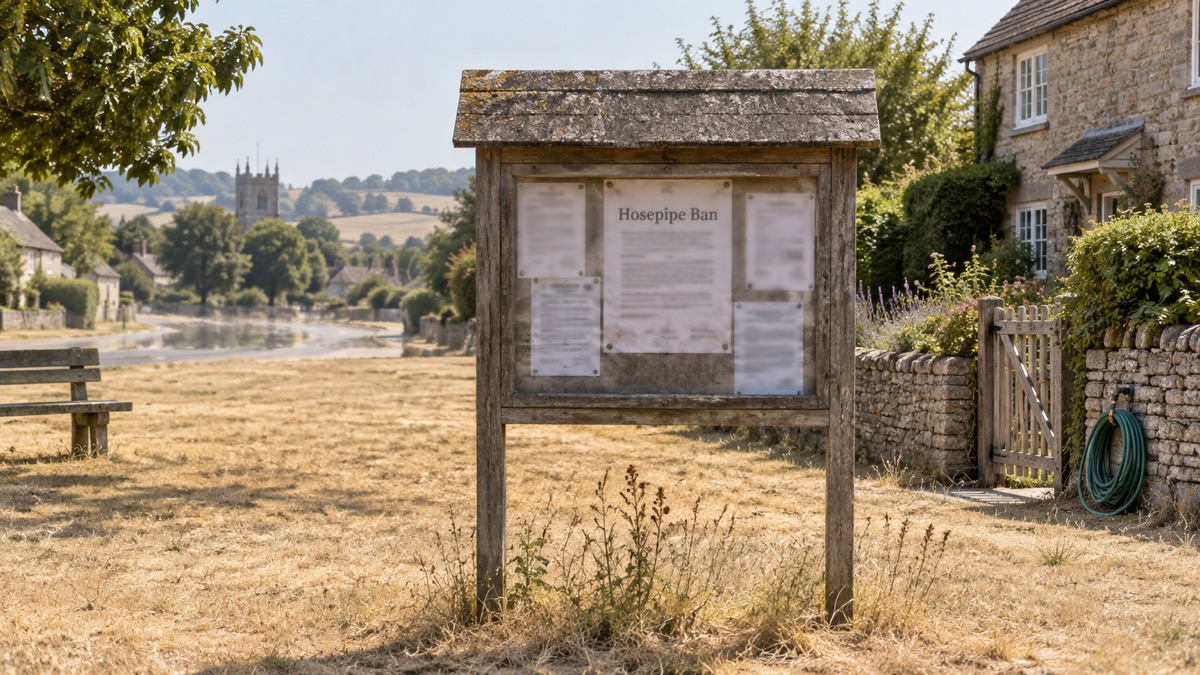
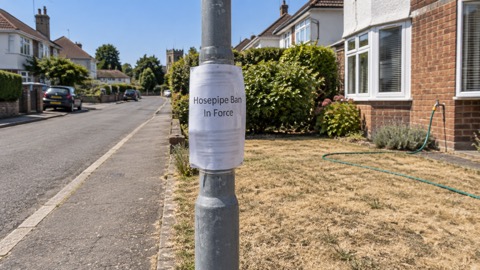
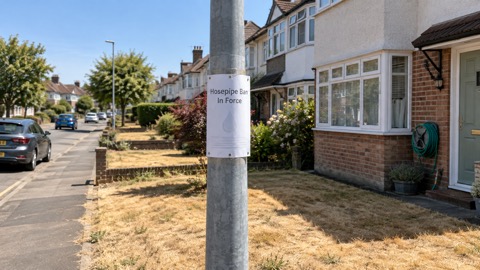
Wessex Water introduced a Temporary Use Ban, commonly called a hosepipe ban, across its supply region on 18 August 2025. The company says the restriction will remain in place across the region until further notice1.
The company describes its region as being in environmental drought following one of the driest summers ever recorded, high demand for water and ongoing lower-than-average rainfall. It says water resources remain under significant pressure, particularly in parts of Somerset where reservoir levels are much lower than average for this time of year. The area supplied by Wimbleball Reservoir has been declared as being in a severe drought after the reservoir reached a critically low level1.
"Our region is in environmental drought following one of the driest summers ever recorded, high demand for water and ongoing lower-than-average rainfall."
Wessex Water says drought status is declared when prolonged dry weather and low rainfall reduce the availability of water in rivers, reservoirs and underground aquifers. It states that this does not mean water will run out, but that action is needed to protect water resources, support the environment and ensure supplies remain resilient1. Around 75% of the water the company supplies comes from groundwater sources, with the remainder from rivers and reservoirs1.
The company says it is moving water through its £230m water supply grid from more resilient parts of the region into areas where the drought is more severe, and has carefully adjusted water pressure in some communities without affecting supplies. Its leakage teams have increased the number of leaks fixed by a third since July. Wessex Water links the dry weather to an increase in ground movement, which it says makes pipes more prone to leaks1.
| Item | Detail given by Wessex Water1 |
|---|---|
| Restriction | Temporary Use Ban (hosepipe ban) |
| Introduced | 18 August 2025 |
| Duration | Until further notice |
| Severe drought area | Area supplied by Wimbleball Reservoir |
| Water moved via supply grid | £230m grid |
| Leak repairs | Up by a third since July |
| Groundwater share of supply | Around 75% |
Why it matters for households
The ban applies to households across the Wessex Water region, with conditions reported as most acute in parts of Somerset. The company says it can only lift the restrictions once water resources have safely returned to normal operating levels, so no end date has been given1. It notes that while there have been some recent spells of rain, significantly more sustained rainfall is needed to restore reservoir, river and groundwater levels, and that a few weeks of occasional rain is not enough to reverse the impact of many months of dry conditions1.
Wessex Water thanks customers who are following the restrictions and asks households to help by fixing dripping taps and leaking toilets, running dishwashers and washing machines less and with full loads, taking shorter showers, and not washing their car1. The rules on what a temporary use ban permits, and how bans are enforced, are set out in the site's guides to hosepipe bans and how temporary use bans work, what you can and cannot do in a hosepipe ban, watering the garden, allotment and new lawn, paddling pools, ponds and car washing and fines and reporting misuse. A water shortage and hosepipe ban checklist covers household preparation, and the heatwaves and drought hub collects the wider guidance.
What happens next
Wessex Water says it is continuing to monitor reservoir, groundwater and river levels closely and that further actions are ready to be taken if dry weather continues. Under its Drought Plan, the restrictions can only be lifted once water resources have safely returned to normal operating levels1. No date for lifting the ban has been reported.
Sources (1)
- Drought and water resources | Wessex Water, wessexwater.co.uk
 Hosepipe Bans and the Garden
 Hosepipe Ban Rules
 Pools, Ponds and Car Washing
 Hosepipe Ban Fines and Reporting
 Household Guide to Drought





