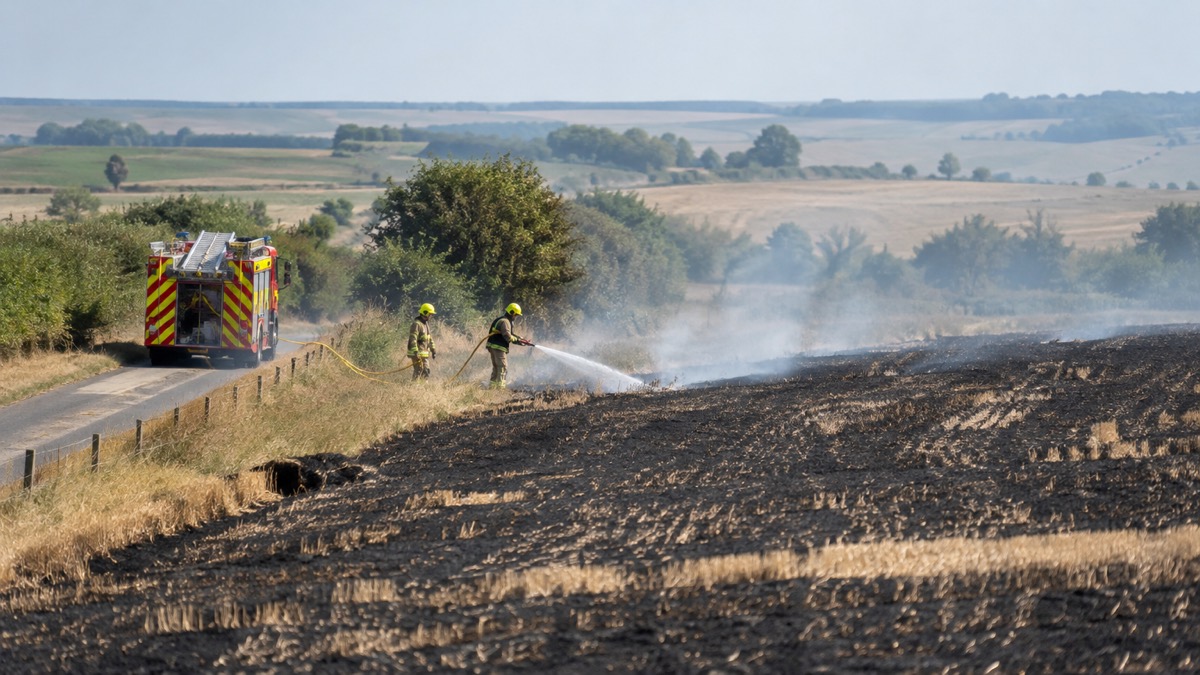
Dorset & Wiltshire Fire and Rescue Service (DWFRS) said that since Wednesday 8 July 2026 it has seen a number of fires involving large areas of land, fields and heath1. In a warning published on 9 July 2026, the service said local people are being warned that Dorset and Wiltshire face exceptionally difficult wildfire conditions this weekend, due to the continued hot and dry weather1.
The service said it attended four significant field fires across Dorset and Wiltshire on just one day that week1. It said fires during increasingly dry spells can be extremely difficult to extinguish and have a lasting impact on the environment and wildlife around them1. Group Manager Matthew Skyme said the third heatwave of the year was currently being experienced1.
"With the third heatwave this year currently being experienced, I'm urging the public to take extra care to help avoid and prevent fires, especially during these challenging conditions."
The service's safety tips for the public cover several outdoor activities1:
| Activity | DWFRS guidance |
|---|---|
| Smoking | Extinguish smoking materials properly; do not throw cigarette ends on the ground or out of car windows; take litter home |
| Bonfires | Do not have a bonfire at home during these high-risk conditions |
| Beaches | Do not set off flares, have campfires or light barbecues, as these can easily lead to gorse and foliage on cliffs catching fire |
| Reporting a fire | Get to a safe place and call 999 immediately; use What3Words to give an accurate location and as much detail as possible |
The service also issued a checklist for farmers and agricultural workers, saying farm and field fires are a big risk at this time of year1. It said chaff and dust can build up in machines and catch fire if parts overheat, and that field fires are often caused when flint is caught and sparked1. Its checklist includes regularly cleaning dust and chaff from hot spots in combines and balers, switching off engines and ensuring moving parts have stopped before clearing blockages, investigating hot-running engines or bearings, keeping in contact with lone workers, keeping mobile phones on the person, knowing locations and access points, checking the height of power lines, keeping maintained fire extinguishers on all vehicles, cleaning grain dryers and training staff who run them, and keeping ladders and platforms in good condition1.
The service asked anyone who sees suspicious fire setting behaviour in progress to call 999 and ask for the Police, or to report it anonymously to Crimestoppers on 0800 5551111.
Why it matters for households
The warning covers Dorset and Wiltshire and applies to the weekend following 9 July 20261. Households in these areas are affected by the continued hot and dry weather, which the service says has made wildfire conditions exceptionally difficult1. The service's advice covers everyday activities that can start fires outdoors, including barbecues, campfires, smoking, bonfires and flares at the beach, and it asks people to report countryside fires from a safe place by calling 9991. Farmers and agricultural workers are separately asked to follow the service's machinery and harvest checklist1. The service has not reported how the fires started, the total area burned, or any casualties.
What happens next
The service has not announced any further steps beyond the weekend warning. Its outdoor safety information is published at dwfire.org.uk/safety/safety-outdoors1. Households can read more on wildfires and grass fires: risk and prevention, barbecues and wildfire risk in dry weather and what to do if you see or are near a wildfire, with background on why UK summers are getting hotter and drier.
 Wildfires and Grass Fires
 Barbecues and Wildfire Risk
 What to Do Near a Wildfire
 Why UK Summers Are Hotter





