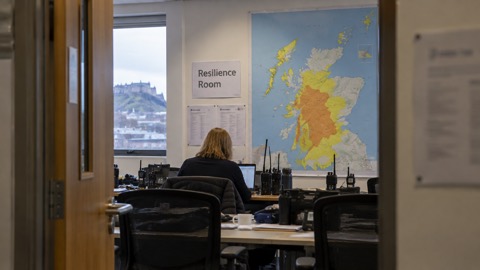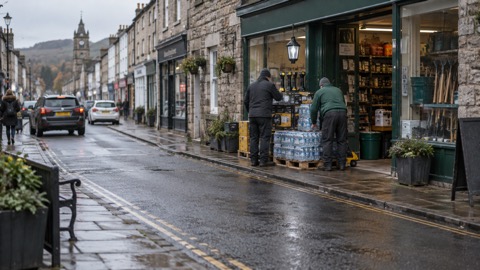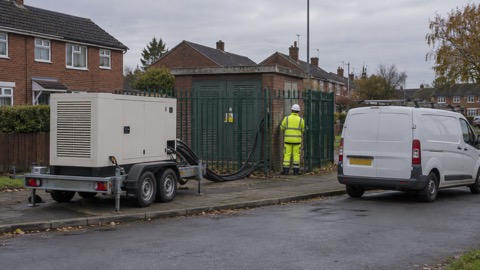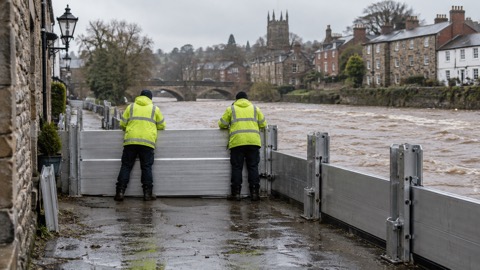
The Floods Resilience Taskforce was launched by the government in September 2024, according to the Environment Agency's flood and coastal erosion risk management report for 1 April 2024 to 31 March 20251. The report states that the taskforce brings together Defra ministers and officials with public, private and third sector representatives to oversee national and local flood resilience and preparedness1. The report applies to England1.
The same report sets out the scale of risk the taskforce's work sits against. The updated national flood risk assessment (NaFRA), published in December 2024, shows that around 6.3 million homes and businesses in England are in areas at risk from flooding1. The report describes this as around one in five homes across England, rising to one in four homes by the mid-century because of climate change1. The updated national coastal erosion risk map, published in January 2025, shows that 3,500 properties are at risk of coastal erosion by 20551.
The report records the flooding in the year the taskforce was set up. Around 5,000 properties were reported as flooded across the country, while flood and coastal defences protected around 167,000 properties1. England experienced 7 named storms in the year: Kathleen, Lilian, Ashley, Bert, Conall, Darragh and Eowyn1. Around 1,600 properties flooded across England during Storm Bert, and defences protected around 35,800 properties1. During Storm Darragh the Met Office issued a rare red weather warning for wind, with speeds of up to 90mph affecting some coastal areas1.
"In September 2024, government launched the Floods Resilience Taskforce"
The report also records later funding announcements. In February 2025 the government announced a record £2.65 billion to be invested over 2 years to build, maintain and repair flood defences across England, which the report says will better protect 52,000 properties by March 20261. In March 2025 the government announced an additional £16 million for the IDB Storm Recovery and Asset Improvement fund, increasing it to a total of £91 million1.
| Date | Development recorded in the report1 |
|---|---|
| September 2024 | Floods Resilience Taskforce launched |
| October 2024 | Mid-programme report of the flood and coastal innovation programmes published |
| December 2024 | National assessment of flood and coastal erosion risk in England 2024 published |
| January 2025 | Updated NCERM published; information on a grant and its eligibility criteria published |
| February 2025 | Record £2.65 billion investment in flood defences announced |
| March 2025 | Additional £16 million for the IDB Storm Recovery and Asset Improvement fund announced |
Why it matters for households
The taskforce covers flood resilience and preparedness in England, so its work bears on households in areas at risk of flooding, which the report puts at around 6.3 million homes and businesses, or around one in five homes1. The report says the Environment Agency has been building and testing a new warning service ahead of an anticipated launch later in 20251. It also records that the Flood Map for Planning Service now includes data from the new NaFRA, so planners and developers can account for flood risk in the location and design of developments1. The report does not set out any new duties or advice for individual households arising from the taskforce, and no further detail on its membership, meeting schedule or work programme has been reported in the pages available.
What happens next
The report gives no dated programme for the taskforce itself. It records that the new flood warning service is anticipated to launch later in 20251, and that the £2.65 billion investment announced in February 2025 is intended to better protect 52,000 properties by March 20261. Longer term funding decisions are to be made during the next spending review bid1.
Households can read about who manages flood risk, flood alerts, flood warnings and severe flood warnings and home insurance in a flood risk area and Flood Re. The site's flooding hub and UK preparedness hub set out the wider picture, including Local Resilience Forums and the UK Government Resilience Framework and Action Plan.
 Who Manages Flood Risk