
Ebac is a United Kingdom manufacturer whose household kit centres on dehumidifiers: appliances that pull moisture out of the air1. For a household preparing for emergencies, that one capability matters twice over. During the damp, cold months it keeps condensation and mould in check, and after a flood or a burst pipe it is one of the three tools, alongside heating and ventilation, that official guidance across England, Wales, Scotland and Northern Ireland tells householders to use when drying out a home3.
This page sets out what Ebac makes, how its dehumidifiers fit a household emergency plan, how to use and store them safely, and where to get help from the maker. One thing needs checking before anything else: in April 2026 the government published a recall notice for three Ebac air dehumidifier models. If you own an Ebac dehumidifier, read the safety notices section below and compare your machine's model and batch numbers against the recall lists before you use it again2.
- Country of origin: United Kingdom2
- Recall, April 2026: models DD295ZWH-GB, DD695ZWH-GB and DD895ZWH-GB, six batch numbers; stop using and contact the distributor for a refund2
- Customer service: 0345 805 0000, or customer.services@ebac.com1
- Warranty registration: www.ebac.com/support/warranty, or automatic if bought direct from Ebac1
- After a flood: do not use any mains appliance in a flood-affected area until a registered electrician says it is safe7
What Ebac makes for UK households
Ebac's household range is built around dehumidification. The government recall notice describes the affected products as "Domestic dehumidifier designed to reduce humidity levels in indoor environments" and classifies them as "Electrical appliances and equipment - Air Dehumidifiers - Portable (Powered)"2. The maker's own manual covers a different product in the same family, the LMD loft mounted dehumidifier, a fixed unit intended "for installation within the dwelling's loft space, where it extracts moisture"1. The country of origin given in the recall notice is the United Kingdom2.
For a prepping household, a dehumidifier is not a headline item like a torch or a power bank, but it earns its place in two parts of a plan. The first is home emergencies: a flood, a burst pipe or a leak leaves a house wet, and drying it quickly is what prevents lasting damage and mould. The second is the long damp stretch of a British winter, when a home that is hard to heat gathers condensation, and a dehumidifier manages that day to day. Both uses are covered in the sections below.
The maker states that its loft mounted model is UKCA and CE approved, and electrically and EMC approved1. Keeping any dehumidifier clean and in good working order is the routine maintenance side of owning one, and the same habit applies to every electrical appliance in the house. Our emergency kit guide covers the rest of what a household should keep ready.
Drying out a home after a flood or leak
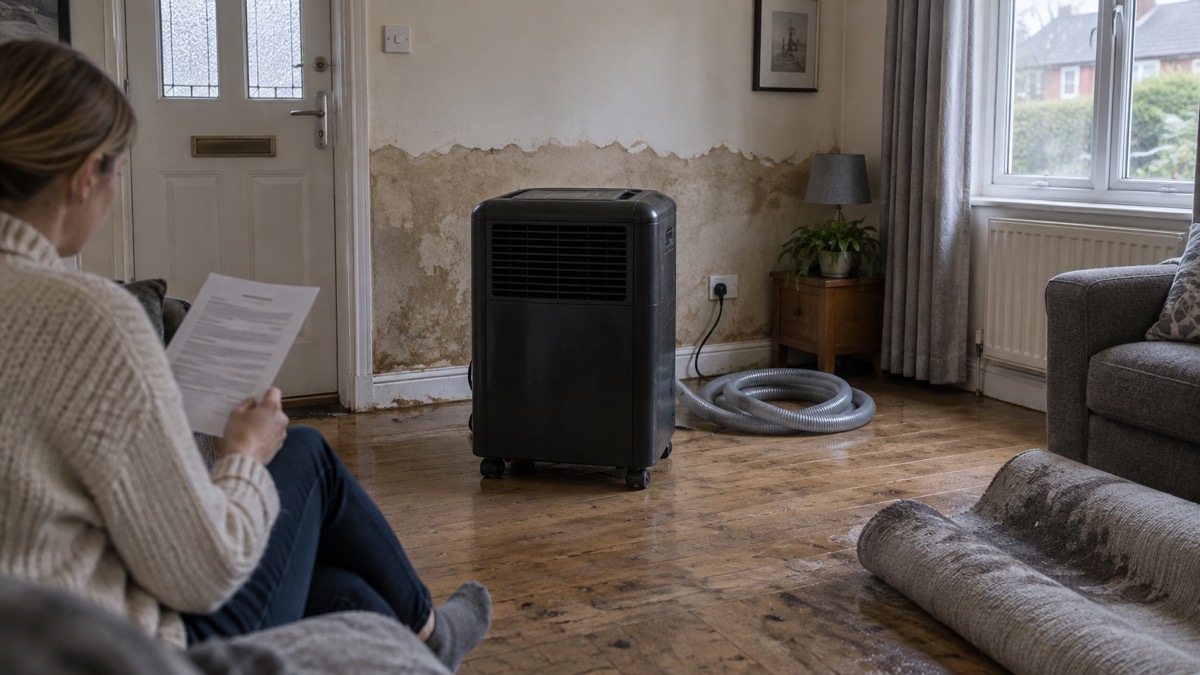
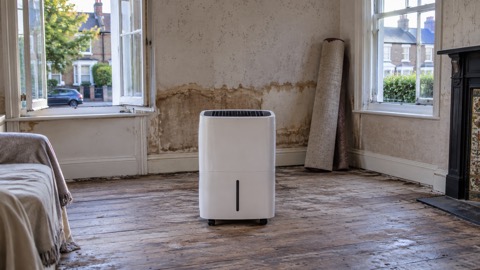
This is where a dehumidifier does its most urgent work. Official guidance is consistent across the four nations: heating, dehumidifiers and good ventilation together dry out a flooded home. Wiltshire and Swindon Prepared puts it plainly: "Heating, dehumidifiers and good ventilation can help to dry out your home"3. Runnymede Borough Council says the same three "are all very effective in drying out your home"7, and Public Health Wales adds fans and air conditioning units to the list5.
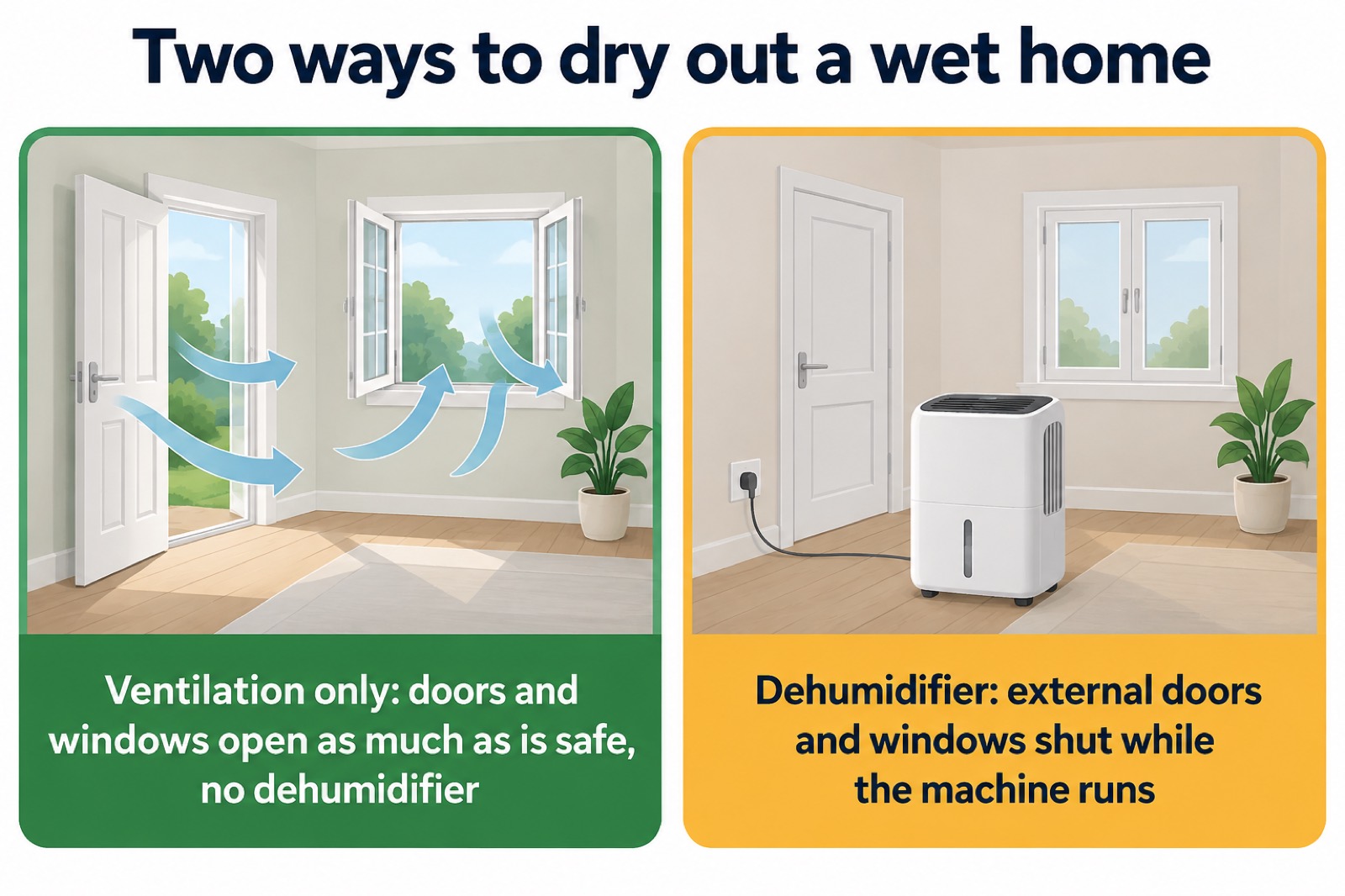
There is one rule that decides whether the machine is doing anything at all. Natural Resources Wales and nidirect both give it: either keep doors and windows open to dry the property with ventilation alone, or run a dehumidifier with the windows and doors closed4. nidirect is the most direct: "If you use a dehumidifier to remove water from the air in your home, you need to keep external doors and windows shut"8. A dehumidifier drying an open house is working against the weather, so pick one method and commit to it.
A few practical points from the official guidance:
- Do not use a dehumidifier to remove standing floodwater. Derbyshire County Council is clear that dehumidifiers "can be used to collect moisture from the air and can aid in drying out a property but should not be used to" remove floodwater itself10.
- Empty the tank safely. The same guidance says collected water can be disposed of down regular drains and sinks, and that you should wear face masks and eye protection when emptying the tank10.
- Expect mould to fade as the house dries. Wiltshire and Swindon Prepared advises that "As your home continues to dry out, the mould should disappear. If it persists, please contact a specialist cleaner"3.
- Dehumidifiers can be hired. If you do not own one, North Yorkshire Fire and Rescue Service notes after a fire that "You can hire dehumidifiers, which will remove water from the atmosphere"11, and the same applies after floods and leaks.
For households with children, nidirect notes that "a dehumidifier may be useful to help with drying out your home quickly"12. For the full sequence of what to do after floodwater recedes, see our flooding guide.
Controlling damp and condensation
The everyday job of a dehumidifier is the same as the emergency job, just slower and smaller. A home that holds moisture in the air gathers condensation on cold surfaces, and condensation that persists leads to mould. Reducing humidity levels indoors is what a dehumidifier is for, and the drying advice above applies in miniature: shut the room up while the machine runs rather than letting damp air stream through it.
The maker's loft mounted model takes a different approach to the same problem. It is installed in the loft, extracts moisture there, and is self draining, so it pipes collected water away rather than filling a tank you have to empty1. It runs under what the manual calls Automatic (Intelligent) control, operated through a remote dashboard rather than a panel on the unit, which suits a fixed appliance you cannot easily reach1. It is supplied with 6 metres of 200 mm flexible duct1. For a household that wants damp managed continuously without a portable unit in the hallway, that is the trade: a fixed installation against the flexibility of a portable machine you can move to wherever the moisture is.
Two things are worth doing whatever model you own. First, keep the appliance clean and in good working order, as London Fire Brigade advises for electrical items generally13. Second, register it, so the maker can reach you if a safety notice is issued: Warwickshire and Cheshire fire and rescue services both point to the Register My Appliance website as the quick way to do this14. The April 2026 recall of Ebac dehumidifiers, covered below, is exactly the kind of notice registration is meant to deliver2.
Ebac kit during a power cut
A dehumidifier needs mains power, so a power cut takes it out of action, and a storm that causes the cut is often the same weather that causes the damp. The practical response is in two parts: protect the appliance during the cut, and have the right independent kit ready for lighting and information.
For a dehumidifier full of water or running unattended in a loft, switching off at the socket before the cut arrives, where you have warning, is the safe habit. It protects the appliance from power surges when electricity is restored, and it means a machine left running in a loft is not drawing power the moment supply returns.
What to have ready instead, from the official kit lists:
- Torches and spare batteries, and battery candles16
- A power bank or solar charger for your mobile phone16
- A wind up or battery powered radio tuned to local news17
- Warm clothes and blankets, and non-perishable food17
If your household includes someone who relies on mains powered medical or assistive equipment, such as ventilators, oxygen concentrators, electric wheelchairs, hoists, communication devices or feeding pumps, East Cambridgeshire District Council notes these households may need extra help during a power cut18, and the Scottish Government's Ready campaign sets out what that help looks like19. Our extra help and power cuts guides cover this in full, and our backup power guide explains what a power station can realistically run.
On running an Ebac dehumidifier from a generator or a portable power station: the maker's manual does not address it, so check with Ebac before doing so. What official guidance does say, in a storm warning from nidirect, is to "check and test backup generators and equipment" ahead of severe weather rather than discovering a fault during it20.
Using and storing Ebac appliances safely
The safety basics for a dehumidifier are the ones fire and rescue services give for any electrical appliance. London Fire Brigade: "Keep electrical appliances clean and in good working order"13. The same principle of following the maker's own instructions for using and storing an appliance applies to a dehumidifier as much as to any other powered item in the home.
For the loft mounted model specifically, the manual sets out a commissioning test when the unit is installed: fill a container with 200 to 300ml of water and empty it into the inlet area to confirm the drain pump works1. That is worth knowing after any long shutdown or service, because a self draining unit that has silently stopped draining is a fault you would otherwise find late.
The most serious safety issue with any appliance is a flood. Official guidance is unanimous and firm:
Runnymede Borough Council also warns households to be wary of damage to gas appliances long after flooding, including central heating systems, radiators and hot water systems7, and Lancaster City Council's flooding advice adds the preparation side: when flooding threatens, switch off all electrical appliances, remove plugs from sockets and turn off the main electricity switch, remembering that freezers and refrigerators will become ineffective21. A dehumidifier is a portable appliance in most homes, so it is one you can move to dry ground ahead of floodwater, then have checked before it goes back into service.
Support: Ebac customer service on 0345 805 0000
Ebac's customer service team is on 0345 805 0000, a number given both in the maker's manual and in the government recall notice, which also gives the email address customer.services@ebac.com1. The manual says to call "during our normal hours" but does not state what those hours are, so if your query is time-sensitive, email gives you a written record and the phone line gives you the fastest answer when it is open.
For recall queries specifically, the notice asks owners to contact the distributor they purchased from for a refund2, so have your proof of purchase to hand. For warranty and repair matters, the manual states that "The appliance must be returned to the manufacturer Ebac for service or repair"1, so customer service is the route for any fault on the loft mounted model rather than a local repairer.
If you are struggling more broadly after a flood or an emergency, help exists beyond the maker. Our extra help guide sets out what is available, including for older and disabled households.
Warranty, repairs and spare parts
The maker's warranty terms for the loft mounted dehumidifier are set out in its manual, and they are unusually specific about what is included. The warranty covers:
- Unlimited repairs for any mechanical failure within the warranty period1
- The costs of collection, repair and return delivery of the dehumidifier1
- All parts and labour1
The warranty covers dehumidifiers in domestic use, and the maker states that if you purchased directly from Ebac, your warranty has been automatically registered and active from the day of purchase1.
The exclusions are equally specific: the warranty does not cover wear and tear to the unit exterior or air filter, or accidental damage, and you may be charged if no fault is found or the fault is due to user error1. That last point is worth acting on before you contact the maker: describe the fault clearly when you get in touch, so the repair is not turned away as user error or a no-fault finding.
Registration differs by where you bought the machine. The manual states: "If you have purchased directly with Ebac, your warranty has been automatically registered and active from day of purchase"1. For units bought through approved retailers, it says to "Log on to www.ebac.com/support/warranty to register your Ebac dehumidifier warranty"1. South Wales Fire and Rescue Service makes the wider point about registration when it advises consumers to register products with the manufacturer to validate warranties and to make it easier for manufacturers to contact you with safety or recall information22. Registering costs nothing and it is how a recall notice reaches you.
Safety notices and recalls
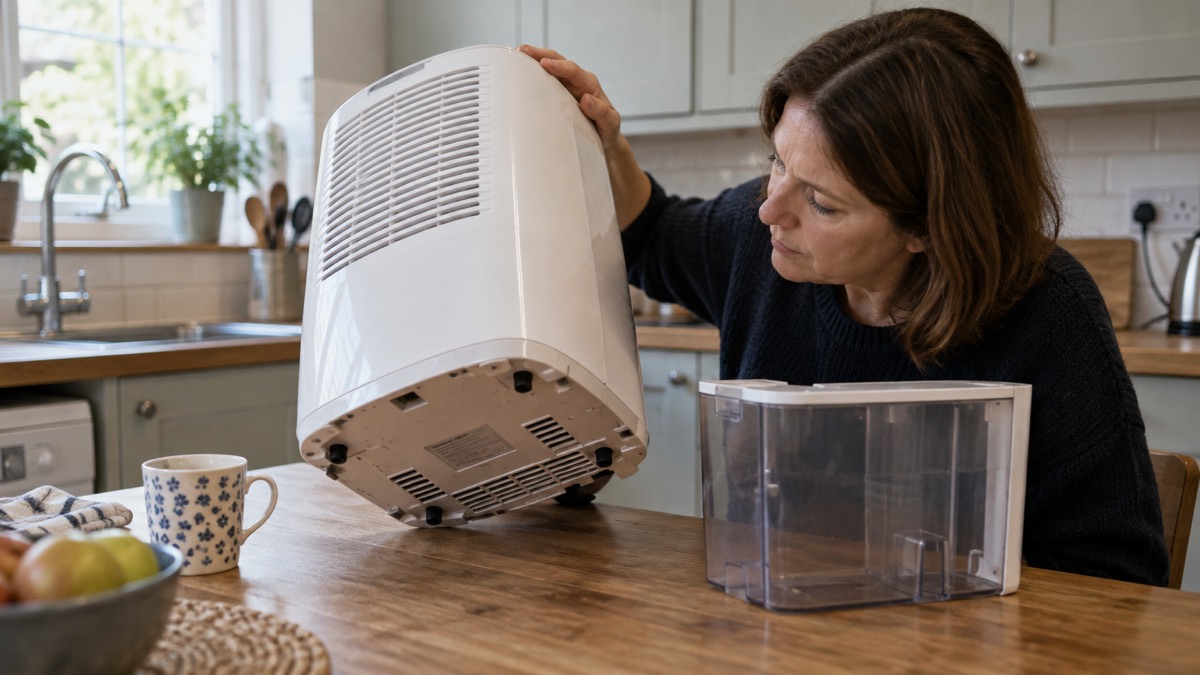
Check the label on your machine against both lists: the model number alone is not enough, because the recall is tied to specific batch numbers2. The notice was notified by Local Authority Trading Standards under PSD notification number 2604-00232, and Ebac can be contacted about it on 0345 805 0000 or at customer.services@ebac.com2.
The general lesson is worth keeping. The Office for Product Safety and Standards issues recall and alert notices on its website13, and London Fire Brigade advises checking product recall notices issued by the Office for Product Safety and Standards and contacting the retailer where you purchased the product, with a firm rule: "Don't continue to use a battery or charger that has been identified as unsafe"23. Cheshire Fire and Rescue Service points to the Electrical Safety First and government websites for checking whether products are subject to a recall15. Wiltshire and Swindon Prepared reports that homes across the UK have been destroyed by fires that started in cheap electrical products, with cases where people have lost their lives24, which is why registration and recall checks are part of household preparedness rather than admin.
Where Ebac fits a household plan
A dehumidifier is a supporting item in a prepared household, not a core one. It earns its place in two scenarios: the slow one, managing damp and condensation through winter, and the sudden one, drying a home after a flood, leak or fire, where official guidance in all four nations names it as one of the tools that work3. It depends on mains power, so it pairs with, rather than replaces, the torch, power bank and radio that the official power cut kit lists describe16.
If you own or buy an Ebac machine, three actions follow. Check it against the April 2026 recall lists before its next use2. Register it, with the maker for the warranty and on Register My Appliance for safety notices1. And if floodwater ever reaches it, do not switch it on again until a qualified electrician has checked it8. Beyond that, our flooding, home emergencies and power cuts guides set out the rest of what those situations ask of a household.
Sources (24)
- Ebac LMD Loft Mounted Dehumidifier manual, Ebac, 2026
- Product recall: Ebac Limited air dehumidifiers, PSD 2604-0023, Office for Product Safety and Standards, 2026-04-21
- Flooding and health: safely cleaning your home, Wiltshire and Swindon Prepared, 2026-10-25
- What to do after a flood, Natural Resources Wales, 2026-10-29
- Flooding and health, Public Health Wales, 2026-07-31
- Flooding advice, Scottish Borders Council, 2026-10-29
- Flooding aftercare, Runnymede Borough Council, 2026-10-26
- After a flood: clearing up, nidirect, 2026-05-06
- After a flood: flooding advice, London Fire Brigade, 2026-10-25
- Cleaning up and returning home after flooding, Derbyshire County Council, 2026-10-29
- Steps after a fire, North Yorkshire Fire and Rescue Service, 2026-06-17
- Keeping children safe during a flood, nidirect, 2025-12-09
- Electrical items in the home, London Fire Brigade, 2026-10-25
- Electrical fire safety, Warwickshire Fire and Rescue Service, 2026-07-17
- Electrical fire safety: stay safe at home, Cheshire Fire and Rescue Service, 2026-10-29
- Stay safe in lightning: seasonal advice, Met Office, 2026-10-25
- Power cuts, West Yorkshire Prepared, 2026-10-29
- Loss of utilities, East Cambridgeshire District Council, 2026
- Disabled people and carers, Ready Scotland, 2026-10-25
- Strong winds and heavy rain warning: information and advice, nidirect, 2026-01-27
- Be prepared: flooding advice, Lancaster City Council, 2026-10-26
- E-bikes and e-scooters, South Wales Fire and Rescue Service, 2026-07-29
- Registering your e-bike or e-scooter for safety alerts and product recalls, London Fire Brigade, 2026-10-25
- Reminder not to cut corners with electrical safety this Christmas, Wiltshire and Swindon Prepared, 2026-10-25
 Air Dehumidifiers